
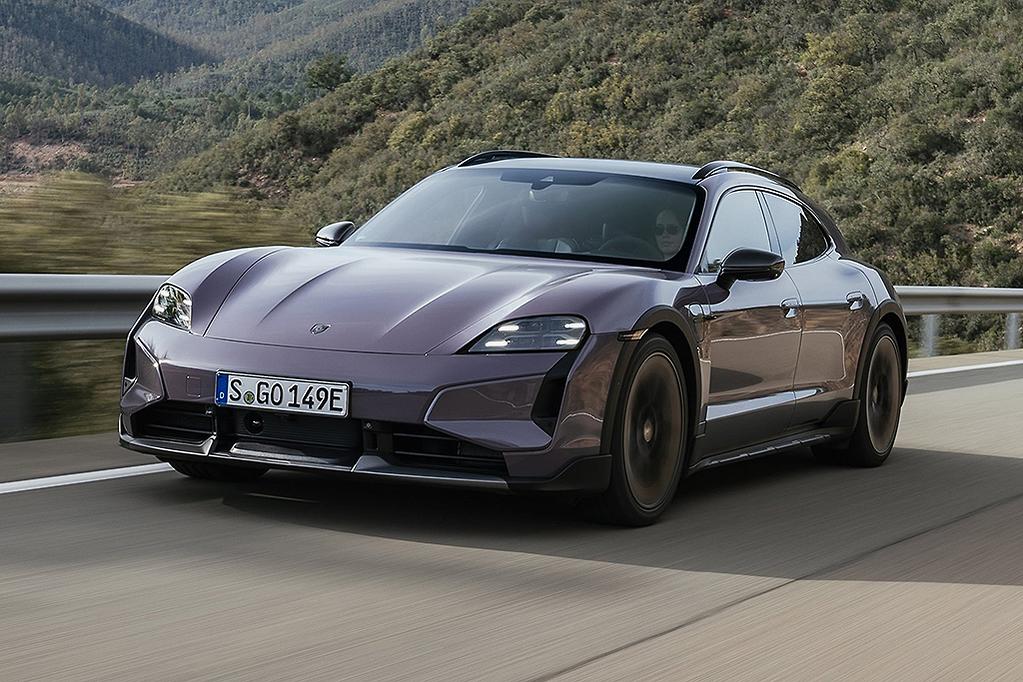
Porsche is giving the Taycan a more theatrical driving character for 2027 with a new E-Shift function that simulates an eight-speed transmission. The system uses steering-wheel paddles to create virtual gear changes, while a digital rev counter rises toward 8,000 rpm.
Porsche has also programmed shift jolts, gear-specific torque delivery, and simulated engine braking into the electric sports sedan.
The Taycan remains fully electric and does not gain a physical gearbox. Its electric motors still provide instant torque and the smooth acceleration that has defined the model since its launch.
E-Shift is a software-controlled feature intended to make the car feel more interactive for drivers who enjoy the rhythm of shifting gears, watching revs build, and using downshifts to slow the vehicle before a corner.
Porsche said the function is designed as a multi-sensory driving experience, combining visual information on the instrument display, changes in motor torque, sound through the speakers, and physical movement through the chassis.
The system can be turned off, allowing drivers to return to the Taycan’s normal EV behavior whenever they prefer seamless acceleration.
The 2027 update includes more than virtual gears. Porsche has also made the larger Performance Battery Plus standard on several Taycan versions, upgraded the infotainment system, added a battery health display, and expanded hardware options for the range-topping Turbo GT.
Still, E-Shift is the most unusual change because it introduces familiar combustion-car sensations to an EV.
Also Read: 10 Trucks That Held Their Value Better Than Most Over the Last Decade
Eight Virtual Gears Through Paddle Shifters
E-Shift is operated by paddle shifters mounted behind a new GT Sport steering wheel. When the system is activated, the driver can select from eight virtual gear ratios in manual mode. Porsche also offers an automatic setting that allows the vehicle’s software to decide when virtual upshifts and downshifts occur.
Electric motors do not require multiple gears in the same way a gasoline engine does. They can produce strong torque across a wide operating range, allowing the Taycan to accelerate without the pauses associated with a conventional automatic or dual-clutch transmission. Porsche’s new software intentionally alters that behavior.
When the driver shifts, E-Shift changes motor torque to create a brief interruption in acceleration. The vehicle then resumes power delivery in the next simulated ratio. Porsche has calibrated each virtual gear differently, creating changes in response that are intended to make the system feel more believable than a simple sound effect.
A virtual tachometer appears in the driver display when E-Shift is active. The rev counter rises and falls with throttle input and gear selection, while a gear indicator and shift prompts give the driver a reference point. Porsche has included a virtual rev limiter, creating a defined point where the driver is encouraged to select the next gear.
Car and Driver reported that the system’s virtual rev counter can climb toward 8,000 rpm. The number does not represent the speed of a physical engine, but it gives drivers the familiar visual drama of watching revs rise before pulling a paddle.
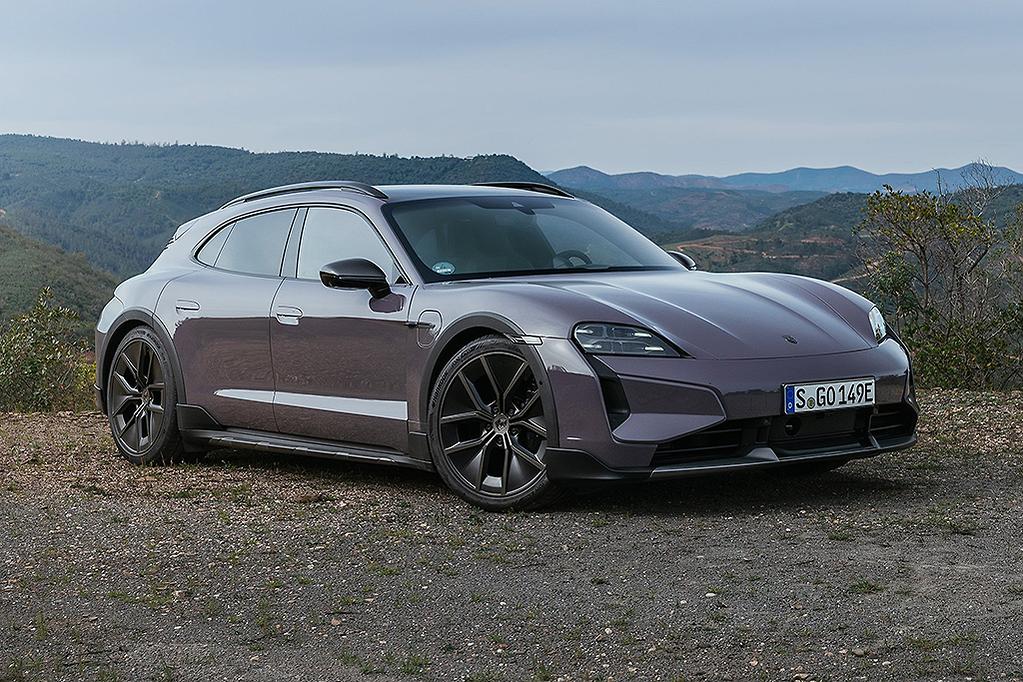
Porsche has made E-Shift available across the Taycan lineup, including the sedan, Sport Turismo, and Cross Turismo body styles. The Taycan Turbo GT receives it as standard equipment, while other versions offer it as an option.
Shift Jolts and Engine-Braking Feel
Porsche has designed E-Shift to create more than a dashboard animation. The system can produce noticeable shift jolts when drivers move through the virtual gears. During an upshift, the Taycan briefly changes its torque delivery, creating a physical sensation similar to the momentary pause felt in a traditional performance car.
The company has also added simulated engine braking. In a gasoline-powered vehicle, selecting a lower gear can slow the car because the engine and transmission resist the wheels. An EV already slows through regenerative braking, but the sensation is usually smoother and does not feel like a downshift.
With E-Shift active, the Taycan creates more pronounced drag torque as the driver selects lower virtual gears. Porsche says this makes the paddles more useful during spirited driving because they can influence the rhythm of braking and acceleration before a corner.
Autoweek noted that Porsche’s E-Shift system connects torque delivery, sound, and display information rather than functioning as an isolated audio effect. That distinction matters because the feature is meant to make the driver feel a change in the vehicle’s behavior, not simply hear one.
The idea will divide buyers. One of the Taycan’s strengths has always been its smooth, immediate acceleration. Some drivers will see simulated gear changes as unnecessary because they interrupt the natural advantages of electric propulsion.
Porsche’s answer is flexibility. E-Shift can be switched off completely, allowing the Taycan to behave like a conventional EV during commuting, highway travel, or relaxed driving.
A Revised Electric Sound Experience
The new virtual transmission works with an updated Porsche Electric Sport Sound system. The Taycan already offered an artificial sound profile, but Porsche has revised it to respond more closely to the E-Shift function.
The sound changes with throttle position, speed, and selected virtual gear. It becomes more intense as the virtual rev counter climbs and changes character during upshifts and downshifts.
Porsche has not tried to recreate the sound of a flat-six 911 engine or a V8. Instead, the company has developed an electronic sound intended to fit an electric performance car.
Porsche says the system can be heard outside the vehicle as well as inside the cabin. This gives the Taycan more presence when accelerating, though it remains separate from the low-speed pedestrian warning sound required for EVs in many markets.
T3 reported that E-Shift combines eight virtual ratios, a rev limiter, shift jolts, and simulated braking effects. The feature is intended to give EV drivers more sensory feedback without changing the Taycan’s basic electric drivetrain.
Larger Battery Becomes Standard
Porsche has made a major practical change for the 2027 model year by fitting the larger Performance Battery Plus as standard on the Taycan, Taycan 4, and Taycan 4S.
Usable battery capacity rises from 83.7 kWh to 97.0 kWh for these versions. Porsche is removing the smaller battery from the lower end of the lineup, giving buyers more energy capacity without requiring an extra-cost battery upgrade.
The larger battery should improve long-distance flexibility and support faster charging. Porsche said the Performance Battery Plus can accept up to 320 kW when connected to a compatible 800-volt DC fast charger. In the right conditions, that capability can reduce the time needed to add a useful amount of range during a road trip.
Porsche is also adding a battery state-of-health display. This feature gives owners a clearer indication of battery condition over time, which could be valuable for long-term ownership, resale discussions, and used-car buyers.
The company has introduced lower rolling-resistance summer tires for rear-wheel-drive Taycan models. Porsche says these tires can improve range by up to 20 kilometers under the WLTP test cycle. Actual results will depend on temperature, driving speed, tire pressure, and road conditions.
Updated Infotainment and Charging Features
The 2027 Taycan receives Porsche’s updated Digital Interaction infotainment system. Porsche says the new platform has more processing power, improved personalization, and expanded over-the-air update capability.
The revised Porsche Communication Management system allows drivers to customize widgets on the central display and access navigation, charging information, media, and vehicle settings more easily. Porsche has also expanded Apple CarPlay and Android Auto integration.
A new wireless smartphone charging tray includes magnetic mounting similar to MagSafe and provides faster charging output. Car and Driver reported that the revised tray can charge compatible phones 1.5 times faster than the previous unit.
The passenger-side DC charging port now includes native North American Charging Standard hardware. This gives Taycan owners more direct access to compatible NACS fast-charging stations and can reduce the need for an adapter in certain situations.
These updates may receive less attention than E-Shift, but they are likely to affect daily ownership more often. Better phone integration, faster software, charging access, and clearer battery information are all important for buyers spending well into six figures on an electric luxury car.
Turbo GT Receives a Manthey Kit Option
The Taycan Turbo GT remains Porsche’s most extreme electric model. For 2027, E-Shift is standard on the Turbo GT, and Porsche is offering a Manthey Kit for examples equipped with the Weissach Package.
Manthey Racing has worked with Porsche for years on track-focused performance upgrades. The new kit includes aerodynamic, chassis, and powertrain changes designed to improve stability, downforce, and lap-time potential.
Porsche said a Taycan Turbo GT equipped with the Weissach Package and Manthey Kit completed a Nürburgring Nordschleife lap in 6 minutes and 55.553 seconds. That places the model among the fastest production EVs around the circuit.
The Manthey Kit is aimed at a small group of owners who want the most track-capable Taycan available. It also shows that Porsche is continuing to develop electric performance cars for serious circuit use rather than treating them only as luxury technology products.
Porsche says orders for the 2027 Taycan are now open, with U.S. deliveries expected in fall 2026. Car and Driver reported that the range begins at $114,250 for the rear-wheel-drive Taycan, reflecting the larger Performance Battery Plus battery now included as standard.
E-Shift does not make the Taycan more efficient or fundamentally faster. Its purpose is emotional. Porsche is giving drivers an optional way to add rhythm, sound, and control to electric acceleration.
Those who prefer smooth and silent EV driving can leave the system off. Drivers who miss paddle shifts, rising revs, and engine brake feel now have eight virtual gears to work through.
Also Read: 10 Cars Worth More Used Today Than Their Original MSRP
