
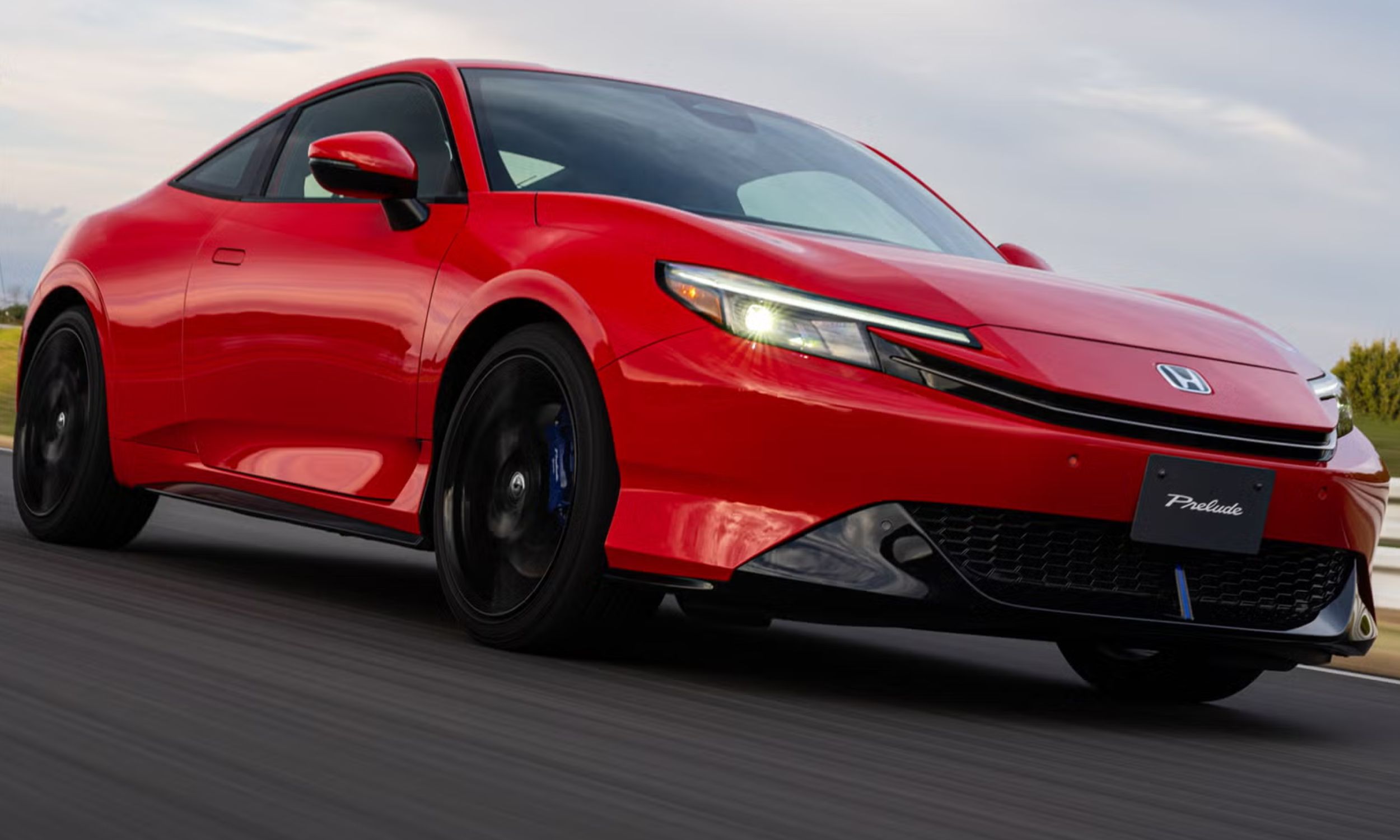
Certain automotive badges never disappear for good. They simply step out of view and wait for the right moment to return. After being absent for roughly twenty-five years, the Prelude is coming back for the 2026 model year, and Honda has treated the revival with care rather than nostalgia alone. This is not a recycled name placed on a familiar economy car. Instead, the new Prelude is built with clear intent, using the Civic Type R as its foundation and pairing that platform with Honda’s well-known two-motor hybrid system.
Rather than chasing headline power figures, the new Prelude focuses on balance and feedback. Engineers tuned the chassis to reward smooth inputs and confident cornering, placing driving feel ahead of straight-line speed. Drivers who remember the earlier generations will notice the connection immediately. While the mechanical layout has changed, the personality has not vanished. The car still favors precision, control, and that sense of harmony between steering, suspension, and road surface.
Honda has also been clear about what this coupe is not. It is not designed as a lap time hero or a stripped-out performance special. That honesty shapes its appeal. In a market crowded with oversized vehicles and aggressive styling, the Prelude offers restraint. Its design attracts attention without resorting to excess, and its hybrid setup balances efficiency with responsiveness.
Bringing back a two-door coupe in 2026 carries risk, and Honda knows it. The decision reflects confidence that there is still room for cars built around enjoyment rather than extremes. The Prelude’s return may spark debate, but it also reminds buyers that driving pleasure can exist without chasing records or trends.
A Hybrid Heart Borrowed From One of Honda’s Best Engines
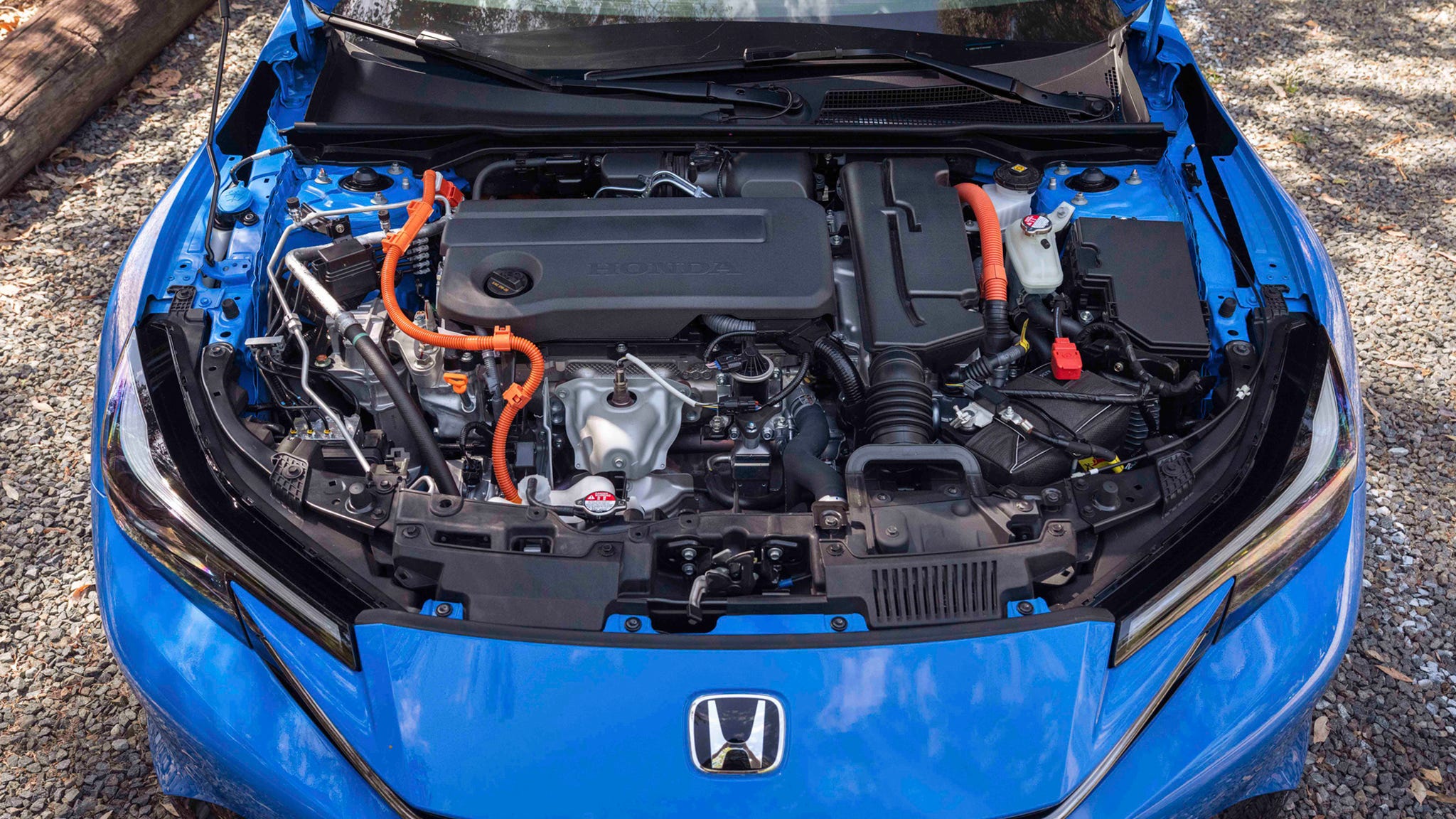
Honda did not reinvent the wheel under the hood, and that decision turns out to be one of the smartest parts of this entire revival. The first-ever electrified Prelude uses the smooth, responsive, and fuel-efficient Honda two-motor hybrid-electric system found in the award-winning Civic hybrid models, combining two electric motors with a highly efficient 2.0-liter Atkinson cycle direct injection gasoline engine. That same powertrain helped the Civic Hybrid earn serious industry recognition just one year earlier, and Honda essentially decided not to mess with a winning formula.
Numbers tell only part of the story here, and Honda knows it. Combined system output reaches 200 horsepower and 232 lb-ft of torque. Critics quickly pointed out that this figure matches the original Prelude’s output from a quarter century ago almost exactly, and that comparison has fueled plenty of online debate. That power figure is identical to the last Prelude’s, which exited production 25 years ago and weighed about 300 pounds less than this new model. Still, raw horsepower rarely tells the whole truth about how a car actually drives.
What separates this powertrain from a typical hybrid commuter is how it delivers that power. Launching the Prelude starts with an assertive shot of electric torque before the 2.0-liter engine fires up, and power builds progressively in both GT and Sport driving modes.
Reviewers who spent real seat time behind the wheel came away surprised by how engaging that delivery feels in practice. Power arrives smoothly off the line, and the pull out of corners feels immediate, the way you expect from an electric motor that is always ready.
Fuel economy remains a genuine highlight, especially for anyone cross-shopping traditional sports coupes that drink gasoline far more aggressively. The Prelude receives a 46 city, 41 highway fuel-economy rating. That kind of efficiency from a coupe wearing performance hardware represents exactly the balance Honda was chasing, proving a hybrid system can deliver genuine driving character without forcing buyers to choose between fun and frugality at the pump.
Honda Borrowed the Civic Type R’s Chassis, and It Shows
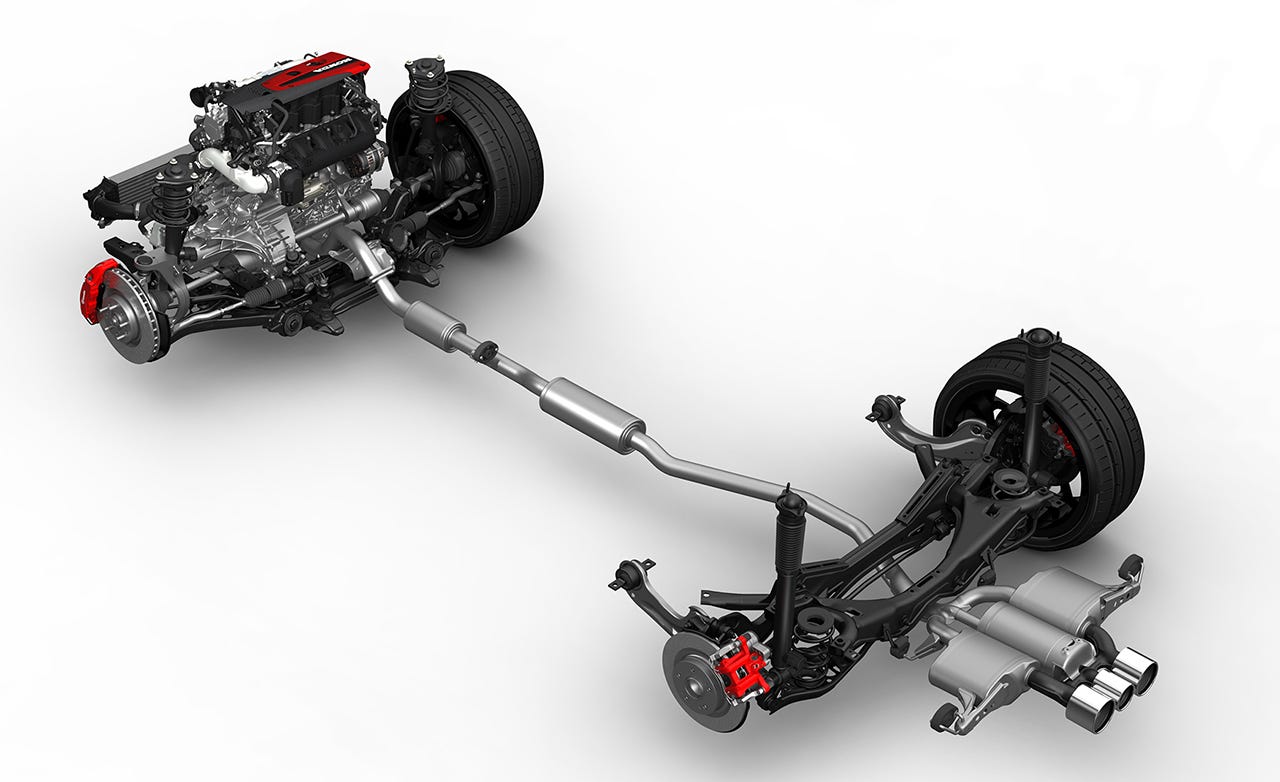
Underneath that sculpted body sits hardware that performance enthusiasts will recognize immediately, and this is where Honda’s engineering priorities become obvious. This marks the first model to pair the award-winning Honda two-motor hybrid-electric powertrain with the high-performance chassis hardware of the iconic Civic Type R. Pairing a hybrid heart with hot-hatch bones sounds unusual on paper, yet it forms the entire personality of this car.
Specific components are carried over directly from Honda’s most celebrated performance hatchback. The Prelude features Brembo four-piston aluminum front calipers shared with the Civic Type R, finished in a unique Prelude Blue, along with dual-axis strut front suspension and adaptive dampers also shared with the Type R, though uniquely tuned for this coupe. Braking hardware in particular, received serious attention. Up front are lightweight two-piece 13.8-inch rotors clamped by Brembo monobloc four-piston aluminum calipers, while rear rotors measure 12.0 inches.
On the road, that borrowed hardware translates into handling that punches well above what the horsepower figure suggests. The Type R suspension means drivers can attack corners at high speed without the front end pushing wide, and the chassis is stiff enough to quell large body motions, with just enough lateral roll to communicate a real sense of speed. Reviewers consistently praised how naturally the car responds to driver input around tight corners. Light, crisp steering paired with solid handling attributes makes the Prelude reveal itself as a fun and flickable little coupe.
Four selectable drive modes let owners shape that character to match their mood. Four driving modes, Comfort, GT, Sport, and Individual, allow drivers to adjust the car’s behavior to their preference. These modes adjust throttle response, steering weight, suspension damping, and engine sound, with Individual mode letting drivers build their own custom mix of settings.
For buyers chasing maximum grip on a weekend track day, Honda left room to push further still. High-performance summer tires will be available for buyers who want maximum grip.
Also Read: 10 Hidden Features in the Honda Accord
S+ Shift Turns a CVT Into Something That Feels Like a Real Gearbox
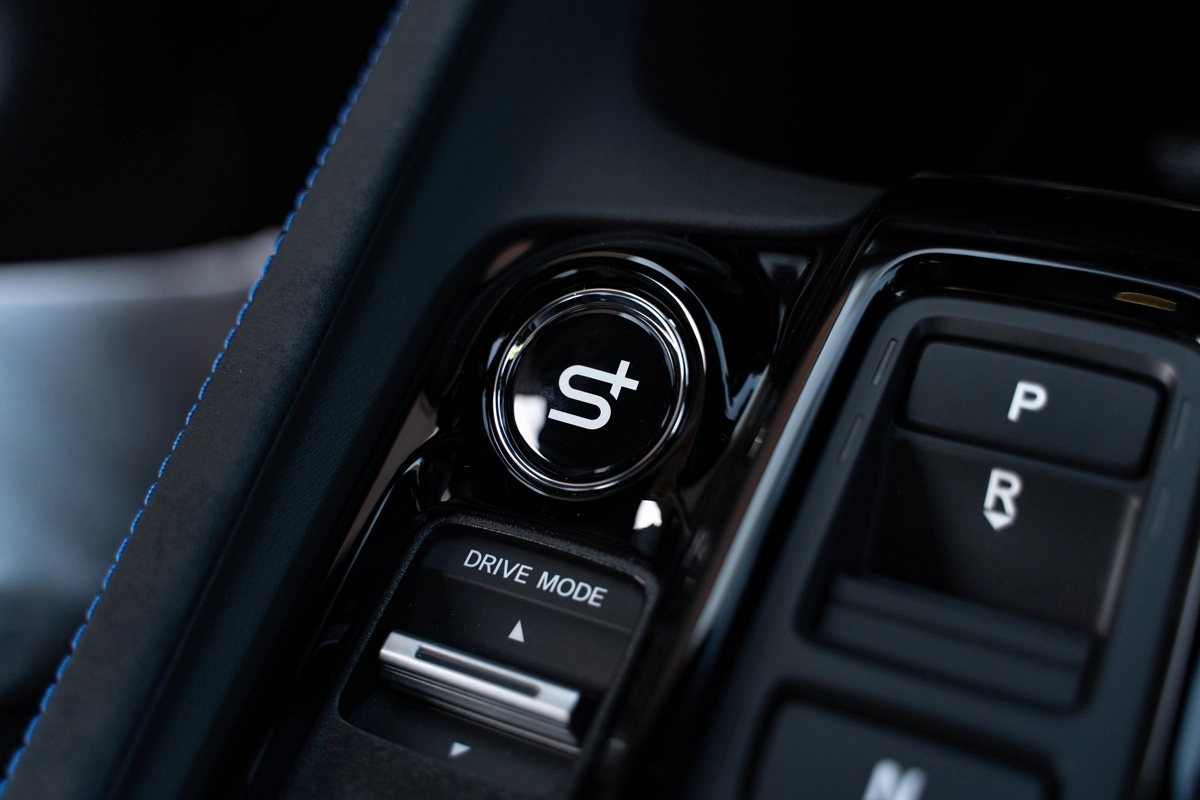
Continuously variable transmissions have a reputation problem among enthusiasts, who often complain about a droning engine note and a disconnected feeling under hard acceleration. Honda tackled that complaint directly with a feature unique to this car. The Prelude debuts “Honda S+ Shift,” a new drive mode that simulates a performance transmission experience for enhanced driver engagement.
The system works by fundamentally changing how the transmission behaves under acceleration. Pressing the large S+ button on the center console activates S+ Shift, Honda’s technology that remaps the CVT’s logic to behave more like a traditional automatic transmission with a planetary gear set.
This is not an entirely new idea among CVT-equipped vehicles, but Honda pushed the concept further than most competitors have attempted. S+ Shift takes things a step further by building in power cuts and spikes to really drive home the whole “it’s a real transmission” feeling.
Drivers actually behind the wheel describe a genuinely immersive experience rather than a gimmick. Honda S+ Shift mode offers responsive 8-gear simulation and virtual rev-matched downshifts. Paddle shifters reinforce that illusion with tactile feedback positioned exactly where a driver’s fingers naturally fall. Alloy shift paddles sit just where your fingers expect them, mounted on a flat-bottom steering wheel.
According to Honda, this technology represents a starting point rather than a one-off feature exclusive to this single model. Honda debuts S Plus Shift as part of a broader strategy, with the company indicating this technology will eventually make its way to other hybrids across the lineup.
That detail matters beyond this one coupe, since it suggests Honda views the Prelude as a proving ground for tech that could reshape how its entire hybrid lineup feels to drive in the coming years, turning what some assumed would be a niche halo model into something with influence well beyond its own sales numbers.
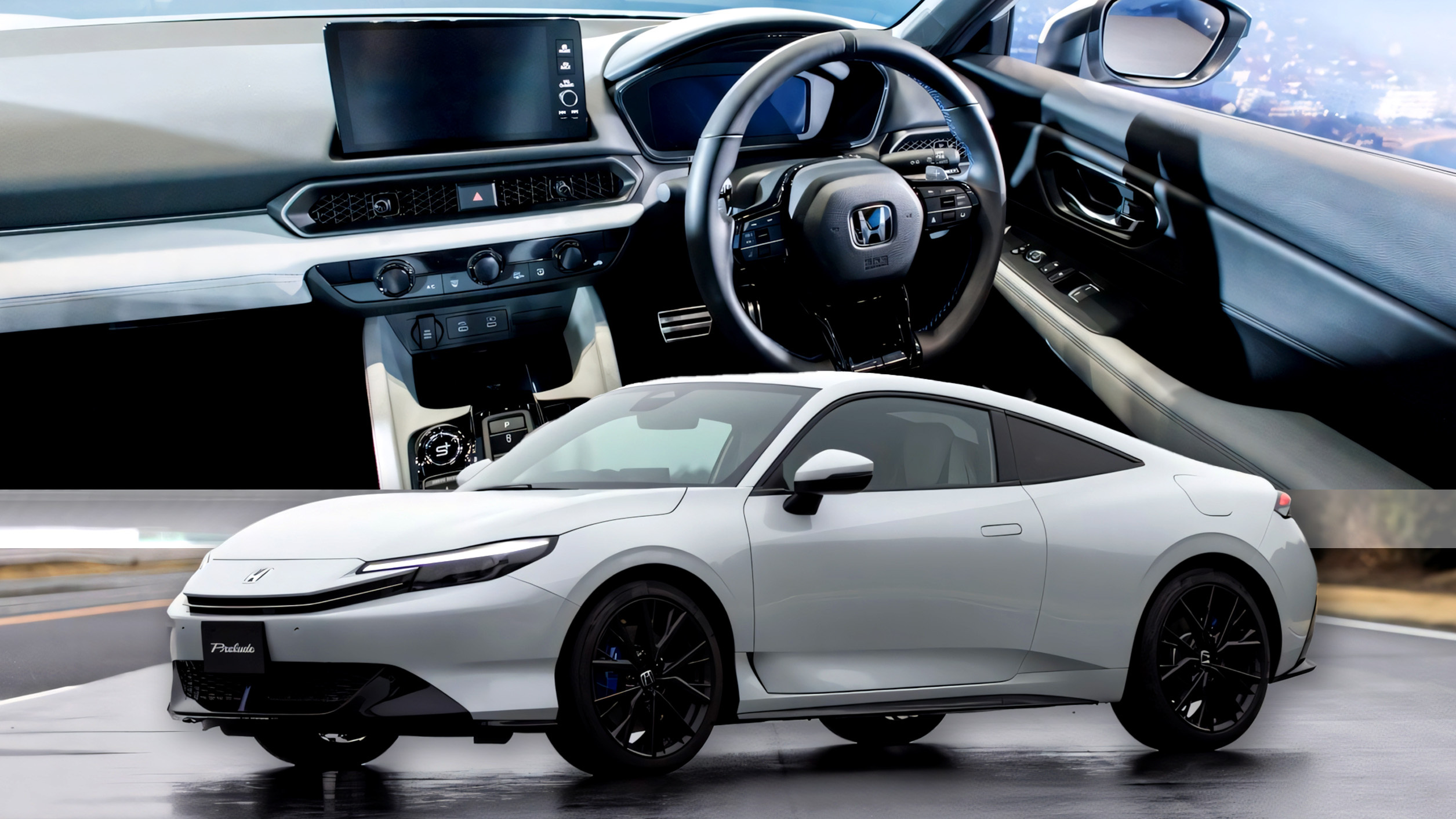
A Cabin Built for Comfort, Not Just Spirited Weekend Drives
Slide into the cabin and it quickly becomes obvious that Honda prioritized comfort and real-world usability instead of going all-in on a bare-bones sports setup. A low driving position, thin A-pillars, and a lowered dashboard work together to give you a clear, wide view of the road ahead, making the car feel more approachable and less confined.
Up front, the seats clearly got extra attention. They come wrapped in leather with a perforated houndstooth pattern, along with integrated headrests and built-in heating for added comfort. The driver’s seat offers extra support under the thighs to keep you settled during longer drives, while the passenger seat is tuned a bit softer to feel more relaxed for everyday cruising.
Inside, the layout avoids clutter and keeps things simple. A 10.2-inch digital instrument cluster displays essential driving data, including a large tachometer in sport modes. Alongside it sits a 9-inch touchscreen with wireless Apple CarPlay and Android Auto, plus Google built in for navigation, voice control, and apps. A wireless charging pad adds convenience without extra cables.
Despite its coupe shape, the Prelude still offers some practicality. It uses a two-plus-two layout with split-folding rear seats and a liftback design that makes loading cargo easier. It works well for short trips or weekend getaways, though rear seating remains tight and best suited for occasional use.
Safety features come standard, including the full Honda Sensing suite. Systems like adaptive cruise control, lane keeping assist, collision mitigation braking, and blind spot monitoring help support daily driving. The cabin balances driving enjoyment with comfort, making it suitable for both spirited drives and routine commutes.
