
Automotive safety has evolved rapidly as manufacturers invest heavily in technologies that prevent crashes and better protect occupants. Rising road fatalities and stricter testing standards from the IIHS and NHTSA have accelerated innovations in structural engineering, crash avoidance, and driver-assistance systems.
Modern vehicles now use cameras, radar, lane-keeping assistance, and automatic emergency braking to reduce the likelihood of accidents before they happen, marking a shift from passive to active safety. This article highlights ten car brands that stand out not only for earning high safety ratings but also for pioneering meaningful safety technologies, conducting extensive crash research, and advancing automotive safety standards.
1. Volvo
No discussion of automotive safety is complete without starting with Volvo. The Swedish automaker has been the single most consequential company in the history of vehicle safety, and it continues to hold that title today through deeply integrated, multi-layered technology that goes far beyond that of any competitor.
Volvo engineers invented the three-point seatbelt in 1959 and then gave the patent away freely so that every manufacturer could use it. That one act of safety altruism has saved an estimated one million lives. That foundational DNA runs through every vehicle the company produces today.
The 2025 XC90 carries the most comprehensive standard safety suite on the market. The City Safety Collision Avoidance system detects vehicles, pedestrians, cyclists, and large animals day and night, automatically applying brakes up to 31 mph without any driver input.
The Run-off Road Protection system stands out for its advanced design. As soon as it detects that the vehicle is about to leave the roadway, it tightens the seatbelts, adjusts the suspension, and prepares the chassis to help reduce the impact of the incident.
Volvo’s Pilot Assist provides semi-autonomous steering and speed management on highways, while a standard 360° surround-view camera system gives drivers a bird’s-eye perspective that rivals vehicles costing twice as much. Intersection auto-braking, which activates when cross-traffic is detected, is standard on every XC90, a feature most luxury brands still charge extra for.
Volvo’s stated corporate goal, first announced in 2020 and renewed through 2025, is zero fatalities or serious injuries in new Volvo vehicles by 2040. To support this, the company has built a dedicated Safety Centre in Gothenburg, Sweden, where real-world crash data from emergency services is fed directly into vehicle development. No other automaker maintains this kind of direct link between road fatalities and engineering response at scale.
The XC90 earned the IIHS Top Safety Pick+ award for 2025, with “Good” ratings across every crash category. It remains the benchmark against which all other large luxury SUVs are measured for occupant protection.
2. Toyota
Toyota’s most significant contribution to safety is not a single piece of technology, but rather a philosophy: making advanced safety systems standard across its entire lineup at every price point.
Toyota Safety Sense (TSS) is the most widely deployed driver-assistance suite, equipping millions of vehicles from the entry-level Corolla to the flagship Land Cruiser with the same generation of collision-avoidance tech.
The 2025 Camry ships exclusively as a hybrid with Toyota Safety Sense 3.0 standard on every single trim, including the base LE. This is significant because most competitors still charge premiums or restrict advanced safety to upper trims.
TSS 3.0 includes a Pre-Collision System with pedestrian, cyclist, and daytime motorcyclist detection, full-speed-range Dynamic Radar Cruise Control, and a Proactive Driving Assist feature that subtly adjusts throttle and braking based on the detected traffic environment ahead.
Lane Tracing Assist is among the most refined in the segment, using camera data to keep the Camry centered between lane markings with minimal driver input.
The Road Sign Assist system reads speed limit signs and communicates them to the instrument cluster and head-up display, acting as a passive reminder for drivers who may have missed signage.
Toyota’s Star Safety System, which underpins every model, bundles Vehicle Stability Control, Traction Control, Anti-lock Brakes, Electronic Brake-force Distribution, Brake Assist, and Smart Stop Technology into a single integrated platform.
These are not bolt-on features but core engineering elements of the platform itself, making them far more reliable in real-world conditions. For 2025, the Camry added Safe Exit Alert, which warns passengers if a vehicle is approaching from behind before they open the door.
The IIHS awarded the 2025 Camry its Top Safety Pick+ designation, recognizing strong performance in both crash protection and crash avoidance. At an entry price below $33,000, it delivers safety technology that was reserved for six-figure vehicles just five years ago.
3. Mercedes-Benz
Mercedes-Benz holds a distinct position in automotive safety because it blends decades of crash engineering research with proprietary active safety innovations that no other manufacturer has replicated.
The Stuttgart brand invented the crumple zone in 1959 and the anti-lock braking system in 1978 two technologies now mandated by law in virtually every country on Earth.
The GLE 450’s centerpiece safety innovation is the PRE-SAFE system, which is among the most sophisticated pre-crash preparation technologies available.
The moment the vehicle’s sensors detect an imminent collision, PRE-SAFE tightens seatbelts, adjusts headrests and front seats to optimal crash positions, closes open windows, and amplifies a pink noise pulse through the audio system to prepare the inner ear against pressure damage from airbag deployment. No other manufacturer combines all of these pre-collision actions in a single integrated response.
The GLE comes equipped with the standard MBUX (Mercedes-Benz User Experience) system, which combines intelligent voice control with integrated safety alerts. Its Blind Spot Assist system goes beyond providing warnings by applying steering intervention if the driver begins changing lanes while another vehicle occupies the blind spot. The Exit Warning system also monitors approaching traffic from the rear and alerts occupants before they open a door into the path of an oncoming vehicle.
For 2025, every GLE receives surround-view cameras as standard equipment along with a full 360° bird’s-eye monitor. The Active Brake Assist system detects pedestrians, cyclists, and crossing vehicles, applying autonomous braking when the driver fails to respond.
On higher trims, the optional Driver Assistance Package adds lane change suggestions, highway automatic lane changes, and evasive steering assist.
The GLE earned the IIHS Top Safety Pick+ for 2025, with consistent “Good” scores across small overlap, moderate overlap, side barrier, and side pole crash tests. Its combination of structural rigidity, intelligent pre-crash preparation, and layered post-detection response makes it one of the most comprehensively protected vehicles available at its price point.
4. Subaru
Subaru’s approach to safety technology is distinctive in that it centers on a proprietary sensor system called EyeSight, a dual-camera stereo vision system that uses two forward-facing cameras mounted at the top of the windshield to perceive depth and distance in a way that single-camera or radar-only systems cannot.
This binocular approach more closely mimics human vision, allowing the vehicle to make more accurate judgments about the relative speed and trajectory of objects ahead.
The sixth-generation EyeSight system in the 2025 Forester received significant updates, including a wider field of view, an upgraded electric brake booster, and revised control algorithms that allow it to respond more quickly and across a broader set of conditions.
Critically, EyeSight can now identify cyclists and pedestrians at intersections earlier, triggering alerts and braking with enough lead time to avoid collisions even at moderate city speeds.
For the first time on a Subaru, the 2025 Forester introduced Emergency Stop Assist, a system that activates when the driver becomes unresponsive while Advanced Adaptive Cruise Control is engaged.
The vehicle safely decelerates, activates hazard lights, and brings the car to a complete stop if the driver does not respond to escalating audio and visual warnings. This is a safety function that previously appeared only in far more expensive European luxury vehicles.
The Forester’s Subaru Global Platform contributes passively through a reinforced inner frame with expanded structural adhesive coverage growing from approximately 26 feet to over 88 feet of adhesive bonding, which dramatically improves body rigidity and energy absorption in a crash.
The platform also provides a low center of gravity due to the flat BOXER engine layout, reducing rollover risk in emergency maneuvers. DriverFocus, available on higher Forester trims, uses facial recognition technology to track the driver’s gaze and alertness.
If the system detects drowsiness or distraction, it delivers audio and visual warnings before a dangerous situation develops. Subaru earned multiple IIHS Top Safety Pick+ awards across its 2025 lineup, reflecting the brand’s holistic commitment to both structural and active safety.
Also Read: 10 Cars With the Lowest Theft Rates in the Country
5. Genesis
Genesis, Hyundai’s flagship luxury brand, has rapidly established itself as one of the most safety-forward automotive nameplates, earning consistent IIHS Top Safety Pick+ recognition while making advanced safety features standard at price points where competitors charge for every option.
The brand’s 2025 GV80 received a five-star NHTSA safety rating, with a perfect five stars in side crash protection. What sets Genesis apart is the comprehensiveness of its standard safety package across all trims.
Even the base GV80 includes forward collision-avoidance assist with pedestrian and cyclist detection, lane-keeping assist, lane-following assist, blind-spot collision-avoidance assist, rear cross-traffic collision avoidance, safe exit assist, and an Advanced Rear Occupant Alert system that can detect a child or pet left in the back seat after the driver exits the vehicle. This level of standard equipment is unmatched in the luxury segment.

The Blind-Spot View Monitor, available on upper GV80 trims, is a true innovation it displays a live video feed of the vehicle’s blind zone directly in the driver cluster when the turn signal is activated. Rather than relying on a simple warning light, drivers see exactly what the sensor sees, enabling more confident and informed lane changes.
Genesis invested heavily in structural engineering, using high-strength steel in the A and B pillars and door rings that allow the cabin to maintain integrity even in offset frontal impacts.
The GV80’s roof crush resistance far exceeds federal minimum standards, a critical factor in rollover crashes. Ten airbags are standard, covering front, side, curtain, and rear outboard positions across all trim levels.
The 2025 GV80 also received the IIHS TSP+ award, joining the GV70 and Electrified GV70 on the list. With a 10-year, 100,000-mile powertrain warranty the most generous in the luxury SUV segment, Genesis backs its safety-focused engineering with long-term confidence that rivals offer only in rhetoric.
6. Honda
Honda has been systematically embedding its Honda Sensing driver-assistance suite across its full lineup since 2016, making it the first mainstream automaker to commit to standard collision-avoidance technology on virtually every vehicle it sells in the United States.
By 2025, Honda Sensing had become a standard feature rather than a competitive advantage. Every Accord, Civic, and CR-V included the suite regardless of trim level, making advanced safety technology an expected part of the ownership experience.
The 2025 Accord’s Collision Mitigation Braking System (CMBS) is among the most sensitive pedestrian detection systems in the non-luxury segment.
Using a combination of forward camera and radar, it can identify a pedestrian crossing at an angle, not just walking directly ahead, and pre-charge the brakes, reducing stopping distances by a meaningful margin. The system activates even when the vehicle is traveling at low speeds in parking environments.
Road Departure Mitigation is calibrated to distinguish between intentional steering inputs with turn signals and unintended road departures. When the vehicle begins drifting without a signal, mild steering torque is applied to guide the car back into the lane, while simultaneous brake pressure is applied to slow road departure velocity. This dual-input correction is more effective in real-world conditions than simple steering nudges alone.
Honda’s Adaptive Cruise Control with Low-Speed Follow maintains set speed gaps down to zero, allowing the Accord to come to a complete stop in traffic and resume following automatically.
Traffic Sign Recognition reads posted speed limits and school zone markers, providing in-cluster reminders. For 2025, Honda added a Traffic Jam Assist feature on upper Accord trims, which handles steering, acceleration, and braking simultaneously in slow, congested traffic to reduce driver fatigue.
The 2025 Accord earned the IIHS Top Safety Pick+ designation, with headlights rated “Good” across multiple trim configurations, a score that eluded earlier Accord generations and reflects Honda’s significant investment in LED light calibration for nighttime pedestrian visibility.
7. BMW
BMW’s approach to safety engineering is rooted in a principle the company calls Integrated Active Steering and Dynamic Stability, the belief that a vehicle that handles predictably and precisely is, at its core, a safe vehicle.
This philosophy has led BMW to develop some of the most sophisticated electronic chassis systems in the automotive world, all of which contribute to collision avoidance through control rather than intervention.
The 2025 X5 carries the iDrive 8.5 system with a Driving Assistant Professional package that includes a Traffic Jam Assistant capable of hands-free driving in stop-and-go traffic on highways where lane markings are clearly visible.
The Emergency Stop Assistant can bring the vehicle to a controlled stop if the driver becomes completely unresponsive, a life-saving feature that handles both steering and braking while activating hazard lights and an optional emergency call.
BMW’s Rear Automatic Braking is standard on the 2025 X5, using rear radar to detect stationary objects when reversing, applying autonomous braking before a collision.
Active Lane Keeping Assistant applies corrective steering torque when the vehicle begins drifting across lane markings without a signal, and at highway speeds, it will apply asymmetric braking to individual wheels to enhance the corrective force. The system works in conjunction with Side Collision Protection, which can steer away from vehicles or guardrails detected in adjacent lanes.
The X5 is built around a laser-welded high-strength steel structure designed to channel crash forces away from the passenger compartment. Its front-end crumple zone is engineered to absorb impact energy in a carefully planned sequence, allowing the bumper beam, crash structures, and front frame rails, to deform progressively and manage collision forces across a range of impact speeds.
This controlled deformation reduces peak crash forces transmitted to occupants compared to less structured designs. The 2025 X5 earned the IIHS Top Safety Pick+ award, with “Good” results across all crash categories and notably strong performance in the challenging small overlap rigid barrier test. Its combination of active electronic safety and deeply engineered passive protection makes it one of the safest large luxury SUVs on the market.
8. Mazda
Mazda occupies a unique position in the safety world. It is a non-luxury brand that consistently outperforms many luxury competitors in independent safety evaluations.
This achievement is the result of a foundational engineering program called SKYACTIV-Vehicle Architecture, which prioritizes vehicle dynamics, driver feedback, and structural rigidity as interconnected pillars of safety rather than treating them as separate concerns.
Mazda i-ACTIVSENSE is the brand’s suite of driver-assistance technologies, and unlike many competitors who layer these features onto existing platforms, Mazda engineered i-ACTIVSENSE into the vehicle’s core architecture from the ground up.
The Mazda Radar Cruise Control with Stop & Go maintains a set following distance and brings the vehicle to a complete stop in traffic without driver intervention. Advanced Smart City Brake Support activates at speeds up to 37 mph when pedestrians are detected in the path, applying maximum autonomous braking.
The CX-5’s Driver Attention Alert system monitors steering input patterns over time to detect microsleep and cognitive fatigue. Unlike simple camera-based drowsiness monitors, the Mazda system analyses actual steering behavior, small, unconscious corrections that indicate degraded awareness, and escalates through three levels of warning before suggesting a rest stop.
This behavioral approach catches fatigue earlier than facial recognition systems in many real-world scenarios. Mazda’s SKYACTIV-BODY structural philosophy distributes crash energy through a continuous ring structure that transfers loads along the strongest members of the body shell.
The front floor and rocker panels are reinforced to accept and redirect side impact forces away from the occupant cell, which contributed to the CX-5’s strong side barrier and side pole test results.
The 2025 CX-5 also features Safe Exit Warning, which alerts rear occupants about approaching cyclists or vehicles before they open doors into traffic. With multiple IIHS Top Safety Pick+ awards across its lineup in recent years and a brand average that consistently outranks manufacturers with far larger safety budgets, Mazda proves that rigorous engineering philosophy matters more than marketing spend.
9. Tesla
Tesla’s contribution to vehicle safety is unlike any other brand on this list, not because of traditional passive safety engineering, though its crash performance is exceptional, but because of how it has fundamentally changed the relationship between a vehicle and its safety systems through over-the-air software updates and real-world AI training at unprecedented scale.
The Model 3’s rigid battery floor structure, which runs the full length of the vehicle’s underbody, creates a rigid skateboard platform that contributes to an extremely low center of gravity.
This structural configuration dramatically reduces rollover risk and provides a reinforced floor pan that protects battery cells and occupants simultaneously in a side impact or undercarriage strike.
Tesla’s Autopilot, standard on every Model 3, uses eight external cameras, ultrasonic sensors, and forward-facing radar to build a 360° picture of the vehicle’s environment.
Unlike competitors whose driver-assistance systems operate in isolated modules, Tesla’s systems process all sensor data through a single neural network, allowing the vehicle to learn from situations where individual sensors might fail or provide conflicting information.
Automatic Emergency Braking, Lane Departure Avoidance, Collision Warning, and Blind Spot Monitoring all run continuously as background processes regardless of whether Autopilot is engaged.
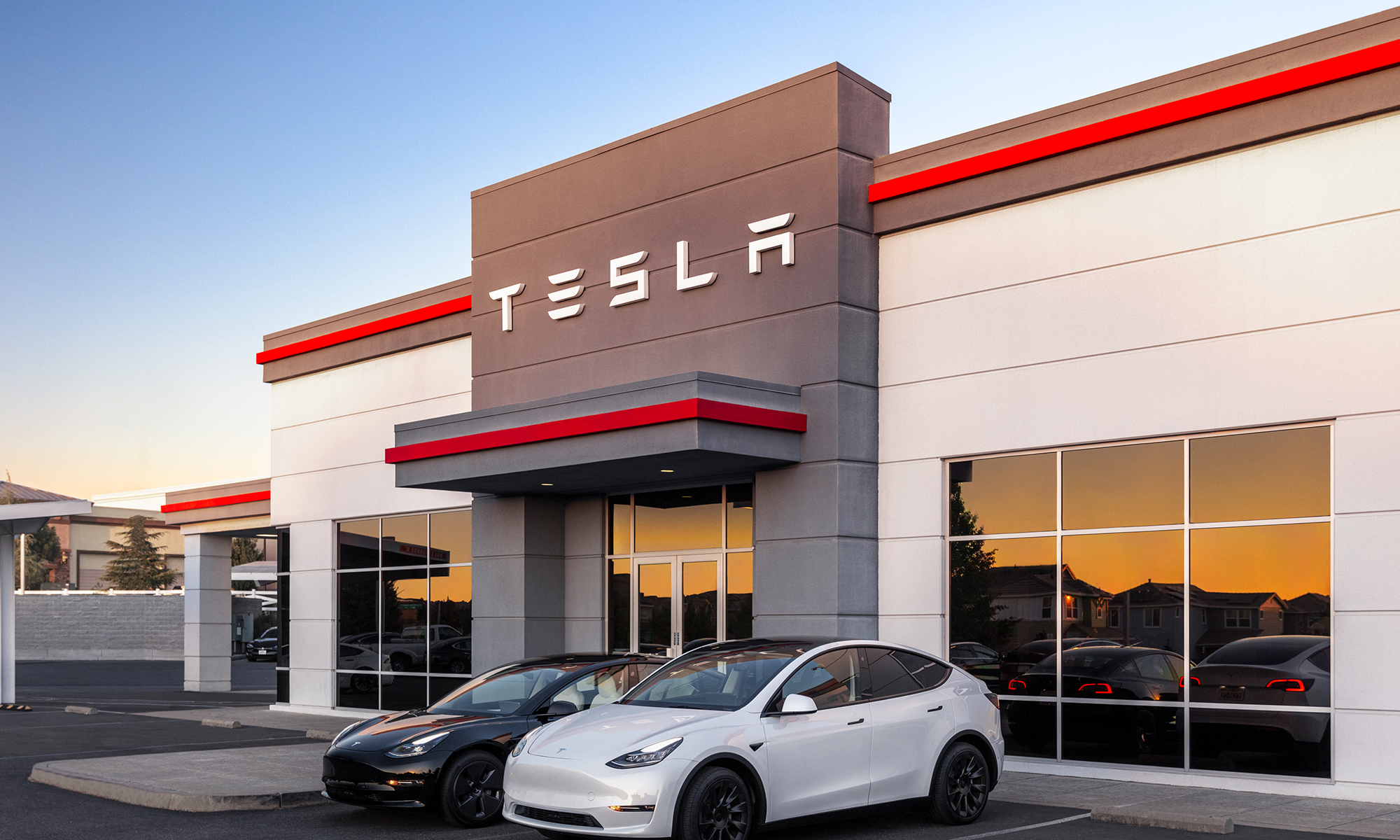
The most radical safety innovation Tesla brings is fleet learning. Every Tesla on the road sends anonymized data about road conditions, near-miss events, and system activations back to Tesla’s servers, which feed training data for the next software update.
A safety improvement developed from a crash in California is rolled out to every Tesla on earth within weeks, an approach no traditional automaker has replicated at scale.
The 2025 Model 3 earned NHTSA’s highest five-star safety rating, with five stars in both frontal and side crash categories. Its combination of structural integrity from the battery platform, active electronic protection, and continuously improving software gives it a safety profile that evolves over its lifetime rather than depreciating with it.
10. Kia
Kia has executed one of the most remarkable safety transformations in modern automotive history. A brand once associated primarily with value pricing has emerged, in the span of roughly a decade, as one of the most decorated automakers in IIHS Top Safety Pick+ evaluations.
The 2025 Telluride, K4, Sportage, and EV9 all appear on IIHS safety honor rolls, a breadth of lineup safety achievement that most luxury manufacturers fail to match.
Kia’s Drive Wise suite of driver-assistance technologies anchors this achievement. Forward Collision-Avoidance Assist on the Telluride uses both radar and camera input to detect not just vehicles ahead but also pedestrians crossing, cyclists entering the path, and vehicles turning in front, providing finer-grained threat detection than radar-only systems.
The system can autonomously brake from highway speeds to a complete stop, making it effective in the front-to-rear crashes that represent the most common collision type on American roads.
Safe Exit Assist is one of Kia’s most thoughtful safety innovations. When the vehicle detects an approaching vehicle or cyclist from behind while parked, it will prevent the door from being fully opened using electronic latching until the threat has passed or the driver consciously overrides. This is passive protection for passengers, particularly children who may be unaware of traffic approaching from outside the vehicle.
The Telluride features Driver Attention Warning with Lane Keeping Assist, a system that monitors both steering inputs and the driver’s history of departures to build an individualized alertness baseline for each trip.
Rear Occupant Alert uses a sensor in the rear seat area to detect movement after the driver exits and locks the car, activating an interior alert sequence and notifying the driver via the Kia Connect app. In hot climates, this system has a genuine life-saving capability for children and animals.
In terms of passive safety, the Telluride’s body structure uses Advanced High Strength Steel in critical load paths, particularly the roof ring, B-pillars, and floor tunnel, giving it roof crush resistance that the IIHS rates as among the best in its class. Multiple IIHS Top Safety Pick+ designations across the 2025 Kia lineup confirm that this brand has graduated from value contender to genuine safety leader.
