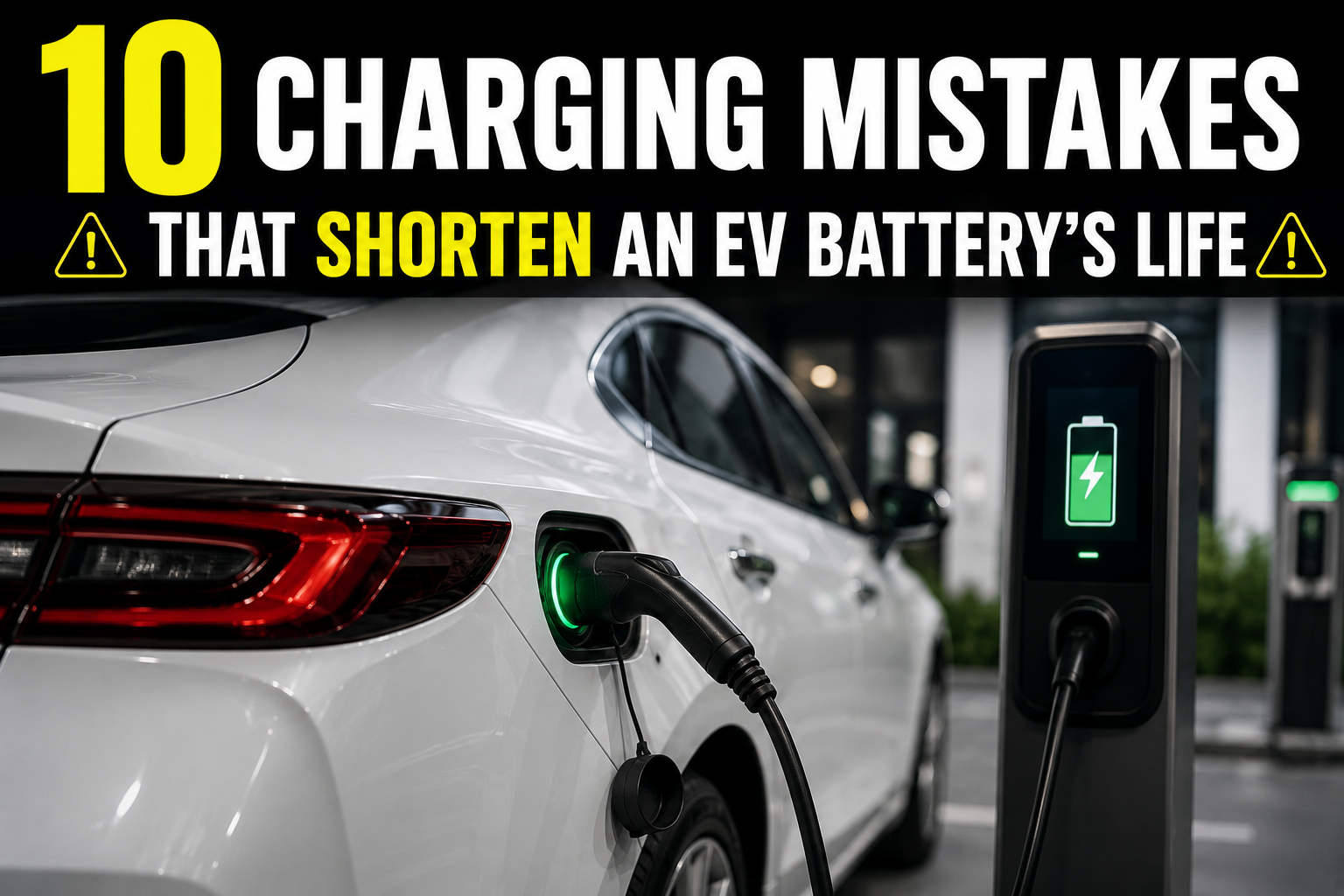
An electric vehicle’s battery is its single most valuable component, and with proper care, it can deliver reliable performance for well over a decade.
Modern lithium-ion battery packs are engineered with advanced thermal management systems and sophisticated software that protect them from excessive wear.
Even so, daily charging habits still play an important role in determining how well the battery retains its capacity over thousands of charging cycles. Many owners unknowingly adopt routines that accelerate battery degradation, reducing driving range and potentially affecting long-term performance.
Modern EV batteries no longer suffer from the memory effect that affected older nickel-based batteries. However, they remain sensitive to extreme temperatures, frequent high-voltage charging, and prolonged exposure to very high or very low states of charge.
Manufacturers have introduced features such as battery preconditioning, scheduled charging, and customizable charge limits to help reduce unnecessary stress. Using these tools correctly can significantly improve battery longevity without making ownership less convenient.
Fortunately, protecting an EV battery does not require complicated maintenance. Small adjustments to everyday charging habits can make a meaningful difference over many years of ownership.
Understanding when to fast charge, how much to charge, and how environmental conditions influence battery health allows owners to preserve both range and resale value.
The following charging mistakes are among the most common practices that can gradually shorten the lifespan of an electric vehicle’s battery if repeated regularly.
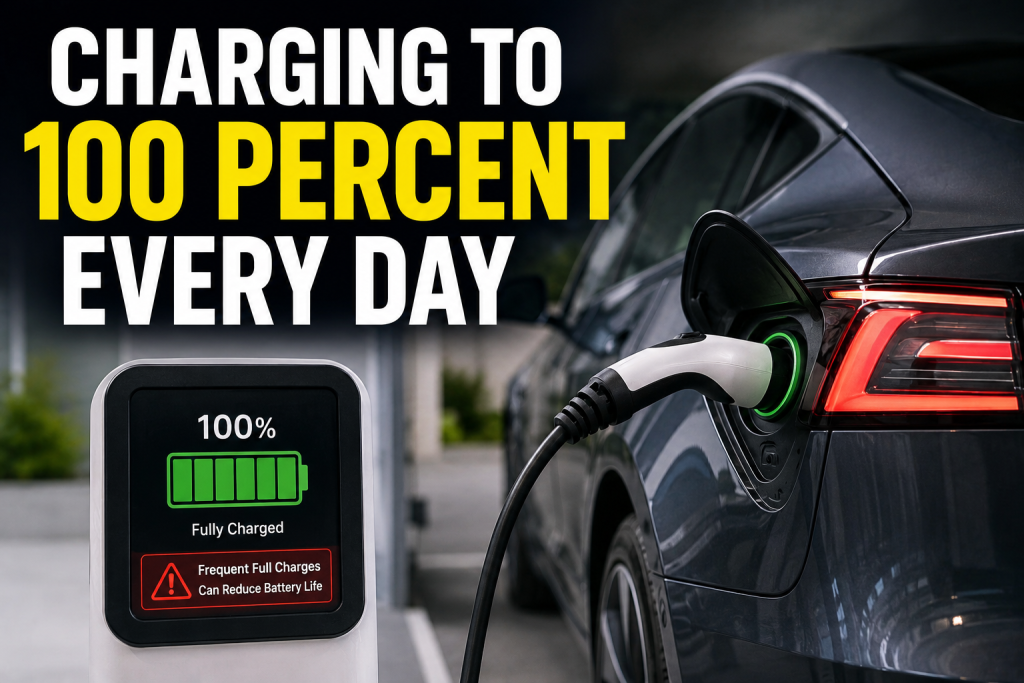
1. Charging to 100 Percent Every Day
One of the most common misconceptions among new electric vehicle owners is that the battery should always be charged to 100 percent after every drive.
While a full charge may seem like the best way to maximize available range, regularly keeping a lithium-ion battery at its maximum state of charge can place unnecessary stress on its chemistry. Most manufacturers recommend charging to approximately 80 percent for daily driving unless extra range is genuinely needed for a longer journey.
At very high charge levels, the battery operates closer to its maximum voltage. Remaining in this condition for extended periods can accelerate gradual capacity loss over thousands of charging cycles.
Modern battery management systems reduce much of this stress, but they cannot eliminate it. This is why many EVs allow owners to set charging limits directly through the infotainment system or a mobile application.
Drivers with predictable daily commutes rarely require the entire battery capacity. Charging only to the level needed for routine travel helps reduce chemical aging while still providing ample driving range. Reserving full charges for vacations, road trips, or unexpected long-distance travel represents a more battery-friendly strategy.
Another useful habit is scheduling charging so the battery reaches its target level shortly before departure rather than sitting fully charged overnight. This minimizes the amount of time spent at maximum voltage.
Small adjustments like these require little effort but can contribute to healthier battery performance throughout the vehicle’s lifetime, helping preserve driving range and long-term value.
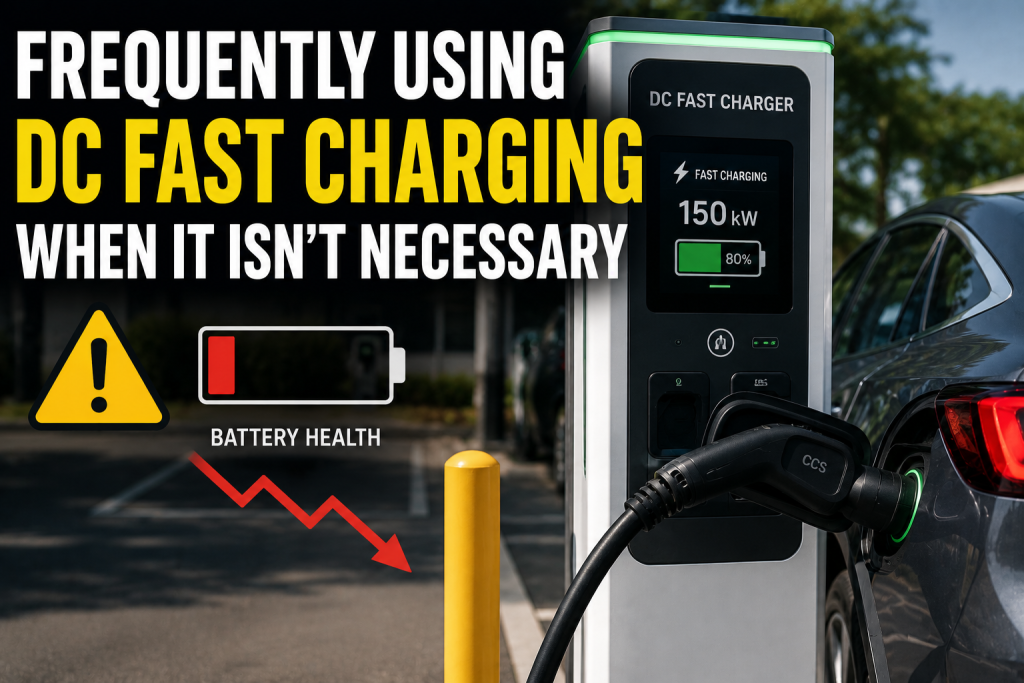
2. Frequently Using DC Fast Charging When It Isn’t Necessary
Rapid charging technology has transformed electric vehicle ownership by making long-distance travel significantly more convenient.
High-powered DC fast chargers can restore hundreds of miles of driving range in a relatively short period, allowing road trips that would have seemed impractical only a few years ago.
Despite this convenience, relying on DC fast charging as the primary charging method can gradually increase battery wear compared with slower Level 2 home charging.
Fast charging delivers a large amount of energy in a short time, creating additional heat inside the battery cells.
Although modern cooling systems actively regulate battery temperature during charging, repeated exposure to high charging currents places greater stress on the battery than slower charging sessions.
Manufacturers design their battery packs to tolerate frequent fast charging, but most still recommend using AC charging whenever practical for everyday needs.
Home Level 2 charging typically provides enough energy overnight for daily commuting while generating less heat and placing reduced strain on the battery.
Fast chargers are best reserved for road trips, emergencies, or situations where charging time is limited. Treating them as a convenience rather than a daily routine helps support long-term battery health.
Battery preconditioning before arriving at a fast charger also plays an important role. Warming or cooling the battery to its ideal temperature improves charging efficiency and reduces stress during the process.
By combining regular home charging with occasional fast charging only when necessary, owners can balance convenience with battery longevity and maintain strong performance throughout years of electric vehicle ownership.
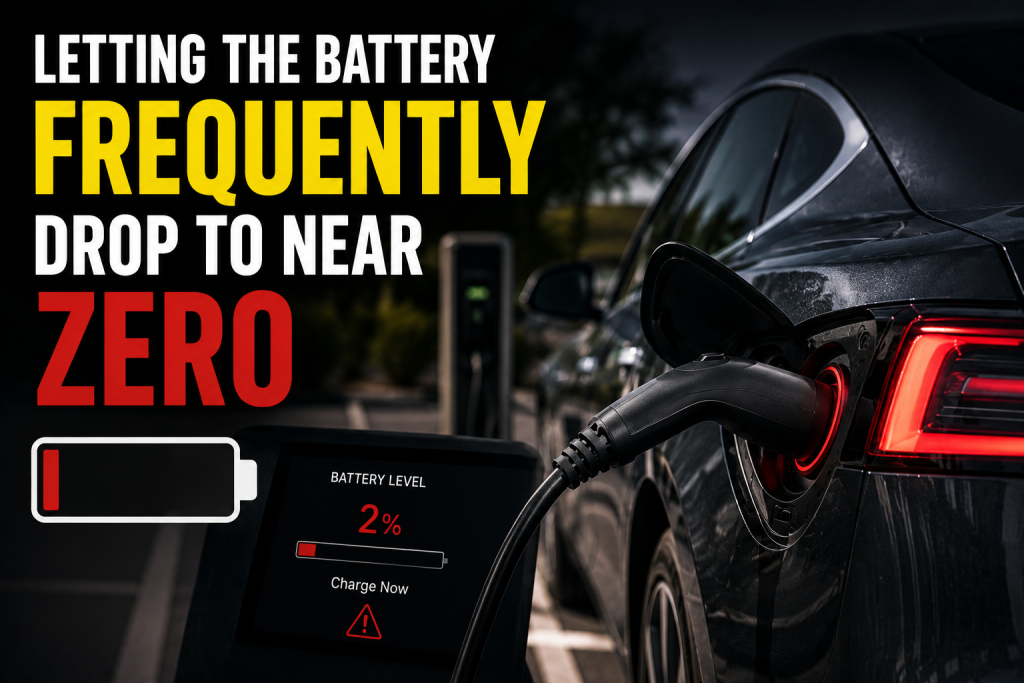
3. Letting the Battery Frequently Drop to Near Zero
Many drivers assume that using every available mile before plugging in makes the most of an electric vehicle’s battery. In reality, repeatedly allowing the battery to fall to extremely low charge levels can increase long-term wear.
Lithium-ion batteries perform best when they operate within a moderate state of charge rather than constantly cycling between completely full and nearly empty.
Modern battery management systems include protective buffers that prevent true zero percent discharge, but regularly driving until the battery warning appears still places additional stress on the cells.
Deep discharge causes the battery to spend more time at a very low voltage, which is less favorable for long-term chemical stability. If this habit is repeated over hundreds or thousands of charging cycles, gradual capacity loss may occur sooner than expected.
Most manufacturers recommend charging before the battery reaches critically low levels whenever practical. Many experienced EV owners prefer to recharge once the battery falls to roughly 20 or 30 percent during everyday driving.
Planning charging stops also reduces unnecessary anxiety. Waiting until the final few miles of available range can limit charging options if a station is occupied or temporarily unavailable. Maintaining a comfortable energy reserve provides greater flexibility while helping preserve battery health.
For drivers who occasionally need to use nearly the entire battery during road trips, there is little cause for concern. The issue arises only when deep discharge becomes a routine habit.
Keeping the battery within a moderate operating range during normal daily use is one of the simplest and most effective ways to support long-term performance, maintain usable capacity, and reduce unnecessary stress on the battery pack throughout the life of the vehicle.
4. Charging Immediately After Aggressive Driving Without Cooling the Battery
Electric vehicle batteries generate heat whenever they deliver large amounts of power. Long highway journeys, repeated rapid acceleration, mountain driving, towing, or spirited performance driving all increase battery temperature.
Plugging into a charger immediately after these demanding situations may force the thermal management system to work harder before charging can begin efficiently.
Although modern EVs are designed to protect themselves, making this a daily habit can create unnecessary thermal stress over the long term.
Most electric vehicles actively monitor battery temperature and automatically adjust charging speed when the pack is hotter than ideal. In some cases, charging power is temporarily reduced until cooling systems lower the temperature.
While these safeguards protect the battery, they also demonstrate that battery temperature plays a major role in charging efficiency and long-term durability.
Allowing the battery a short period to stabilize after demanding driving conditions can be beneficial, particularly when home charging, where immediate charging is not essential.
Some manufacturers also recommend using navigation to a DC fast charger because the vehicle can begin battery preconditioning before arrival, bringing the pack closer to its ideal charging temperature. This improves both charging speed and battery efficiency.
Drivers should not be concerned about plugging in after ordinary commuting or normal city driving. The concern primarily involves repeated charging after heavy battery loads that result in significantly high temperatures.
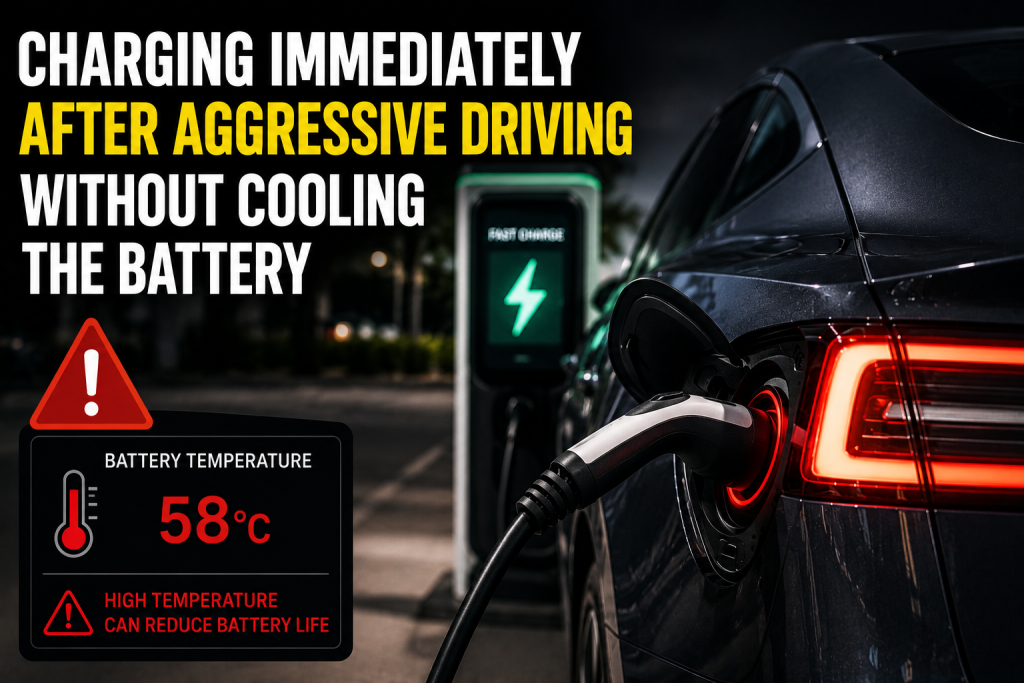
Paying attention to battery condition, using manufacturer-recommended charging practices, and allowing thermal management systems to operate effectively can contribute to healthier battery aging over many years of ownership while maintaining consistent charging performance and driving range.
5. Leaving the Vehicle Fully Charged for Long Periods
Many owners believe that keeping an electric vehicle fully charged ensures it is always ready to drive. While this may seem convenient, allowing the battery to remain at or near 100 percent for days or even weeks can gradually accelerate battery aging.
Lithium-ion batteries experience the least chemical stress when they remain within a moderate state of charge. Sitting at maximum voltage for extended periods increases internal reactions that slowly reduce long-term capacity.
This situation commonly occurs when owners charge the vehicle to full on Friday but do not drive again until several days later. The battery spends unnecessary time at its highest voltage without delivering any benefit.
Fortunately, most modern EVs allow owners to set a daily charging limit, typically between 70 and 90 percent, depending on the manufacturer’s recommendation. This feature is especially valuable for drivers with predictable commuting schedules.
Scheduled charging provides another effective solution. Instead of charging immediately after arriving home, owners can program the vehicle to complete charging shortly before their planned departure.
This reduces the time the battery remains at full charge while still ensuring maximum available range when it is actually needed.
The occasional full charge before a vacation or long road trip is perfectly acceptable and is exactly how manufacturers expect owners to use their vehicles. The concern develops only when keeping the battery at full charge becomes a regular habit.
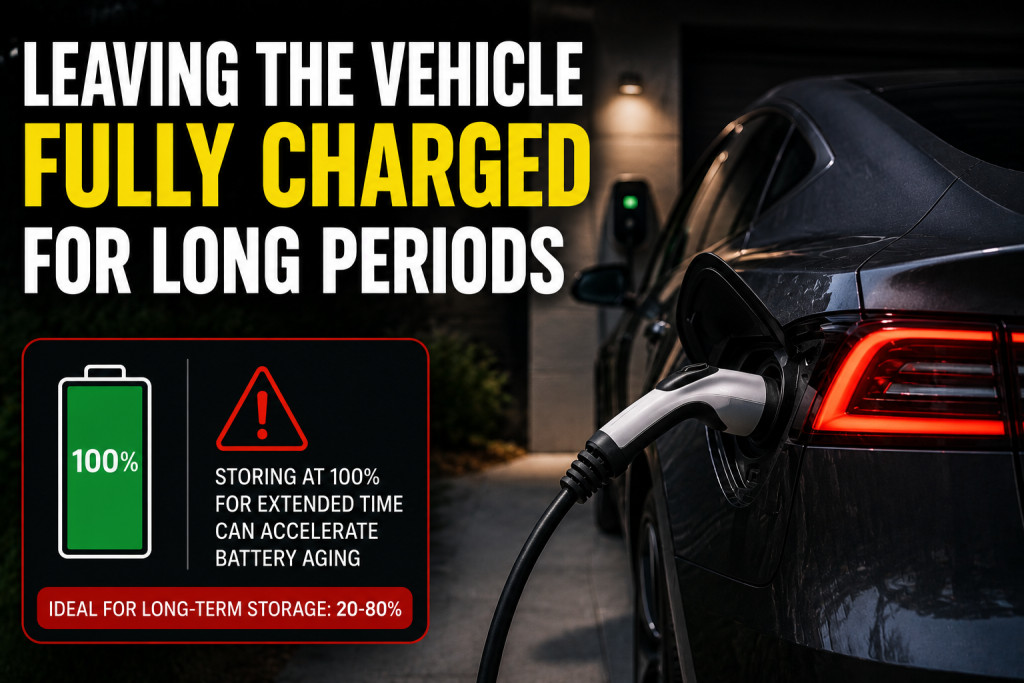
A few simple adjustments to charging schedules can significantly reduce unnecessary battery stress while helping preserve driving range, charging performance, and long-term resale value throughout many years of ownership.
6. Ignoring Battery Preconditioning Before Fast Charging
Modern electric vehicles include sophisticated battery management systems, yet many owners overlook one of the most valuable features available: battery preconditioning. This function prepares the battery for rapid charging by warming or cooling it to an ideal operating temperature before connecting to a DC fast charger.
Skipping this process whenever it is available may not immediately damage the battery, but repeatedly fast charging with a battery that is far too cold or excessively hot can increase stress while also reducing charging efficiency.
Lithium-ion batteries perform best within a carefully controlled temperature range. When the battery is too cold, charging speeds decrease because the cells cannot safely accept large amounts of energy.
If the battery is extremely hot after demanding driving, the cooling system must first lower temperatures before full charging power becomes available. In both situations, charging takes longer and places additional demands on the thermal management system.
Many manufacturers automatically activate battery preconditioning when drivers enter a compatible fast charger as the destination in the navigation system.
During the drive, the vehicle gradually adjusts the battery temperature so it reaches the charger in optimal condition. Owners who rely on third-party navigation or manually drive to charging stations sometimes miss this important preparation.
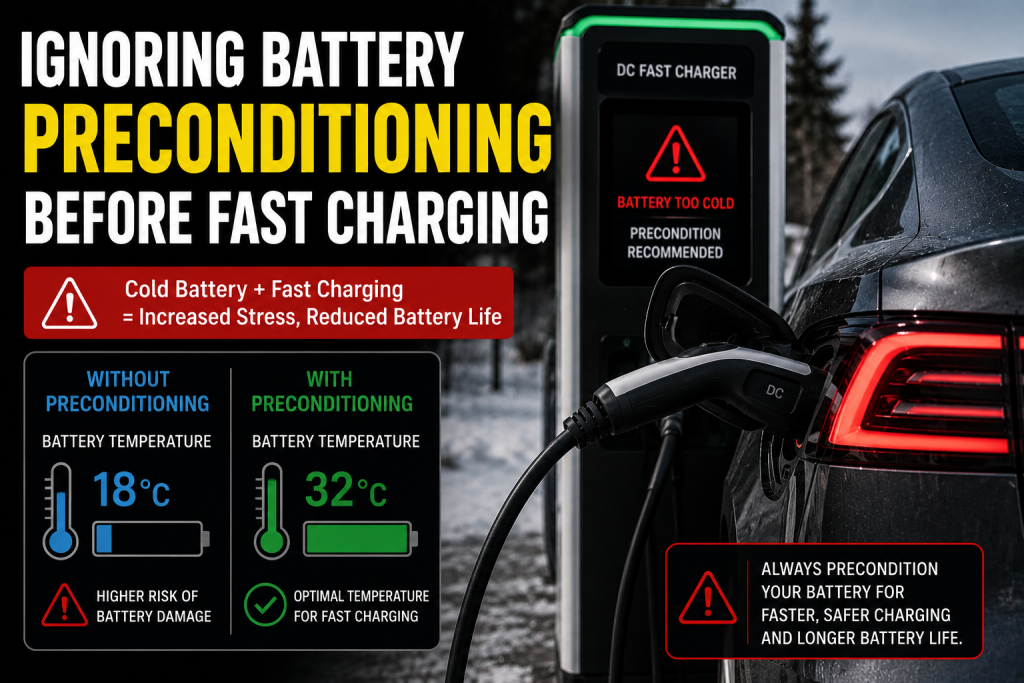
Using built-in navigation whenever practical allows the battery to arrive ready for efficient charging, reducing waiting time while minimizing unnecessary thermal stress.
This simple habit improves charging performance during road trips and supports healthier long-term battery operation. Taking advantage of features already built into the vehicle is one of the easiest ways to combine convenience with effective battery care.
7. Charging in Extreme Heat Without Considering Battery Temperature
High ambient temperatures create one of the most demanding environments for lithium-ion batteries. Although modern electric vehicles include advanced liquid cooling systems, repeatedly charging when the battery is already exposed to extreme heat can contribute to faster long-term degradation.
Summer temperatures, direct sunlight, and prolonged highway driving may raise battery temperatures before charging even begins. Adding a charging session immediately afterward forces the cooling system to work continuously to maintain safe operating conditions.
Battery chemistry naturally ages more quickly when exposed to sustained high temperatures. Manufacturers account for this by incorporating sophisticated thermal management, but no cooling system can eliminate the effects of excessive heat over many years.
Drivers living in particularly hot climates can reduce unnecessary stress by choosing shaded parking, covered charging stations, or charging during cooler evening and overnight hours whenever practical.
Charging overnight offers several advantages beyond lower electricity rates in many areas. Cooler air allows the thermal management system to regulate battery temperature more efficiently, and slower Level 2 charging generates less internal heat than repeated use of high-powered DC fast chargers. These conditions create a more favorable environment for preserving battery health.
Drivers should not avoid charging simply because the weather is hot. Instead, the goal is to minimize unnecessary heat exposure whenever possible.
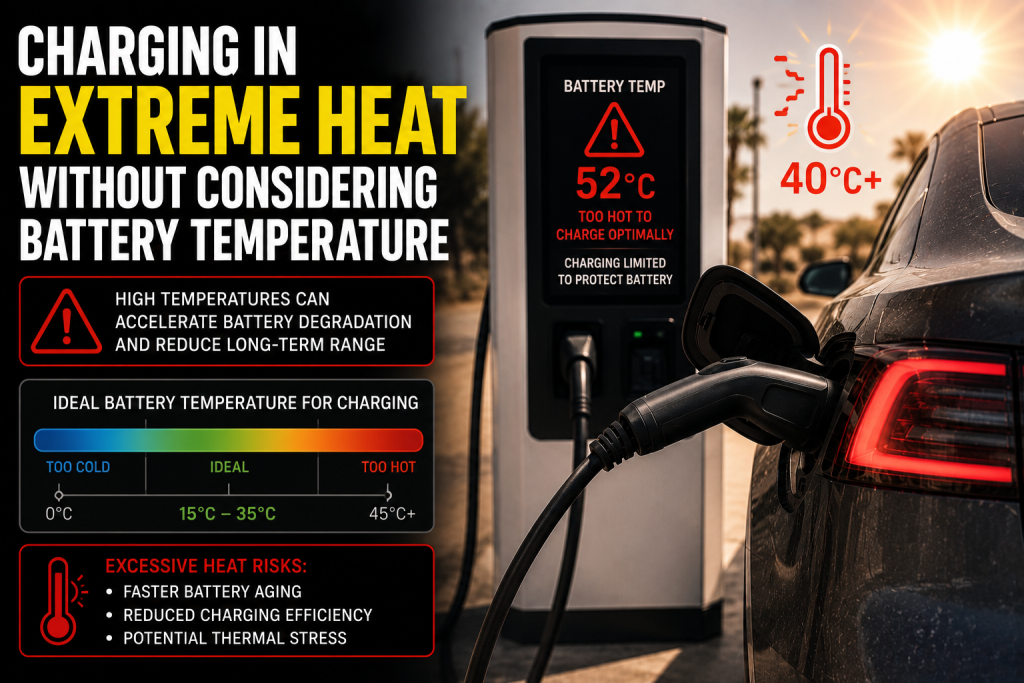
Small habits such as parking in covered areas, allowing the battery to cool after demanding driving, and scheduling charging during cooler parts of the day can collectively reduce long-term battery stress.
These adjustments require very little effort while helping maintain battery capacity and dependable performance throughout years of ownership.
8. Using Low-Quality or Damaged Charging Equipment
Charging equipment is often overlooked because it simply works in the background of everyday EV ownership. However, using damaged cables, worn connectors, poorly manufactured adapters, or uncertified charging equipment introduces unnecessary risks for both charging reliability and battery protection.
While modern electric vehicles contain numerous safeguards against electrical faults, consistently relying on inferior charging hardware can create interruptions, inconsistent charging behavior, and avoidable stress on electrical components.
Certified charging equipment undergoes extensive testing to ensure stable voltage delivery, proper communication with the vehicle, and protection against overheating or electrical faults. Low-quality aftermarket products may not always meet these standards.
Loose connections can generate excess heat at the charging port, while damaged insulation or worn connectors may reduce charging efficiency and increase wear on both the charger and vehicle interface.
Routine inspection is a simple but valuable habit. Owners should occasionally check charging cables for cuts, cracked insulation, bent pins, or signs of overheating around connectors.
Charging ports should also remain clean and free from moisture, dirt, or corrosion that could interfere with proper electrical contact. Replacing damaged accessories promptly helps maintain safe and efficient charging performance.
When adapters are required, choosing products approved by the vehicle manufacturer or produced by reputable companies provides additional confidence.
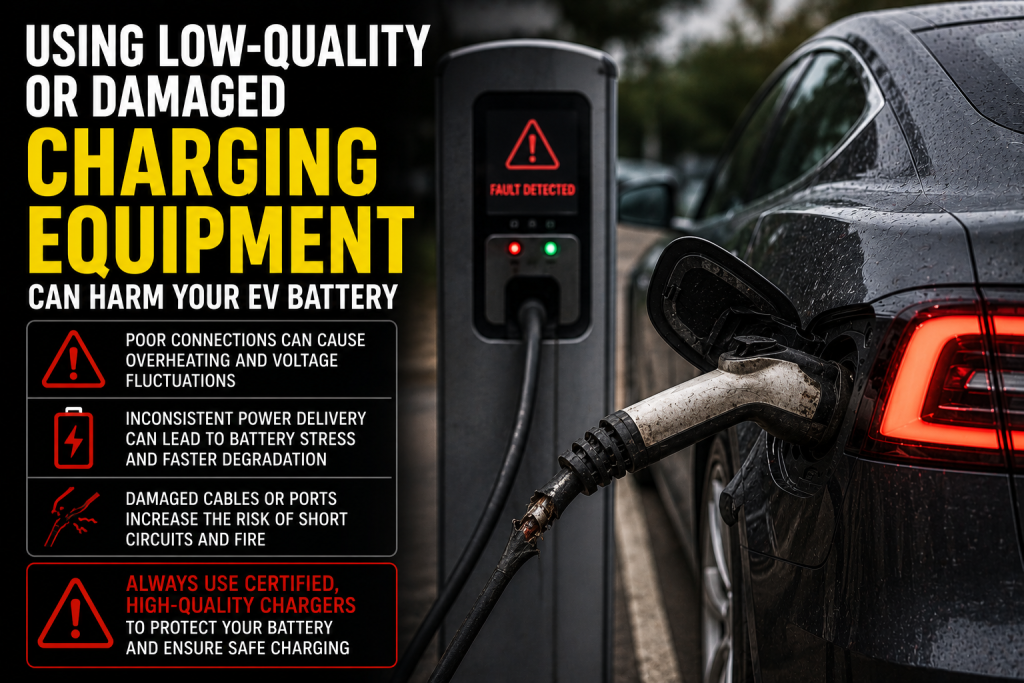
Saving a small amount of money on uncertified charging accessories is rarely worthwhile when compared with the value of the battery pack they are connected to.
Reliable charging equipment supports stable energy delivery, reduces unnecessary electrical issues, and contributes to dependable long-term operation throughout the life of the electric vehicle.
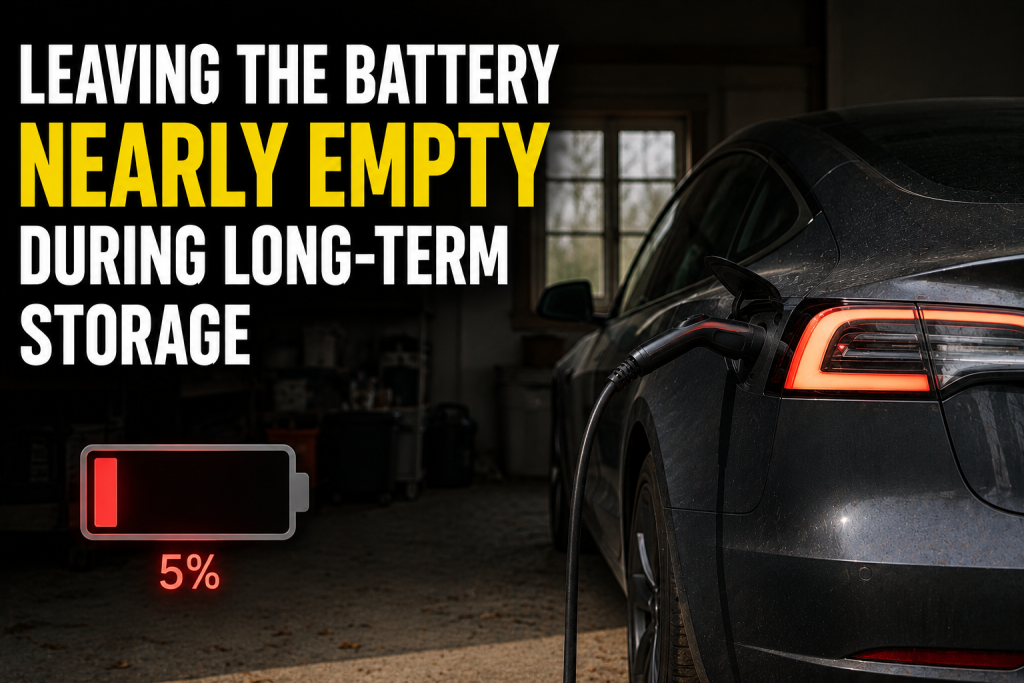
9. Leaving the Battery Nearly Empty During Long-Term Storage
Electric vehicles are often stored for extended periods while owners travel, use another vehicle, or leave a seasonal property. One of the most damaging mistakes during storage is leaving the battery at an extremely low state of charge.
Although modern battery management systems consume very little electricity while the vehicle is parked, they still require a small amount of energy to monitor battery health and maintain essential systems. If the battery begins in storage nearly empty, it can gradually discharge to an even lower level over time.
Allowing the battery to remain in a deeply discharged state for weeks or months increases chemical stress and, in severe cases, may cause the battery voltage to fall below the manufacturer’s preferred operating range.
Recovery from extremely low voltage conditions can be difficult and, depending on the vehicle, may even require professional servicing. Manufacturers therefore recommend storing the battery at a moderate charge level rather than full or nearly empty.
For most electric vehicles, maintaining approximately 40 to 60 percent charge during long-term storage provides an excellent balance between battery protection and readiness for future use.
If the vehicle will remain parked for several months, periodically checking the battery level through the manufacturer’s mobile app is a sensible precaution. Some vehicles also allow owners to leave the charger connected during storage, automatically maintaining the battery within an appropriate range.
Proper storage habits become increasingly important for owners who travel frequently or own multiple vehicles.
Spending just a few minutes preparing the battery before long periods of inactivity helps preserve capacity, supports healthy battery chemistry, and ensures the vehicle is ready to drive when it returns to regular service.
This simple step contributes to better long-term battery performance without requiring any specialized maintenance.
10. Ignoring the Manufacturer’s Recommended Charging Practices
Every electric vehicle uses a battery management system specifically calibrated for its battery chemistry, cooling system, and charging characteristics.
Because of these differences, manufacturers provide detailed recommendations covering charge limits, battery preconditioning, fast charging frequency, storage procedures, and daily charging habits.
Ignoring these guidelines in favor of generalized advice found online is one of the easiest ways to reduce long-term battery efficiency without realizing it.
For example, some manufacturers recommend limiting daily charging to 80 percent, while others suggest 90 percent depending on battery design.
Certain models automatically precondition the battery before rapid charging, whereas others require drivers to activate navigation to a charging station.
Storage recommendations, charging schedules, and software features also vary between brands. Following advice intended for a different vehicle may prevent owners from taking full advantage of systems engineered specifically for their battery pack.
Manufacturers continuously update charging strategies through software improvements as battery technology evolves.
Installing these updates ensures the battery management system benefits from the latest refinements in thermal control, charging efficiency, and long-term battery protection. Ignoring available software updates may mean missing improvements designed to extend battery life.
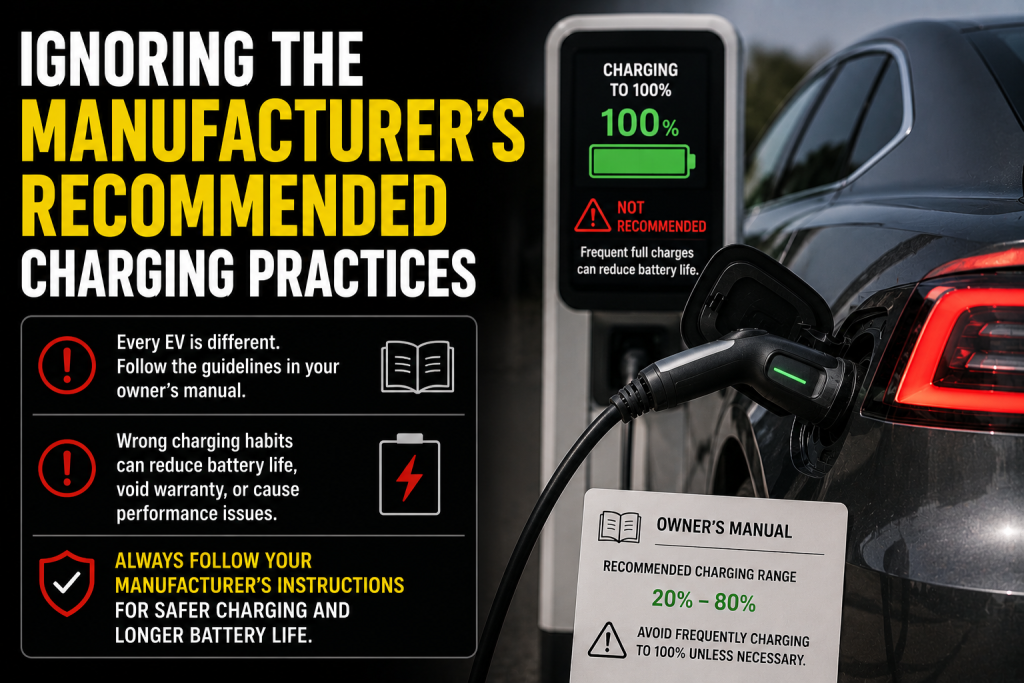
Reading the owner’s manual may not seem exciting, but it remains one of the most valuable resources available to every EV owner. Understanding the recommendations provided by the engineers who designed the vehicle helps eliminate unnecessary battery stress while maximizing efficiency, charging performance, and driving range.
Consistently following those guidelines is one of the simplest ways to protect the most expensive component in an electric vehicle and support dependable performance for many years to come.
Also Read: 10 Electric Vehicles That Spend the Least Time at Charging Stations