
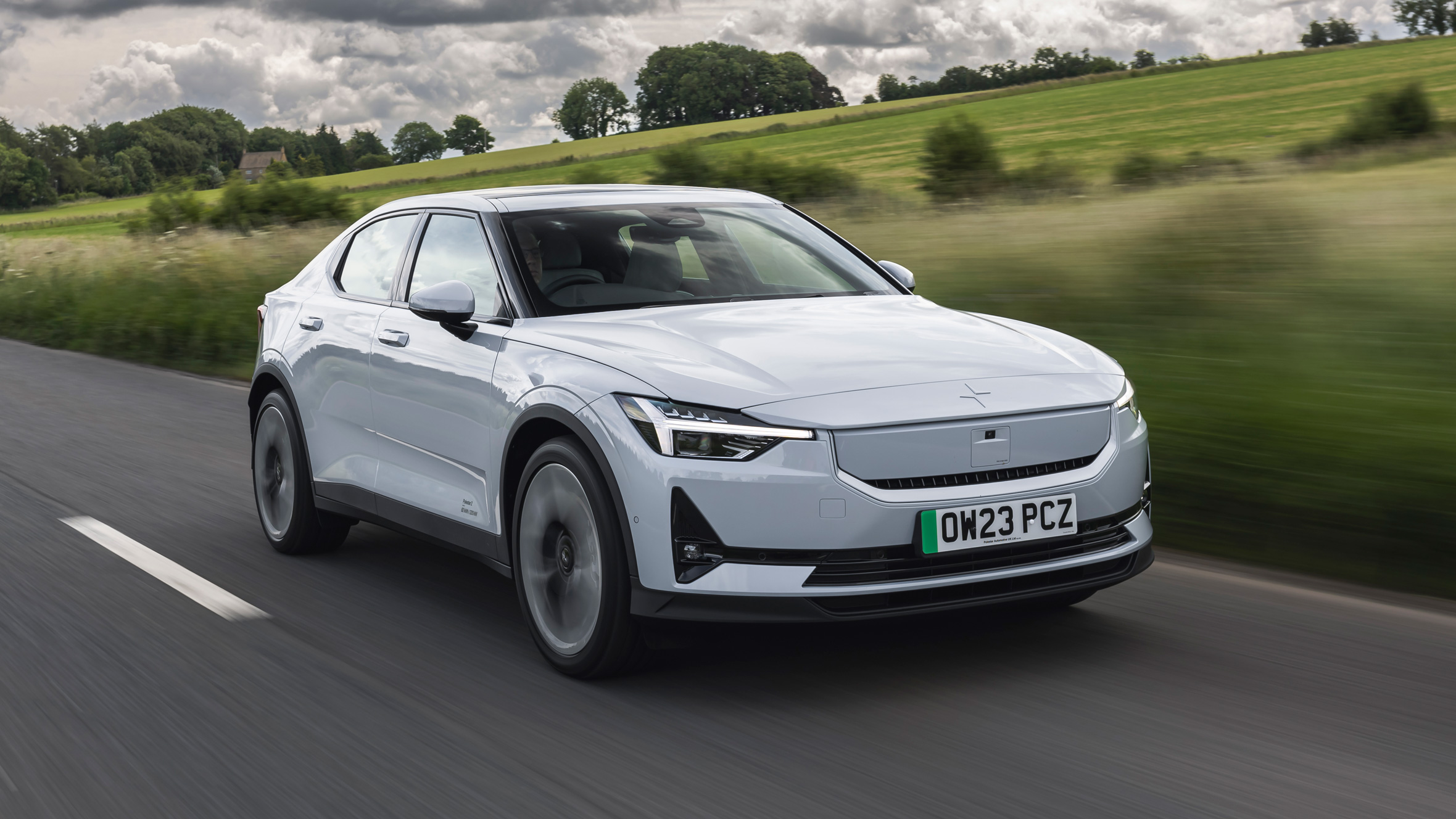
Polestar’s future in the United States has effectively come to an end. Beginning with the 2027 model year, the Swedish electric vehicle manufacturer will no longer be allowed to sell new vehicles in the U.S. after the Department of Commerce denied the company’s request for authorization under the federal Connected Vehicle Rule.
The decision means Polestar will sell its remaining eligible inventory before transitioning its American retail network from vehicle sales to customer support and service operations.
For customers, the announcement raises questions about future product availability. For dealers, however, the news represents something much more personal.
Many retailers spent years investing millions of dollars into dedicated Polestar facilities, recruiting staff, building customer bases, and preparing for an expanding lineup that included the Polestar 5 grand tourer, Polestar 6 roadster, and future Polestar 7 compact SUV.
Instead, they are now facing the prospect of becoming service centers for an aging fleet rather than showrooms selling new vehicles. One dealer described the decision in simple terms.
“I’m absolutely devastated,” Polestar retailer Matthew Haiken told Automotive News. “This whole company was like a family to me… I’m just heartbroken.” His reaction reflects the uncertainty now facing Polestar’s entire U.S. retail network.
Also Read: ICON 4×4 Puts Its Latest C10- and C20-Based Build on the Road in a Five-Unit Run
Why Polestar Can No Longer Sell Cars in America
The decision is tied to the U.S. government’s Connected Vehicle Rule. Originally finalized in January 2025 and retained under the Trump administration, the regulation prohibits the sale or import of vehicles containing connected-vehicle technology linked to China or Russia unless companies receive specific authorization from the Commerce Department.
The rules cover software controlling systems such as the following:
- Bluetooth
- Wi-Fi
- Cellular communications
- Satellite connectivity
- Certain onboard computing systems
Federal officials argue these systems could theoretically collect sensitive information about American drivers, infrastructure, and travel patterns if controlled by foreign adversaries.
Polestar applied for authorization but was denied. As Reuters reported, the Commerce Department concluded that Polestar would not receive approval to continue selling vehicles beginning with the 2027 model year.
Rather than targeting where a vehicle is assembled, the Connected Vehicle Rule focuses on software origin and digital connectivity, setting it apart from traditional tariffs and import restrictions.
Why Polestar Was Affected Despite Being Swedish
Many consumers associate Polestar with Sweden. The company is headquartered in Gothenburg, shares engineering with Volvo, and markets itself around Scandinavian design. Yet its ownership structure and manufacturing footprint place it squarely within the scope of the new U.S. regulations.
Polestar is majority-controlled by China’s Geely Group and relies on Chinese engineering and software development for significant portions of its vehicle ecosystem.
Several of its models are also produced in China. Even vehicles assembled elsewhere remain subject to review if their connected software has links covered by the regulations.
That distinction proved decisive. The Verge reported that even though the Polestar 3 is assembled in South Carolina and the Polestar 4 is produced in South Korea for some markets, the software architecture tied to China meant the company still required federal authorization that ultimately was not granted.
In other words, the issue was not simply where the vehicle was built. It was the digital technology embedded inside it.
Dealers Built Businesses Around Polestar’s Growth Plans
The announcement came as a major shock because Polestar had spent the past several years expanding its U.S. retail presence. Unlike traditional dealerships, Polestar operates retail locations called Spaces. Many are located in premium shopping districts rather than conventional auto rows.
Retailers invested heavily in:
- Dedicated showrooms
- Charging infrastructure
- Service facilities
- Employee training
- Brand marketing
- Customer delivery centers
Those investments were made with the expectation that Polestar’s product range would continue growing. Instead, dealers now face a future where new inventory will eventually disappear.
Matthew Haiken, whose New Jersey location became one of Polestar’s earliest U.S. retailers, said the decision leaves years of investment in doubt.
“I made money with Polestar. I made investments with the brand. I was looking forward to all the new products.” For retailers, the disappointment extends beyond immediate sales losses. Future expansion plans have effectively stopped overnight.
Existing Customers Are Not Being Abandoned
While new vehicle sales will end, existing owners will continue receiving support. Polestar says current vehicles, including the Polestar 2, Polestar 3, and Polestar 4, will continue to receive the following:
- Warranty service
- Maintenance
- Replacement parts
- Software support where permitted
- Customer assistance
Reuters reported that the company intends to maintain service operations while selling the remaining eligible inventory already approved for the U.S. market.
That means today’s owners do not suddenly lose access to repairs or warranty coverage. Instead, the retail network will gradually transition from selling new vehicles toward supporting those already on American roads.
The Timing Is Especially Painful
The decision arrives just as Polestar appears to be regaining momentum. Following leadership changes and new product launches, the company had begun rebuilding global sales.
Its lineup had expanded well beyond the original Polestar 2 liftback. The Polestar 3 entered production as a premium electric SUV. The Polestar 4 introduced a coupe-like SUV without a traditional rear window.
Plans included:
- Polestar 5 four-door grand tourer
- Polestar 6 electric roadster
- Polestar 7 compact SUV
Several of those vehicles were expected to strengthen the brand’s American presence. Instead, they are now unlikely to reach U.S. customers under current regulations. The decision also complicates manufacturing plans.
Polestar 3 is already assembled at Volvo’s South Carolina facility alongside Chinese production, but the software restrictions mean domestic assembly alone is insufficient if the connected technology does not comply with federal rules.
Why Volvo Received Approval While Polestar Did Not
One question many observers immediately asked was why Volvo continues selling vehicles while Polestar cannot. The answer lies in separate authorization decisions.
Although both brands have connections to Geely, Volvo pursued extensive discussions with federal regulators regarding governance, software development, cybersecurity procedures, and data handling.
Reuters reported in May that Volvo successfully obtained Commerce Department authorization to continue importing connected vehicles into the United States after demonstrating compliance measures acceptable to regulators.
Polestar’s application received a different outcome. The government has not publicly detailed every reason behind the denial, but the result means the company cannot legally sell 2027-model vehicles under the current rules.
The contrasting outcomes illustrate that ownership alone did not determine the decision. Each company underwent its own review process.
Dealers Now Face an Uncertain Future
For Polestar retailers, the biggest question is what comes next. Most franchise businesses depend on selling new vehicles to generate revenue.
Trade-ins, financing, accessories, maintenance, warranty work, and used-car sales all benefit from a steady flow of new customers.
Without new inventory, dealerships must rely increasingly on servicing existing vehicles. Some retailers may continue operating profitably if the installed vehicle base remains large enough.
Others could choose to shift resources toward different brands. Automotive News reported that future franchise investments will likely be evaluated individually as Polestar works with retailers during the transition.
For employees hired specifically to support Polestar’s growth, the uncertainty is equally significant.
Sales consultants, product specialists, marketing teams, and managers now face an entirely different business environment than the one they anticipated only weeks ago.
Polestar Will Shift Its Focus Elsewhere
The company is already redirecting its attention toward other markets. Europe now represents the overwhelming majority of Polestar’s global business, and Reuters reported that the company intends to concentrate future expansion there while also strengthening operations in Canada, Latin America, Southeast Asia, and Eastern Europe.
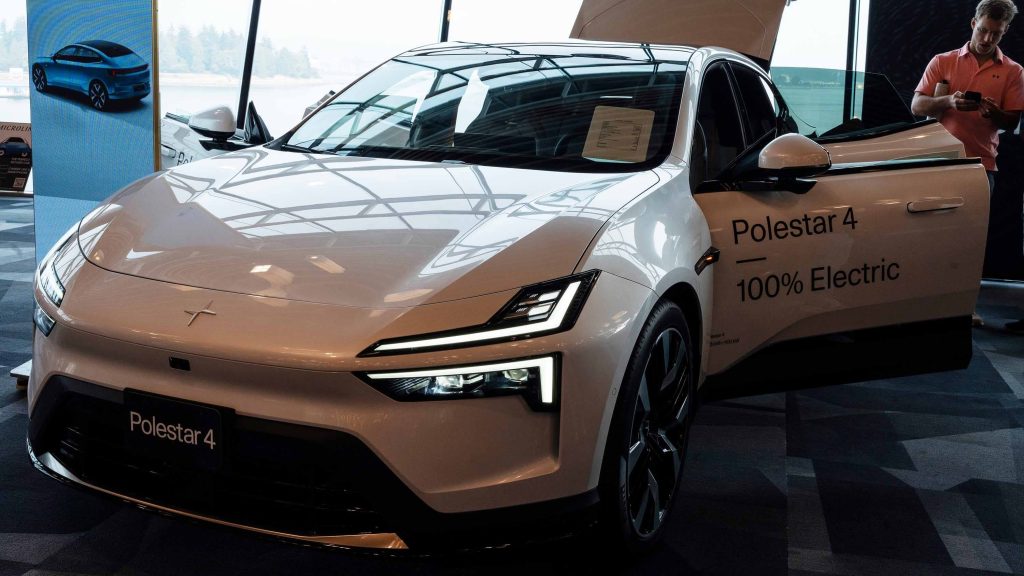
Future products, including the Polestar 7, are planned for European production rather than Chinese assembly.
That strategy may reduce future regulatory complications in some markets, although it does not immediately solve the company’s inability to sell new vehicles in the United States.
For American customers, it means one of the EV market’s most distinctive premium brands is effectively exiting just as its product lineup was becoming more complete.
A Sign of a Bigger Industry Shift
Polestar’s departure reflects a broader transformation taking place across the global automotive industry.
For decades, automakers optimized production around manufacturing cost, supplier efficiency, and logistics.
Now they must also consider:
- Software origin
- Cybersecurity
- Data governance
- Electronic supply chains
- National security regulations
- Connected-vehicle compliance
These issues increasingly influence where vehicles are built, which suppliers are selected, and even whether a model can legally enter a particular market.
Ford’s recent application to continue importing the China-built Lincoln Nautilus under the same regulatory framework illustrates that Polestar is not the only automaker adapting to the new environment. The difference is that Ford sought an exemption, while Polestar’s authorization request was denied.
Polestar’s exit from the U.S. new-car market beginning with the 2027 model year marks one of the most significant consequences yet of America’s connected vehicle rule.
The Commerce Department’s decision to deny the company’s authorization means dealers who invested heavily in the brand will now transition from selling new vehicles to primarily servicing existing ones.
For retailers, the announcement has been deeply emotional, with some describing years of investment and growth plans coming to an abrupt halt. For customers, current vehicles will continue receiving warranty and service support, but future Polestar models will no longer arrive in American showrooms unless the regulatory situation changes.
As the automotive industry becomes increasingly defined by software, connectivity, and geopolitics, Polestar’s experience shows that digital technology can now determine a vehicle’s market access just as much as engineering or consumer demand.
Also Read: Cupra Reveals 2026 Leon VZx Sportstourer With More Power Than the Hatch
