
Buying a new car in 2026 means having access to the safest vehicles ever built for public roads. But with dozens of models on the market and safety ratings that vary dramatically from one trim level to the next, knowing which vehicles genuinely earned their safety credentials matters more than ever. Every year, the Insurance Institute for Highway Safety puts new vehicles through a battery of crash tests and active safety evaluations that go well beyond what federal minimum standards require.
For 2026, the IIHS raised the bar again. To earn the top-tier Top Safety Pick Plus award, a vehicle must now score a perfect “Good” rating in an updated high-speed Front Crash Prevention test that challenges automatic braking systems to detect and stop for stationary motorcycles, passenger cars, and semi-trucks at speeds up to 43 miles per hour. Vehicles must also demonstrate maximum structural protection for rear-seat passengers during severe overlap impacts.
Twelve vehicles cleared every requirement and earned the 2026 Top Safety Pick Plus designation. The list includes family sedans, electric SUVs, a stainless-steel pickup truck, and affordable compact cars, proving that top-tier safety performance is not limited to any single vehicle category or price point. Here is every vehicle that made the cut, with factory specifications and the specific reasons each one earned its place.
1. Toyota Camry
Award: 2026 IIHS Top Safety Pick+
- Engine: 2.5L 4-Cylinder Hybrid
- Horsepower: 225 hp to 232 hp
- Torque: 163 lb-ft (engine torque)
- Size: 193.5 in Long x 72.4 in Wide
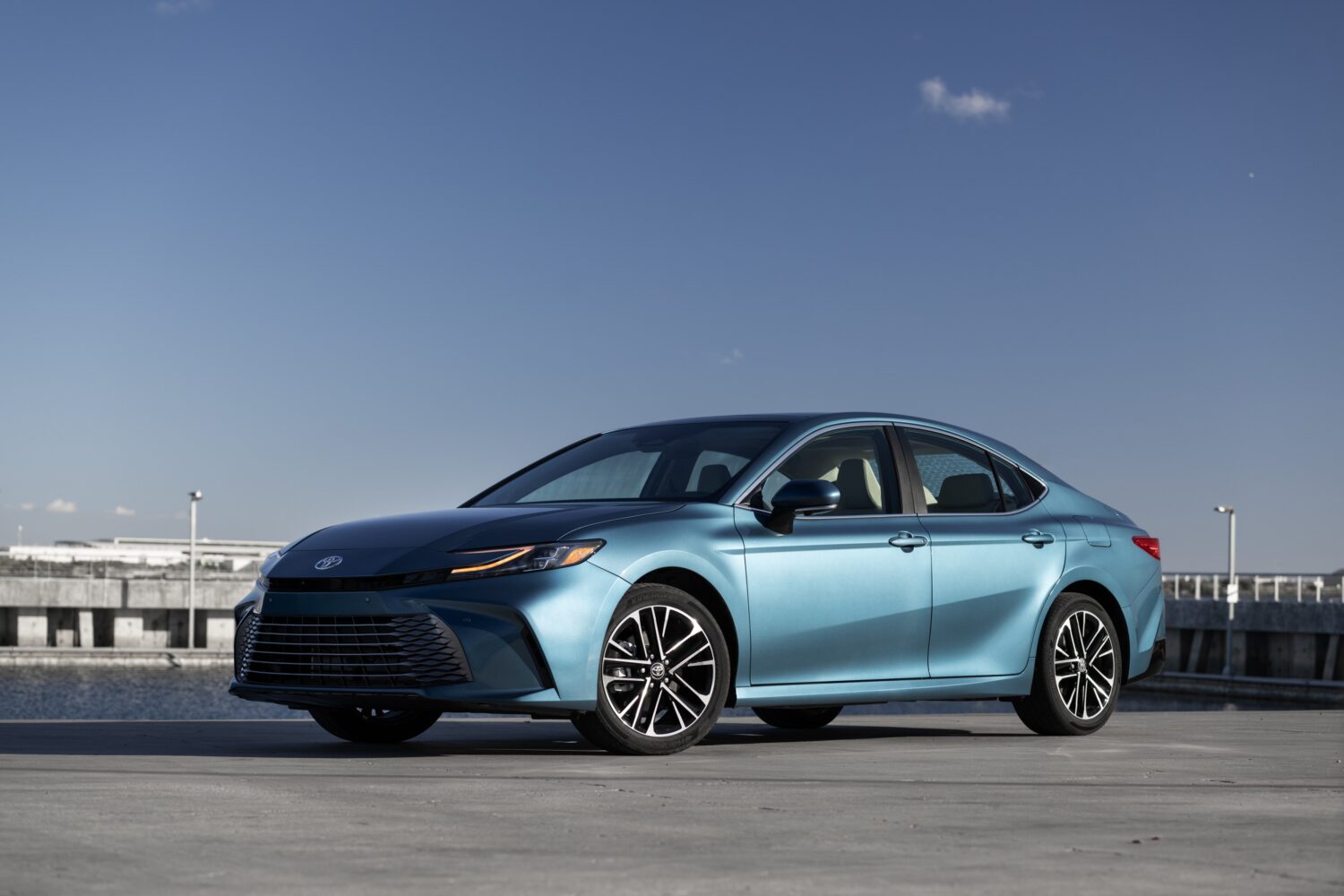
Toyota’s decision to make the current Camry hybrid-only paid dividends beyond fuel economy. A redesigned platform built around the hybrid powertrain also gave Toyota’s engineers a clean foundation to integrate Toyota Safety Sense 3.0 as standard equipment across all trim levels, and that system delivered during IIHS testing.
Producing between 225 and 232 horsepower from its 2.5-liter hybrid four-cylinder and measuring 193.5 inches long by 72.4 inches wide, the Camry is a properly sized midsize family sedan with a safety profile that matches its reliability reputation. Toyota Safety Sense 3.0 is the version of Honda’s pre-collision assistance platform most specifically updated to address the new IIHS motorcycle detection requirement.
During the upgraded front crash prevention trials, the system successfully identified and responded to all three stationary target types, including the small-profile motorcycle target that exposed sensor weaknesses in several competing vehicles. Zero structural collisions across all test configurations is the result that earns a perfect score, and the Camry achieved exactly that.
Rear passenger structural protection also met IIHS requirements under the severe overlap impact evaluation, which tests whether the vehicle’s safety cage maintains adequate survival space for occupants in the second row during serious collisions. Families who carry children or transport passengers regularly will find that the Camry’s structural performance in this test is one of its strongest arguments as a family vehicle.
At a price point accessible to a broad range of buyers and with Toyota’s well-established long-term reliability record supporting it, the 2026 Toyota Camry makes a compelling case as the benchmark midsize sedan for buyers who prioritize safety above all else.
2. Kia EV9
Award: 2026 IIHS Top Safety Pick+
- Engine: Dual Electric Motors AWD or Single Motor RWD
- Horsepower: 215 hp to 379 hp
- Torque: 258 lb-ft to 516 lb-ft
- Size: 197.4 in Long x 77.9 in Wide
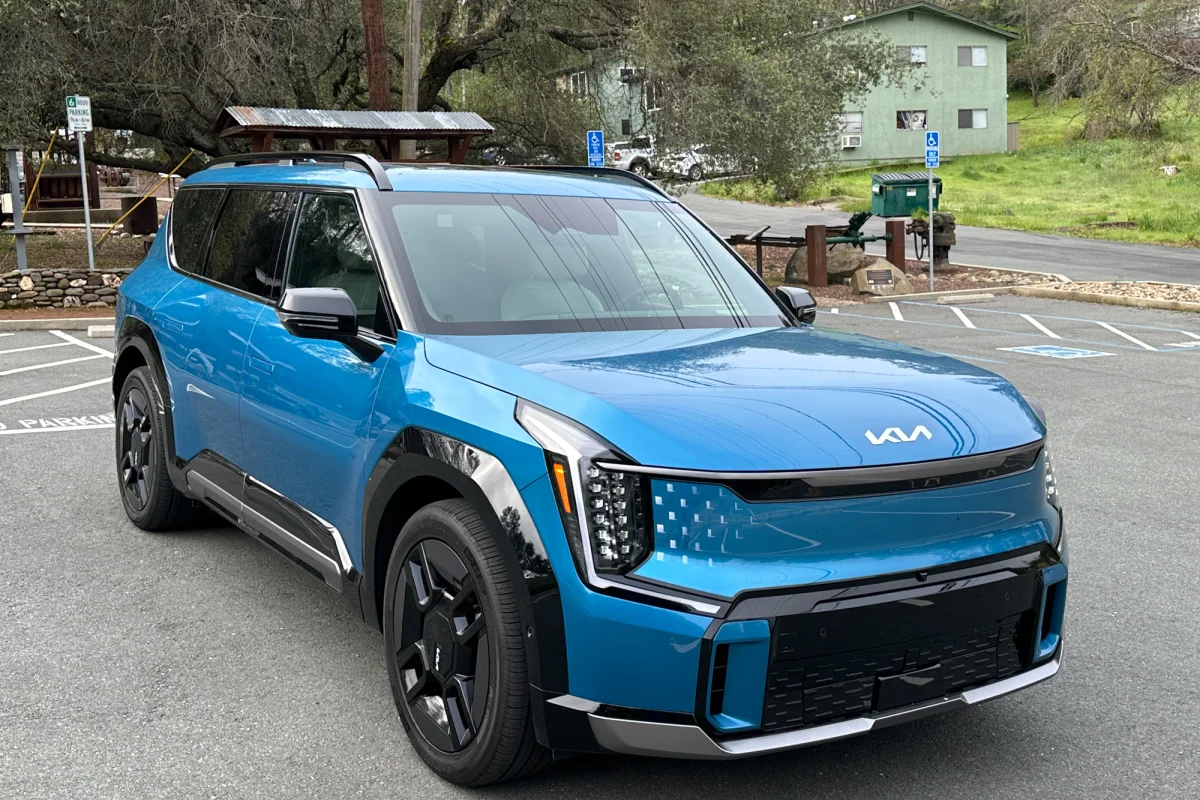
Earning top marks across every passive and active crash evaluation the IIHS administers is a genuinely rare achievement, and the Kia EV9 delivered exactly that result in 2026 testing. At 197.4 inches long and 77.9 inches wide, this is a large, heavy three-row electric SUV, and its structural safety architecture reflects the engineering investment Kia made in protecting all three rows of passengers during severe collision events.
Passive safety performance, meaning what the vehicle’s physical structure does during a crash, was where the EV9 drew some of its most impressive scores. Its structural safety cage maintained survival space for rear-row passengers under the severe overlap impact test conditions, addressing one of the most demanding requirements in the updated 2026 IIHS criteria. For families who routinely carry passengers in the third row, that structural performance is directly relevant to real-world safety.
Active safety performance, meaning what the vehicle’s sensors and automatic braking systems do before a crash occurs, also cleared the 2026 requirements. The EV9’s forward sensor array successfully detected and responded to all required target types during the high-speed automated braking trials.
Producing between 215 and 379 horsepower depending on configuration, the EV9 has the straight-line performance that makes sensor response time critical at higher speeds, and the system performed within the margins required for a perfect front crash prevention score.
For buyers shopping for large family SUVs who want three rows of seating and an IIHS top-tier safety rating simultaneously, the 2026 Kia EV9 is one of the most complete answers available in its class.
Also Read: 10 Cars Most Frequently Stolen for Parts
3. Tesla Cybertruck
Award: 2026 IIHS Top Safety Pick+
- Engine: Dual-Motor or Tri-Motor AWD Electric Setup
- Horsepower: 600 hp to 845 hp
- Torque: 7,435 lb-ft to 10,296 lb-ft (wheel torque)
- Size: 223.7 in Long x 86.6 in Wide
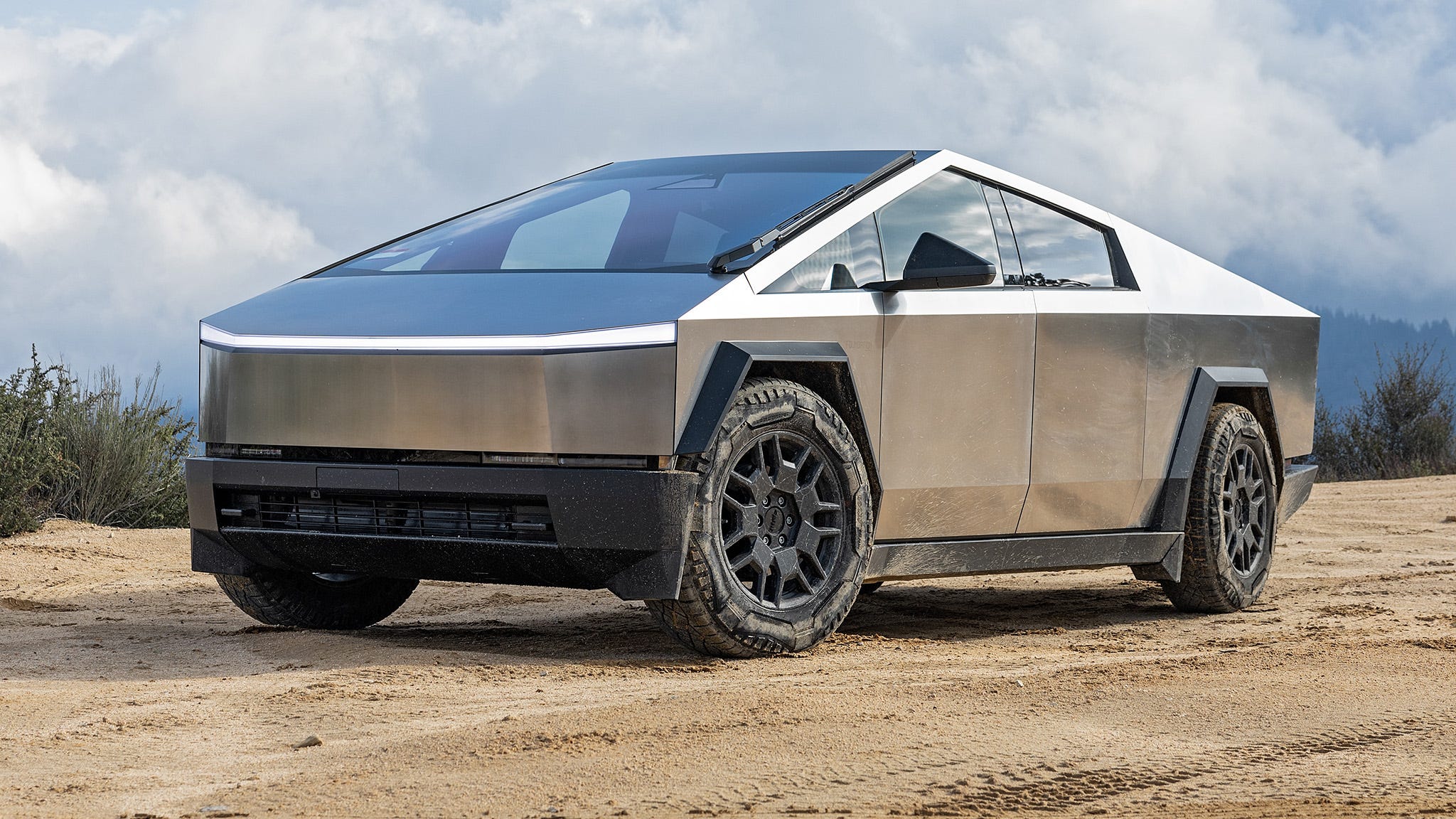
Standing as the only full-size pickup truck on the entire 2026 Top Safety Pick Plus list, the Tesla Cybertruck’s safety achievement deserves genuine recognition. Earning this rating despite the motorcycle detection challenges that penalized other vehicles with similar sensor configurations required Tesla to deliver meaningful improvements to the Cybertruck’s active safety software, and the 2026 evaluation results show those improvements paid off.
What makes the Cybertruck’s structural safety profile unique is its stainless-steel exoskeleton construction. Unlike traditional body-on-frame pickups that use stamped steel panels over a separate ladder frame, the Cybertruck’s outer shell is a structural component that contributes directly to crash energy management.
During severe overlap impact testing, that architecture distributed collision forces in ways that maintained occupant survival space effectively. Measuring 223.7 inches long and 86.6 inches wide, it is one of the largest vehicles on this list, and managing crash energy across a vehicle this large without allowing cabin intrusion is a structural engineering achievement.
Active safety performance in the motorcycle detection loop, which is the specific test that the Cybertruck’s narrow lightbar design struggled with in earlier headlight evaluations, cleared the 2026 IIHS threshold through sensor system improvements rather than hardware changes. Tesla’s over-the-air update capability allowed the company to refine the pre-collision detection algorithms in ways that ground-mounted radar and camera fusion could not accomplish on legacy vehicle platforms.
At up to 845 horsepower and wheel torque figures that dwarf any combustion vehicle on this list, the Cybertruck’s ability to stop before hitting a stationary motorcycle at 43 mph reflects what properly calibrated sensors can do when the underlying software receives sufficient development attention.
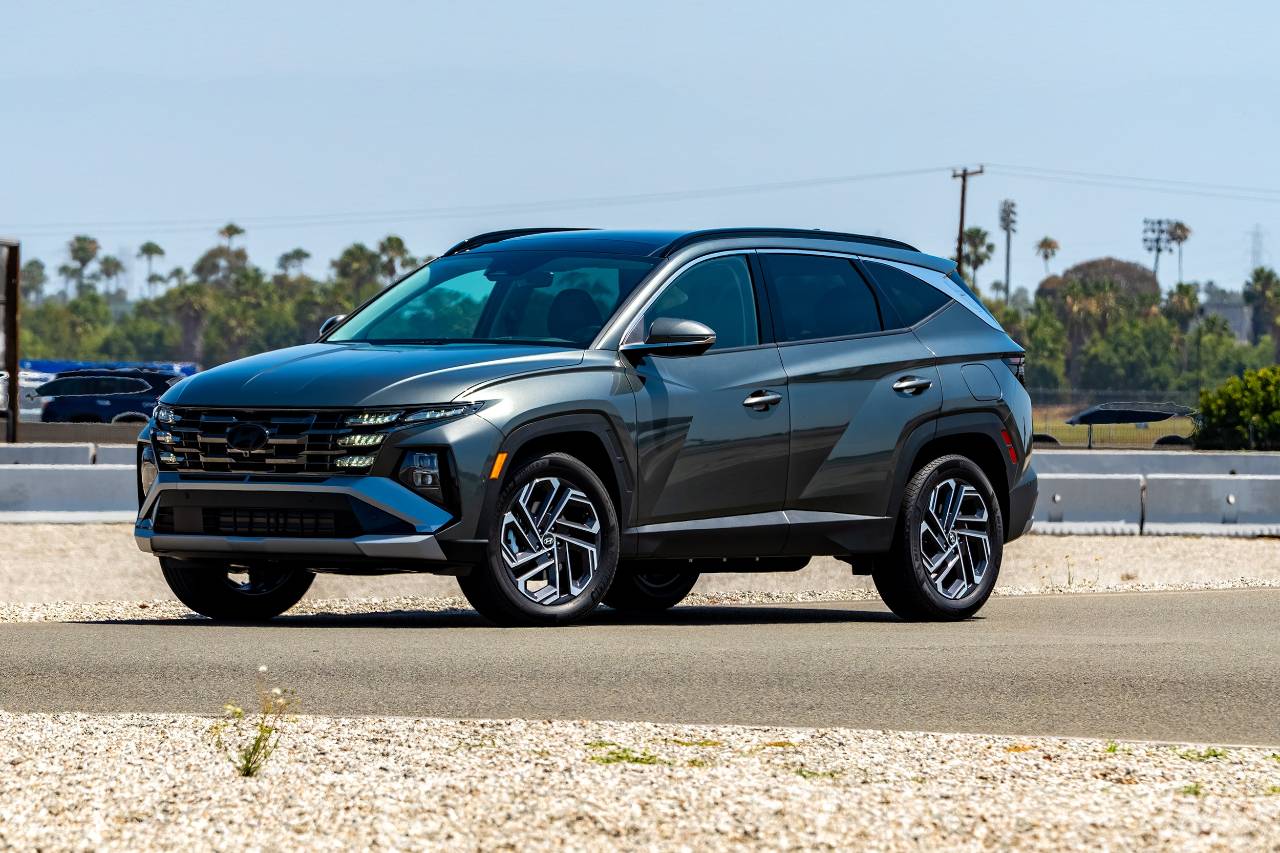
4. Hyundai Tucson
Award: 2026 IIHS Top Safety Pick+
- Engine: 2.5L 4-Cylinder (Hybrid and Plug-in Hybrid available)
- Horsepower: 187 hp to 261 hp
- Torque: 178 lb-ft to 258 lb-ft
- Size: 183.1 in Long x 73.4 in Wide
Hyundai’s Tucson has consistently ranked among the safest compact SUVs on the market, and the 2026 model year extended that record with another Top Safety Pick Plus designation. Updated sensor placement across the 2026 Tucson is the specific engineering change that made the difference in meeting the tightened IIHS requirements, particularly in the motorcycle detection portion of the front crash prevention evaluation.
Motorcycle targets present a detection problem for forward-facing sensors because their narrow cross-section returns a weaker radar signature than a full passenger car or semi-trailer. Hyundai’s engineers addressed this by repositioning the Tucson’s forward radar unit and recalibrating the camera fusion logic to improve object classification accuracy at small cross-sections and high closing speeds.
During IIHS testing at 43 miles per hour, the updated system cleanly identified the motorcycle target and initiated braking with enough lead time to avoid a structural collision. That specific improvement was the determining factor between earning a Top Safety Pick Plus and falling to a lower tier.
Rear passenger structural protection met IIHS requirements without the demerits that pulled several competitors below the top rating. At 183.1 inches long and 73.4 inches wide, the Tucson is a compact SUV with enough interior space to carry a family of five comfortably, and the structural safety score demonstrates that Hyundai did not sacrifice second-row protection to achieve the front-end active safety performance.
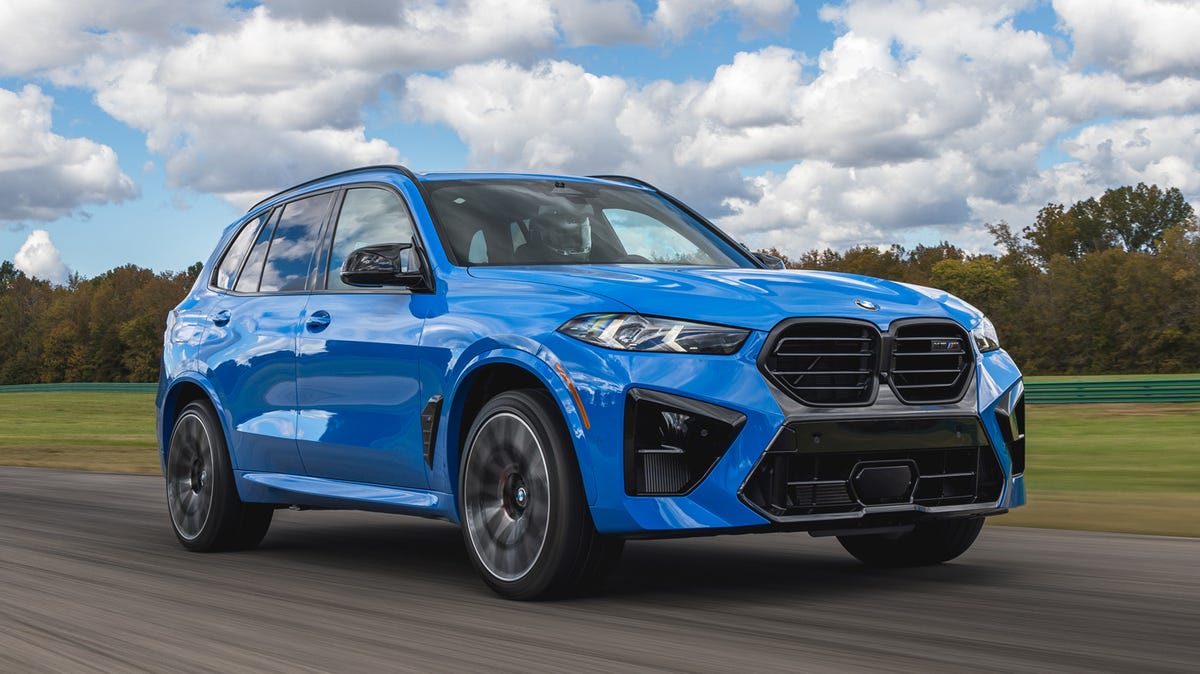
5. BMW X5
Award: 2026 IIHS Top Safety Pick+
- Engine: 3.0L Turbo Inline-6 or 4.4L Twin-Turbo V8
- Horsepower: 375 hp to 523 hp
- Torque: 398 lb-ft to 553 lb-ft
- Size: 194.2 in Long x 78.9 in Wide
Premium pricing and advanced safety technology go together more reliably in the luxury SUV segment than almost anywhere else in the automotive market, and the BMW X5 makes that relationship concrete with a 2026 Top Safety Pick Plus rating that confirms its Active Driving Assistant Pro system is among the most capable in the industry.
Producing between 375 and 523 horsepower from its turbocharged six-cylinder and twin-turbocharged V8 options, and measuring 194.2 inches long by 78.9 inches wide, the X5 is a properly powerful midsize SUV with safety credentials that match its performance profile. BMW’s Active Driving Assistant Pro platform uses a combination of forward-facing cameras, long-range radar, and ultrasonic sensors working in a fused data architecture that the brand has developed across multiple vehicle generations.
During the 2026 IIHS high-speed front crash prevention evaluation, the system achieved top-tier scores across all three stationary target types by initiating braking responses early enough to avoid structural impact at speeds up to 43 miles per hour. Preventing high-velocity impacts with stationary obstacles at this closing speed requires sensor fusion accuracy and braking system response time that BMW’s platform delivered without exception.
Structural passive safety scores complemented the active safety results. Rear passenger protection under severe overlap conditions met the requirements that IIHS introduced as a harder standard for 2026, ensuring that the X5’s safety credentials reflect both what the vehicle does before a crash and what it does during one.
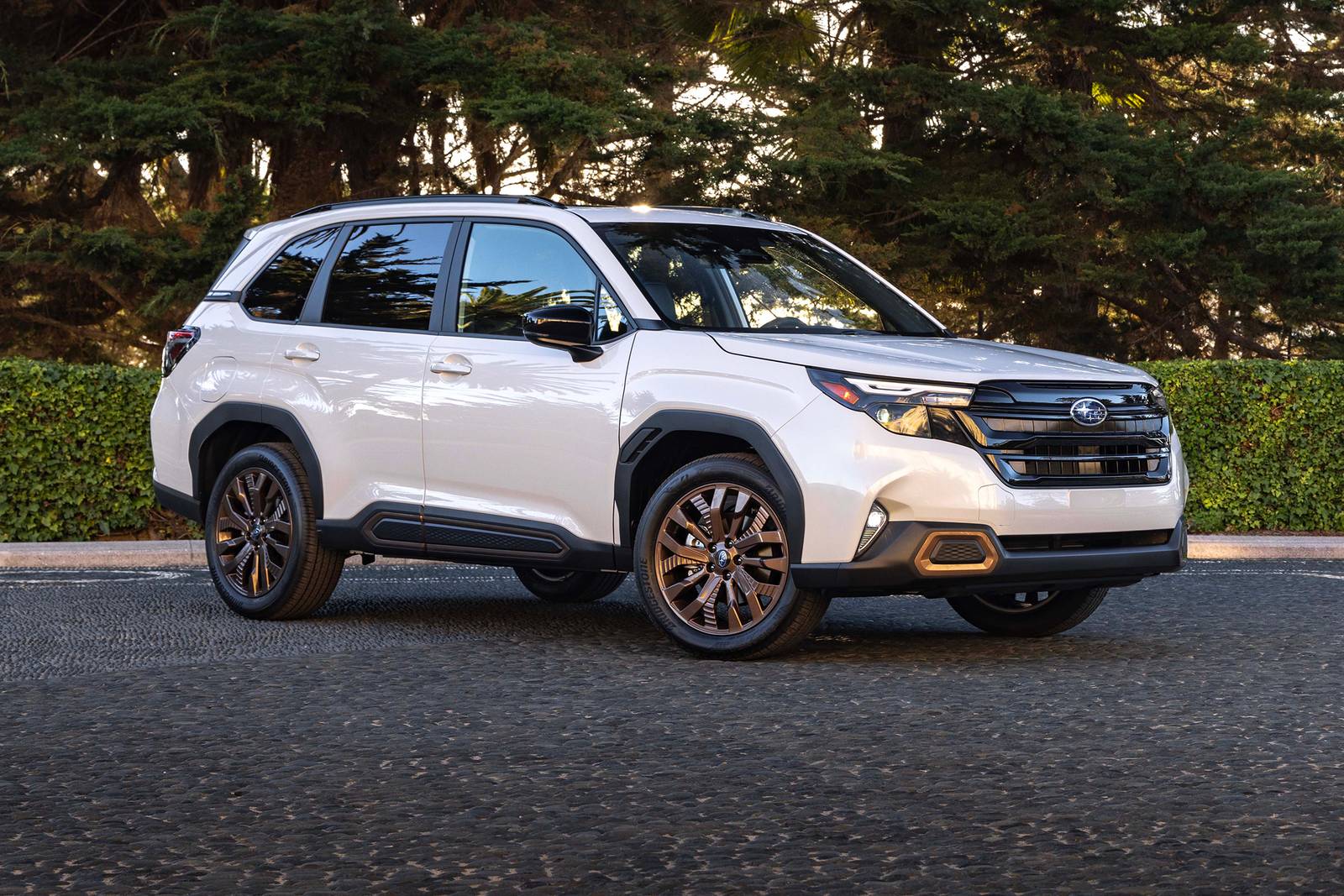
6. Subaru Forester
Award: 2026 IIHS Top Safety Pick+
- Engine: 2.5L Flat 4-Cylinder Boxer
- Horsepower: 180 hp
- Torque: 178 lb-ft
- Size: 183.3 in Long x 72.0 in Wide
Subaru has built its brand identity around safety and all-weather capability more deliberately than almost any other mainstream automaker, and the fully redesigned 2026 Forester extended that commitment with a Top Safety Pick Plus designation earned through both structural and active safety excellence.
At 180 horsepower and 178 lb-ft of torque from its horizontally opposed 2.5-liter Boxer four-cylinder engine, and measuring 183.3 inches long by 72 inches wide, the Forester is a compact SUV sized and powered for practical daily use. Subaru’s EyeSight driver assistance system received a meaningful update for the redesigned 2026 Forester, incorporating a wider dual-camera field of view and improved processing hardware that increased the system’s ability to classify objects at varying distances and speeds.
During IIHS testing, the updated EyeSight achieved a flawless “Good” rating in the front crash prevention evaluation, including successful detection and avoidance of the motorcycle target at 43 mph. This result is particularly meaningful for Subaru because EyeSight has historically been one of the automotive industry’s most discussed active safety systems, and the 2026 update demonstrates that the brand continues to invest in keeping it at the top of the segment.
Physical subframe strength scores were equally strong, reflecting the structural engineering work that went into the redesigned platform. Subaru’s standard inclusion of EyeSight across all Forester trim levels means buyers do not need to select a premium package to get the safety technology that earned this award.
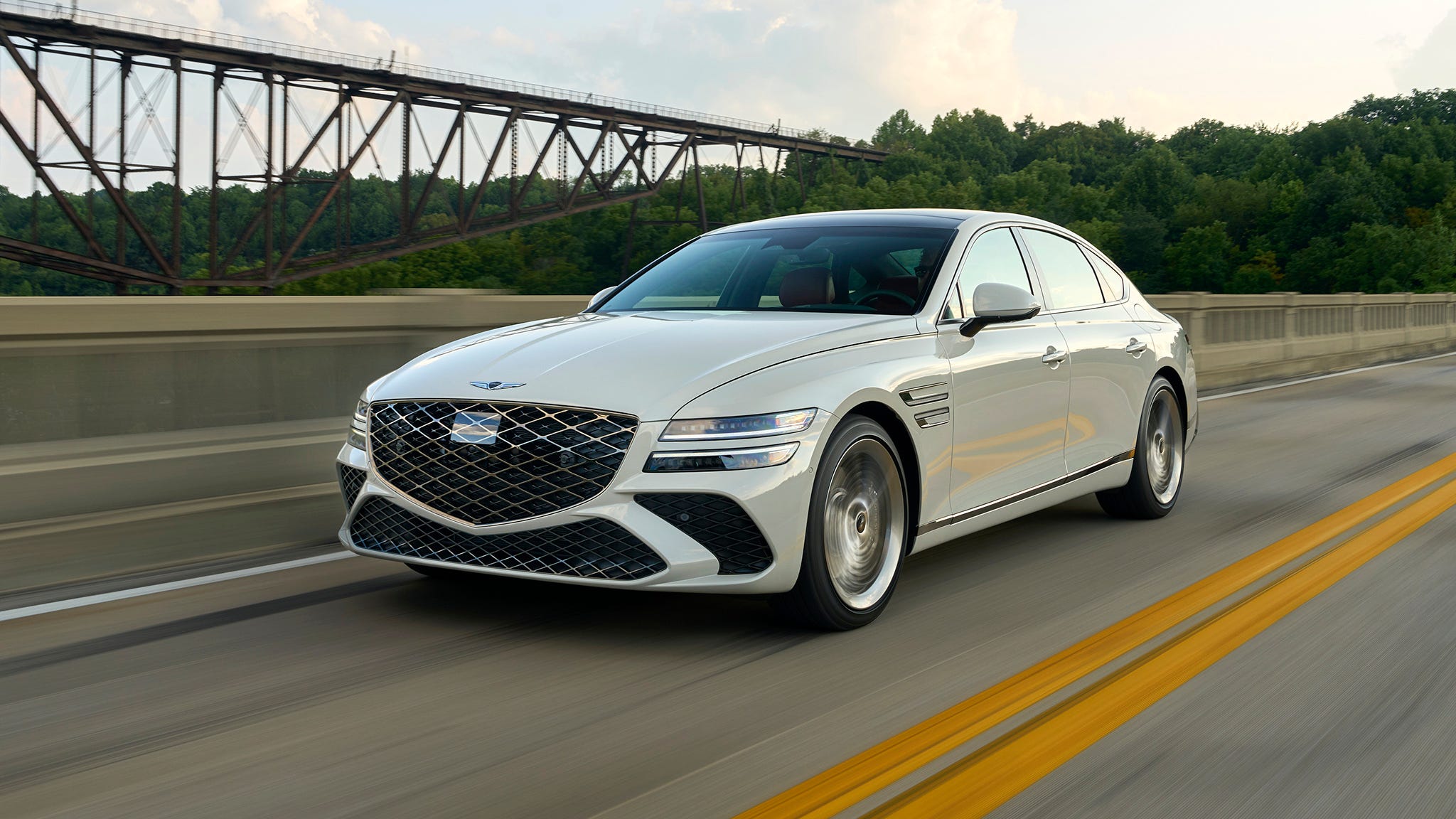
7. Genesis G80
Award: 2026 IIHS Top Safety Pick+
- Engine: 2.5L Turbo 4-Cylinder or 3.5L Twin-Turbo V6
- Horsepower: 300 hp to 375 hp
- Torque: 311 lb-ft to 391 lb-ft
- Size: 196.7 in Long x 75.8 in Wide
Genesis has spent its short independent history as a brand proving that Korean luxury vehicles can compete directly with established European and Japanese alternatives on quality, refinement, and safety. A 2026 Top Safety Pick Plus rating on the G80 large luxury sedan is the kind of independent validation that advertising cannot replicate.
Producing between 300 and 375 horsepower from turbocharged four-cylinder and twin-turbocharged V6 options, and measuring 196.7 inches long by 75.8 inches wide, the G80 is a properly proportioned full-size luxury sedan with interior quality that competes favorably with vehicles costing considerably more.
Structural integrity was a standout result in the G80 IIHS evaluation. During severe overlap impact testing, the vehicle’s safety cage protected dummy occupants from cabin intrusion, maintaining the survival space required for occupants in both the front and rear rows. For a large luxury sedan that buyers expect to serve as a comfortable long-distance vehicle for multiple occupants, second-row structural protection is directly relevant to real family use.
Active safety performance cleared the 2026 requirements through Genesis’s driver assistance platform, which successfully managed all three stationary target types in the front crash prevention evaluation. Multi-vehicle blind spot scenarios, which refer to situations where the sensor must identify a target vehicle through or around other objects, were handled without the failures that pulled competing vehicles below top-tier scores.
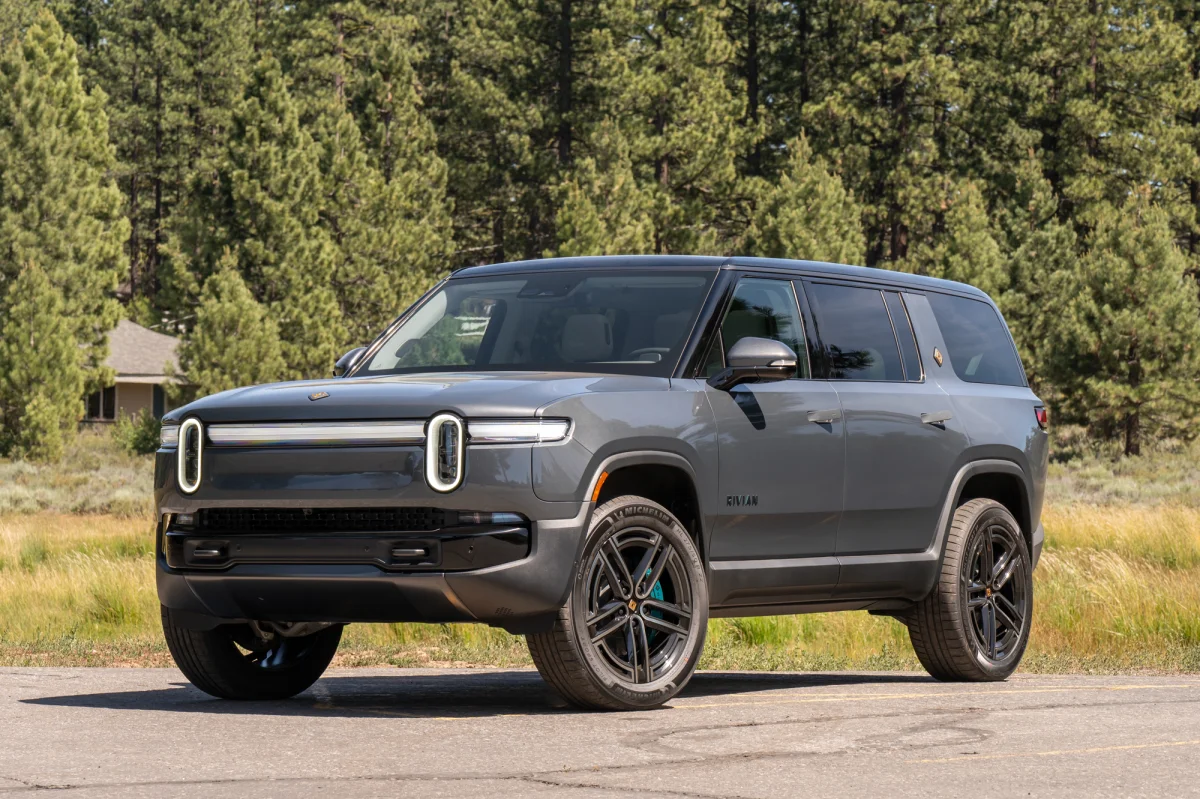
8. Rivian R1S
Award: 2026 IIHS Top Safety Pick+
- Engine: Dual, Tri, or Quad-Motor AWD Electric Setup
- Horsepower: 533 hp to 1,025 hp
- Torque: 610 lb-ft to 1,198 lb-ft
- Size: 200.8 in Long x 79.0 in Wide
Earning a 2026 Top Safety Pick Plus rating while competing in a vehicle class where rear occupant safety has been a persistent challenge is a meaningful achievement for the Rivian R1S. At 200.8 inches long and 79 inches wide, this large electric SUV carries substantial mass, and Rivian’s engineers channeled that structural weight into a chassis architecture that manages crash energy effectively for passengers in all seating rows.
Rear-row occupant protection during severe overlap impact testing was where the R1S separated itself from competitors in the large SUV class. Several vehicles in adjacent categories failed to meet the updated rear passenger structural requirements, earning demerits that prevented top-tier classification.
Rivian’s heavy chassis architecture, built around the low-mounted battery pack that also contributes to the vehicle’s low center of gravity and handling stability, distributed collision forces in a pattern that maintained survival space for rear passengers throughout the IIHS test sequence.
Active safety performance across the front crash prevention evaluation also cleared the 2026 threshold. At up to 1,025 horsepower and 1,198 lb-ft of torque from its available quad-motor configuration, the R1S has performance figures that make sensor response time critical when approaching a stationary target.
Rivian’s sensor fusion platform, combining forward-facing cameras with radar and ultrasonic inputs, delivered the detection and braking response required to avoid structural collisions at all three test speeds. For buyers who want a large, high-performance electric SUV with a documented top-tier safety rating across both structural and active categories, the 2026 Rivian R1S presents a strong case.
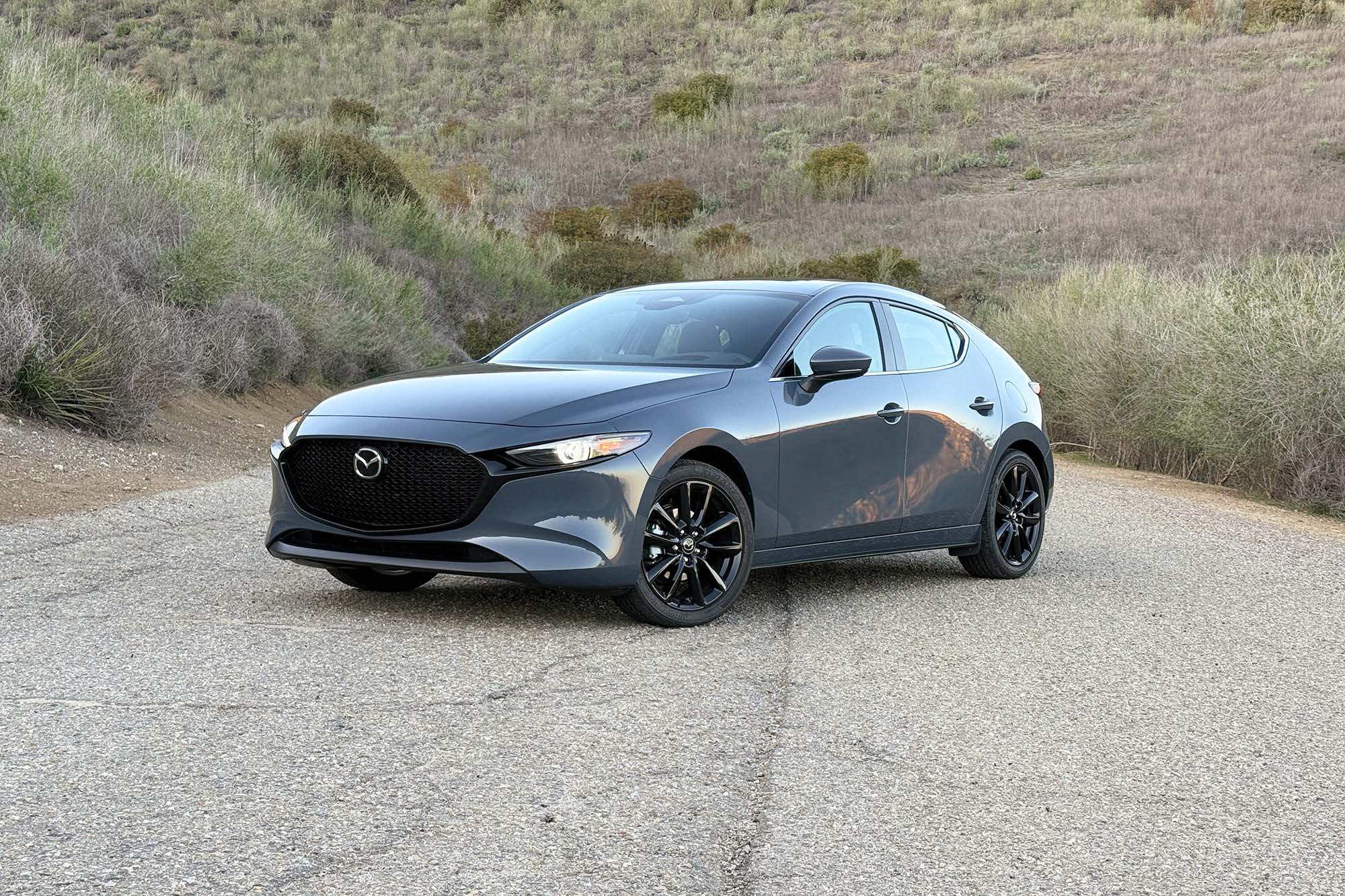
9. Mazda3 Sedan and Hatchback
Award: 2026 IIHS Top Safety Pick+
- Engine: 2.5L Naturally Aspirated 4-Cylinder or 2.5L Turbo I4
- Horsepower: 191 hp (Standard) / 250 hp (Turbo)
- Torque: 186 lb-ft (Standard) / 320 lb-ft (Turbo)
- Size: 175.6 to 183.5 in Long x 70.7 in Wide
Affordability does not disappear when strong safety enters the conversation, and the Mazda3 proves that clearly. Offered as both a sedan and a hatchback, it delivers between 191 and 250 horsepower while keeping compact dimensions of roughly 175.6 to 183.5 inches in length and 70.7 inches in width. Despite its modest pricing, the Mazda3 earned a 2026 Top Safety Pick Plus rating by matching results seen from cars that cost far more than expected today.
Attention then turns to Mazda’s i-Activsense safety package, which played a major role in the test results. Using a forward camera and radar working together, the pre-collision system showed improved response during daylight and reduced lighting.
Updated camera processing helped the car recognise objects earlier, meeting the stricter IIHS testing requirements introduced for the 2026 evaluation cycle. This progress reflects careful calibration and real-world driving conditions considered during development by Mazda engineering teams.
Budget-focused shoppers searching for a small car with proven safety credentials should keep the Mazda3 in mind. The Top Safety Pick Plus award confirms that careful engineering is not limited to expensive models. Along with responsive handling and a well-finished cabin, the Mazda3 delivers reassurance for daily driving in 2026 without demanding a premium purchase price. This balance suits buyers who value security, comfort and reliability in everyday ownership within compact segments nationwide.
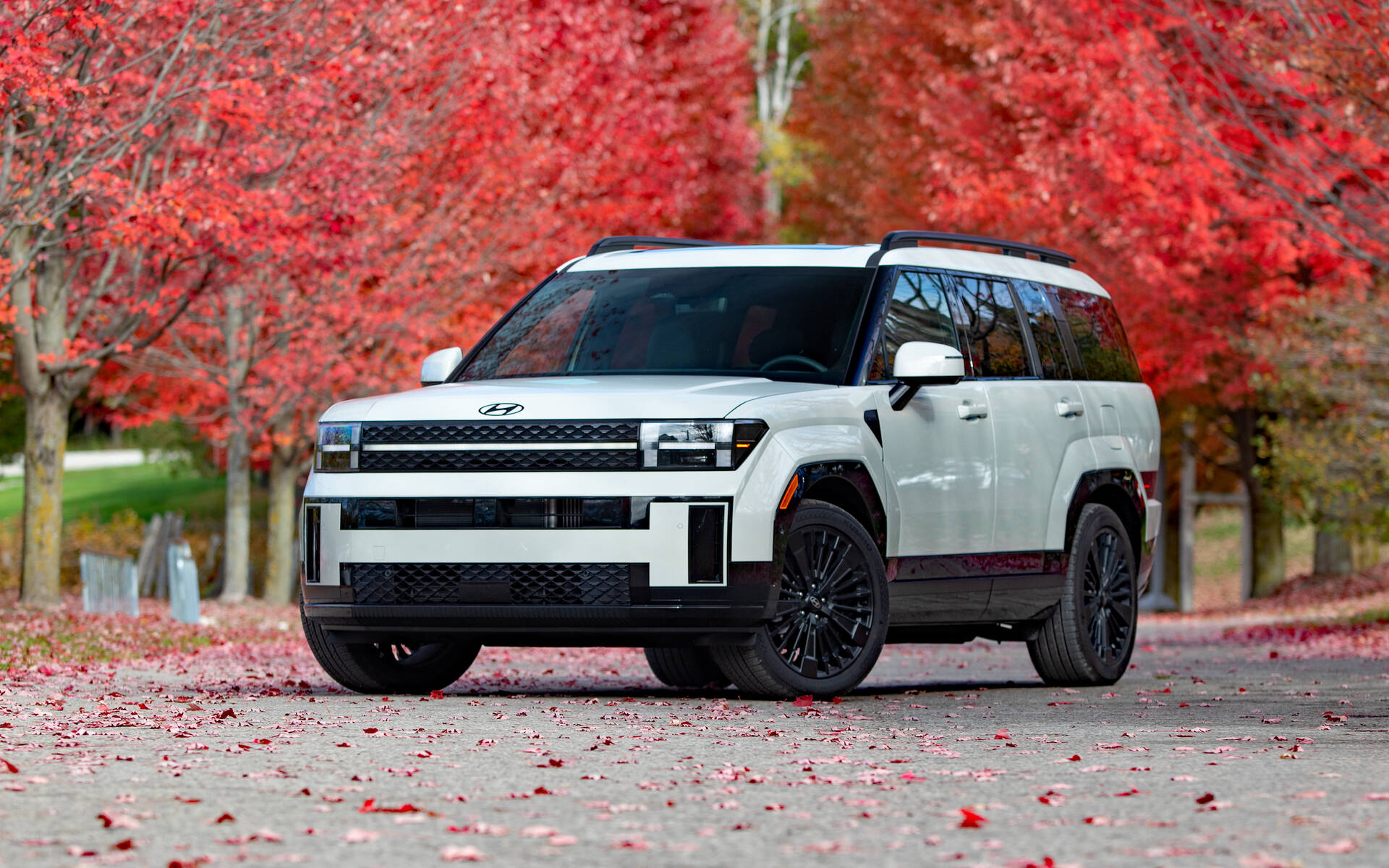
10. Hyundai Santa Fe
Award: 2026 IIHS Top Safety Pick+
- Engine: 2.5L Turbocharged 4-Cylinder (Hybrid available)
- Horsepower: 277 hp (Hybrid: 231 hp total system)
- Torque: 311 lb-ft (Hybrid: 271 lb-ft total system)
- Size: 190.2 in Long x 74.8 in Wide
Safety recognition for the 2026 model year placed Hyundai in a strong position, with two of its SUVs earning Top Safety Pick Plus status. Among them, the Santa Fe stands out as a midsize option designed to balance space, power, and protection. Measuring 190.2 inches in length and 74.8 inches in width, it offers available three-row seating and a turbocharged engine that delivers 277 horsepower and 311 lb ft of torque. Hybrid versions trade some output for better fuel use, giving buyers flexibility based on driving needs.
High marks in crash testing came from careful attention to side impact protection. Curtain airbags extend fully across the cabin, while reinforced roof and door structures help preserve occupant space during collisions. Side pole impact testing focuses on what happens when a vehicle strikes a narrow, rigid object at speed, a situation that places heavy demands on both airbag coverage and body strength. The Santa Fe performed well in these evaluations, maintaining cabin integrity and providing consistent protection across all tested seating positions.
Roof strength also played an important role in the Santa Fe’s strong safety showing. During rollover compression tests, which simulate the pressure placed on the roof during a rollover event, deformation stayed within the highest acceptable range set by the IIHS. This matters more for taller SUVs, where rollover risk carries greater weight than it does for lower-riding vehicles. Solid roof performance reduces the chance of serious injury when a vehicle tips or rolls.
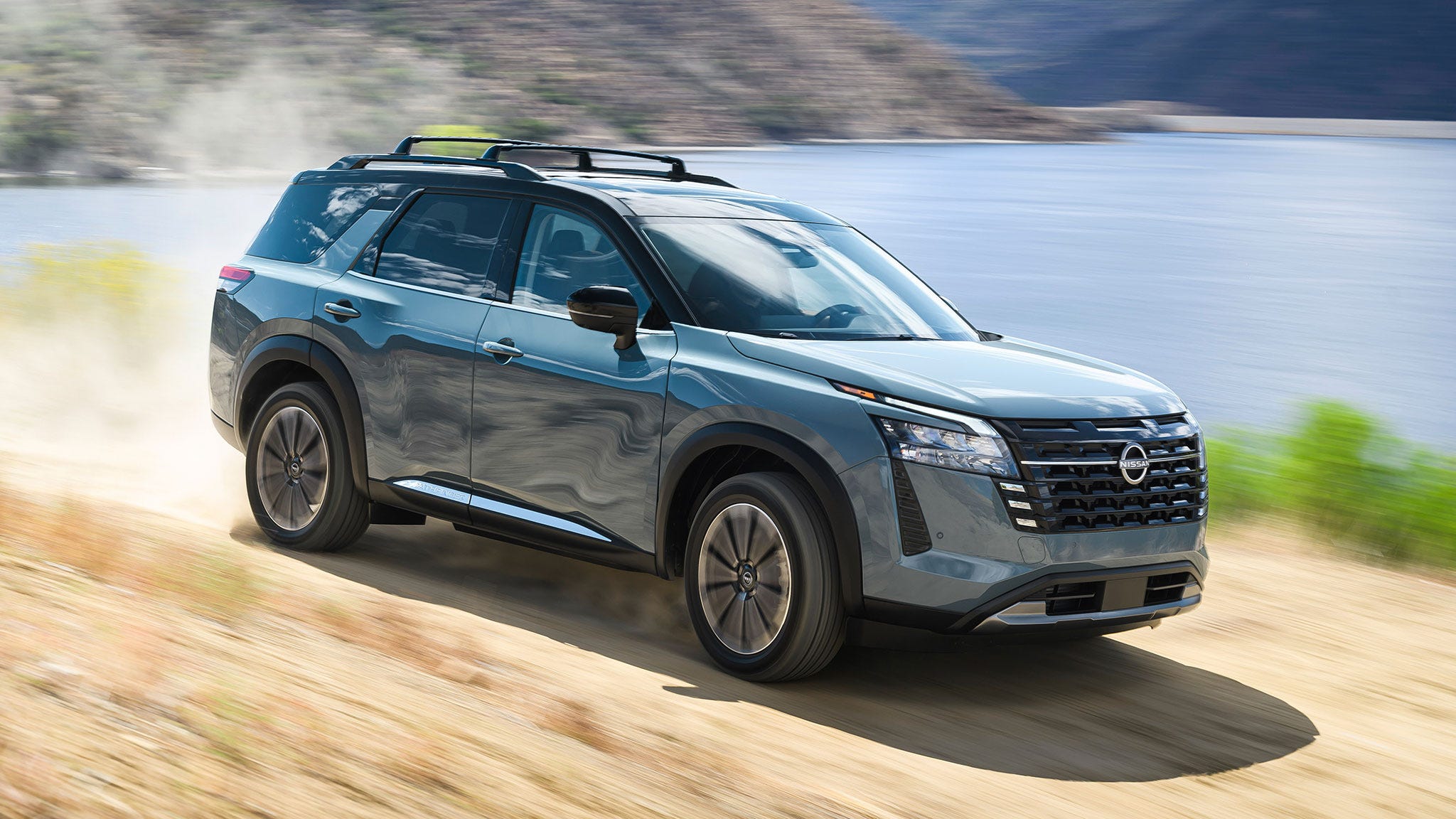
11. Nissan Pathfinder
Award: 2026 IIHS Top Safety Pick+
- Engine: 3.5L Naturally Aspirated V6
- Horsepower: 284 hp to 295 hp
- Torque: 259 lb-ft to 270 lb-ft
- Size: 197.7 in Long x 77.9 in Wide
Nissan’s Pathfinder has competed in the three-row midsize SUV segment for decades, and its 2026 Top Safety Pick Plus rating is the strongest independent safety validation the current generation has received. Producing between 284 and 295 horsepower from a 3.5-liter naturally aspirated V6 and measuring 197.7 inches long by 77.9 inches wide, the Pathfinder is a properly sized family hauler with the structural dimensions to carry up to eight passengers on longer trips.
Passing the 43 mph stationary vehicle avoidance test is the specific result that defines a 2026 Top Safety Pick Plus vehicle, and the Pathfinder’s ProPilot Assist system delivered that result by initiating a multi-stage response sequence that combined early audio-visual cluster alerts with progressive autonomous braking engagement.
Rear passenger structural performance met IIHS standards without the deductions that have affected some competitors in the three-row SUV class. For a vehicle designed to carry children in the second and third rows, structural rear-row protection is one of the most practical safety attributes a buyer can consider.
Also Read: 10 Cars With The Strongest Headlights Ever Made
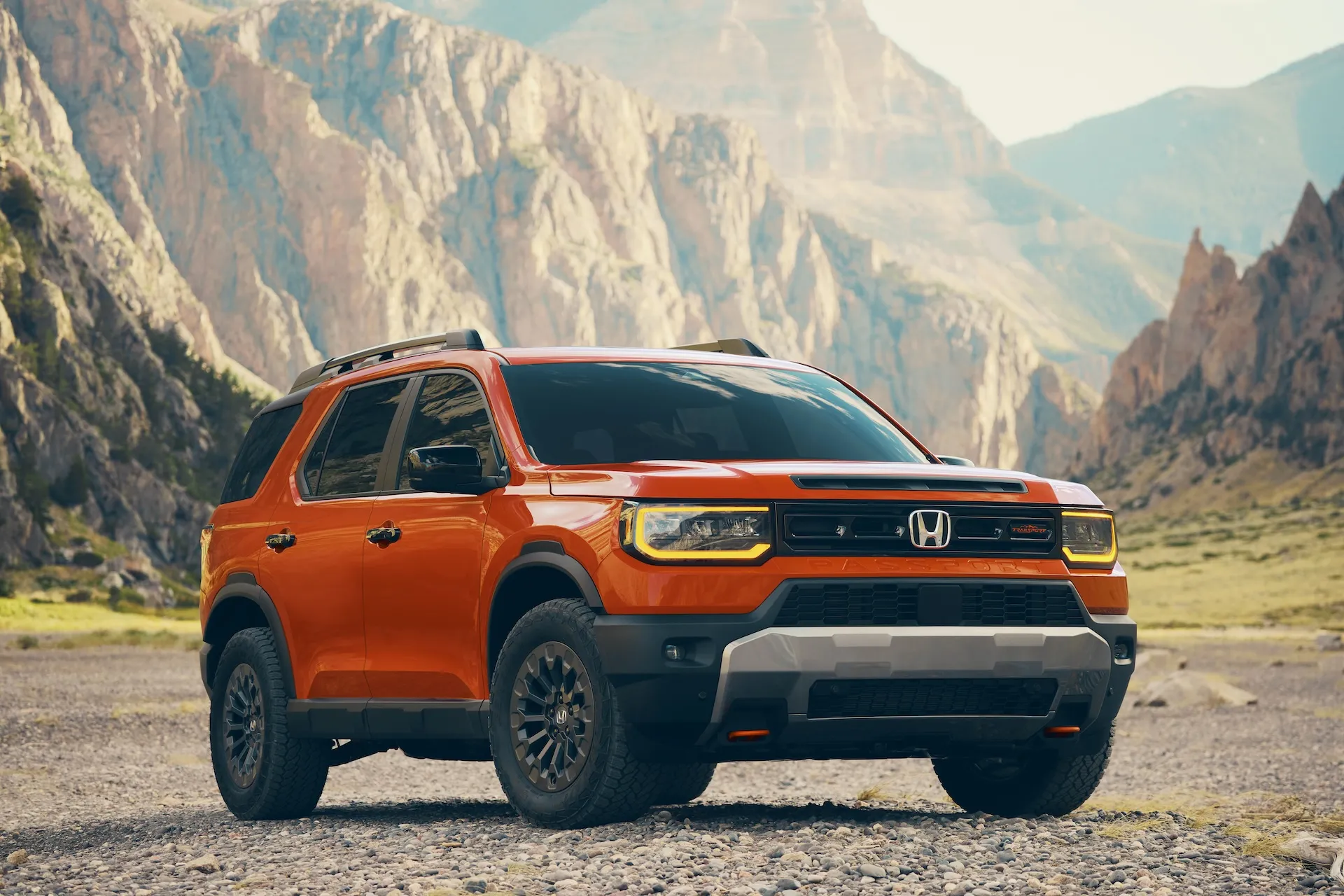
12. Honda Passport
Award: 2026 IIHS Top Safety Pick+
- Engine: 3.5L Naturally Aspirated V6
- Horsepower: 280 hp
- Torque: 262 lb-ft
- Size: 189.1 in Long x 78.6 in Wide
Rounding out the 2026 Top Safety Pick Plus list is the Honda Passport, a two-row midsize SUV that sits between the smaller CR-V and the larger Pilot in Honda’s SUV lineup. At 280 horsepower and 262 lb-ft of torque from a 3.5-liter naturally aspirated V6, and measuring 189.1 inches long by 78.6 inches wide, the Passport offers a wider body than the CR-V and a more manageable length than the Pilot, positioning it as a practical choice for buyers who want genuine cargo room without full three-row dimensions.
Child seat latch accessibility earned the Passport premium marks in the IIHS evaluation, a result that matters specifically to families with young children who install and remove child safety seats regularly. LATCH system accessibility is rated on how easily an adult can locate the anchor points, thread the connectors through the seat, and confirm a secure attachment without contorting into awkward positions.
A high score in this category reflects design intentionality that directly benefits the parents and caregivers who use the vehicle daily. Honda Sensing, the brand’s standard active safety suite covering forward collision warning, automatic emergency braking, road departure mitigation, and adaptive cruise control, delivered clean performance across the 2026 IIHS front crash prevention evaluation.
