
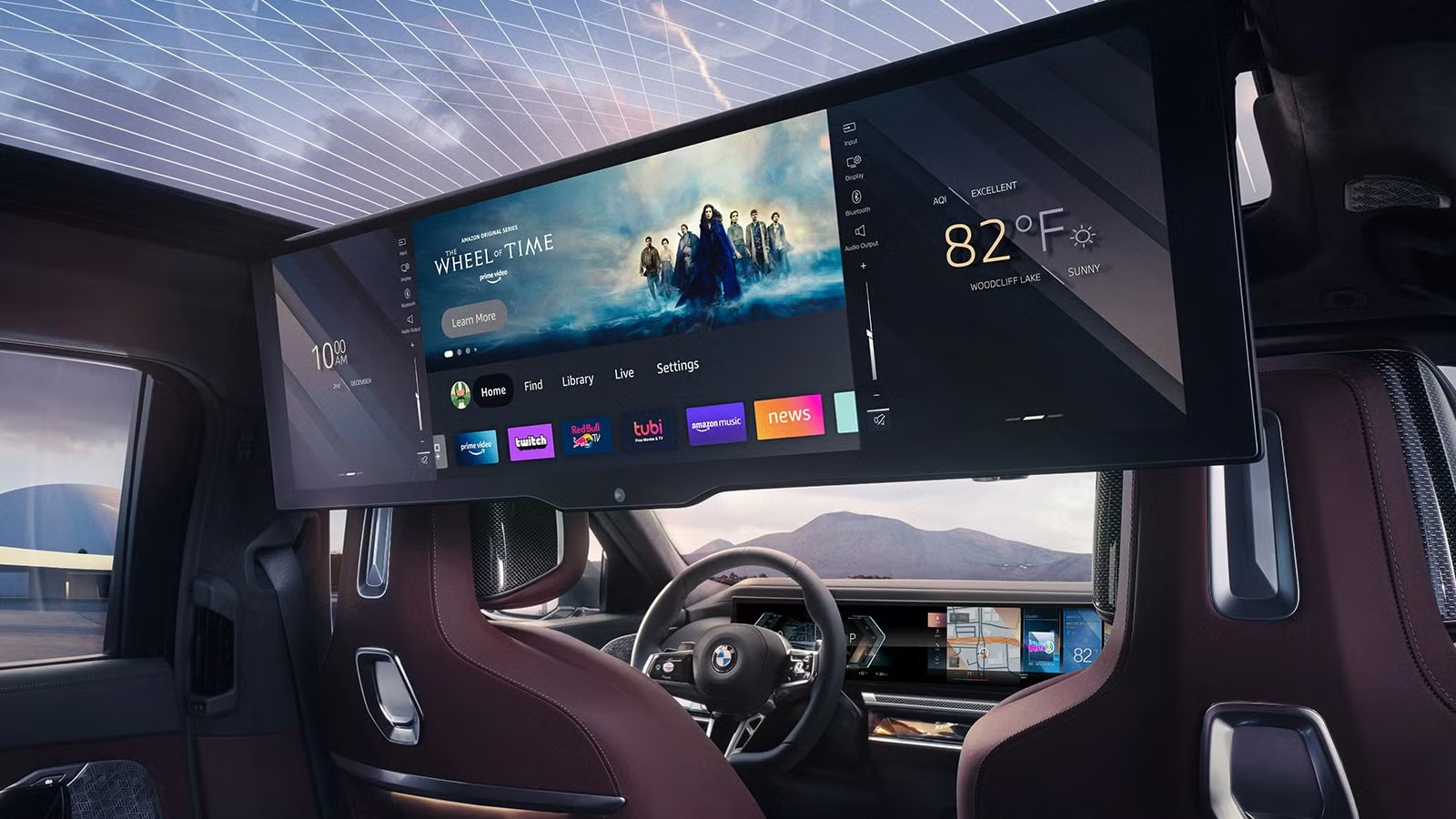
For more than a decade, automakers have embraced touchscreens as the future of vehicle interiors. Physical buttons gradually disappeared, climate controls moved into digital menus, and nearly every function, from adjusting mirrors to changing drive modes, became accessible through a central display.
Manufacturers promoted these minimalist cabins as modern, high-tech, and software-driven, while many buyers initially welcomed the sleek appearance.
Today, however, the market is beginning to shift. As vehicles equipped with touchscreen-only dashboards enter the used-car market in greater numbers, many buyers are discovering that living with these systems every day is not always as enjoyable as showroom demonstrations suggested.
What once looked futuristic is increasingly being viewed as frustrating, distracting, and expensive to repair.
The result is an emerging trend that industry analysts, dealers, and used-car buyers are paying closer attention to. Vehicles that rely almost entirely on touchscreen controls may not retain their value as well as comparable models that continue offering physical buttons for essential functions.
While the touchscreen itself is rarely the only factor influencing resale value, growing buyer preferences for more intuitive controls are beginning to affect purchasing decisions.
Also Read: 8 Car Features Automakers Now Lock Behind a Monthly Subscription
The Industry Rushed Toward Digital Controls
Around the mid-2010s, large infotainment displays became one of the defining features of new vehicles.
Manufacturers quickly realized that replacing dozens of physical switches with a single touchscreen offered several advantages.
A digital interface could:
- Control multiple vehicle functions
- Receive software updates
- Support smartphone integration
- Simplify dashboard design
- Reduce the number of physical components
Minimalist interiors also became associated with premium technology. Brands such as Tesla helped popularize cabins dominated by a single large display, encouraging competitors to adopt similar layouts across mainstream and luxury vehicles alike.
Within only a few years, climate controls, seat adjustments, drive modes, navigation, lighting settings, and even glovebox releases had migrated into touchscreen menus.
Buyers Are Rediscovering the Value of Buttons
As these vehicles age, many owners have realized that physical controls still offer important advantages. A traditional volume knob or climate-control dial can be operated almost entirely by feel.
Drivers rarely need to take their eyes off the road. Touchscreens work differently. Even relatively simple tasks may require moving through multiple menus, locating virtual icons, and confirming selections on the display.
That extra visual attention increases distraction, particularly while driving on unfamiliar roads or in heavy traffic.
Many used-car shoppers now actively seek vehicles that combine digital technology with physical controls for frequently used functions.
Common examples include:
- Volume adjustment
- Temperature controls
- Fan speed
- Defrosters
- Heated seats
- Audio shortcuts
These features are often accessed dozens of times during a typical drive. Buttons remain faster and easier for many drivers. Driver Frustration Becomes More Important in the Used Market
New-car buyers often focus on appearance. Used-car buyers usually prioritize usability and reliability. That difference matters.
Someone shopping for a five- or six-year-old vehicle is generally less interested in futuristic styling than in long-term ownership experience.
If two otherwise similar vehicles are available, many buyers increasingly favor the one with more intuitive controls. Dealers have also noticed this shift.
Sales staff frequently receive questions about whether certain functions still operate through physical buttons or require accessing touchscreen menus.
The answer can influence purchasing decisions, particularly among older buyers and families seeking practical daily transportation.
Touchscreens Can Become Expensive Repairs
Another factor affecting resale value is repair cost. A physical climate-control knob typically costs very little to replace. Modern infotainment displays are entirely different. Large touchscreen systems often combine the following:
- Navigation
- Climate controls
- Audio system
- Vehicle settings
- Camera displays
- Driver-assistance menus
- Software updates
If the display develops faults, owners may lose access to multiple vehicle systems simultaneously.
Replacement costs can range from several hundred dollars to several thousand dollars, depending on the vehicle. Potential buyers recognize this risk.
As vehicles age beyond warranty coverage, expensive electronic repairs become a greater concern than they were when the car was new.
Software Ages Faster Than Hardware
Mechanical components often remain functional for decades. Software ages much more quickly. A vehicle introduced only six or seven years ago may already have:
- Slower processor performance
- Lower display resolution
- Outdated graphics
- Older smartphone connectivity
- Limited app compatibility
Unlike smartphones, vehicles generally remain in service for well over a decade. That means infotainment systems inevitably begin feeling outdated long before the rest of the vehicle reaches the end of its useful life.
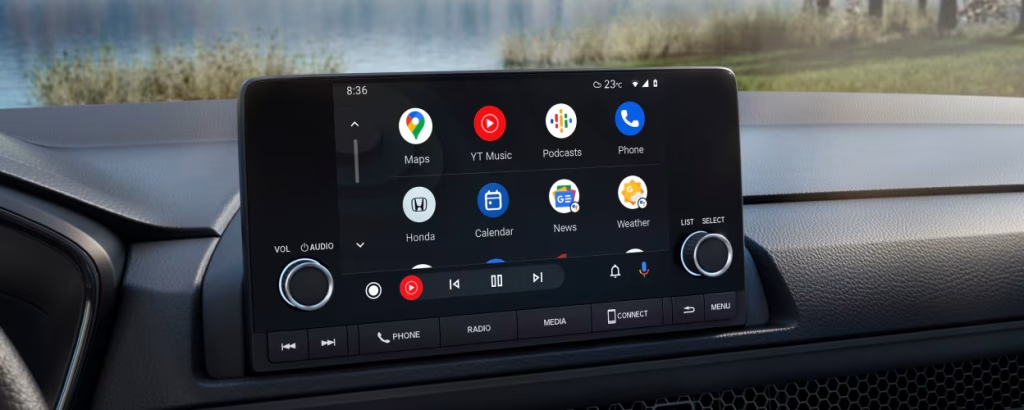
Cars that depend heavily on those systems may therefore appear older than comparable vehicles using simpler physical interfaces.
Reliability Concerns Affect Buyer Confidence
Modern touchscreens have become considerably more reliable than early systems, but problems still occur.
Owners occasionally report:
- Frozen displays
- Delayed response
- Random restarts
- Bluetooth issues
- Black screens
- Touch sensitivity problems
- Software glitches
Even when repairs are covered under warranty, repeated software issues can influence long-term perceptions of vehicle quality. Used-car shoppers often research common ownership complaints before purchasing.
Models known for unreliable infotainment systems may experience softer resale demand compared with competitors offering more dependable interfaces.
Safety Studies Have Influenced Public Opinion
Growing concerns about driver distraction have also affected consumer attitudes. Safety organizations have repeatedly noted that complicated touchscreen menus can require longer visual attention than physical controls.
Changing cabin temperature or adjusting audio volume through multiple on-screen menus may require drivers to glance away from the road longer than turning a traditional knob.
Several automakers have begun responding. Manufacturers, including Hyundai, Mazda, Subaru, and others, have retained or reintroduced physical controls for essential functions after receiving customer feedback.
Volkswagen has publicly acknowledged criticism of some of its touch-sensitive controls and has announced that future interiors will restore more traditional buttons for commonly used features.
These design changes reinforce the idea that physical controls continue offering meaningful advantages despite advances in digital technology.
Minimalist Interiors May Date More Quickly
Interior design trends change just as exterior styling does. The extremely minimalist dashboards introduced during the late 2010s initially appeared futuristic.
As more vehicles adopted similar layouts, however, the designs became less distinctive. At the same time, buyers began recognizing practical drawbacks.
A dashboard with thoughtfully integrated buttons often ages more gracefully because it prioritizes function alongside appearance.
Touchscreen-only interiors, by comparison, can feel outdated if the display software no longer appears modern. This contributes to differences in perceived value between otherwise similar used vehicles.
Manufacturers Are Beginning to Reverse Course
Perhaps the strongest evidence of changing consumer preferences is the direction many automakers are now taking. Recent vehicle introductions increasingly combine the following:
- Larger touchscreens
- Physical climate controls
- Dedicated audio buttons
- Rotary controllers
- Steering-wheel shortcuts
Rather than eliminating touchscreens, manufacturers are creating hybrid interfaces that balance digital flexibility with traditional usability.
Industry designers increasingly acknowledge that customers appreciate physical controls for high-frequency tasks while remaining comfortable using touchscreens for navigation, media, and vehicle settings. The shift suggests the touchscreen-only philosophy may already have reached its peak.
Resale Value Depends on More Than One Factor
It is important to recognize that touchscreen design alone does not determine resale value. Other factors remain far more influential, including:
- Brand reputation
- Reliability
- Mileage
- Accident history
- Maintenance records
- Powertrain
- Market demand
However, interior usability increasingly contributes to buyer perception. If a vehicle gains a reputation for frustrating controls or expensive infotainment repairs, those issues may reduce demand relative to competing models. Lower demand generally translates into lower resale values over time.
What Buyers Should Consider
Anyone shopping for a new vehicle today should think beyond the initial showroom experience. Questions worth asking include:
- Can common functions be operated without entering menus?
- Are physical climate controls available?
- How expensive is the infotainment system to replace?
- Does the manufacturer provide long-term software support?
- Is the interface intuitive during everyday driving?
The answers may influence ownership satisfaction years after purchase. A dashboard that feels impressive during a short test drive may become frustrating after thousands of miles of daily use.
Touchscreen-only dashboards helped redefine modern automotive interiors, offering cleaner designs, advanced software features, and greater flexibility than traditional switchgear.
However, as these vehicles enter the used-car market, buyers are placing increasing importance on everyday usability, repair costs, and long-term reliability.
Physical buttons for frequently used functions remain easier to operate, less distracting, and often less expensive to repair, making them increasingly desirable among second and third owners.
While touchscreen design is only one of many factors influencing resale value, consumer preferences are clearly evolving. Manufacturers that balance digital innovation with intuitive physical controls are likely to satisfy a broader range of buyers, both when the vehicle is new and years later in the used market.
As the industry continues refining interior design, the lesson is becoming clear: removing every button may have looked futuristic, but practicality still carries significant value.
Also Read: The Average Car Has Just a 4.8% Chance of Reaching 250,000 Miles
