
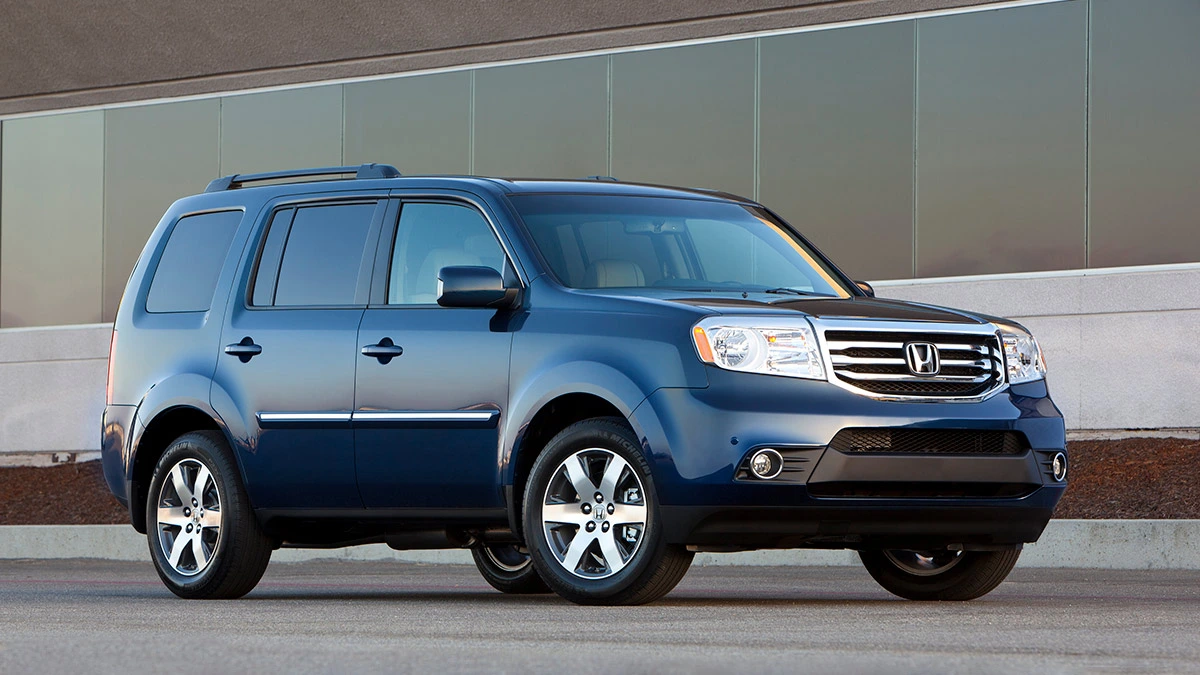
Honda has announced one of its largest U.S. safety recalls of the year, affecting nearly 880,000 SUVs and pickup trucks because of a defect that can cause rear suspension components to corrode over time.
The recall primarily impacts vehicles operated in states where road salt is heavily used during winter, raising concerns that prolonged exposure to corrosive conditions could weaken critical suspension parts and increase the risk of a crash.
The campaign highlights a growing challenge facing automakers as vehicles remain on the road longer and continue to experience years of exposure to harsh environmental conditions.
While corrosion-related recalls are not uncommon in northern regions of the United States, the scale of Honda’s latest action has drawn widespread attention because it involves several of the company’s most popular models and nearly nine hundred thousand vehicles.
According to the U.S. National Highway Traffic Safety Administration (NHTSA), the recall affects approximately 875,000 vehicles, including certain 2021 through 2025 Honda Pilot, 2020 through 2025 Honda Passport, and 2020 through 2025 Honda Ridgeline models.
Honda determined that prolonged exposure to road salt, water, and moisture can cause corrosion around the rear suspension frame mounting points. If corrosion progresses without detection, the rear suspension trailing arm could detach from the vehicle, reducing stability and significantly increasing the likelihood of an accident.
Honda stated that the issue is primarily limited to vehicles originally sold or currently registered in states where winter road salt is commonly used to prevent ice accumulation. These regions experience substantially higher levels of corrosion because salt accelerates the deterioration of exposed steel components over time.
Also Read: 10 Cars Where Remote Features Stop Working Without a Subscription
How Honda Identified the Problem
The recall follows an extensive internal investigation that examined customer reports, dealership inspections, and field data collected over several years.
According to documents submitted to NHTSA, Honda engineers began reviewing isolated reports involving corrosion around rear suspension mounting areas before identifying a pattern in vehicles operated under severe winter conditions.
The investigation determined that repeated exposure to salt and moisture could allow corrosion to develop more rapidly than anticipated, particularly where protective coatings had deteriorated after years of service.
Although the issue develops gradually rather than suddenly, engineers concluded that advanced corrosion could eventually compromise the structural integrity of the suspension mounting point. As a result, Honda decided to initiate a voluntary safety recall before additional vehicles experienced significant deterioration.
Company officials emphasized that the decision reflects Honda’s commitment to addressing potential safety concerns proactively. Automakers routinely monitor warranty claims, dealership repairs, customer complaints, and field inspections to identify emerging trends that may require corrective action.
In this case, the accumulated data provided sufficient evidence to justify a nationwide recall covering affected vehicles operating in designated corrosion-prone regions.
Why Rear Suspension Corrosion Is a Serious Safety Concern
The rear suspension performs a critical role in maintaining vehicle stability, ride comfort, and predictable handling.
Trailing arms connect the rear wheels to the vehicle’s chassis, helping control wheel movement during acceleration, braking, and cornering.
If corrosion weakens the mounting area where the trailing arm attaches to the frame, the suspension geometry can change unexpectedly, affecting steering response and full vehicle control.
In severe cases, excessive corrosion could allow the trailing arm to separate from its mounting point. Such a failure may result in abnormal rear wheel movement, making the vehicle difficult to control, particularly during emergency maneuvers or at highway speeds.
Safety experts note that suspension failures are especially dangerous because they can occur without warning after corrosion has progressed beyond visible surface rust.
Honda has stated that drivers may notice warning signs before significant structural damage develops. These can include unusual noises from the rear suspension, changes in vehicle handling, uneven tire wear, or visible corrosion underneath the vehicle during routine maintenance inspections.
However, because corrosion often begins in areas that are difficult to inspect without lifting the vehicle, many owners may not recognize the problem until a dealership performs a detailed examination.
Dealers Will Inspect and Repair Affected Vehicles
Honda has developed a multi-step repair procedure to address the issue depending on the condition of each vehicle.

According to the recall documents filed with NHTSA, dealers will first inspect the rear suspension mounting area for evidence of corrosion. Vehicles showing little or no corrosion will receive an anti-corrosion treatment designed to improve long-term protection against moisture and road salt.
If technicians identify moderate corrosion, additional reinforcement components may be installed to restore structural integrity while preventing further deterioration. Vehicles exhibiting severe corrosion that exceeds repair limits will receive replacement rear frame components or other necessary structural repairs at no cost to owners.
Honda said owner notification letters will begin mailing in phases, and all inspections and approved repairs will be performed free of charge through authorized dealerships.
The company is also advising owners who experience unusual rear suspension noises or handling changes to schedule an inspection promptly rather than waiting for their official notification letter.
Owners Are Encouraged to Act Promptly
Although the recall is preventive in nature, safety experts recommend that affected owners arrange an inspection as soon as they receive notification from Honda.
Corrosion-related issues generally develop over an extended period, meaning many vehicles will show little or no structural damage. However, delaying an inspection could allow deterioration to progress, particularly in regions where winter road salt is applied frequently.
According to the National Highway Traffic Safety Administration, owners can confirm whether their vehicle is included by entering the Vehicle Identification Number (VIN) into the agency’s recall database or Honda’s owner information portal.
Dealers have already begun receiving repair procedures, replacement components, and inspection guidelines to ensure repairs can be completed efficiently once owner notifications are issued.
Industry analysts note that large-scale recalls have become increasingly common as automakers expand vehicle monitoring through warranty data, dealership reports, and field investigations.
While recalls often generate negative headlines, many safety experts view voluntary actions such as Honda’s as evidence that manufacturers are identifying and addressing potential defects before they result in a larger number of serious incidents.
The recall also serves as a reminder of the long-term impact that environmental conditions can have on vehicle durability. States across the northern United States routinely use salt and chemical de-icing agents during winter, helping improve road safety but accelerating corrosion on exposed metal components.
Manufacturers have introduced improved protective coatings over the years, yet prolonged exposure combined with vehicle age can still create unexpected maintenance and safety challenges.
For Honda, responding quickly is important not only from a safety perspective but also for maintaining customer confidence. The Pilot, Passport, and Ridgeline represent some of the brand’s most popular light trucks in North America, and many owners rely on these vehicles for daily transportation and family travel.
By launching a comprehensive inspection and repair program before widespread failures occur, Honda aims to minimize risk while reinforcing its long-standing reputation for reliability and product quality.
The recall also illustrates how modern vehicle safety extends beyond advanced driver-assistance systems and crash protection. Structural durability remains equally important throughout a vehicle’s lifespan, particularly in demanding climates.
As more vehicles stay on the road for well over a decade, manufacturers are expected to place even greater emphasis on corrosion prevention, long-term durability testing, and early detection of potential safety issues.
For affected Honda owners, scheduling the inspection promptly will be the most effective way to ensure their vehicle continues to operate safely for years to come.
Also Read: 10 Beginner Motorcycles That Hold Their Value Best
