
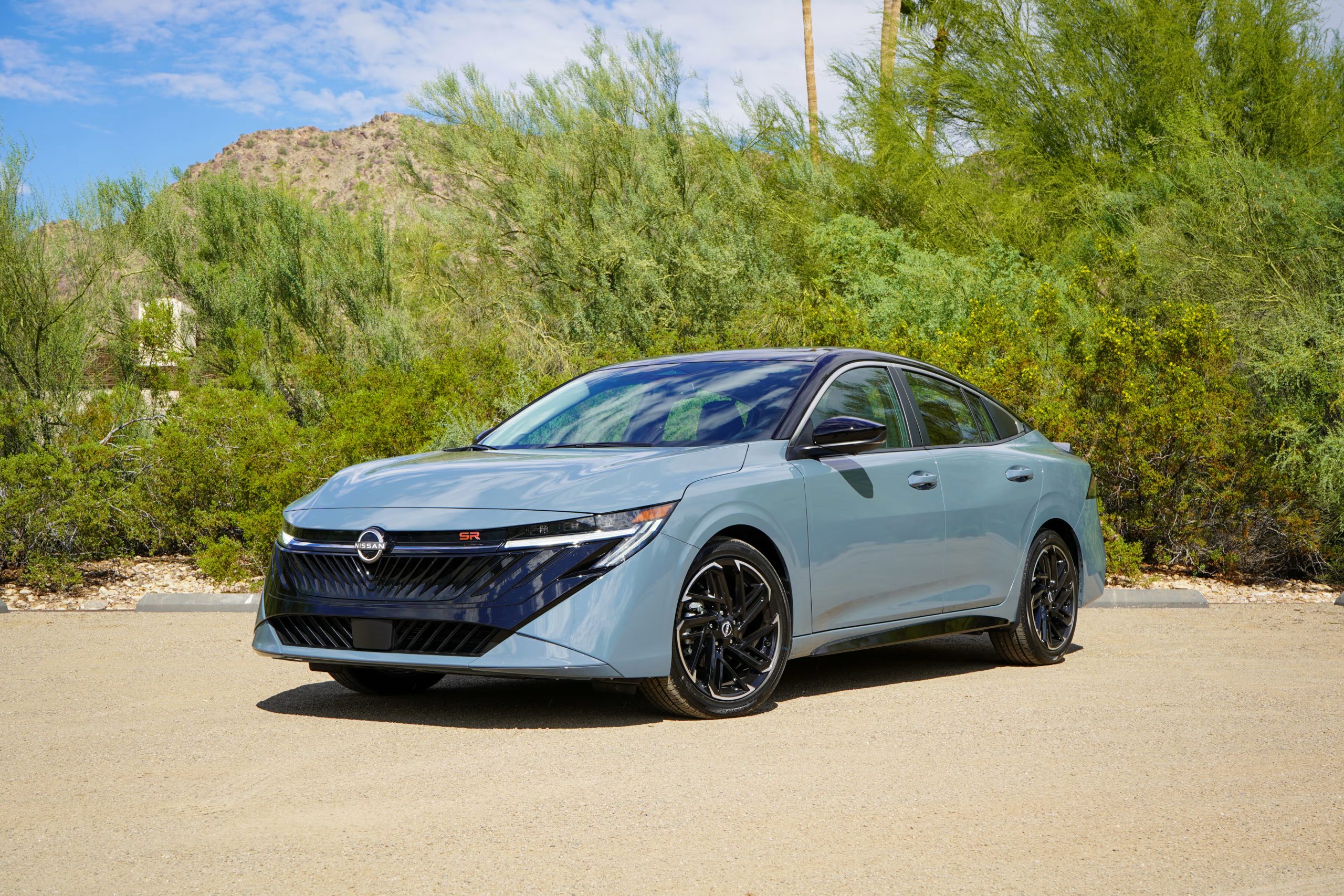
Nissan has announced a safety recall affecting a limited number of 2026 Sentra sedans after identifying a manufacturing defect that could compromise occupant protection in the event of a crash.
Although the campaign involves far fewer vehicles than several recent industry-wide recalls, it has attracted significant attention because the Sentra remains one of Nissan’s highest-volume passenger cars in North America and a key model in the compact sedan segment.
The recall underscores how even small production inconsistencies can trigger mandatory safety actions when they involve critical structural components.
Modern vehicles undergo extensive quality inspections before leaving the factory, yet manufacturers continue monitoring production data, supplier reports, dealership inspections, and warranty claims after vehicles enter customers’ hands.
When a potential safety concern is identified, automakers are required to notify regulators and provide repairs free of charge.
According to the National Highway Traffic Safety Administration (NHTSA), Nissan is recalling certain 2026 Sentra sedans because the front seat frame hook bracket may have been inadequately welded during manufacturing.
The defective weld could allow the front seat frame to loosen during a collision, preventing the seat and seat belt anchorage from performing as designed.
As a result, the affected vehicles fail to comply with Federal Motor Vehicle Safety Standards covering seating systems and seat belt anchorages. Owners will receive replacement front seat assemblies at no cost through authorized Nissan dealerships.
Although the number of affected vehicles is relatively small compared with many recent recalls, safety engineers note that defects involving occupant restraint systems receive particular scrutiny because they directly influence passenger protection during an accident.
Also Read: 10 Oldest Nameplates Still in Production
How the Defect Was Identified
The recall follows an internal quality investigation that traced the issue to a supplier manufacturing process.
According to recall documents reviewed by the NHTSA, Nissan discovered that certain front seat frame hook brackets may not have received sufficient weld penetration during production.
While the defect is not expected to affect every vehicle included in the recall population, engineers concluded that the possibility of weakened welds justified a voluntary safety campaign before additional vehicles accumulated mileage.
Manufacturing quality audits play an important role in identifying these issues. Every major automaker routinely performs inspections of supplier components and finished vehicles, comparing production samples against engineering specifications.
When inconsistencies are detected, companies analyze manufacturing records to determine exactly which production batches may have been affected.
In this case, Nissan used production traceability records to identify a limited group of vehicles assembled during a specific manufacturing period. Rather than waiting for field failures or customer complaints to increase, the company elected to notify regulators and begin a recall while the number of potentially affected vehicles remained relatively small.
Industry analysts say this proactive approach has become increasingly common as manufacturers expand the use of digital quality-control systems capable of identifying production anomalies much earlier than traditional inspection methods.
Why Seat Frame Integrity Matters
Although the defect is hidden beneath the seat cushion and is unlikely to be noticed during everyday driving, the affected component performs a critical safety function.
The front seat frame forms part of the vehicle’s occupant restraint system by supporting both the driver and the passenger and the seat belt anchor points. During a collision, tremendous forces are transmitted through the seat structure as occupants are restrained by their seat belts.
If the frame or its mounting brackets are not manufactured to specification, the seat may move more than intended, reducing the effectiveness of the restraint system.
According to the NHTSA, a loose seat frame can increase the risk of injury because occupants may not remain in their optimal seating position during a crash. Federal Motor Vehicle Safety Standards require seating systems to withstand substantial crash loads without structural failure, making weld quality an essential part of vehicle safety certification.
Safety experts note that most drivers are unlikely to experience any symptoms during normal operation. Unlike mechanical defects involving steering or braking systems, a weakened seat frame may not produce warning lights, unusual noises, or noticeable changes in vehicle performance.
That is one reason manufacturers typically encourage owners to respond promptly to recall notices even when no obvious problems are present.
Nissan’s Repair Plan
Nissan has instructed its dealer network to replace the complete front seat assemblies on affected vehicles rather than attempting localized repairs. Replacing the entire assembly ensures every structural component meets the required manufacturing specifications and eliminates any uncertainty regarding weld integrity.
According to the recall information, owners will be notified by mail, and dealerships will complete the repairs free of charge.
Nissan is also advising customers to verify whether their vehicle is included by using the company’s VIN lookup tool or the NHTSA recall database before scheduling a service appointment. Vehicles outside the identified production range are not affected by this campaign.
Quality Control Remains a Growing Focus Across the Auto Industry
Although the Nissan Sentra recall affects only a limited production batch, it highlights the increasingly rigorous quality control standards that govern today’s automotive industry.
Modern vehicles contain thousands of individual components sourced from suppliers around the world, making continuous monitoring essential even after production begins. Automakers now rely on advanced manufacturing analytics, supplier audits, and traceability systems to identify potential defects before they become widespread safety issues.
Industry experts note that recalls involving structural components are treated differently from cosmetic or convenience-related problems because they can directly influence crash protection.
In Nissan’s case, the issue involves the integrity of the front seat assembly, a component that works alongside seat belts and airbags to protect occupants during a collision.
Even though no widespread incidents or injuries prompted the campaign, the company determined that replacing the affected seats was the most appropriate solution to ensure every vehicle meets federal safety requirements.
Owners of affected Sentra models are encouraged to schedule repairs promptly after receiving notification.
The replacement process is expected to be straightforward, with dealerships installing new front seat assemblies built to the correct manufacturing specifications. Because the repair is performed under a safety recall, customers will not be charged for parts or labor.
The campaign also reinforces the importance of checking for open recalls periodically, even when a vehicle appears to operate normally. Many safety-related defects develop without producing noticeable symptoms during everyday driving.
Manufacturers and the National Highway Traffic Safety Administration recommend that owners verify their vehicle identification number whenever a recall is announced, particularly after purchasing a new or used vehicle.
For Nissan, responding quickly helps maintain customer confidence in one of its most important passenger cars. The Sentra has remained a cornerstone of the company’s North American lineup for decades, competing in one of the industry’s most competitive compact sedan segments.
Addressing the issue through a voluntary recall demonstrates Nissan’s commitment to meeting regulatory standards and protecting customer safety before isolated manufacturing defects have an opportunity to affect a larger number of vehicles.
While the recall is relatively small compared with recent industry campaigns, it illustrates how manufacturers increasingly prioritize preventive action, ensuring that even limited production issues are corrected before they develop into more significant safety concerns.

Looking ahead, industry analysts expect automakers to continue strengthening production oversight as vehicle manufacturing becomes increasingly automated and dependent on complex global supply chains.
Digital quality-control systems now allow manufacturers to trace individual components back to specific production batches, making it possible to identify affected vehicles with far greater precision than in the past.
This capability enables companies to issue targeted recalls instead of broad campaigns that include vehicles unaffected by the defect.
For consumers, the latest Sentra recall serves as a reminder that safety recalls are an essential part of the automotive industry’s commitment to continuous product improvement.
A recall does not necessarily indicate that a vehicle is unreliable; rather, it reflects a manufacturer’s responsibility to correct issues that could affect occupant safety or regulatory compliance.
By responding promptly to recall notices and completing recommended repairs, owners help ensure their vehicles continue to meet the safety standards established when they were originally certified for sale, while also preserving long-term reliability and resale value.
Also Read: 10 Narrowest Cars Ever Sold in America
