
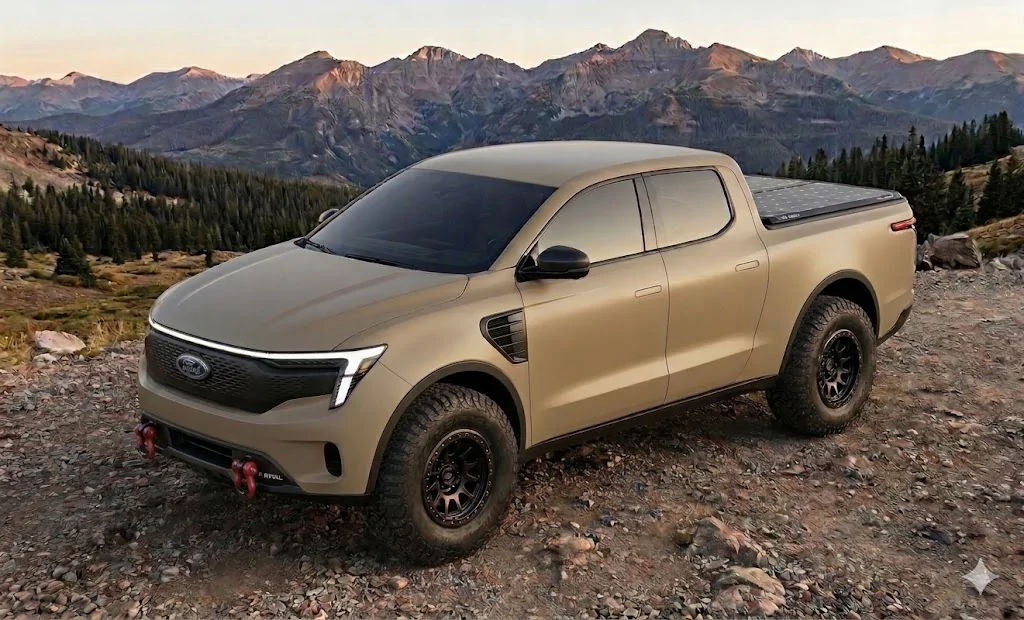
Ford’s long-awaited affordable electric pickup is moving closer to reality as new prototype sightings and fresh engineering details provide the clearest look yet at one of the company’s most important upcoming products.
Expected to revive the historic Ranchero nameplate, the compact electric truck is designed to bring EV ownership within reach of mainstream buyers by targeting a starting price of around $30,000, significantly below that of most electric pickups currently available in the United States.
The project represents a major shift in Ford’s electric vehicle strategy. Rather than focusing primarily on large, premium-priced EVs, the automaker is developing a simpler, lighter, and more affordable platform intended to compete with emerging low-cost electric trucks while attracting customers who may be purchasing their first EV.
Industry analysts believe the vehicle could become one of Ford’s most significant product launches of the decade if it successfully combines affordability with the practicality pickup buyers expect.
According to Car and Driver, recently captured prototype images reveal a camouflaged compact pickup testing near Dearborn, Michigan, offering new insights into the vehicle’s proportions and design.
The truck appears similar in size to the gasoline-powered Ford Maverick, although it rides on Ford’s all-new Universal EV platform, which has been engineered specifically to reduce manufacturing costs through simplified construction and fewer individual components.
Ford has previously confirmed that production is scheduled to begin in 2027 at its Louisville Assembly Plant in Kentucky, with a target starting price of approximately $30,000.
Also Read: 10 Longest-Running Automotive Engine Families Ever Built
A Return to an Iconic Name
Although Ford has not officially confirmed the Ranchero name, industry observers believe it is the strongest candidate following the company’s recent trademark filing.
The original Ford Ranchero, produced between 1957 and 1979, combined passenger-car comfort with pickup utility, creating one of America’s earliest car-based trucks.
Reviving the name for an affordable electric pickup would allow Ford to connect its future EV strategy with one of its best-known historical models while introducing the badge to a new generation of buyers.
Ford executives have remained cautious about confirming the final branding, but they have consistently described the upcoming truck as a vehicle intended to redefine affordable electric transportation.
CEO Jim Farley has previously referred to the company’s next-generation EV platform as a potential “Model T moment,” emphasizing that lowering costs rather than increasing vehicle size has become Ford’s primary objective.
Designed Around Simplicity and Affordability
Unlike many current electric pickups that emphasize maximum towing capacity, oversized battery packs, and luxury features, Ford’s upcoming truck has been engineered with simplicity in mind.
According to development information released by Ford, the Universal EV platform uses approximately 20 percent fewer parts, 25 percent fewer fasteners, and requires significantly fewer manufacturing stations than existing vehicle architectures.
Engineers have also adopted a 400-volt electrical system instead of more expensive high-voltage configurations, helping reduce production costs while maintaining competitive performance for everyday drivers.
Recent spy photographs suggest the truck will feature a practical four-door cab, an upright driving position, and a conventional pickup profile rather than an aggressively futuristic appearance.
Observers also identified a large central infotainment display, front-facing camera hardware, and a spacious cabin expected to provide interior room comparable to or greater than a Toyota RAV4.
Ford has indicated that performance will remain an important consideration despite the vehicle’s affordability. Internal development targets reportedly include a 0-to-60 mph time of approximately 4.5 seconds, giving the compact pickup acceleration comparable to many gasoline-powered performance vehicles while maintaining everyday usability.
A New Direction for Ford’s Electric Vehicle Strategy
The upcoming affordable electric pickup represents far more than the introduction of another model to Ford’s lineup. It signals a significant shift in the company’s long-term approach to electrification.
Over the past several years, Ford has focused heavily on larger electric vehicles such as the F-150 Lightning and Mustang Mach-E. While those products established the company’s presence in the EV market, they also highlighted one of the industry’s biggest challenges: affordability.
Many consumers remain interested in electric vehicles but are unwilling or unable to spend $50,000 or more on a new truck.
By targeting a starting price of approximately $30,000, Ford hopes to attract buyers who want the practicality of a pickup without the premium pricing that currently defines much of the electric truck segment.
Industry analysts believe this strategy could significantly expand Ford’s EV customer base if production costs remain under control.
The new truck is also expected to appeal to younger buyers, urban professionals, and small-business owners who prioritize efficiency, maneuverability, and lower operating costs over maximum towing capacity.
Rather than competing directly with heavy-duty electric pickups, the compact model is expected to focus on daily usability, making it suitable for commuting, weekend recreation, and light commercial work.
Competition in the Affordable EV Segment Is Increasing
Ford’s decision to accelerate development of a budget-friendly electric pickup comes as competition in the entry-level EV market continues to intensify. Several manufacturers are investing heavily in lower-cost electric platforms as battery prices gradually decline and production methods become more efficient.
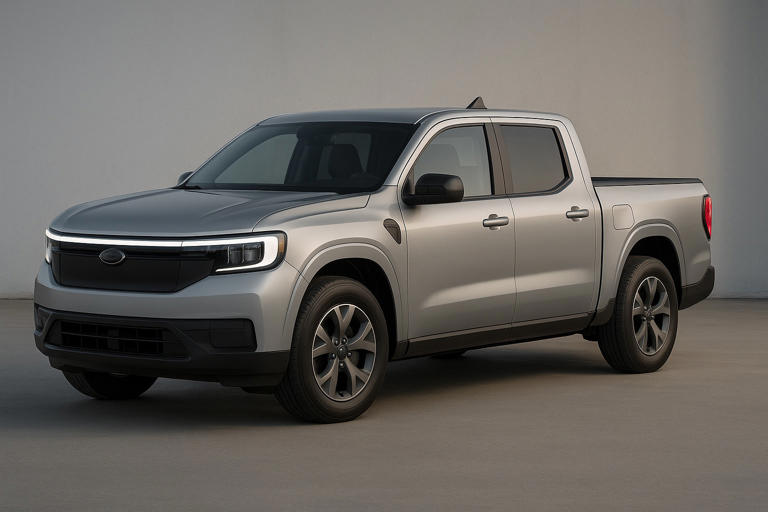
Industry experts believe affordable electric vehicles represent the next major growth opportunity for the automotive sector. While premium EVs helped introduce new technology to consumers, long-term market expansion will depend on vehicles that offer competitive pricing without sacrificing quality or practicality.
Companies capable of delivering reliable electric vehicles at accessible price points are expected to gain a significant advantage during the second half of the decade.
The compact pickup segment itself has also experienced renewed popularity. Models such as the Ford Maverick have demonstrated strong demand for smaller trucks that combine passenger-car comfort with everyday utility.
Analysts expect an electric alternative to appeal to buyers seeking lower fuel costs, reduced maintenance, and improved environmental performance while retaining the flexibility that has made compact pickups increasingly popular.
Manufacturing Efficiency Will Be Critical
One of the most closely watched aspects of the project is Ford’s new manufacturing strategy. Company executives have repeatedly stated that reducing complexity is just as important as improving battery technology.
By designing a platform with fewer individual components, simplified assembly processes, and more efficient production methods, Ford expects to lower manufacturing costs while improving profitability.
Industry analysts note that this approach could become a blueprint for future Ford electric vehicles. Instead of developing separate architectures for multiple vehicle categories, the Universal EV platform has been designed to support a range of products while sharing major engineering components.
Greater parts commonality allows manufacturers to purchase materials in larger volumes, reduce supplier complexity, and streamline production across multiple assembly plants.
Ford has also emphasized domestic manufacturing as an important part of its long-term strategy. Building the truck in Kentucky enables the company to shorten supply chains, support American manufacturing jobs, and respond more quickly to changing customer demand within the North American market.
Looking Ahead
Although Ford has not yet released final specifications regarding battery capacity, driving range, towing capability, or charging performance, industry observers expect additional information to emerge as development progresses toward production.
Prototype testing is expected to continue throughout the coming year as engineers refine vehicle dynamics, software systems, and manufacturing processes before final validation begins.
The success of the project will depend on Ford’s ability to deliver on its affordability promise without compromising reliability, quality, or customer expectations.
Achieving a starting price near $30,000 while offering a competitive driving range and practical capability would represent a significant milestone not only for Ford but also for the broader electric vehicle market.
For the automotive industry, the upcoming Ranchero EV symbolizes the next phase of electrification. Instead of focusing exclusively on high-performance luxury models, manufacturers are increasingly directing attention toward practical, affordable vehicles capable of reaching a much larger audience.
If Ford successfully brings its compact electric pickup to market at the projected price, it could become one of the most influential EV launches of the decade, encouraging wider consumer adoption while reshaping expectations for what an affordable electric truck can offer.
Also Read: 10 Cars With the Standard Safety Tech That Matters Most After 70
