
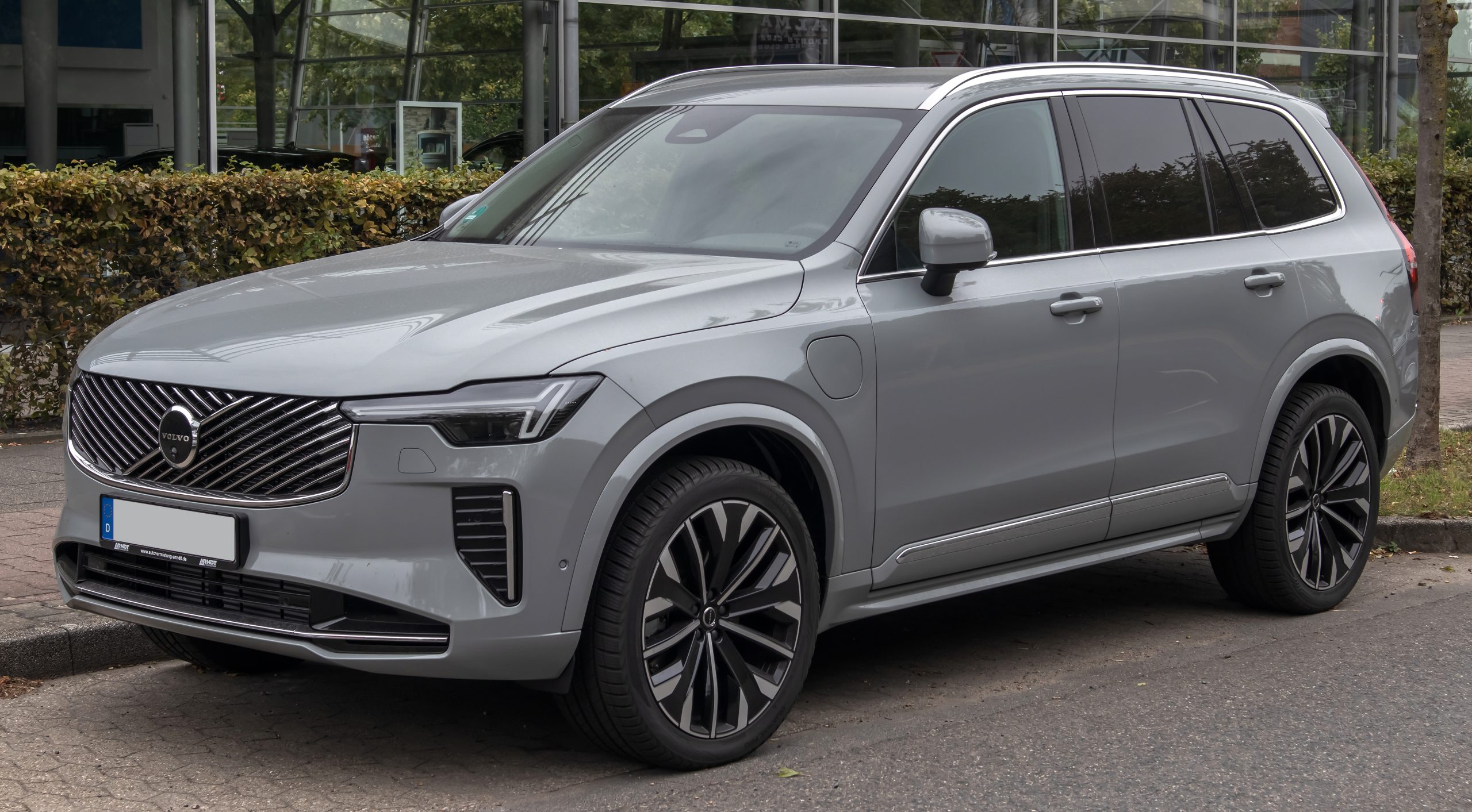
The modern luxury SUV is expected to deliver far more than a comfortable ride and premium materials. Buyers also expect advanced technology, thoughtful convenience, and engineering that improves daily driving without demanding constant attention.
The Volvo XC90 has earned a strong reputation in the United States by combining Scandinavian design with a long list of intelligent features that often remain unnoticed even after years of ownership.
While most drivers immediately recognize its spacious cabin, advanced safety systems, and refined powertrain, many of the vehicle’s smartest functions stay hidden within menus, sensors, and carefully designed hardware.
Owners frequently discover these capabilities months after purchasing the SUV because they are not prominently advertised during delivery.
This article highlights eight lesser-known features available on the Volvo XC90 sold in the United States. Every feature discussed is based on Volvo’s official owner documentation, U.S. specifications, or factory-installed equipment offered on recent model years.
Whether you already own an XC90 or are considering purchasing one, understanding these hidden capabilities can help you get much more from one of America’s most respected luxury three-row SUVs.
Also Read: 10 Hidden Features in the Mazda CX-90
1. Hands-Free Tailgate Can Be Activated With a Simple Foot Motion
Many luxury SUVs now offer power liftgates, but the Volvo XC90 adds another layer of convenience through its hands-free tailgate system.
Owners often assume the liftgate can only be opened using the key fob or dashboard controls, yet the SUV includes a motion-activated sensor beneath the rear bumper that allows the tailgate to open without touching the vehicle.
The feature is particularly useful when both hands are occupied with groceries, luggage, sports equipment, or shopping bags. Instead of setting items down, the driver simply needs the key within detection range and to perform a forward kicking motion beneath the left side of the rear bumper. Once the sensor recognizes the movement and verifies that the key is nearby, the liftgate opens automatically.
Unlike some competing systems that require a sweeping motion, Volvo calibrates the sensor for a deliberate forward kick, helping reduce accidental activation while washing the vehicle or walking behind it. The same gesture also closes the liftgate on equipped models, making loading and unloading noticeably easier.
Another benefit appears during poor weather. Drivers can avoid touching a dirty liftgate after rain or snow, keeping clothing cleaner while accessing the cargo area.
The system also works alongside the programmable tailgate height setting. Owners with low garage ceilings can teach the XC90 to stop opening at a customized height, preventing accidental contact with overhead obstacles. This memory remains stored until manually changed.
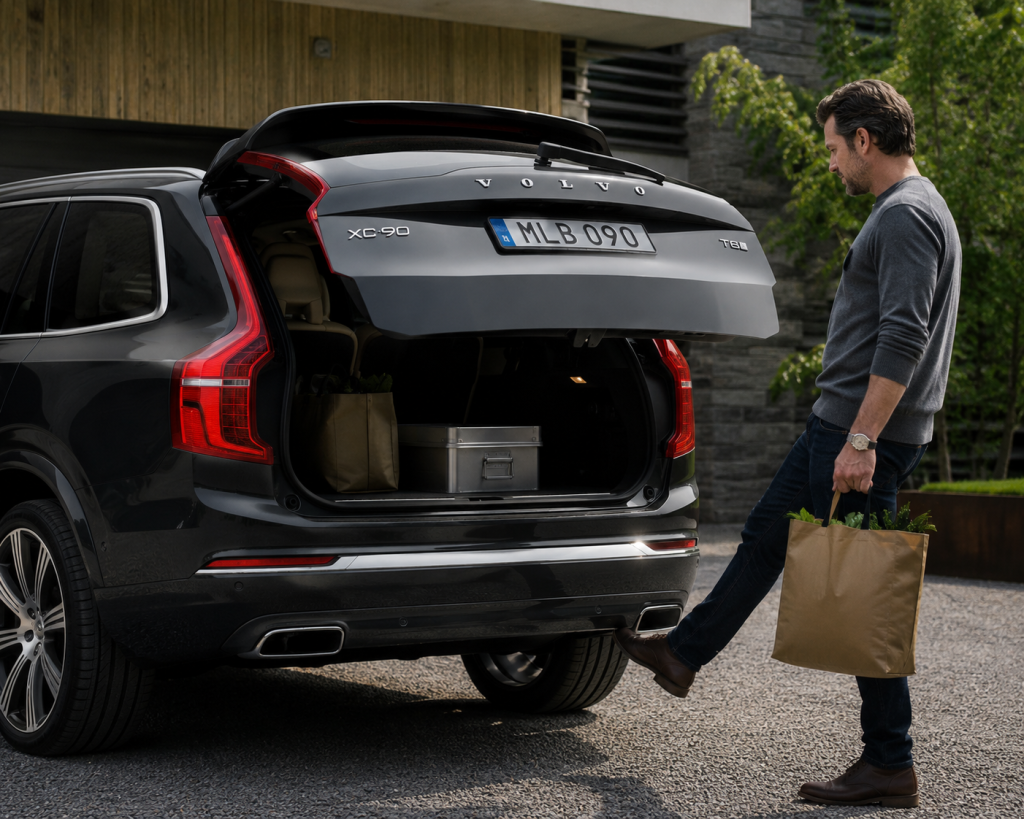
Because this capability operates quietly in the background, many owners never realize their XC90 includes it until reading the owner’s manual or seeing someone demonstrate it. Once discovered, it quickly becomes one of the vehicle’s most frequently used convenience features.
2. Integrated Booster Cushion Eliminates the Need for a Separate Child Seat
One of Volvo’s longest-standing family-focused innovations remains hidden in plain sight. Select U.S. market Volvo XC90 models include an integrated child booster cushion built directly into the second row center seat. Instead of carrying a removable booster, parents can raise the factory-installed cushion within seconds.
The design reflects decades of Volvo safety research. By upgrading the child into the proper seating position, the vehicle’s standard three-point seat belt fits more correctly across the shoulders and hips. This improves comfort while helping the restraint system function as intended during a collision.
Using the booster is remarkably straightforward. The seat base lifts upward and locks into place, creating a higher seating surface without requiring extra hardware or installation. When no longer needed, the cushion folds neatly back into the seat, restoring a flat seating area for adult passengers.
Families particularly appreciate the convenience during school pickups or carpools. There is no separate booster seat to carry between vehicles, store in the cargo area, or remove when adults occupy the second row.
Volvo also engineered the surrounding seating position to work with the integrated booster, ensuring compatibility with the XC90’s advanced restraint systems. Parents should still follow Volvo’s recommended height and weight guidance along with applicable child passenger safety regulations in their state.
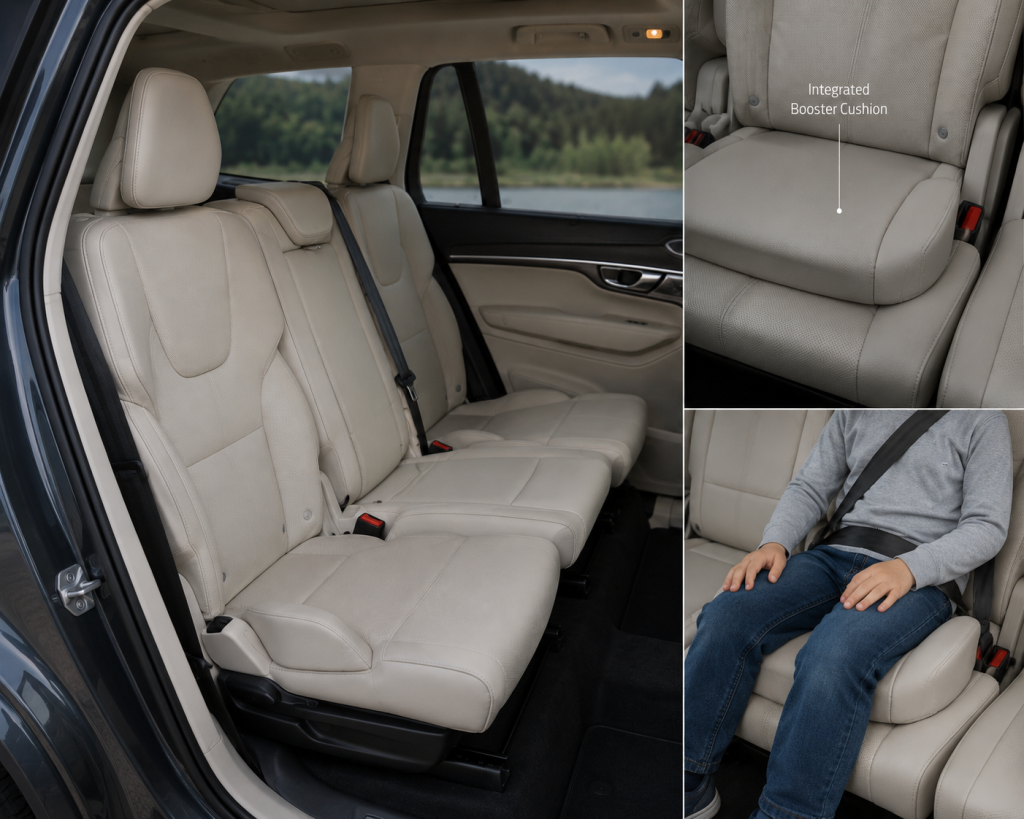
Although many buyers focus on the XC90’s Pilot Assist, panoramic roof, or premium audio options, this integrated booster represents one of the SUV’s most practical hidden features. It reflects Volvo’s long-standing philosophy of designing vehicles around real family needs rather than simply adding luxury equipment.
3. CleanZone Air Quality System Automatically Filters Cabin Air
Luxury SUVs often advertise premium interiors, but the Volvo XC90 quietly adds a feature that works behind the scenes every time the vehicle is driven.
Volvo’s CleanZone air quality system is designed to help maintain cleaner cabin air by limiting pollutants before they reach occupants. Many owners appreciate the comfortable cabin without realizing that an intelligent filtration system is constantly monitoring incoming air.
The system combines a multistage cabin air filter with an air quality sensor that continuously evaluates outside air. When upgraded levels of pollutants, exhaust gases, or other harmful particles are detected, the XC90 can automatically switch the climate control system into recirculation mode.
Instead of allowing contaminated outside air to enter the cabin, it temporarily seals the ventilation system until cleaner conditions return.
This function becomes especially valuable during heavy traffic, when following diesel trucks, or while driving through tunnels where emissions can become concentrated. Drivers do not need to adjust the climate controls manually because the vehicle makes these decisions automatically.
On newer U.S. market XC90 models equipped with Volvo’s advanced air purification technology, the system also removes a high percentage of fine particulate matter entering the cabin.
Owners can monitor air quality through the center touchscreen, which displays air purification information on supported models. This provides reassurance that the filtration system is actively protecting cabin occupants during everyday driving.
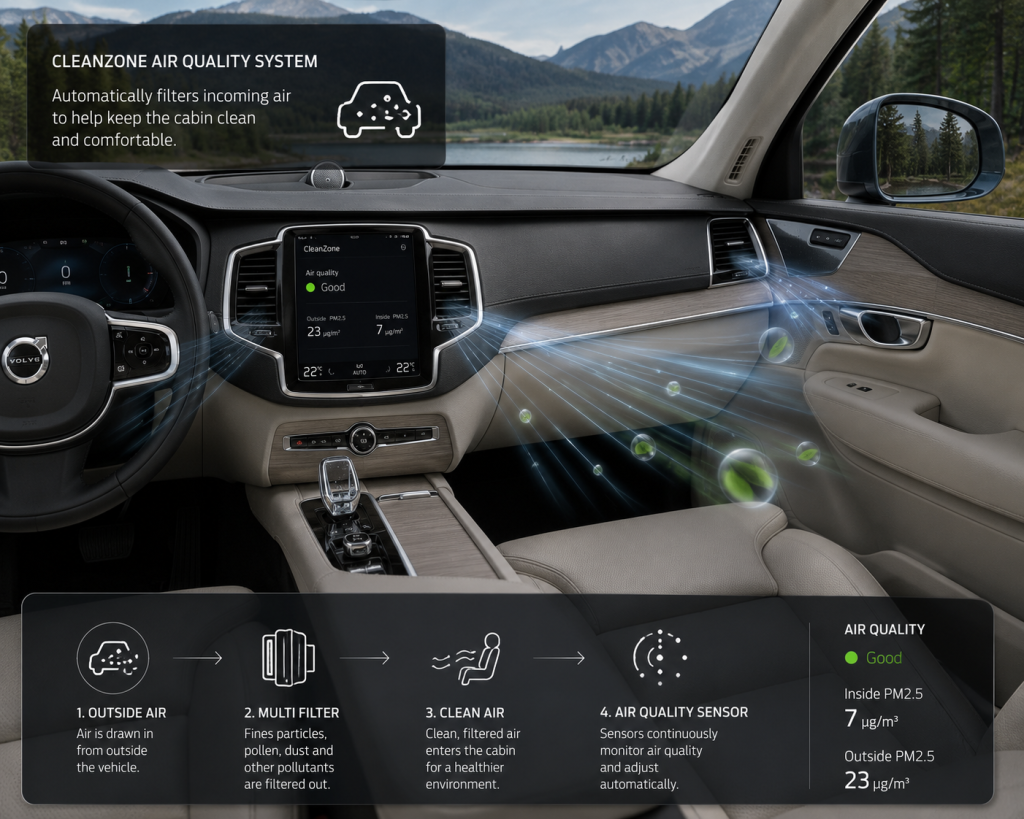
Although invisible during normal operation, CleanZone reflects Volvo’s long-standing emphasis on occupant wellness in addition to crash safety. The feature requires little attention from the driver yet contributes to a more pleasant interior environment throughout the year.
4. Hidden Grocery Bag Holder Keeps Cargo From Sliding Around
Many drivers have experienced arriving home only to find grocery bags tipped over in the cargo area. Volvo addressed this common problem with a clever storage solution that remains unnoticed by numerous XC90 owners.
Built into the rear cargo compartment is a foldable grocery bag holder that helps secure shopping bags during everyday driving.
The feature is integrated into the cargo floor assembly and can be deployed in seconds. Once raised into position, it creates a partition that holds grocery bags upright, reducing movement during acceleration, braking, and cornering. Delicate items such as eggs, fruit, or baked goods are much less likely to shift around in the luggage compartment.
Unlike removable cargo organizers that consume storage space when not in use, Volvo designed this holder to fold neatly back into the floor when not in use. The cargo area immediately returns to a flat loading surface capable of accommodating larger luggage, sports equipment, or household items without obstruction.
Owners who regularly visit warehouse stores or supermarkets often discover this feature accidentally while accessing the underfloor storage compartment. After learning how it works, many find themselves using it during nearly every shopping trip because it eliminates the need for reusable crates or aftermarket organizers.
The grocery bag holder also complements the XC90’s generous cargo capacity and flat load floor, making the vehicle even more practical for family errands. Rather than relying solely on luxury appointments, Volvo incorporated thoughtful details that improve day-to-day usability without adding unnecessary complexity.
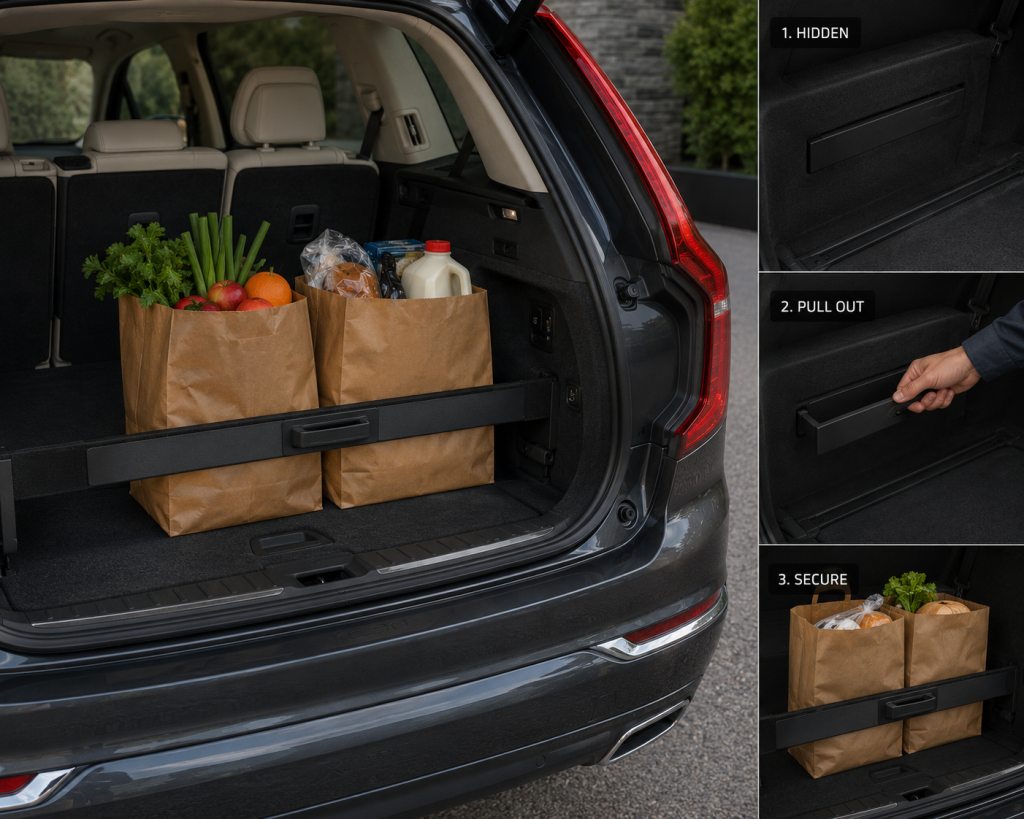
Small conveniences like this rarely appear in advertisements, yet they contribute significantly to the ownership experience and demonstrate the practical engineering philosophy behind the XC90.
5. Pilot Assist Can Steer the SUV With Minimal Driver Input
Many drivers recognize adaptive cruise control, but fewer realize how capable the Volvo XC90’s Pilot Assist system becomes when activated on properly marked roads.
Rather than serving only as a speed management feature, Pilot Assist combines adaptive cruise control with gentle steering assistance, allowing the SUV to maintain both a selected following distance and its position within the lane.
Although the driver must always remain attentive with hands on the steering wheel, the technology can significantly reduce fatigue during long highway trips.
Using information from forward-facing cameras and radar sensors, the XC90 continuously monitors lane markings and surrounding traffic. When the vehicle ahead slows, the system automatically reduces speed and can even bring the SUV to a complete stop in traffic if necessary.
Once traffic begins moving again, the XC90 can resume driving with minimal driver input, depending on the length of the stop and the model year.
The steering assistance operates through subtle corrections rather than abrupt movements. Instead of forcing the vehicle into the center of the lane, Pilot Assist provides smooth inputs that help maintain a natural driving feel. This becomes particularly useful during extended interstate travel, where constant steering corrections can become tiring.
Another hidden aspect is the customizable settings available through the center touchscreen. Drivers can adjust following distance preferences and enable or disable specific assistance features based on personal comfort. Because these settings are tucked inside vehicle menus, many owners never discover the full flexibility of the system.
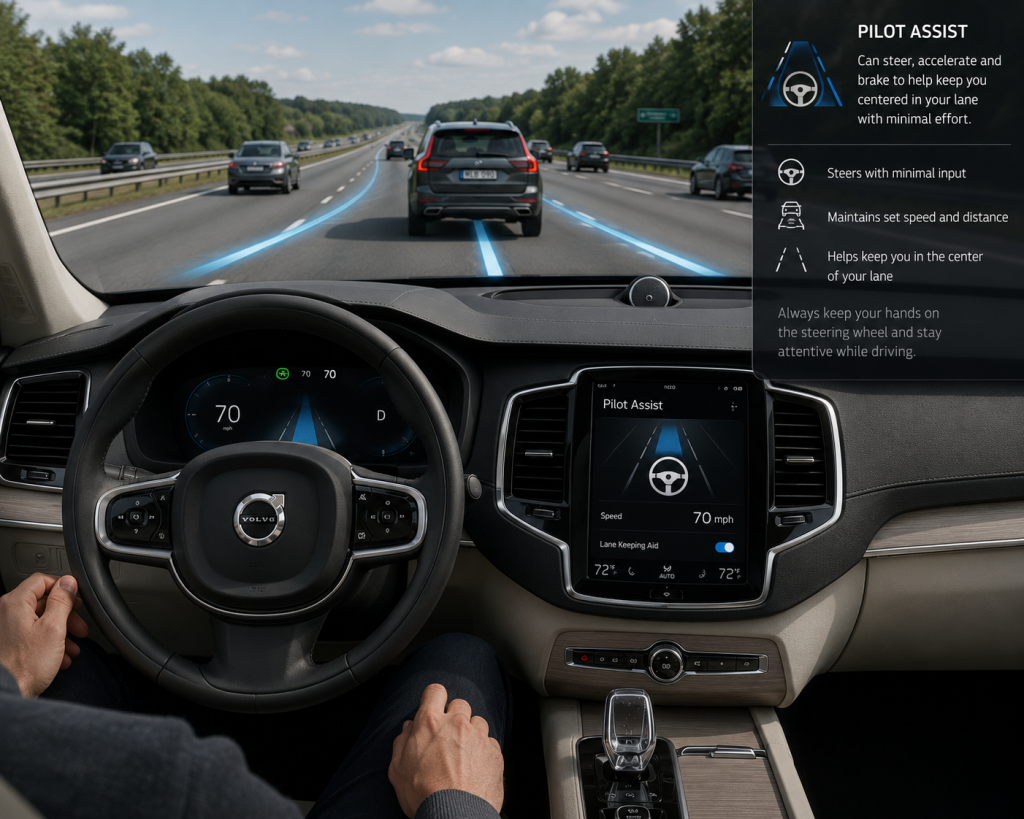
Pilot Assist is not an autonomous driving system and requires continuous driver supervision. Volvo clearly states that the driver remains responsible for steering, braking, and monitoring traffic at all times.
When used as intended, however, it becomes one of the XC90’s most valuable hidden technologies for everyday commuting and long-distance travel.
6. Four-Zone Climate Control Lets Rear Passengers Create Their Own Comfort
Climate control systems are common in premium SUVs, yet the Volvo XC90 offers a level of personalization that many owners do not fully utilize.
On equipped U.S. models, the available four-zone climate system allows individual temperature settings for the driver, front passenger, and both sides of the second row. Instead of forcing everyone to share the same cabin temperature, each seating area can be adjusted independently for greater comfort.
Rear passengers use dedicated climate controls positioned behind the center console to select their preferred temperature. Airflow is distributed through strategically placed ceiling and floor vents, helping maintain consistent comfort throughout all three rows.
This arrangement proves especially useful during family road trips where children and adults often have different temperature preferences.
An additional feature hidden within the infotainment system allows drivers to precondition the cabin before entering the vehicle.
Through the Volvo Cars smartphone app on supported models, owners can remotely activate climate control, warming the cabin during winter or cooling it before summer drives. The system can also defrost windows in cold weather, reducing preparation time before departure.
The climate system works alongside Volvo’s advanced air filtration technology, helping circulate cleaner air while maintaining the selected temperature settings. Because these functions operate automatically after initial setup, many owners overlook the extensive customization available within the vehicle’s climate menus.
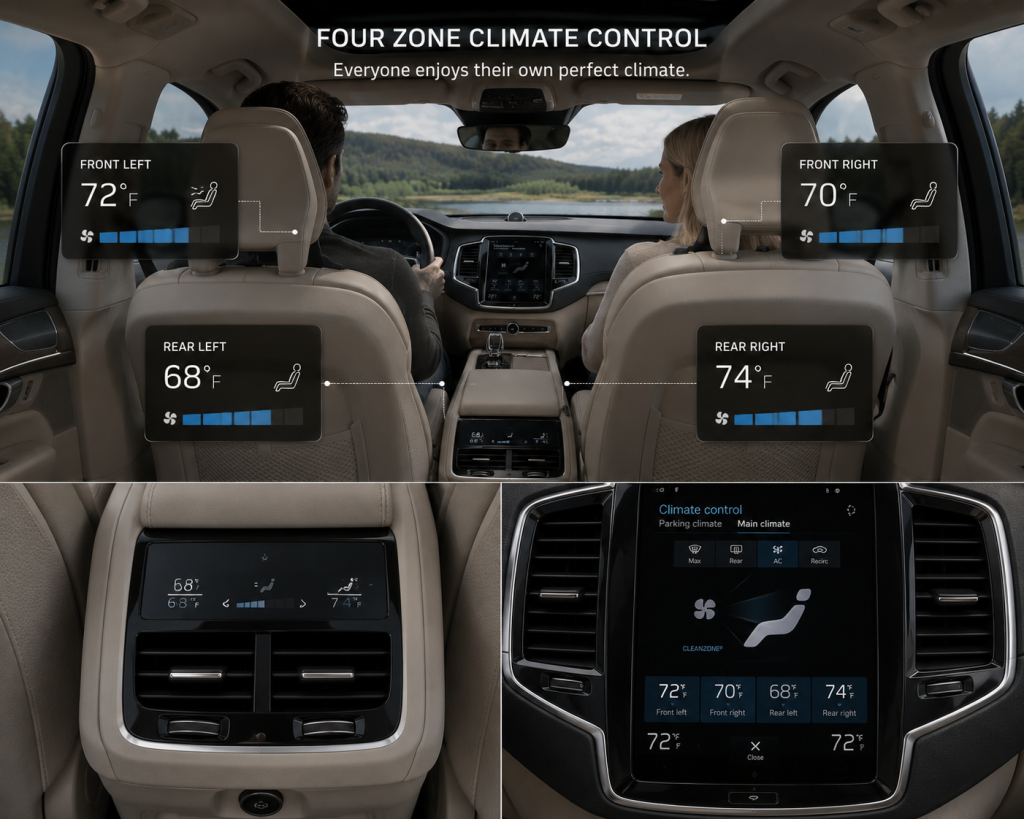
This thoughtful approach reflects Volvo’s focus on passenger well-being rather than simply adding luxury equipment. Every occupant benefits from a more comfortable ride without constantly requesting temperature adjustments from the driver, making long journeys noticeably more enjoyable for the entire family.
7. Programmable Key Memory Automatically Restores Your Personal Settings
Sharing a vehicle with another family member often means constantly readjusting the driver’s seat, mirrors, and other comfort settings before every trip. The Volvo XC90 quietly eliminates much of this inconvenience through its programmable key memory function.
While many owners know the SUV offers memory seats, fewer realize that the individual key fobs can automatically recall a driver’s saved preferences as soon as the vehicle is unlocked.
Each registered key can be paired with a specific driver profile stored within the infotainment system. When that key unlocks the XC90, the SUV recognizes which profile should be activated and restores previously saved settings.
Depending on equipment and model year, this can include the driver’s seat position, exterior mirror adjustments, steering feel preferences, climate control selections, and certain infotainment configurations.
This hidden capability becomes particularly valuable in households where multiple people regularly drive the same vehicle. Instead of manually selecting a profile every time, the XC90 performs the transition automatically.
The driver’s seat and mirrors begin moving toward their stored positions before the journey even starts, reducing preparation time and improving convenience.
Another useful detail is that individual profiles can maintain favorite navigation destinations, radio presets, and connected smartphone preferences. This creates a more personalized experience without affecting another driver’s settings.
Since the feature operates automatically after the initial setup, many owners forget it exists until they temporarily use a spare key that has not been linked to a profile.
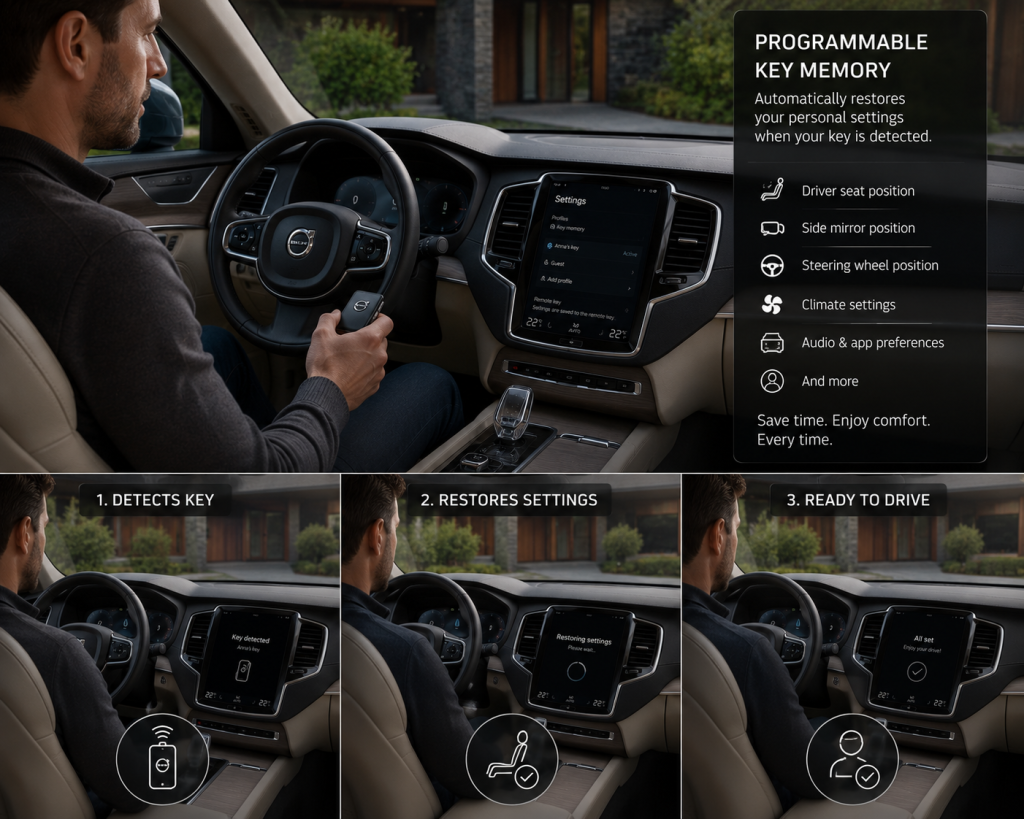
Volvo designed this system to make daily ownership more seamless rather than adding unnecessary complexity. Once configured through the center display, it quietly works in the background and contributes to the refined driving experience that has become a hallmark of the XC90.
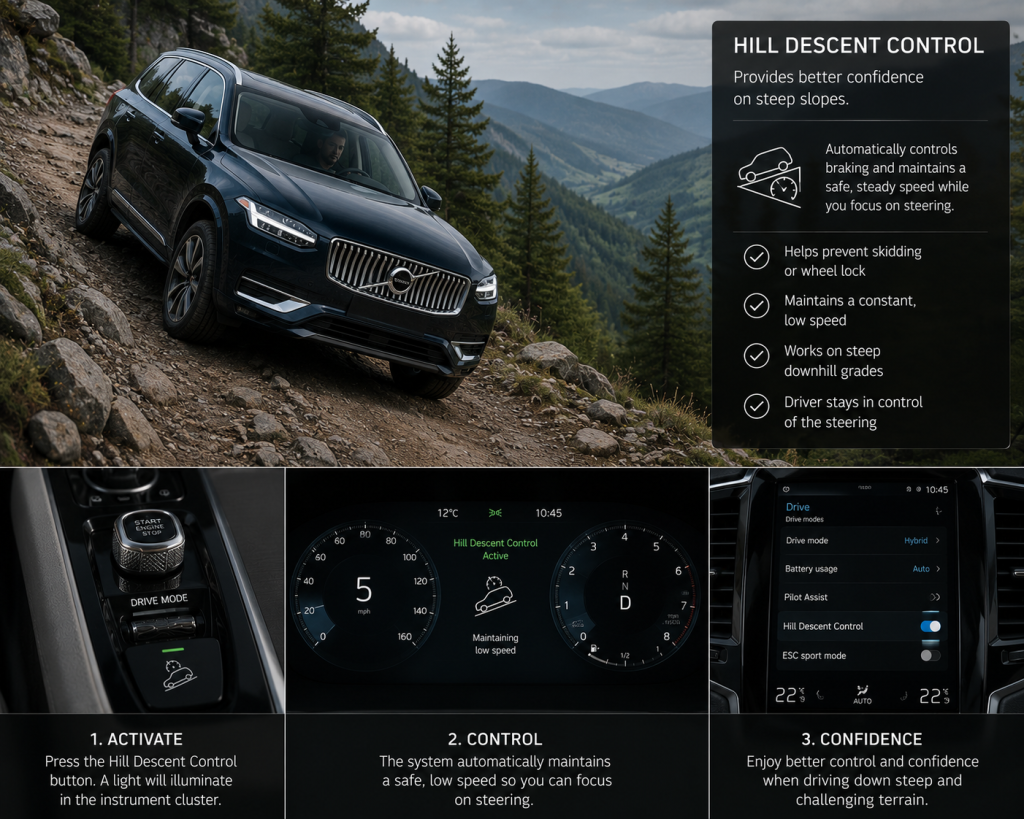
8. Hill Descent Control Provides Better Confidence on Steep Slopes
Most XC90 owners associate the SUV with comfortable highway travel, yet Volvo also equipped it with technology that assists during challenging downhill driving. Hill Descent Control is one of the vehicle’s lesser-known capabilities because many drivers never encounter conditions that require its use.
When activated at low speeds, the system automatically manages braking and vehicle speed while descending steep grades, allowing the driver to concentrate on steering.
The feature is especially beneficial on gravel roads, muddy trails, snow-covered driveways, or other slippery surfaces where maintaining a controlled descent can be difficult.
Instead of repeatedly applying the brake pedal, the driver activates Hill Descent Control through the vehicle settings or drive mode controls, depending on the model year. The XC90 then uses its anti-lock braking system and electronic stability control to regulate wheel speed individually.
By carefully controlling brake pressure, the system helps reduce wheel slip and maintains a steady downhill pace without sudden acceleration. This improves driver confidence while also reducing the likelihood of locking the wheels on loose terrain.
The technology is particularly effective on models equipped with all-wheel drive, where torque distribution works together with the braking system to maximize available traction.
Because many XC90 owners spend most of their time on paved roads, Hill Descent Control often remains unused for years. Nevertheless, it becomes an invaluable tool during vacations, mountain driving, or unexpected weather conditions.
Volvo included this capability not to encourage aggressive off-road driving but to provide additional security whenever road conditions become more demanding.
Hidden features like this demonstrate that the XC90’s engineering extends beyond luxury and comfort, delivering practical assistance that drivers may only appreciate when the situation truly calls for it.
Also Read: 8 Hidden Features in the Volkswagen Atlas
