
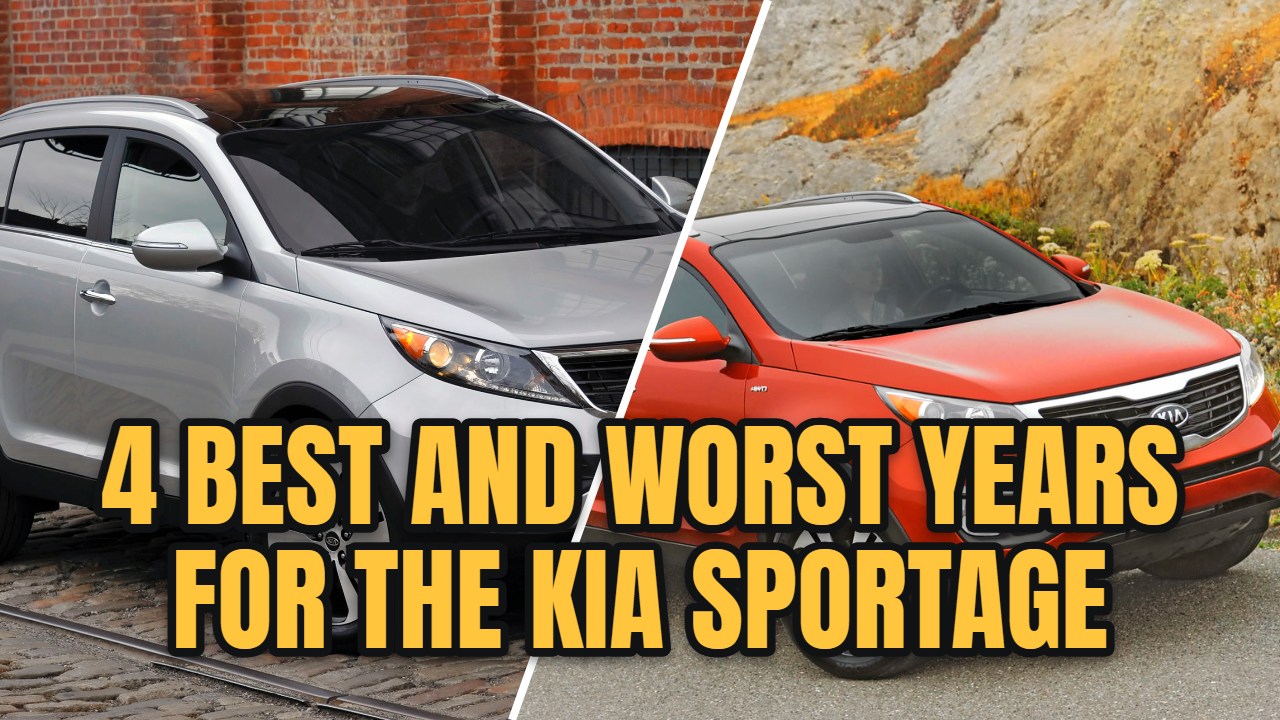
The Kia Sportage has been part of the American SUV market for decades, but its long production history has created a complicated picture for used-car buyers. Some model years have earned strong quality scores and benefited from years of engineering refinement.
Others have been connected with significant safety recalls, engine concerns, or electrical problems that deserve careful attention before purchase. That difference is exactly why choosing a Sportage based only on price, mileage, or exterior condition can be a mistake.
Kia has repeatedly transformed the Sportage. Early models were relatively basic sport utility vehicles, while later generations developed into polished compact crossovers with touchscreen infotainment, advanced driver assistance features, available all-wheel drive, and increasingly sophisticated cabin technology.
Mechanical changes also occurred between generations. Different versions have used naturally aspirated engines, turbocharged powertrains, conventional automatic transmissions, and, more recently, electrified options.
A long production run does not mean every Sportage year delivers the same ownership experience. Official safety actions provide an important example.
The National Highway Traffic Safety Administration announced a major recall involving certain Sportage vehicles because an electrical circuit in the hydraulic electronic control unit could short circuit and potentially cause an engine-compartment fire.
The campaign covered hundreds of thousands of Kia vehicles when combined with the Cadenza models included in the same recall.
At the other end of the ownership spectrum, certain Sportage years have posted impressive quality results. J.D. Power gave the 2020 Sportage an 89 out of 100 quality and reliability score, providing measurable support for its reputation as one of the stronger recent used examples.
This list separates four of the best Kia Sportage years from four years that used-SUV buyers should approach with additional caution. The selections consider model development, available reliability information, documented safety campaigns, and powertrain history.
No used vehicle is guaranteed to be problem-free, and a poorly maintained example from a highly rated year can still become expensive.
For that reason, the year on the registration document is only the beginning. Maintenance records, recall completion, oil-change history, and a professional pre-purchase inspection remain essential.
Still, knowing which Sportage years have stronger records and which have documented concerns can make the buying process considerably more informed.
Also Read: 4 Best Honda Ridgeline Years vs 4 to Avoid
4 Best Years for the Kia Sportage
1. 2020 Kia Sportage
Numbers give the 2020 Kia Sportage a particularly convincing reason to lead this section. J.D. Power awarded it an 89 out of 100 quality and reliability score, placing the SUV in the organization’s “Great” category.
That rating is based on reported defects, malfunctions, and design problems experienced by owners, making it more useful than simply calling the vehicle dependable without supporting evidence.
The 2020 model also arrived as a refreshed version of the fourth-generation Sportage rather than a completely new SUV. Kia updated its appearance and equipment, but the mainstream powertrain remained familiar.
The standard 2.4-liter gasoline direct-injection four-cylinder engine generated 181 horsepower and 175 lb-ft of torque. A six-speed automatic transmission handled shifting, giving the Sportage a conventional powertrain layout for this period.
That combination will not impress buyers searching for sports-car acceleration, but outright speed is not the reason the 2020 model appears here. Its value comes from its position within the generation.
Kia had already been producing the fourth-generation U.S. Sportage since the 2017 model year, meaning the 2020 vehicle was not introducing an entirely unfamiliar architecture.
Practical dimensions also helped it remain useful as a compact crossover. The Sportage measured 176.4 inches long and 73 inches wide. Those proportions made it substantially easier to place in a parking space than many larger SUVs while still offering the upright seating position buyers expect from the segment.
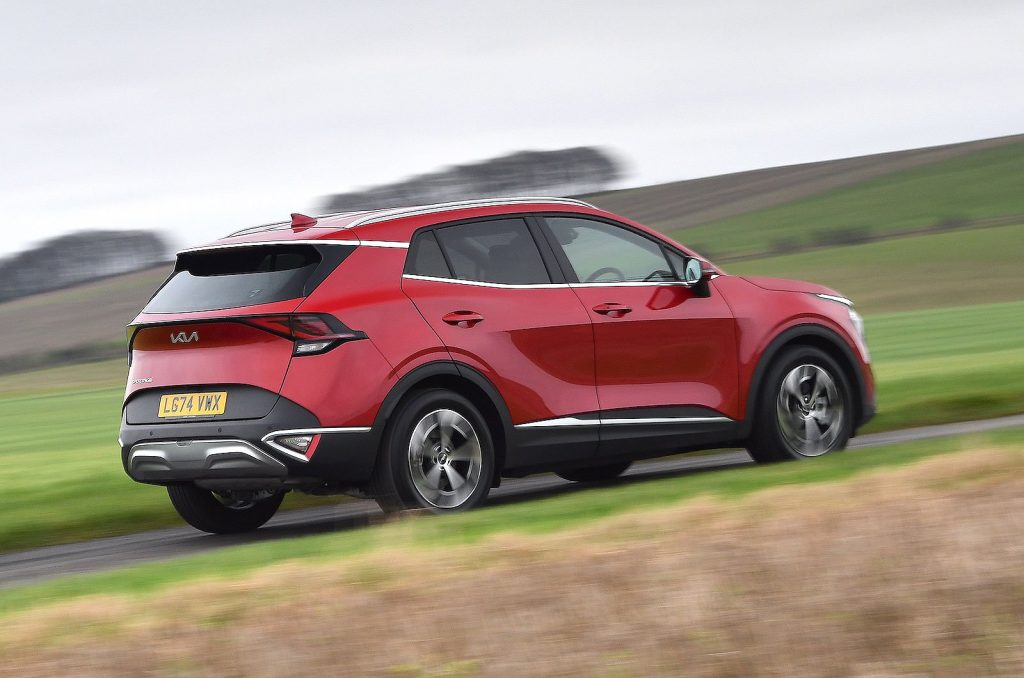
There is an important warning attached to any recommendation. Certain Sportage vehicles were included in Kia’s hydraulic electronic control unit fire-risk recall, so buyers must verify the specific VIN and confirm that every required safety repair has been completed.
NHTSA said the electrical circuit in the HECU could short-circuit and create an engine-compartment fire risk in affected vehicles.
The 2020 Sportage belongs among the best years because its 89/100 quality and reliability score provides a strong factual foundation. Find one with documented servicing, a clean inspection, and completed recall work, and it becomes one of the more convincing used Sportage choices from this generation.
- Engine: 2.4-liter GDI inline-four
- Torque: 175 lb-ft at 4,000 rpm
- Horsepower: 181 hp at 6,000 rpm
- Length/Width: 176.4 inches / 73.0 inches
2. 2022 Kia Sportage
Final-year models can occupy an interesting position in the used-car market, and the 2022 Kia Sportage is a good example. It was the last U.S. model year of the fourth-generation design before the significantly redesigned 2023 Sportage arrived.
Instead of asking buyers to accept a newly introduced platform, the 2022 version continued with a vehicle Kia had been producing for several years.
Mechanical familiarity is central to its appeal. Kia’s U.S. specifications list the 2.4-liter GDI four-cylinder at 181 horsepower and 175 lb-ft of torque. The company also offered the SX Turbo with a 2.0-liter turbocharged GDI four-cylinder producing 240 horsepower and 260 lb-ft of torque.
For this list, the standard 2.4-liter version is the reference model because it represents the mainstream Sportage configuration most used-SUV shoppers are likely to encounter. Power travels through a six-speed automatic transmission, and buyers could select front-wheel drive or available all-wheel drive depending on trim.
The 2022 Sportage also retained compact exterior proportions. Kia’s specification data identifies a 176.4-inch length and 73-inch width, measurements that kept the SUV relatively manageable in urban environments.
This is important because the succeeding generation became considerably longer. A buyer who wants compact dimensions may actually prefer the older design.
Its position on the list is therefore based less on one dramatic feature and more on timing. The 2022 Sportage represents the closing stage of an established generation. Controls, engines, transmission choices, and the basic vehicle architecture were already familiar by this point.
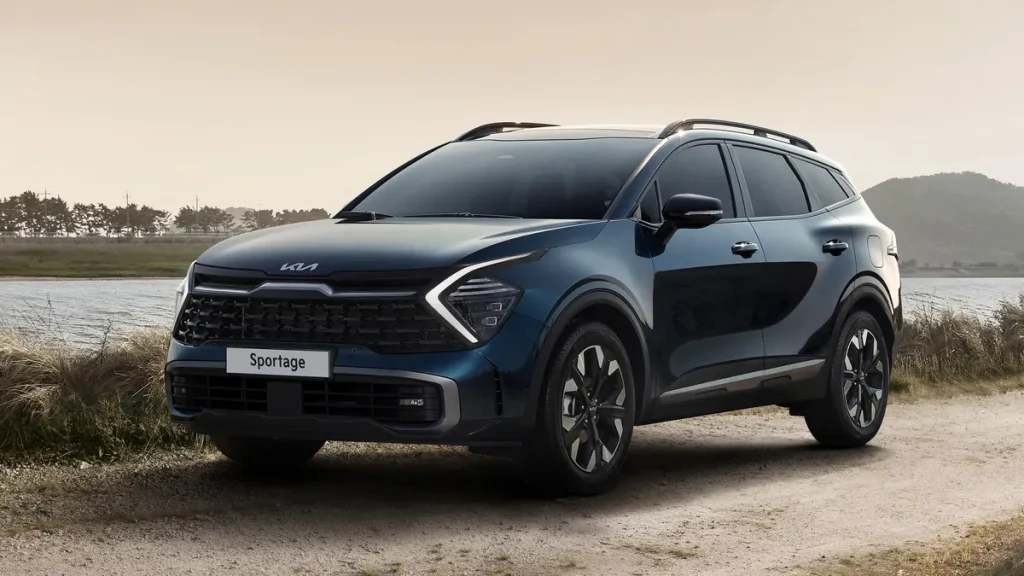
Buyers should not interpret “final year” as a guarantee against mechanical problems. Maintenance documentation remains essential, and the VIN should be checked for open safety recalls. Oil level, cold-start behavior, transmission operation, and warning lights should all be examined during a pre-purchase inspection.
For someone who wants a relatively recent Sportage but does not necessarily want the first year of the 2023 redesign, the 2022 model presents a logical alternative. Its mature fourth-generation design and familiar 181-horsepower base powertrain are the main reasons it earns a place among the better Kia Sportage years.
- Engine: 2.4-liter GDI inline-four
- Torque: 175 lb-ft at 4,000 rpm
- Horsepower: 181 hp at 6,000 rpm
- Length/Width: 176.4 inches / 73.0 inches
3. 2018 Kia Sportage
A strong used SUV does not always need to be the newest vehicle in the dealership lot. The 2018 Kia Sportage proves that an older model can still build a convincing case when measurable quality data and a practical mechanical package are considered together. J.D. Power gave the 2018 Sportage a quality and reliability score of 87 out of 100, placing it in the organization’s “Great” category.
That score is the main reason the 2018 model earns a position among the better Sportage years. It came during the early portion of the fourth generation, but it was not the first model year of that redesign. The fourth-generation Sportage had already reached the U.S. market for 2017, giving the 2018 model some separation from the initial launch year.
Under the hood, LX and EX trims used Kia’s 2.4-liter gasoline direct-injection four-cylinder engine. Official Kia specifications rate it at 181 horsepower at 6,000 rpm and 175 lb-ft of torque at 4,000 rpm. A six-speed automatic transmission was standard.
Buyers looking for stronger acceleration could choose the SX Turbo, which used a 2.0-liter turbocharged engine and produced up to 240 horsepower in front-wheel-drive configuration.
The standard engine is the more relevant reference for typical used-car shoppers. Its 181-horsepower output was adequate for commuting, grocery trips, and routine highway travel. More importantly, buyers were dealing with a conventional six-speed automatic rather than an unusual transmission arrangement requiring a completely different driving style.
There is still a reason to inspect a 2018 Sportage carefully. Age now plays a larger role in the condition of these SUVs. Oil service records, coolant condition, suspension wear, brake components, and evidence of previous accident repairs deserve close examination. A VIN recall check is also essential.
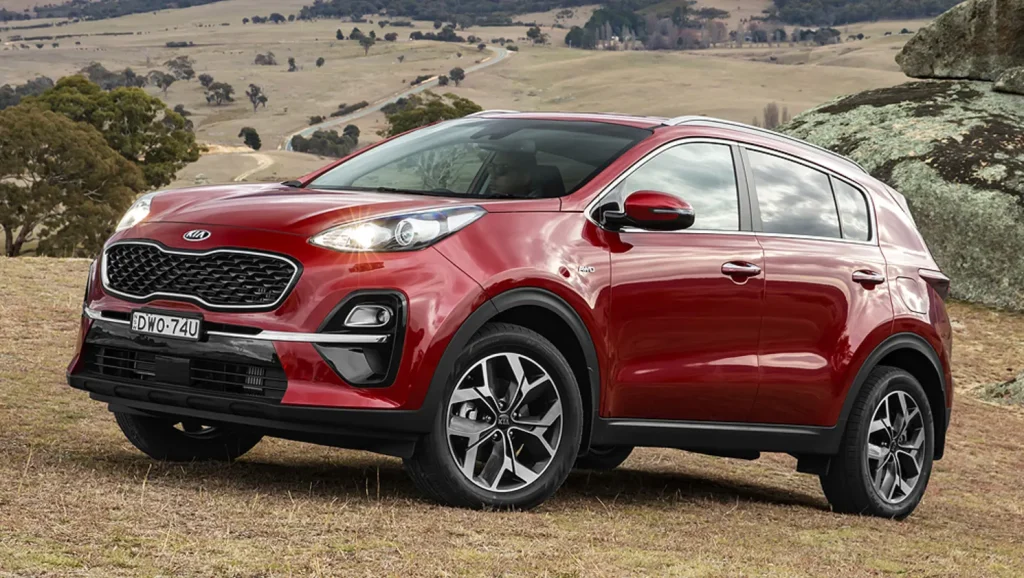
The 2018 Sportage is included because the data gives it a legitimate advantage. An 87/100 J.D. Power Quality and Reliability score is difficult to ignore, especially for buyers comparing similarly priced compact SUVs. With documented maintenance and a satisfactory mechanical inspection, this year’s Sportage deserves a higher position on a used Sportage shopping list.
- Engine: 2.4-liter GDI inline-four
- Torque: 175 lb-ft at 4,000 rpm
- Horsepower: 181 hp at 6,000 rpm
- Length/Width: 176.4 inches / 73.0 inches
4. 2021 Kia Sportage
The 2021 Kia Sportage makes this list from a different angle. It was neither the year of a complete redesign nor the final model year of the fourth generation.
Instead, it occupied a mature stage in the Sportage production cycle, sitting between the refreshed 2020 model and the generation-ending 2022 version. For buyers who value an established vehicle design, that middle position can be attractive.
Quality information strengthens the argument. J.D. Power assigned the 2021 Sportage an 85 out of 100 quality and reliability score, which falls within its “Great” rating category. The score measures owner-reported defects, malfunctions, and design flaws across the vehicle, including areas such as the powertrain and infotainment equipment.
Kia did not radically change the mainstream engine formula. The LX, S, and EX versions used the 2.4-liter GDI four-cylinder, producing 181 horsepower and 175 lb-ft of torque. A six-speed automatic transmission remained part of the package.
Official Kia specifications confirm the continued use of this conventional automatic transmission across the 2021 Sportage range.
That consistency is one of the reasons to consider this model year. By 2021, the basic fourth-generation Sportage had been present in the U.S. lineup for several years. Drivers were not buying into the opening year of an unfamiliar platform. Service departments had also spent years working with this generation and its primary powertrain combinations.
Its compact footprint remains another practical advantage. At 176.4 inches long and 73 inches wide, the Sportage fits the traditional compact crossover role without stretching toward midsize SUV dimensions. The available all-wheel-drive system gave buyers another configuration for regions where additional traction was desirable.
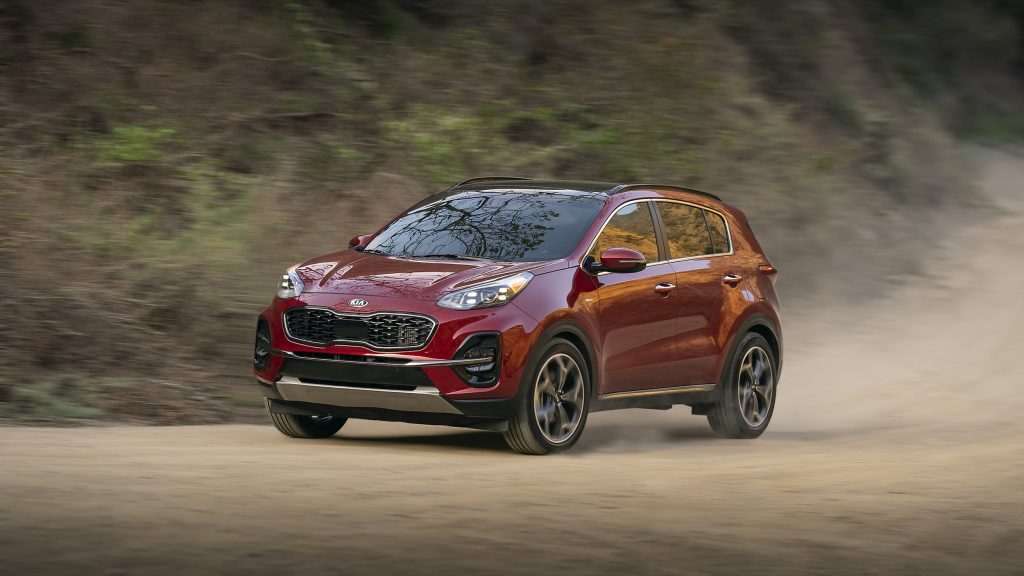
The correct approach to a 2021 Sportage is still based on the individual vehicle. Buyers should inspect the engine for abnormal noises, review oil-change records, test every electronic feature, and verify recall completion. A high-quality rating cannot reveal how a previous owner treated one specific SUV.
Still, an 85/100 quality and reliability score combined with its mature fourth-generation platform gives the 2021 Sportage a solid reason to appear here. It represents a sensible balance between newer equipment and an established design, making it one of the stronger years to investigate when shopping for a used Kia Sportage.
- Engine: 2.4-liter GDI inline-four
- Torque: 175 lb-ft at 4,000 rpm
- Horsepower: 181 hp at 6,000 rpm
- Length/Width: 176.4 inches / 73.0 inches
4 Worst Years for the Kia Sportage
1. 2011 Kia Sportage
The 2011 Kia Sportage deserves caution because its history became connected with serious engine concerns rather than minor convenience faults. Certain 2011 through 2013 Sportage vehicles were included in Kia’s engine safety recall. Recall notices warned that the defect could cause an engine to stall at higher speeds, increasing crash risk.
That is a major consideration when evaluating a vehicle now more than a decade old. Even if the engine sounds acceptable during a short dealership test drive, buyers need documentation showing which campaigns applied to the specific VIN and whether required work was completed.
Fire risk creates another concern. NHTSA records show a recall associated with the 2011 Sportage involving an engine-compartment fire risk. A separate 2023 federal safety alert also covered 2010 through 2013 Sportage models in a large Kia and Hyundai fire-risk campaign involving the anti-lock brake control module.
This does not mean every 2011 Sportage will suffer engine failure or catch fire. It does mean the model year carries enough documented safety history to demand more investigation than many buyers expect from an inexpensive compact SUV.
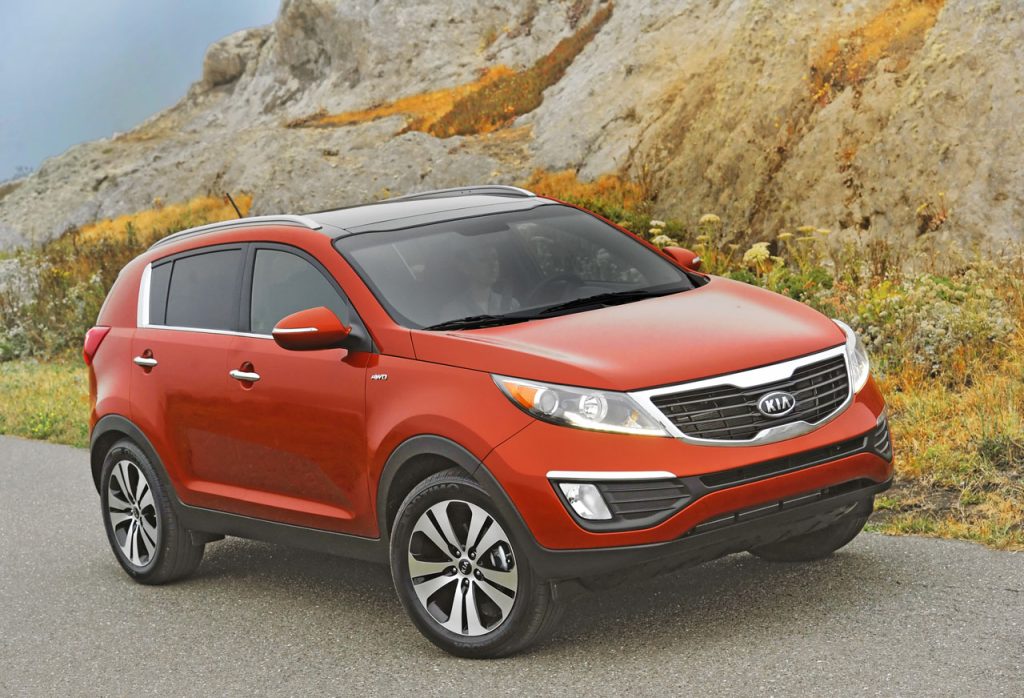
Before purchasing, inspect the engine from a cold start, review service records, and confirm recall completion by VIN. Missing documentation should be treated seriously.
- Engine: 2.4-liter inline-four
- Torque: 168 lb-ft at 4,000 rpm
- Horsepower: 176 hp at 6,000 rpm
- Length/Width: 174.8 inches / 73.0 inches
2. 2017 Kia Sportage
Redesign years often attract buyers with new styling and updated technology, but the 2017 Kia Sportage provides reasons for greater scrutiny. It introduced the fourth-generation Sportage to the U.S. market, bringing a completely revised body and a modernized cabin.
The problem is its documented ownership and safety history. Consumer Reports notes that the 2017 Sportage has been recalled four times by NHTSA and includes owner reports involving engine rebuilds, replacements, and excessive oil consumption.
These owner reports do not prove that every 2017 model will experience the same failure, but they establish a pattern worth investigating.
Fire risk also complicates the picture. NHTSA announced a recall covering 379,931 select Sportage and Cadenza vehicles because an electrical circuit in the hydraulic electronic control unit could short circuit and potentially cause an engine-compartment fire. The affected Sportage population included certain 2017 through 2021 models.
For a used buyer, the 2017 Sportage should never be purchased solely because it is cheaper than a 2020 or 2021 example. Check oil consumption history, listen for abnormal engine sounds, examine warning-light records, and confirm every recall repair.
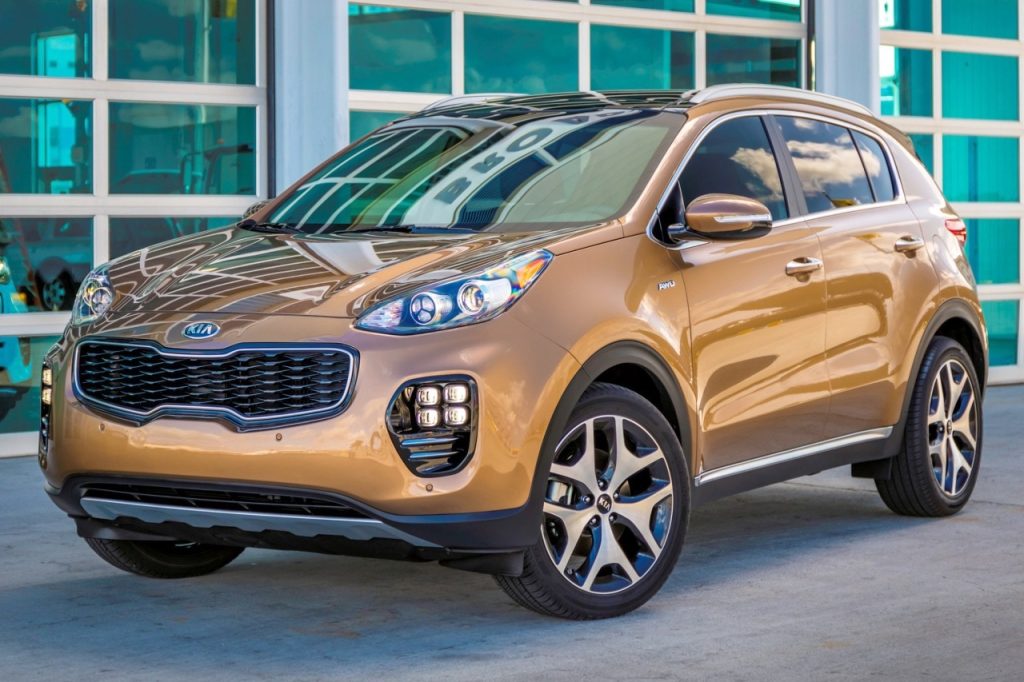
Its newer-generation design remains appealing, but the first-year status and documented concerns are why the 2017 Sportage finishes this list of years requiring additional caution.
- Engine: 2.4-liter GDI inline-four
- Torque: 175 lb-ft at 4,000 rpm
- Horsepower: 181 hp at 6,000 rpm
- Length/Width: 176.4 inches / 73.0 inches
3. 2012 Kia Sportage
The 2012 Kia Sportage belongs on the worst-years list because certain versions were directly involved in a major engine safety recall. The primary concern applies to Sportage models equipped with the 2.0-liter turbocharged GDI Theta II engine.
Kia’s federal recall documentation identified certain 2012 and 2013 Sportage vehicles as potentially affected by a connecting rod bearing problem.
The issue began inside the engine. Manufacturing debris could remain in crankshaft oil passages, while machining conditions could leave uneven crankpin surfaces. These conditions had the potential to restrict oil flow to the connecting rod bearings.
Without sufficient lubrication, the bearings could wear prematurely and eventually suffer serious damage.
Drivers might first notice a repetitive knocking sound from the engine compartment. Engine or oil-pressure warning lights could also appear. Kia’s recall documents warned that continued driving could lead to connecting rod bearing failure and engine stalling.
A sudden stall at higher speeds can increase crash risk, making this much more serious than an ordinary age-related repair.
Another concern came from the later HECU fire-risk campaign. Certain 2010 through 2013 Sportage models were recalled because an electrical short in the hydraulic electronic control unit could increase engine-compartment fire risk while driving or parked.
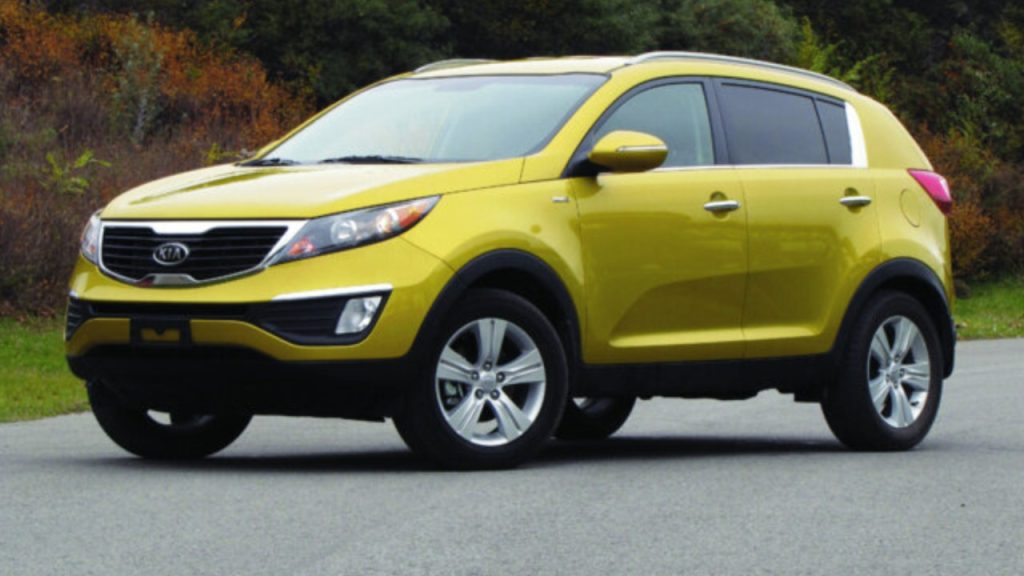
This combination of documented engine and electrical safety concerns puts the 2012 Sportage on the caution list. Anyone considering one should check the VIN for completed recalls and examine the engine’s repair history.
A cold-start inspection is particularly important. Knocking noises, oil-pressure warnings, or unexplained engine replacement work require careful investigation before purchase.
- Engine: 2.0-liter turbocharged GDI inline-four
- Torque: 269 lb-ft at 1,850 to 3,000 rpm
- Horsepower: 260 hp at 6,000 rpm
- Length/Width: 174.8 inches / 73.0 inches
4. 2013 Kia Sportage
Strong performance once helped the 2013 Kia Sportage SX separate itself from ordinary compact SUVs. Its turbocharged four-cylinder engine produced 260 horsepower, an impressive figure for a small crossover of its period.
Yet used buyers today need to focus less on acceleration and more on the documented history of the 2.0-liter turbocharged GDI engine.
Certain 2013 Sportage models were included in Kia’s Theta II engine safety recall. According to federal recall documents, restricted oil flow to the connecting rod bearings could cause premature bearing wear. The problem could produce a cyclic knocking noise before progressing to more severe engine damage.
If bearing wear continued, drivers might see the engine warning lamp or oil-pressure warning lamp. Complete bearing failure could eventually result in an engine stall. This is why a quick drive around a dealership block is not enough when inspecting a 2013 Sportage SX. The vehicle should be started cold and evaluated for unusual mechanical noise.
Kia later introduced a knock sensor detection system strategy for certain engines. The system was designed to identify vibrations associated with excessive connecting rod bearing wear and provide an earlier warning. Detection could trigger a flashing malfunction indicator lamp and reduced-power operation.
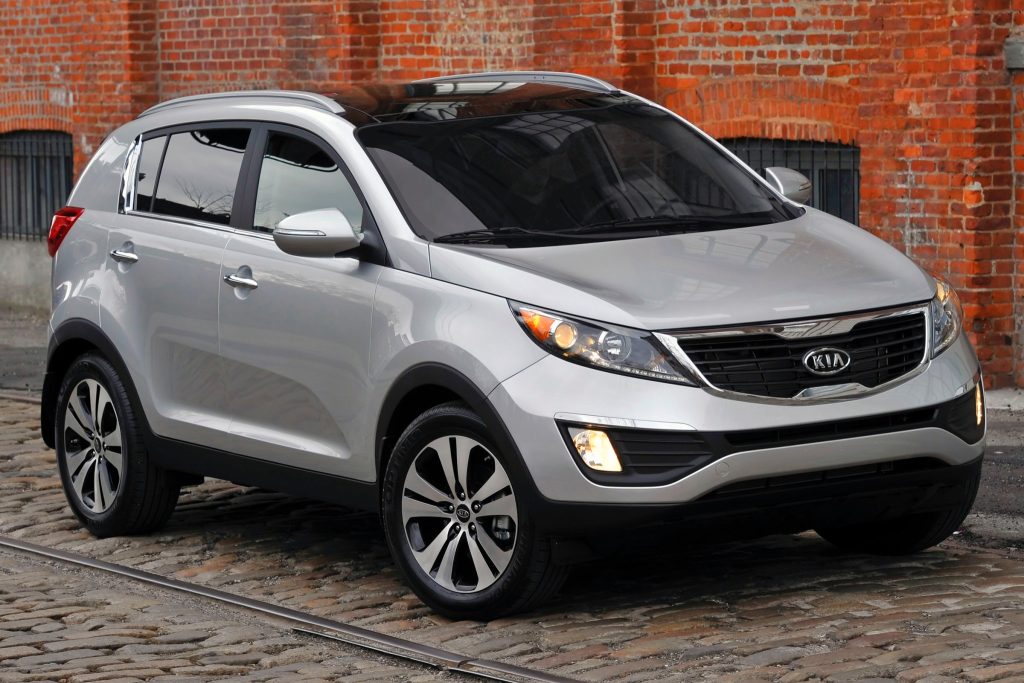
The 2013 Sportage was also among the model years covered by a later fire-risk campaign involving the HECU. That additional safety history further strengthens the case for caution.
A 2013 Sportage with documented recall repairs and clear engine service records deserves individual evaluation. Without that paperwork, however, the turbocharged model’s engine history creates a significant buying risk that should not be ignored simply because the SUV is inexpensive.
- Engine: 2.0-liter turbocharged GDI inline-four
- Torque: 269 lb-ft at 1,850 to 3,000 rpm
- Horsepower: 260 hp at 6,000 rpm
- Length/Width: 174.8 inches / 73.0 inches
Also Read: 10 V6 Engines Ranked by Long-Term Durability
