
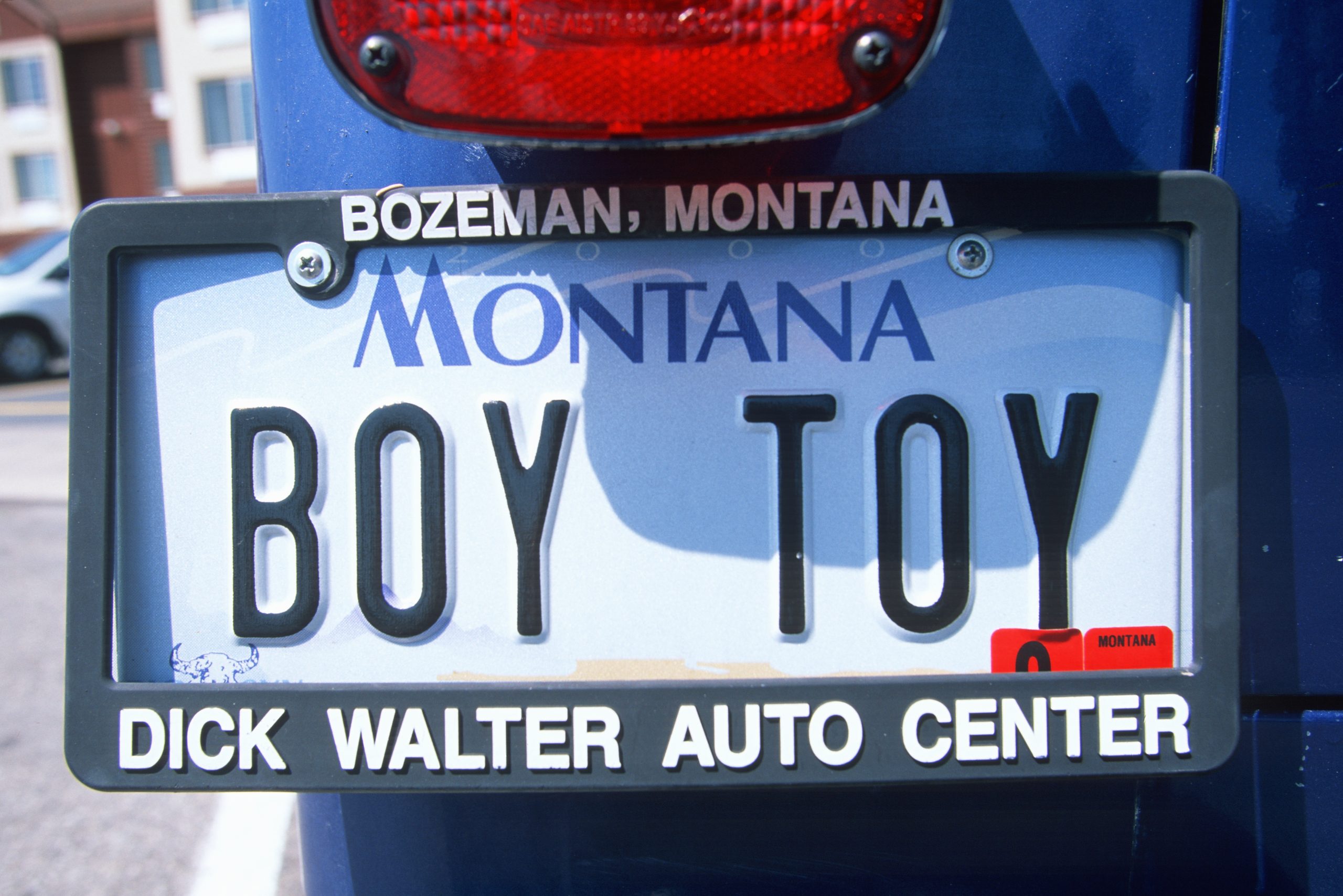
Walk through a luxury-car gathering almost anywhere in America, and one detail quickly stands out. Ferraris, Lamborghinis, McLarens, and Rolls-Royces often wear Montana license plates, even though the owners clearly don’t live anywhere near Big Sky Country.
The explanation isn’t that Montana has a thriving supercar scene. Instead, it comes down to a combination of state tax law, business law, and vehicle registration rules that has made Montana the most famous state for registering high-value vehicles.
The strategy, commonly called the “Montana LLC,” has existed for years and is entirely legal under Montana law when properly used. However, that does not automatically make it legal in the state where the vehicle is actually kept or driven.
As more states investigate the practice, owners are discovering that the tax savings can sometimes come with significant legal and financial risks.
Also Read: 10 Motorcycles With Highest Horsepower—Ranked
Montana’s Tax Laws Make It Attractive for Expensive Cars
The biggest reason supercar owners look to Montana is simple: Montana has no general statewide sales tax. That immediately makes the purchase of an expensive vehicle far cheaper than in states with sales taxes ranging from 6% to more than 10%.
Consider a $500,000 Ferrari. In a state with an 8% sales tax, the buyer could owe $40,000 in tax before even driving the car home. Registering that same vehicle through a Montana entity can eliminate that state sales-tax bill because Montana does not impose a general sales tax on vehicle purchases.
Registration costs are another advantage. Unlike states that calculate annual registration fees or personal property taxes based on vehicle value, Montana generally uses an age-based registration system for light vehicles.
That means a million-dollar hypercar and an ordinary pickup can pay similar registration fees if they fall into the same age category. For owners of extremely valuable cars, the long-term savings can be substantial.
Another attraction is the state’s business laws. Montana allows a limited liability company (LLC) to own a vehicle. An out-of-state buyer can legally form a Montana LLC, title the vehicle in the company’s name, and register it there.
Since the LLC, not the individual, is the registered owner, the vehicle qualifies for Montana registration even if the person driving it lives elsewhere.
This process has become so common that numerous Montana businesses specialize in creating LLCs, acting as registered agents and handling paperwork for out-of-state exotic-car owners.
Privacy also plays a role. Public registration records generally show the LLC as the owner rather than the individual’s name, making ownership less visible. While tax savings remain the primary motivation, some wealthy owners appreciate the additional layer of privacy.
Contrary to a common myth, Montana does not simply allow vehicles to operate without a front license plate. State law requires both front and rear plates on most vehicles.
However, Montana provides a waiver process for vehicles whose body design makes mounting a front plate impractical, which can include certain exotic cars. That exception has helped create the mistaken belief that Montana is a “no front plate” state.
The Strategy Can Become Risky Outside Montana
Although registering a vehicle through a Montana LLC may comply with Montana law, problems often begin when the vehicle spends nearly all of its time somewhere else.
Most states impose both a sales tax and a complementary use tax. The use tax exists to prevent residents from avoiding local taxes simply by purchasing or registering expensive items elsewhere.
If a California resident registers a supercar through a Montana LLC but stores, drives, and garages the vehicle almost exclusively in California, California authorities may argue that the vehicle should have been registered there and that California use tax is owed.
The issue has become increasingly important because states are stepping up enforcement. California has been particularly aggressive.
In 2026, the California Attorney General announced criminal charges against 14 individuals accused of using Montana LLCs to avoid approximately $1.8 million in taxes on more than $20 million worth of luxury vehicles, including McLarens, Ferraris, and Porsche supercars.
Authorities said many of the vehicles were actually based in California despite carrying Montana registrations.
According to California officials, investigators have launched dozens of investigations into suspected fraudulent out-of-state registrations and have already recovered millions of dollars in unpaid taxes.
License-plate readers, DMV records, and property information have all been used to identify vehicles that appear to be permanently located within the state while carrying Montana plates. Insurance can also become complicated.
Insurance companies generally expect accurate information about where a vehicle is primarily garaged. If an insurer believes the vehicle is actually based in another state but was insured using different information, coverage disputes may arise after an accident.
The strategy therefore works best when the registration accurately reflects how and where the vehicle is actually owned and used. A collector who legitimately keeps a vehicle in Montana or operates it in multiple states may have a different legal situation from someone attempting to avoid taxes while permanently using the car elsewhere.
Why the Montana Plate Trend Isn’t Going Away
Despite increasing scrutiny, Montana plates continue to appear on expensive cars because the financial incentive can be enormous.
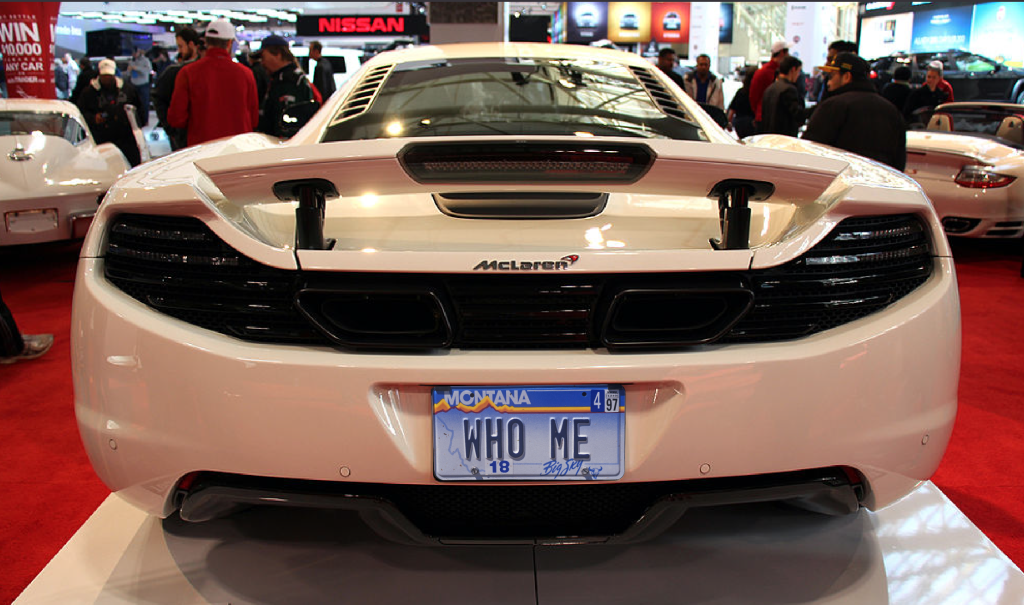
Saving tens of thousands of dollars on a six- or seven-figure vehicle naturally attracts attention. Even after LLC formation costs, registered agent fees, and registration expenses, the total can still be far below the sales taxes charged in many states.
The strategy also benefits from relatively straightforward business formation. Creating a Montana LLC is inexpensive, and the state permits companies to own registered vehicles. That legal framework has existed for years and has supported an entire industry of firms that assist out-of-state owners with paperwork and registration.
However, the legal question is no longer simply whether Montana allows the registration. The more important issue is whether the owner’s home state agrees.
Many states require residents to register vehicles where they are principally used or garaged. If investigators determine that a Montana registration exists primarily to avoid taxes while the vehicle actually lives elsewhere, the owner may face back taxes, interest, civil penalties, or, in serious cases, allegations of tax fraud.
Recent enforcement actions in California demonstrate that regulators are increasingly willing to challenge questionable registrations.
For that reason, not every Montana-plated supercar represents tax evasion. Some vehicles are legitimately owned by Montana businesses, collectors with multiple residences, or companies operating across several states. Others, however, may be relying on an arrangement that their home state views very differently.
The sight of a Montana plate on a Ferrari or Lamborghini is therefore less about where the owner lives and more about how American vehicle-registration laws differ from one state to another.
Montana’s combination of no statewide sales tax, age-based registration fees, and LLC-friendly registration rules has made it the preferred state for registering many high-value vehicles. But as other states continue tightening enforcement, the famous Montana plate is becoming as much a legal talking point as it is a tax-saving strategy.
For some owners, the savings are entirely legitimate. For others, those same plates may eventually become evidence in a tax investigation. That’s why a simple Montana license plate on a supercar often tells a much bigger story than where the car was built or where it’s actually driven.
Another factor helping Montana registrations remain popular is that many exotic and collector cars accumulate very little mileage each year. Owners often transport them in enclosed trailers, store them in climate-controlled garages, and drive them only for special events or weekend outings.
Because these vehicles spend much of their lives off public roads, it can be more difficult for state authorities to determine where they are primarily garaged without conducting a detailed investigation.
That does not mean the vehicles are exempt from registration requirements in other states, but it explains why enforcement agencies increasingly rely on multiple sources of evidence, including toll records, automatic license plate readers, service records, insurance information, and property records, to establish where a vehicle is actually based.
Legal experts also caution that forming a Montana LLC should not be viewed as a one-size-fits-all solution. Whether the arrangement is appropriate depends on where the owner resides, where the vehicle is principally used, and the registration laws of that state.
A structure that is perfectly compliant for one owner could expose another to unpaid taxes, penalties, or registration violations if the vehicle is effectively being used as a resident vehicle elsewhere.
Because state tax and registration laws vary widely, owners of high-value vehicles often consult tax professionals and attorneys before deciding how to title and register an expensive purchase, especially when the potential tax savings can reach tens of thousands of dollars.
Also Read: 10 Used Cars Under $20,000 With Excellent Reliability and IIHS-Recommended Safety
