
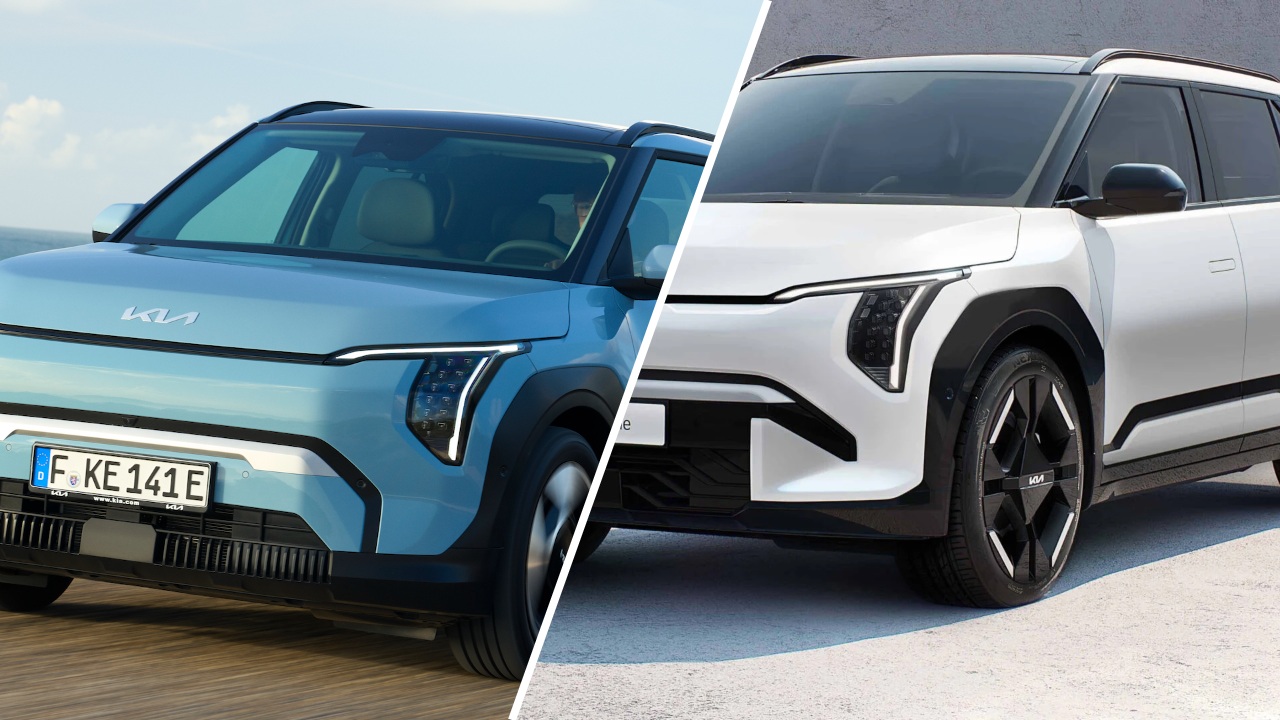
Kia has spent the past several years expanding its electric vehicle lineup with models such as the EV6, EV9, and EV5, but its next product could be the one that has the biggest impact on the mass market.
The Kia EV3 is designed to bring the company’s advanced electric vehicle technology to a lower price point, targeting buyers who want long driving range, modern technology, and SUV practicality without spending luxury-car money.
For the U.S. market, Kia is aiming for a starting price of around $35,000, positioning the EV3 as one of the most affordable long-range electric SUVs from a mainstream brand.
With an expected range exceeding 300 miles on select models, fast-charging capability, and styling inspired by the larger EV9, the EV3 could become a key player in the growing compact EV segment.
The timing is significant. As federal EV tax incentives have ended and automakers shift toward more affordable electric models, manufacturers are under pressure to lower prices while maintaining competitive range and technology. Kia believes the EV3 can meet that challenge.
Also Read: 10 Cities With the Fewest Public Charging Stations per EV
A Smaller EV Without Sacrificing Technology
Although the EV3 sits below the EV6 and EV9 in Kia’s lineup, it shares many of the same design cues and technologies.
The SUV adopts Kia’s “Opposites United” design language, featuring vertical LED lighting, a squared-off front fascia, flush door handles, and a modern interior with a minimalist dashboard.
Inside, buyers can expect a panoramic digital display combining a digital instrument cluster and infotainment touchscreen, along with over-the-air software updates, wireless smartphone connectivity, and the latest version of Kia’s infotainment system.
According to Kia, the EV3 is built on the company’s Electric Global Modular Platform (E-GMP), using a 400-volt electrical architecture optimized for lower manufacturing costs while still supporting rapid DC fast charging.
The company offers two battery options globally: a 58.3-kWh Standard Range battery and an 81.4-kWh Long Range battery. Kia estimates the larger battery can deliver up to 375 miles (605 km) of WLTP range, though U.S. EPA estimates are expected to be lower.
Power comes from a front-mounted electric motor producing approximately 201 horsepower and 209 lb-ft of torque, giving the EV3 competitive performance for the compact SUV segment while prioritizing efficiency over outright acceleration.
Kia also equips the EV3 with regenerative braking, including its latest i-Pedal system that allows one-pedal driving in many situations.
Safety technology is another major selling point. Depending on the trim level, the EV3 will offer Highway Driving Assist, adaptive cruise control, lane-centering assistance, blind-spot monitoring, automatic emergency braking, parking assistance, and multiple camera systems. Many of these features previously appeared only on more expensive Kia models.
Why the $35,000 Target Matters
Affordability has become one of the biggest challenges facing the EV industry. While premium electric SUVs continue to grow in capability, many still start well above $45,000, placing them beyond the reach of many buyers. Kia hopes the EV3 can close that gap by delivering much of the technology found in larger EVs at a considerably lower price.
According to Car and Driver, Kia expects the U.S.-spec EV3 to start at approximately $35,000, with higher trims potentially approaching $49,000 depending on equipment. The publication also reports that the EV3 is expected to arrive in American dealerships during the second half of 2026 as a 2027 model.
MotorTrend reports a similar pricing strategy, noting that Kia is targeting a base price of about $35,000 while offering premium features usually associated with more expensive electric SUVs. The publication expects higher-end trims equipped with larger batteries and additional technology to approach the $50,000 mark.
The EV3 also arrives during a period of significant change for the U.S. EV market. Several manufacturers have canceled or delayed electric models as demand softened following the expiration of federal EV tax incentives.
Industry analysts have noted that automakers are increasingly shifting toward affordable, longer-range EVs rather than expensive niche products. This changing landscape could work in Kia’s favor.
Compact crossovers remain America’s most popular vehicle segment, and buyers increasingly expect advanced technology, practical cargo space, and lower operating costs.
If Kia successfully delivers more than 300 miles of EPA-rated driving range near the targeted starting price, the EV3 would compete directly with affordable electric crossovers while undercutting many larger EVs on price.
Charging capability is another important advantage. Although the EV3 uses a 400-volt platform instead of the 800-volt architecture found in the EV6 and EV9, it still supports high-speed DC fast charging, allowing owners to recharge from approximately 10% to 80% in around 30 minutes under ideal conditions, depending on battery size and charger output.
This makes long-distance travel considerably more practical than earlier generations of affordable EVs.
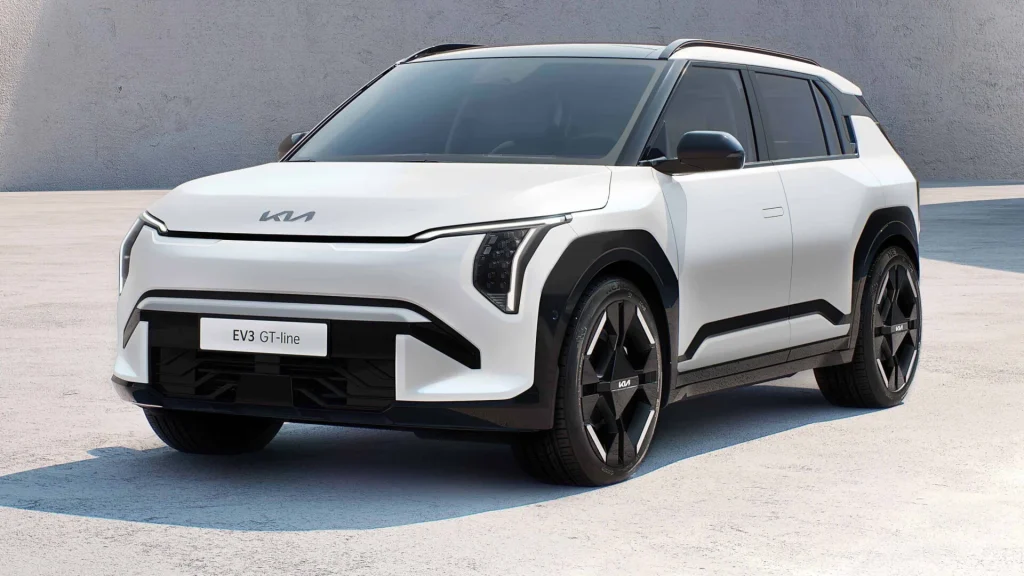
The interior also reflects Kia’s broader strategy of making premium technology accessible. Features such as a sliding center console table, AI-powered voice assistant, digital key functionality, and over-the-air software updates demonstrate that buyers are no longer expected to sacrifice convenience simply because they choose an entry-level electric vehicle.
Competition, however, will be intense. The EV3 is expected to face rivals such as the Chevrolet Equinox EV, Hyundai Kona Electric, and Volvo EX30 in markets where it is available and future affordable EVs from several global manufacturers.
Pricing, charging infrastructure, and real-world range will likely determine how successful the model becomes in North America.
Still, Kia enters the segment with strong momentum. The company has earned praise for its recent EV launches, and the EV3 builds on that reputation by combining recognizable SUV styling, competitive driving range, modern technology, and a significantly lower entry price than many existing electric crossovers.
If Kia succeeds in bringing the EV3 to U.S. dealerships near its targeted under-$35,000 starting price while maintaining the quality and technology found in its larger electric models, it could become one of the most important affordable EV launches in recent years.
Rather than chasing luxury buyers, the EV3 focuses on making electric mobility accessible to mainstream consumers without compromising range, safety, or everyday usability. In a market increasingly demanding value alongside innovation, that strategy may prove to be Kia’s strongest advantage.
How the EV3 Fits Into Kia’s Long-Term Electric Vehicle Strategy
The EV3 is more than just another addition to Kia’s growing electric lineup. It represents a crucial part of the automaker’s global strategy to expand beyond premium EV buyers and reach mainstream consumers who may be purchasing their first electric vehicle.
According to Kia, the company plans to launch multiple dedicated electric models across different price points as it works toward significantly increasing global EV sales before the end of the decade.
The EV3 is expected to play one of the largest roles in achieving that goal because compact SUVs remain one of the highest-volume vehicle segments worldwide.
Industry analysts believe affordability will become increasingly important as government incentives decline and consumers place greater emphasis on total ownership costs rather than outright performance.
Unlike some early electric vehicles that prioritized acceleration or luxury features, the EV3 focuses on practicality. Lower operating costs, reduced maintenance compared with gasoline-powered vehicles, and competitive energy efficiency could make it an attractive option for commuters and families looking to transition to electric transportation.
The vehicle’s expected compatibility with North America’s expanding charging infrastructure is another advantage. Kia has already begun adopting the North American Charging Standard (NACS) across its EV lineup, allowing future owners access to a broader network of public fast chargers.
According to Kia America, expanding charging access remains one of the company’s priorities as EV adoption continues to grow, helping reduce one of the biggest concerns among first-time electric vehicle buyers.
The EV3’s arrival also reflects a broader shift occurring throughout the automotive industry. Instead of introducing increasingly expensive flagship EVs, many manufacturers are now concentrating on smaller, more affordable crossovers that appeal to a wider audience.
Market researchers at Cox Automotive have consistently noted that pricing remains one of the biggest barriers to EV adoption in the United States.
By targeting a starting price below $35,000 while offering modern safety technology, a competitive driving range, and SUV practicality, Kia positions the EV3 as a model that could significantly broaden its customer base.
If the company delivers on its pricing and performance targets, the EV3 has the potential to become one of Kia’s highest-volume electric vehicles and a key competitor in the affordable EV segment.
Also Read: 10 Trucks That Beat Their EPA Ratings in Real-World Driving
