

An engine failure is stressful enough without an insurance company questioning whether it actually happened the way you say it did. Insurers tend to draw a hard line between sudden mechanical failures, which may be covered, and gradual wear or skipped maintenance, which usually isn’t. That distinction is exactly why documentation matters so much.
The stronger your paper trail, the harder it becomes for an adjuster to deny or delay your claim. Below are eight practical ways to build a case that holds up, from the moment you notice trouble to the final conversation with your insurer. Think of this as your roadmap for turning a frustrating mechanical breakdown into a claim you can actually win.

1. Detailed Claim Form Completion
The claim form is where your entire case begins, and treating it as a quick formality is one of the easiest ways to weaken your position later. Take the time to fill it out with precision.
Note the exact date and time you first noticed something wrong, along with a clear description of the symptoms leading up to the failure, whether that was a warning light, unusual noise, loss of power, or sudden stalling.
Mileage matters here too, since insurers often use it to judge whether a failure fits a pattern of normal wear or looks like an unexpected mechanical event.
Include the conditions the vehicle was operating under at the time, such as highway driving, stop-and-go traffic, towing, or extreme temperatures, since these details can support or undercut a sudden-failure argument depending on what happened.
Don’t leave out recent maintenance work either. If you had an oil change two weeks before the failure, say so. If nothing had been serviced in months, that’s worth noting as well, since it shows you’re being transparent rather than selective.
Every blank space on that form is an opportunity for a gap that an adjuster can use against you. Sign and date it properly, keep a copy for your own records, and resist the urge to rush through it just to get the process moving.
A sloppy claim form invites scrutiny, while a thorough one signals that you’re organized, credible, and prepared to back up every statement you’re making.
2. Proof of Loss and Coverage Statement
A proof of loss form is more than routine paperwork. It is a formal statement that documents your claim and gives the insurer the information needed to evaluate it. The form typically requires you to provide a signed account of what happened, when it occurred, and the amount or benefits you believe you are entitled to under your policy.
Treat it with the same seriousness you’d give a legal filing, because in many ways, that’s exactly what it is. Before you submit anything, go back and reread your policy language around mechanical breakdown or engine failure coverage.
Insurance contracts are often written with specific definitions of what counts as “sudden” versus what falls under wear and tear exclusions, and knowing that language before you write your proof of loss helps you frame your account in terms the insurer already recognizes.
If your policy explicitly covers sudden engine failure, reference that section directly in your submission rather than assuming the adjuster will connect the dots for you.
Vague claims get vague responses, while specific claims tied to specific policy language tend to move faster. It also helps to confirm your coverage limits and deductible amounts at this stage, so there are no surprises once the claim gets processed.
Keep a signed and dated copy of everything you submit, including the proof of loss itself, because you may need to reference the exact wording you used if questions come up during the review process later.

3. Photographic and Video Evidence
Your phone can become one of the most useful tools for recording an engine failure. Take photographs as soon as it is safe to do so, especially before repairs, cleaning, dismantling, or replacement of damaged parts.
Begin with broad images showing the vehicle and engine compartment. Then take closer photographs of visible damage, leaks, broken components, warning labels, fluid residue, damaged belts, hoses, wiring, or other areas related to the failure.
A series of pictures can tell a clearer story than a single close-up. Include the vehicle identification number when appropriate, the odometer, dashboard warning lights, and any visible messages on the instrument panel.
If the vehicle cannot be moved, photographs showing its location may also provide useful context. Video can add information that still photographs cannot capture.
If the engine makes an unusual sound, for instance, a recording may preserve what was heard before the vehicle was taken to a repair facility.
Do not continue operating the vehicle merely to obtain footage, particularly if doing so could increase the damage or create a safety hazard. Preserve the original files whenever possible.
Avoid editing the originals or adding filters that could obscure details. Your phone may store dates and times automatically through file metadata, but keeping a written note about when and where each image was taken adds another layer of organization.
Label copies with simple descriptions so an adjuster can identify what each image shows without guessing.
4. Repair and Diagnostic Records
Once the vehicle reaches a repair facility, ask for written documentation of what the technician finds. A verbal explanation can be helpful, but an invoice, inspection sheet, diagnostic report, or written estimate creates a record that can be saved with your claim materials.
Request copies of diagnostic trouble codes, test results, inspection findings, and photographs taken by the repair shop when those records are available.
If the technician identifies a damaged component, ask that the repair order describe the finding in specific terms. For instance, a statement identifying a cracked engine component is more useful than a vague note saying only “engine problem.”
Keep every invoice connected with the vehicle. This can include towing bills, diagnostic charges, teardown costs, parts estimates, labor estimates, and repair invoices.
If the engine requires disassembly before the cause can be identified, ask whether the insurer wants to inspect the vehicle before major work begins. Some policies or claim procedures may require an opportunity to inspect damaged property.
A written opinion from a qualified mechanic can also help explain causation. The report should distinguish observed facts from professional conclusions.
If the technician believes the failure resulted from a particular component or event, ask for that opinion in writing and retain the supporting test results.
Do not discard damaged parts without considering the insurer’s instructions. Those components may provide physical evidence that could be examined later.
Before authorizing extensive repairs, confirm whether the claims representative requires an inspection or preservation of the failed parts.
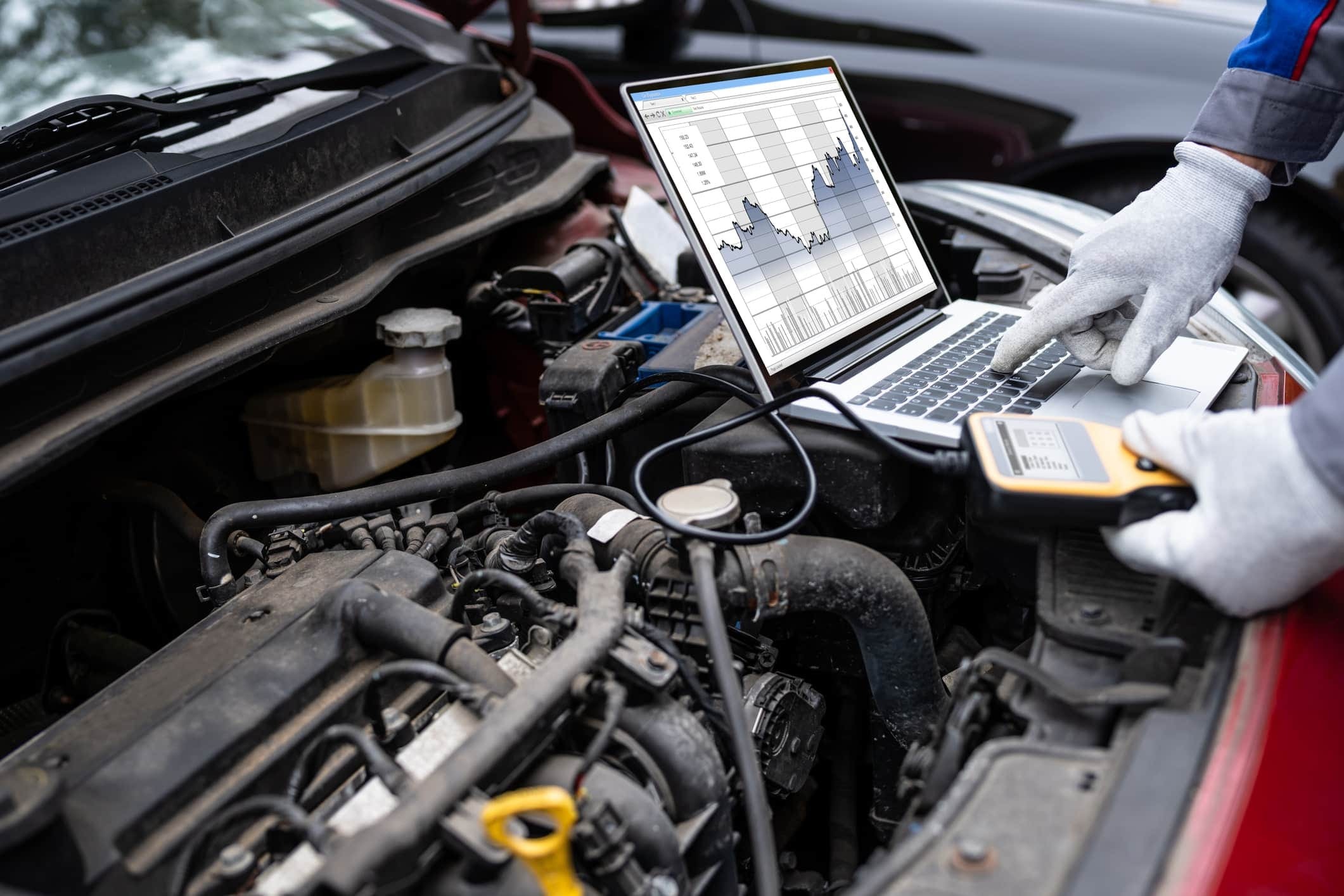
5. Forensic Engine File Review Documentation
For claims involving higher dollar amounts or disputed causation, a forensic review can be the difference between a denied claim and an approved one.
This is a more technical step than a standard repair report, and it usually involves a specialist who examines the engine’s full operating history alongside diagnostic data to pinpoint exactly what triggered the failure.
Think of it as building a case file rather than just gathering repair notes. A forensic review typically traces the failure pathway from start to finish, identifying whether the root cause was a specific part failure, a defect, an external event, or something else entirely.
This kind of analysis carries weight precisely because it’s methodical and grounded in technical evaluation rather than assumption. If your claim is being questioned or the amount involved justifies the added cost, it’s worth asking whether your repair shop can refer you to someone who performs this kind of assessment, or whether your insurer has a preferred process for requesting one.
Some claims never need this level of detail, but when there’s a dispute over whether a failure was sudden or the result of long-term neglect, a forensic file review can settle the question with evidence an adjuster can’t easily argue against.
Keep the full report once it’s completed, along with any supporting data referenced inside it, since insurers may ask for the underlying material and not just the summary conclusions.
6. Maintenance and Service History
Insurers often rely on one particular argument when denying an engine failure claim. They may contend that the damage resulted from neglect or poor maintenance rather than a sudden, covered event.
A complete maintenance history is your best defense against that argument. Keep records of every oil change, filter replacement, coolant flush, and fluid check, going back as far as you reasonably can.
If your vehicle has a maintenance app, a written log, or receipts from a shop that services it regularly, gather all of it into one organized file.
The goal here is to prove a pattern of responsible upkeep, because a well-maintained vehicle that experiences sudden failure looks very different, from a claims perspective, than one with gaps in its service record.
If you’ve gone through periods where maintenance was less frequent, be upfront about it rather than trying to hide the gap, since inconsistencies discovered later can hurt your credibility more than the gap itself would have.
Dealership service records tend to carry particular weight because they’re systematically logged and timestamped, but independent shop receipts work too as long as they’re detailed and dated.
If you performed any maintenance yourself, keep receipts for parts and, where possible, take photos of the work as you complete it. A thin or inconsistent maintenance history doesn’t automatically sink a claim, but a thorough one gives you a real advantage when an adjuster is deciding which way to lean on a borderline case.

7. Supportive Third-Party Evidence
People who witnessed the failure or examined the vehicle can provide useful independent information. A mechanic might describe what was discovered during an inspection.
A tow operator could confirm that the vehicle became disabled and had to be transported. A passenger may be able to describe what happened immediately before the engine stopped.
Ask third parties to record facts rather than make unsupported statements about insurance coverage. A mechanic’s report might state that the engine would not start during testing, identify diagnostic codes, or describe visible damage.
A witness can explain what they personally saw or heard. Each statement becomes more useful when it identifies the date, vehicle, circumstances, and person’s role.
Service vendors may also have records that you do not possess. A dealership, repair shop, towing company, parts supplier, or inspection facility may be able to provide invoices, photographs, diagnostic results, or work orders upon request.
If someone provides a written statement, preserve the original and record when you received it. Avoid asking another person to state a cause they did not personally establish.
For example, a witness who saw smoke coming from the vehicle can describe the smoke, but that person may not be qualified to identify the failed engine component.
Independent evidence can help connect separate pieces of information. Your claim form may describe the moment the vehicle stopped, a tow record may confirm the date of transport, and a mechanic’s report may document what was found afterward.
When those records agree on basic facts, the claim file becomes easier to review.
8. Communication & Submission Records
Keep a running claim log from the first report through the final decision. Record the claim number, date of each contact, name or identification number of the representative, method of communication, and a short description of what was discussed.
After a phone call, write down any documents the insurer requested and the deadline provided, if one was given. Save emails, letters, text messages, uploaded-document confirmations, and portal receipts.
If you submit photographs or repair records through an online claims system, keep confirmation that the files were successfully uploaded. When sending documents by mail, retain tracking information and a copy of what was sent.
A simple spreadsheet can make this task easier. One column can show the date, another can identify the person contacted, another can list the communication method, and another can describe the action taken. Add a final column for follow-up dates when needed.
When the insurer says a document is missing, your records can show when and how you supplied it. If a representative gives verbal instructions that affect your claim, consider sending a brief written message confirming your understanding. This creates a dated record without requiring a lengthy exchange.
Keep claim communications separate from unrelated vehicle documents. A dedicated digital folder and a physical folder can reduce the chance of losing an invoice or submission receipt.
If the claim becomes disputed, having a chronological record of your communications may help you, your attorney, or another authorized representative understand what happened and which documents were provided at each stage.
