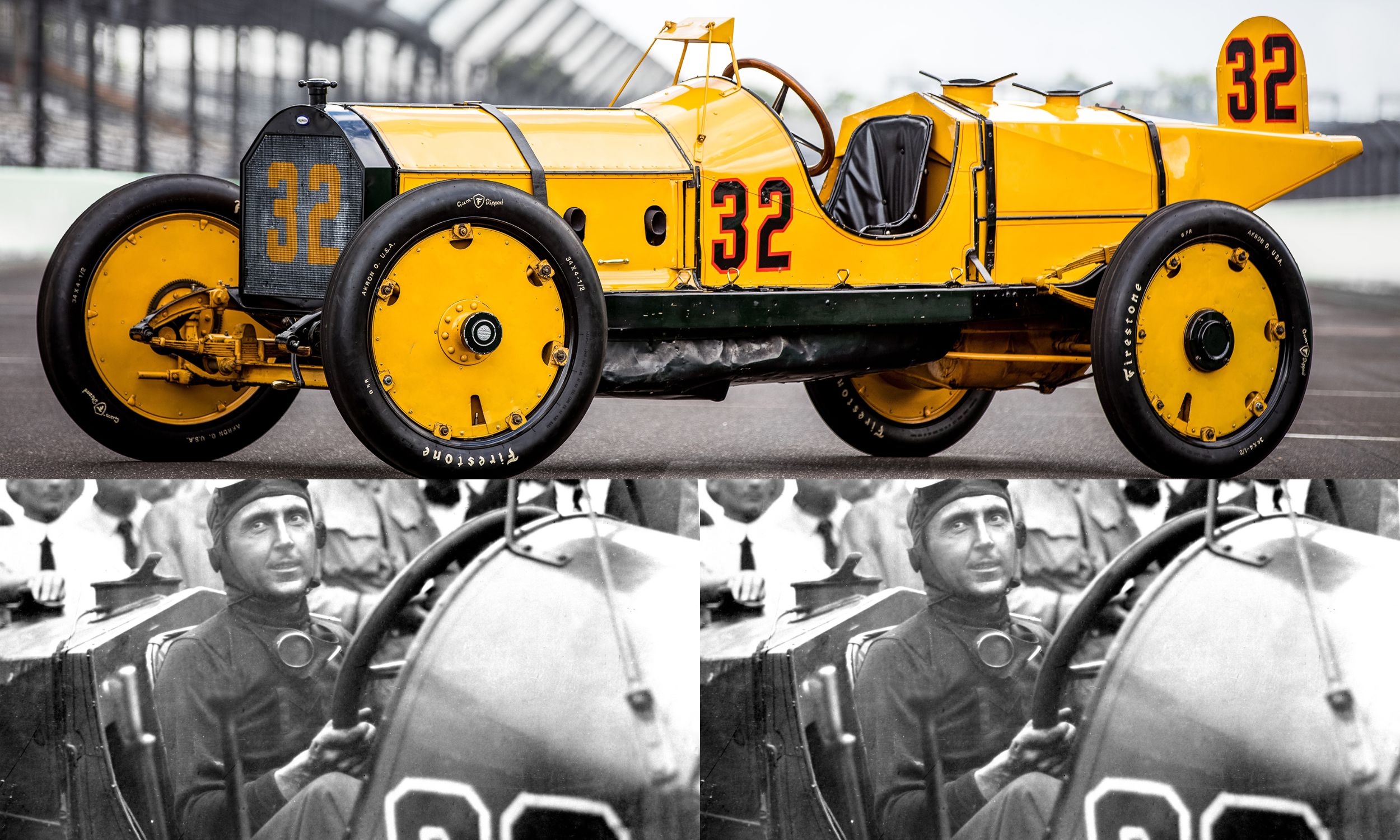
When the first Indianapolis 500 took place in 1911, nearly every race car carried two people. The driver focused on the race, while a riding mechanic watched for approaching cars and warned the driver about traffic behind. Ray Harroun believed there was a better way. Instead of bringing a second person, he installed a small rearview mirror above the steering wheel of his yellow Marmon Wasp and raced alone.
That simple decision gave Harroun an advantage by reducing the car’s weight while still allowing him to see what was happening behind him. His victory at the inaugural Indianapolis 500 proved that a small engineering idea could make a real difference. The rearview mirror soon became one of the most important safety features in both racing and everyday driving.
A Speedway Built for Something New
Indianapolis Motor Speedway opened its doors for the very first International 500-Mile Sweepstakes Race on Tuesday, May 30, 1911, drawing an estimated crowd somewhere between 80,000 and 85,000 spectators to watch history play on brick pavement. The 2.5-mile oval had already hosted shorter events, but nothing on this scale, and nobody quite knew what to expect from a full 500-mile endurance test.
Forty cars lined up that morning, nearly all of them carrying two people, a driver plus a riding mechanic whose entire job involved watching for traffic approaching from behind and alerting the driver to danger. That two-person setup had become standard practice across early racing, treated almost as a safety requirement rather than an optional choice teams could simply skip.
Ray Harroun broke from that tradition entirely. A young engineer working for the Indianapolis-based Marmon Motor Car Company, Harroun had actually planned to retire from driving after the 1910 season, taking a position as Marmon’s chief engineer instead. Company leadership convinced him to race one final time for this inaugural event, and Marmon gave him something rare: full freedom to design his own car exactly how he wanted it built.
That freedom would prove decisive. Harroun approached the entire project like an engineering problem rather than a simple racing entry, questioning assumptions that everyone else in the field treated as fixed and unchangeable.
Building the Wasp From Scratch
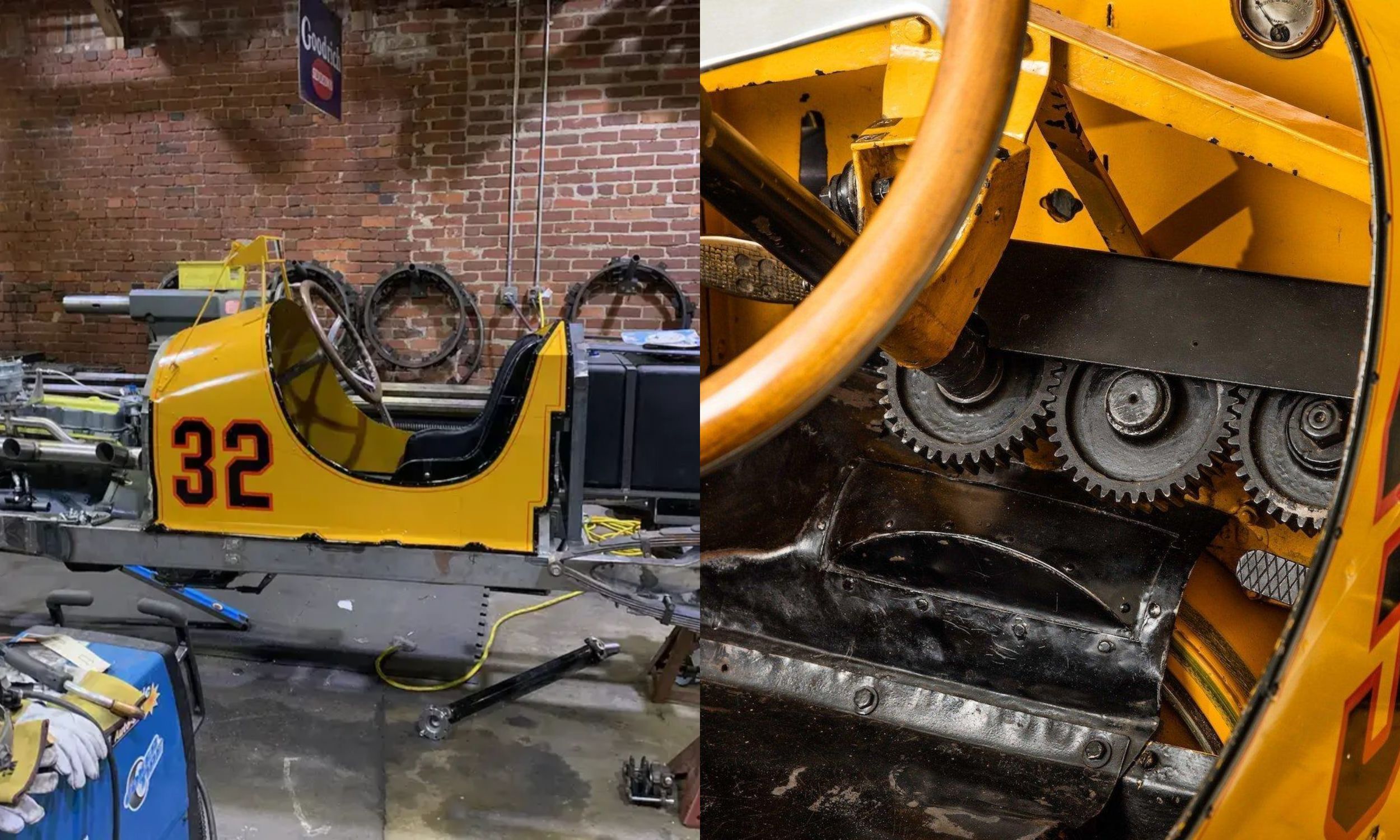
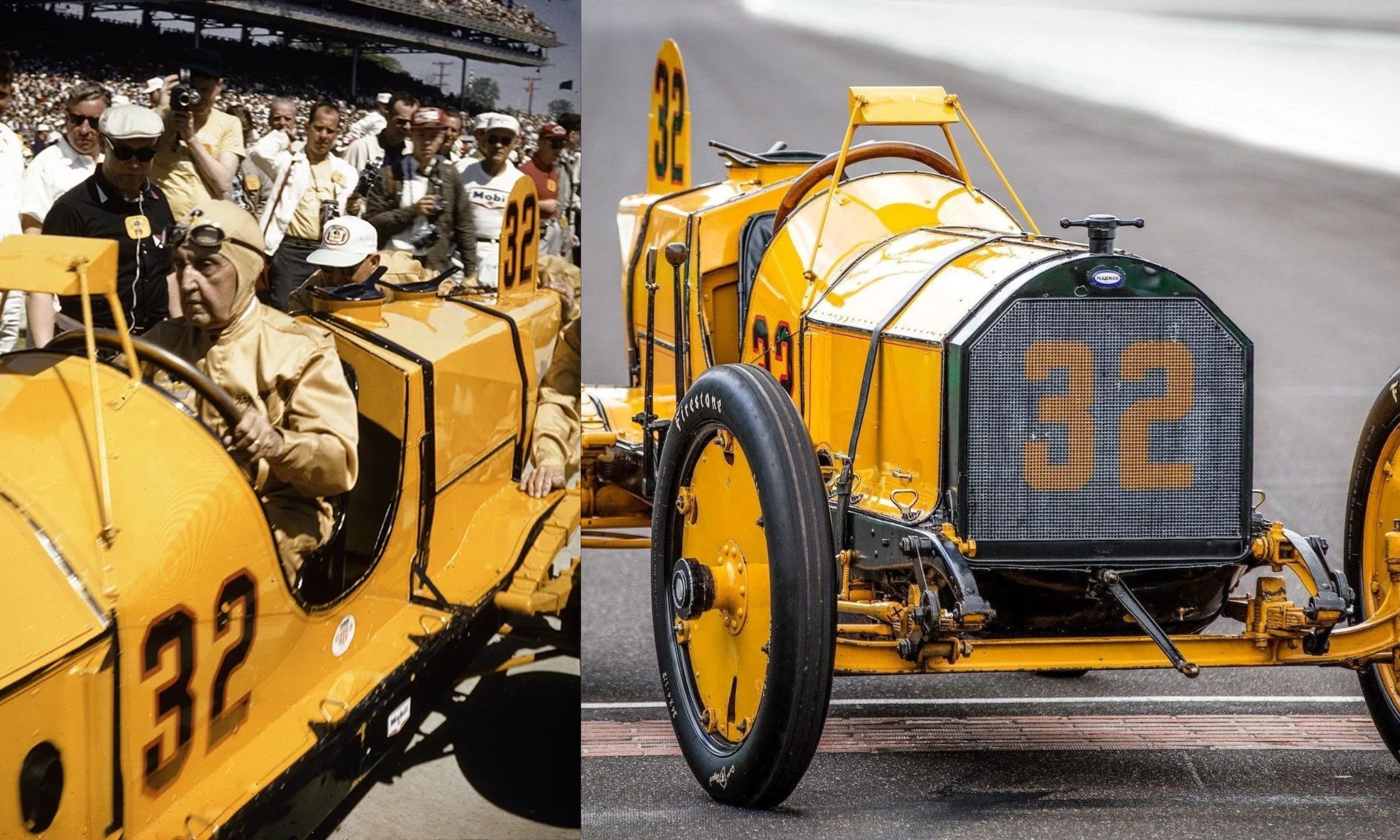
Harroun based his creation on Marmon’s existing 6-cylinder Model 32, but reshaped nearly everything around it. He stripped away the traditional two-seat layout entirely, creating what’s widely recognized as the first open-wheel, single-seater race car ever built for competition. Removing that second seat eliminated real weight, and less weight meant less strain on tires and better efficiency across a grueling 500-mile distance.
The bodywork received equal attention. Harroun sculpted a long, narrow shape with a cowled cockpit and a pointed tail section designed specifically to cut through air resistance more efficiently than the boxier cars around him. That tapering rear end, resembling a stinger, combined with the car’s bright yellow and black paint scheme, inspired a journalist covering the event to nickname it the “Wasp.” The name stuck permanently.
Under that distinctive shell sat a 477 cubic-inch, 7.8-liter, naturally aspirated six-cylinder engine, a genuinely large powerplant for a car Harroun had worked hard to keep as light and aerodynamic as possible. Every design choice worked toward the same goal: finishing 500 miles with mechanical reliability and minimal drag, rather than chasing raw top speed like several rival teams were doing.
Other competitors noticed the missing second seat immediately, and plenty weren’t shy about voicing their displeasure regarding what they considered a dangerous shortcut.
Also Read: Cadillac V16: Pinnacle of Luxury Automaking in 1930
Solving the Missing Mechanic Problem
Rival drivers and teams protested loudly once they realized Harroun intended to race without a riding mechanic watching his back. Their argument centered on safety, insisting that a solo driver couldn’t reasonably track fast-approaching traffic while simultaneously focusing on holding a competitive racing line through turns at speed.
Harroun’s answer was refreshingly simple. Rather than caving to pressure and adding a second occupant back into his carefully weight-optimized car, he bolted a small mirror onto brackets mounted directly above the steering wheel, positioned exactly where a driver’s eyes would naturally glance for a quick traffic check.
This device is widely credited as the first rearview mirror ever installed on an automobile, predating its adoption across the broader auto industry by years. The mirror gave Harroun exactly what his mechanic would have provided: a clear view of what was happening behind him, without the weight penalty of carrying a second person for 500 continuous miles.
Critics still grumbled about the setup right up until race day, viewing it as an unproven gadget rather than a legitimate safety solution. History proved those critics wrong in the most convincing way possible. Harroun’s mirror worked exactly as intended throughout the entire race, and the concept spread across the automotive world so quickly and so completely that most drivers today have never once considered a car without one.
Starting 28th and Playing the Long Game
Harroun didn’t qualify anywhere near the front of the field, rolling off from 28th position among the forty starters that morning. Plenty of drivers ahead of him treated the race as a flat-out sprint, pushing their machines toward top speeds exceeding 90 mph as they roared past the pagoda tower early in the event.
Harroun took a completely different approach. Rather than chasing every position on lap one, he focused on smooth, controlled driving, paced around what his equipment could realistically sustain for the full distance ahead. He had specifically consulted with Firestone Tire representatives before the race, who recommended keeping his speed below roughly 80 mph on the unforgiving brick surface unless he wanted to spend the entire afternoon swapping tires in the pits.
That advice shaped his entire race. While competitors around him treated tire wear as an afterthought, discovering the consequences only after their rubber shredded mid-race, Harroun had already built his strategy around avoiding that exact outcome from the very start. Patience, not raw aggression, became his defining tactic across the full 500 miles.
Engineer Ryan VanLeeuwen, speaking about Harroun decades later for Marmon, described him as a genuine strategist who planned for the long game rather than chasing top speed at every opportunity. That mindset, unusual among his contemporaries, turned out to be exactly what the inaugural Indy 500 rewarded most.
Where the Real Race Was Won
Tire management, more than raw horsepower, decided the outcome of this race. Harroun changed his right rear tire four separate times throughout the full 500 miles, keeping his other three tires mounted on the car for the entire distance without a single additional change. That’s a remarkably light total for an event run on unforgiving brick pavement at genuine race speeds.
Compare that to his closest competition. The second-place finisher, driving a Lozier, needed seven total tire changes to complete the same distance, each stop costing precious minutes that Harroun simply never had to spend sitting still. Drivers who ignored tire conservation entirely fared even worse, some averaging eleven pit stops across the race, with several crashing out completely after their rubber failed at speed.
Every minute Harroun’s rivals spent in the pits swapping tires was a minute Harroun spent gaining ground on the brick oval, still moving steadily toward the finish line. His disciplined approach to speed management directly translated into fewer mechanical interruptions, turning what looked like a conservative, unhurried pace into a genuinely decisive competitive advantage by the race’s final laps.
Author Ronald Sieber later described Harroun as essentially inventing the science of tire management on the spot, treating something most drivers of his era barely considered as a central pillar of his entire race strategy.
Crossing the Line First
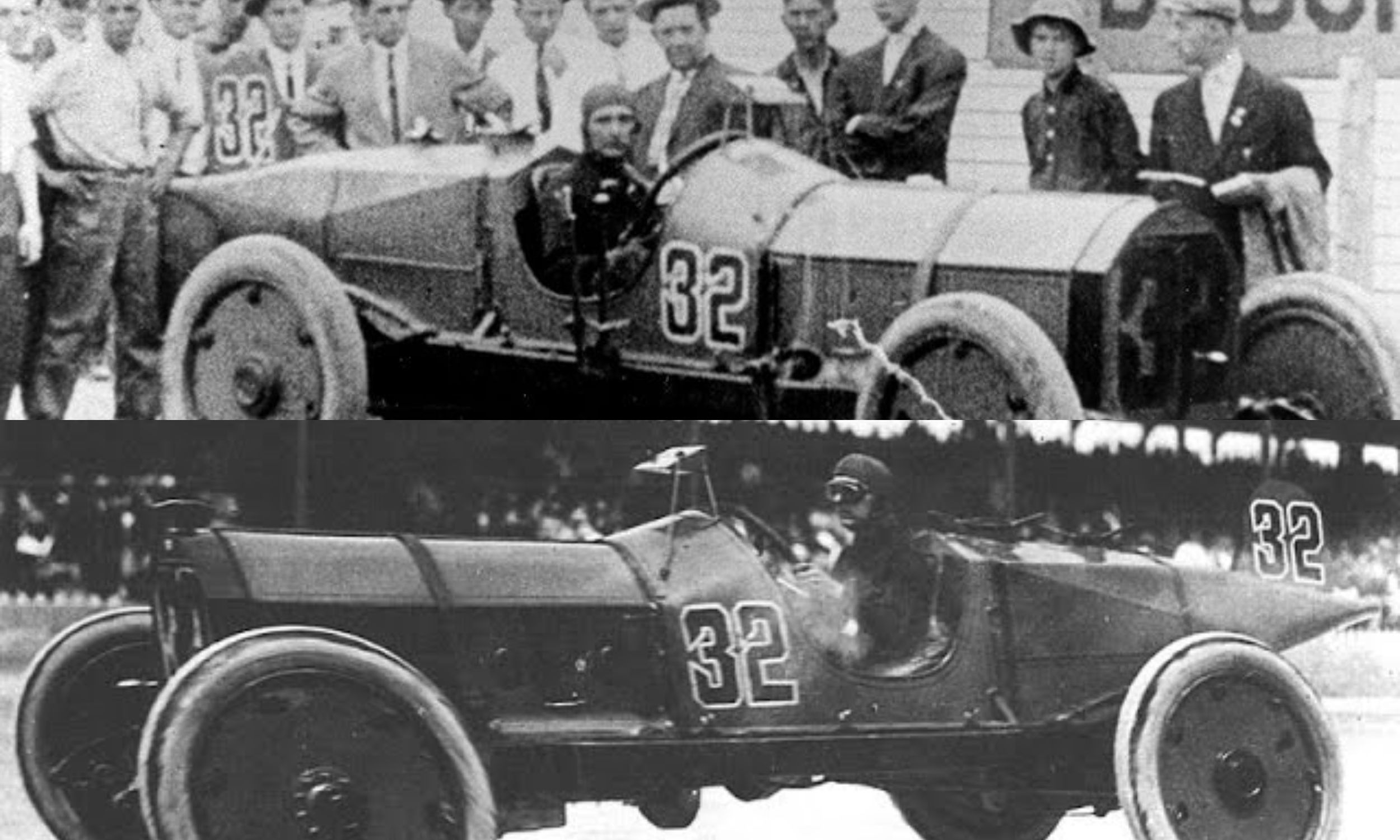
After 6 hours, 42 minutes, and 8 seconds of continuous racing, Harroun’s yellow Marmon Wasp crossed the finish line first, completing the full 500 miles at an average speed of 74.6 mph. He finished roughly one full lap ahead of Ralph Mulford’s Lozier in second place, a genuinely comfortable margin considering how competitive the field had looked at the start.
Mulford’s team filed a protest afterward, arguing there had been scoring errors during the race that potentially affected the final results. Officials reviewed the dispute and upheld Harroun’s victory, confirming him as the winner of the first Indianapolis 500 in official record books.
The prize purse for the event totaled $27,550, with Harroun personally earning right around $14,000 to $14,250 depending on the specific source consulted, plus an additional bonus paid directly by the Marmon company itself. He would later earn that year’s American Automobile Association national driving championship retroactively, once formal championship rules finally got established in 1927, sixteen years after his actual victory.
Despite the win, Harroun’s innovative single-seat design was banned from future competition almost immediately afterward, with officials mandating that riding mechanics remain a required part of every entry going forward. The rearview mirror, however, faced no such restriction and quietly spread across the entire automotive world in the years that followed.
Also Read: Top Sweet Sixteen: The Greatest 16-Cylinder Cars Ever Produced
A Legacy That Outlasted the Race
Harroun retired from racing again immediately following his win, returning full-time to his engineering role at Marmon exactly as he’d originally planned before the company talked him into one final race. He would later be credited with winning eight total races at Indianapolis Motor Speedway across his career, the second-highest total of any driver across the track’s first century of competition.
After his famous victory, Harroun offered reporters a characteristically humble line, insisting that Marmon had won the race and that he simply happened to be the driver behind the wheel that day. That quote has followed the Marmon company ever since, referenced repeatedly in the decades that followed as a symbol of engineering-driven teamwork rather than individual glory.
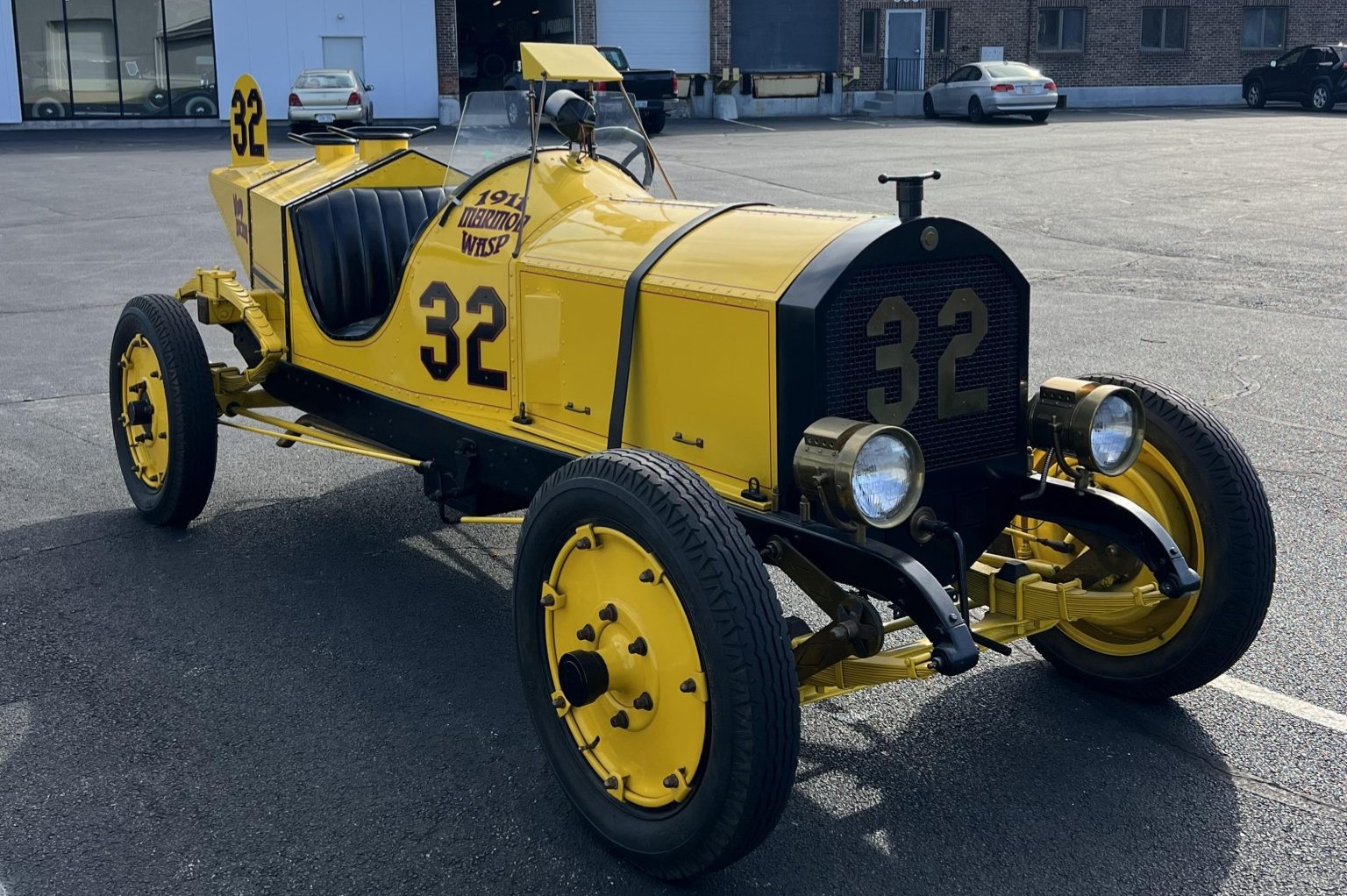
The original Marmon Wasp still exists today, preserved and on display at the Indianapolis Motor Speedway Museum, where visitors can see the actual car that carried Harroun to victory back in 1911. Harroun himself returned to the speedway in 1961 alongside the car for a commemorative lap celebrating the race’s 50th anniversary, a fitting reunion between driver and machine decades after their shared triumph.
Marmon has continued honoring this legacy well beyond the racetrack itself. Company engineers built a faithful replica of the Wasp years later, working from historical photographs and original specifications to recreate Harroun’s machine as closely as possible.
Today, Marmon Holdings has grown into a company generating billions in annual revenue, and its leadership still points back to that single 1911 race as proof that looking backward, quite literally through a small mirror, sometimes creates the clearest path forward.