
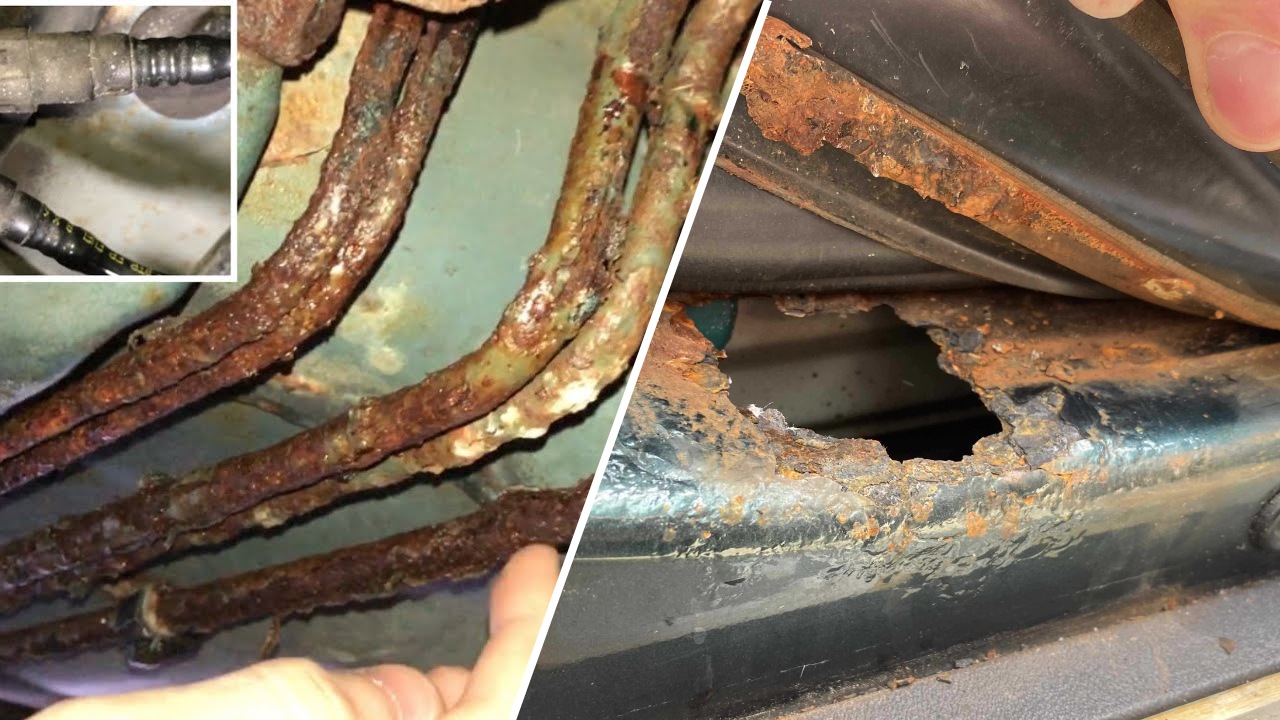
Rust is one of the biggest threats to a used truck because it can affect far more than appearance. Corrosion weakens structural components, suspension mounting points, brake and fuel lines, and even the frame itself. Trucks that spent years in regions where road salt is common deserve especially careful inspection before purchase.
According to maintenance guidance from the National Highway Traffic Safety Administration (NHTSA), truck manufacturers, and corrosion experts, catching rust early can prevent costly repairs and safety concerns. These are ten critical areas every buyer should inspect before purchasing a used truck in the United States.
1. Rocker Panels
The rocker panels run beneath the doors and form an important structural part of the truck’s cab. They are constantly exposed to water, mud, gravel, snow, and road salt thrown up by the tires.
Over time, trapped moisture behind the metal can cause rust to begin from the inside, meaning serious corrosion may already exist before any bubbles appear in the paint.
When inspecting a used truck, kneel beside the vehicle and carefully examine the full length of both rocker panels. Look for bubbling paint, discoloration, uneven repairs, fresh undercoating, or soft spots. A small magnet can sometimes help identify areas hidden by body filler because it will not stick well where thick filler has been applied.
Rust in this location is more than cosmetic. The rocker panels contribute to the cab’s structural integrity, especially during side-impact collisions. Severe corrosion can also make lifting the truck with a jack unsafe because the metal may no longer support the vehicle’s weight.
Trucks operated in northern states such as Michigan, Minnesota, New York, Pennsylvania, and Ohio often develop rocker panel corrosion sooner due to heavy winter salt use. Buyers should pay close attention if the truck spent several winters in these regions.
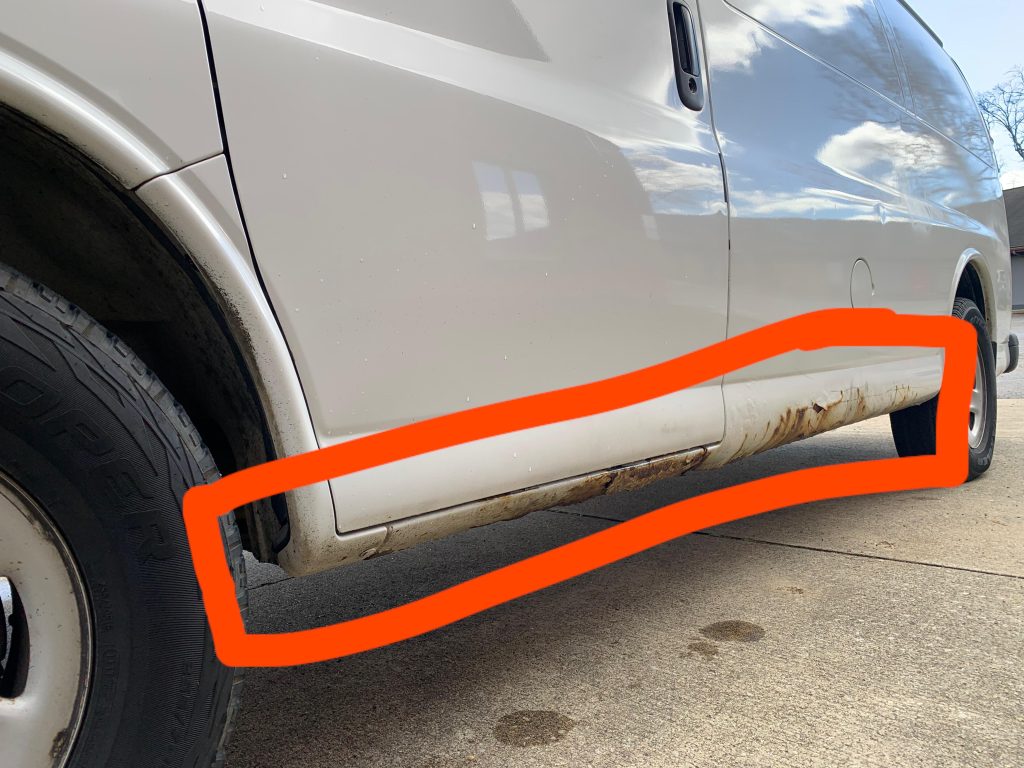
Minor surface rust can usually be repaired without major expense, but holes, flaking metal, or rust extending into the floor structure often require extensive body work. Discovering those problems before purchase can save thousands of dollars and prevent unexpected repairs shortly after taking ownership.
2. Cab Corners
Cab corners are another location where corrosion frequently develops, particularly on pickups used in snowy climates.
Positioned directly behind the rear doors on Crew Cab models or behind the seats on Regular Cab trucks, these panels collect moisture, road debris, and salt that can remain trapped for extended periods. Once corrosion begins inside the panel, it often spreads unnoticed until bubbles appear beneath the paint.
Rather than immediately focusing on visible rust, inspect the shape of the metal itself. Uneven surfaces, ripples, fresh paint, or slightly mismatched body color may indicate previous rust repairs. Run your hand gently across both cab corners to feel for rough patches or repairs hidden beneath new paint.
Water drainage also plays an important role. Clogged drain openings allow moisture to remain inside the body cavity, accelerating corrosion from within. Even trucks that appear clean externally can have significant rust hidden behind interior trim panels.
Replacement cab corners are available for many popular pickups, but installation involves cutting away damaged metal and welding in new panels. Repair quality varies significantly depending on the shop performing the work. Poor repairs can allow rust to return within only a few years.
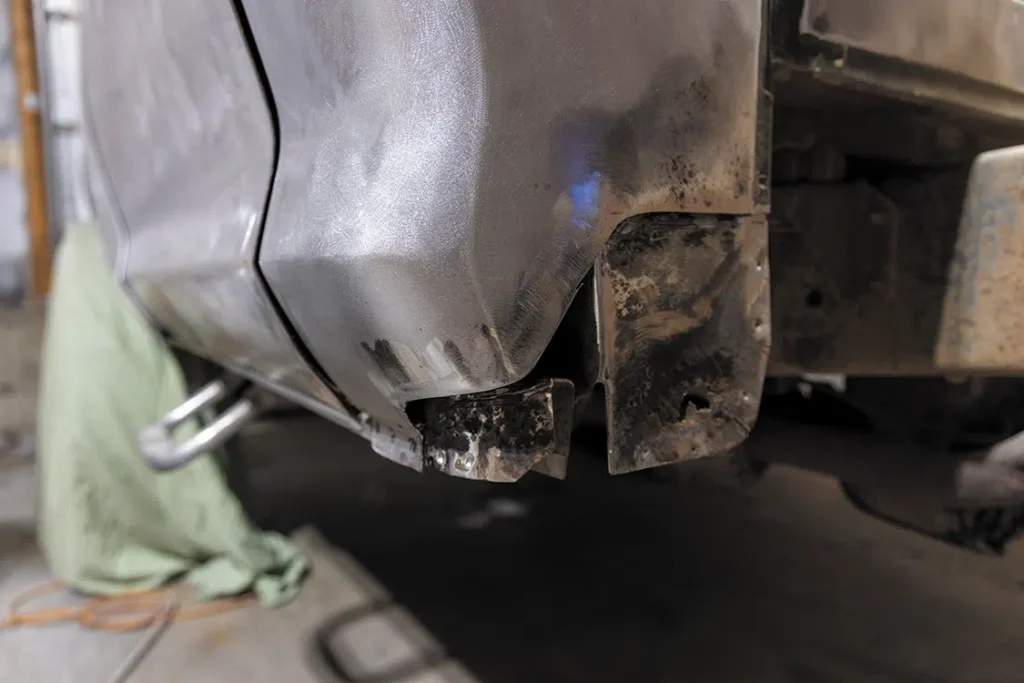
Checking both sides of the truck in bright daylight often reveals subtle differences in paint texture or reflections that indicate previous repairs. Spending a few extra minutes inspecting these areas can prevent purchasing a truck that requires extensive body restoration despite looking attractive at first glance.
3. Frame Rails
If there is one place that deserves the most attention during a used truck inspection, it is the frame rails. Cosmetic rust on body panels can often be repaired, but structural corrosion on the frame can compromise the truck’s strength, towing capability, suspension alignment, and crash protection.
Repairing severe frame damage is usually expensive, and in some cases, the safest option is to walk away from the purchase.
Bring a flashlight and inspect the entire length of both frame rails from the front bumper to the rear. Surface rust with light orange discoloration is common on older trucks and is generally not a major concern.
The real warning signs are heavy scaling, flaking metal, deep pitting, soft spots, cracks near welded joints, or sections that appear swollen from corrosion underneath the surface.
Pay extra attention to areas around suspension mounting points, crossmembers, steering components, and fuel tank supports. These locations trap moisture and road salt, especially on trucks that have spent years in northern states where winter road treatments are common.
A small hammer or screwdriver can also help during an inspection. Gently tapping questionable areas should produce a solid metallic sound. If the tool easily chips away thick flakes or exposes weakened metal underneath, corrosion has likely progressed beyond simple surface rust.
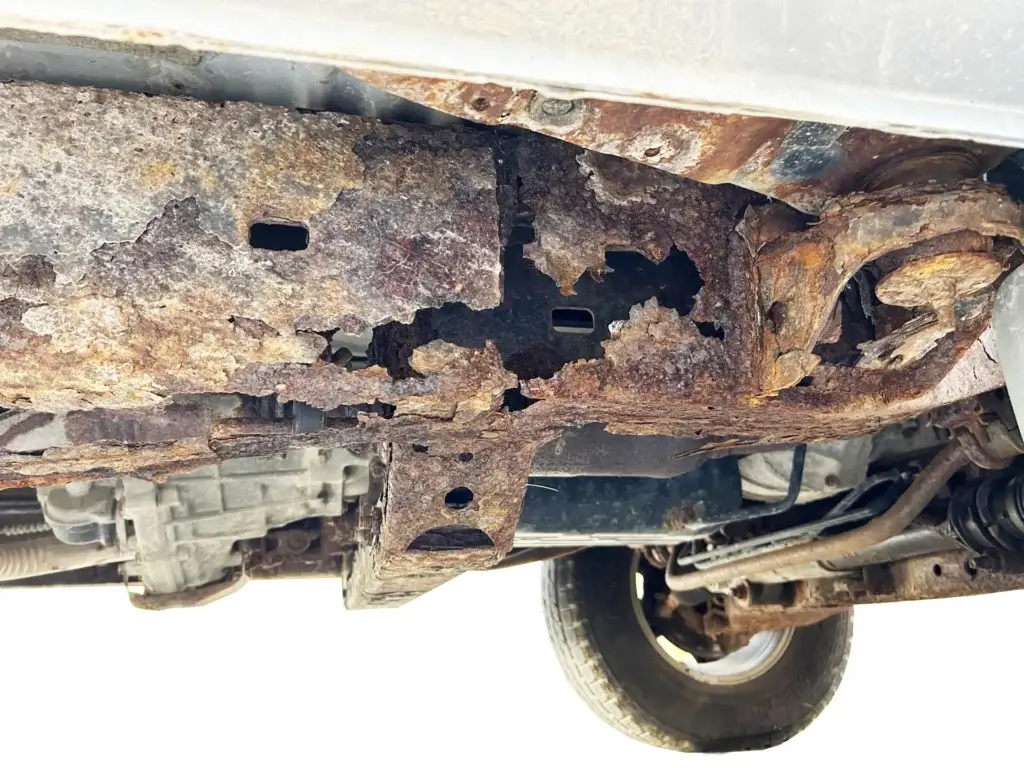
Frame corrosion has resulted in recalls and service campaigns on certain trucks over the years, making this inspection even more important. Spending fifteen minutes underneath the truck can reveal structural issues that are impossible to detect during a short test drive.
4. Bed Crossmembers
Many buyers carefully inspect the pickup bed for dents and scratches but never look underneath it. Hidden below the bed floor are steel crossmembers that support cargo weight and help maintain the truck’s structural rigidity.
Because these components are constantly exposed to water, mud, fertilizer, gravel, and road salt, they are common rust locations, particularly on trucks that have performed heavy work.
Begin by crouching behind the truck with a flashlight. Look underneath the cargo bed and inspect each crossmember individually. Surface rust is expected on older trucks, but severe scaling, holes, separated welds, or sagging supports indicate much more serious deterioration.
Pay close attention near the bed mounts where the cargo box attaches to the frame. Moisture often becomes trapped between mounting surfaces, accelerating corrosion in areas that cannot easily dry. Rust here may eventually allow the bed to shift slightly under heavy loads or while towing.
Commercial trucks that carry landscaping equipment, construction materials, salt spreaders, or chemicals often experience faster corrosion because debris remains trapped against the steel. Even trucks with attractive paint can hide extensive rust beneath the bed.
Replacement bed crossmembers require removing or lifting the pickup bed, making repairs labor-intensive. If several supports have deteriorated significantly, repair costs can quickly reach thousands of dollars depending on the truck model.
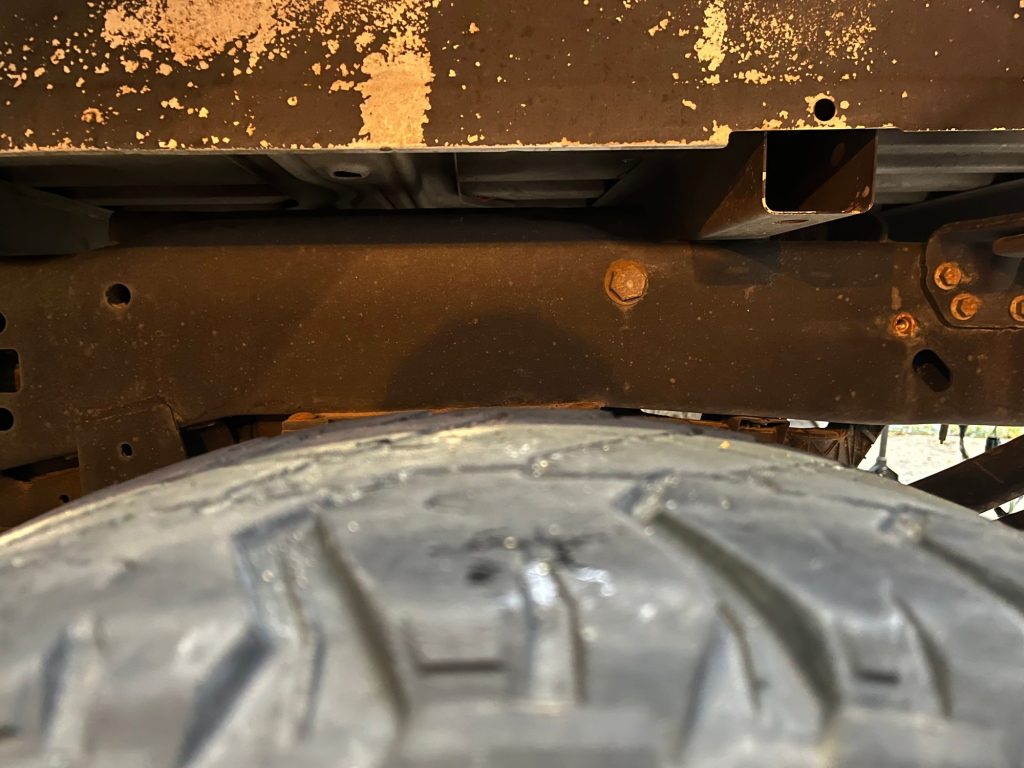
A clean bed floor should never be mistaken for a rust-free cargo box. Looking underneath provides a much clearer picture of how the truck has been used and maintained throughout its life.
5. Brake and Fuel Lines
Some of the most dangerous rust on a used truck is also the easiest to miss. Brake lines and fuel lines are mounted underneath the vehicle, tucked along the frame where most buyers rarely look.
Because these steel lines are constantly exposed to water, mud, road salt, and gravel, they are especially vulnerable to corrosion in states that experience harsh winters. Surface rust may not seem alarming, but advanced corrosion can eventually cause a brake line to rupture or a fuel line to leak, creating serious safety hazards.
Before purchasing any used truck, crawl underneath with a flashlight and carefully trace the brake and fuel lines from front to rear. Look for heavy rust scaling, flaking metal, damp spots, or repairs using compression fittings.
Brake lines should have a consistent appearance from end to end. If one section looks much newer than the rest, ask why it was replaced and whether the remaining lines are original. Fuel lines deserve the same attention because corrosion can weaken them internally long before an external leak develops.
Many manufacturers have issued service bulletins or recalls involving corroded brake lines over the years, demonstrating how serious this issue can become.
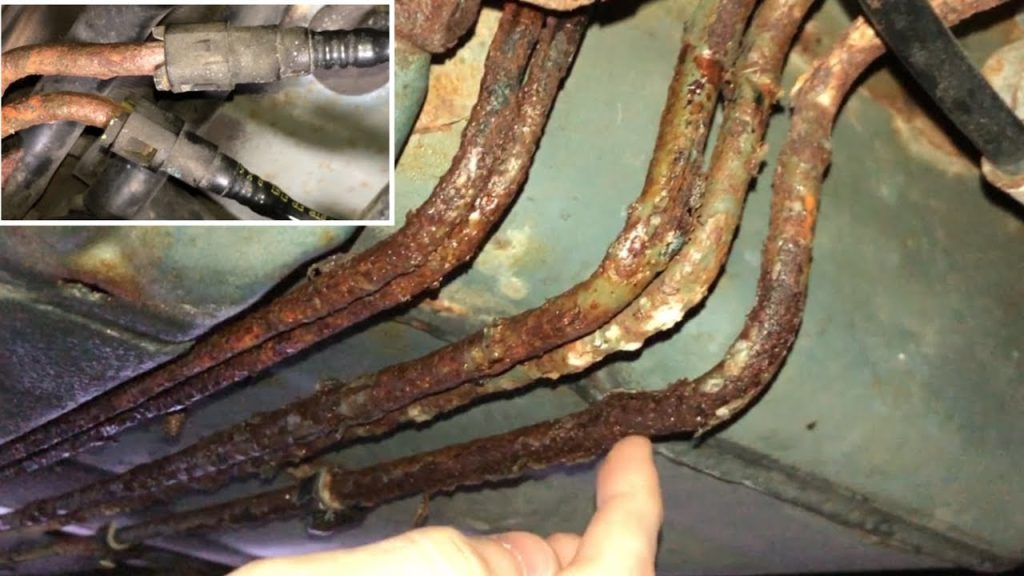
A truck may drive perfectly during a short test drive, yet severe rust hidden underneath could lead to brake failure months later. Replacement costs also increase rapidly because multiple lines often need to be replaced at the same time.
Checking these components takes only a few minutes but can prevent expensive repairs and improve safety. A clean frame means little if the truck’s brake or fuel lines are nearing the end of their service life due to corrosion.
6. Wheel Wells and Inner Fenders
Wheel wells endure some of the harshest conditions on any pickup. Every mile driven throws water, sand, road salt, gravel, and debris directly against the inner fenders and surrounding metal.
Over several winters, this constant exposure gradually removes protective coatings, allowing corrosion to begin in places that are difficult to see without a thorough inspection. Many trucks that appear clean from the outside already have rust developing behind the wheel liners.
Start by turning the steering wheel fully to gain a better view of the front wheel wells. Use a flashlight to inspect the inner fender panels, suspension mounting areas, and the lip around each wheel opening.
At the rear, check inside the wheel arches for bubbling paint, rust streaks, loose undercoating, or packed dirt holding moisture against the metal. If plastic liners are loose or missing fasteners, moisture may have been trapped behind them for years.
Wheel wells are also common locations for previous body repairs. Fresh undercoating, uneven seam sealer, or mismatched paint texture can indicate earlier corrosion damage that has been covered rather than completely repaired. A magnet can sometimes help detect excessive body filler around repaired areas.
Surface rust inside a wheel well is generally manageable if addressed early. Deep corrosion extending into structural supports, however, can require cutting and welding new metal sections, substantially increasing repair costs.
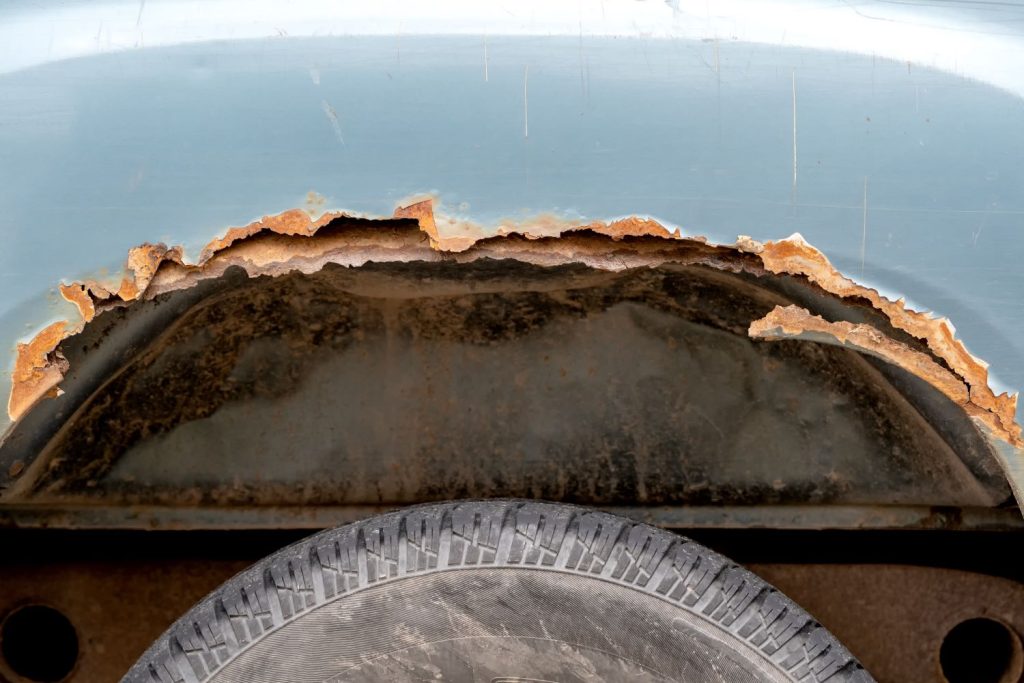
Buyers should pay particular attention to trucks from snowbelt states where winter road salt accelerates rust formation.
A careful inspection of all four wheel wells provides valuable insight into how well the truck has resisted corrosion throughout its life and whether hidden repairs may already exist.
7. Suspension Mounting Points
A truck’s suspension does far more than provide a comfortable ride. It supports thousands of pounds of vehicle weight, absorbs impacts from rough roads, and keeps the tires properly aligned with the pavement.
Every control arm, leaf spring, shock absorber, and axle depends on solid mounting points attached to the frame or body. If rust weakens these areas, repairs become much more serious than replacing worn suspension components. That is why suspension mounting points deserve a careful inspection before buying any used truck.
Start underneath the truck with a bright flashlight. Focus on the brackets holding the control arms, leaf springs, shock absorbers, sway bars, and rear axle.
Light surface rust is common on older pickups, especially in northern states, but heavy scaling, cracked welds, deep pitting, or metal separating around the mounting bolts should immediately raise concerns. Rust often forms between overlapping pieces of steel where moisture remains trapped for long periods.
Pay close attention to rear leaf spring hangers and shackles. These components carry tremendous loads every time the truck accelerates, brakes, or hauls cargo.
Corrosion here can eventually cause the suspension to shift unexpectedly or even separate from the frame. Front control arm mounting points deserve equal attention because structural rust can affect steering precision and tire wear.
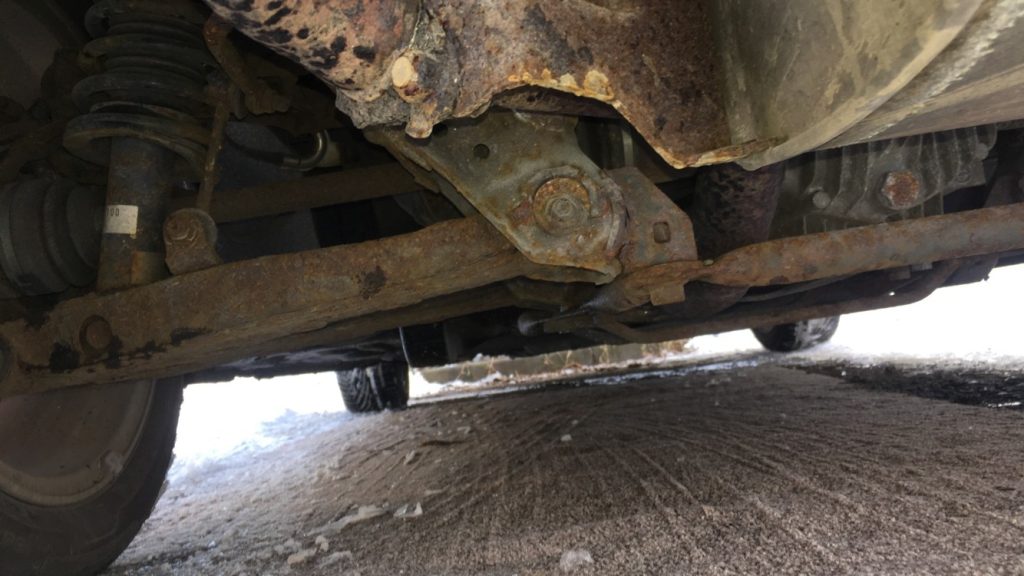
Fresh black undercoating sprayed only around suspension brackets may also deserve a second look. While undercoating protects against future corrosion, it is occasionally used to hide existing rust. Inspect closely for soft metal or uneven surfaces beneath the coating.
Repairing severely rusted suspension mounting points often requires welding new steel into the frame, making it one of the most expensive corrosion repairs on a used truck. Spending a few extra minutes inspecting these areas can prevent buying a vehicle with hidden structural problems.
8. Door Bottoms and Drain Holes
The lower edges of truck doors may seem like an unlikely place for serious rust, but they are among the most common corrosion points on older pickups. Every time rainwater enters through the window seals, it drains through small openings at the bottom of each door.
If those drain holes become clogged with dirt, leaves, or road debris, water remains trapped inside the door shell. Over months and years, that trapped moisture gradually attacks the metal from the inside out.
Open each door completely and inspect the lower seam carefully. Look for bubbling paint, rust stains, swollen metal, or rough edges that indicate corrosion has begun beneath the paint.
Run your fingers gently along the underside because damage is sometimes easier to feel than to see. A flashlight also helps reveal rust developing around the drain openings.
Check whether the drain holes themselves are open. Blocked drains often indicate that water has been sitting inside the door for extended periods. If possible, look inside the door using the access openings near the hinges to check for loose rust flakes or heavy internal corrosion.
Many trucks receive cosmetic repainting before being offered for sale. Fresh paint along the lower portion of a door is not automatically a problem, but it should prompt a closer inspection to determine whether the repair addressed the source of the rust or simply covered the visible damage.
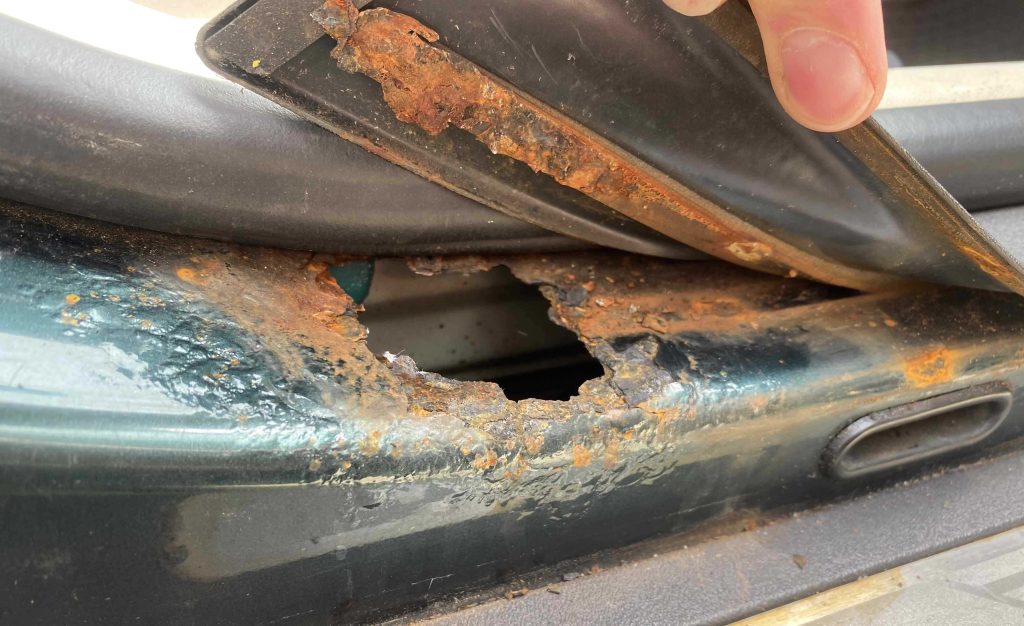
Replacing an entire truck door is significantly more expensive than repairing a small rust spot early. Careful inspection of all four doors helps buyers identify hidden corrosion before it spreads into larger structural repairs.
9. Rear Bumper Mounts and Hitch Receiver
A used truck’s rear bumper and hitch receiver often reveal far more about its history than the odometer. These components are constantly exposed to water, road salt, mud, gravel, and trailer loads.
Because they sit at the rear of the truck where moisture and debris accumulate, they are among the first structural areas to develop significant corrosion. A rusty bumper may seem like a cosmetic issue, but rust around the bumper brackets or hitch receiver can indicate much deeper structural problems.
Begin by inspecting the hitch receiver from every angle. Look inside the receiver tube using a flashlight because corrosion frequently starts where moisture collects. Surface rust is common and can usually be cleaned and treated.
Thick scaling, heavy flaking, distorted metal, or cracks around the receiver opening are much more serious. These conditions may reduce towing strength and could require complete replacement.
Next, examine the bumper mounting brackets where they attach to the frame. Rust often forms between the brackets and the frame rails because dirt and moisture remain trapped in these tight spaces.
Check every mounting bolt for excessive corrosion, as severely rusted hardware can make future repairs difficult and sometimes indicates long-term exposure to harsh winter conditions.
If the truck has been used for frequent towing, inspect the welds surrounding the hitch receiver. Rust combined with repeated heavy trailer loads can weaken weld integrity over time. Also look for fresh paint applied only around the hitch area, which may hide previous corrosion repairs.
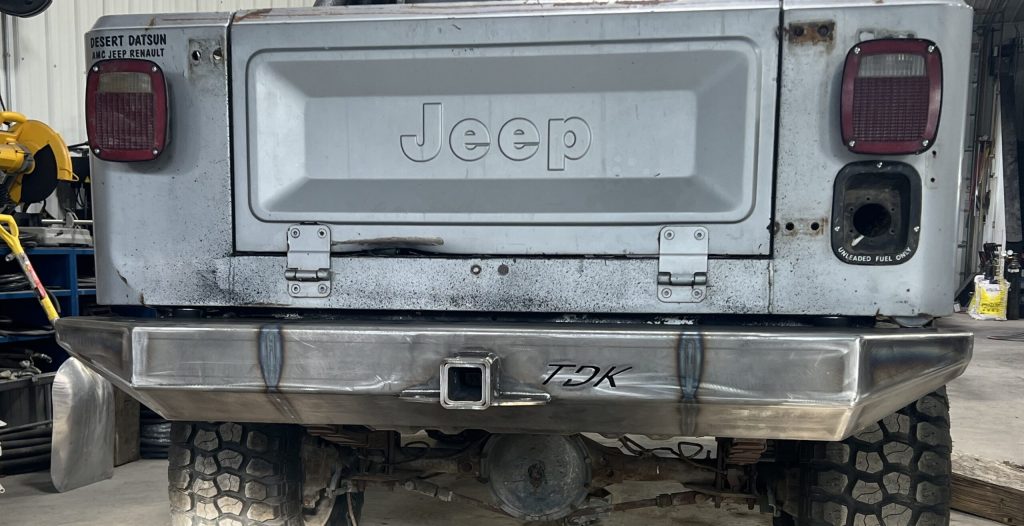
A damaged hitch receiver is not simply an appearance issue. It directly affects towing safety. Spending a few minutes underneath the rear of the truck can reveal expensive structural repairs that might otherwise remain hidden until after the purchase.
10. Spare Tire Carrier and Rear Crossmember
Many buyers never lower the spare tire during a used truck inspection, making this one of the most overlooked rust-prone areas on any pickup. The spare tire carrier, winch mechanism, and rear crossmember are constantly exposed to road spray, salt, and dirt.
Since the spare tire often remains untouched for years, moisture becomes trapped between the tire, mounting hardware, and surrounding steel, accelerating corrosion without attracting much attention.
Before buying the truck, ask the seller if the spare tire can be lowered. Operate the spare tire winch to confirm it functions smoothly. A seized mechanism often indicates years of corrosion.
Once the tire is down, inspect the carrier, cables, mounting brackets, and rear crossmember for rust scaling, deep pitting, cracked welds, or weakened metal. Surface rust is expected on older trucks, but metal that flakes away easily or shows perforation should raise immediate concern.
The rear crossmember also supports important components such as the bumper mounts, hitch assembly on some trucks, and portions of the frame structure. Corrosion in this area can spread into adjoining frame sections, significantly increasing repair costs.
Trucks driven in snowbelt states frequently develop rust here because road salt accumulates behind the rear axle and remains trapped around the spare tire.
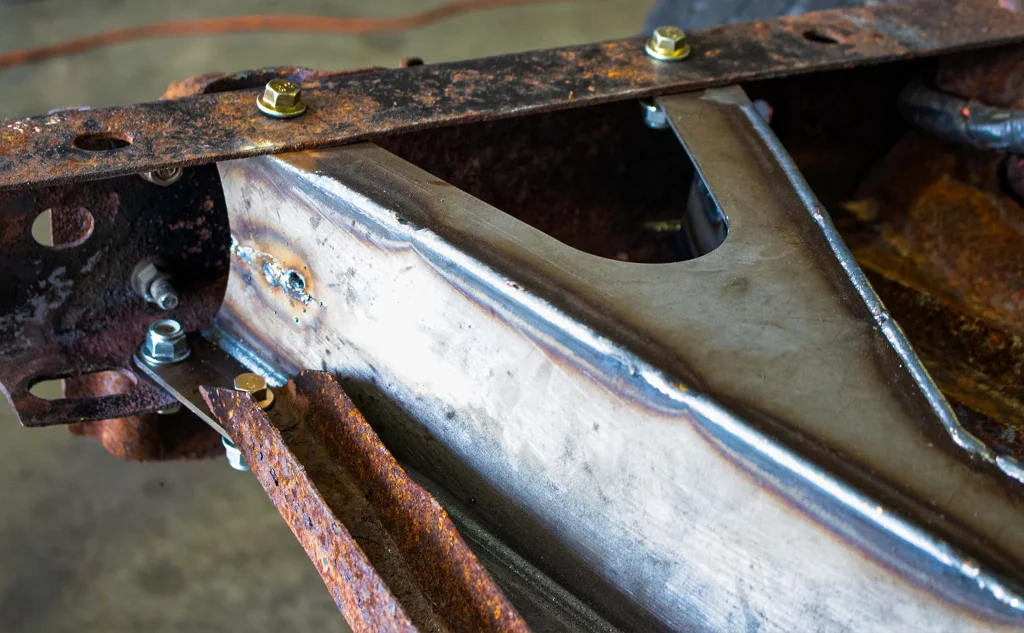
Replacing a spare tire carrier is generally straightforward, but repairing a severely rusted rear crossmember often requires extensive welding or frame repairs. A truck that appears clean from above can still hide substantial corrosion underneath.
Lowering the spare tire before purchase takes only a few minutes, yet it can uncover hidden damage that influences both the truck’s value and its long-term safety.
Also Read: 8 Car Seats That Get Painful After One Hour
