
Owning a car that became part of your daily life, only to have the manufacturer take it away and destroy it, is something most people would never expect. Yet that was the reality for hundreds of people who leased the General Motors EV1 in the early 2000s after growing deeply attached to the vehicle. GM built about 1,117 of these advanced electric cars and leased them to a small group of dedicated drivers.
When the project came to an end, the company recovered almost every EV1 and sent them to be crushed instead of offering them for sale. Many leaseholders repeatedly asked to buy the cars they had cared for, but GM refused every request. The EV1’s story remains one of the most debated chapters in American automotive history and still leaves many people questioning why those cars were never allowed to stay with their drivers.
California’s Bold Bet Sparked a Car Nobody Asked For
The story began in 1990 when California introduced a rule that changed the direction of the auto industry. The state required vehicle manufacturers to produce zero-emission cars. Brian Bilbray of the California Air Resources Board described the decision as bold, saying it could influence air-quality policies far beyond the state’s borders.
Car companies quickly began searching for practical solutions. Some focused on hybrid technology, while others invested in hydrogen fuel cells. General Motors chose a fully electric design and created a prototype called the Impact. During a 1992 test drive in Arizona, NPR reporter Paul Eisenstein described the car’s quick response and unusual electric motor sound when it accelerated.
That project later became the EV1, which reached dealerships in 1996. What started as a government effort to reduce air pollution produced a vehicle that earned lasting admiration from many drivers. Years later, the EV1 would become just as well known for the way its story came to an unexpected and emotional close.
The EV1 Redefined What Electric Driving Could Feel Like
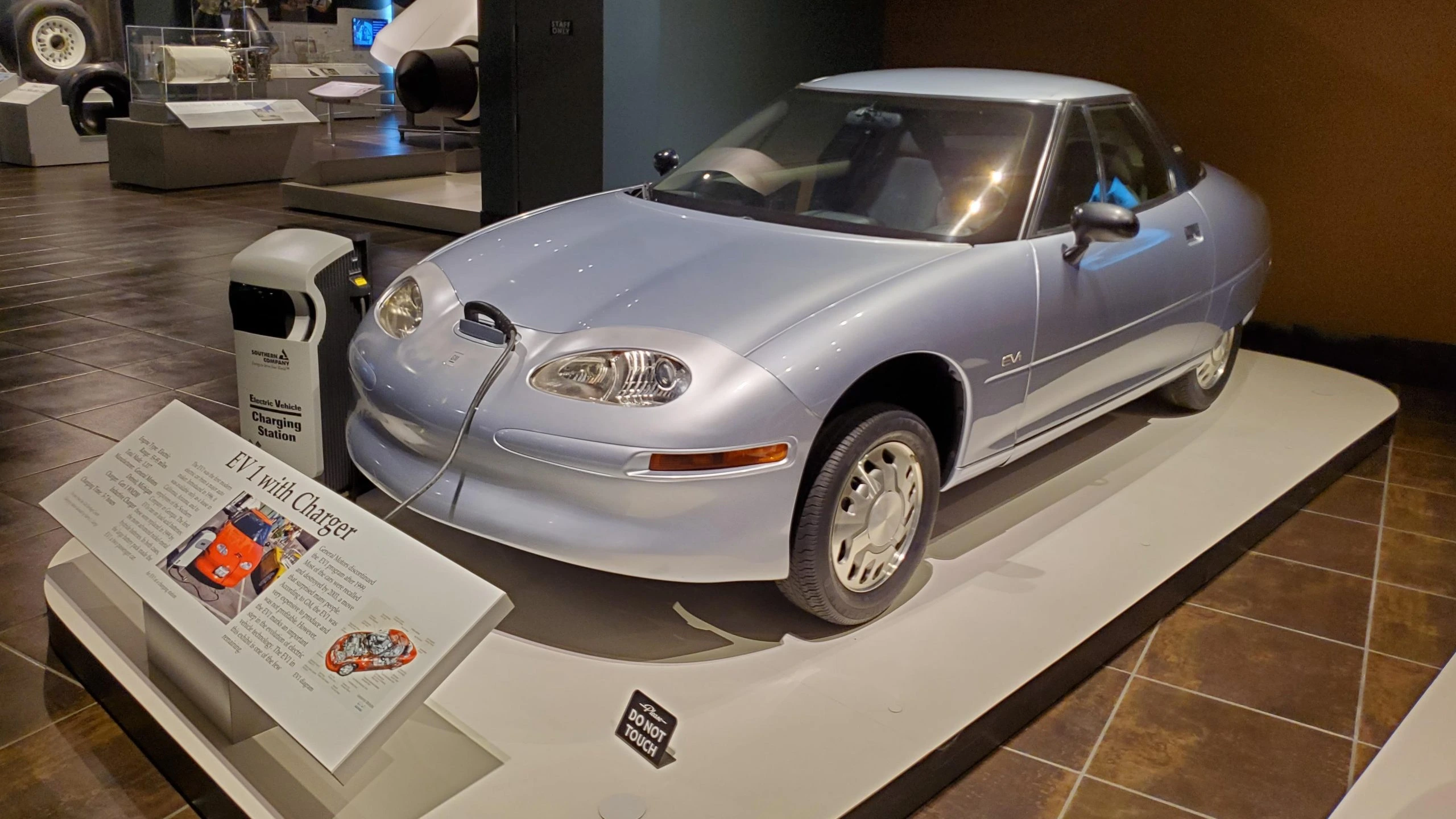
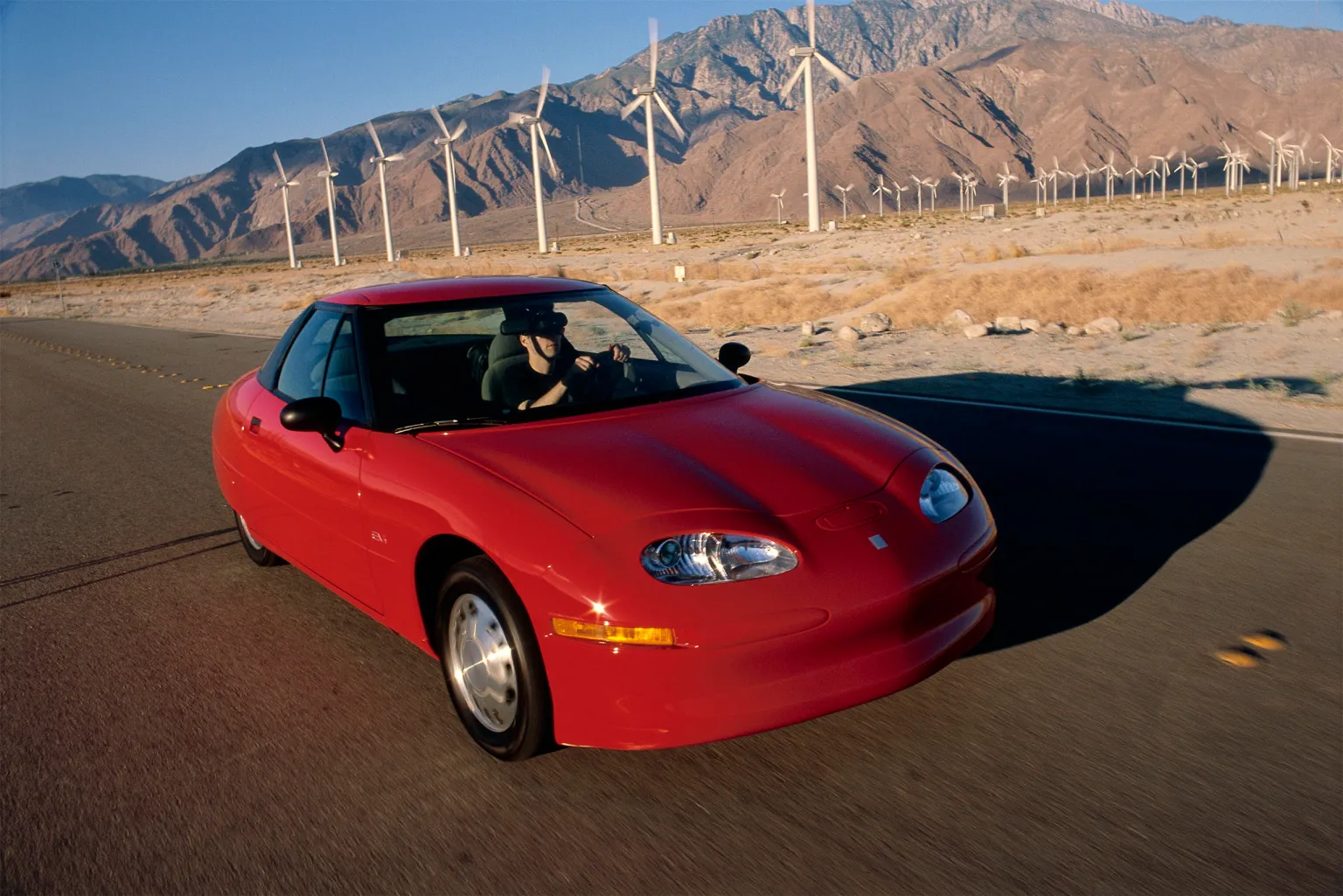
Here’s the thing about the EV1: it wasn’t just electric, it was genuinely clever engineering wrapped in a body that looked like nothing else on the road. The two-door shape resembled a cross between a flying saucer and a computer mouse, and that wasn’t just for show.
Its drag coefficient measured an astonishingly low 0.19, a number that still beats most modern EVs rolling off dealer lots today. Regenerative braking recaptured energy every time a driver hit the brakes, with GM engineer Larry Oswald explaining that the drive motors essentially worked in reverse as generators, storing electricity back into the battery for the next acceleration.
Range started around 70 miles on early lead-acid battery packs, later stretching closer to 100 miles as the technology matured. Former lessee Kris Trexler described the ownership experience simply, telling Michigan Public it felt like having a gasoline station right in his own garage.
Drivers plugged in overnight and woke up ready to go, no gas station stops, no oil changes, nothing but quiet, consistent performance. For a car built in the mid-1990s, that kind of daily convenience felt genuinely ahead of its time, and plenty of drivers who experienced it never quite got over losing it.
Also Read: General Motors Reports Record Revenue Despite EV Slowdown
GM Never Sold a Single EV1 to the Public
One detail made the EV1 program different from almost every other car sold at the time. Although its suggested retail price was $35,000, equal to more than $70,000 in today’s money, General Motors never allowed anyone to buy one.
Every EV1 was available only through a lease, meaning drivers made monthly payments without gaining ownership, regardless of how long they kept the vehicle. The company also aimed its marketing at a small group of wealthy, well-educated customers who could use the EV1 as an extra car.
Consumer Reports researcher Ron Conlin explained that this was the intended audience. Leasing was also limited mainly to California and Arizona because low temperatures reduced the driving range of the lead-acid battery. Another part of the story made the situation even harder for many drivers. About 800 people managed to lease an EV1, while thousands of others reportedly waited for an opportunity.
When GM spokesperson Dave Barthmuss later contacted people on the waiting list, fewer than 50 still wanted a lease. Since every agreement ruled out future ownership, drivers had no legal way to keep the cars they had grown attached to.
Diehard Drivers Fought to Save Their Beloved Cars
Everything changed once the first three-year lease agreements began reaching their expiration dates in the early 2000s. General Motors informed every EV1 driver that the program had ended and that each vehicle had to be returned.
There was no room for discussion, no option to purchase the cars, and no special treatment for drivers who had cared for them faithfully. Many pleaded with the company to let them keep the vehicles they had come to value, but every request was rejected.
Public reaction grew stronger as more EV1s were taken back. Chelsea Sexton, who had worked on the EV1 program, openly criticised the decision. Speaking with NPR, she said it was painful to watch cars she had helped introduce disappear from people who genuinely appreciated them.
Supporters gathered outside GM facilities where the returned vehicles were kept, calling the storage areas “EV1 death row” because they believed the cars were waiting to be destroyed. Attention increased after filmmaker Chris Paine documented the dispute in Who Killed the Electric Car? He later told NPR that seeing the vehicles destroyed before many people even knew they existed was deeply upsetting.
Protesters carried signs, spoke to the media, and even sought legal remedies in an effort to stop the process. Their efforts changed nothing. GM stood by its decision, insisting every leased EV1 had to be returned once the agreement expired. That choice left many drivers disappointed and remains one of the most debated decisions in American automotive history.
The Crusher Claimed Nearly Every EV1 Ever Built
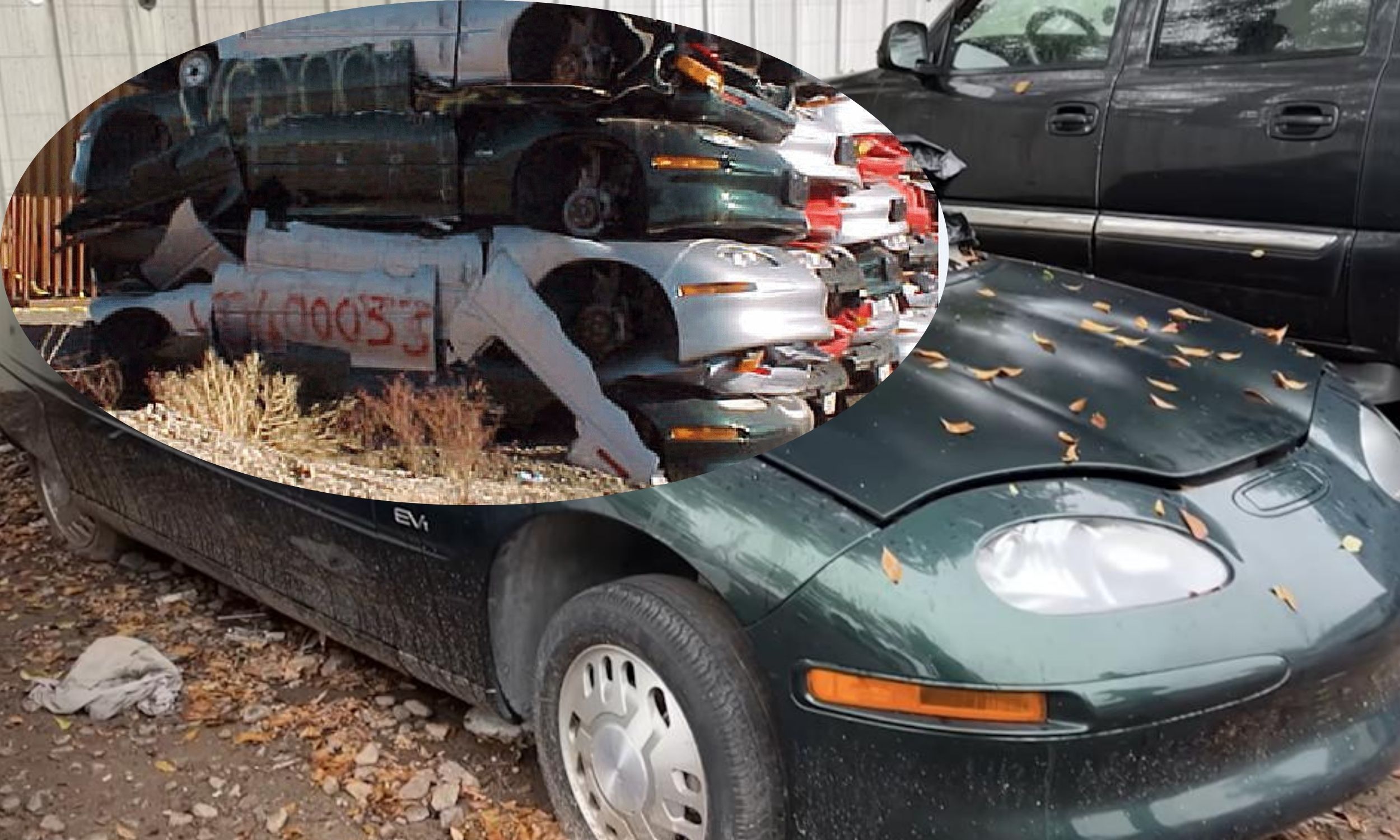
What happened next still stings anyone who followed the EV1 story closely. GM loaded repossessed cars onto semi trucks and hauled them to a facility in Mesa, Arizona, where nearly all of them met the crusher.
Photographs from the era show flattened EV1 bodies stacked on top of each other like discarded soda cans, a jarring image for a car that drivers had once treated like a technological marvel. GM defended the decision by pointing to safety concerns tied to parts availability.
Barthmuss explained that the EV1 contained roughly 2,000 unique parts, some of them computer control modules responsible for braking, and that failure of those components carried serious safety risks the company wasn’t willing to accept once production and parts support ended.
Critics saw it differently, arguing GM simply wanted the zero-emission mandate pressure to disappear and viewed the EV1 program as an unwanted financial obligation rather than a genuine product line.
The company had already sunk more than a billion dollars into electric vehicle development, and once California softened its zero-emission requirements, that investment started looking like dead weight on the balance sheet.
Whatever the real motivation, the outcome was the same: a car built to prove electric vehicles could work ended up almost entirely erased from existence within a few short years.
A Handful of Survivors Escaped Total Destruction
Not every EV1 met the crusher, and that small detail matters more than it might seem at first glance. GM set aside around 40 examples, donating them to museums and universities across the country rather than sending them to Arizona for destruction.
These survivors had their batteries pulled and various components disabled before being handed over, a process insiders call decommissioning, ensuring the cars could never actually drive again even if someone tried.
The Petersen Automotive Museum in Los Angeles became home to one of these preserved units, where former lessee Kris Trexler visited his old car in 2010 and admitted it brought back some seriously powerful memories just standing beside it again.
Universities received several units too, often displaying them as engineering artifacts rather than functional vehicles, stripped of anything that might let them move under their own power again. For roughly two decades, this handful of museum pieces represented the entire physical legacy of the EV1 program, frozen in place as static reminders of what might have been.
Enthusiasts tracked these surviving units obsessively through online forums and dedicated Facebook groups, treating each known location almost like a pilgrimage site for anyone who still mourned the loss of the broader fleet.
Also Read: General Motors Raises 2026 Profit Forecast After Strong Truck and SUV Demand
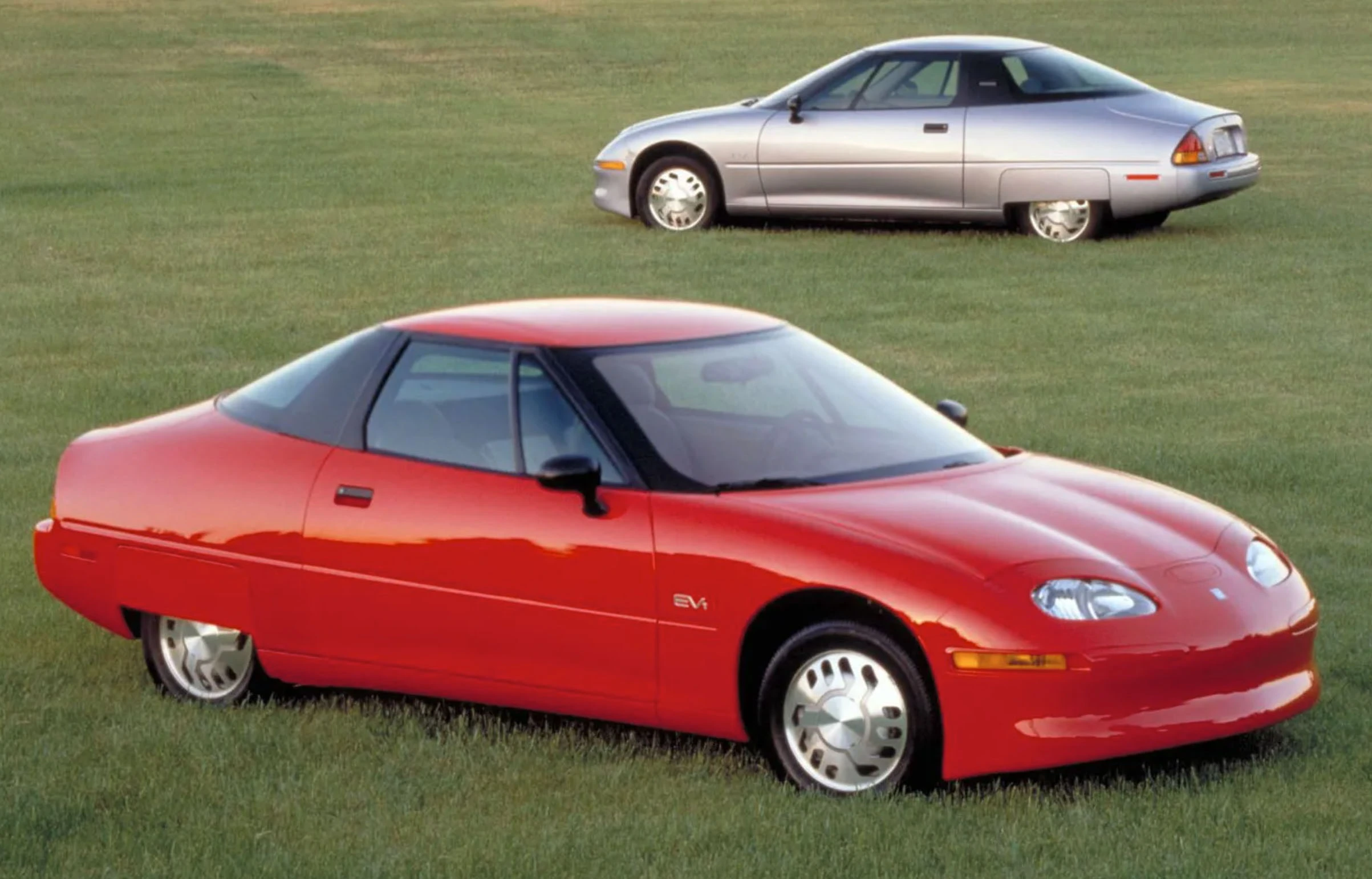
One EV1 Beat the Odds and Sold for Six Figures
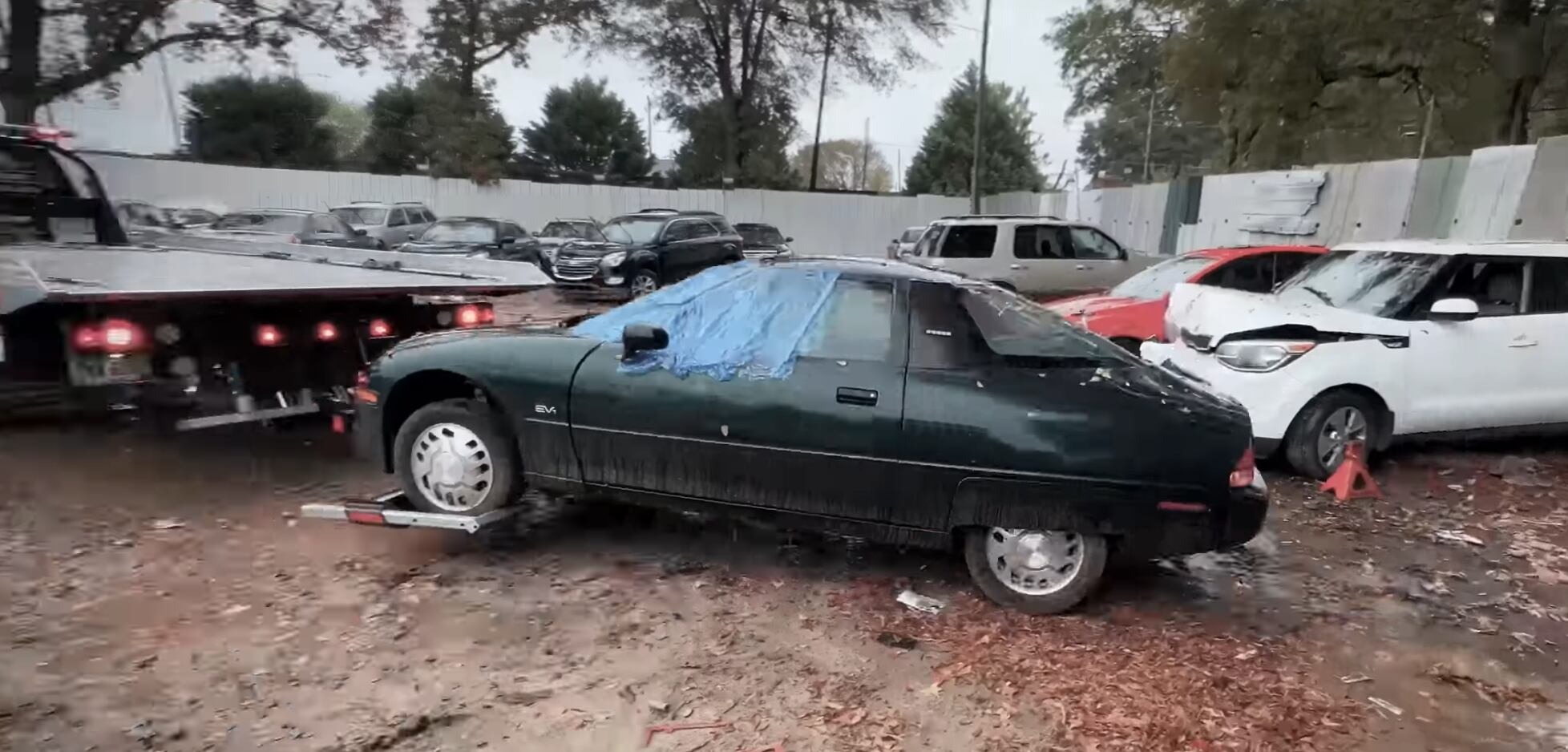
Many years after nearly every EV1 was destroyed, one example surfaced under very unusual circumstances. In 2025, an EV1 carrying VIN #4G5PX2250V0200212 was discovered sitting in a tow yard outside Atlanta. Records from Clark Atlanta University’s campus police listed the vehicle as abandoned, though no clear explanation was ever given for how it ended up there.
Back in the late 1990s, the car had been leased by Jonathan Sawyer. He took legal action against GM after the company collected the vehicle during what was described as a recall repair and never gave it back. Sawyer even reported it stolen to Tempe police before learning the vehicle had been moved elsewhere without his knowledge.
He later told The Autopian that his legal case protected the car because GM’s legal representatives had received direct instructions not to destroy it while the matter remained before the court. Years later, the tow yard secured court approval to sell the vehicle through a public auction. Peak Auto Auctions received 134 bids before the hammer fell at $104,000, with the total rising above $118,000 after fees.
A buyer identified only as Billy purchased the battery-free car and plans to restore it. Today, it remains the only EV1 legally owned by a private citizen.
