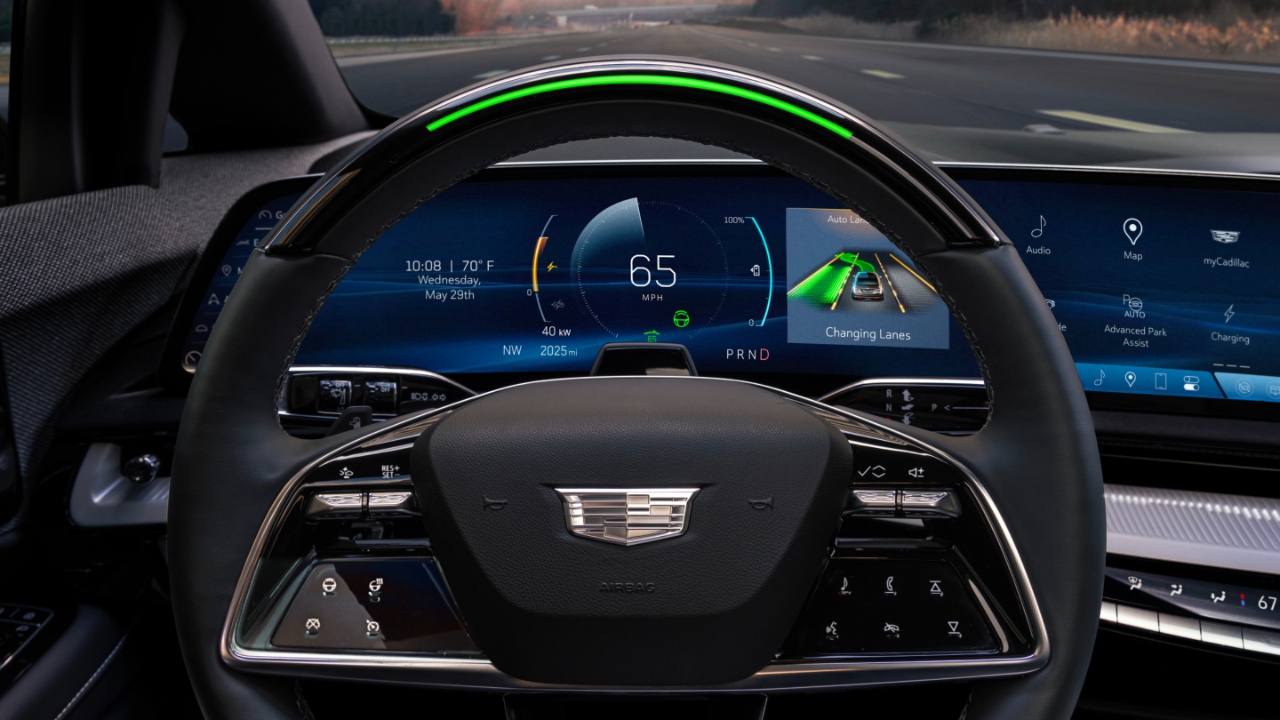
General Motors is broadening access to one of its most recognizable driver assistance technologies by expanding the availability of Super Cruise to additional mainstream vehicles.
The move represents a significant step in GM’s strategy to make advanced hands-free driving features accessible beyond premium luxury models, allowing more customers to experience technology that was once reserved for higher-priced vehicles.
Since its introduction in 2017, Super Cruise has become one of General Motors’ flagship technologies, earning recognition for its ability to enable hands-free driving on compatible highways while continuously monitoring driver attention.
Initially available only on select Cadillac models, the system has gradually spread across Chevrolet, GMC, and Buick vehicles. The latest expansion accelerates that strategy by bringing Super Cruise to a broader range of affordable models.
According to GM News, the company is extending Super Cruise availability across additional mainstream vehicles as part of its ongoing commitment to democratizing advanced driver assistance technology.
By increasing accessibility, GM hopes to strengthen its competitive position while offering customers premium safety and convenience features at lower price points.
Also Read: 8 Used Motorcycles Selling Above Original MSRP
Super Cruise Continues to Evolve
When Super Cruise first debuted on the Cadillac CT6 luxury sedan, it quickly distinguished itself from many competing driver assistance systems by allowing true hands-free driving under specific conditions.
Unlike conventional adaptive cruise control systems that still require drivers to keep their hands on the steering wheel, Super Cruise uses a combination of precision mapping, GPS positioning, onboard cameras, radar sensors, and driver-monitoring technology to enable hands-free operation on approved roads.
General Motors said its hands-free driving system is currently supported on more than 750,000 miles of compatible highways throughout the United States and Canada. The network has grown significantly over time, enabling the technology to function across an expanding range of major interstates and divided roadways.
The company says continuous software improvements and expanded mapping have significantly enhanced the system’s capabilities since its original introduction.
One of the biggest changes announced by General Motors is its intention to make Super Cruise available on more affordable vehicles.
Historically, advanced driver assistance systems have first appeared on luxury vehicles before gradually reaching mass-market models as production costs decline.
The expansion of Super Cruise into more affordable vehicle segments is part of GM’s long-term strategy to widen access to advanced driver assistance technology, GM News said. Rather than restricting the feature to premium models, the automaker aims to make it available across a broader portion of its lineup.
For consumers, this means buyers shopping for Chevrolet, GMC, and Buick models will increasingly have access to technology previously associated with Cadillac’s luxury lineup.
Industry analysts note that this strategy mirrors the evolution of features such as adaptive cruise control, automatic emergency braking, blind-spot monitoring, and lane-keeping assistance, all of which gradually transitioned from luxury vehicles to more affordable segments over time.
How Super Cruise Works
Super Cruise combines several advanced technologies to deliver hands-free highway driving while maintaining multiple layers of safety oversight.
General Motors said Super Cruise combines high-definition LiDAR-mapped road data with real-time GPS positioning, onboard cameras, radar sensors, and advanced vehicle control software to enable its hands-free driving capabilities.
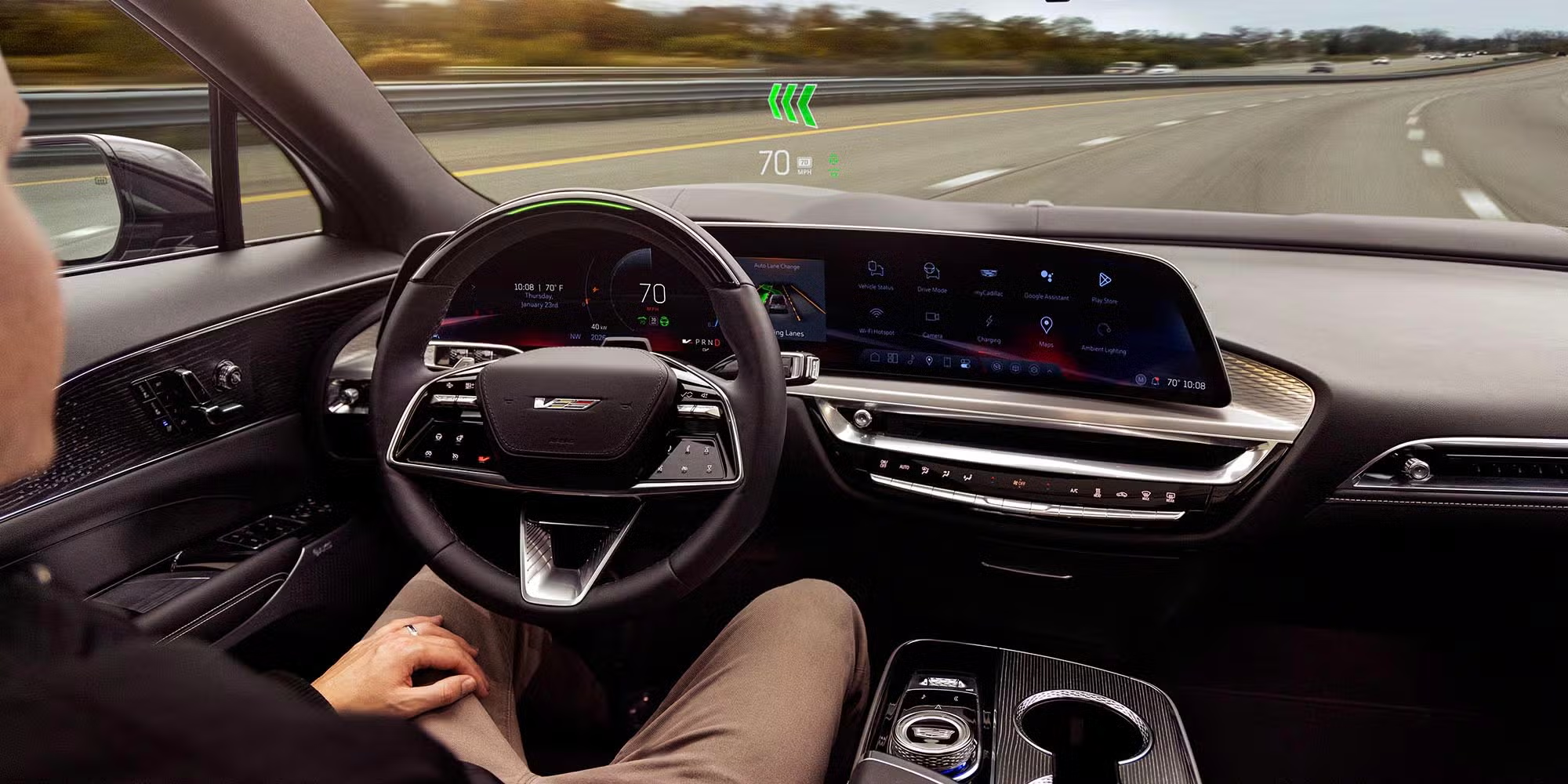
One of its defining features is the driver attention monitoring system. Rather than relying on steering wheel sensors to determine whether a driver remains engaged, an infrared camera mounted inside the cabin continuously tracks the driver’s head position and eye movements.
If the system detects that the driver is no longer paying attention to the road, it issues visual, audible, and seat vibration alerts. If the driver fails to respond, Super Cruise can gradually bring the vehicle to a controlled stop while activating the hazard lights.
GM says this driver-monitoring approach provides an additional layer of safety that distinguishes Super Cruise from many competing systems.
In addition to hands-free steering, Super Cruise has gained several new capabilities through software updates.
One of the most notable is Automatic Lane Change, which allows the vehicle to safely move into an adjacent lane when conditions permit.
While Super Cruise is engaged, the system uses cameras and radar sensors to continuously assess nearby traffic before performing a lane change, GM said. It also allows drivers to request the maneuver by activating the turn signal, with the system completing the lane change when conditions are appropriate
Another feature, Lane Change on Demand, allows drivers to initiate passing maneuvers without disengaging the hands-free driving system.
These capabilities are designed to reduce driver workload during long highway journeys while maintaining continuous monitoring of surrounding traffic conditions.
General Motors has steadily increased the number of vehicles offering Super Cruise over the past several years.
Initially exclusive to Cadillac, the technology has since expanded to vehicles such as the Chevrolet Silverado, GMC Sierra, Chevrolet Tahoe, Chevrolet Suburban, GMC Yukon, Cadillac Escalade, Cadillac Lyriq, Chevrolet Blazer EV, Chevrolet Equinox EV, GMC Hummer EV, and several other models.
GM News reported that Super Cruise will continue to be introduced across a broader selection of vehicles, with future availability expanding to include both conventional gas-powered models and GM’s electric vehicle offerings.
This broader rollout reflects GM’s strategy of treating advanced driver assistance as a core technology across its entire product portfolio rather than a premium option limited to flagship vehicles.
Industry analysts expect additional model announcements as future vehicle launches approach.
A Competitive Advantage in the ADAS Market
The advanced driver assistance systems market has become one of the automotive industry’s most competitive technology segments.
Ford offers BlueCruise, Tesla continues expanding Full Self-Driving (Supervised), and Mercedes-Benz markets Drive Pilot in selected regions, while BMW, Nissan, Hyundai, Honda, and Toyota continue introducing increasingly capable highway driving assistance systems.
According to independent evaluations conducted over recent years by organizations such as Consumer Reports and other industry testing groups, Super Cruise has consistently ranked among the highest-performing hands-free highway driving systems due to its combination of driver monitoring, smooth vehicle control, and reliable lane-centering performance.
As more manufacturers introduce competing systems, expanding Super Cruise into mainstream vehicles allows GM to differentiate itself in a market where technology increasingly influences purchasing decisions.
Although Super Cruise enables hands-free driving, General Motors continues emphasizing that it is an advanced driver assistance system rather than a fully autonomous driving technology.
According to GM, drivers must remain attentive at all times and be prepared to immediately take control of the vehicle whenever necessary.
The system operates only on compatible roads that have been precisely mapped, and certain weather conditions, road construction, poor lane markings, or other environmental factors may limit availability.
Driver monitoring remains active throughout every Super Cruise session to ensure drivers continue supervising the vehicle.
Industry safety experts generally agree that driver attention monitoring is one of the most important components of current hands-free driving technologies because it helps reduce the risk of driver distraction.
The expansion of Super Cruise aligns with General Motors’ broader vision of integrating advanced software and digital technologies across its vehicle lineup.
The company has invested heavily in connected vehicle services, over-the-air software updates, advanced sensors, artificial intelligence, and cloud-based vehicle platforms.
According to GM, these investments allow new features and system improvements to be delivered throughout a vehicle’s ownership rather than being fixed at the time of purchase.
The company also continues developing Ultra Cruise technologies and future automated driving capabilities that build upon the foundation established by Super Cruise.
While those future systems remain under development, expanding today’s technology to more affordable vehicles allows a much larger customer base to benefit from GM’s ongoing engineering investments.
Consumer Demand Continues to Grow
Consumer interest in advanced driver assistance technologies has increased steadily over the past decade.
Features that once appeared only in luxury vehicles are now becoming important purchasing considerations across mainstream market segments.
According to industry surveys, many buyers place increasing value on technologies that reduce driver fatigue during long highway journeys while enhancing full convenience.
By expanding Super Cruise beyond premium models, General Motors is responding directly to this growing demand.
As production volumes increase and component costs decline, technologies such as driver monitoring cameras, high-definition mapping, and advanced sensor systems become more practical for wider deployment across multiple vehicle categories.
General Motors’ decision to expand Super Cruise into additional affordable models represents another milestone in the evolution of advanced driver assistance technology.
The wider deployment of Super Cruise is part of GM’s ongoing strategy to bring hands-free highway driving to a broader range of customers, according to GM News. The company added that the expansion continues to prioritize the same safety-focused approach that has been central to the system since it was first introduced.
As competition among automakers increasingly shifts toward software capabilities and intelligent driving technologies, expanding access to Super Cruise strengthens GM’s position in one of the industry’s fastest-growing areas.
With continued improvements in mapping coverage, over-the-air software updates, automatic lane-changing capabilities, and driver monitoring systems, Super Cruise is expected to remain a central part of the company’s technology strategy.
While fully autonomous vehicles remain a long-term goal for the automotive industry, General Motors’ latest announcement demonstrates that advanced hands-free driving is steadily becoming a mainstream feature rather than an exclusive luxury option.
For consumers, that means technologies once available only on premium vehicles are increasingly finding their way into everyday transportation, making safer and more convenient highway travel accessible to a broader range of drivers.
Also Read: Oldsmobile Sold a Front-Drive V8 With 385 Horsepower