
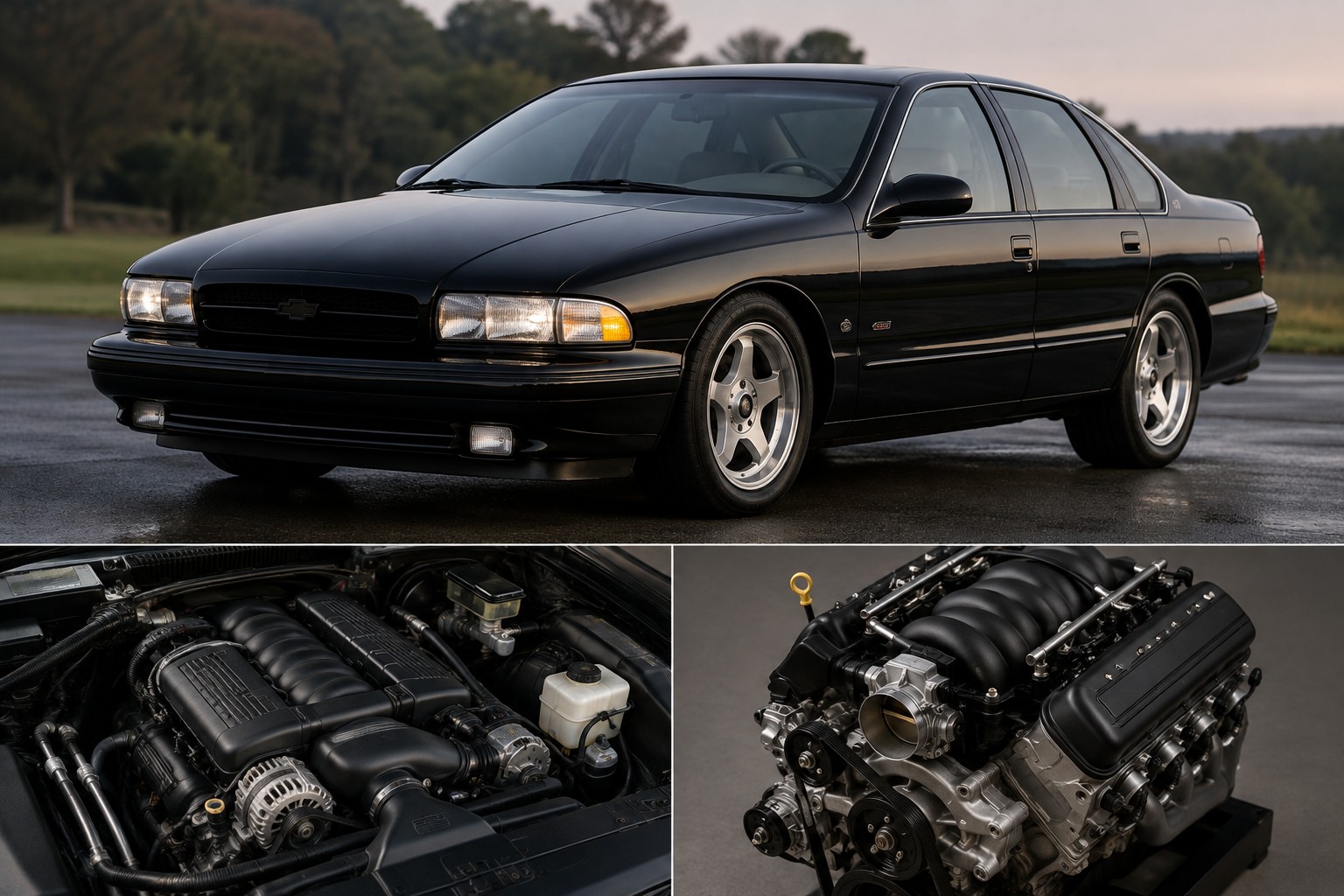
In 1994, Chevrolet did something almost unthinkable in the modern automotive world. They took the Corvette’s celebrated LT1 V8 engine and dropped it into a full-size family sedan.
That sedan was the Impala SS, and it revived a legendary nameplate that had been dormant for years. The result was a car that looked like a plain-clothes police cruiser but drove like a muscle car in disguise.
Enthusiasts nicknamed it a “sleeper” because its blacked-out styling hid genuine performance credentials underneath. This wasn’t a marketing gimmick with a badge slapped on a base model.
The Impala SS shared its 260-horsepower, 5.7-liter LT1 engine architecture directly with the Corvette of that era. It produced 330 lb-ft of torque, numbers that shocked buyers expecting a soft, floaty land yacht.
Produced only from 1994 through 1996, the Impala SS became an instant cult classic. This article explores its origins, engineering, and lasting legacy across three fascinating model years.
The Origins and Design Philosophy Behind the Impala SS
The Impala SS story actually began as a concept car revealed in 1992. Chevrolet designer John Cafaro created a blacked-out Caprice show car that stunned crowds at auto shows.
Public reaction was overwhelmingly positive, and Chevrolet noticed immediately. Executives greenlit a production version almost as fast as the concept had appeared on the show floor.
The car was based on the Caprice Classic, GM’s full-size B-body platform. This body-on-frame architecture used rear-wheel drive, a layout increasingly rare among American sedans by the mid-1990s.
Chevrolet’s engineers borrowed the name “Impala SS” from the legendary 1960s muscle sedans. Those earlier Impalas had also combined big V8 power with practical four-door bodies.
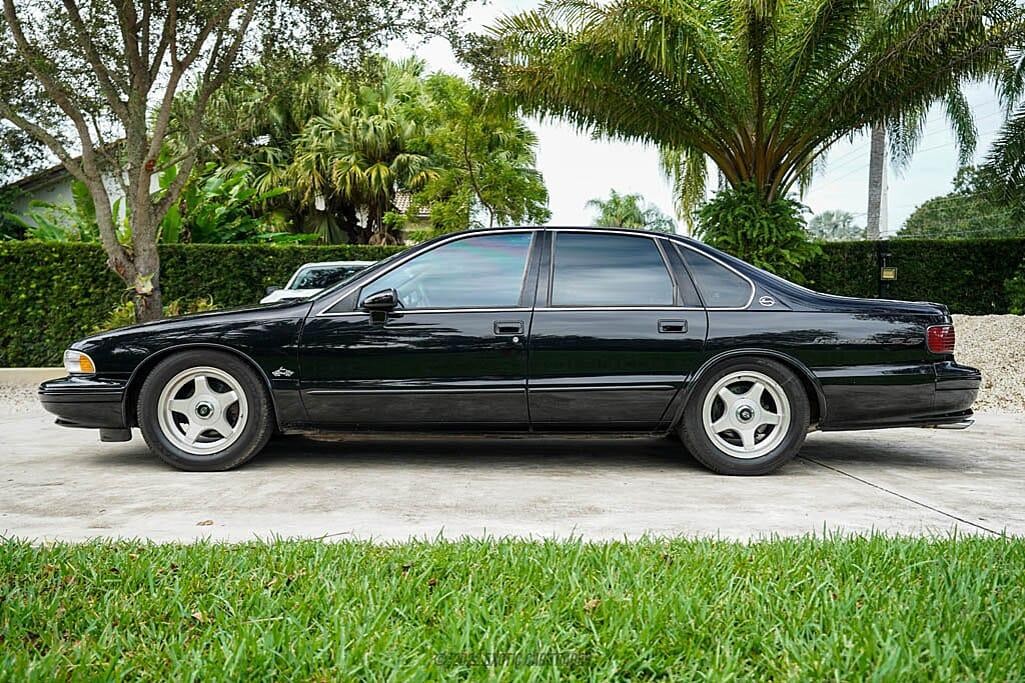
For 1994, the reborn Impala SS arrived exclusively in monochromatic black. This single-color scheme, including black wheels and trim, gave it a menacing, stealthy appearance.
The blacked-out treatment wasn’t just cosmetic flair either. It signaled to onlookers that something serious lurked beneath that unassuming sedan bodywork.
Inside, the cabin received sportier front bucket seats and a floor-mounted shifter. This differed from the column-shift bench seat setup found in standard Caprice models.
A center console with a tachometer and additional gauges reminded drivers this wasn’t an ordinary grocery-getter. Chevrolet wanted the interior to match the exterior’s performance promise.
The suspension also received significant upgrades over the standard Caprice. Engineers stiffened springs, upgraded shocks, and added a larger rear stabilizer bar.
Bigger front and rear brakes rounded out the mechanical package. These changes transformed a comfortable cruiser into something that could actually handle corners with confidence.
Seventeen-inch aluminum wheels, unusual for a mid-1990s sedan, filled out the wheel wells nicely. They gave the car a planted, aggressive stance that matched its performance intentions.
The Corvette-Derived LT1 Engine and Its Real-World Performance
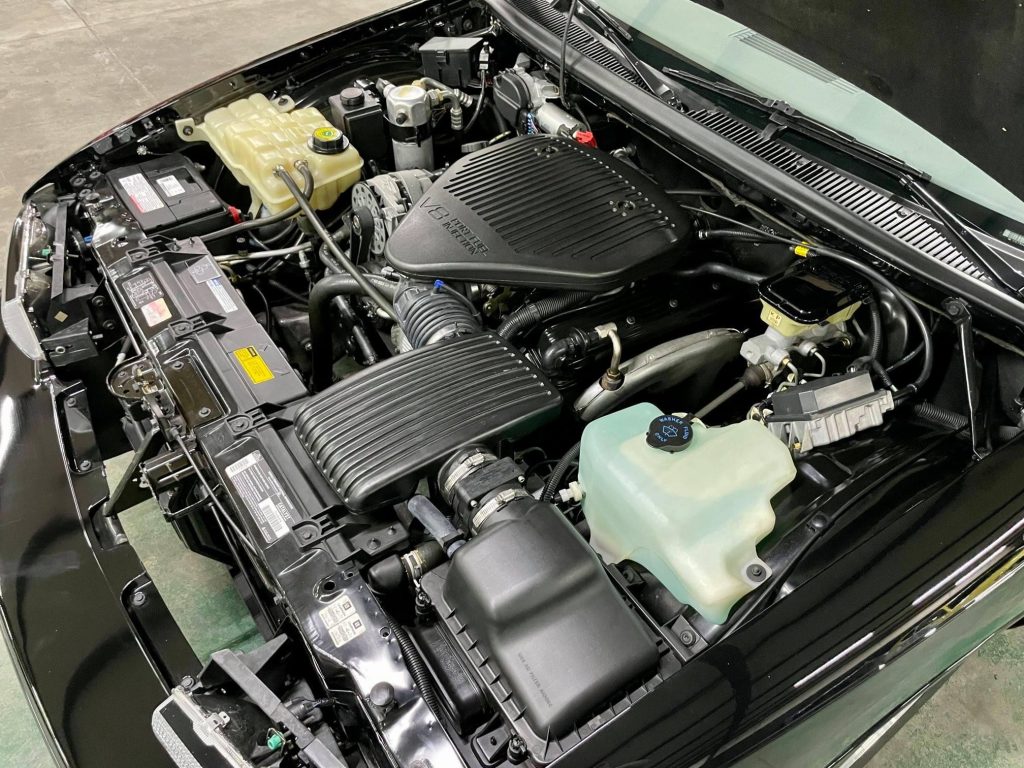
At the heart of the Impala SS sat the LT1, Chevrolet’s celebrated small-block V8. This same basic engine family powered the Corvette and Camaro during that era.
In Corvette applications, the LT1 produced around 300 horsepower thanks to tuned exhaust manifolds. Chevrolet detuned the Impala’s version slightly to fit the sedan’s packaging constraints.
The Impala SS variant made 260 horsepower and 330 lb-ft of torque. Engineers used cast-iron exhaust manifolds instead of the Corvette’s more efficient tubular headers.
This change was necessary because of the Impala’s tighter engine bay dimensions. Despite the reduction, 260 horsepower remained tremendously potent for a mid-1990s American sedan.
Power reached the rear wheels through a four-speed automatic transmission, the 4L60-E. No manual gearbox was ever offered, disappointing some purists who wanted full control.
Still, the automatic suited the car’s mission as a comfortable highway cruiser with hidden teeth. Zero-to-sixty times came in around 7 seconds, quick for a full-size sedan of that period.
Quarter-mile times hovered in the mid-15-second range depending on testing conditions. These numbers rivaled contemporary sports coupes, a genuinely remarkable feat for a four-door family car.
The Impala SS could also tow, haul groceries, and seat six passengers comfortably. It blended genuine practicality with a level of straight-line performance nobody expected.
Motor journalists at the time praised the car’s effortless torque and smooth power delivery. The LT1’s low-end grunt made passing maneuvers feel almost sedate despite the underlying speed.
Fuel economy suffered as expected from a large V8 in a heavy sedan. Buyers accepted this tradeoff willingly, understanding they were purchasing performance over frugality.
The exhaust note also became a signature Impala SS characteristic among enthusiasts. A deep, throaty rumble hinted at the Corvette DNA hiding under that plain black hood.
Reliability proved solid, since the LT1 was a proven, well-engineered platform. Many examples survive today with high mileage and minimal major mechanical issues.
Model Year Changes and the Impala SS’s Lasting Legacy
The 1994 model year introduced the Impala SS in black exclusively, with no other color options. Chevrolet wanted to maintain that stealthy, monochromatic aesthetic during its debut season.
Approximately 21,000 units sold in that first year alone. Demand exceeded initial expectations, proving genuine enthusiast interest in a performance-oriented family sedan.
For 1995, Chevrolet expanded the color palette significantly beyond basic black. Dark Cherry Metallic and Dark Green Metallic joined the lineup, giving buyers more personalization choices.
Minor interior refinements also arrived for the 1995 model year. Chevrolet addressed some early customer feedback regarding seat comfort and dashboard ergonomics.
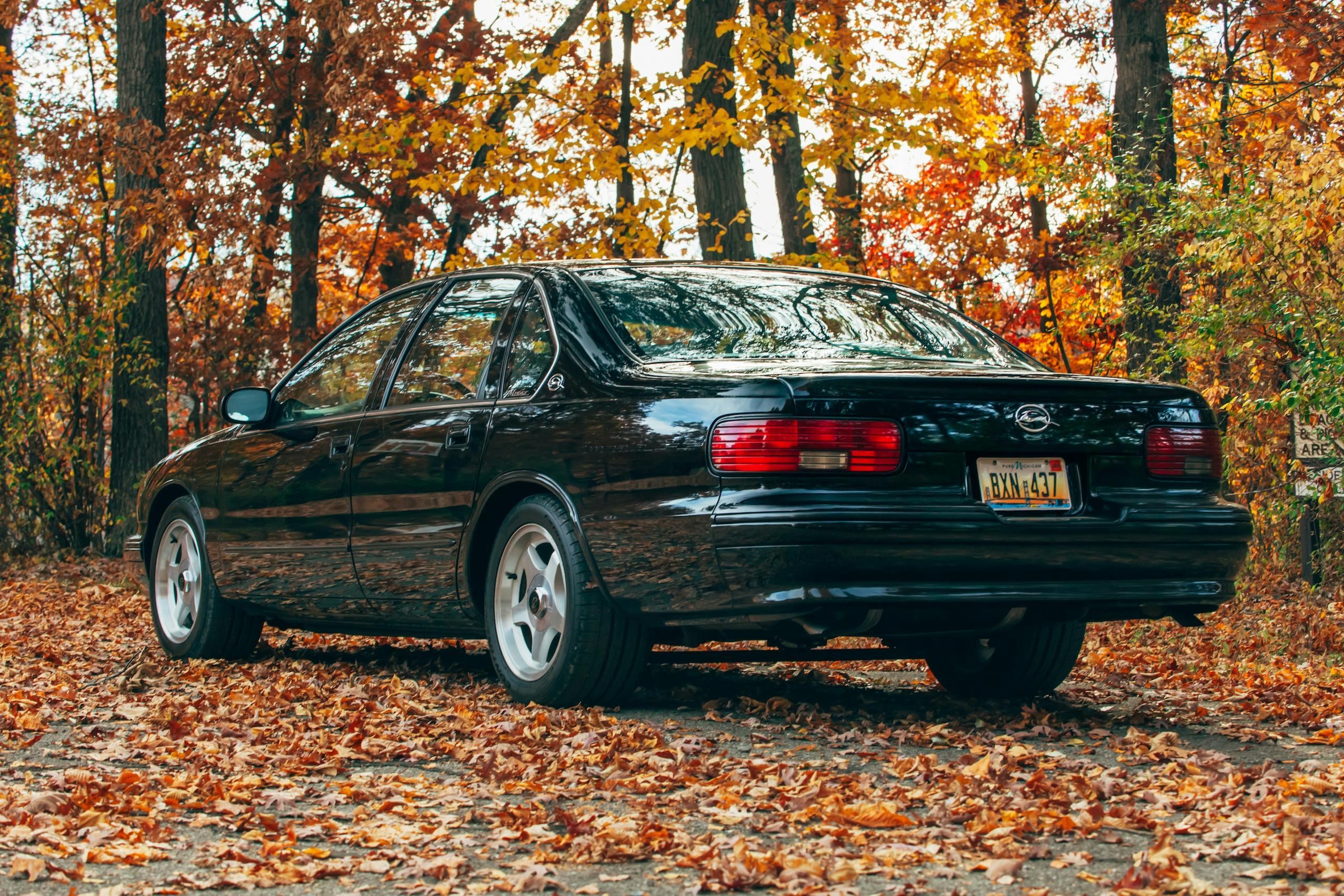
Production numbers dipped slightly compared to the debut year’s strong showing. Roughly 22,000 units were built during the 1995 model year across all three colors.
The 1996 model year became the Impala SS’s final act before discontinuation. Chevrolet made subtle trim and badge updates but kept the core formula unchanged.
This final year also marked the end of GM’s rear-wheel-drive B-body platform entirely. Full-size sedans were shifting toward front-wheel-drive architecture across the industry.
Approximately 26,000 units rolled off the line during that last production year. Total combined production across all three years reached nearly 70,000 vehicles.
Chevrolet’s Arlington, Texas assembly plant handled all Impala SS production throughout its run. This same facility built the related Caprice and Buick Roadmaster models simultaneously.
When production ended in December 1996, it closed a unique chapter in American automotive history. No factory sedan since has quite matched that blend of stealth and Corvette-derived muscle.
The Impala SS’s legacy grew substantially in collector circles over subsequent decades. Values have risen steadily as enthusiasts recognize its historical significance and mechanical charm.
Clean, low-mileage examples now command respectable prices at classic car auctions. Buyers specifically seek out unmodified original cars with documented service history.
The nameplate itself returned briefly in 2006 with a front-wheel-drive SS variant. However, that later car lacked the rear-wheel-drive charm and raw character of the original.
Enthusiast clubs and online communities continue celebrating the 1994-1996 Impala SS today. These groups share restoration tips, source rare parts, and organize meetups nationwide.
Ultimately, the Impala SS proved that practicality and performance need not be mutually exclusive. Chevrolet successfully democratized Corvette-adjacent power within an everyday family sedan package.
Its blacked-out sleeper styling, combined with genuine V8 muscle, created something truly special. For three short years, Chevrolet built a family car that could genuinely surprise sports car owners at stoplights.
Also Read: 10 Ten-Year-Old SUVs That Still Sell Above $25,000
