Pickup trucks are sold by the numbers. Towing capacity, payload rating, horsepower, torque these figures dominate every brochure and every showroom conversation.
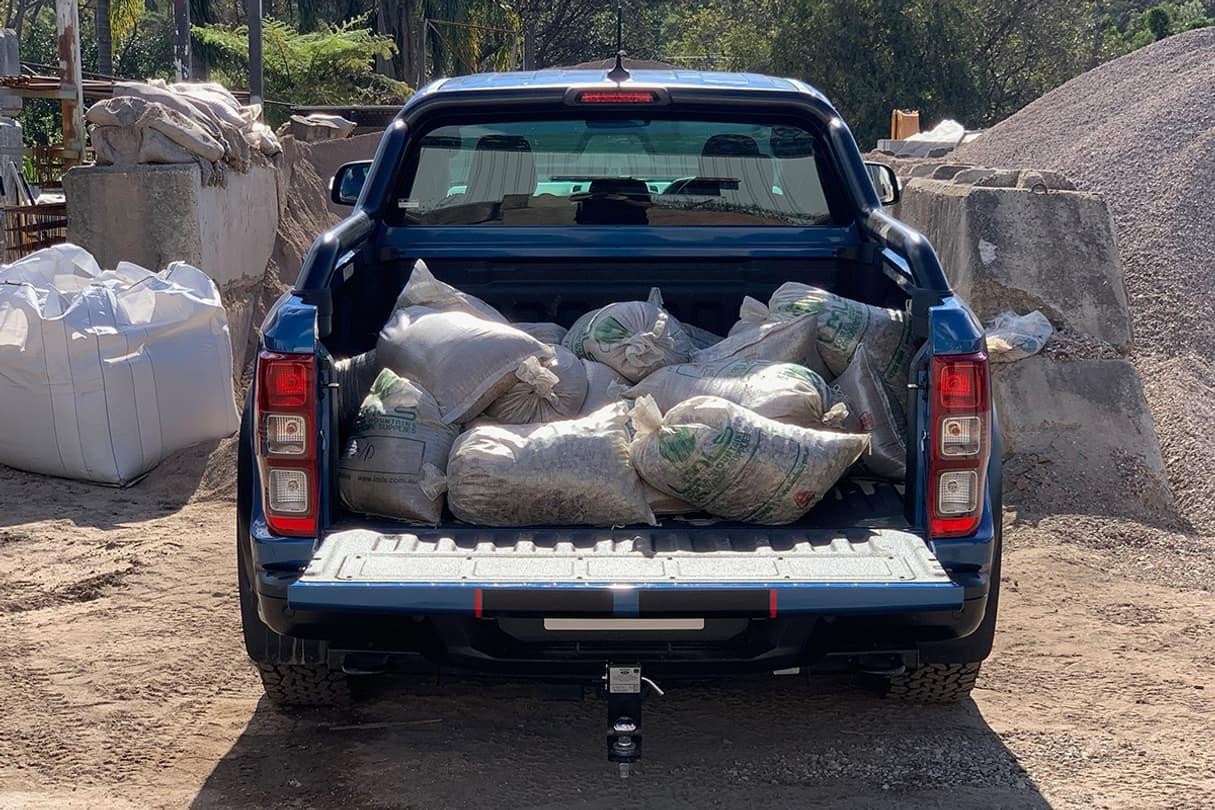
But there’s a gap between what a spec sheet promises and what the suspension actually delivers. Many trucks carry big tow ratings on paper. Yet their rear ends visibly drop the moment real weight goes in the bed or on the hitch.
This happens because manufacturers tune suspensions for daily comfort. A soft, compliant ride feels good empty. That same softness becomes a liability once you load it.
Leaf springs compress. Coil springs squat. The nose lifts, headlights point skyward, and steering gets vague. This is the “capability gap” the space between rated capacity and how confidently a truck actually carries that capacity.
Below are ten trucks, from full-size haulers to midsize and unibody pickups, that are widely reported by owners, forums, and suspension specialists to sag noticeably under load. Each entry includes real specifications and an explanation of why the suspension struggles once weight enters the equation.
1. Toyota Tundra (Leaf-Spring Generations)
The Toyota Tundra has built a legendary reputation for durability, longevity, and robust performance in the full-size truck market, yet it has faced one persistent criticism across multiple model cycles: rear suspension sag.
Tundra owners have thoroughly documented this sagging phenomenon for two decades now, making it one of the most widely discussed suspension complaints within online truck forums and enthusiast communities.
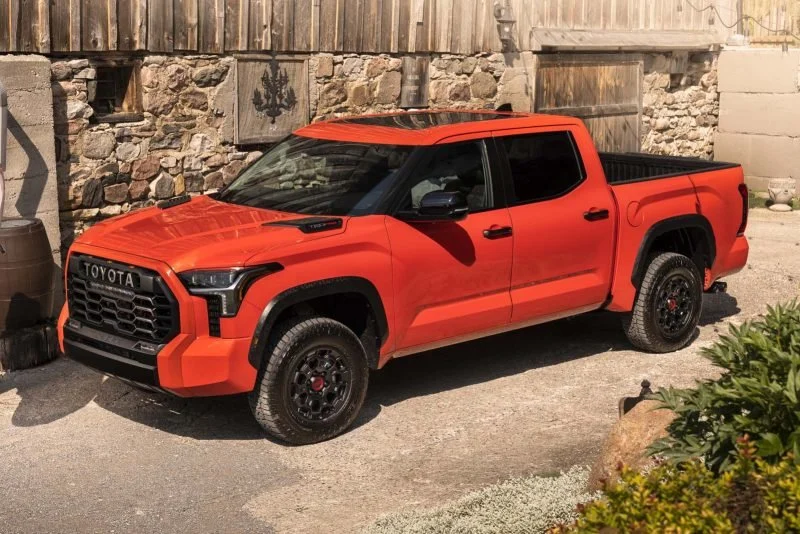
Specifications:
- Engine: 3.5L twin-turbo i-FORCE V6
- Horsepower: 389 hp
- Torque: 479 lb-ft
- Length: 233.6 in (CrewMax)
- Width: 80 in
Detailed forum threads frequently describe factory leaf springs bottoming out or compressing flat under surprisingly modest cargo loads. In fact, one frustrated owner famously reported bottoming out their rear suspension with only 500 pounds of gravel loaded into the bed, a weight limit far below the vehicle’s advertised capacity.
Interestingly, even the heavily redesigned coil-spring Tundra generations are not entirely immune to this characteristic trait. Owners frequently note visible rear-end drop and noticeable squat under heavy tongue weights or tongue loads, since a progressive coil spring naturally compresses faster early in its travel path compared to a heavily stacked traditional leaf pack.
This behavior stems directly from how engineers tune the truck’s dynamics. The factory shocks and soft-rate springs are meticulously tuned to deliver an exceptionally smooth, comfortable, Cadillac-like ride when the vehicle is completely empty.
That heavy comfort bias is precisely what causes the rear end to sag the moment real cargo, camping gear, or heavy trailer weight shows up in the real world. To combat this, many Tundra drivers invest heavily in aftermarket helper springs, airbags, or custom leaf additions to restore proper ride height and towing confidence.
2. Honda Ridgeline
The Honda Ridgeline has carved out a unique and loyal following by redefining what a midsize pickup truck can be, utilizing an innovative unibody structure paired with independent rear suspension rather than a traditional body-on-frame platform.
This automotive architecture allows the Ridgeline to drive, corner, and handle more like a refined crossover SUV than a traditional heavy-duty truck.
However, that exceptional comfort and car-like ride quality come with a notable mechanical trade-off when it comes to utility and hauling capability.
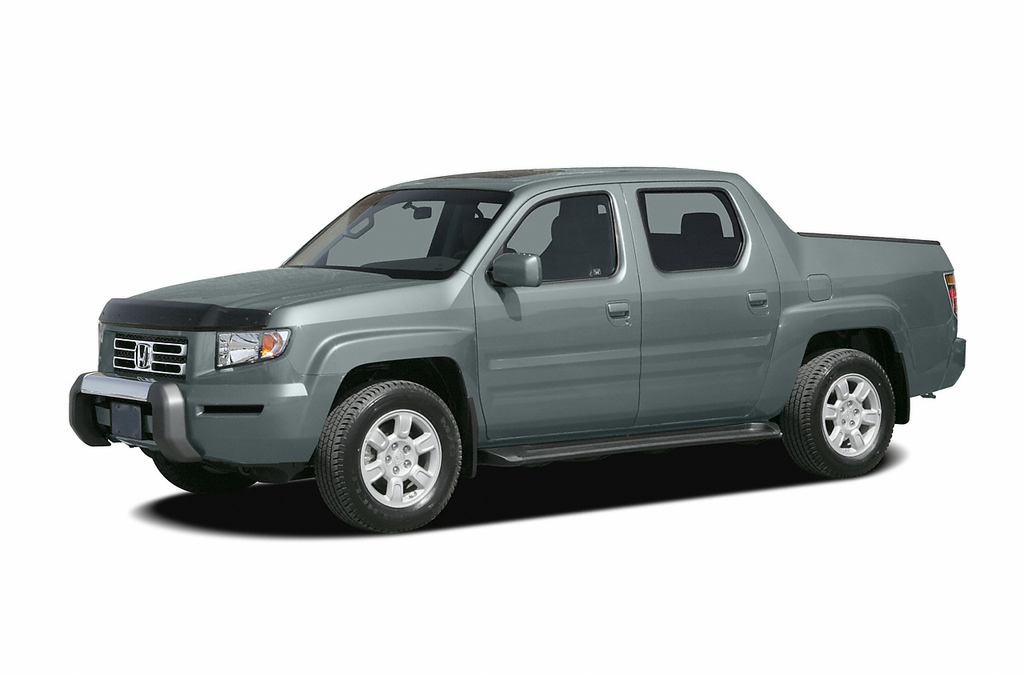
Specifications:
- Engine: 3.5L V6 (VCM)
- Horsepower: 280 hp
- Torque: 262 lb-ft
- Length: 210.6 in
- Width: 78.6 in
Owners frequently report that the rear coil springs can drop anywhere from 1.5 to 3 inches under a relatively modest 500-pound tongue weight or bed load, causing the rear end to visibly squat toward the pavement.
While the Ridgeline boasts a respectable 5,000-pound maximum towing rating that sounds entirely competitive on paper, its soft multi-link rear suspension geometry simply isn’t engineered to resist heavy squat the way a rugged solid rear axle with stiff leaf springs would.
When a heavy trailer is hitched up or the bed is packed down with heavy equipment, the independent control arms and soft coil springs quickly reach the limits of their downward travel.
For daily commuting, grocery hauling, and weekend DIY tasks, the Ridgeline’s ride comfort is unrivaled in the segment. But for truck owners who regularly push payload limits or tow heavy loads, managing the rear suspension sag requires careful weight distribution hitch management or aftermarket suspension upgrades to maintain proper headlight alignment and steering control.
3. Jeep Gladiator
The Jeep Gladiator occupies a unique and highly coveted space in the midsize truck market, successfully combining the open-air freedom and legendary trail-conquering prowess of the iconic Wrangler with the utility of a 5-foot steel bed.
Underneath its rugged exterior, the Gladiator heavily borrows its heavy-duty frame and sophisticated running gear directly from its Wrangler sibling.
While that shared heritage brings serious, category-leading off-road suspension articulation and rock-crawling flexibility, it also introduces a significant downside: notably soft rear coil springs.
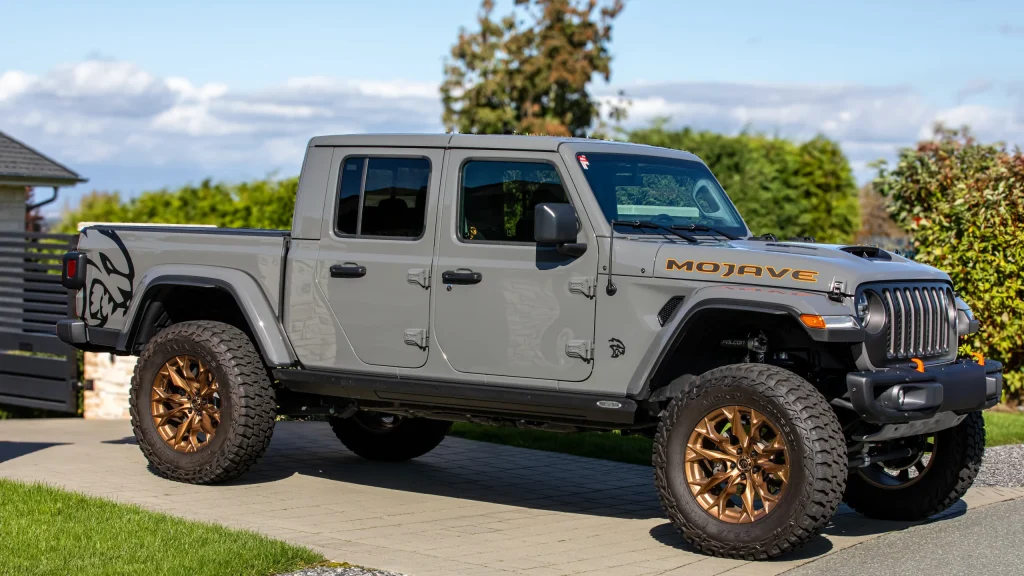
Specifications:
- Engine: 3.6L Pentastar V6
- Horsepower: 285 hp
- Torque: 260 lb-ft
- Length: 218 in
- Width: 73.8 in
Owners across various Jeep Gladiator enthusiast forums frequently describe factory rear springs that feel so soft they routinely hit the rubber bump stops even when driving over ordinary, bumpy back roads, sometimes without even towing a trailer.
Furthermore, popular lifestyle modifications like heavy-duty camper shells, roof top tents, and fully loaded overlanding builds routinely trigger visible, severe sag at the trailer hitch and rear axle.
This phenomenon is largely driven by the vehicle’s physical proportions; the Gladiator features a noticeably long rear overhang behind the rear axle.
That extended physical overhang dramatically increases leverage on the axle, making any added tongue weight or cargo make the tail sag significantly more than it would on a shorter-bed midsize truck with tighter packaging.
To overcome this inherent suspension squat, many owners resort to installing aftermarket air helper bags, stiffer progressive coil springs, or complete lift kits designed to handle heavy expedition gear.
Without these modifications, fully loading the bed for a weekend camping trip can easily upset the vehicle’s handling balance, pointing the headlights blindingly toward the night sky and reducing front-wheel traction.
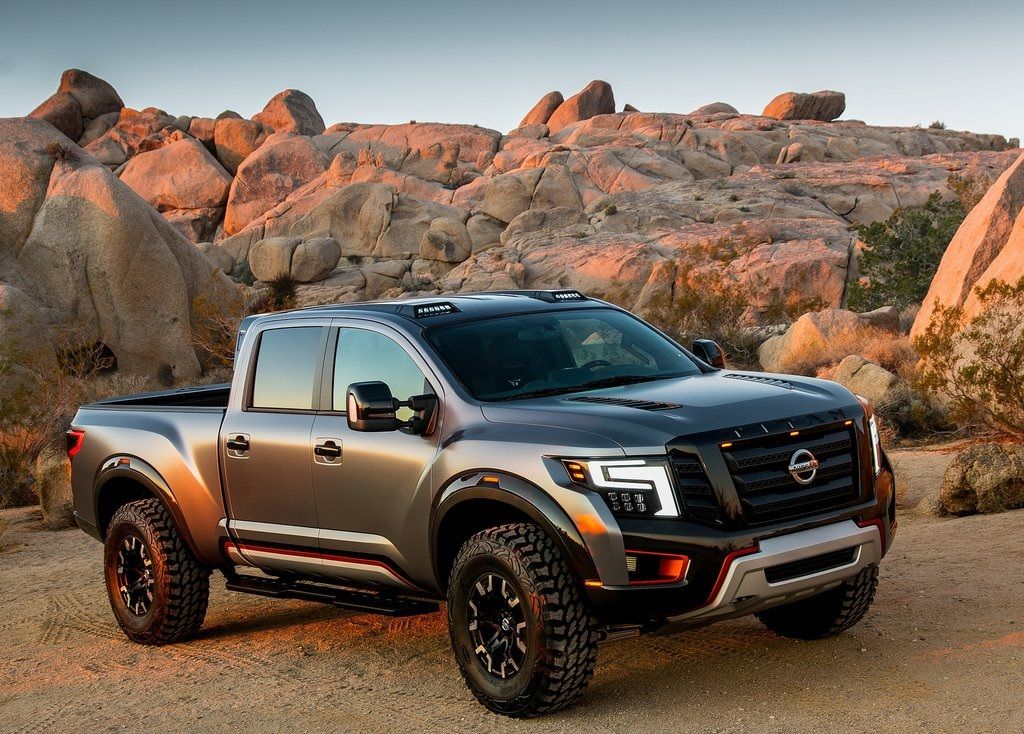
4. Nissan Titan
The Nissan Titan enters the full-size truck arena armed with a muscular V8 engine and a traditional leaf-spring solid rear axle configuration, a classic layout that on paper should easily resist heavy payload sag.
For decades, traditional leaf springs have been the gold standard for commercial and recreational hauling because their multi-layer arch naturally pushes back against downward force.
However, in practical everyday use, Nissan Titan owners frequently report that the stock factory leaf pack tends to lose its original arch over time, leading to premature sagging even under moderate working loads.
Specifications:
- Engine: 5.6L Endurance V8
- Horsepower: 400 hp
- Torque: 413 lb-ft
- Length: 228.8 in (Crew Cab)
- Width: 79.5 in
In response to this common complaint, specialized aftermarket suspension shops and off-site outfitters actively sell heavily reinforced leaf spring kits and add-a-leaf packages specifically marketed at reducing the dreaded 2 to 3 inches of rear-end squat that plague working trucks.
The root cause of this behavior lies directly in Nissan’s engineering priorities for ride comfort. Official Nissan suspension tuning notes readily admit that the factory damping and spring rates heavily favor a plush, highway-cruising ride quality over stiff commercial utility.
That careful tuning choice successfully keeps the truck smooth and composed during empty commutes, but it leaves critical load-carrying stiffness completely on the table.
When a contractor loads bags of concrete into the bed or a family hitches up a heavy travel trailer, the soft factory steel yields quickly to the pressure.
For owners who bought a Titan expecting a traditional workhorse straight out of the box, addressing the rear suspension sag with aftermarket support is often a necessary step to restore a level towing posture and safe highway control.
Also Read: 5 Cars With Cheap Alternator Jobs and 5 That Cost $1,100
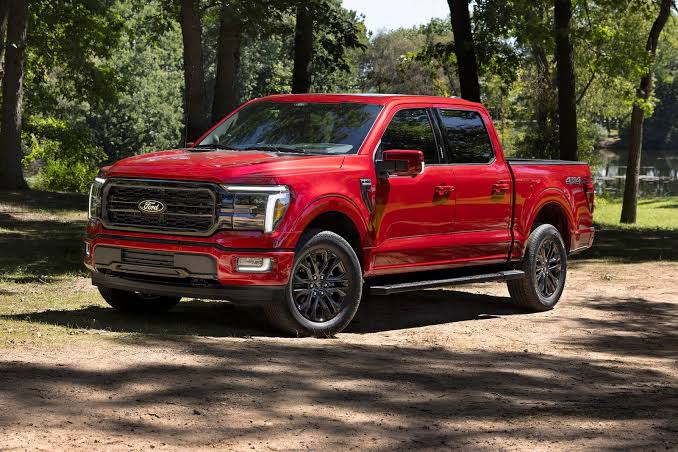
5. Ford F-150
The Ford F-150 has reigned as America’s best-selling pickup truck for decades, earning a stellar reputation for durability, innovation, and everyday utility.
Beneath its high-strength aluminum body, the standard F-150 utilizes a classic leaf-spring rear axle configuration designed to balance payload capacity with reasonable ride comfort.
Specifications:
- Engine: 5.0L V8 (Ti-VCT)
- Horsepower: 400 hp
- Torque: 410 lb-ft
- Length: 231.7 in (SuperCrew, 5.5-ft box)
- Width: 79.9 in
However, unless a buyer specifically checks the box for the rare and robust Heavy-Duty Payload Package, the standard factory leaf setup tends to sag surprisingly fast under everyday working conditions.
Numerous truck owners have documented this limitation on enthusiast forums and owner logs. One frustrated owner famously reported measuring a noticeable half-inch of rear-end squat resulting from just 200 pounds of basic hand tools and equipment loaded near the tailgate.
When working professionals add a heavy fiberglass camper shell, a ladder rack, and commercial gear, the rear-end drop becomes completely obvious and pronounced to anyone standing behind the truck.
The primary culprit behind this behavior lies in factory configuration choices. Most standard F-150s leave the assembly line equipped with a softer, single-leaf setup supplemented by a light-duty helper or polymer-overload design.
That is intentionally the softer of Ford’s two available rear leaf configurations, engineered specifically to keep the unladen ride smooth and composed over rough city pavement and highway potholes. Unfortunately, that comfort-oriented tuning means the rear suspension yields quickly when genuine payload is introduced.
For contractors and weekend warriors who frequently haul heavy materials, upgrading to aftermarket helper springs or air helper bags is often required to restore a level towing stance, protect headlight alignment, and prevent the rear suspension from constantly bottoming out on rough job sites.
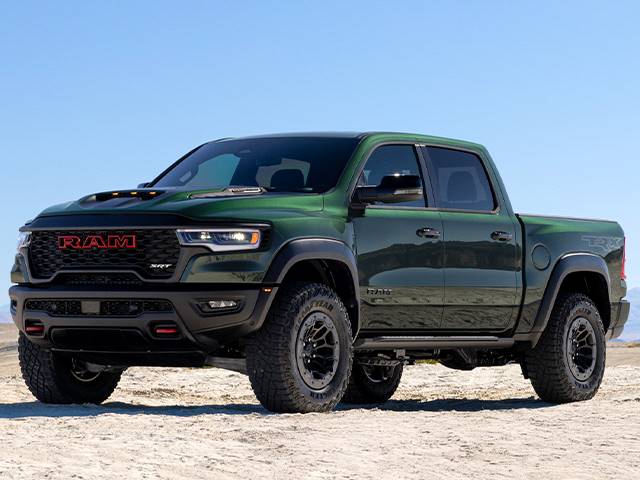
6. Ram 1500
The Ram 1500 completely revolutionized the full-size pickup truck segment by abandoning traditional leaf springs in favor of an advanced multi-link, coil-sprung rear axle.
This unique engineering choice made the Ram universally famous for delivering a remarkably smooth, luxurious ride quality that easily rivals high-end luxury SUVs.
However, that exact same coil spring design is also the primary reason why the Ram 1500 squats so visibly and dramatically under the weight of a heavy trailer or a loaded bed.
Specifications:
- Engine: 5.7L HEMI V8
- Horsepower: 395 hp
- Torque: 410 lb-ft
- Length: 232.9 in (Crew Cab)
- Width: 82.1 in
Specialist suspension retailers and aftermarket accessory shops routinely report that rear-end sag is “a common problem even for those towing well within their stated capacity.”
Because coil springs compress rapidly and linearly upon initial contact with weight, the rear end loses its height quickly when tongue weight is applied.
In fact, auxiliary air-assist suspension kits and heavy-duty load-leveling helper springs rank among the absolute best-selling aftermarket accessories for the Ram 1500 platform for this exact reason.
The underlying engineering physics are straightforward: coil springs compress quickly at first contact with heavy loads because they lack the progressive resistance naturally built into multi-stage leaf packs.
That is the unavoidable mechanical trade-off for achieving the exceptionally smooth, car-like ride quality that the Ram 1500 is so widely known and praised for.
While empty highway cruising feels effortless and cloud-like, pulling a heavy travel trailer or hauling a bed full of landscaping materials demands careful attention to tongue weight, weight-distribution hitches, or auxiliary air helper systems to keep the truck tracking straight, safe, and level across the highway.
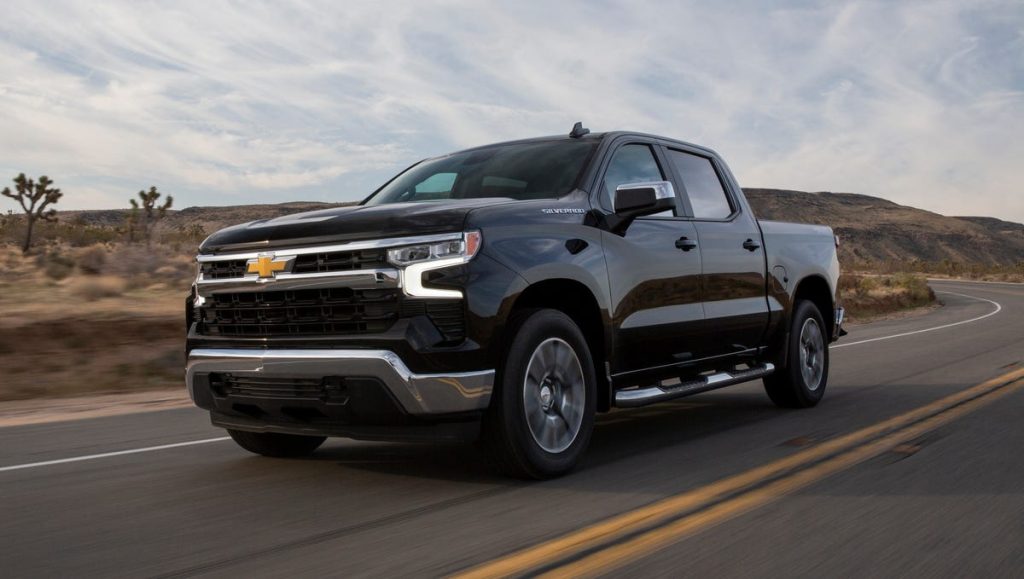
7. Chevrolet Silverado 1500
The Chevrolet Silverado 1500 has long stood as a titan in the American full-size pickup segment, renowned for its strong V8 engines, robust towing capability, and rugged styling.
However, under its modern T1XX vehicle architecture, General Motors has tuned the suspension heavily toward plush ride comfort and highway cruising composure to compete with modern luxury standards.
According to professional suspension specialists and mechanics, this heavy bias toward comfort directly impacts real-world load-carrying performance. Once a heavy trailer tongue weight applies leverage directly behind the rear axle, the soft rear leaf springs give way, causing the tail to drop significantly.
Specifications:
- Engine: 5.3L EcoTec3 V8
- Horsepower: 355 hp
- Torque: 383 lb-ft
- Length: 231.7 in (Crew Cab, standard box)
- Width: 81.2 in
This noticeable rear squat triggers a cascade of handling issues. Suspension shops that service these trucks regularly note that when the rear end sags low under a load, the front end points upward, altering the vehicle’s geometry.
As a result, steering gets noticeably less precise and lighter on center, reducing the driver’s feeling of control on winding roads. Furthermore, braking distances stretch out because weight is dynamically shifted away from the front braking axle, compromising emergency stopping power.
Beyond towing-related squat, owners have also logged various suspension-related complaints regarding uneven lean over time. One heavily documented case across truck enthusiast forums showed persistent uneven sag between the truck’s two sides when loaded, pointing to slight tolerances in factory leaf pack spring rates.
While the Silverado 1500 remains a phenomenal tool for daily driving and light-duty tasks, utilizing it near its maximum capacity without auxiliary helper springs or a properly adjusted weight-distribution hitch will quickly reveal the compromises of its comfort-tuned factory suspension geometry.
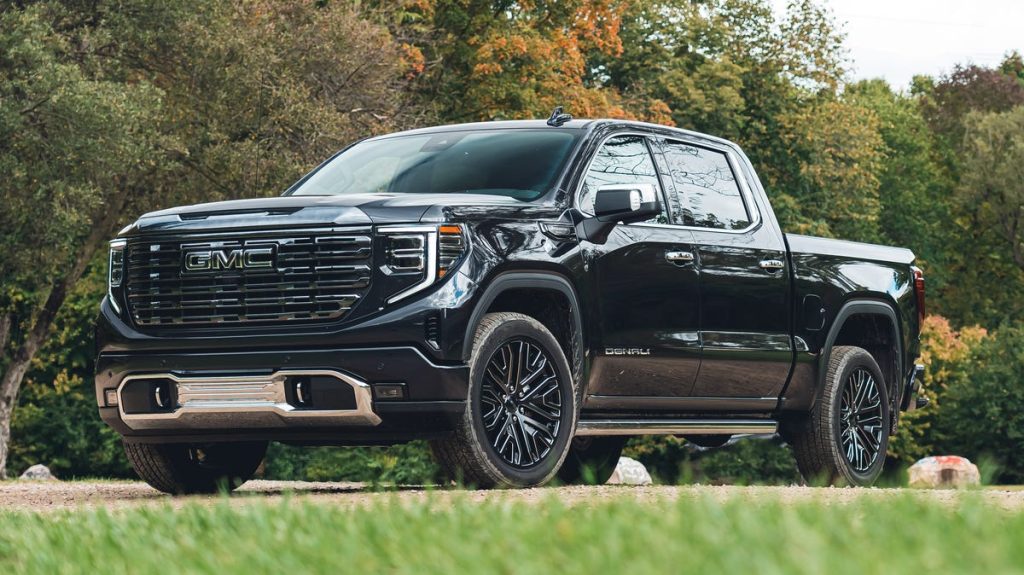
8. GMC Sierra 1500
The GMC Sierra 1500 is marketed as the more premium, upscale sibling to the Chevrolet Silverado, offering distinct styling, luxurious interior appointments, and advanced trailering technology.
Beneath the sheet metal, however, the Sierra shares its core platform, frame structure, axle architecture, and leaf spring geometry directly with the Silverado.
Because of this shared DNA, it naturally inherits the same load-related rear-end squat and suspension characteristics when subjected to heavy cargo or trailer tongue weights.
Specifications:
- Engine: 5.3L EcoTec3 V8
- Horsepower: 355 hp
- Torque: 383 lb-ft
- Length: 231.7 in
- Width: 81.2 in
GMC does offer advanced adaptive ride control and available adaptive air suspension systems on higher, top-tier trim levels like the Denali, which help mitigate sag and maintain an level ride height.
However, the vast majority of base, mid-trim, and work-oriented trucks run the exact same comfort-tuned rear setup as their Chevrolet twin. Without selecting the expensive upgraded air-ride option or adding aftermarket helper bags, the standard rear suspension compresses quite noticeably under pressure. This occurs regularly even when owners are towing well within their officially rated towing limits.
When the rear leaf springs flatten out under a load, the Sierra experiences the same shifting of weight dynamics that plagues the Silverado. The rear squat pushes the headlights up into the eyes of oncoming traffic and lightens the front steering load.
For buyers opting for the lower and mid-level trims, managing this predictable rear sag often requires investing in aftermarket leaf additions or air helper kits to ensure the truck remains stable, level, and safe when hauling heavy loads across long highway stretches.
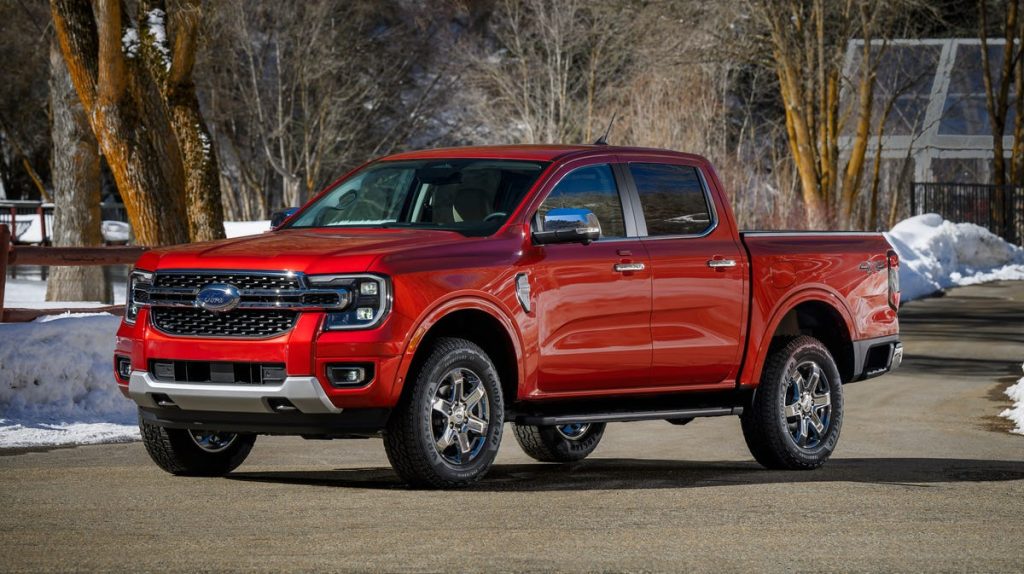
9. Ford Ranger
The Ranger uses a leaf-spring solid rear axle, similar in concept to the F-150. Its shorter wheelbase makes any sag more visually obvious. Midsize truck squat is common enough that suspension brands market dedicated helper-spring kits for the Ranger. That aftermarket demand signals a real factory shortfall.
Specifications:
- Engine: 2.3L EcoBoost turbo-4
- Horsepower: 270 hp
- Torque: 310 lb-ft
- Length: 210.8 in
- Width: 73.3 in
Off-road trims add travel and softer valving for trail use. That same setup reduces the truck’s resistance to hitch and bed loading.
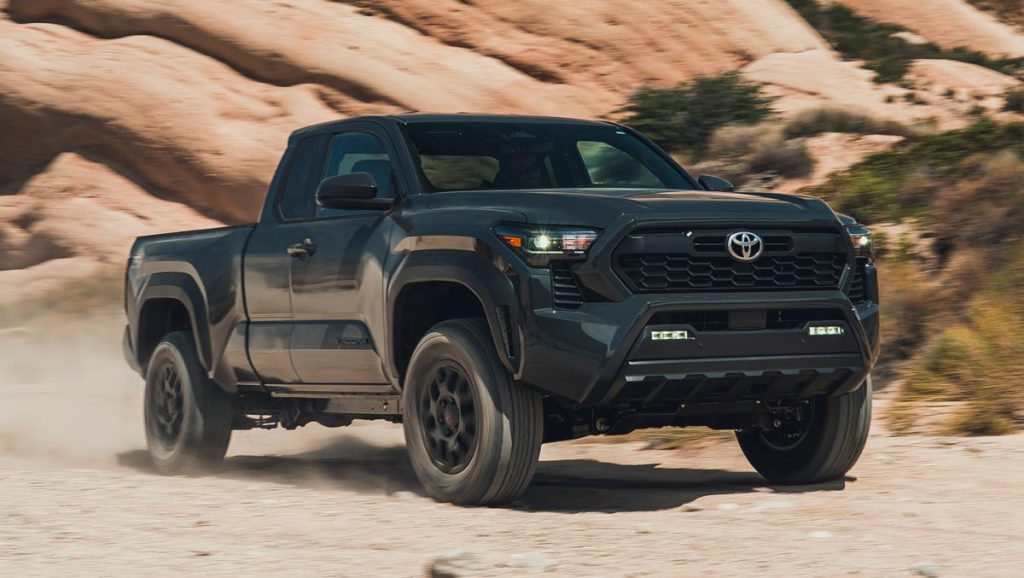
10. Toyota Tacoma
The previous-generation Tacoma carried Toyota’s familiar leaf-spring softness into the midsize class. Owners report visible sag even with a bed topper and modest gear.
One 2023 owner noted the rear end sitting a full inch lower than the front, just from a topper and light cargo. That’s a small load by pickup standards.
Specifications:
- Engine: 3.5L V6
- Horsepower: 278 hp
- Torque: 265 lb-ft
- Length: 212.3 in
- Width: 74.4 in
Aftermarket suspension makers now sell dedicated air-assist kits for the Tacoma. Their marketing points directly at squat, floaty steering, and headlight-aim drift as the problems being solved.
Also Read: 10 Ten-Year-Old SUVs That Still Sell Above $25,000