
Cars make harmless noises as they age, but some sounds are warnings that a safety-critical part is failing or that continued operation could turn a manageable repair into a destroyed engine. The important clues are when the sound occurs, whether it follows engine or road speed, and whether it arrives with vibration, warning lights, weak braking, or unstable steering.
This diagnostic guide does not claim that sound alone can identify a failed component. Different faults can produce nearly identical noises. However, grinding brakes, heavy engine knocking, tire thumping, and severe steering clunks justify stopping in a safe location rather than experimenting with another drive. Shut the vehicle down, document the symptoms, and arrange an inspection or tow when control, braking, lubrication, or tire integrity may be compromised.
1. Metal Grinding When You Press the Brake Pedal
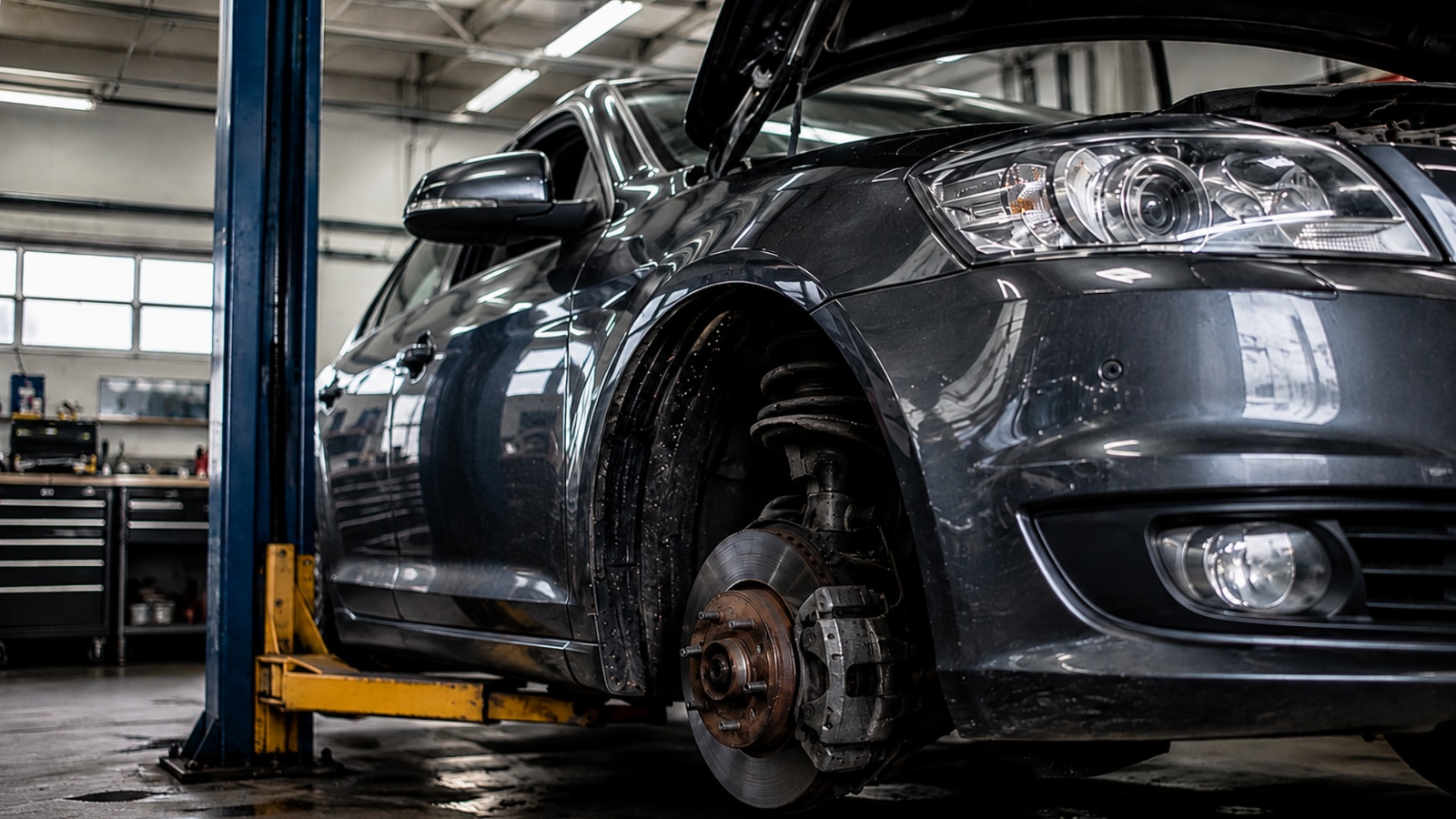
A faint brake squeal may come from a wear indicator, surface rust, or certain pad materials. Grinding is the sound that changes the decision. If you hear harsh metal scraping whenever you press the brake pedal, assume the friction material may be gone until an inspection proves otherwise. The pad’s metal backing plate can contact the rotor directly, reducing effective braking and rapidly damaging the rotor.
The AA advises drivers not to continue driving after hearing brake grinding or scraping until the braking system has been inspected. AAA likewise explains that grinding often means the pads are completely worn, and their metal backing is scraping against the rotors. Weak braking, a soft pedal, pulling, smoke, or a burning smell raises the urgency further.
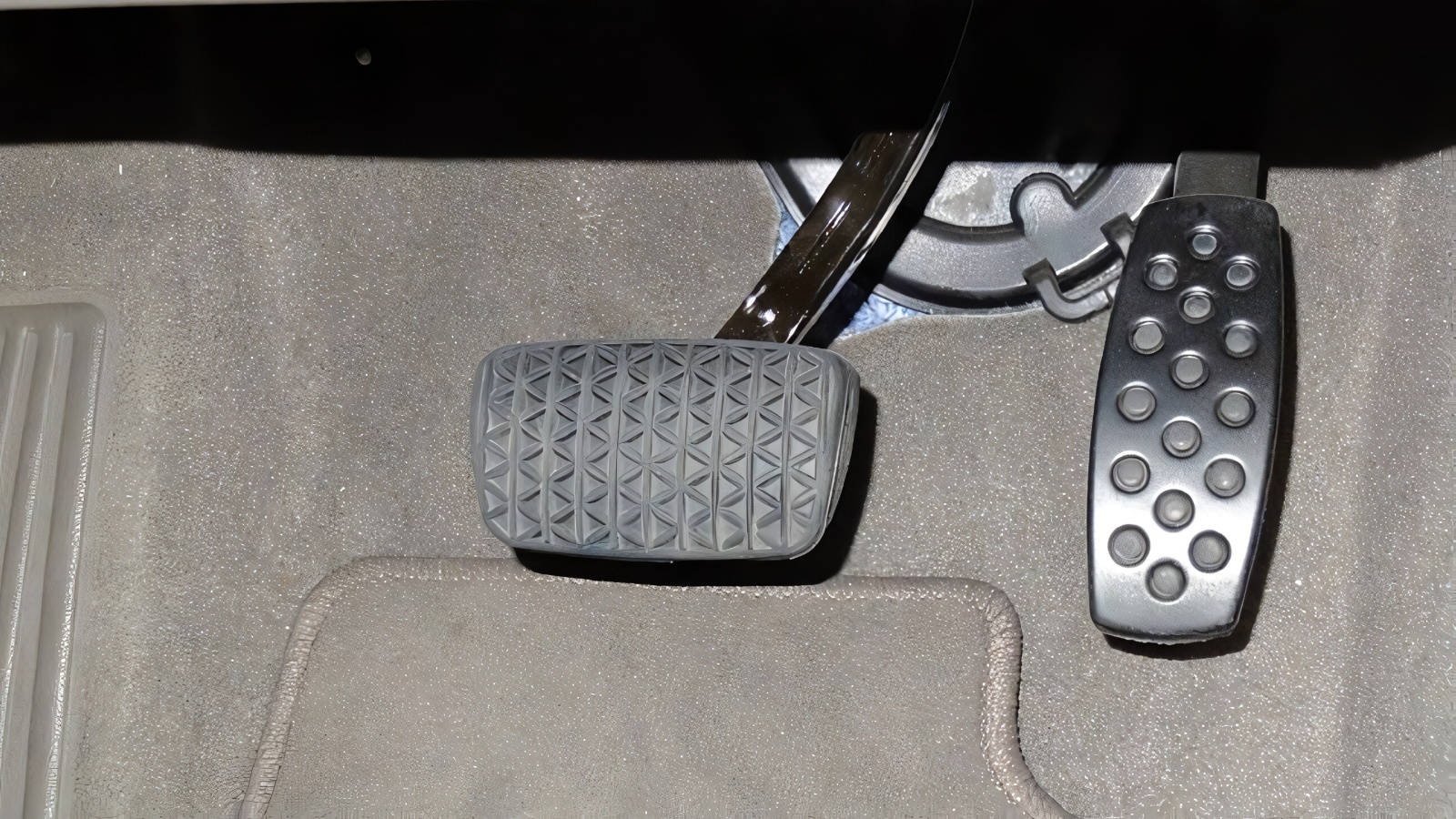
Do not test the brakes repeatedly by accelerating and stopping harder. Pull into the nearest safe location using gentle inputs. If the pedal is sinking, the car is taking longer to stop, or one wheel is extremely hot, arrange a tow. Continuing could damage the rotors and calipers, but the larger concern is losing predictable stopping ability.
In the shop, I would inspect pad thickness, rotor condition, caliper operation, brake hoses, fluid level, and signs that one wheel has been dragging. A stone trapped near a dust shield can sometimes imitate scraping, but you cannot responsibly assume that from the driver’s seat.
The best approach is straightforward. A squealing brake system means the vehicle should be inspected as soon as possible, while a grinding noise means it should no longer be driven.
Waiting a few more days in the hope that the sound will disappear is never a good idea when it comes to brakes. It is far better to have the vehicle towed and discover that the problem was only a minor issue than to find out during an emergency stop that the grinding noise was warning of a serious brake failure.
2. A Deep Knock That Follows Engine Speed
A deep engine knock sounds heavier than normal injector ticking. It usually rises and falls directly with engine speed and may become louder when the engine is loaded. Mechanics often describe serious internal knocking as a dull hammering from the lower engine rather than a light clicking from the top. When that noise appears with an oil-pressure warning, shut the engine off as soon as you can stop safely.
Low oil level or pressure can leave bearings and other moving components without adequate lubrication. AAA identifies low oil and loose or damaged internal parts including connecting rods, pistons, and bearings as possible sources of rhythmic engine knocking. Continuing to operate an engine with inadequate oil pressure can accelerate internal damage.

Do not rev the engine while standing beside it to “hear the knock better.” Every increase in speed adds load and may damage the crankshaft, connecting rods, bearings, or block. Check the oil level only after parking safely and following the manufacturer’s procedure. Adding oil may correct a low level, but it does not prove that pressure has returned or that internal damage has not occurred.
Diagnosis should include verifying actual oil pressure with a mechanical gauge, inspecting the drained oil and filter for metallic debris, identifying the sound’s location, and checking for timing, ignition, or combustion problems that can create different forms of knock. Light spark knock under acceleration is not the same diagnosis as a failed rod bearing.
From the driver’s seat, however, you are not expected to distinguish them perfectly. A new, heavy knock, especially with an oil warning, misfire, or loss of power, is a shutdown sound. A tow costs less than turning a repairable lubrication problem into an engine replacement.
3. A Rhythmic Thump or Slap From a Tire
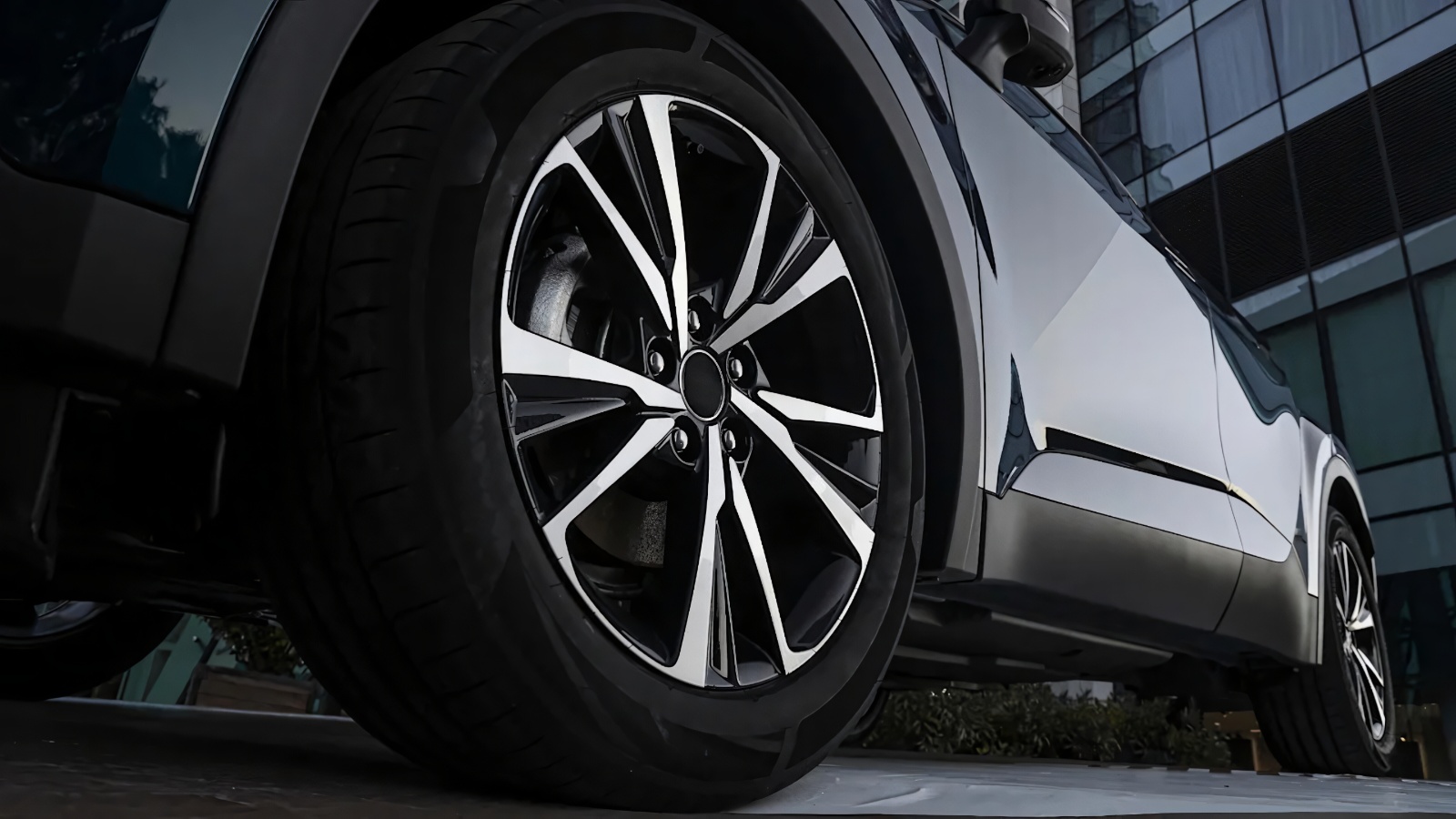
A tire thump that increases with road speed should never be dismissed as ordinary road noise. It can come from a flat spot, severe cupping, a foreign object, low pressure, or internal structural damage. The dangerous possibility is tread or belt separation, where part of the tire begins deforming or pulling away from its intended shape.
Drivers often describe the sound as “whump-whump-whump,” followed by vibration through the seat or steering wheel. In advanced cases, loose tread may strike the wheel well like a rubber flap. NHTSA documents that tread-separation failures have contributed to crashes, injuries, and deaths, and advises motorists to inspect tires regularly for damage, uneven wear, and unsafe tread depth.
Reduce speed smoothly and move to a safe stopping location. Avoid abrupt braking or steering because a compromised tire may behave unpredictably. Do not continue to the next exit at highway speed merely because the tire is still holding air. Internal separation can exist without an immediate pressure loss, and the tread can detach while the casing remains inflated.
Once stopped, look for a bulge, distorted tread, exposed cords, missing tread, or a section that appears higher than the surrounding surface. Do not crawl beneath a vehicle on the roadside. If the damage is not obvious but the thumping continues, use the spare when conditions permit or call for assistance.
A wheel that is out of balance can cause vibration, and uneven tire wear may create a humming sound. However, a sudden rhythmic thumping noise should never be ignored because it often points to a problem that requires immediate inspection.
Since your tires provide the only connection between the vehicle and the road, any change in the way they roll deserves prompt attention. Instead of continuing to drive or increasing speed, pull over safely and inspect the tires before going any farther.
4. A Growl or Grinding Noise That Changes With Road Speed
A failing wheel bearing often starts as a low hum or growl that becomes louder with vehicle speed. The pitch may change when the car turns because cornering shifts load from one side to the other. At a more advanced stage, the sound can become rough grinding accompanied by steering vibration, looseness, or an anti-lock-brake warning.
Tires can produce similar sounds, so a growl does not automatically prove the bearing is bad. Uneven tread, cupping, aggressive tire patterns, and drivetrain components can all imitate bearing noise. However, wheel bearings support the rotating hub and wheel.
Kelley Blue Book warns that advanced bearing failure can allow the wheel and tire assembly to separate, while technical guidance identifies cyclic growling that changes with road speed as a classic warning sign.
If the growl has become grinding, the steering feels loose, or the wheel is visibly wobbling, stop driving and arrange a tow. Do not perform aggressive left-and-right swerving on a public road to diagnose it. A technician can road-test the vehicle safely, raise it, check for hub play, rotate the wheel by hand, inspect the tire, and listen using chassis microphones or a stethoscope.
Remember that a bearing can be noisy without showing obvious looseness when the wheel is shaken. Lack of play does not clear it. Conversely, noise that changes on different pavement may be tire-related rather than a bearing.
The mechanic’s line is severity. A faint new hum needs prompt diagnosis. A loud growl, grinding, heat at one hub, steering movement, or vibration means the component may already be far into its failure. At that point, do not keep driving simply because the car still moves under its own power.
5. Heavy Clunking or Popping With Loose Steering
A small rattle over bumps may come from a sway-bar link or loose trim. A heavy clunk accompanied by wandering, delayed steering response, or movement through the steering wheel is different. That combination can indicate looseness in a tie-rod end, ball joint, control arm, steering rack, or another component responsible for keeping the wheel pointed and attached correctly.
Worn tie-rod ends can develop play that produces clunking or popping during tight turns and over bumps. Firestone warns that severely worn tie rods can break and cause complete loss of steering control at the affected wheel. Worn ball joints can also produce clunks, unstable steering, drifting, and abnormal tire wear.
Do not keep driving while compensating by sawing at the steering wheel. Pull over if the vehicle suddenly wanders, the steering wheel no longer corresponds normally with the front wheels, or the clunk becomes a repeated impact. A tow is appropriate when steering control feels uncertain.

Diagnosis requires more than shaking a tire casually. The suspension must be loaded or unloaded according to its design, and the manufacturer’s inspection method and wear limits should be followed. A technician should examine tie rods, ball joints, control-arm bushings, mounting bolts, struts, wheel bearings, and the steering gear. Fresh alignment numbers cannot make a loose joint safe.
The location of the noise also matters. A light clatter from one side may be a link, while a deep pop during braking or steering may indicate substantial movement in a load-bearing joint. The driver cannot always distinguish those faults acoustically.
When a clunk comes with tight, predictable steering, schedule an inspection quickly. When the steering feels loose, unstable, or disconnected, the diagnostic phase should not continue on the road. Steering components do not provide a reliable countdown before failure.
Also read: 10 Cars With Sunroof Drains That Flood the Carpet
6. Loud Clicking on Turns With Acceleration Vibration
A repetitive click-click-click while making a tight turn is a classic warning of wear in an outer constant-velocity joint. The sound is often most noticeable in parking lots or during U-turns. An inner CV joint may create clunking during acceleration or deceleration, along with a vibration that becomes stronger when engine load increases.
CV joints allow the drive axles to transfer power while the suspension and steering move. Their flexible boots retain grease and keep contamination out. Once a boot splits, grease can escape, and dirt can enter, accelerating wear. Firestone lists cornering clicks, acceleration vibrations, and clunking under load among symptoms of CV-joint damage and notes that a malfunctioning joint may eventually cause loss of power transfer or axle failure.

A faint click discovered early may allow a cautious trip directly to a repair facility, depending on the vehicle and inspection advice. A loud, rapid click accompanied by shaking, banging, grease near the brakes, or a visibly displaced axle should be treated as a tow situation. Once the joint is badly worn, nobody can tell you precisely how many turns remain before it separates or binds.
A technician should inspect all CV boots, joint play, axle shafts, wheel bearings, engine mounts, and suspension components. Engine movement from a broken mount can create clunks that imitate axle problems, while a failing wheel bearing can produce different noises in turns.
Do not diagnose a CV joint by holding the steering at full lock and repeatedly launching the car. That test places additional load on the exact component being questioned. The sound has already supplied enough information to justify inspection.
When clicking becomes banging or is joined by severe acceleration vibration, the axle is no longer giving an early warning. It is telling you that its ability to transfer power smoothly has already been compromised.
7. A Metallic Timing-Chain Rattle at Startup or Idle
Many engines make a brief normal sound when first started, and some fuel systems are naturally noisy. The warning sound is a new metallic rattle or chain-like clatter from the timing-cover area, especially when it lasts several seconds, continues at idle, or appears with rough running, misfires, reduced power, or camshaft-timing fault codes.
The timing chain keeps the crankshaft and camshafts synchronized. A worn chain, failed tensioner, broken guide, lubrication problem, or low oil pressure can allow excessive slack. Haynes warns that a loose timing chain may rattle during startup or cold idle and that chain failure can cause catastrophic internal engine damage. RepairPal similarly notes that excessive chain rattling can precede failure and engine damage on affected vehicles.
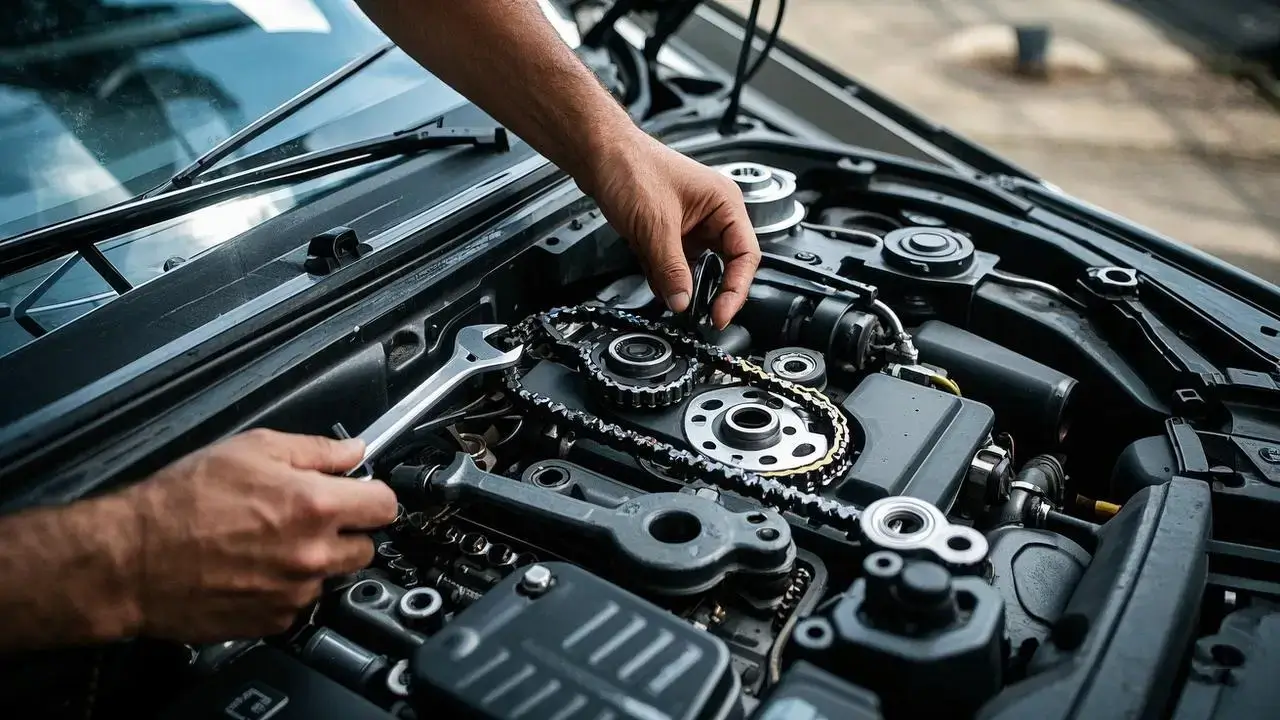
Do not repeatedly restart the engine to record the sound from different angles. If the chain jumps teeth, valve timing can move far enough for the engine to stop running or, on an interference design, for pistons and valves to contact. Shut it down and check the oil level. Correcting a low level does not erase wear in the chain, guides, or tensioner.
Proper diagnosis may include reading camshaft-correlation codes, comparing commanded and actual cam timing, measuring oil pressure, listening near the timing cover, inspecting the oil filter for guide material, and removing covers when necessary. Loose heat shields and accessory tensioners can imitate chain noise, which is why parts should not be ordered from sound alone.
A single split-second startup noise may have a model-specific explanation. A sustained metallic rattle, repeated cold-start clatter, or noise combined with running problems is different. Driving it to “see whether it clears up” risks turning a timing-service bill into cylinder-head or engine replacement.
8. A Sudden Exhaust Roar, Hiss, or Chuff Near the Cabin
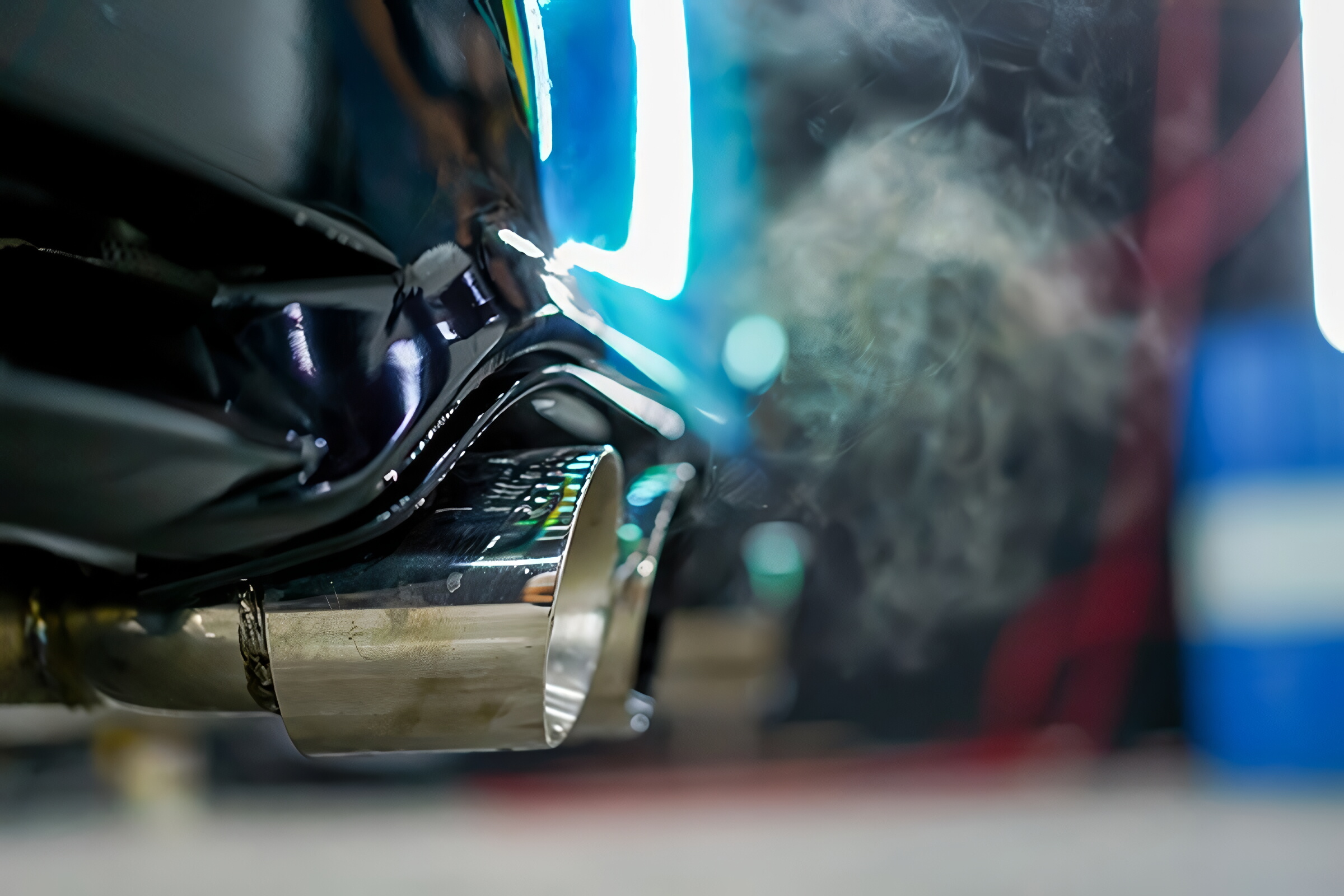
A vehicle that suddenly becomes much louder than normal may have a cracked exhaust pipe, a failed flex joint, a separated flange, or a damaged exhaust manifold. Depending on the source of the problem, the noise may resemble a deep roar during acceleration, a rhythmic chuffing sound near the engine, or a hissing noise beneath the vehicle.
The loud sound is not always the greatest concern. A leak located in the wrong place can allow exhaust gases to enter the passenger compartment, creating a much more serious safety risk.
AAA identifies increased engine noise and fumes inside the vehicle as warning signs of an exhaust leak. The CDC states that even a small exhaust-system leak can allow carbon monoxide to accumulate inside a car. Carbon monoxide cannot be reliably detected by smell, so the absence of a strong odor does not establish that the cabin is safe.
Stop driving immediately if occupants develop headache, dizziness, weakness, nausea, confusion, or unusual sleepiness. Move everyone into fresh air and seek appropriate medical assistance. Do not sit in the parked vehicle with the engine running while arranging help.
A rear muffler hole may primarily create noise, but a leak near the manifold, firewall, catalytic converter, or floor can be more concerning. Missing body plugs, damaged seals, an open tailgate, or corrosion may make cabin entry easier. A technician should inspect the entire system for cracks, loose joints, broken hangers, heat damage, and evidence that fumes can reach ventilation intakes or openings.
Do not patch an unidentified leak with tape or household sealant and assume the vehicle is safe. Exhaust components become extremely hot, and movement can reopen temporary repairs.
When the exhaust suddenly changes volume, have it inspected promptly. When that roar or hiss is accompanied by cabin fumes or physical symptoms, shut the engine off and tow the vehicle. That is not merely an annoying sound; it may represent an invisible exposure hazard.
Also read: 8 Reasons New Cars Have Smaller Trunks Than They Did 20 Years Ago
