
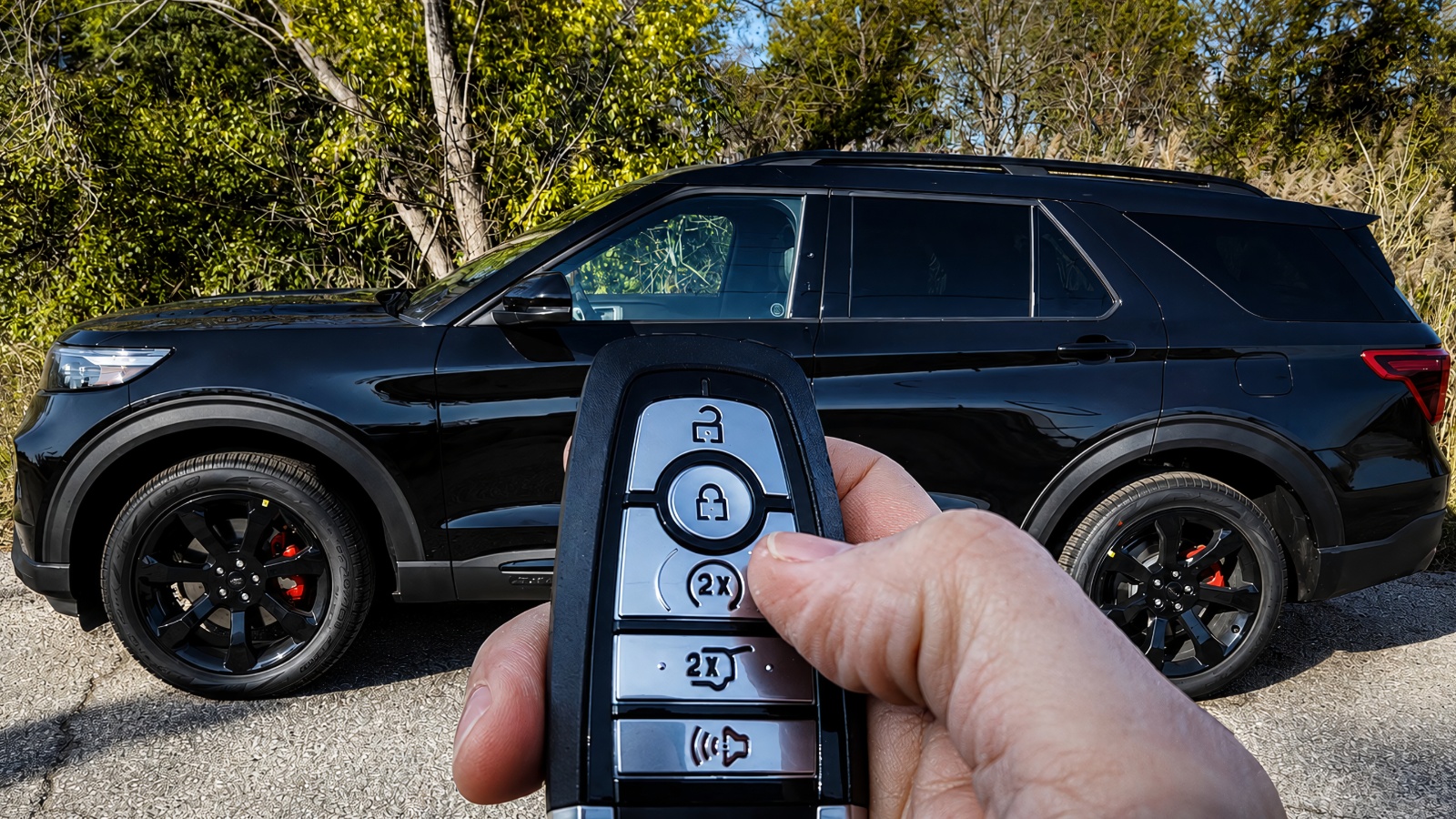
Keyless entry has become the default in modern vehicles. Drivers love the convenience of unlocking and starting a car without pulling out a key. But this convenience comes with a hidden cost. Security researchers have repeatedly shown that most keyless systems can be tricked.
Germany’s ADAC, one of the largest and most trusted auto clubs, has been testing this for years. Their ongoing series has now covered more than 800 vehicles across dozens of brands.
The results are troubling. Only around 15 percent of tested cars are properly protected against relay attacks. That leaves roughly 85 percent open to exploitation. These vehicles can be unlocked and driven away using cheap, easily available signal-extension equipment.
This is not a niche problem affecting a few unlucky models. It spans budget cars, family SUVs, pickup trucks, and luxury brands alike. Relay theft has become one of the most common ways cars disappear from driveways today.
It leaves no broken glass, no forced locks, and often no witnesses. This article explains how relay attacks work, why so many cars remain vulnerable, and what owners can actually do to protect themselves.
How Relay Attacks Actually Work
A relay attack exploits the wireless handshake between a car and its key fob. Most passive keyless systems constantly listen for a nearby fob signal.
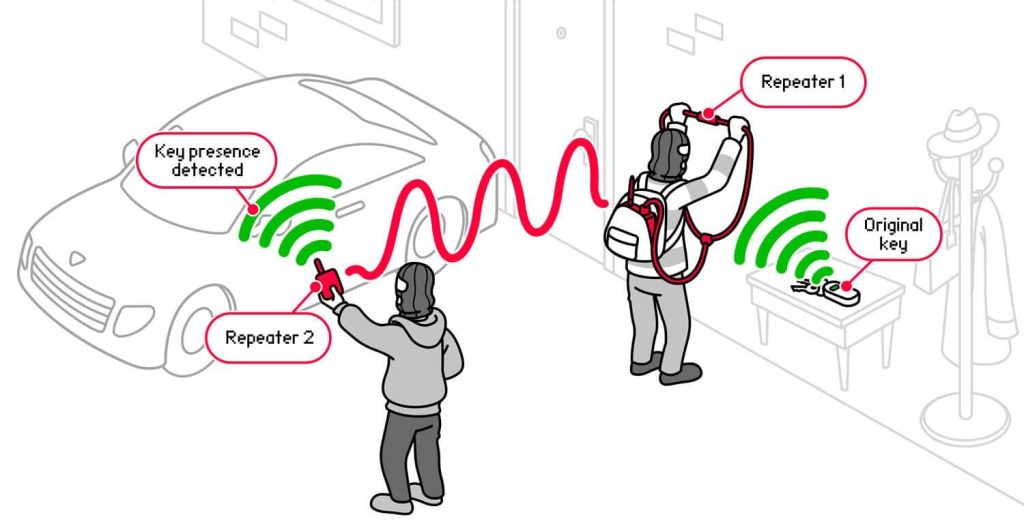
Two thieves typically work together on this. One stands near the parked car with a signal receiver device. The other stands near the house, close to where the key fob usually sits. Fobs are often left near a front door or hallway table.
The device near the house captures the fob’s low-power signal. It then relays that signal wirelessly to the device near the car. The car receives what looks like a legitimate signal from its own key. It has no way of knowing the key is actually far away.
Believing the key is close, the car unlocks its doors. In many cases, the same trick lets thieves press the start button too. The entire process can take under a minute. Thieves are often gone before homeowners even realize anything happened.
This method requires no hacking skills or specialized training. Relay equipment is inexpensive and can be bought or built with basic electronics knowledge.
Instructional videos and hardware kits circulate widely online. This has lowered the barrier to entry for car theft dramatically. Unlike older theft methods, relay attacks leave almost no physical evidence. There is no smashed window and no forced ignition switch.
This makes the crime harder to detect in the moment. It also makes it harder for insurers and police to investigate afterward. Some criminal networks have scaled this into an organized business. Stolen vehicles are frequently shipped overseas or stripped for valuable parts.
Export demand for certain SUVs and premium saloons keeps this activity profitable. Older models with known signal weaknesses are often preferred targets.
Thieves know that an outdated but well-understood system can be easier to beat. This is true even when a newer car nearby might seem like the flashier target.
Security researchers first demonstrated these vulnerabilities publicly years ago. Yet the underlying weaknesses in many systems have never been fully resolved.
Why So Many Vehicles Remain Vulnerable
The scale of this problem is not limited to older or cheaper cars. Testing has repeatedly shown that vulnerability cuts across nearly every price category.
German researchers found that over 90 percent of keyless models tested between 2019 and 2023 failed to block a relay signal. That failure rate has barely improved over time.
One widely cited earlier test by ADAC examined 237 keyless vehicles from more than 30 brands. Only seven of those cars could not be compromised through a relay-style attack.
That is a striking illustration of how deeply this issue runs. Even flagship luxury brands have not been immune to the problem. Manufacturers have known about this weakness for a long time. Researchers at the University of Birmingham publicly demonstrated relay attacks on car key systems back in 2018.
Despite that early warning, adoption of stronger defenses has been slow and uneven. Many manufacturers continued using unidirectional radio signals that cannot verify true proximity.
Newer technologies like ultra-wideband, or UWB, can measure the actual distance between a key and a car. This makes relaying a signal much harder to pull off successfully.
But UWB adoption remains inconsistent across the industry. Even brand-new 2024 and 2025 models from major manufacturers have shipped without it in certain trims.
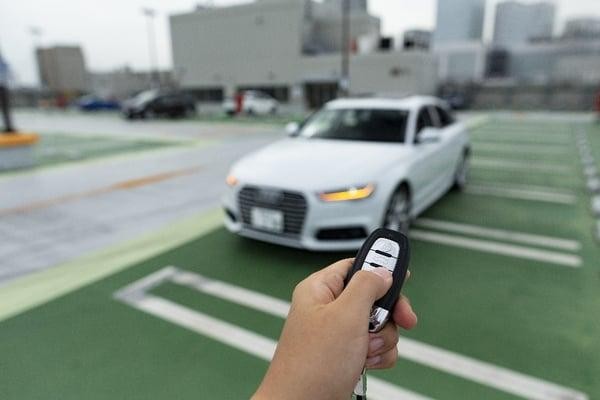
Some vehicles marketed as having advanced security still lack basic protections. Motion-sensing fobs that go quiet when stationary, for example, are still optional rather than standard on many models.
There is also a large installed base of older cars still on the road. Average vehicle age in markets like the United States now exceeds twelve years.
That means the vast majority of cars people are driving today were built before stronger anti-relay protections existed. Retrofitting these systems is rarely practical or affordable for average owners.
Even when better technology exists, consumer awareness lags behind. Surveys have found that a majority of owners cannot locate their own vehicle’s key fob security settings.
This gap between available protection and actual usage matters enormously. A car can have strong defenses built in and still be stolen if those features are never activated.
Firmware updates add another wrinkle to the story. Even UWB-equipped vehicles need periodic security patches to stay ahead of new attack methods.
Recalls tied to key-system vulnerabilities have already affected mainstream electric vehicles. This shows that even cutting-edge systems are not permanently immune to compromise.
Insurance and police data reflect the scale of the fallout. UK insurers have reported that a majority of stolen cars in recent years were keyless models.
In the Netherlands, keyless entry was present on well over half of all passenger cars stolen in a recent year. Similar patterns have been observed across much of Western Europe.
Commercial vehicles are affected too, not just personal cars. A large share of stolen light commercial vehicles were taken without the owner’s actual keys.
Pickup trucks, in particular, remain popular targets for thieves. High resale value and strong demand for truck parts make them especially attractive. Family SUVs and crossovers are stolen this way just as often. These vehicles frequently sit in driveways within easy range of a home’s front door.
Even electric vehicles using Bluetooth-based digital key systems face similar risks. Without extra safeguards like a PIN-to-drive feature enabled, these systems can also be relayed.
The consistent theme across all this data is simple. Vulnerability is the default state, and real protection almost always requires deliberate action by the owner.
What Owners Can Do to Reduce Their Risk
The good news is that relay attacks can be significantly disrupted with a few simple habits. None of these require expensive new hardware or technical expertise.
The most effective and cheapest defense is signal blocking. Storing a key fob inside a Faraday pouch prevents its radio signal from being captured at all.
These pouches are inexpensive and widely available online and in stores. They work by shielding the fob so no signal can escape to be relayed. Distance also matters more than most people assume. Simply moving a fob further from exterior walls and doors weakens any signal a thief could capture.
Keeping keys in a back room rather than a hallway table can make a real difference. Even a few extra meters can defeat basic relay equipment. Some fobs include a motion-sensing feature that goes to sleep when not moved for a period. Checking whether this feature exists and is switched on is worth the effort.
For owners buying a new car, it is worth asking dealers directly about relay protection. Confirming whether ultra-wideband technology or similar distance-verification exists can guide a smarter purchase decision.
Physical deterrents still have a place too. A visible steering wheel lock or wheel clamp can discourage opportunistic thieves even after entry. These devices add time and difficulty to a theft attempt. Many criminals will simply move on to an easier target rather than deal with the extra hassle.
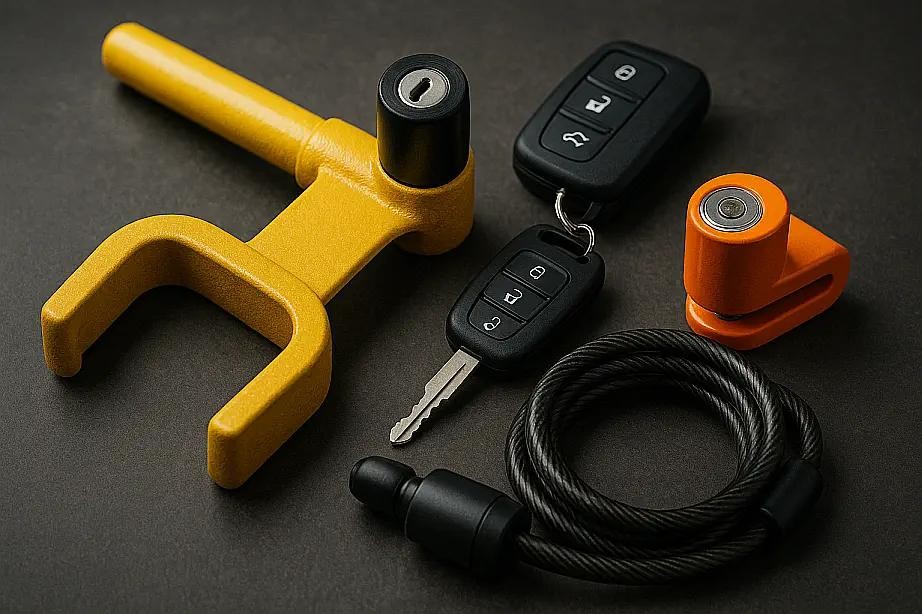
Installing a secondary immobiliser, sometimes called a ghost immobiliser, adds another layer of defense. It requires a separate code or sequence to start the car, something a relay attack alone cannot bypass.
Tracking devices will not prevent a theft from happening in the first place. But they dramatically improve the odds of recovering a stolen vehicle afterward.
For owners of BLE or app-based digital key systems, enabling every available security layer matters. Features like PIN-to-drive should not be left switched off for convenience.
Driveway cameras and motion-activated lighting can also help. They will not stop a relay attack technically, but they do add a deterrent and evidence trail.
Some insurers now offer discounts for cars fitted with recognized anti-theft technology. It is worth checking directly with an insurance provider about qualifying devices.
Manufacturers occasionally release retrofit kits or software updates addressing known vulnerabilities. Owners should stay alert to recall notices and apply any available updates promptly.
Ultimately, no single measure guarantees complete protection. Layering several of these defenses together is the most realistic way to reduce risk meaningfully.
The core lesson from years of testing is consistent. Most keyless cars remain vulnerable by default, and real security depends on the choices owners make after they drive off the lot.
Understanding how relay attacks work is the first step toward closing that gap. Simple, low-cost habits can turn an easy target into a much harder one.
Also Read: 8 Car Brands Blocked From US Showrooms by One Federal Rule
