
Nevada is generally considered a vehicle-friendly state, but that does not mean every vehicle can legally receive a license plate for public roads.
The Nevada Department of Motor Vehicles enforces federal safety standards, state registration laws, emissions requirements in applicable counties, and title regulations before a vehicle can be registered.
Some vehicles are prohibited because they were never designed for highway use, while others fail because of title status or federal compliance issues.
Understanding these rules before purchasing a vehicle can save thousands of dollars and prevent expensive registration problems. Here are ten types of vehicles that cannot legally be registered for normal road use in Nevada under current regulations.
1. Polaris RZR XP 1000
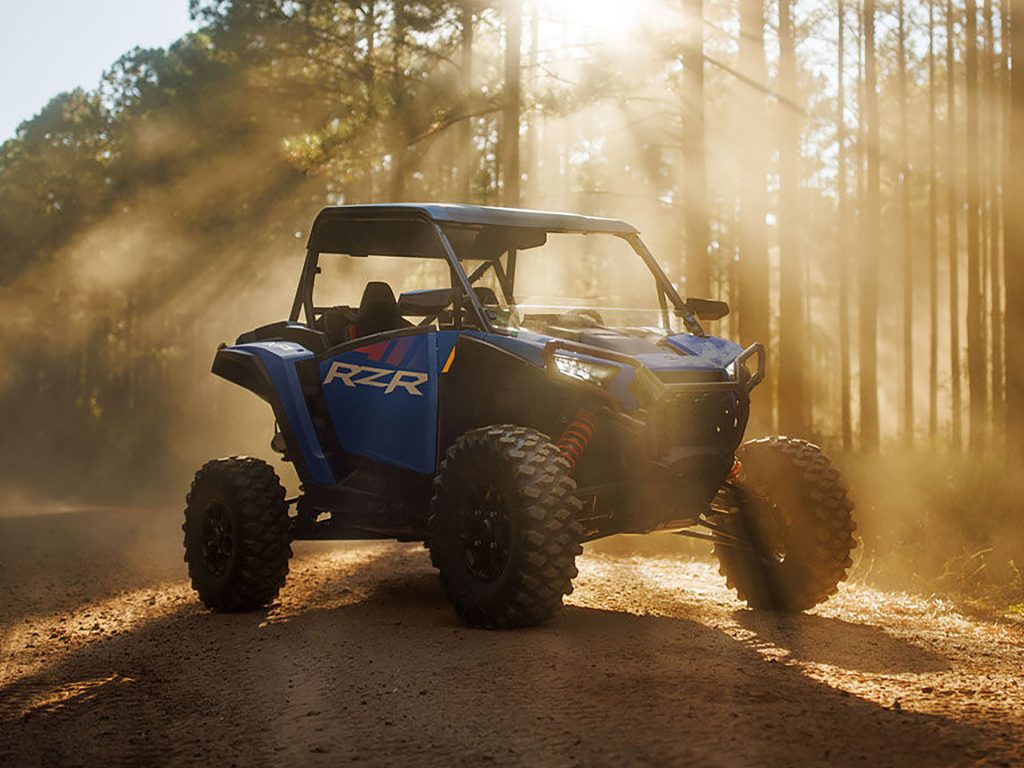
The Polaris RZR XP 1000 is one of the most popular side-by-side vehicles sold in the United States, but it cannot receive standard Nevada passenger vehicle registration for highway use.
Although it is equipped with headlights, seat belts, a roll cage, and other safety equipment for trail riding, the RZR was manufactured as an Off-Highway Vehicle (OHV), not as a passenger automobile meeting Federal Motor Vehicle Safety Standards (FMVSS).
Nevada registers these vehicles through its OHV program rather than issuing standard license plates for unrestricted road use.
Many owners install windshields, mirrors, turn signals, and horn kits, believing these upgrades will make the vehicle street legal. In Nevada, those modifications do not change the vehicle’s original federal certification. The manufacturer’s certification label identifies the RZR as an off-road vehicle, and that designation remains with the vehicle throughout its life.
Limited local exceptions may allow an OHV to cross certain roads or use designated connecting routes where specifically authorized, but those exceptions do not convert the vehicle into a fully road-legal passenger vehicle. It still cannot be registered for unrestricted highway operation like a conventional SUV or pickup.
This catches many buyers by surprise because several neighboring states have more permissive laws regarding OHVs. Before purchasing a Polaris RZR for mixed on-road and off-road use, Nevada residents should understand that standard passenger registration is not available.
2. Yamaha YFZ450R
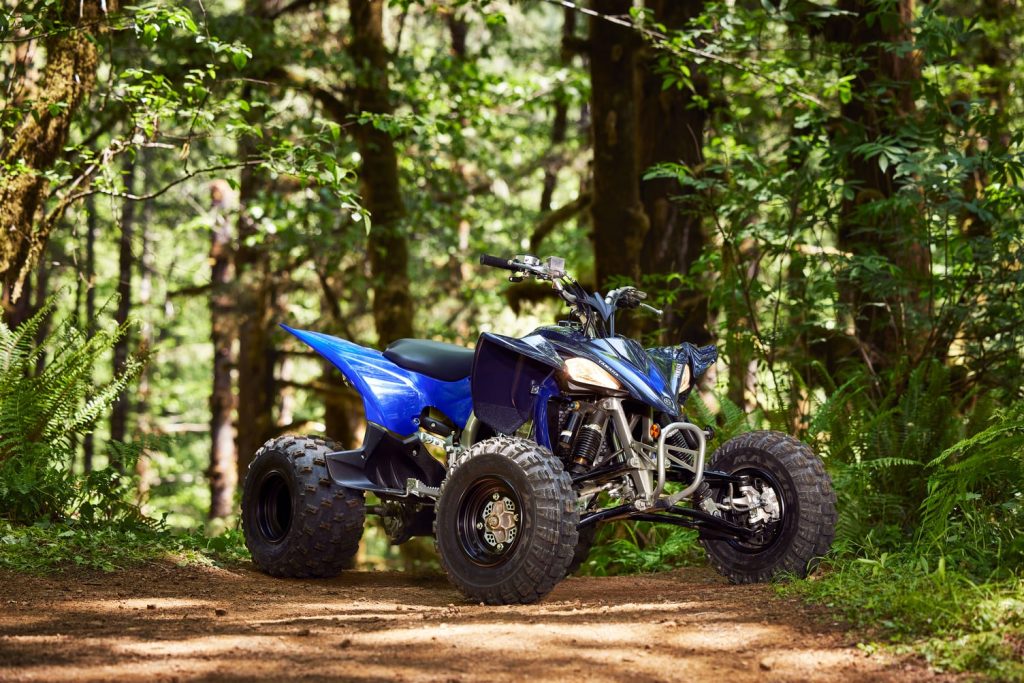
The Yamaha YFZ450R has earned an outstanding reputation among sport ATV enthusiasts thanks to its lightweight chassis and race-inspired suspension.
However, despite its performance credentials, it cannot be registered for normal highway use in Nevada because it was manufactured exclusively as an off-highway vehicle. Like other ATVs, it lacks federal certification required for passenger vehicles operated on public streets.
Unlike motorcycles that are originally designed for road use, the YFZ450R was engineered for closed-course riding, recreational trails, and designated OHV areas.
It does not include the crash protection, lighting certification, braking standards, occupant safety requirements, or other federally mandated equipment necessary for unrestricted highway registration.
Some aftermarket companies sell conversion kits containing mirrors, LED lighting, turn signals, and license plate brackets. While these accessories may improve visibility, they do not alter the vehicle’s legal classification. Nevada DMV registration is based primarily on the manufacturer’s intended use and federal certification, not on aftermarket modifications.
The proper way to operate a Yamaha YFZ450R in Nevada is through the state’s Off-Highway Vehicle registration program, which allows legal operation on approved trails and recreation areas. Buyers looking for a machine that can legally travel on public roads should instead consider a motorcycle or another vehicle originally certified for highway use.
Understanding this distinction before making a purchase can prevent registration problems and unexpected ownership costs.
3. Honda Talon 1000R
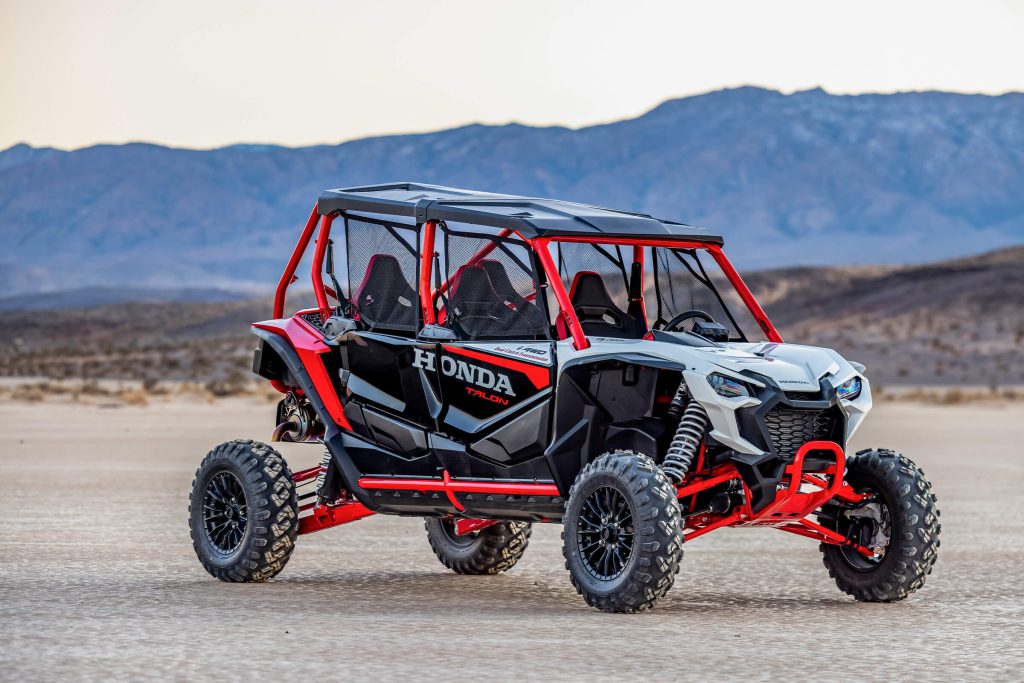
The Honda Talon 1000R is built to tackle dunes, rocky trails, and desert terrain, but it cannot be registered for unrestricted highway use in Nevada.
Although the Talon features bucket seats, three-point seat belts, a roll cage, and LED headlights, Honda designed and certified it exclusively as an off-highway vehicle rather than a passenger automobile.
Because it does not comply with Federal Motor Vehicle Safety Standards required for cars and trucks, the Nevada DMV does not issue standard road registration for it.
Many prospective buyers are surprised because the Talon resembles a compact off-road buggy more than a traditional ATV.
However, appearance does not determine road legality. The manufacturer’s certification label, vehicle title, and federal classification identify it as an OHV. That designation remains in place regardless of aftermarket modifications.
Some owners install windshields, turn signals, mirrors, horn kits, and even street-oriented tires. While those upgrades may improve convenience on private property or designated trail systems, they do not make the Talon eligible for standard Nevada license plates. Nevada law recognizes the original federal certification rather than modifications added after purchase.
The Talon can be registered through Nevada’s Off-Highway Vehicle program for legal operation in approved riding areas, but it cannot legally operate on public roads except where very limited local exceptions specifically authorize crossings or designated connector routes.
Buyers looking for an adventure vehicle should understand this distinction before making a purchase. The Honda Talon is exceptionally capable off-road, but it is not intended to replace a street-legal SUV or pickup for everyday transportation.
4. Can-Am Maverick R
The Can-Am Maverick R represents one of the most powerful production side-by-sides available in North America, producing performance that rivals many sports cars on loose terrain. Despite its impressive engineering, it cannot receive standard Nevada highway registration because it was manufactured exclusively for off-road recreation.
Powered by a turbocharged three-cylinder engine and equipped with long-travel suspension, the Maverick R is designed to handle dunes, desert trails, and high-speed off-road environments.
It includes advanced safety equipment such as a reinforced roll cage, bucket seats, and multi-point harnesses, but these features do not satisfy the federal crash standards required for passenger vehicles operated on public highways.
Some owners mistakenly believe that adding DOT-approved tires, mirrors, turn signals, or a windshield will make the vehicle street legal. Nevada DMV regulations focus on the manufacturer’s original certification rather than aftermarket equipment.
Since the Maverick R was never certified under Federal Motor Vehicle Safety Standards for passenger vehicles, it cannot be converted into a normally registered highway vehicle.
Nevada allows owners to register the Maverick R through the state’s OHV registration program, permitting operation on approved public lands and designated trail systems. That registration is completely separate from the passenger vehicle registration issued to cars, trucks, and motorcycles.
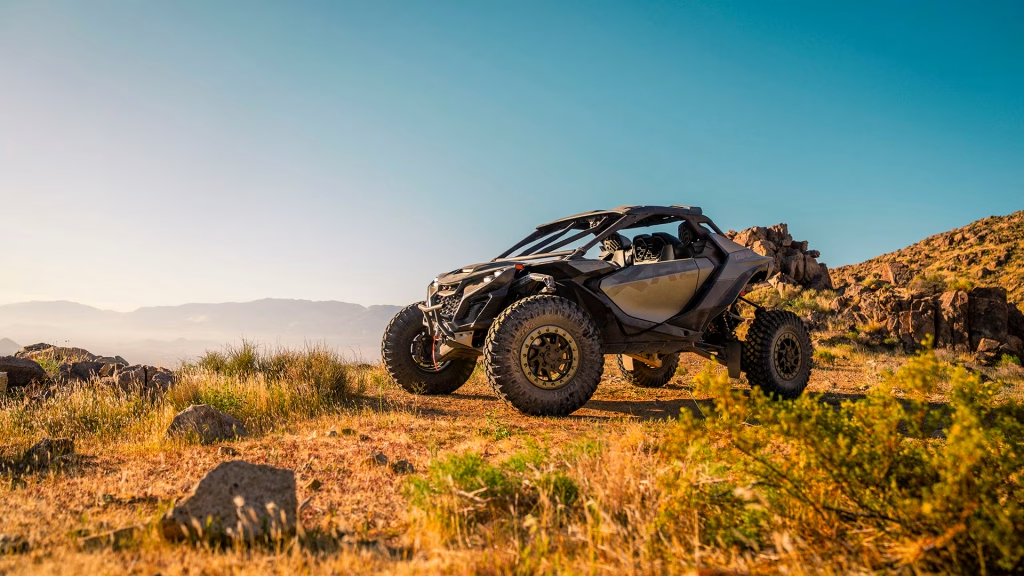
The Maverick R remains an outstanding recreational machine, but buyers should understand that ownership is limited to off-road environments unless local governments specifically authorize short roadway connections for OHVs. It cannot legally serve as a daily driver on Nevada public roads.
5. KTM 450 SX-F
The KTM 450 SX-F is widely regarded as one of the premier motocross motorcycles in the United States, but it cannot be registered for normal highway use in Nevada.
The reason is straightforward: the motorcycle was engineered exclusively for closed-course motocross competition and is not certified to meet the Federal Motor Vehicle Safety Standards required for on-road motorcycles. The Nevada DMV follows the manufacturer’s original certification when determining registration eligibility.
Unlike KTM’s EXC dual-sport lineup, which is built specifically for public roads, the 450 SX-F leaves the factory without many components required for highway operation.
It does not come equipped with DOT-certified lighting, turn signals, mirrors, a horn, emissions equipment for street use, or other federally required safety features. More importantly, its Manufacturer’s Certificate of Origin identifies it as an off-road motorcycle.
Some aftermarket companies offer conversion kits that include headlights, brake lights, mirrors, and license plate brackets. While these upgrades may improve visibility, they do not change the motorcycle’s original legal classification.
Nevada does not allow an off-road competition motorcycle to become street legal simply because additional equipment has been installed.
The motorcycle is perfectly legal for motocross tracks, private land, and approved off-highway riding areas after complying with Nevada’s OHV registration requirements. However, it cannot receive a standard motorcycle license plate for unrestricted public road use.
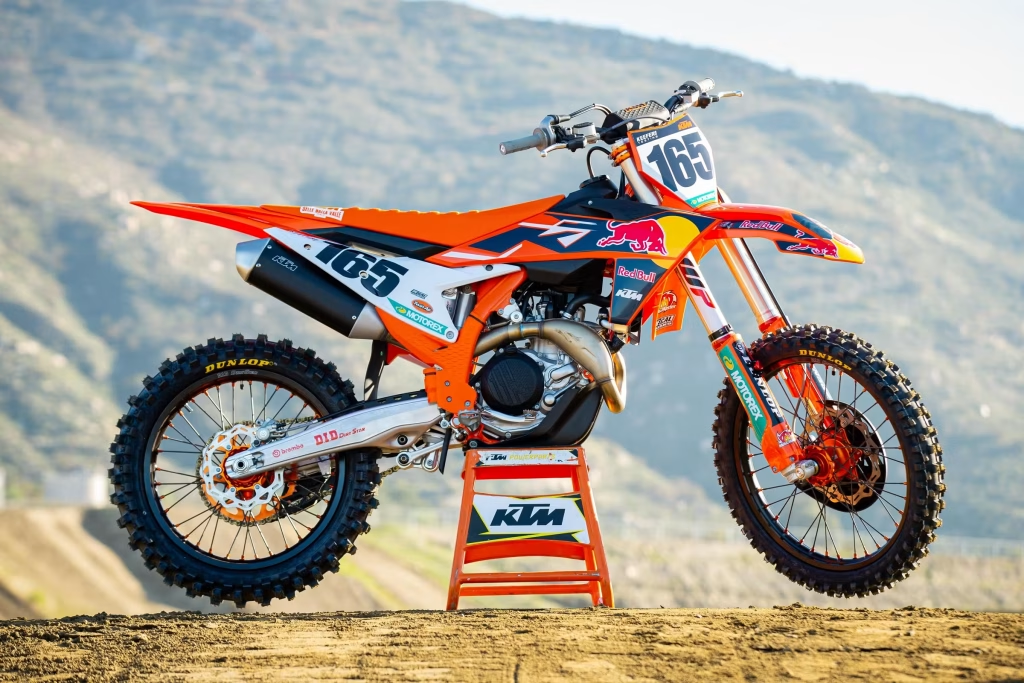
For riders shopping for a KTM that can legally operate on highways, models such as the 500 EXC-F or 350 EXC-F are the proper choices because they were designed and certified as dual-sport motorcycles from the factory.
6. Chevrolet Silverado 1500 With a Non-Repairable Title
A Chevrolet Silverado 1500 is normally one of the easiest vehicles to register in Nevada, but not every Silverado can legally return to the road. If the truck has been issued a non-repairable title or scrap certificate, Nevada law permanently prohibits it from receiving registration for highway use, regardless of how much money is spent repairing it.
This situation usually occurs after catastrophic damage. Severe fire damage, extensive flood destruction, major structural collapse, or vehicles stripped to the point where they are suitable only for parts may receive a non-repairable designation from an insurance company or state motor vehicle agency.
Once that status is assigned, the vehicle is legally considered unsuitable for highway operation. Many auction buyers mistakenly assume they can rebuild any damaged truck if they have enough time and resources.
That is not true. While a salvage-title Silverado may eventually qualify for a rebuilt title after passing the required inspections, a Silverado carrying a non-repairable title cannot complete that process. It is legally restricted to dismantling, recycling, or parts use.
Before purchasing any heavily damaged pickup from an insurance auction, buyers should carefully review the title documents instead of relying solely on photographs. Two trucks with nearly identical damage may have very different legal futures depending on the title classification.
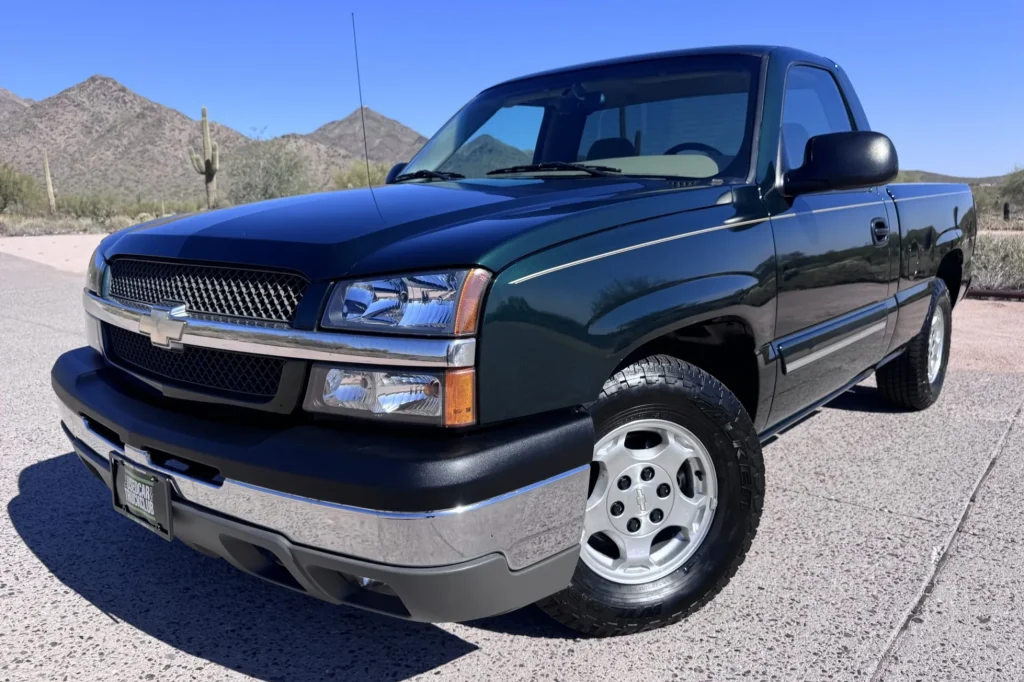
The Silverado itself is not prohibited in Nevada. The prohibition applies specifically to examples carrying a non-repairable designation, making title research just as important as inspecting the truck’s physical condition.
7. Nissan Skyline GT-R R34 (Non-Federalized Import)
Few imported performance cars generate as much excitement as the Nissan Skyline GT-R R34. Produced between 1999 and 2002, it became a global icon thanks to its RB26DETT twin-turbocharged engine, advanced all-wheel-drive system, and success in motorsports. However, not every R34 can legally be registered for road use in Nevada.
The key issue is federal compliance rather than Nevada law itself. The Nevada DMV requires imported vehicles to satisfy applicable federal import requirements before issuing a title and registration.
A Skyline GT-R R34 that was imported illegally or has not been properly federalized cannot receive standard Nevada registration.
Vehicles lacking compliance with National Highway Traffic Safety Administration (NHTSA) and Environmental Protection Agency (EPA) import requirements cannot legally be titled for unrestricted highway use.
The federal 25-year import rule has gradually made certain R34 model years eligible for import as they reach 25 years of age. However, buyers must still ensure the specific vehicle entered the United States legally and has all required import documentation.
A vehicle brought into the country outside those legal pathways may still be denied registration regardless of its condition.
This has become especially important because R34 values have risen dramatically, encouraging some unauthorized imports over the years. Before purchasing one, buyers should carefully verify the VIN documentation, customs paperwork, EPA forms, and NHTSA import records.
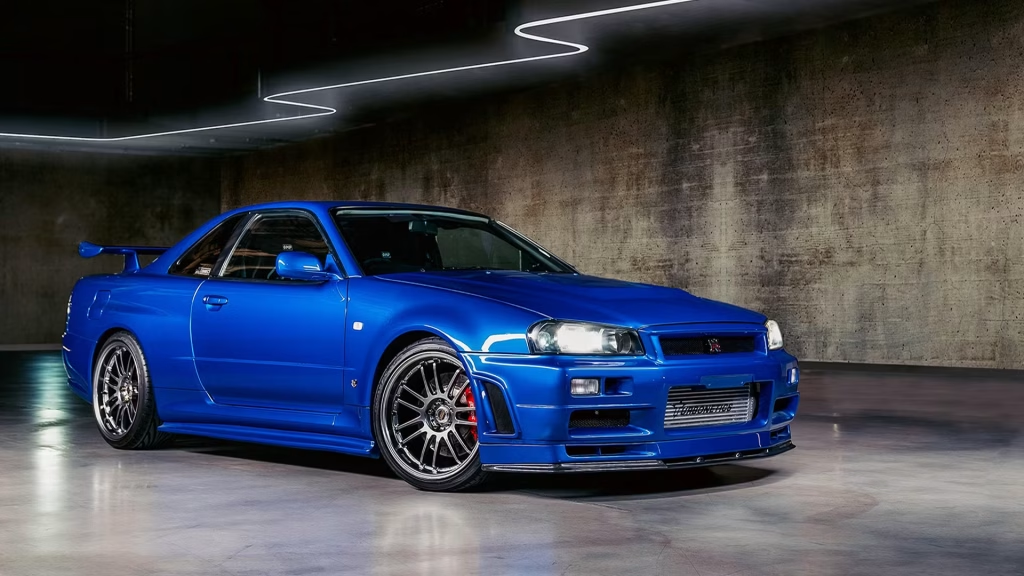
A legally imported R34 that satisfies federal requirements can eventually be titled and registered in Nevada. A non-federalized example cannot.
8. Mini Jeep Willys Replica (Low-Speed Imported Clone)
Mini Jeep replicas have become increasingly popular through online marketplaces because they resemble classic military Jeeps while costing only a fraction of the price.
Many are manufactured overseas and imported as recreational vehicles or utility vehicles rather than highway automobiles. Although they may look road-ready, most cannot be registered for normal highway use in Nevada.
The problem is their certification. Many imported mini Jeeps do not comply with Federal Motor Vehicle Safety Standards and were never designed to meet U.S. crash, lighting, braking, emissions, or occupant protection requirements.
They often arrive with documentation identifying them as off-road vehicles, utility vehicles, or recreational equipment rather than passenger automobiles.
Some sellers advertise these vehicles as “street legal” after adding mirrors, headlights, seat belts, or turn signals. Those modifications do not change the original federal certification. Nevada DMV bases registration primarily on the manufacturer’s compliance status and federal import documentation rather than aftermarket accessories.
Another issue involves vehicle identification numbers. Some imported mini Jeeps use VIN formats that do not comply with U.S. requirements or lack the necessary documentation to establish a valid title. Without acceptable federal paperwork, Nevada cannot issue standard registration.
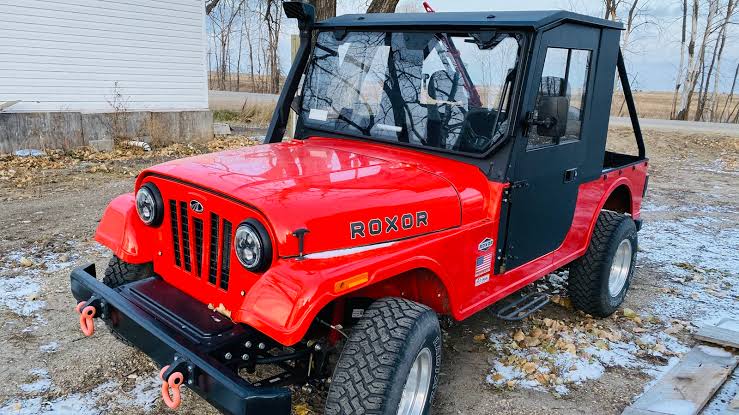
Prospective buyers should carefully investigate any imported replica before purchasing. If the vehicle was not originally certified for U.S. highway use, obtaining a Nevada title and license plates may be impossible regardless of cosmetic appearance.
9. Toyota Land Cruiser 70 Series (Non-U.S.-Compliant Import)
The Toyota Land Cruiser 70 Series has earned a legendary reputation for durability and is still sold new in markets such as Australia, the Middle East, Africa, and parts of Asia.
Its rugged body-on-frame construction and dependable four-wheel-drive system make it highly desirable among American enthusiasts. However, a newly imported 70 Series cannot simply be registered for road use in Nevada.
The obstacle is federal certification. Toyota has never certified the modern Land Cruiser 70 Series for sale in the United States, meaning it does not comply with all applicable U.S. Federal Motor Vehicle Safety Standards or Environmental Protection Agency emissions requirements.
Since the Nevada DMV requires imported vehicles to meet federal import laws before issuing a title, a recently imported 70 Series generally cannot receive standard registration.
There is one important exception. Under the federal 25-year import rule, Land Cruiser 70 models that are at least 25 years old may become eligible for legal import without meeting modern FMVSS requirements, provided all Customs, EPA, and NHTSA paperwork is completed correctly.
Buyers should carefully verify the model year because even a one-year difference can determine whether importation is legal.
Unscrupulous sellers occasionally advertise newer foreign-market Land Cruiser 70s as “easy to register,” but without proper federal eligibility, Nevada will not issue a standard title simply because the vehicle is mechanically sound.
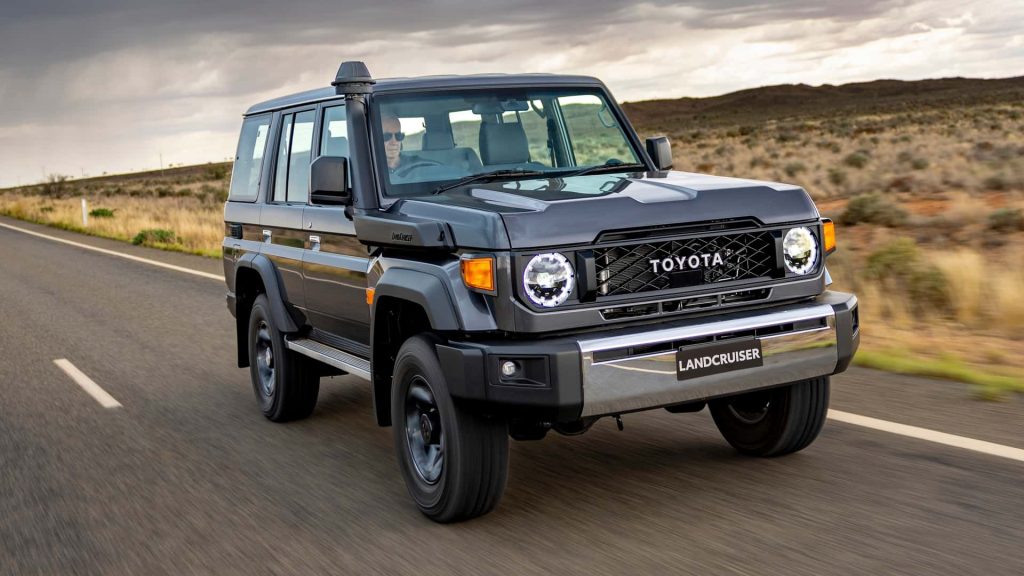
Anyone considering importing one should confirm its eligibility before purchase. A legally imported 25-year-old example can become a collectible and fully usable vehicle, while a newer non-compliant version may never qualify for Nevada registration.
10. Ford F-150 With a Certificate of Destruction
The Ford F-150 has been America’s best-selling truck line for decades, and under normal circumstances, registering one in Nevada is straightforward. However, an F-150 carrying a Certificate of Destruction or an equivalent permanent non-repairable designation cannot legally return to public roads.
Insurance companies issue these certificates when a vehicle has sustained catastrophic damage that makes restoration impractical or unsafe. Examples include severe flood damage, extensive fire damage, complete structural collapse, or destruction so significant that the vehicle is suitable only for dismantling and recycling.
Once a Certificate of Destruction has been issued, the truck permanently loses its eligibility for normal road registration.
This differs from a salvage title. A salvage-title F-150 may be rebuilt, inspected, and, if it satisfies Nevada requirements, receive a rebuilt title allowing future registration. A truck carrying a Certificate of Destruction has no such pathway.
Regardless of repair quality or the amount invested, the Nevada DMV will not issue a standard title or license plates because the vehicle has been permanently removed from the highway fleet.
This distinction is particularly important for buyers shopping at insurance auctions. Two damaged F-150s may appear almost identical in photographs, yet one may qualify for rebuilding while the other is legally limited to parts use.
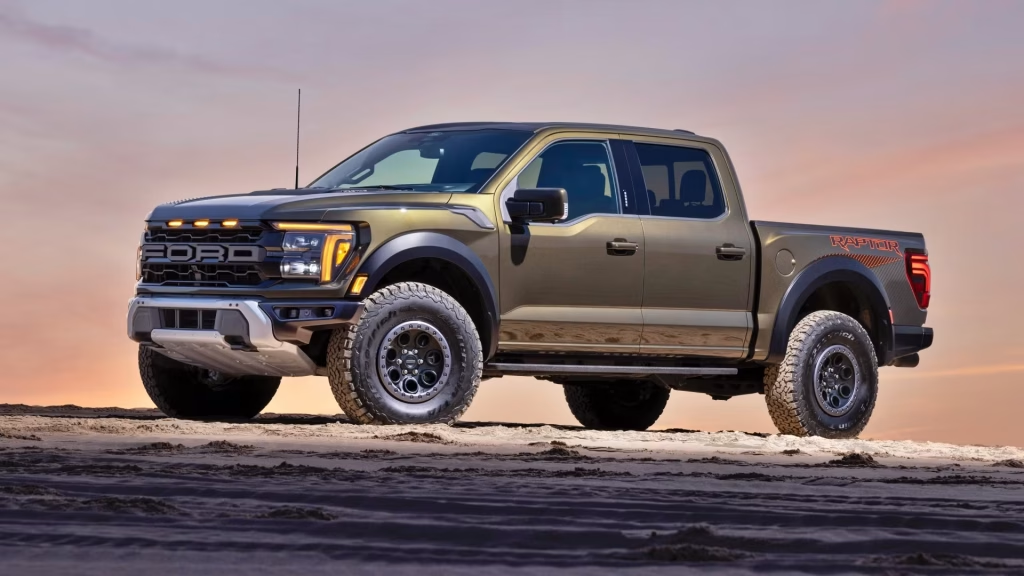
Reviewing the title documentation before bidding is just as important as evaluating the truck’s physical condition.
The F-150 itself is fully legal in Nevada. The prohibition applies only to examples that have received a permanent non-repairable title status, making careful title verification essential before any purchase.
