Automatic transmissions have gained an extraordinary number of ratios over the past two decades. Four- and five-speed automatics were once completely normal, but manufacturers kept adding gears to improve acceleration, fuel economy, refinement, and highway efficiency.
Eight- and nine-speed gearboxes are now common, while a smaller group of production cars reached 10 forward gears, essentially the high-water mark for conventional torque-converter automatics used in modern passenger cars.
More gears do not automatically make a transmission better. What matters is how effectively engineers select the ratios and control shifting. Closely spaced lower gears can keep an engine near its strongest power band during acceleration, while tall ninth and tenth gears reduce engine speed during cruising.
The cars below represent some of the most notable production applications of 10-speed automatics, along with a few historically important examples that helped establish the multi-ratio transmission race.
1. Lexus LC 500
The Lexus LC 500 was one of the cars that helped establish the 10-speed automatic as something more than a transmission for pickups and large luxury vehicles. When Lexus launched its flagship grand-tourer, it paired the naturally aspirated 5.0-liter V8 with a Direct-Shift 10-speed automatic transmission, giving the LC one of the highest forward-gear counts available in a production passenger car.
The transmission was designed to provide unusually quick shifts while retaining the smoothness expected from a Lexus. Ten ratios allow the gearbox to use relatively close spacing during hard acceleration, helping the V8 stay in the upper portion of its rev range. At highway speeds, the upper gears become much taller, reducing engine rpm and improving refinement.
That approach suits the LC particularly well because its V8 develops peak power relatively high in the rev range. Instead of relying on turbocharged low-end torque, the LC encourages drivers to let the engine spin. Having 10 ratios gives the transmission more opportunities to keep the V8 near its strongest operating range without leaving huge gaps between gears.
The current LC 500 remains one of the few luxury coupes still combining a naturally aspirated V8 with this many transmission ratios.
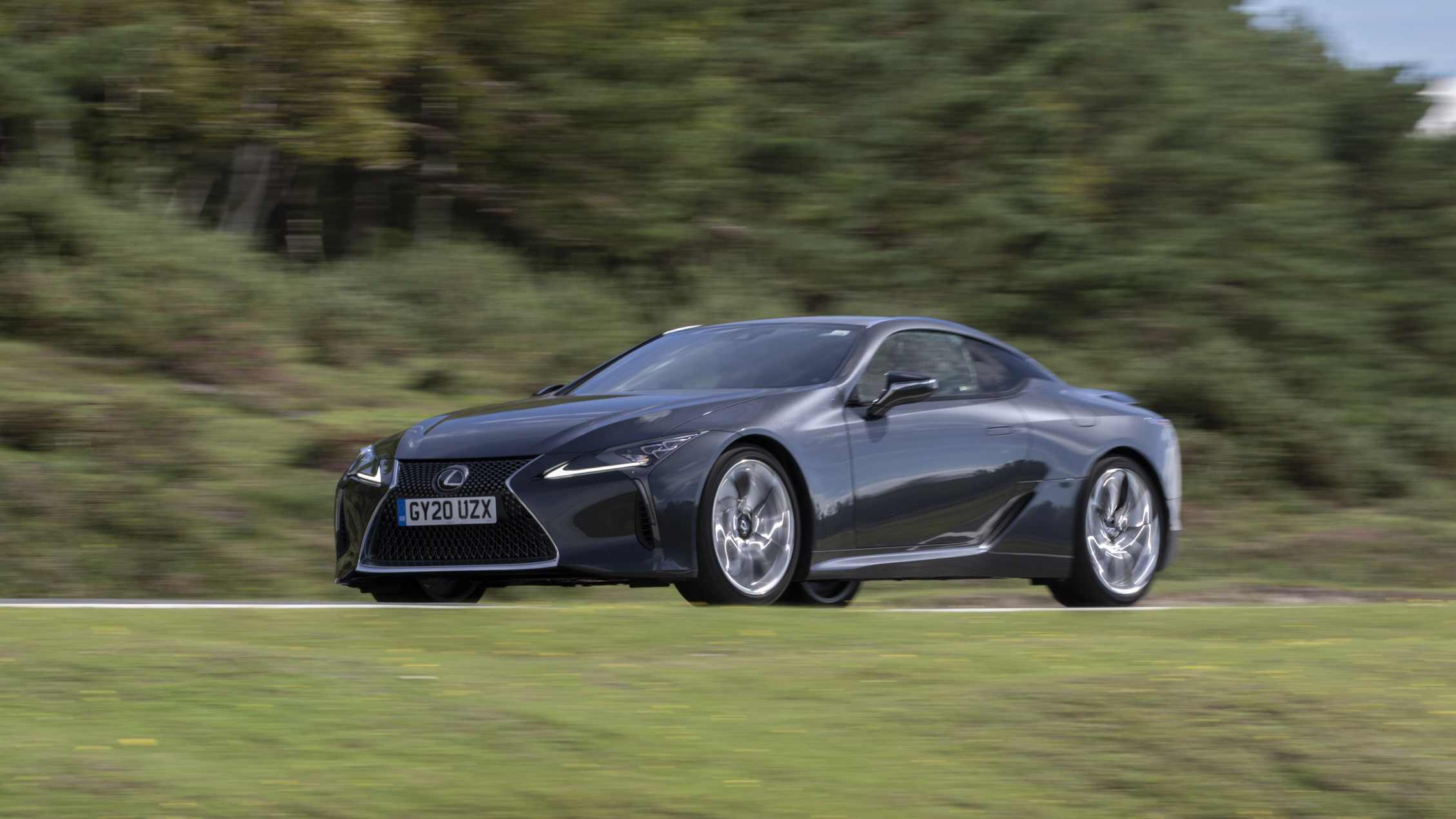
- Transmission: 10-speed Direct-Shift automatic
- Engine type: 5.0-liter naturally aspirated DOHC V8
- Torque: 398 lb-ft
- Horsepower: 471 hp
- Length: Approximately 187.4 inches
- Width: Approximately 75.6 inches
The LC’s gearbox is particularly notable because Lexus managed to make 10 speeds feel appropriate in an emotional grand-tourer rather than simply installing more ratios for fuel-economy numbers. Shifts can be almost imperceptible during relaxed driving and much more aggressive when the car is pushed.
2. Lexus LS 500
The Lexus LS 500 brought the 10-speed automatic into one of the world’s most established flagship luxury sedans. When Lexus redesigned the LS, it replaced the previous naturally aspirated V8 with a twin-turbocharged V6 and matched it to a 10-speed Direct-Shift automatic transmission.
That may sound like an excessive number of gears for a luxury sedan, but the LS illustrates why manufacturers pursued additional ratios. Its twin-turbo engine produces a broad wave of torque, while the transmission can choose among closely spaced gears to keep acceleration smooth and virtually uninterrupted.
The lower ratios are relatively aggressive, helping a large luxury sedan launch with surprising urgency. Once cruising, the gearbox moves into its taller ratios to reduce engine speed and cabin noise. That creates two personalities from the same drivetrain: strong acceleration when demanded and quiet, relaxed highway travel the rest of the time.
Lexus also designed the shift logic so the transmission does not constantly hunt through all 10 gears. The computer evaluates accelerator position, vehicle speed, driving mode, and other conditions to decide whether skipping ratios is more appropriate.
The result is more sophisticated than simply shifting sequentially through first, second, third, and so on every time.
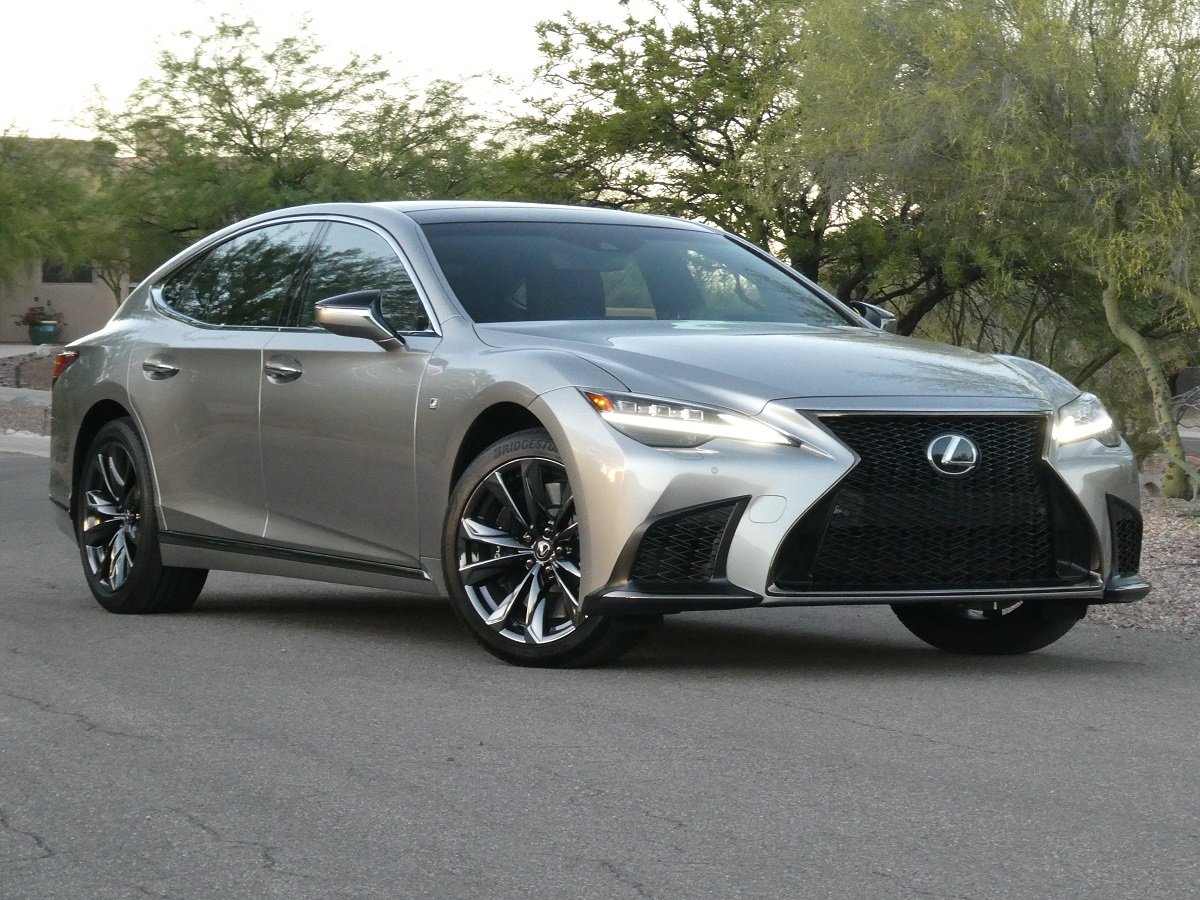
- Transmission: 10-speed Direct-Shift automatic
- Engine type: 3.4-liter twin-turbocharged DOHC V6
- Torque: 442 lb-ft
- Horsepower: 416 hp
- Length: Approximately 206.1 inches
- Width: Approximately 74.8 inches
With 10 forward ratios, the LS 500 matches the highest gear count found in conventional production-car automatics. Its implementation is less about aggressive performance than the LC’s, but the underlying objective is similar: always provide an appropriate ratio without compromising efficiency or refinement.
3. Ford Mustang GT
The Ford Mustang GT helped bring the 10-speed transmission into mainstream American performance cars. Ford’s available 10R80 10-speed automatic transformed the way the Mustang delivered its V8 power, particularly in straight-line acceleration.
A traditional automatic might experience a noticeable drop in engine speed after each upshift. With 10 ratios, the Mustang can keep its 5.0-liter Coyote V8 much closer to the portion of the tachometer where it produces its strongest horsepower. That matters because the Coyote is a relatively high-revving naturally aspirated V8.
The gearbox also uses an exceptionally broad spread between its short first gear and tall tenth. First provides strong multiplication for launching the car, while tenth allows low-rpm interstate cruising.
One of the transmission’s cleverest characteristics is its ability to skip gears. Under light throttle, it does not necessarily move through every ratio sequentially. When accelerating hard, however, it can use more of the intermediate ratios to keep the engine producing maximum performance.
The Mustang retains a manual option, so enthusiasts can choose between traditional involvement and the faster-shifting 10-speed.
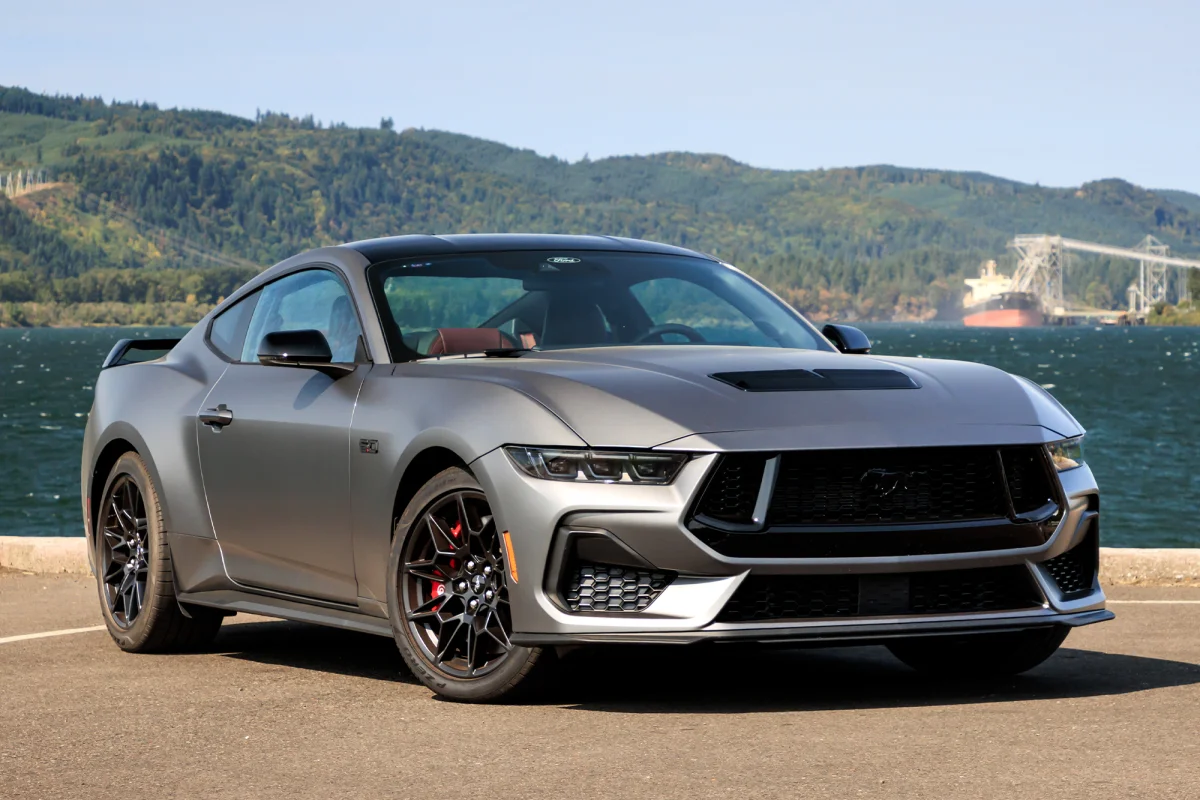
- Transmission: 10-speed SelectShift automatic
- Engine type: 5.0-liter naturally aspirated DOHC V8
- Torque: Approximately 418 lb-ft
- Horsepower: Approximately 480 hp in GT specification
- Length: Approximately 189.4 inches
- Width: Approximately 75.4 inches
The 10-speed Mustang is important because it demonstrates that additional gears are not purely an economy technology. Drag racers quickly discovered that the closely stacked ratios could make automatic Mustangs extremely quick.
Ford effectively used transmission engineering to extract more acceleration from the same basic engine output without resorting to a dramatically shorter final-drive ratio.
4. Ford Mustang Dark Horse
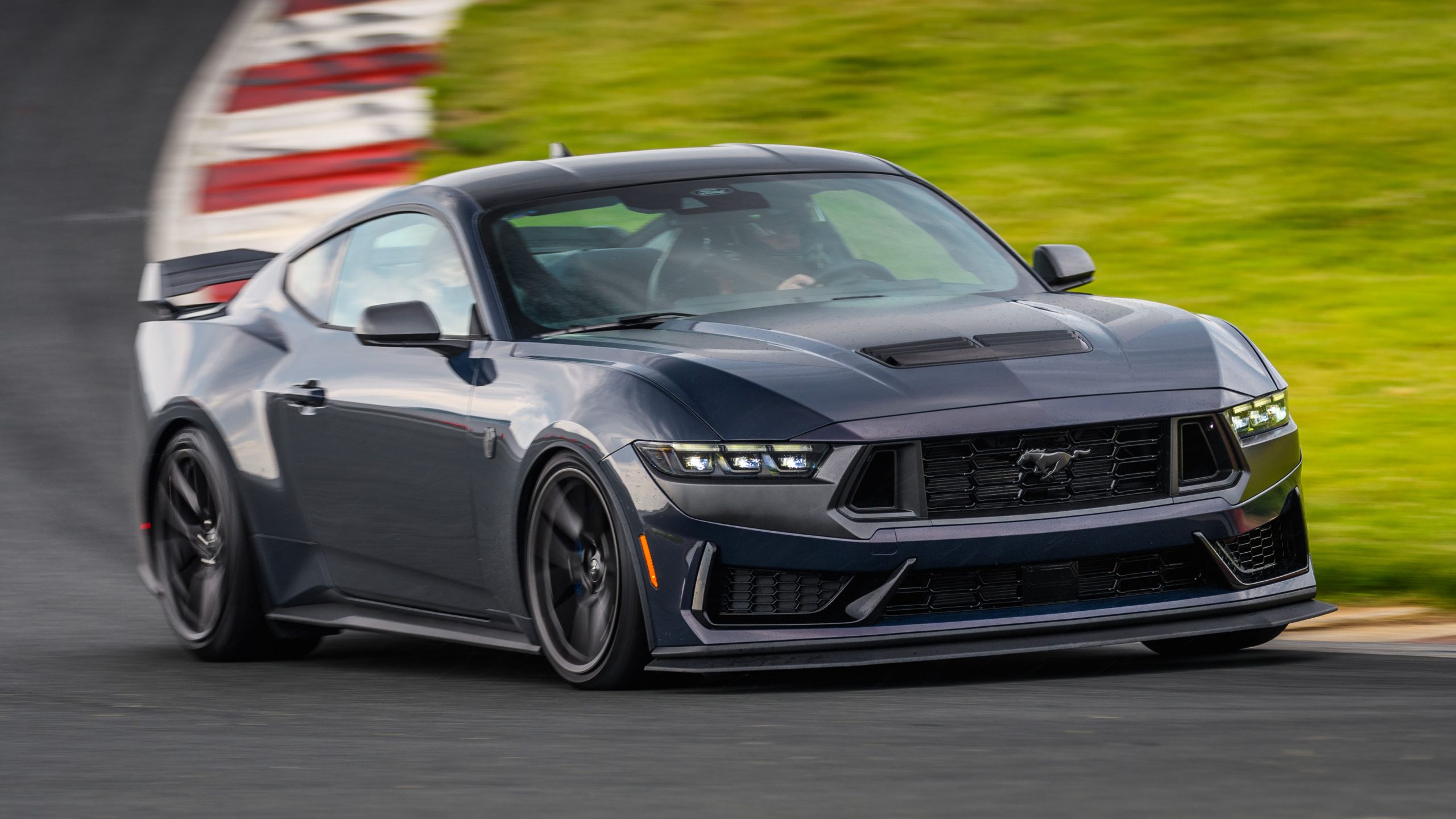
The Mustang Dark Horse uses the same basic 10-speed automatic architecture as the GT but combines it with a more powerful version of Ford’s 5.0-liter Coyote V8 and a chassis aimed more directly at serious performance driving.
Buyers can choose a six-speed manual, but the available 10-speed SelectShift automatic provides the highest forward-gear count in the Mustang lineup. With the Dark Horse producing around 500 horsepower, the gearbox has enough ratios to keep the engine close to its power peak during hard acceleration.
Ten gears also allow engineers to avoid one of the usual compromises in performance-car gearing. Traditionally, choosing short lower gears improves acceleration but makes highway cruising noisy and inefficient. Tall gearing helps cruising but hurts responsiveness. A transmission with such a wide ratio spread can provide both.
In automatic mode, the computer can skip unnecessary gears when conditions allow. Paddle shifters provide manual control when the driver wants to select ratios directly.
The Dark Horse is particularly interesting because 10 forward speeds sound almost contradictory to its track-focused personality. Yet modern control software allows the transmission to behave much more aggressively when the vehicle is placed in performance-oriented modes.
- Transmission: 10-speed SelectShift automatic
- Engine type: 5.0-liter naturally aspirated DOHC V8
- Torque: 418 lb-ft
- Horsepower: 500 hp
- Length: Approximately 189.7 inches
- Width: Approximately 75.5 inches
The manual Dark Horse may appeal more strongly to traditionalists, but the automatic can deliver faster, more consistent shifts.
It represents how far performance automatics have developed: a transmission carrying twice as many forward gears as some sports cars from the 1990s while still responding quickly enough for track use.
5. Chevrolet Camaro SS
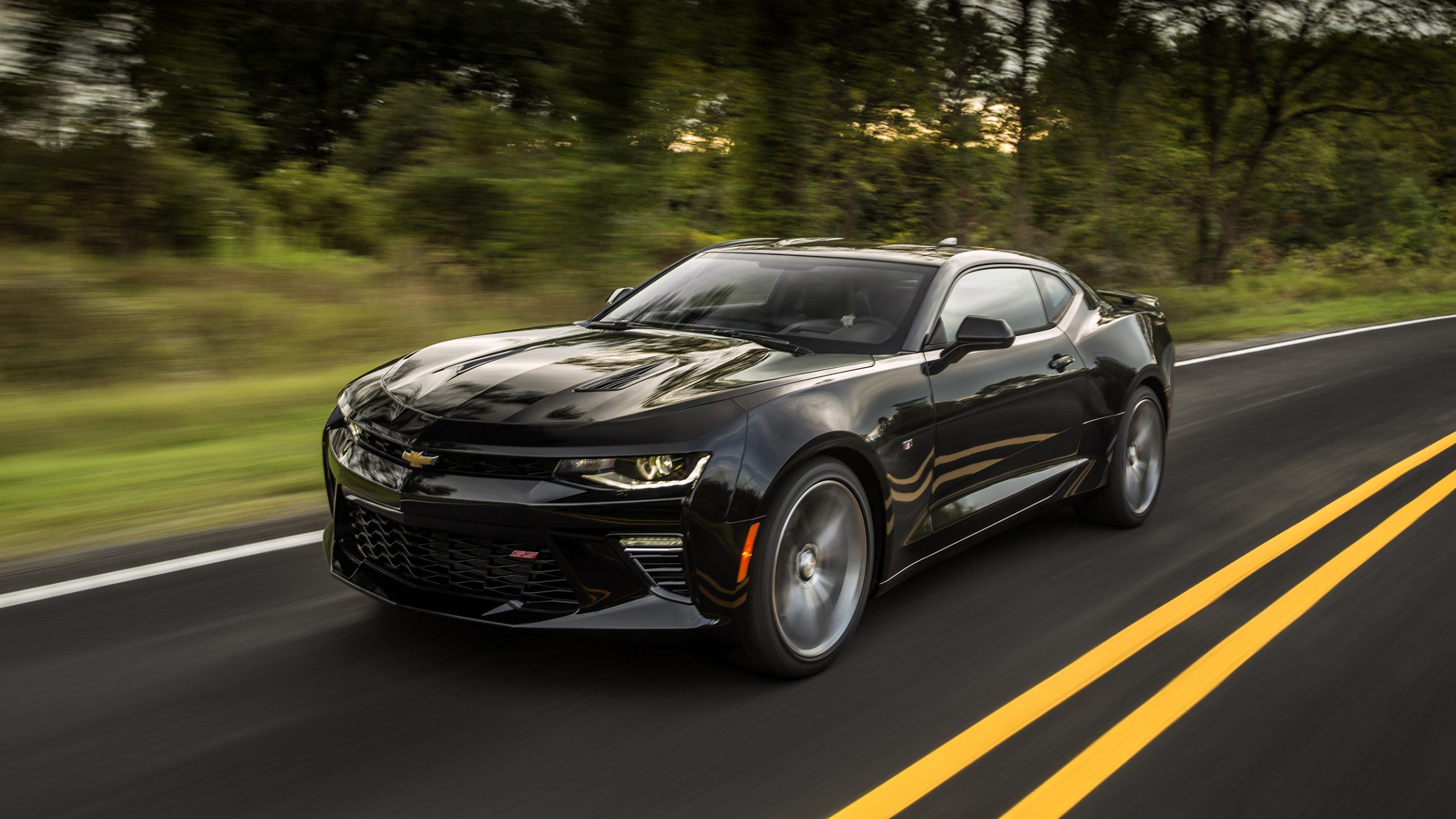
The sixth-generation Chevrolet Camaro SS became another major American application of the 10-speed automatic. Chevrolet eventually offered its naturally aspirated 6.2-liter V8 with the 10L80 10-speed automatic, replacing the earlier eight-speed option in later versions.
The gearbox was developed in the same broad engineering family as Ford’s 10-speed, although each manufacturer calibrated and produced its own versions. Its closely stacked ratios were particularly useful in the Camaro because the LT1 V8 combines strong low-end torque with useful high-rpm power.
Under maximum acceleration, the transmission can make rapid successive shifts without allowing engine speed to fall dramatically. That helps keep the 455-horsepower V8 producing strong acceleration throughout the run.
The upper gears are much less dramatic. Ninth and tenth primarily serve highway cruising, lowering rpm and reducing fuel consumption compared with using a shorter final ratio. Drivers can also control the gearbox manually through steering-wheel paddles, and performance programming changes shift behavior during aggressive driving.
- Transmission: 10-speed automatic
- Engine type: 6.2-liter naturally aspirated OHV V8
- Torque: 455 lb-ft
- Horsepower: 455 hp
- Length: Approximately 188.3 inches
- Width: Approximately 74.7 inches
Although Camaro production ended after the 2024 model year, the 10-speed-equipped SS remains an important milestone in performance-transmission development.
Only a couple of decades earlier, a four-speed automatic was normal in a V8 muscle car. The Camaro SS more than doubled that number while producing faster shifts, stronger acceleration, and better highway efficiency. It illustrates just how quickly automatic transmission technology evolved.
Also read: 5 Cars With Cheap Window Regulators and 5 Over $600
6. Chevrolet Camaro ZL1
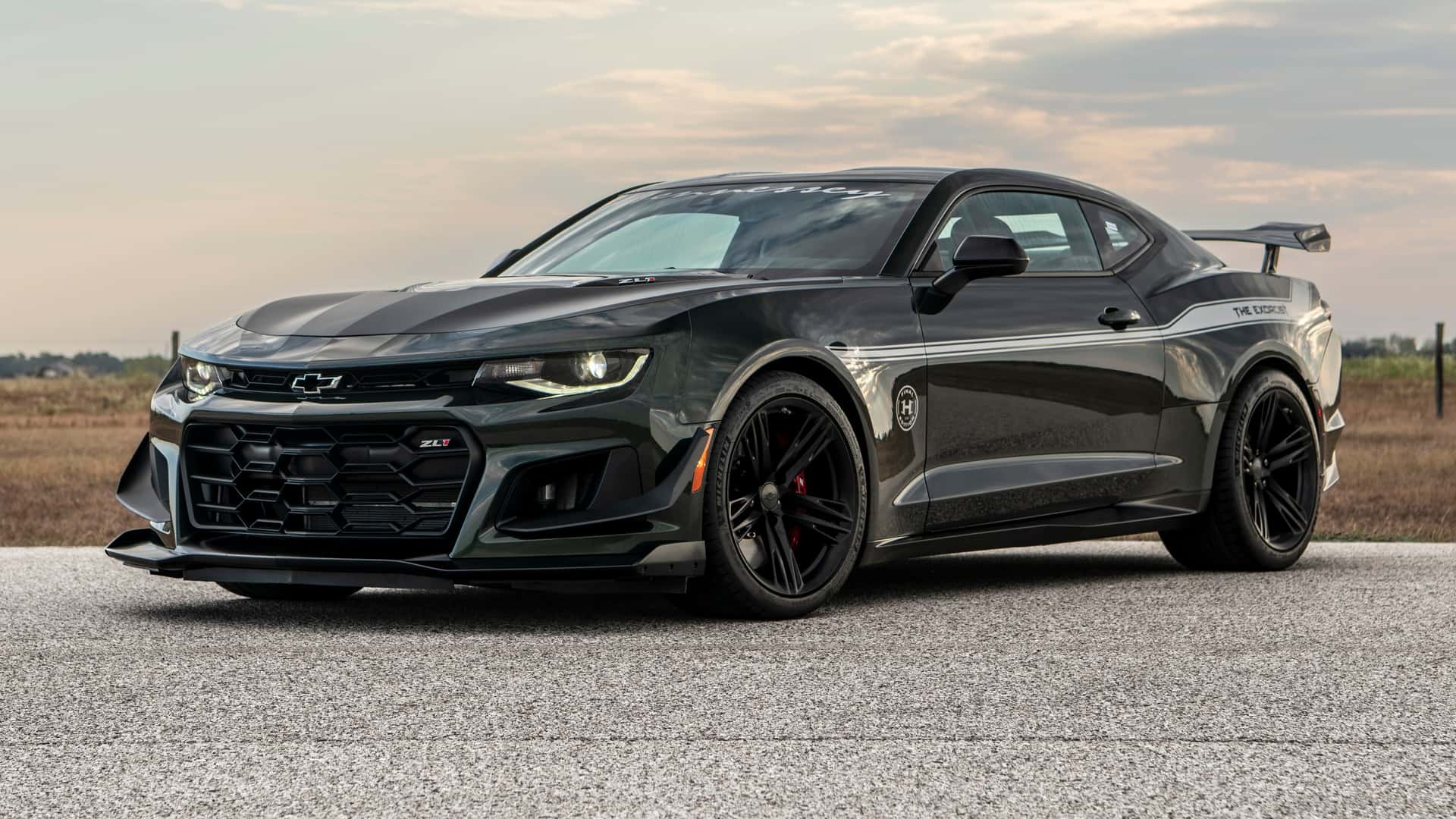
If the Camaro SS demonstrated that a 10-speed could work in a muscle car, the Camaro ZL1 proved the gearbox could cope with supercar-level output. Its available 10L90 10-speed automatic was engineered to handle the enormous torque produced by Chevrolet’s supercharged 6.2-liter LT4 V8.
The engine sends 650 horsepower and 650 lb-ft through the transmission, making the ZL1 one of the most demanding production applications of a 10-speed conventional automatic.
Chevrolet calibrated the transmission for exceptionally aggressive shifting under full throttle. Because there are so many ratios, the supercharged engine can remain near its strongest power range instead of falling far down the tachometer after each gear change.
That proved especially useful in straight-line acceleration and track driving. Automatic shifting also removes the small interruption in power delivery that occurs when a driver operates a conventional clutch.
Yet the same gearbox can settle into ninth or tenth on a highway and make the ZL1 surprisingly relaxed for a 650-horsepower performance car.
- Transmission: 10-speed 10L90 automatic
- Engine type: 6.2-liter supercharged OHV V8
- Torque: 650 lb-ft
- Horsepower: 650 hp
- Length: Approximately 190.2 inches
- Width: Approximately 75 inches
The ZL1’s transmission became notable enough that its shift performance was frequently compared with dual-clutch gearboxes.
A 10-speed torque-converter automatic might not sound exotic beside a seven- or eight-speed DCT, but sheer gear count tells only part of the story. The ZL1 demonstrated how fast a properly calibrated conventional automatic could become. It remains one of the most powerful passenger cars ever sold with 10 forward gears.
7. Honda Accord 2.0T
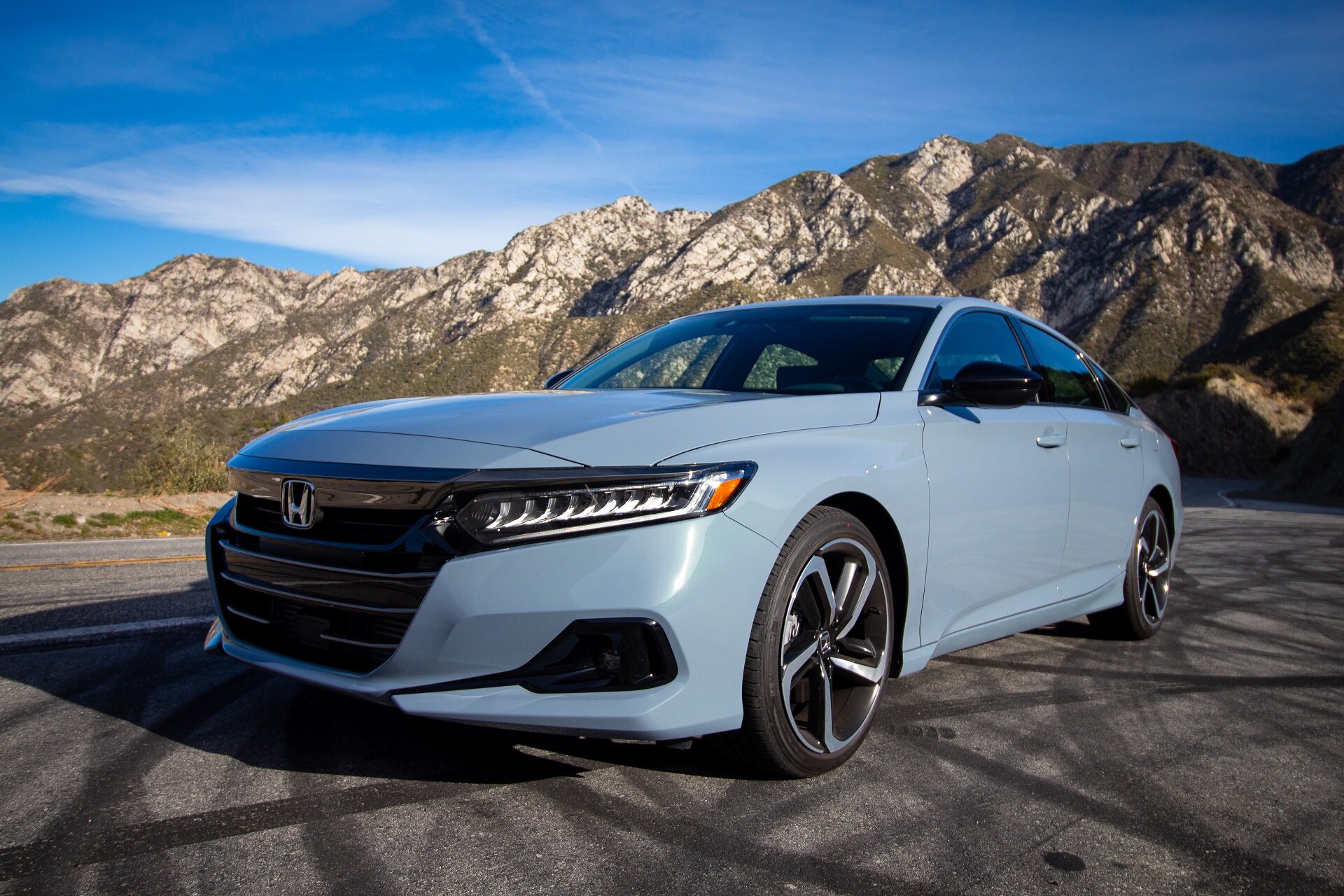
The Honda Accord 2.0T proves that the race toward more gears was not restricted to expensive luxury cars and high-powered V8 coupes. From the tenth-generation Accord’s introduction, Honda paired its stronger 2.0-liter turbocharged four-cylinder with an available 10-speed automatic transmission.
That was remarkable for an ordinary midsize family sedan. At the time, many competitors still used six-, eight-, or continuously variable transmissions.
Honda’s 10-speed was developed internally and used a remarkably wide spread of ratios. Lower gears helped the turbocharged engine accelerate strongly from a stop, while the highest gears reduced engine speed during highway cruising.
The 2.0T’s 273 lb-ft of torque arrives at relatively low engine speed, giving the transmission plenty of flexibility. It does not need to shift constantly to access power, but having 10 ratios allows the control system to select an efficient gear under almost any condition.
Unlike a CVT, the transmission still provides distinct gear changes, something some drivers prefer for a more conventional driving feel.
- Transmission: 10-speed automatic
- Engine type: 2.0-liter turbocharged DOHC inline-four
- Torque: 273 lb-ft
- Horsepower: 252 hp
- Length: Approximately 193 inches for 2022
- Width: Approximately 73.3 inches
Honda discontinued the 2.0T when the next-generation Accord arrived, making these cars particularly interesting on the used market.
The Accord also demonstrates how additional ratios allowed smaller turbo engines to replace larger naturally aspirated engines without sacrificing responsiveness.
A family sedan with 10 forward gears would have sounded excessive only a decade earlier, but Honda showed that the technology could work smoothly enough for everyday commuting.
8. Acura TLX Type S
The Acura TLX Type S brought Honda’s 10-speed automatic technology into a higher-performance luxury sedan. Instead of the Accord’s four-cylinder, the Type S uses a 3.0-liter turbocharged V6 producing 355 horsepower and 354 lb-ft of torque.
Every version sends power through a 10-speed automatic transmission, paired with Acura’s Super Handling All-Wheel Drive system.
The gearbox has been calibrated more aggressively than in Honda’s mainstream family cars. Paddle shifters allow manual control, and performance-oriented driving modes alter shift timing and response.
With 10 ratios available, Acura can provide short lower gearing for acceleration while retaining very tall cruising ratios. That helps a relatively heavy luxury sedan feel responsive without requiring the engine to run at high rpm all the time.
The transmission can also perform rev-matched downshifts, giving the Type S a more performance-focused character during braking and corner entry.
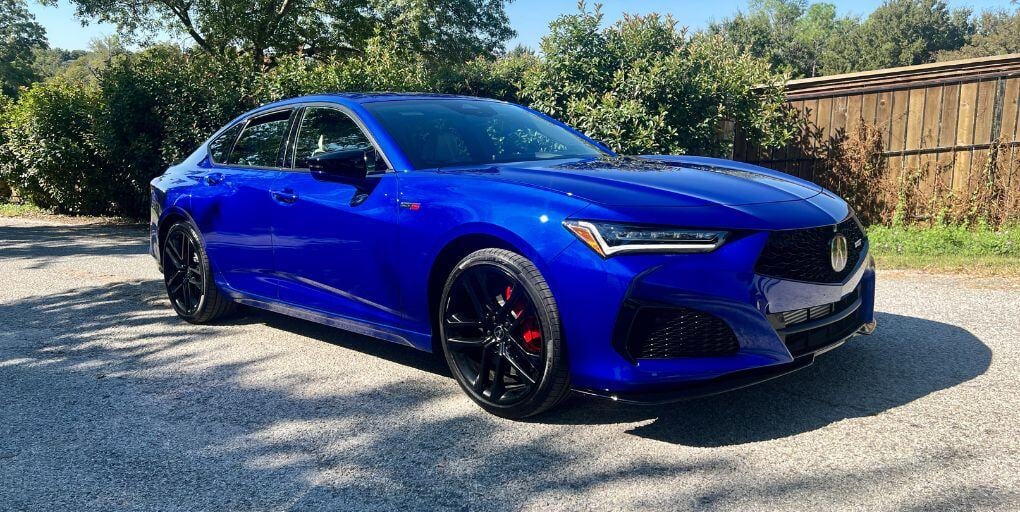
- Transmission: 10-speed automatic with Sequential SportShift
- Engine type: 3.0-liter turbocharged DOHC V6
- Torque: 354 lb-ft
- Horsepower: 355 hp
- Length: Approximately 194.6 inches
- Width: Approximately 75.2 inches
The TLX demonstrates how widespread 10-speed technology became once manufacturers had proven the concept.
Its gearbox has the same number of forward ratios as the transmission behind a 650-horsepower Camaro ZL1, yet it is tuned for a very different purpose. Acura balances performance with everyday refinement, all-weather traction, and luxury-car smoothness.
That adaptability is one reason 10-speed automatics became so appealing. Software and internal calibration can give essentially the same basic idea dramatically different personalities depending on the vehicle.
9. Cadillac CT4-V Blackwing
The Cadillac CT4-V Blackwing combines traditional enthusiast hardware with one of the highest-ratio-count automatic transmissions ever installed in a compact performance sedan.
A six-speed manual is standard, but buyers could choose a 10-speed automatic for faster shifting and easier everyday driving. That automatic is paired with a 3.6-liter twin-turbocharged V6 producing 472 horsepower and 445 lb-ft of torque.
The 10-speed gives Cadillac enormous flexibility in programming. During ordinary driving, shifts can occur smoothly and early, keeping the engine quiet. During performance use, the transmission can hold gears longer and execute rapid downshifts to keep the twin-turbo V6 in its strongest operating range.
Because the engine already has abundant torque, Cadillac does not need all 10 ratios merely to keep the car moving. Instead, the broad spread allows engineers to optimize both acceleration and highway efficiency.
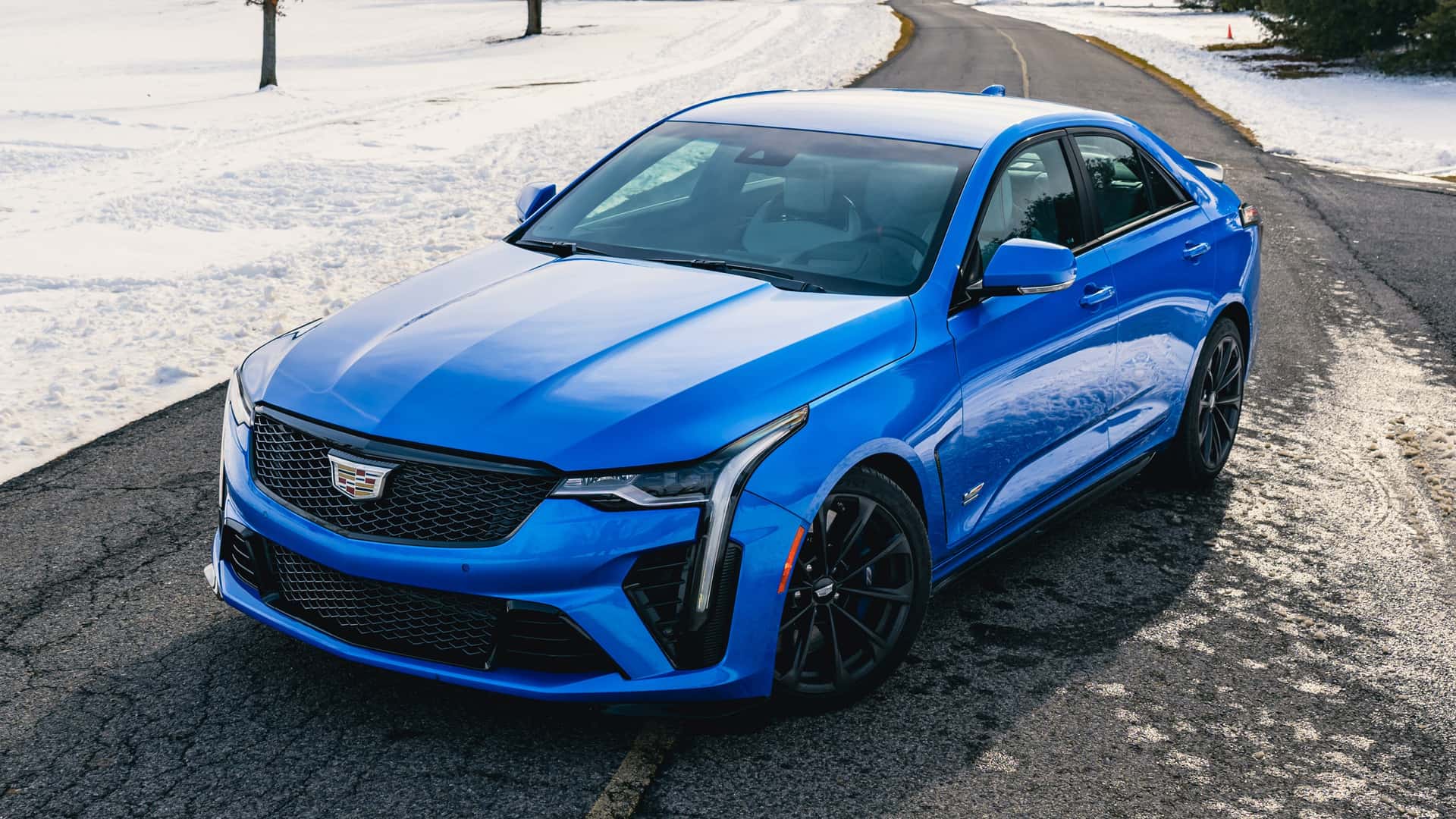
- Transmission: 10-speed automatic
- Engine type: 3.6-liter twin-turbocharged DOHC V6
- Torque: 445 lb-ft
- Horsepower: 472 hp
- Length: Approximately 187.2 inches
- Width: Approximately 71.5 inches
The Blackwing’s availability with both a six-speed manual and 10-speed automatic makes it a fascinating comparison between two eras of performance-car thinking. The manual offers direct involvement and considerably fewer ratios. The automatic nearly doubles the gear count and can shift much faster than a human-operated clutch.
Neither approach is inherently superior for every driver, but the 10-speed version demonstrates the sophistication modern automatics have reached. It delivers one of the highest gear counts available in a production passenger sedan without sacrificing serious track capability.
10. Cadillac CT5-V Blackwing
The Cadillac CT5-V Blackwing may be the ultimate example of a 10-speed automatic used in a traditional front-engine performance sedan. Its supercharged 6.2-liter V8 produces enormous output, yet Cadillac still offers a conventional torque-converter 10-speed automatic alongside the standard six-speed manual.
In mainstream versions, the Blackwing’s V8 has produced 668 horsepower and 659 lb-ft of torque, while newer special versions have pushed output even higher. The automatic therefore has to withstand tremendous loads while delivering both luxury-car refinement and track-ready shift behavior.
Closely spaced ratios help the supercharged engine stay deep in its power band during hard acceleration. Yet the huge torque output means the transmission can also skip gears when the driver is merely cruising.
The result is a car that can perform savage full-throttle shifts and then settle into a quiet tenth gear on the freeway.
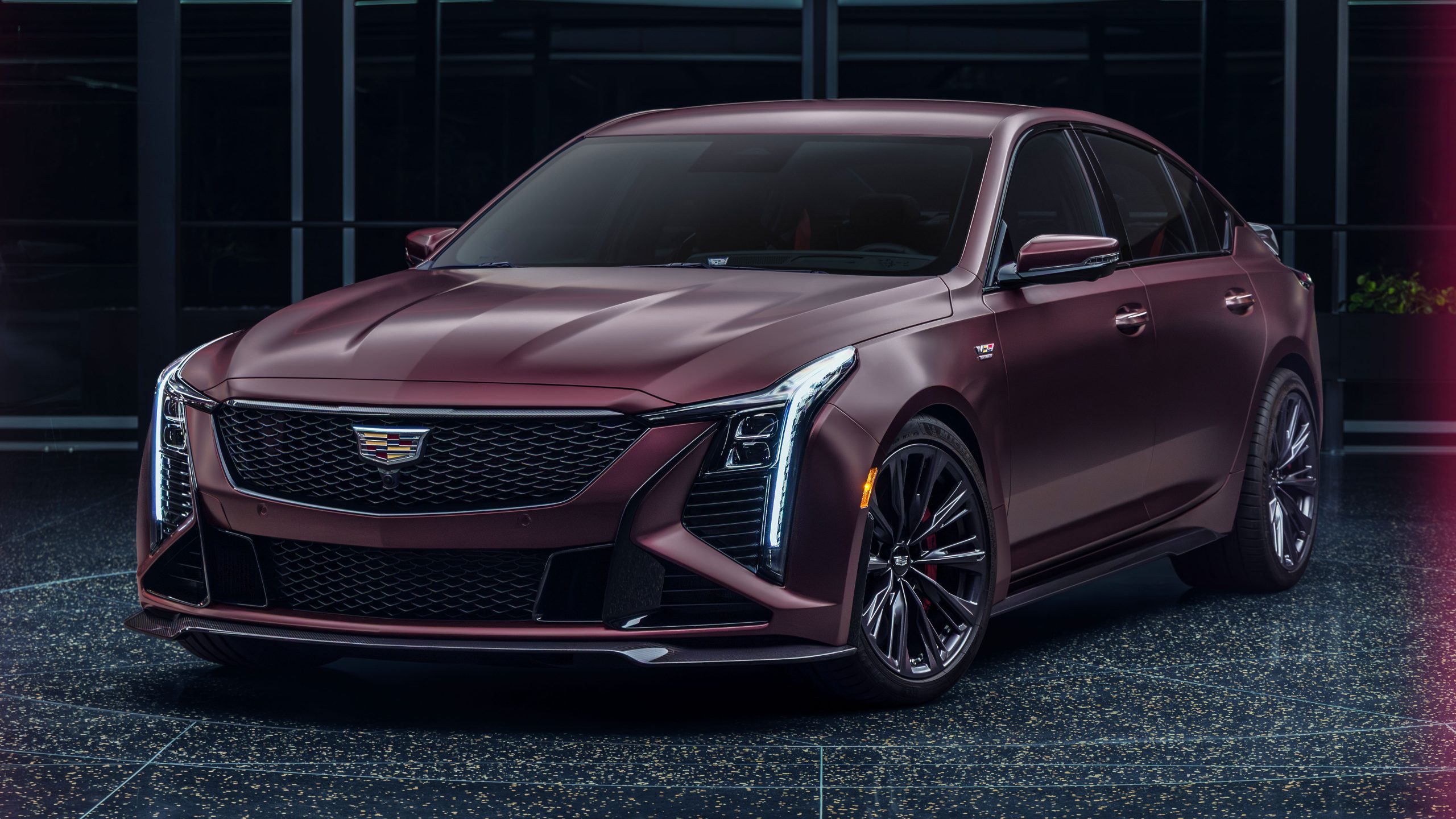
- Transmission: 10-speed automatic
- Engine type: 6.2-liter supercharged OHV V8
- Torque: Approximately 659 lb-ft in standard Blackwing specification
- Horsepower: Approximately 668 hp in standard Blackwing specification
- Length: Approximately 194.9 inches
- Width: Approximately 74.1 inches
The CT5-V Blackwing represents the practical ceiling the industry has reached with conventional production-car automatics. Manufacturers have patented or investigated transmissions with even more ratios, but 10 forward gears became the effective maximum in mainstream production passenger cars.
Beyond that point, engineers increasingly turned toward dual-clutch transmissions, hybrids, CVTs, and electric drivetrains rather than simply adding an eleventh or twelfth physical forward gear.
That makes the Blackwing’s 10-speed one of the final and most spectacular products of the automotive industry’s multi-ratio transmission race.
Also read: 10 Cars Holding Location History No Owner Can Erase