
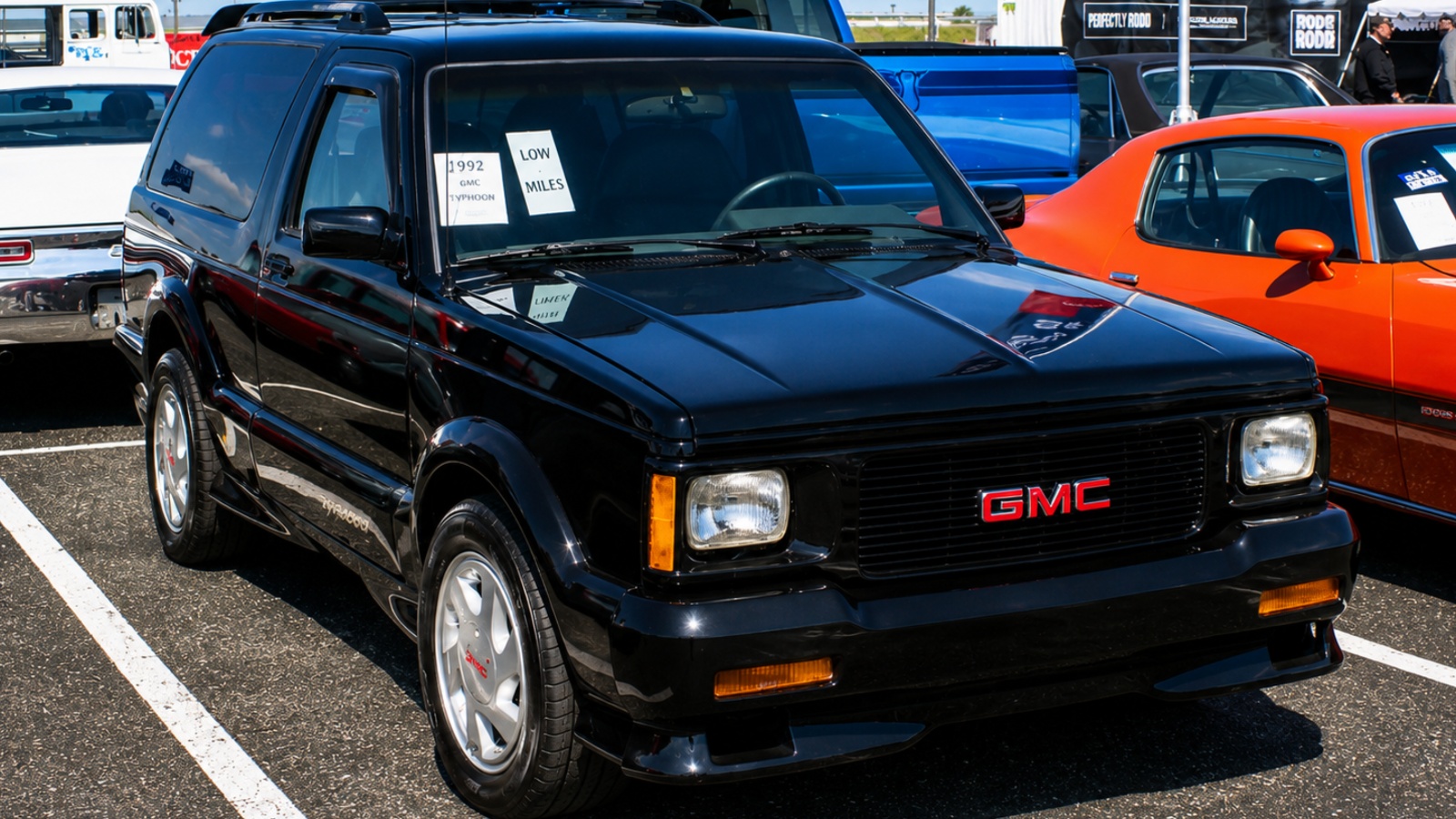
Nobody expected a boxy SUV wearing a GMC badge to embarrass one of Italy’s most respected sports car brands, yet that’s exactly what happened in the early 1990s. The GMC Typhoon, built on the humble Jimmy platform, packed a turbocharged V6 and all-wheel drive into a package that outran a Ferrari 348ts in independent testing.
It sold for a fraction of the Ferrari’s price, wore a plain SUV body, and still walked away faster in a straight line. Decades later, the story remains one of the most surprising chapters in American automotive history, proving that raw engineering sometimes matters more than a badge on the hood.
The Numbers That Shocked Car and Driver
Few SUVs from the 1990s could match the speed of the GMC Typhoon. During testing by Car and Driver, the performance figures showed that this practical-looking SUV could challenge some of the fastest cars of its time. The Typhoon reached 60 mph in just 5.3 seconds, beating the Ferrari’s recorded 6.0-second time.
Its acceleration remained impressive as the speed increased. Car and Driver recorded 16.2 seconds for the run from zero to 100 mph, while reaching 120 mph took exactly 40 seconds. These numbers were remarkable for an SUV designed to carry passengers and handle everyday driving rather than compete with exotic sports cars.
The quarter-mile results made the comparison even more surprising. The Typhoon completed the distance in 14.1 seconds at 93 mph, while the Ferrari needed 14.5 seconds and reached a higher trap speed of 99 mph. Although the Ferrari was faster at the finish, the GMC had already gained an early advantage.
For years, automotive publications continued to mention the Typhoon when discussing unusually quick SUVs. Its performance showed what could happen when engineers combined a lightweight body with a turbocharged engine and all-wheel drive. The result was a family-friendly vehicle with acceleration that could embarrass far more expensive sports cars.
Under the Hood of a Turbocharged Legend
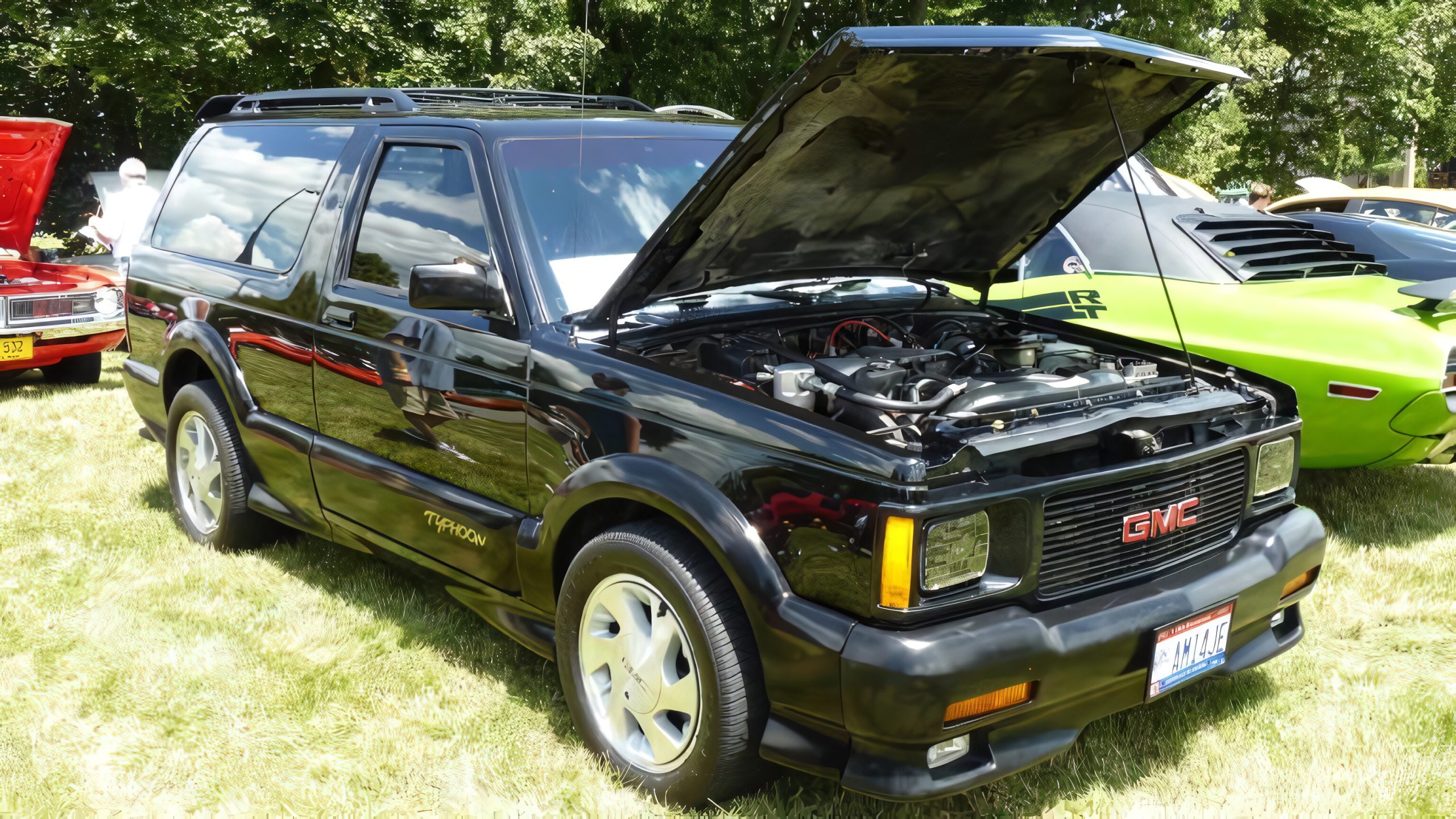
The GMC Typhoon’s impressive performance came from a carefully modified powertrain rather than simple engine tuning. Under the bonnet was a 4.3-litre V6 fitted with a Mitsubishi TD06-17C turbocharger and a Garrett water-to-air intercooler.
The engine started with the Vortec unit used in the regular GMC Jimmy, but engineers made several changes to handle the extra power produced by turbocharging.
Among the upgrades were revised intake and exhaust manifolds, an improved fuel system, and stronger internal components designed to cope with increased boost pressure and torque. These changes allowed the engine to produce far more power than the standard version while maintaining the strength needed for demanding driving.
Another advantage was the standard all-wheel-drive system. It helped the Typhoon put its power onto the road more effectively, especially during hard acceleration, by providing better traction and reducing wheelspin. That made a major difference when launching the SUV from a standstill.
Power was sent through a four-speed automatic transmission, which kept the vehicle easy to drive in normal traffic. This combination gave the Typhoon a rare balance of everyday practicality and serious performance.
What looked like a conventional compact SUV was actually equipped with a turbocharged powertrain and all-wheel drive capable of challenging much more expensive performance cars. Its engineering made the Typhoon one of the quickest SUVs of its era.
Also Read: 10 Hidden Features in the GMC Yukon That Many Owners Miss
Beating a Ferrari 348 on the Drag Strip
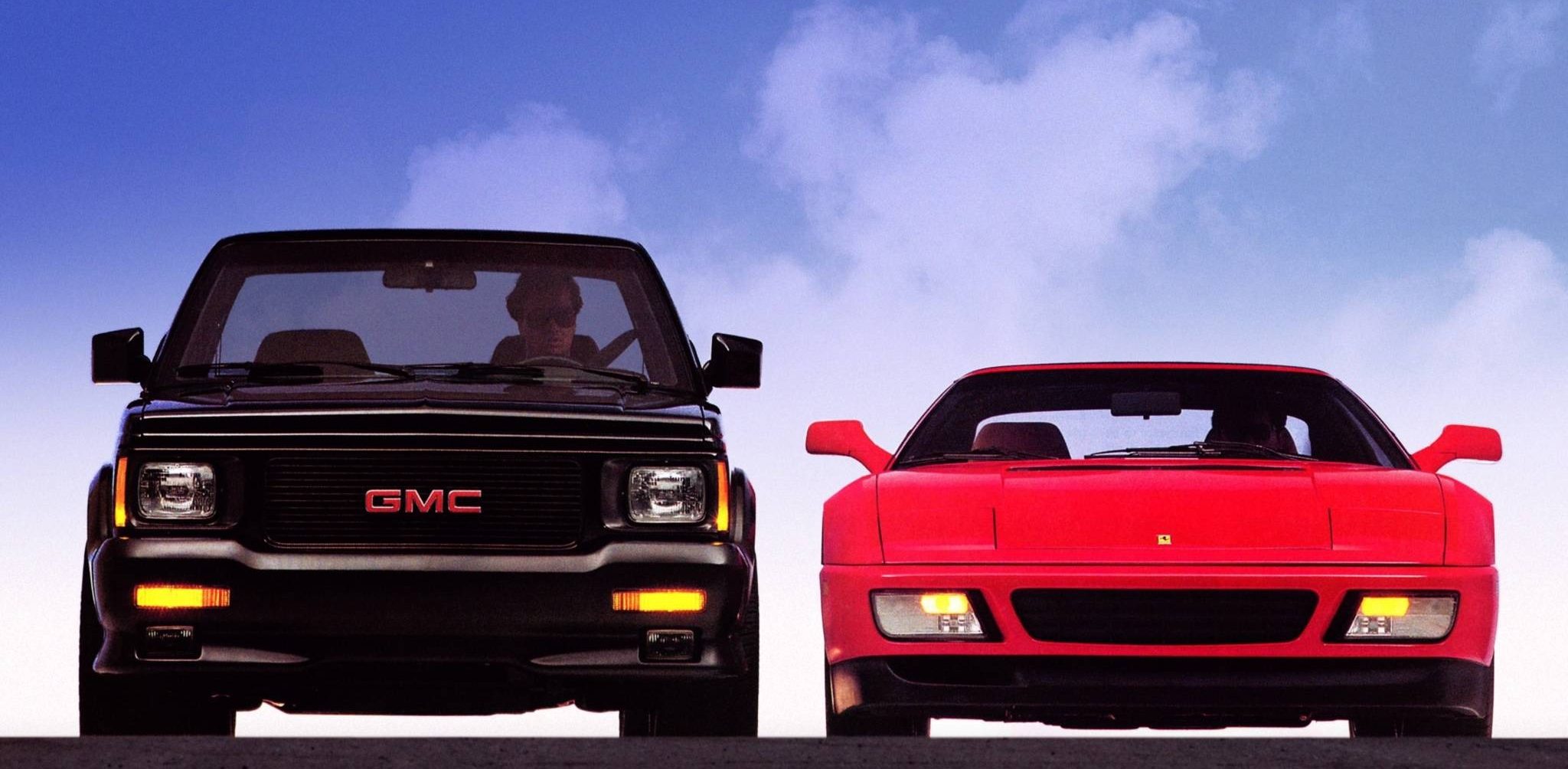
The matchup against the 348ts wasn’t a one-off fluke, either. GMC’s related pickup, the Syclone, had already made headlines the year before facing the same Italian rival.
Car and Driver’s comparison of the Syclone and a Ferrari 348 became one of the most talked-about moments among enthusiasts, whether or not they cared about trucks. Independent runs recorded 0-60 mph times in the mid-four-second range for the Syclone, with quarter-mile passes landing in the low 13-second bracket.
Since the Typhoon shared its drivetrain with the Syclone, later testing simply confirmed what enthusiasts already suspected: this was no marketing gimmick. Multiple outlets ran their own tests across the following years, and results stayed consistent within a narrow range.
Even Motor Trend’s independent testing lined up closely with Car and Driver’s original figures, giving the story staying power rather than letting it fade as an isolated claim.
Why the Typhoon’s Handling Couldn’t Match Its Speed
Straight-line speed told only part of the story, though, and GMC’s engineers never pretended otherwise. While the Typhoon had the Ferrari 348 beat in the straights, it was no match for it in the corners, since it remained a relatively heavy body-on-frame truck whose high center of gravity led to dramatic and sometimes scary handling traits once the road turned twisty.
Braking performance reflected similar compromises. The Typhoon’s cornering grip measured a modest 0.79 g, and its stopping distance from 70 mph ran a longish 185 feet, numbers that lagged behind genuine sports cars of the era despite the strong straight-line performance.
Weight played a role, too, since the Typhoon weighed more than its Syclone sibling. These trade-offs never surprised anyone who understood what GMC had actually built: a practical SUV chassis pushed to its limits, not a purpose-built sports car with a compromised interior. The imperfections only made the achievement more impressive in hindsight.
Also Read: 10 Hidden Features in the GMC Yukon
A Rare Collectible Worth More Than New
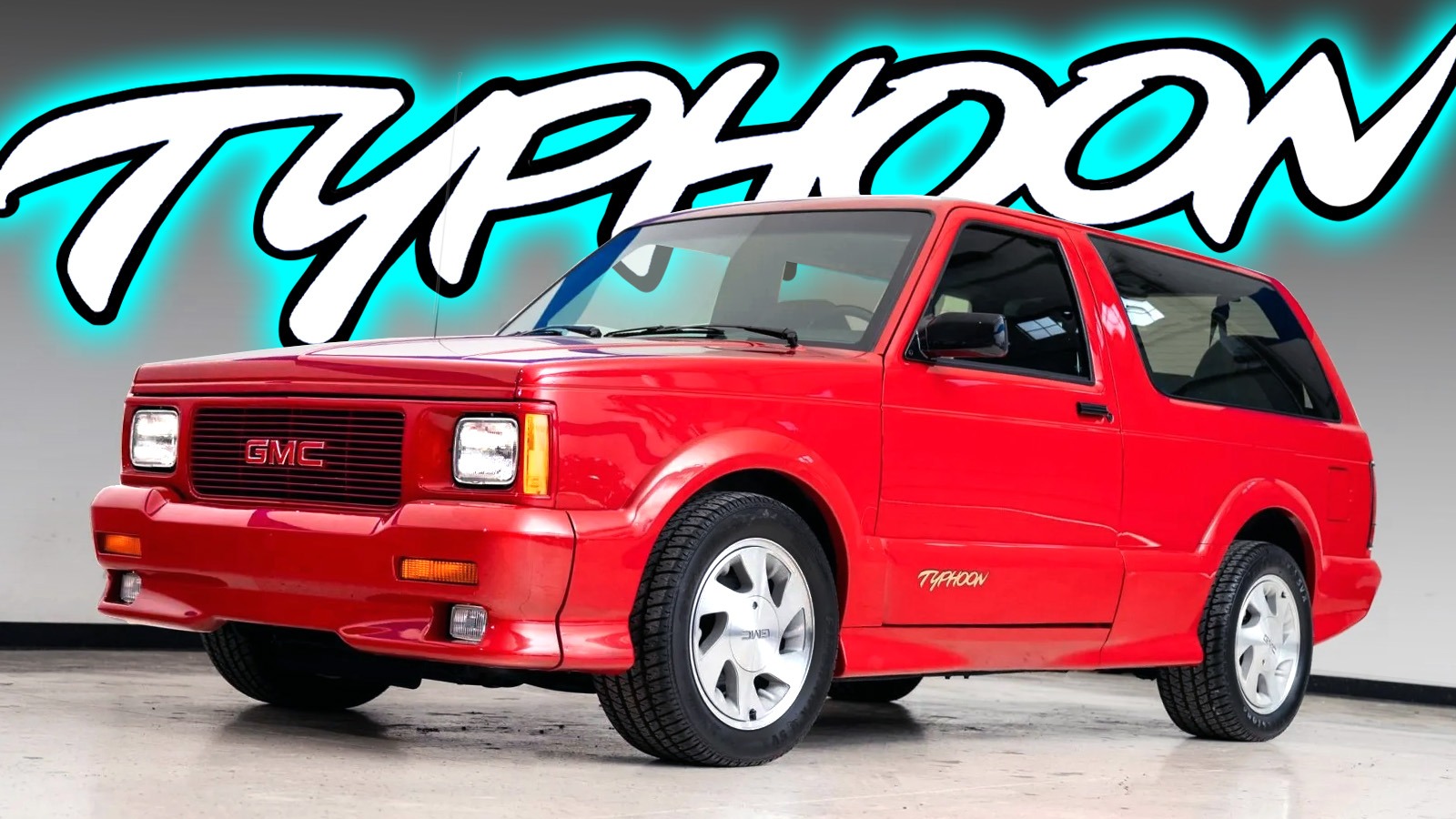
Production numbers stayed remarkably low throughout the Typhoon’s brief run. Only 4,967 Typhoons left GMC’s factory, with 2,497 built in 1992 and 2,200 in 1993, making surviving examples genuinely scarce today.
That scarcity, combined with the SUV’s unmatched performance story, has pushed collector prices dramatically upward. Recent sales have seen Typhoons sell for more than $100,000, a staggering sum considering the original sticker price started at $29,530, equivalent to roughly $57,000 today.
Buyers chasing this piece of automotive history aren’t just paying for nostalgia. They’re buying into a genuine engineering milestone that predates the modern performance SUV segment by decades.
Modern high-performance SUVs, from German sport utilities to American muscle trucks, can trace part of their legacy to what GMC demonstrated in 1992. The brand showed that a practical family vehicle could deliver sports-car levels of performance, creating a formula that would remain memorable with enthusiasts for decades.
