
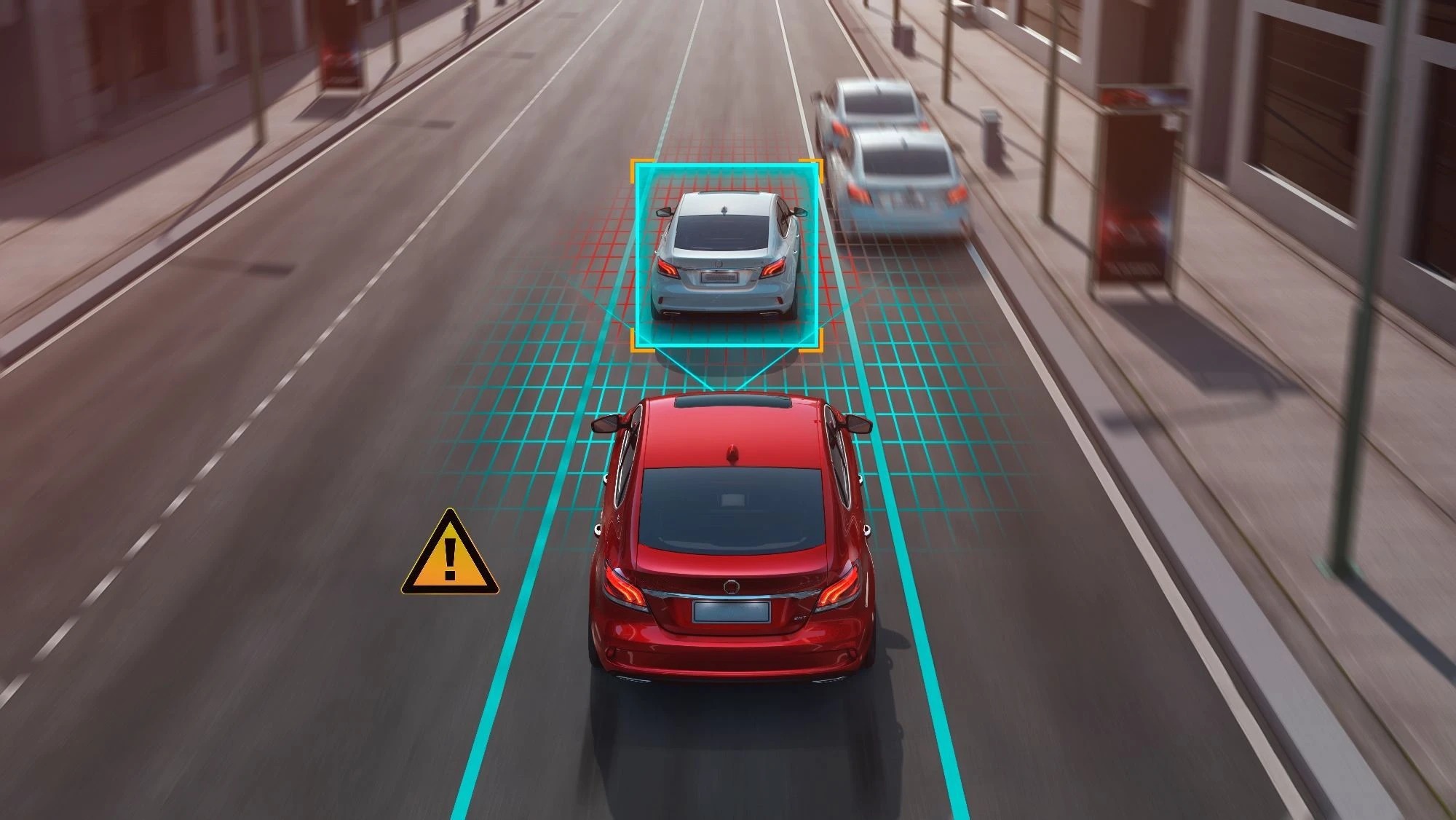
Every new car sold in America is about to gain a skill most drivers already wish it had: knowing when to stop on its own. Starting in September 2029, automatic emergency braking will no longer be a fancy option reserved for luxury trims. It becomes a legal requirement for nearly every passenger car and light truck sold in the country.
Federal regulators expect this single rule to save hundreds of lives every year and prevent tens of thousands of injuries. Whether you’re shopping for a car soon or just curious about what’s coming, this mandate is about to change what “standard equipment” means for good.
What Is The Rule Behind the Deadline?
FMVSS 127 was the result of several years of government action, research, and preparation rather than a rule created suddenly. The National Highway Traffic Safety Administration issued the Federal Motor Vehicle Safety Standard in May 2024, creating performance requirements for automatic emergency braking systems in light vehicles.
Automakers were given until September 1, 2029, to meet the new requirements and equip their vehicles with crash avoidance technology that can help reduce the severity of collisions. The roots of the rule go back to federal legislation approved years earlier.
The Bipartisan Infrastructure Law, signed into law in November 2021, directed the Department of Transportation to establish minimum performance standards for crash avoidance systems. The law also required officials to determine when those standards would take effect and whether manufacturers would receive a phase-in period to meet them.
Before the requirements became official, regulators spent years collecting public feedback, reviewing research, and examining testing data. That lengthy process gave government officials more information to use when developing the final standard.
FMVSS 127 also supports the Department of Transportation’s National Roadway Safety Strategy, which was introduced in 2022 to help reduce traffic deaths and serious injuries across the country. A legislative requirement has now become a firm deadline for automakers.
Every company selling light vehicles in the United States must meet the standard, regardless of the vehicle’s brand, size, or price.
What Every New Car Must Do
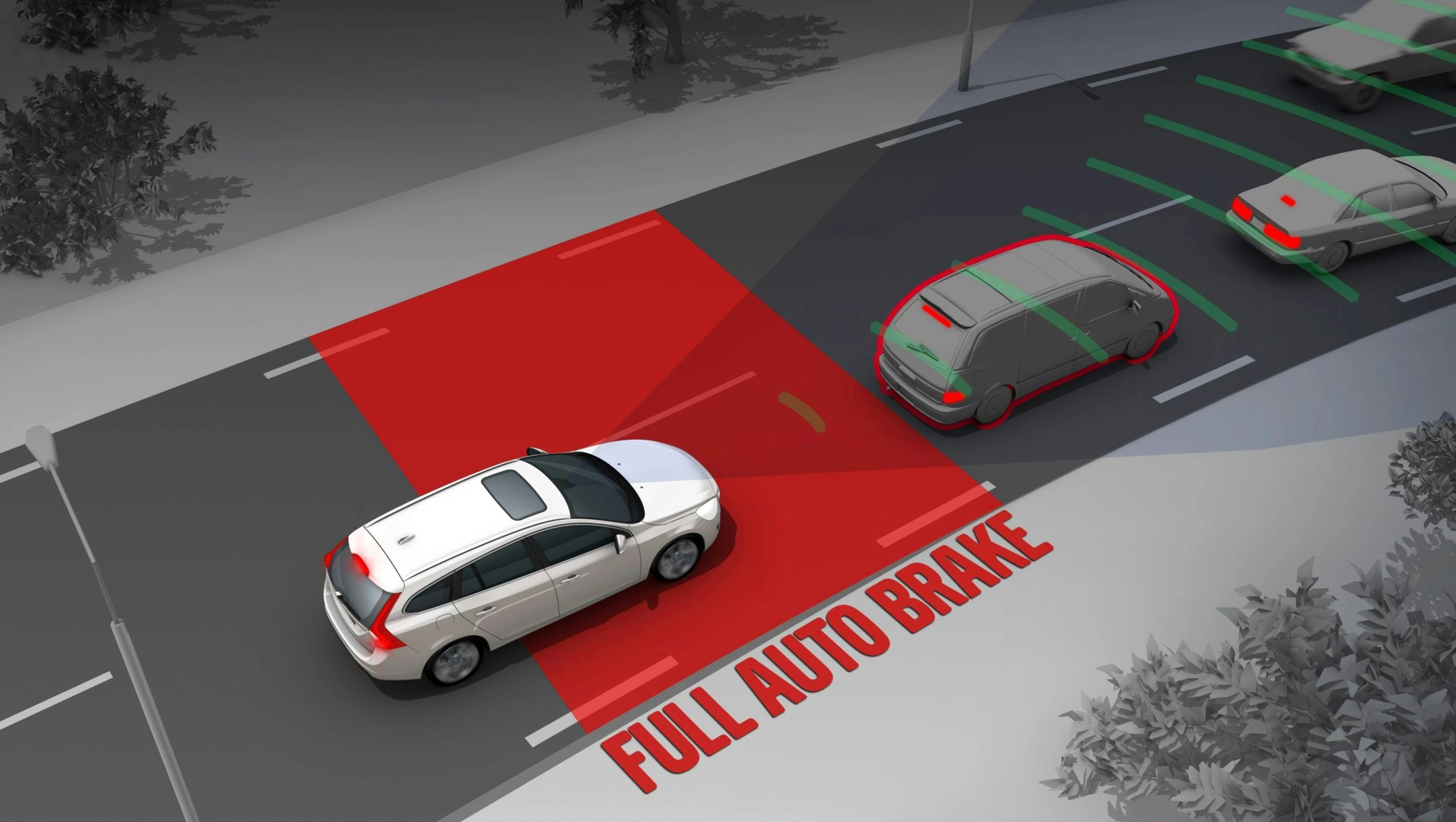
The technical bar set by this standard is genuinely demanding, not just symbolic. The final rule requires cars to stop and avoid contact with a vehicle in front of them at speeds up to 62 mph, while AEB systems must also detect and avoid contact with pedestrians during both day and night conditions at speeds up to 40 mph.
Braking performance requirements extend even further under certain conditions. The standard requires that the system apply the brakes automatically up to 90 mph when a collision with a lead vehicle is imminent, and up to 45 mph when a pedestrian is detected.
Warning systems matter just as much as the braking itself. Vehicles must provide the driver with an auditory and visual forward collision warning at any speed above 6.2 mph and below 90.1 mph whenever a collision with a lead vehicle or pedestrian appears imminent.
Together, these requirements push automatic braking technology far beyond the basic systems many drivers have experienced in current vehicles equipped with driver assistance features.
Also Read: 8 Cars That Failed Automatic Braking

Who Will Get Extra Time to Comply?
Not every manufacturer faces the identical deadline, and that distinction matters for anyone tracking which vehicles will qualify first. Compliance with FMVSS 127 is required for all vehicles by September 1, 2029, though vehicles produced by small-volume manufacturers, final-stage manufacturers, and alterers must be equipped with a compliant system by September 1, 2030.
This extra year recognizes a practical reality: smaller manufacturers simply don’t have the same engineering resources or production scale as major automakers. <cite name=”24″>NHTSA added more lead time from the original proposal and eliminated the previously proposed phase-in approach, meaning compliance arrives as a single deadline rather than a gradual rollout across model years.
</cite> That decision simplifies things for consumers, since there won’t be a confusing stretch of years where some trims of the same model comply and others don’t. Shoppers browsing dealer lots after September 2029 can expect every mainstream vehicle to include the technology, with smaller specialty and low-volume brands catching up roughly twelve months later under their extended compliance window.
Why Regulators Pushed This Through
Numbers rarely tell an emotional story, but these ones are hard to ignore. NHTSA projects that FMVSS 127 will save at least 360 lives annually and prevent at least 24,000 injuries every year once fully implemented across the vehicle fleet.
Rear-end collisions and pedestrian crashes represent two of the most preventable categories of traffic incidents on American roads, and regulators built this standard specifically around addressing both.
The National Roadway Safety Strategy adopts a safe system approach, building multiple layers of protection through safer roads, safer people, safer vehicles, safer speeds, and better post-crash care. Automatic braking fits squarely into that safer-vehicles layer, functioning as a mechanical backup for the moments when human reaction time simply isn’t fast enough.
Drivers get distracted. Pedestrians step out unexpectedly. Traffic stops suddenly on the highway. This rule assumes those moments will keep happening no matter how careful people try to be, and it builds a technological safety net specifically for when human attention fails.
Also Read: 8 Cars With the Shortest 60-to-0 Braking Distance

The Road to Implementation Hasn’t Been Smooth
Getting from a finalized rule to actual compliance has involved more turbulence than the announcement suggested. Subsequent regulatory action, litigation, and a freeze imposed by the Trump Administration have left automakers in limbo as to whether and when this rule will take effect and in what form.
Legal challenges and shifting political priorities have created genuine uncertainty around a deadline that once looked locked in place. Without further action, however, the September 2029 deadline set by NHTSA still looms large over the entire industry.
Manufacturers have had to plan engineering timelines around a moving regulatory target, which isn’t an easy position for companies that need years of lead time to redesign vehicle platforms. Body shops and repair facilities face their own compliance considerations too.
Alterers and other businesses that modify vehicles must not create noncompliance with FMVSS 127, even though the core rulemaking focuses primarily on manufacturers themselves. Whether the deadline holds exactly as written or shifts again before 2029 arrives, the direction of travel remains clear: automatic braking is becoming permanent, standard equipment across the entire American auto industry.
