

Walking into a dealership with cash in hand feels like the ultimate power move. No loan, no interest, no financing games, just a clean transaction, right? Not exactly. Dealerships built their business models around making money from every type of buyer, including the ones who skip financing altogether.
Paying cash removes one revenue stream, but it doesn’t close the door on profit. Smart dealers simply move their focus to other parts of the deal. If you’re planning to pay cash for your next car, understanding these tactics puts you in a much stronger position at the negotiating table. Here are eight ways a dealership can still walk away with a healthy profit, even when there’s no loan involved.
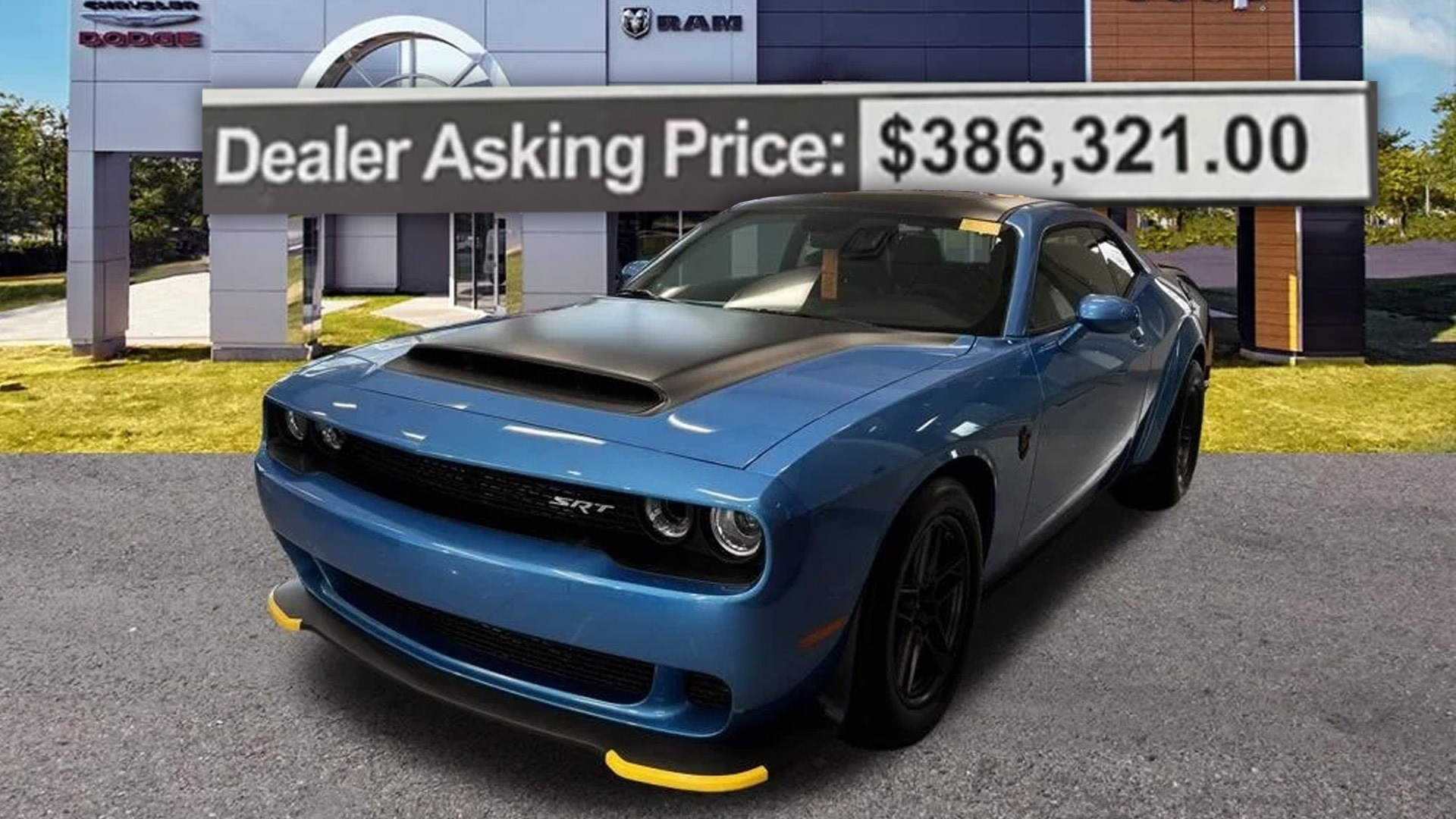
1. Vehicle Markup and Dealer “Pack”
Every car sold has a starting point that dealerships rarely advertise: their effective cost. This number isn’t always the invoice price you might find online. Many dealerships use an internal accounting tool called a “pack,” which adds a set amount to the true cost of the vehicle before calculating gross profit.
Think of it as a cushion built into the books before any negotiation even begins. Here’s the tricky part. A pack usually isn’t a line-item fee that shows up on your paperwork.
It lives behind the scenes, adjusting how much profit a salesperson appears to make on paper, which affects commission structures and internal reporting. The buyer never sees it directly, but its existence means the dealership’s real cost floor sits lower than the number thrown around during negotiations.
This matters because cash buyers often assume that avoiding financing means avoiding markup altogether. That’s simply not true. The vehicle’s selling price compared to its actual cost remains one of the biggest profit centers regardless of how you’re paying. A dealer earns front-end profit anytime the price paid exceeds that internal cost, package included.
The takeaway for shoppers is straightforward: research the market value of the exact trim and configuration you want before stepping onto the lot. Comparing offers from multiple dealerships, and treating the sticker price as a starting point rather than a fixed number, gives you leverage no calculator trick can hide from.
2. Dealer-Installed Add-Ons
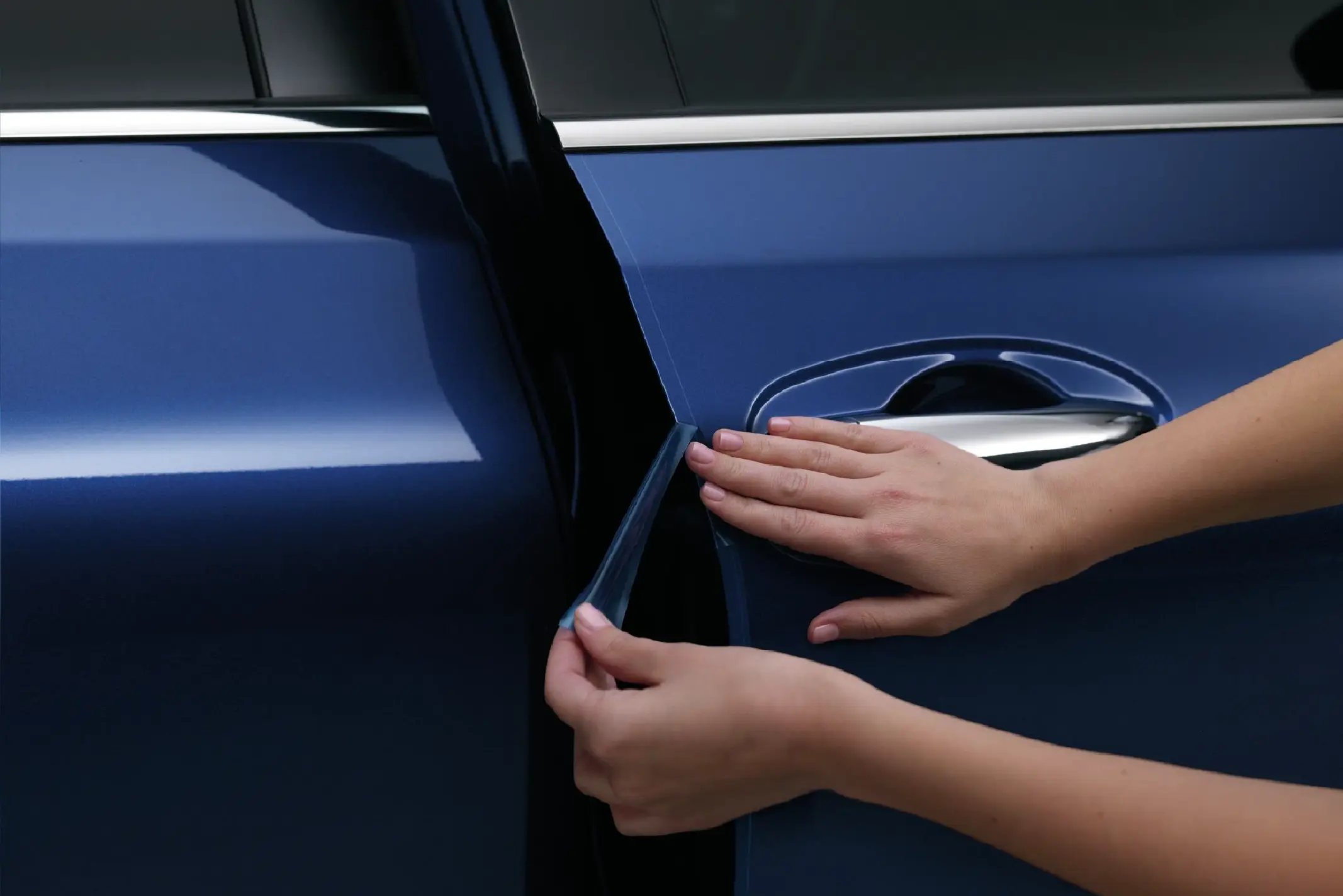
Add-ons are one of the areas where dealerships can make extra profit, especially when a customer is paying cash. These products are often presented as useful protections, including window tint, paint protection, wheel locks, VIN etching and different vehicle protection packages. While some may be useful, they can also come with huge markups.
The price charged for these extras may be much higher than what it costs the dealership to provide them. For example, VIN etching may cost the dealer very little but could be offered to a customer for several hundred dollars. Similarly, some paint protection packages may be available elsewhere for much less, while others may not be necessary at all.
Cash buyers can still be offered these products, particularly because the dealership is not earning money from arranging their financing. This can lead to greater attention being placed on add-ons during the final part of the sales process.
The Federal Trade Commission advises car buyers to ask for an itemised price for every add-on and to reject products they do not want. Buyers should also ask whether an add-on is actually required before agreeing to pay for it.
A simple question such as, “Is this required, or can I remove it?” can help. Being willing to negotiate these extras could save hundreds or even thousands of dollars.
Also Read: 10 Boxes Never to Tick at the Dealer Desk

3. Finance and Insurance Products
It might seem odd that a cash buyer would encounter a pitch from the finance and insurance office, but this department rarely skips a customer based on payment method. Vehicle service contracts, prepaid maintenance plans, tire-and-wheel protection, and other optional coverage products remain available regardless of whether you’re financing or paying outright.
These products generate commission or markup for the dealership when purchased, and the F&I office is often the most profitable department per transaction across the entire dealership.
Salespeople in this role are trained to present these products as peace-of-mind purchases, framing them around worst-case scenarios like transmission failure or curb damage to a wheel.
Here’s where things get interesting for cash buyers specifically. Since financing revenue isn’t part of the equation, some dealerships lean harder into these optional products to recover profit that would otherwise come from loan origination or interest arrangements.
The margin on these products varies widely, sometimes reaching well beyond what similar third-party coverage would cost outside the dealership. None of this means these products lack value entirely. Extended coverage can genuinely help some owners, particularly with vehicles that have spotty reliability reputations or owners who plan to keep a car well past its factory warranty.
The smarter approach is researching comparable third-party options beforehand and treating any dealership pitch as one option among several, rather than a required part of the purchase.
4. Documentation and Dealer Fees
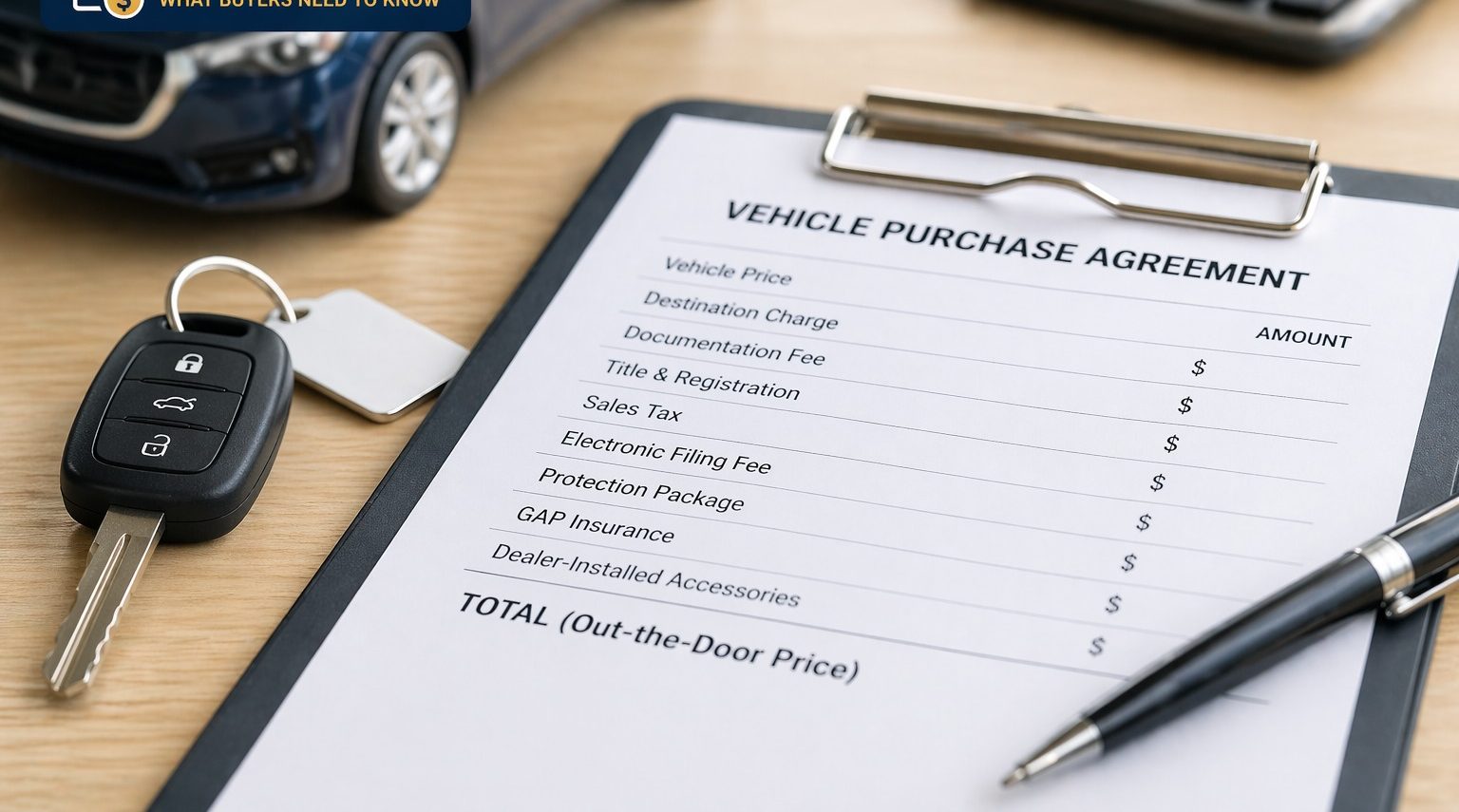
Paperwork costs money to process, and dealerships often pass a portion of that cost, along with a healthy profit margin, directly to the buyer through documentation fees. These charges go by different names depending on the state: doc fees, administrative fees, or processing fees.
Regardless of the label, they represent pure or near-pure profit once actual clerical costs are subtracted. State regulations play a massive role here. Some states cap these fees at a modest amount, while others allow dealerships considerable freedom to set their own pricing.
This creates wide variation from one region to another, meaning the same transaction could involve drastically different fees depending on where it happens. Cash buyers sometimes assume these fees only apply to financed purchases, but that’s a misconception.
Documentation fees typically apply across the board, since they cover the administrative work tied to any vehicle sale, not the loan process specifically. The best defense against inflated fees is comparison shopping and asking for the full out-the-door price early in the conversation.
Rather than negotiating the vehicle price and fees separately, request one final number that includes everything: the car, taxes, title work, and any dealer fees. This approach makes it much harder for a dealership to quietly pad profit through paperwork charges buried at the end of a long sales process.

5. Trade-In Margin
Trading in your vehicle while paying cash for a new one gives the dealership another opportunity to make money. Many buyers do not realise that the amount offered for their old car may be lower than what the dealer expects to make after selling it.
Dealerships need to consider expenses such as repairs, cleaning, transportation and advertising before putting a trade-in up for sale. They also need to make a profit. This is why they may offer less than the vehicle’s potential resale value.
For example, a dealer could offer you $12,000 for a vehicle that might eventually sell for $16,000 after some repairs and cleaning. The $4,000 difference gives the dealership room to cover expenses and make a profit.
If this happens regularly with several vehicles each month, trade-ins can become an important source of income for the dealership.
If you are paying cash and have a trade-in, treat the two transactions separately. Do not allow the dealer to combine the trade-in value with the price of the new vehicle and make the deal difficult to understand.
Before visiting the dealership, check your vehicle’s current market value and compare offers from other buyers. Having a realistic figure in mind makes it easier to recognise a low offer and negotiate a better deal.
6. Manufacturer Incentives and Holdback
Behind every new vehicle sale sits a layer of financial arrangement between the manufacturer and the dealership that most customers never see. Holdback is one piece of this puzzle. It’s a percentage of either MSRP or invoice price, depending on the manufacturer, that gets paid back to the dealership after the sale, essentially functioning as reimbursed profit that already existed within the deal.
This system varies considerably. Some manufacturers offer generous holdback percentages, while others provide none at all. Because these figures rarely appear on any customer-facing paperwork, most buyers have no idea this financial layer even exists.
It sits quietly behind the invoice price, softening what looks like a break-even or low-profit deal into something considerably more profitable for the dealership. Cash buyers often focus heavily on getting close to invoice pricing, assuming that number represents the dealership’s true cost.
In reality, invoice price rarely reflects the dealership’s actual bottom line once holdback and other manufacturer incentives are factored in. A sale that appears to generate minimal profit on paper might still leave the dealership with a comfortable margin once these behind-the-scenes payments arrive.
Understanding this dynamic doesn’t necessarily change your negotiating strategy, but it does provide useful context. A dealership claiming a deal leaves them with “no profit” deserves a healthy dose of skepticism, since holdback and manufacturer incentives often tell a different story than the invoice sheet alone.
7. Used-Car Reconditioning and Resale
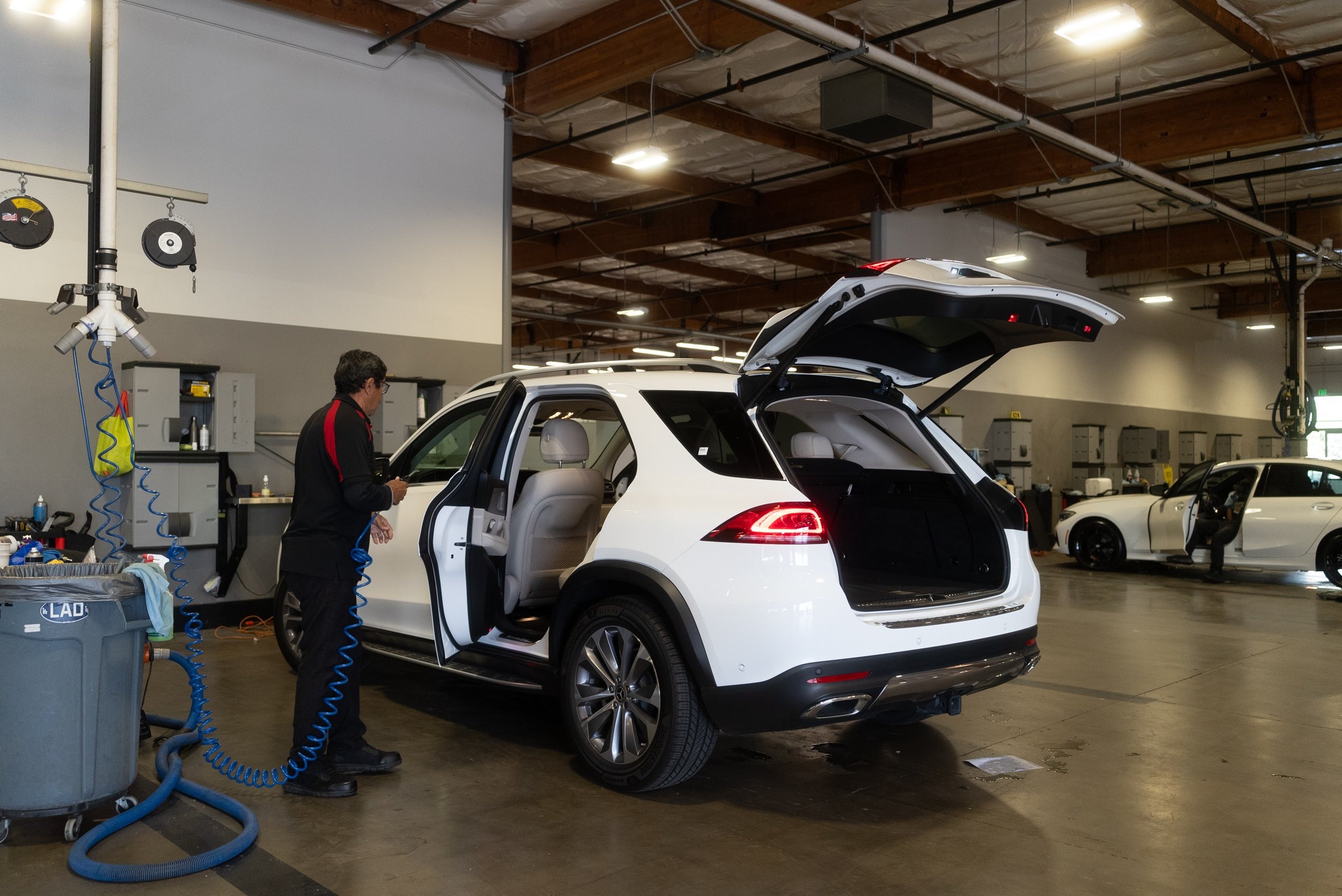
Every trade-in or used vehicle that passes through a dealership becomes a small business opportunity of its own. Reconditioning transforms a car that might look tired or mechanically questionable into something ready for retail pricing, and the gap between acquisition cost and final sale price often represents one of the more profitable corners of dealership operations.
This process typically includes mechanical inspections, minor repairs, detailing, and sometimes cosmetic work like paintless dent repair or upholstery cleaning. None of these services cost as much as what gets added to the final sticker price once the vehicle reaches the used-car lot.
A dealership might spend a few hundred dollars getting a trade-in ready for resale, then list that same vehicle for several thousand dollars more than their total investment.
Cash buyers purchasing a used vehicle outright should pay close attention to this dynamic, since the used-car side of a dealership often operates with wider margins than new-vehicle sales.
Researching comparable listings for the same year, make, model, and mileage helps establish whether the asking price reflects fair market value or leans heavily toward maximizing dealership profit.
Independent inspections before purchase also provide leverage. If reconditioning work was minimal or skipped in certain areas, that information becomes a useful negotiating point, especially for buyers paying cash who have no financing timeline pressuring them to close quickly.
Also Read: 10 Reasons a Used Car Costs the Dealer Almost Nothing
8. Manufacturer Rebates and Incentive Programs
Manufacturer incentives can make buying a vehicle more complicated, whether you are paying cash or using finance. Customer cash rebates, special financing offers, loyalty discounts and other promotions may appear attractive in advertisements, but the conditions attached to them determine who can actually benefit.
For example, some discounts are only available to customers who finance through the manufacturer’s lending company. In such cases, a cash buyer may lose that particular discount. However, other incentives, such as loyalty offers or discounts for military personnel and recent graduates, may still be available regardless of how the vehicle is paid for.
This can easily confuse buyers who assume every advertised discount applies to them. A financing offer of 2.9%, for instance, may come with a discount that disappears when you decide to pay cash.
The best approach is to ask the dealer for a written breakdown of all available incentives and their requirements. In some situations, financing to qualify for a rebate and then paying off the loan early may save money, provided there are no penalties or additional charges.
Paying cash does not stop a dealer from making a profit. Buyers should negotiate the vehicle price, trade-in, add-ons, and fees separately, then request the final out-the-door price in writing.
