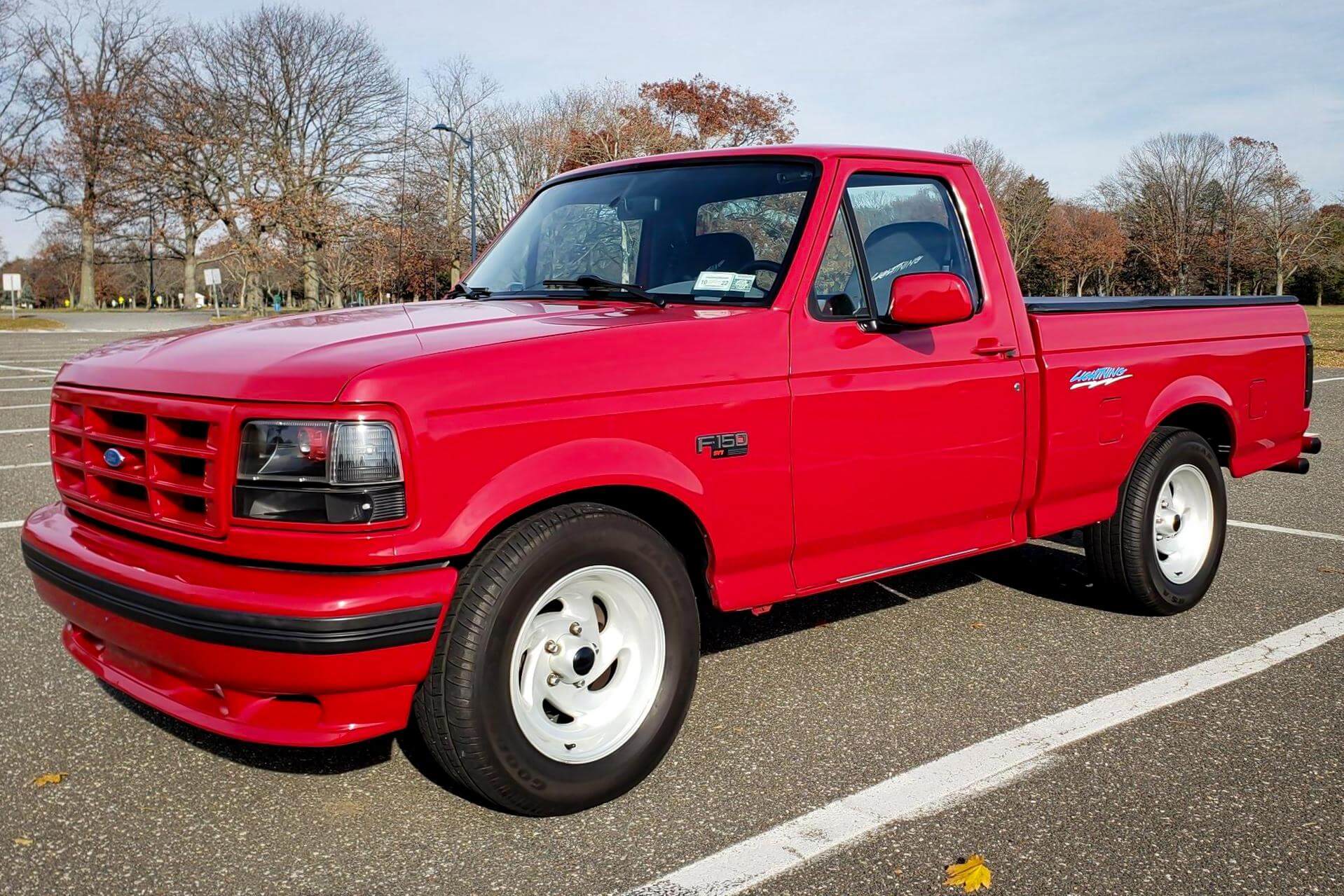
Ford has a long history of building trucks that work hard, but the SVT Lightning changed what a pickup could be. Created as a high-performance version of the F-150, the Lightning combined V8 power, Rear Wheel Drive, and surprisingly sharp road manners in a package that looked like a regular pickup.
Its acceleration was strong enough to challenge performance cars of its era, including certain Mustang models. That unusual combination gave the Lightning a special place in Ford history. Long before performance pickups became common, Ford proved that a truck could be genuinely quick, entertaining, and capable of embarrassing sports cars at a traffic light.
The Birth of the SVT Lightning
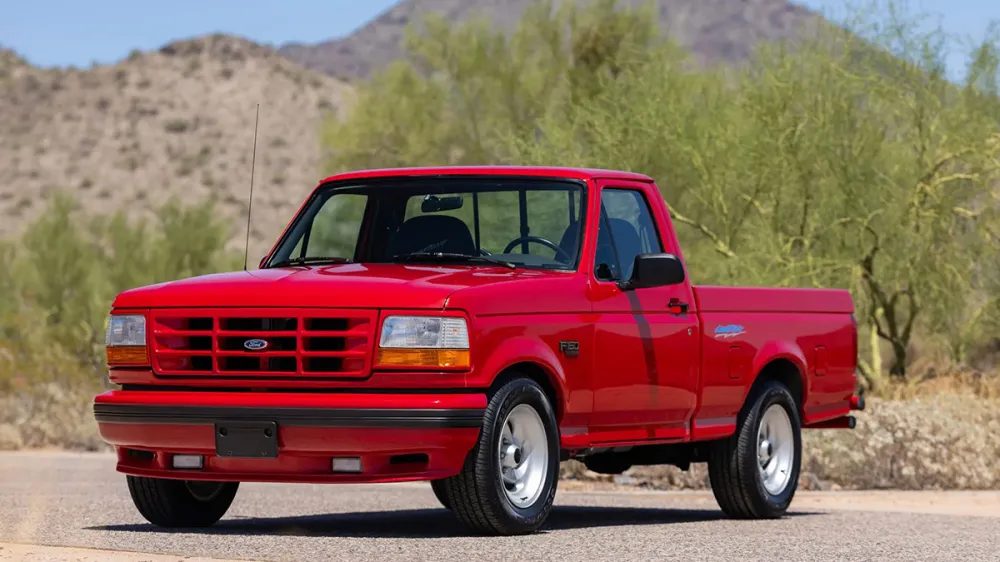
The Ford SVT Lightning first appeared for the 1993 model year as a performance-focused version of the F-150. Ford created it through the company’s Special Vehicle Team, commonly known as SVT. At the time, the idea of turning a full-size pickup into a performance vehicle was still unusual.
The Lightning was not designed simply to carry heavy loads or travel across rough terrain. Its purpose was to deliver a different kind of driving experience while retaining the basic usefulness of an F-150. Ford gave it a more powerful engine, sportier suspension tuning, larger wheels, and a distinctive appearance that separated it from ordinary work trucks.
The first generation Lightning used a 5.8-liter V8 producing 240 horsepower and 340 lb-ft of torque. Those numbers may appear modest by modern performance standards, but the truck was quick for its period. Ford also paid considerable attention to handling.
The suspension was lowered, the shocks were specially tuned, and the truck received a limited-slip differential. These changes helped make the Lightning feel more controlled on pavement than a conventional pickup. The result was a vehicle that could accelerate hard while remaining recognizable as a practical Ford truck.
The original Lightning also demonstrated that performance did not always require an exotic platform. Ford started with an F-150 and changed the parts that mattered most for speed and handling. The truck received larger brakes, performance-oriented suspension components, and special wheels and tires.
The steering and chassis were tuned with street driving in mind. It was not intended to compete with a dedicated sports car on every road, but it offered an unusual blend of acceleration and utility. That formula would become much more important when Ford returned to the Lightning name later in the decade.
Production of the first Lightning generation lasted from 1993 through 1995. Ford built roughly 11,000 examples during that period, making it relatively uncommon compared with the enormous number of ordinary F-150 pickups sold.
The truck quickly developed a following among enthusiasts who appreciated its straightforward character. There was no complicated All Wheel Drive system or exotic engine technology. Instead, the Lightning relied on a powerful V8, Rear Wheel Drive, and careful chassis tuning. It was a simple recipe, but it worked.
The first Lightning established the name as something more meaningful than a trim package. It showed that Ford was willing to take its bestselling pickup and give it the attitude of a performance vehicle.
The concept would disappear for several years, but Ford was not finished with the Lightning name. When the second generation arrived for the 1999 model year, the company took the idea much further and created a truck that became a performance icon.
The Second Generation Changed Everything
The second generation Ford SVT Lightning arrived for 1999 and represented a major step forward. Instead of using the naturally aspirated V8 from the earlier model, Ford equipped the truck with a supercharged 5.4-liter Triton V8.
The engine initially produced 360 horsepower and 440 lb-ft of torque. For the 2001 model year, output increased to 380 horsepower and 450 lb-ft of torque. Those figures were remarkable for a factory pickup at the beginning of the 2000s.
The supercharged engine transformed the Lightning’s character. Power arrived with a strong rush, and the abundant torque made the truck feel much lighter than its size suggested.
Contemporary performance testing often placed the Lightning’s 0 to 60 mph acceleration in roughly the five second range. That was serious performance for a pickup. Ford had created a vehicle capable of accelerating alongside many performance cars while carrying the visual bulk and seating arrangement of a truck.
The Lightning’s relationship with the Mustang is particularly interesting. The claim that a Lightning could outrun a Mustang needs some context because Mustang performance varied significantly by model and model year. A standard Mustang GT from the early 2000s was not necessarily faster than a second-generation Lightning in every test.
The supercharged pickup had enormous torque and strong straight-line acceleration. Certain Mustangs, especially higher performance Cobra models, were considerably more capable. Still, the fact that a full-size F-150 could challenge a Mustang was remarkable enough to become part of the Lightning’s reputation.
Ford also made important changes to the chassis. The second-generation Lightning featured a lowered suspension, performance-tuned dampers, larger brakes, and specially developed tires. The rear suspension retained the basic pickup architecture, but Ford engineered the truck around road performance rather than heavy-duty hauling.
The truck was rated to tow, but its maximum towing capacity was deliberately limited compared with conventional F-150 configurations. Ford wanted buyers to understand that the Lightning was designed first as a performance street truck.
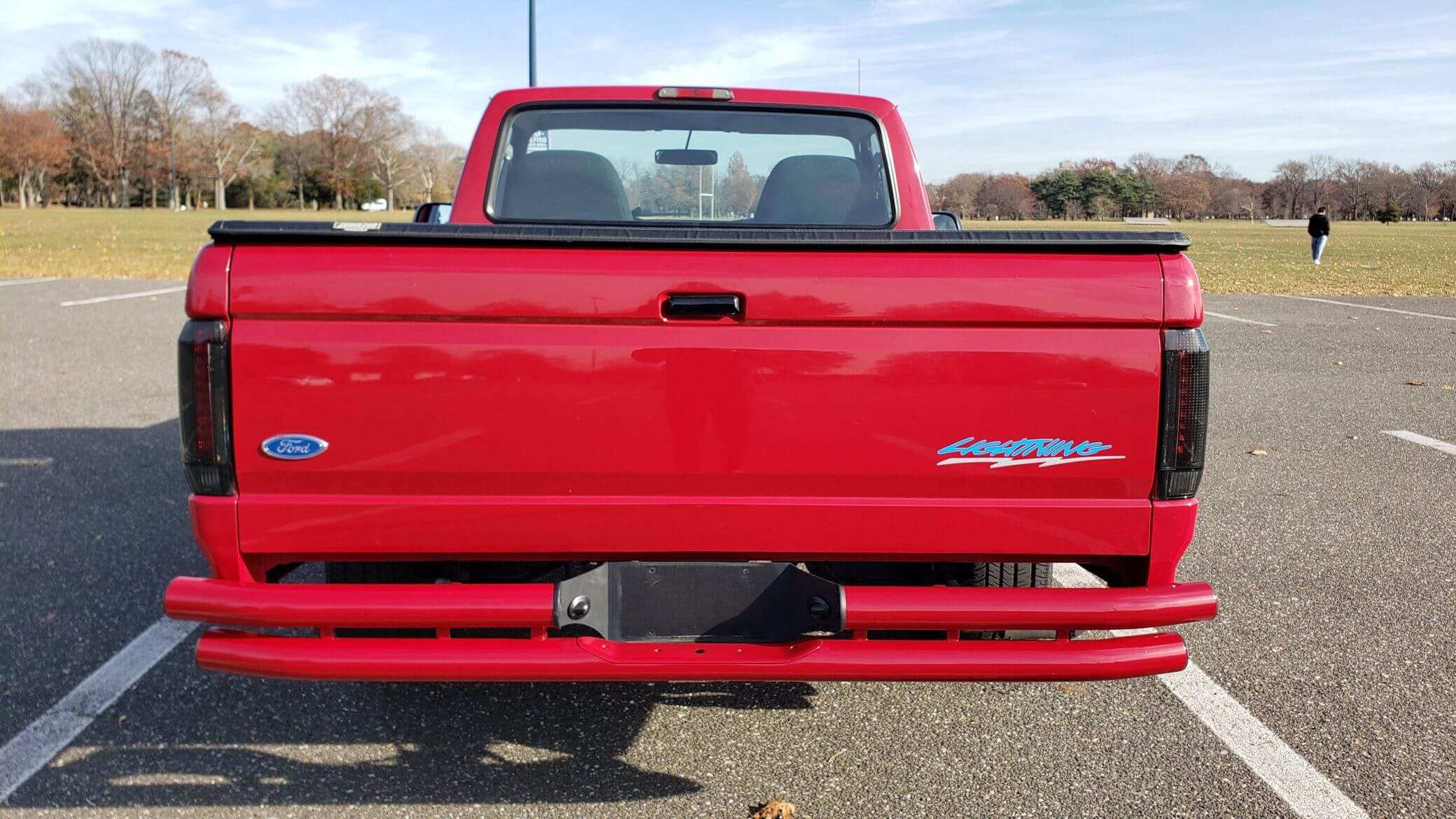
The visual design matched the mechanical upgrades. The Lightning received a lower stance, special front and rear styling, side skirts and distinctive wheels.
Inside, the cabin remained familiar to F-150 owners, but the truck carried a more purposeful character. It was a performance machine hiding beneath the shape of a pickup. That combination helped create an identity that continues to attract collectors and enthusiasts decades after production ended.
How the Lightning Earned Its Reputation
The Lightning became famous because it delivered performance in a way that felt almost unreasonable. A sports car driver could understand a quick Mustang, Camaro or Corvette.
A supercharged F-150 was harder to categorize. The truck sat high enough to retain its pickup identity, yet its acceleration could surprise drivers who expected a slow utility vehicle. That contrast became central to the Lightning’s appeal.
Its 5.4-liter supercharged V8 was the heart of the experience. With 380 horsepower and 450 lb-ft of torque in later versions, the engine generated substantial force across the rev range.
The truck used a four-speed automatic transmission, which might sound unusual to modern performance enthusiasts accustomed to sophisticated transmissions, but the setup suited the Lightning’s character. The automatic allowed the engine’s torque to be used effectively while making the truck easy to drive every day.
The Lightning was also relatively light compared with some modern full-size performance trucks. The second generation model weighed roughly 4,600 pounds depending on configuration, which is heavy by sports car standards but manageable for a pickup.
Its Rear Wheel Drive layout and limited-slip differential helped transfer the engine’s power to the pavement. Traction could still become an issue when the driver demanded maximum acceleration, particularly with worn or cold tires, but that was part of the truck’s personality.
Handling was another important part of the formula. Ford did not simply install a powerful engine and call it a performance truck. The Lightning received a suspension designed to reduce body movement and improve road control. Its lower ride height reduced the visual gap between the pickup and the pavement while also contributing to more stable handling.
It was never a lightweight sports car, but it could be driven enthusiastically on winding roads without feeling like a conventional work truck.
This engineering approach explains why the Lightning became such an influential performance pickup. Modern high-performance trucks often use sophisticated suspension systems, advanced traction management and powerful engines.
The Lightning arrived before that technology became common. Its approach was comparatively simple: add power, lower the chassis, improve the suspension and give the driver Rear Wheel Drive. That formula created a memorable machine that remains highly regarded among Ford enthusiasts.
Lightning Versus the Mustang
Comparing the Lightning with the Mustang reveals how unusual Ford’s performance lineup was during this period. The Mustang was built from the ground up as a performance-oriented coupe, while the Lightning started life as a full-size pickup.
Their missions were completely different. Yet acceleration figures placed them surprisingly close in certain model years and configurations.
The 1999 Mustang GT produced 260 horsepower from its 4.6-liter V8, while the second-generation Lightning produced 360 horsepower from its supercharged 5.4-liter V8. By 2001, the Lightning’s output had climbed to 380 horsepower
. The Mustang GT eventually received more power as Ford developed the platform, but the Lightning maintained a substantial torque advantage. That torque helped the truck deliver hard launches and rapid acceleration without requiring the engine to be pushed to extremely high speeds.
The comparison becomes more complicated when higher-performance Mustang versions enter the picture. The Mustang Cobra, for example, occupied a higher level of the Mustang range and offered technology and performance that could exceed the Lightning in important areas.
The Cobra was lighter, more aerodynamic, and designed specifically for performance driving. A Lightning was never intended to replace a Mustang. Its appeal came from delivering an unexpectedly similar straight-line experience from a completely different vehicle type.
Weight and aerodynamics also explain why the Lightning’s performance was so impressive. A pickup has a large frontal area and a tall body, creating more aerodynamic drag than a low sports coupe.
The fact that Ford could make such a vehicle accelerate at sports car speeds required substantial engine output. The supercharger helped produce the power needed to overcome the truck’s mass and aerodynamic disadvantages.
The Mustang comparison therefore should not be interpreted as saying every Lightning was faster than every Mustang. That would be inaccurate. The important point is that certain Lightning models were quick enough to challenge contemporary Mustangs under the right conditions.
That achievement helped create the truck’s legendary status. Ford had taken an ordinary pickup platform and produced something that could make sports car owners take notice.
Why the Ford Lightning Still Matters
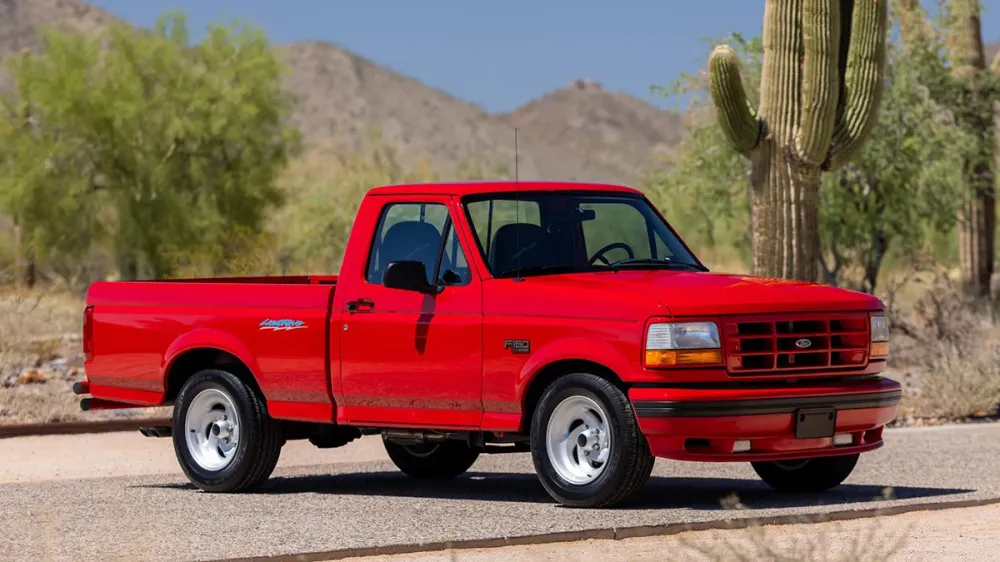
The Ford SVT Lightning remains an important chapter in the company’s performance history because it challenged the usual definition of a fast vehicle. The truck proved that speed did not have to come in a low coupe or sports car package. A full size pickup could have a supercharged V8, rear wheel drive and enough acceleration to surprise cars that looked much faster.
The truck also showed the value of a focused engineering philosophy. Ford did not need an exotic chassis to make the Lightning exciting. The company used proven F-150 architecture and concentrated its efforts on the engine, suspension, brakes, tires and drivetrain. That approach created a vehicle that was relatively straightforward but highly memorable.
For Mustang enthusiasts, the Lightning adds an interesting footnote to Ford’s performance story. The two vehicles represented different approaches to speed, yet their acceleration could overlap during certain periods.
The Mustang had the advantage in weight, aerodynamics and dedicated sports car engineering. The Lightning countered with displacement, forced induction and immense torque. Their rivalry was never official, but comparisons between them helped make the truck famous.
The Lightning name has since returned in a completely different form, but the original SVT models remain the trucks that established the reputation.
They showed that Ford was willing to experiment with its most familiar products and give enthusiasts something they did not expect. The result was a pickup that could work as transportation, turn heads at a car show and deliver startling acceleration when the road opened up.
That is why the story of the Ford Lightning continues to attract attention. It was not simply a powerful F-150. It represented a period when manufacturers were willing to build unusual performance vehicles with strong personalities.
The idea of a truck challenging a Mustang sounds strange at first, yet Ford made it believable through careful engineering and a supercharged V8. The Lightning earned its place in automotive history by proving that performance could come from almost anywhere.
Also read: 5 Cars With the Highest Theft Rates in New Mexico, 5 With the Lowest