
Few things are more frustrating for a car owner than watching a vehicle remain trouble-free during its warranty coverage, only for an expensive component to develop problems soon after the protection expires.
That does not mean every vehicle will fail at a predictable age, but modern cars contain an increasingly complex mix of electronics, sensors, motors, control modules, and interconnected mechanical systems. Even a vehicle with a strong reliability record can eventually develop an expensive fault at the worst possible time.
The systems below are the ones worth watching most closely. Some have documented manufacturer campaigns, warranty extensions, technical bulletins, or recalls that show why they deserve attention once the factory warranty is behind you.
1. Air Conditioning and Climate-Control Systems
Air conditioning is one of those systems most owners barely think about until it stops working. Then the vehicle can become almost unusable during a hot summer, particularly in states where temperatures regularly stay above 90 degrees Fahrenheit.

The expensive part is that “the A/C isn’t cold” is not a diagnosis. The fault could be a refrigerant leak, compressor, condenser, expansion valve, pressure sensor, clutch, control module, blend-door actuator, wiring problem, or another component in the climate-control system.
A compressor failure is particularly unpleasant because contamination from a failed compressor can move through the refrigerant circuit. Replacing only the compressor may not be enough if debris has spread through the system.
There is solid manufacturer documentation showing why compressor failures deserve proper diagnosis. Lotus issued a technical bulletin explaining that insufficient lubrication could cause A/C compressor internal components to seize, reducing A/C performance and generating diagnostic trouble codes. The bulletin specifically called for a running-in procedure when installing a new or refitted compressor.
That is useful context for an owner who gets a large A/C estimate. The repair may involve much more than bolting in a replacement compressor.
What to watch for:
- A/C becomes warm intermittently
- Compressor cycles unusually often
- Grinding or rattling from the compressor area
- Refrigerant warning or pressure-related fault codes
- Weak airflow despite a functioning blower
- Different temperatures from the left and right vents
- Clicking from dashboard air-direction or temperature actuators
The best time to investigate a marginal A/C system is before it completely quits. A system that takes noticeably longer to cool the cabin may already have a developing problem.
2. Infotainment and Touchscreen Systems
The touchscreen has quietly become one of the most complicated pieces of equipment in a modern car. It can control navigation, audio, climate functions, cameras, smartphone integration, vehicle settings, and sometimes even basic controls that used to have physical buttons.
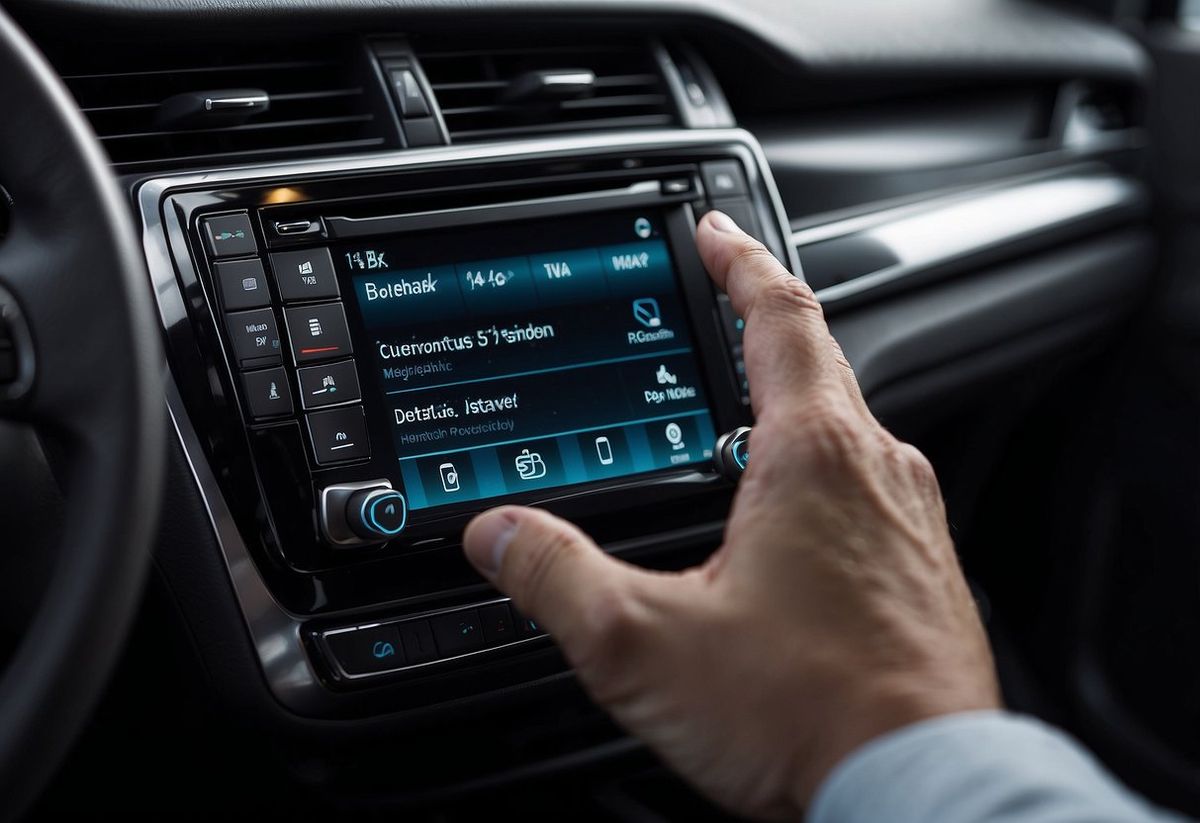
Subaru provides a particularly clear example. In January 2025, Subaru of America announced an extended warranty covering certain CP1 and Gen 3.1 infotainment head units in a wide range of 2019-2023 models.
The extension covered qualifying head-unit failures such as blank screens, loss of audio, repeated reboots, touchscreen concerns, and problems with CarPlay, Android Auto, navigation, or Bluetooth. Coverage was extended to eight years or 150,000 miles for qualifying conditions.
That is exactly the sort of manufacturer action an owner wants to know about before paying for a replacement.
Ford has also documented SYNC 3 problems involving frozen or blank screens, connectivity issues, Apple CarPlay problems, navigation glitches, and other software-related symptoms. In one bulletin, Ford instructed technicians to update the Accessory Protocol Interface Module software rather than automatically replacing the hardware.
The key point is to avoid approving a costly head-unit replacement based only on a general diagnosis of a screen-related issue. Always ask for a proper inspection and a clear explanation of the underlying fault before agreeing to the repair.
Look for:
- Frozen touchscreen
- Random reboots
- Black or blue display
- Audio cutting out
- CarPlay or Android Auto refusing to connect
- Backup-camera display problems
- Navigation becoming unresponsive
- Slow boot-up after starting the vehicle
A software update can sometimes solve what looks like a hardware failure. If the system genuinely needs replacement, however, the part may also require programming or configuration.
3. Automatic Transmission and Transmission-Control Systems
When drivers hear the words “transmission failure,” they often assume the gearbox itself has suffered catastrophic mechanical damage. Modern automatic transmissions, however, depend heavily on electronic controls, meaning a malfunctioning computer or control module can cause severe shifting and drivability problems even when the transmission’s mechanical components remain in usable condition.
A recent GM recall demonstrates how significant that software layer can be. NHTSA Recall 24V-839 covered certain 2022-2023 Chevrolet Express and GMC Savana vans equipped with specified engine and eight-speed automatic transmission combinations.
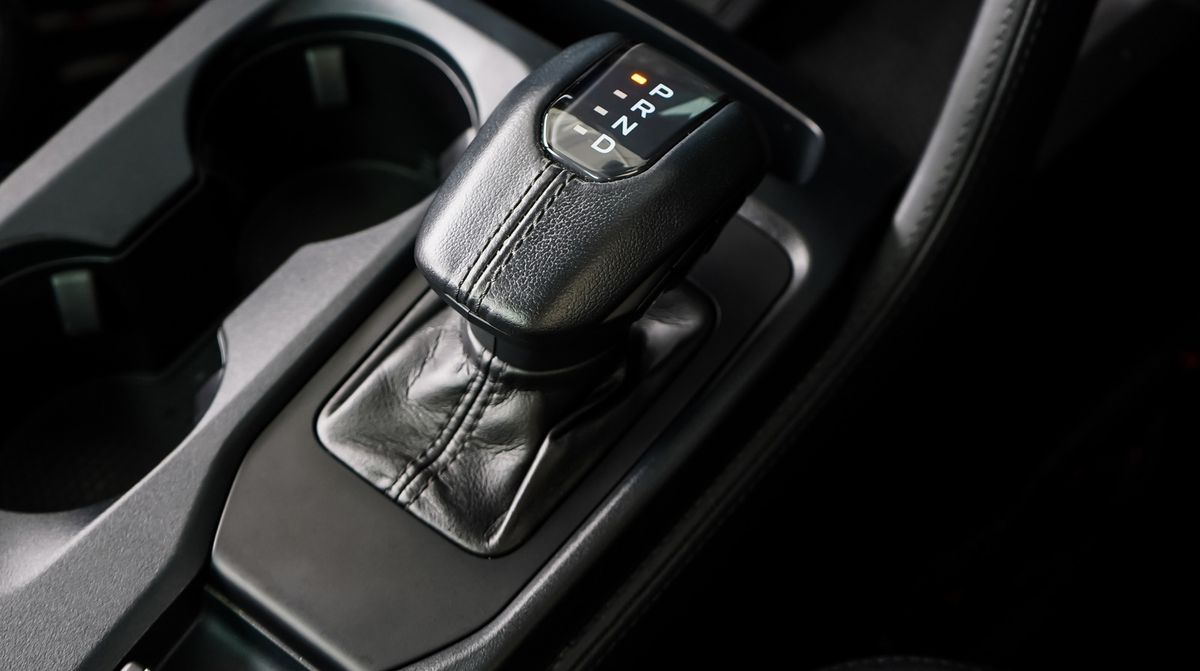
GM identified incorrectly calibrated transmission-control software that could respond incorrectly to certain electrical failures inside the transmission. Symptoms could include harsh shifting, reduced propulsion, harsh deceleration, rear-wheel lockup, and, in rare low-speed circumstances, movement in an unintended direction.
The recall involved 77,824 vehicles, including 54,722 Chevrolet Express vans and 23,102 GMC Savana vans. The affected Express vehicles used either the 4.3-liter V6 with the eight-speed automatic or a specified four-cylinder/eight-speed combination.
This is important because it shows how a transmission problem does not always begin with broken gears or worn clutches. A module, sensor, wiring problem, or calibration issue can change the way the transmission behaves. And outside warranty, diagnosis can become expensive quickly.
Warning signs include:
- Hard or delayed shifts
- Sudden downshifts
- Transmission warning messages
- Check engine light accompanying shift problems
- Unexpected changes in engine braking
- Reduced propulsion
- Limp-home mode
- Unusual behavior after the vehicle warms up
If a transmission starts behaving strangely shortly after warranty expiration, check for recalls and technical bulletins before assuming the gearbox itself needs rebuilding. A documented software or calibration issue can save an owner from authorizing thousands of dollars of unnecessary mechanical work.
4. Turbocharger and Boost-Control Systems
Turbochargers are wonderful when they work properly. They allow a relatively small engine to produce the power of something larger without requiring the displacement of a traditional naturally aspirated engine.
The downside is that a turbocharger operates in a harsh environment involving high exhaust temperatures, high shaft speeds, oil circulation, boost pressure, and complex control hardware. The turbo itself is not always the first component to fail.
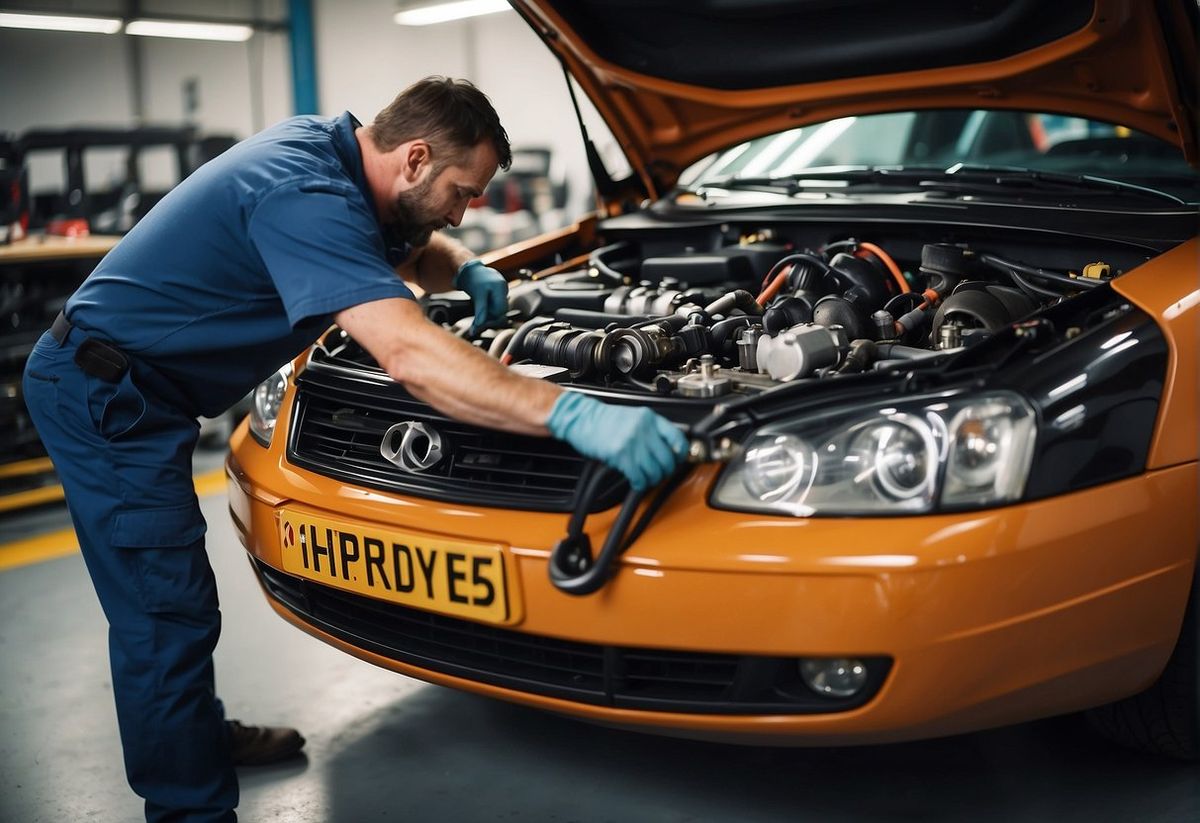
Wastegates, actuators, boost-control valves, oil lines, sensors, and related plumbing can all cause turbo-related symptoms. A problem in one of these areas can produce low boost, overboost, rattling, poor acceleration, warning lights, or reduced engine power.
BMW provides a well-documented historical example. BMW North America extended the emissions warranty for turbocharger failures caused by defective wastegates on certain N54-powered vehicles to eight years or 82,000 miles. The affected applications included various 2007-2010 BMW 335i, 135i, 535i, X6 xDrive35i, and Z4 sDrive35i models.
That example is particularly useful because it shows how an automaker can recognize that a component deserves coverage beyond the standard warranty period. Owners of turbocharged cars should therefore pay attention to changes rather than waiting for a dramatic failure.
Early clues can include:
- Turbo whistle changing noticeably
- Rattling during acceleration or deceleration
- Slower acceleration
- Boost pressure that fluctuates
- Check engine light
- Reduced-power mode
- Excessive oil consumption
- Smoke from the exhaust
- Poor fuel economy
A turbocharger should also be diagnosed before replacement, as boost leaks, electronic control problems, and wastegate issues can mimic a failed turbo.
5. Electric Power Steering Systems
Electric power steering has become common because it eliminates the hydraulic pump, reduces parasitic engine load, and allows manufacturers to integrate steering assistance with safety and driver-assistance functions.
But it also adds motors, sensors, wiring, and control modules to one of the most important systems on the vehicle.

Ford’s previous EPAS problems illustrate the potential seriousness. NHTSA’s investigation into certain Ford Fusion and Mercury Milan vehicles described an electric power-assisted steering system consisting of the steering rack, torque sensor, electric assist motor, motor-position sensor, and power steering control module.
The investigation ultimately led to Ford recall 15V-340. NHTSA documented complaints involving loss of steering assist and increased steering effort.
A more recent example comes from Hyundai. Safety Recall 261 addressed the motor-driven power-steering electric power pack on certain vehicles, with the manufacturer identifying a potential electrical short and sudden loss of power-steering assist.
The important point for owners is that steering assistance can disappear without the steering wheel becoming mechanically disconnected. The vehicle may still steer, but considerably more effort can be required.
Watch for:
- Steering becoming unexpectedly heavy
- Power-steering warning light
- Intermittent steering assistance
- Steering assistance disappearing after startup
- Clicking or unusual noises from the steering area
- Warning messages that disappear after restarting
Because steering is safety-critical, don’t treat an intermittent steering warning as a minor electronic glitch.
And before paying for a steering rack or control module, check the VIN. A recall can turn a potentially expensive repair into a no-cost manufacturer repair. NHTSA specifically recommends regular recall checks because recalls can be issued long after a vehicle is sold.
6. Air Suspension and Adaptive Ride Systems
Few systems demonstrate the difference between an inexpensive conventional car and a complicated luxury vehicle better than electronically controlled suspension. A basic steel-spring suspension can develop worn shocks or bushings, but an air-suspension system may contain air springs, compressors, valves, height sensors, control modules, lines, and electronic controls.
When one component fails, the vehicle can sometimes remain drivable while sitting noticeably lower at one corner. That can make the problem deceptively easy to ignore.
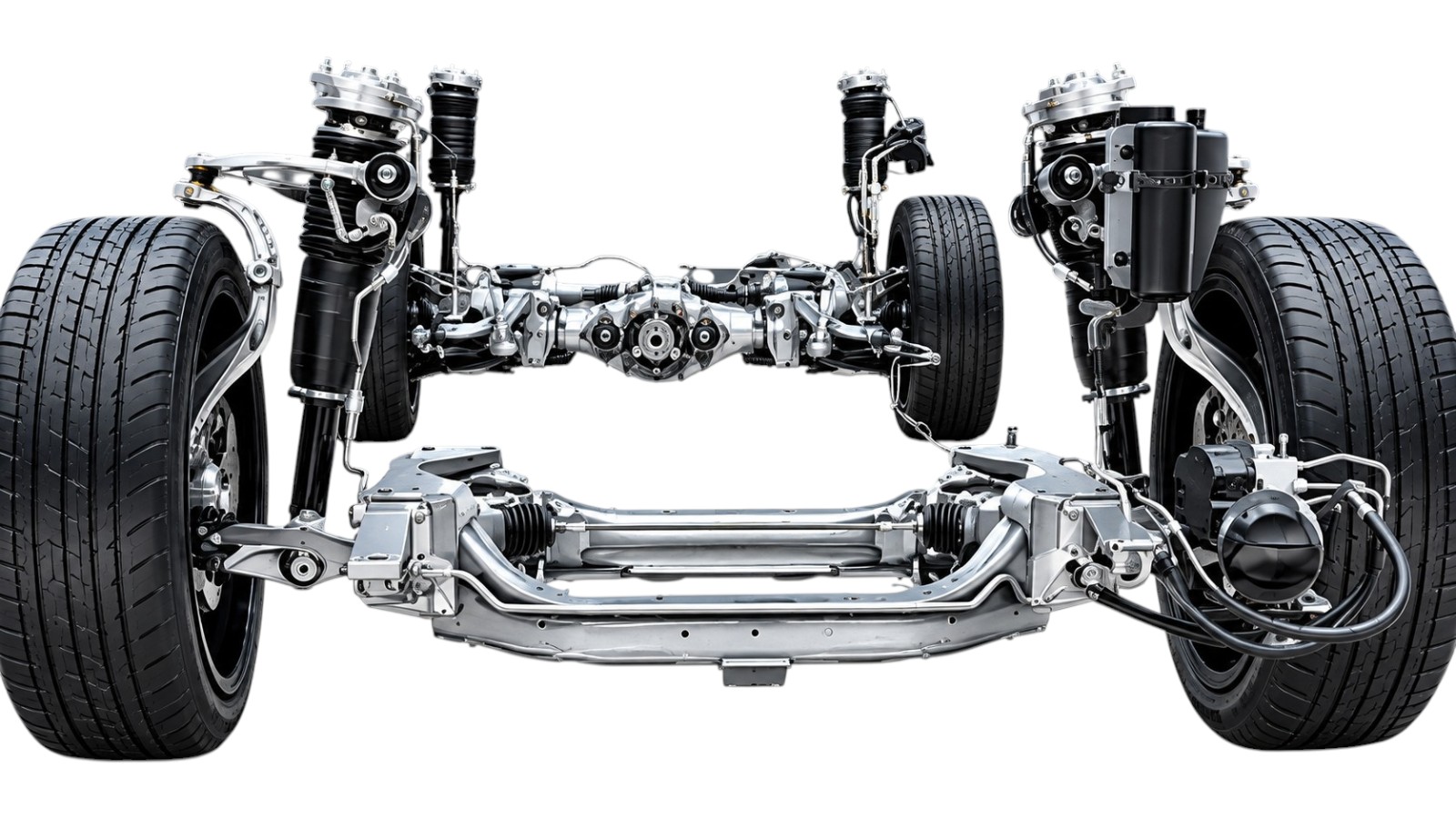
Jaguar Land Rover issued a service action involving air-suspension compressor software on certain 2015-2016 Range Rover and Range Rover Sport vehicles. The manufacturer identified conditions in which an air-suspension warning could appear while the system attempted to vent air or lower the vehicle.
Mercedes-Benz has also documented air-suspension compressor issues. A 2025 technical document for vehicles equipped with AIRMATIC explained that moisture could collect inside the compressor over time, potentially causing corrosion, reduced compressor performance, or micro-leaks through the valve block. The document prescribed updated software in applicable cases.
That distinction is important to remember because a suspension problem does not necessarily mean the compressor has failed.
Symptoms worth investigating include:
- Vehicle sitting lower after parking
- One corner lower than the others
- Compressor running unusually often
- Suspension warning messages
- Slow lifting after startup
- Harsh ride
- Uneven ride height
- Compressor running for long periods
The danger of postponing diagnosis is that a small leak can force the compressor to work excessively. What starts as an air leak can eventually become a compressor problem.
7. Cooling and Thermal-Management Systems
A cooling-system failure can go from “minor warning light” to “engine damage” faster than many owners realize. Modern vehicles are also moving beyond the traditional radiator, mechanical water pump, and thermostat arrangement. Turbocharged engines, hybrids, plug-in hybrids, and EVs can have multiple cooling circuits serving the engine, turbocharger, transmission, battery, inverter, or other components.
Electric water pumps are a good example. BMW documentation associated with recall 24V-608 describes a coolant-pump connector issue and includes procedures for replacing the electric water pump when necessary to address connector-pin problems.
The important takeaway is not that every BMW electric water pump will fail. It is that a cooling system can contain electrical components capable of creating a major problem even when there is no traditional belt-driven pump failure.
NHTSA also advises owners to maintain proper coolant levels, inspect for leaks, use the manufacturer’s specified coolant, and service cooling systems appropriately.
Do not ignore:
- Coolant-level warnings
- Temperature gauge movement
- Cooling fans running constantly
- Coolant smell
- Visible leaks
- Overheating at idle
- Heater suddenly blowing cold air
- Electric coolant pump noise
- Reduced-power warnings
A cooling problem deserves attention immediately. Continuing to drive while an engine is overheating can turn a cooling-system repair into an engine repair. This is also one area where preventive maintenance makes a real difference. Checking coolant condition and inspecting for leaks costs considerably less than replacing an overheated engine.
8. Advanced Driver-Assistance and Safety Systems
ADAS is perhaps the clearest example of a system that can make a relatively small component financially significant. A forward-facing camera, radar sensor, steering module, blind-spot sensor, parking sensor, or associated wiring can be physically small. But the system may require calibration, software configuration, and specialized diagnostic equipment.
That is why a damaged windshield, front bumper, grille, or side mirror can sometimes result in more than a bodywork bill. NHTSA treats advanced driver-assistance technology as a significant safety area. The agency requires reporting of certain crashes involving Level 2 ADAS and higher-level automated driving systems so it can identify potential safety issues.

The technology itself is becoming increasingly integrated into new vehicles. NHTSA’s 2026 announcement concerning its updated ADAS testing also demonstrates how these systems are becoming an increasingly formal part of vehicle safety evaluation. For owners, the practical concern is calibration.
A camera that has shifted slightly may still turn on. A radar sensor may still communicate with the vehicle. But the system may disable adaptive cruise control, lane-centering, automatic emergency braking, or blind-spot functions because the vehicle cannot verify that the sensor is correctly aligned.
Warning signs include:
- “Driver assistance unavailable”
- Adaptive cruise control disabled
- Lane-keeping assistance unavailable
- Blind-spot monitoring faults
- Forward-collision warning errors
- Parking sensors intermittently failing
- Camera alignment warnings
- ADAS functions disappearing after windshield or bumper work
This is another reason not to choose a repair shop based solely on the lowest labor quote. A replacement sensor that has not been properly calibrated is not a completed repair.