
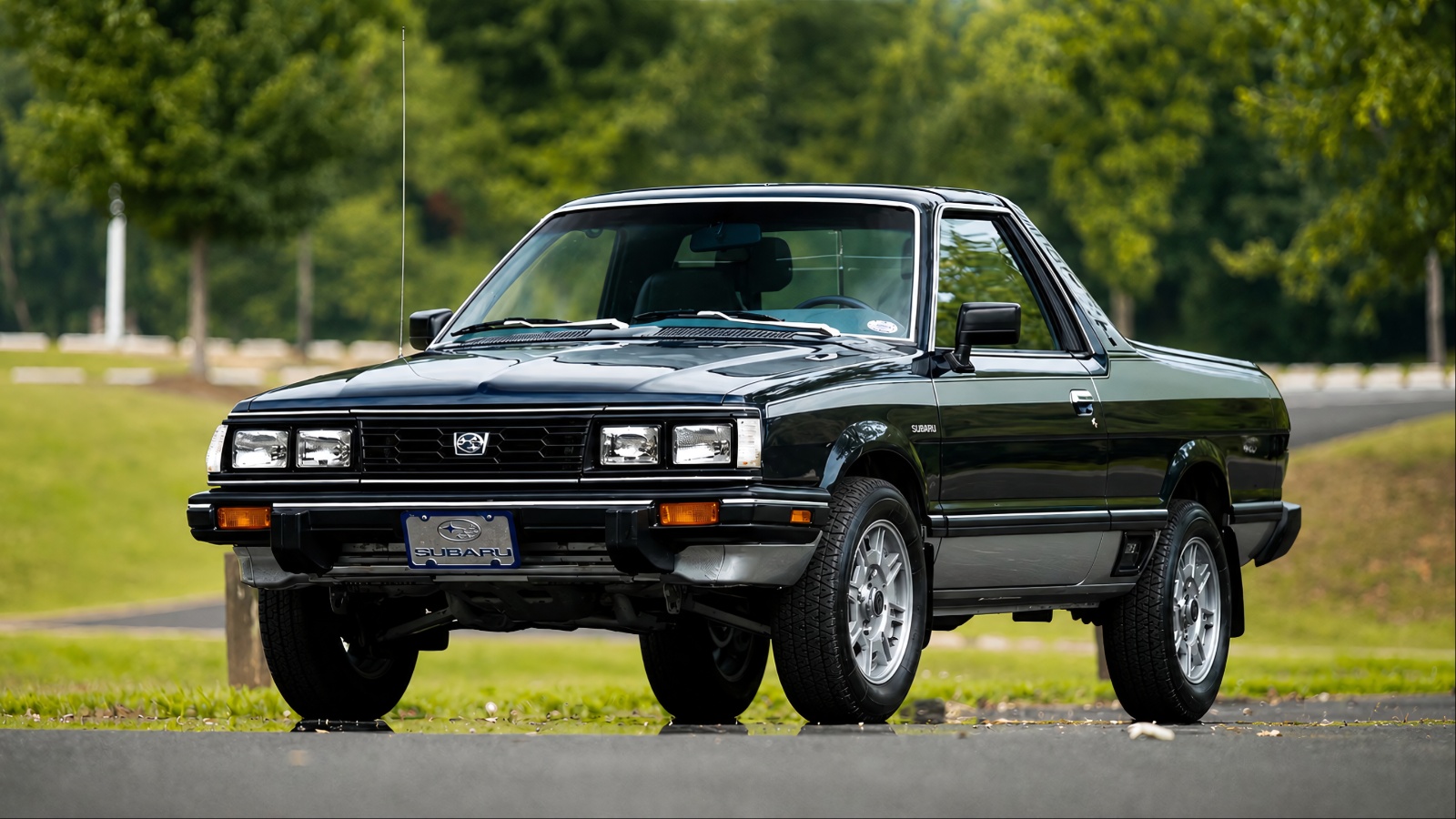
There was a time when automakers could solve a trade problem with a surprisingly simple piece of equipment. Subaru did exactly that with the BRAT, one of the strangest vehicles ever sold in the United States.
It looked like a tiny pickup, used a cargo bed like a pickup, and even offered four-wheel drive, yet Subaru installed two rear-facing seats directly into that bed.
The seats were not simply a quirky attempt to make the BRAT more entertaining. They were part of a clever strategy to get around America’s 25 percent tariff on imported light trucks. By adding passenger seating to the cargo area, Subaru was able to have the BRAT classified differently for tariff purposes.
That unusual decision became one of the most recognizable features of the vehicle and gave the little Subaru a place in automotive history.
The BRAT, short for Bi-drive Recreational All-terrain Transporter, was introduced in the United States for the 1978 model year.
According to Subaru’s own historical material, the vehicle was developed as an export recreational vehicle for North America and was based on the Leone four-wheel-drive platform. It combined a two-seat cabin with a rear cargo bed, creating something between a passenger car and a compact pickup.
What made the American-market version especially unusual was what Subaru put inside that cargo bed.
The Seats Were a Tax Strategy
The story begins with the so-called Chicken Tax, a 25 percent U.S. tariff on imported light trucks that originated from a 1960s trade dispute. For a company importing a small pickup from Japan, paying a 25 percent tariff could make the vehicle considerably more expensive and less competitive against alternatives.
Subaru therefore changed the BRAT in a way that seems almost unbelievable today. It installed two rear-facing jump seats in the cargo bed, turning what appeared to be a simple two-seat pickup into a four-passenger vehicle.
MotorTrend’s history of the BRAT explains that the seats allowed Subaru to have the vehicle classified as a passenger car rather than a truck, reducing the applicable tariff from 25 percent to 2.5 percent. That was not a minor difference. It reduced the tariff burden by roughly 90 percent.
The strategy also explains why the seats were such an integral part of the American BRAT rather than an optional novelty that owners could simply add later.
The design was unmistakable. Two people sat facing backward behind the passenger compartment, effectively sitting in what would normally have been the cargo area of a pickup. Car and Driver’s period review described the BRAT as having bucket seats bolted into the cargo bed, illustrating just how unconventional the arrangement looked when the vehicle was new.
Subaru did not stop with the seats. American-market BRATs also featured carpeting in the bed, another feature that helped reinforce the vehicle’s passenger-car character.
The combination produced a vehicle that looked like a miniature pickup from the outside but was treated differently for import purposes. It was an unusually creative response to an unusually large tariff.
The BRAT itself was mechanically interesting even without the seats. It was based on Subaru’s Leone station wagon rather than a conventional body-on-frame pickup. Its compact dimensions and four-wheel-drive system gave it a different character from larger Japanese pickups arriving in America at the time.
The original 1978 BRAT used a 1.6-liter horizontally opposed four-cylinder engine producing roughly 67 horsepower and 81 pound-feet of torque, according to MotorTrend’s historical specifications. Later versions received a 1.8-liter engine, and a turbocharged version was offered for the 1983 and 1984 model years.
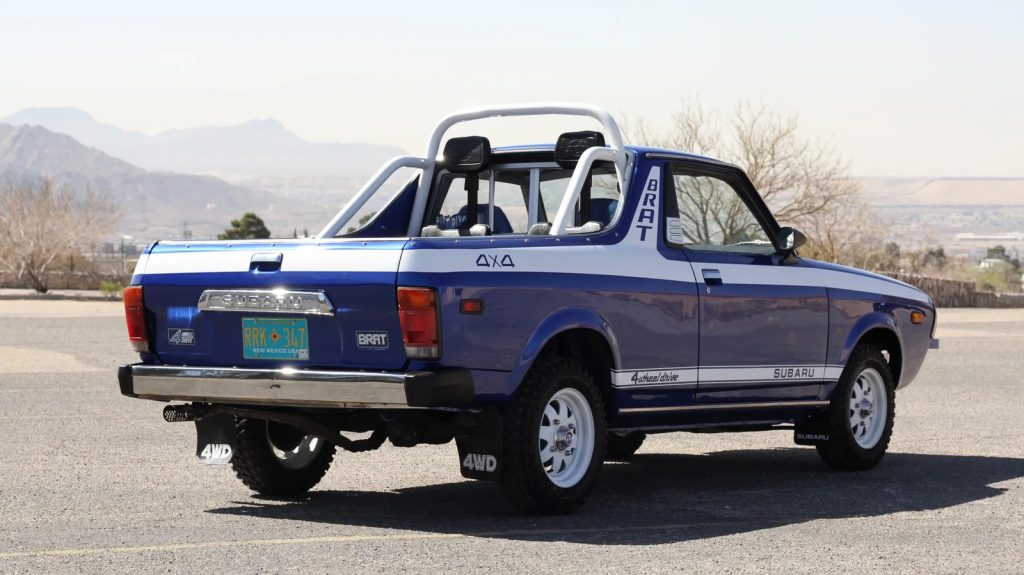
The BRAT’s four-wheel-drive capability was another reason the vehicle appealed to American buyers. It was developed during a period when demand for smaller, more fuel-efficient vehicles was rising, and compact four-wheel-drive trucks were becoming increasingly popular.
Subaru’s approach was different from simply shrinking a conventional pickup. The company essentially transformed the Leone into a car-based utility vehicle, giving American buyers something considerably smaller and more unusual than the full-size pickups dominating the market.
That formula eventually became an important part of Subaru’s identity, although the BRAT itself remained a relatively unusual product.
The Rear Seats Became a Piece of Subaru History
The BRAT’s unusual seating arrangement did more than help Subaru reduce its tariff bill. It created one of the most memorable automotive designs of the 1970s and 1980s.
The seats faced backward, meaning passengers could sit looking toward traffic behind the vehicle. They were exposed to the weather and located outside the main passenger compartment. From a modern perspective, the arrangement looks almost impossible to imagine on a new vehicle.
But it was a genuine factory installation, not an aftermarket modification. NHTSA later specifically referenced the Subaru BRAT in an interpretation concerning occupant protection.
The agency stated that Subaru had installed two rearward-facing seats in the cargo bed and explained that because these were actual seating positions intended for use while the vehicle was moving, they were subject to occupant-protection requirements.
That NHTSA document is particularly important because it confirms that the bed-mounted seats were not merely decorative or an informal way for owners to carry passengers. They were recognized as designated seating positions for regulatory purposes.
Safety expectations were also changing during the BRAT’s life. The rear jump seats eventually disappeared from U.S.-market versions.
MotorTrend reports that the seats were discontinued for the final two model years, 1986 and 1987, while other historical accounts place their removal after the 1985 model year. The important point is that later U.S. BRATs no longer carried the famous factory bed seats.
The BRAT itself remained in the American market through 1987. It continued in other markets under different names, including Brumby and Shifter, for several more years. MotorTrend notes that production and sales continued outside the United States into the early 1990s.
That makes surviving American BRATs with their original seats particularly interesting to collectors. A BRAT without the seats can still be historically significant, but an intact example preserves the feature that best explains why Subaru engineered the vehicle the way it did in the first place.
There were plenty of other unusual touches, too. Some BRATs offered a T-top roof, while the spare tire was stored under the hood rather than in the bed. The cargo area could also be fitted with a camper shell, further emphasizing that Subaru was trying to combine several vehicle categories into one compact package.
The BRAT’s legacy is therefore bigger than the joke of putting seats in a truck bed. It represents a period when automakers were willing to design vehicles around very specific economic and regulatory circumstances.
Subaru needed a way to compete in America’s growing small-pickup market without allowing the 25 percent truck tariff to destroy the economics of importing the vehicle. Its answer was to create a pickup that technically functioned as something else for tariff purposes.
The result was bizarre, but it worked. The BRAT sold in the United States from 1978 through 1987, according to MotorTrend, and established a niche as a small four-wheel-drive utility vehicle unlike anything else in Subaru’s lineup.
Today, the bed-mounted seats are remembered mostly as one of the automotive industry’s strangest regulatory workarounds. Yet they also demonstrate how strongly government policy can influence vehicle design.
Subaru did not add those seats because American consumers were demanding a safer or more practical way to ride in a pickup bed. The company added them because the economics of importing a truck made the alternative extremely expensive.
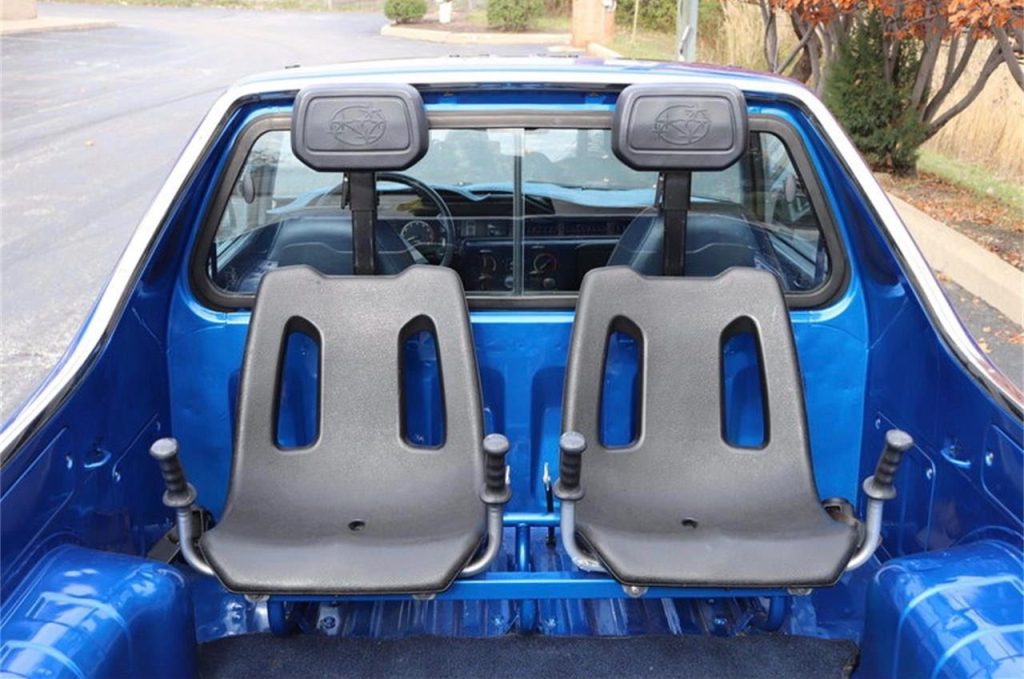
That is what makes the BRAT so fascinating decades later. Its strangest feature was also one of its most important engineering decisions.
A pair of rear-facing seats turned a tiny Japanese pickup into a passenger vehicle for tariff purposes while simultaneously creating an automotive icon. The BRAT may have looked like Subaru had simply bolted two seats into the bed because it could.
In reality, those seats represented a carefully calculated response to American trade policy, and they helped give the BRAT a place in automotive history that far more conventional pickups never achieved.
