
Modern vehicle theft is not just a question of how often a model disappears. For insurers, the bigger issue is the financial loss generated by theft claims, which depends on both how frequently vehicles are stolen and how much those claims cost.
The Highway Loss Data Institute compares insured vehicles using theft claim frequency, claim severity, and total theft losses. Its latest whole-vehicle analysis covers 2022 through 2024 model years and reveals some surprising results.
A few performance cars and luxury models produce theft losses dramatically above the industry average, while others perform much closer to normal. These figures offer a different perspective on theft risk.
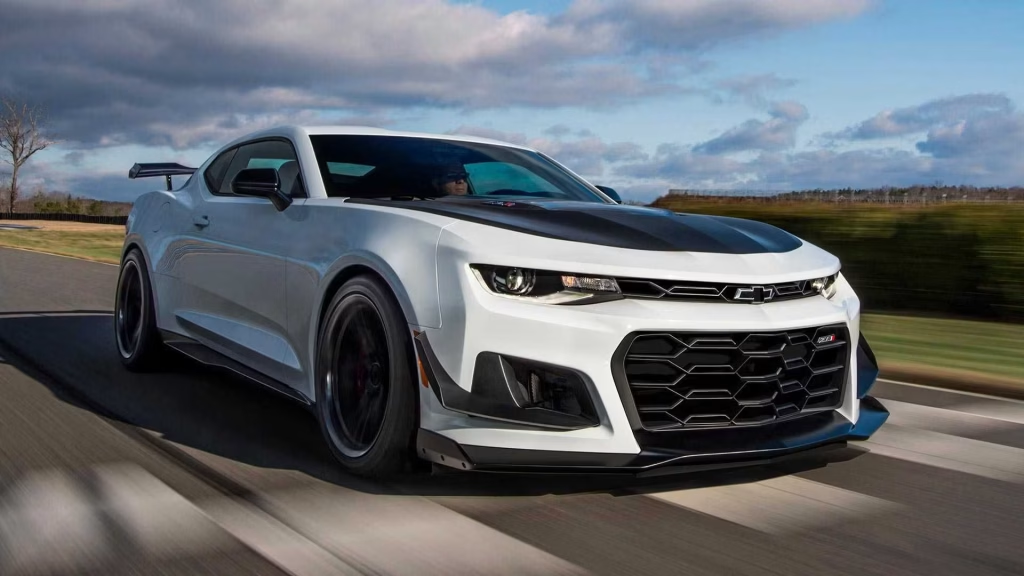
1. Chevrolet Camaro ZL1
The Chevrolet Camaro ZL1 tops HLDI’s latest whole-vehicle theft-loss analysis by a wide margin. For the 2022 through 2024 model years, it recorded a relative theft-loss score of 5,763, compared with the passenger-vehicle benchmark of 100. That means its combined theft losses were more than 57 times the industry benchmark.
The result is driven by two separate factors: how frequently the vehicle is stolen and how expensive those losses become. The ZL1 recorded a relative whole-vehicle theft claim frequency of 3,949, while its claim severity was 146. HLDI reported 127 whole-vehicle theft claims from 7,189 insured vehicle years in its dataset.
The numbers help explain why this particular Camaro variant creates such an unusual insurance problem. The ZL1 combines a powerful engine, limited production, and high value, making it considerably more attractive to thieves than an ordinary passenger car.
HLDI also notes that high horsepower is one factor helping explain why the ZL1 and regular Camaro rank so highly.
There is another important wrinkle. HLDI’s separate research found that theft claims for 2016 through 2024 Camaros rose sharply beginning in 2023, with newer examples experiencing dramatically higher theft claim frequencies than earlier cars.
This does not mean every ZL1 is likely to be stolen. HLDI’s figures are population-level insurance data, not an individual owner’s probability. Nevertheless, the ZL1’s position is difficult to ignore when insurers calculate theft-related risk.
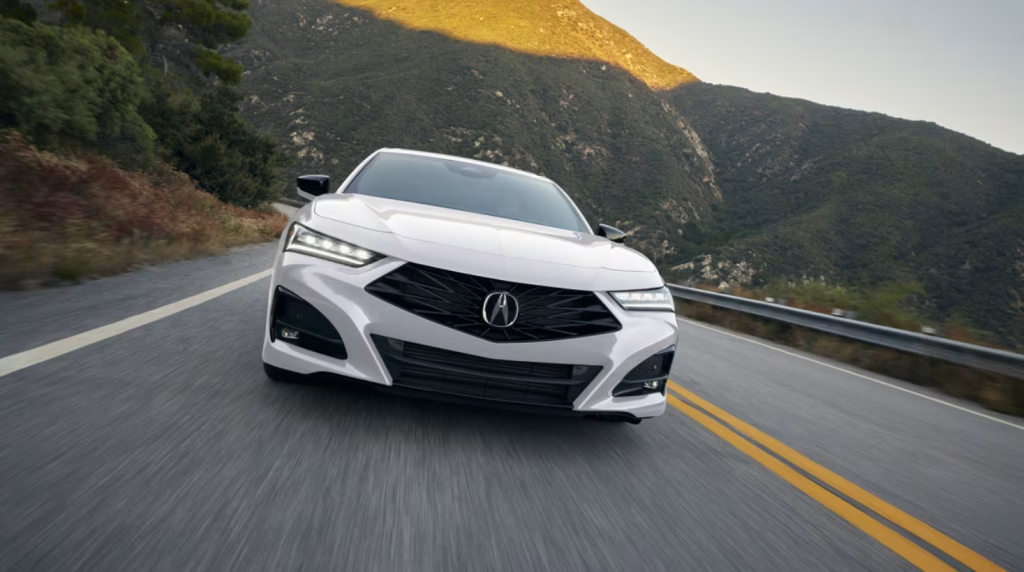
2. Acura TLX 4WD
The Acura TLX with all-wheel drive ranks second in HLDI’s latest whole-vehicle theft-loss analysis, with a relative loss score of 1,973.
That means its theft losses were nearly 20 times the average for all passenger vehicles in the study. The result is particularly interesting because the TLX is not a high-volume pickup or exotic sports car.
HLDI recorded 240 whole-vehicle theft claims across 25,100 insured vehicle years, resulting in a relative claim frequency of 2,138. Its relative claim severity was 92, indicating that the unusually high theft-loss result was driven primarily by the frequency of theft claims rather than exceptionally expensive individual claims.
That distinction matters when interpreting the ranking. “Most costly to insurers” does not necessarily mean that every stolen TLX produces an enormous payout. Instead, insurers experience unusually high aggregate losses because theft claims occur far more frequently than they do for the average vehicle.
The TLX also demonstrates why HLDI’s methodology is different from simple theft-count rankings. HLDI adjusts its calculations for factors such as vehicle exposure, allowing relatively uncommon vehicles to be compared with models that have enormous populations on American roads.
Its whole-vehicle theft analysis identifies thefts by comparing theft claim payments with expected total-loss payments for the same vehicles.
For owners, the result is a reminder that theft risk can vary significantly even among relatively ordinary luxury sedans. The TLX may look far less conspicuous than a supercharged muscle car, yet its insurance theft losses were among the highest in the entire dataset.
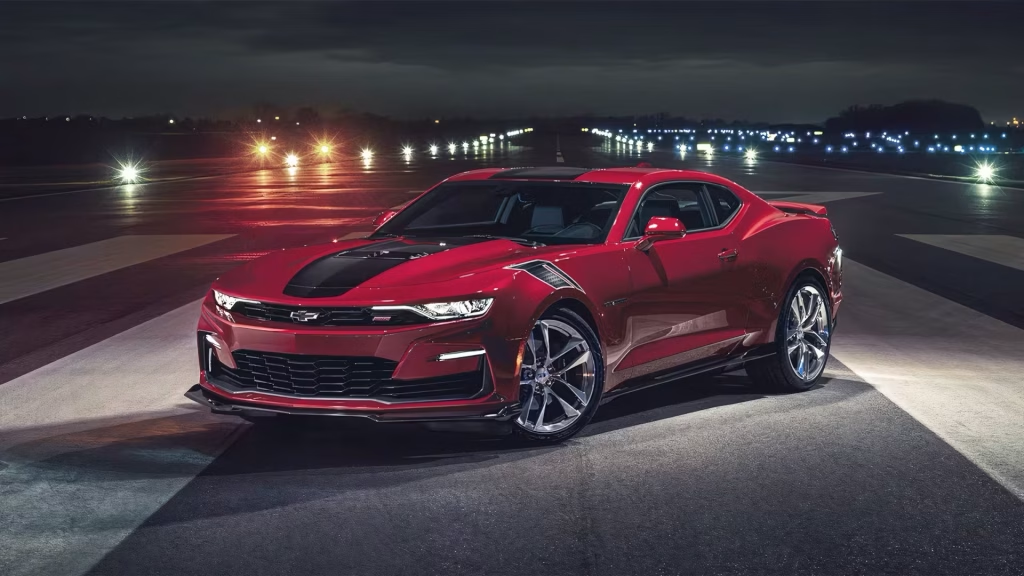
3. Chevrolet Camaro
The regular Chevrolet Camaro also records an exceptionally high theft-loss result in HLDI’s latest analysis, although it sits well below the extreme figure posted by the ZL1.
For the 2022 through 2024 model years, the Camaro posted a relative theft-loss score of 1,645, compared with the passenger-vehicle benchmark of 100. Its combined theft losses were therefore more than 16 times the industry benchmark.
The reason is primarily frequency. HLDI recorded 1,279 whole-vehicle theft claims from 151,136 insured vehicle years, producing a relative theft claim frequency of 1,389.
Its relative claim severity was 118, indicating that the average claim cost was somewhat higher than the industry benchmark. However, the difference was far too small to explain the vehicle’s exceptionally high theft-loss score on its own.
The Camaro’s theft history has also been changing quickly. Separate HLDI research found that theft claim frequency for newer Camaros rose dramatically in recent years. For 2024 model-year Camaros, HLDI recorded a theft claim frequency more than 33 times higher than the average vehicle in its comparison.
That makes the Camaro an interesting case because it shows how theft risk can accelerate within a model line. A long-running nameplate may have a completely different theft profile in newer model years than it did earlier in its production history.
HLDI’s analysis also notes that high horsepower helps explain why some vehicles appear at the top of theft-loss rankings. The Camaro’s performance-oriented image, strong engine options, and relatively high desirability may all contribute to its exposure.
For owners, the data does not mean a Camaro will inevitably be stolen. It does mean theft protection deserves more attention than the vehicle’s ordinary appearance might suggest.
4. Dodge Charger HEMI
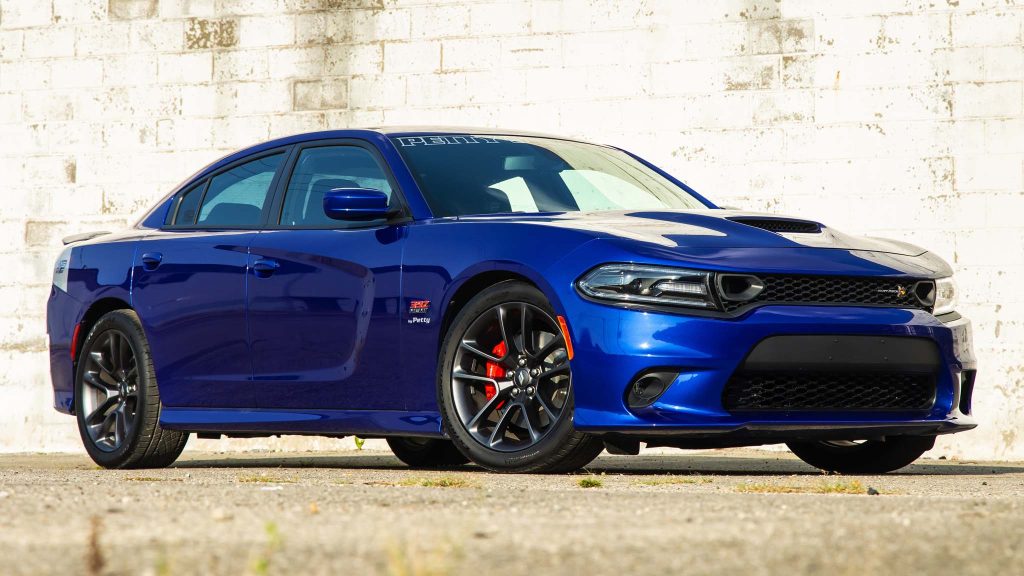
The Dodge Charger equipped with a HEMI engine also ranks near the top of HLDI’s theft-loss analysis, recording a relative theft-loss score of 1,329 for the 2022 through 2024 model years. That puts its combined theft losses at more than 13 times the passenger-vehicle benchmark.
HLDI recorded 1,177 whole-vehicle theft claims from 242,017 insured vehicle years for the Charger HEMI. Its relative theft claim frequency was 1,022, while its relative claim severity was 130. This combination shows that both the frequency of theft and the cost of individual claims contributed to the model’s position.
The Charger is particularly interesting because it is a high-volume American performance sedan rather than a limited-production exotic. Its widespread availability means there are many examples on the road, while powerful HEMI versions carry a level of performance and desirability that can make them more attractive targets.
HLDI’s data also demonstrates why theft-loss rankings should not be confused with simple police theft totals. The organization adjusts for the number of insured vehicle years, allowing models with very different populations to be compared on a common basis.
For an owner, the HEMI badge therefore carries significance beyond horsepower and acceleration. Theft exposure can influence insurance costs, and the vehicle’s security strategy matters. Parking in a secure location, using additional theft deterrents, and keeping keys protected can reduce opportunities.
The Charger HEMI’s result does not mean every example carries the same individual risk. Insurance history varies by location, driver, and vehicle characteristics. Still, the model’s elevated HLDI theft-loss figure makes it one of the vehicles buyers should research carefully when estimating ownership costs.
5. GMC Sierra 2500 Crew Cab 4WD
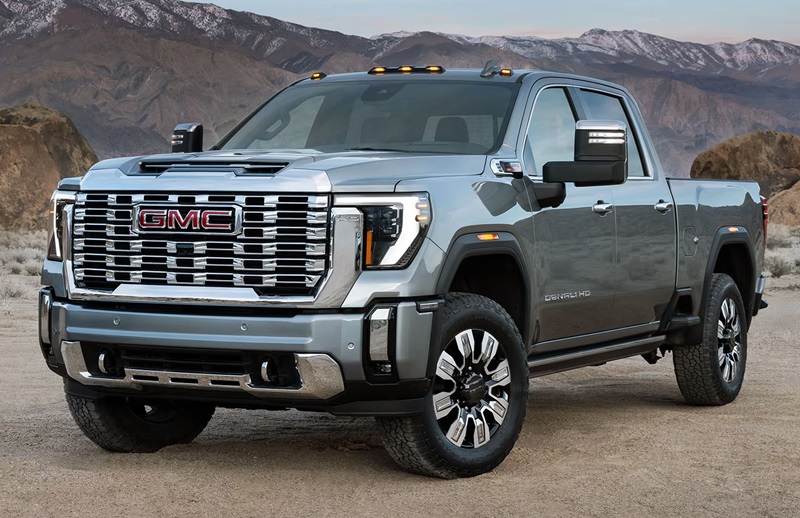
The GMC Sierra 2500 Crew Cab 4WD posted a relative theft-loss score of 1,472 in HLDI’s 2022 through 2024 model-year analysis. It ranked among the vehicles with the highest theft losses in the study and was the highest-ranked pickup in the data.
HLDI recorded 768 whole-vehicle theft claims across 167,970 insured vehicle years. Its relative theft claim frequency reached 1,023, meaning the model experienced theft claims at more than 10 times the rate of the average passenger vehicle after HLDI’s statistical adjustments.
Claim severity was also elevated at 144, so the problem was not limited to how frequently the trucks disappeared. The individual claims were also more expensive than the all-vehicle benchmark.
That combination matters to insurers. HLDI reports an average whole-vehicle theft claim of $53,217 across 2022 through 2024 passenger vehicles, while theft losses averaged $24 per insured vehicle year.
Large pickups can produce higher losses because replacing a modern heavy-duty truck is expensive, particularly when it has expensive equipment, four-wheel drive, and a powerful engine.
The Sierra 2500’s position also fits HLDI’s broader finding that pickups had the highest whole-vehicle theft claim frequency among major vehicle types in the study. The model’s high theft-loss score does not mean every owner faces the same probability, because location, driver characteristics, insurance coverage, and other factors influence individual risk.
For buyers, however, the data provides a useful warning. A heavy-duty pickup can carry a significant theft-related insurance exposure even when it is primarily purchased for work rather than performance.
6. GMC Sierra 3500 Crew Cab 4WD
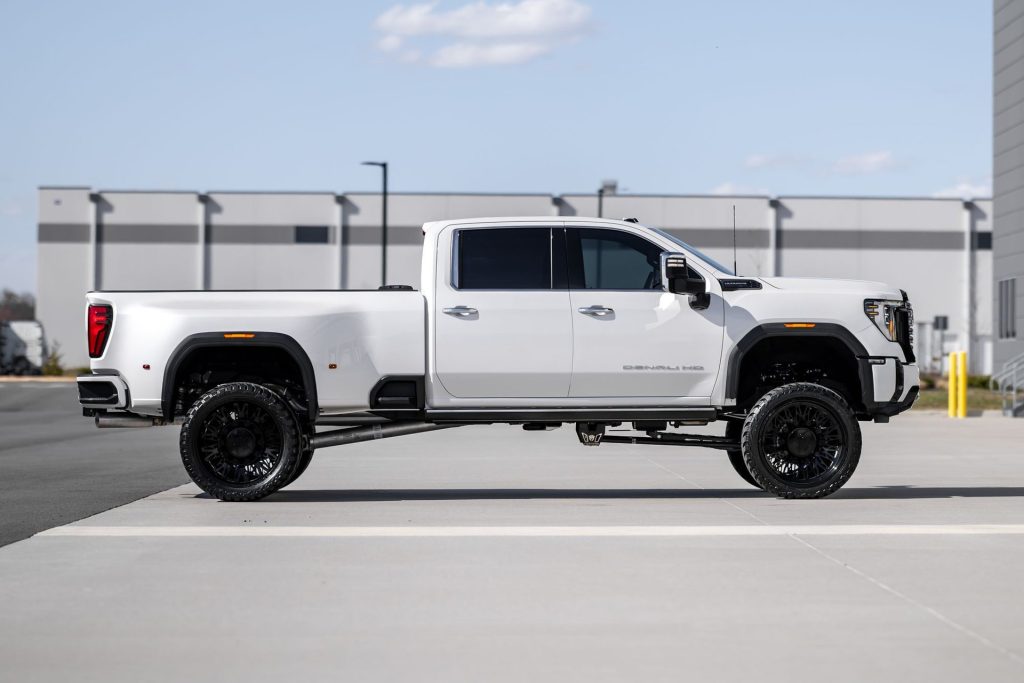
The GMC Sierra 3500 Crew Cab 4WD recorded a relative theft-loss score of 1,138 in HLDI’s 2022 through 2024 analysis. Although it ranked below the Sierra 2500, the result was still more than 11 times the passenger-vehicle theft-loss benchmark.
HLDI recorded 210 whole-vehicle theft claims from 63,375 insured vehicle years. The truck’s relative claim frequency was 742, while its relative claim severity reached 153.
That combination shows why the model produces such a large insurance loss result. It was stolen substantially more frequently than the average vehicle, and individual theft claims were also considerably more expensive.
The Sierra 3500 is a particularly costly vehicle to replace when stolen because it belongs to the heavy-duty pickup category and can be equipped with expensive powertrains and four-wheel-drive hardware. High-value configurations can also include towing equipment and other factory options that raise the vehicle’s replacement cost.
HLDI’s analysis emphasizes that its theft-loss figures are relative measures, not the percentage chance that an individual truck will be stolen. The industry average is represented by 100, while the Sierra 3500’s score of 1,138 indicates how far its insurance loss experience sits above that benchmark.
That makes the number useful when comparing vehicles, but it should not be interpreted as a prediction for a particular owner. Theft exposure can differ substantially by location and individual insurance circumstances.
For someone shopping for a heavy-duty truck, the Sierra 3500’s ranking is nevertheless worth considering alongside purchase price, insurance costs, and security equipment.
7. Dodge Charger
The Dodge Charger also ranks among the vehicles with unusually high theft losses in HLDI’s latest whole-vehicle analysis. For the 2022 through 2024 model years, the Charger posted a relative theft-loss score of 1,066, meaning its combined theft losses were more than 10 times the passenger-vehicle benchmark.
HLDI’s calculation combines two important measurements. Theft claim frequency shows how often insured vehicles generate whole-vehicle theft claims, while claim severity measures the average amount paid for those claims.
The Charger performed poorly on both measures, but theft frequency was the bigger factor behind its elevated theft-loss score.
The model’s position is also consistent with HLDI’s findings on high-performance vehicles. The organization has found that vehicles with greater horsepower tend to experience higher theft claim frequencies. Performance-oriented Chargers can therefore carry a very different theft profile from ordinary family sedans.
That does not mean every Charger is equally exposed. HLDI’s figures are based on insurance claims and insured vehicle years, so they describe population-level loss experience rather than an individual driver’s probability of having a vehicle stolen.
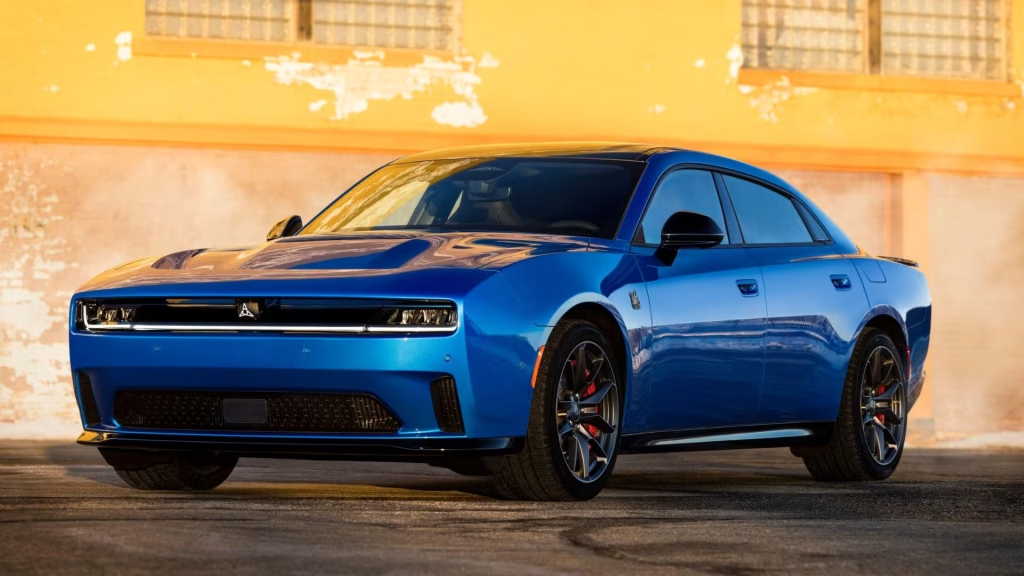
For owners, the practical concern is that theft can become expensive even when the vehicle is not particularly exotic. A Charger can be common on American roads while still generating unusually high insurance losses when stolen.
Buyers should consider the model’s theft-loss history alongside insurance quotes before purchasing. Additional security measures can also make sense, particularly for high-performance versions.
The Charger demonstrates why theft risk should not be judged simply by asking whether a vehicle looks expensive. A mainstream performance sedan can generate substantial losses when theft frequency rises significantly.
8. Dodge Challenger
The Dodge Challenger recorded a relative theft-loss score of 962 in HLDI’s 2022 through 2024 model-year data. Although that figure is below the Charger’s score, it still places the Challenger at nearly 10 times the benchmark for all vehicles.
The Challenger’s result is particularly notable because the model has a large range of powertrains, from V6 versions to high-output V8 variants. HLDI’s broader research has found that horsepower is associated with higher theft claim frequency, which helps explain why powerful performance vehicles frequently appear near the top of theft-loss tables.
The Challenger’s high theft exposure is not simply a matter of how much an individual vehicle costs. HLDI’s overall-loss calculation incorporates both the frequency of theft claims and the severity of those claims.
A vehicle can therefore produce unusually high losses because it is stolen frequently, because individual claims are expensive, or because both factors occur together.
That distinction makes the Challenger’s score more useful than a simple list of police theft totals. HLDI adjusts its results using insured vehicle exposure, allowing different vehicle populations to be compared.
For owners, the numbers do not mean that a Challenger is guaranteed to become an insurance claim. Individual theft risk varies with location, parking arrangements, security equipment, and other factors. However, its elevated loss history provides a strong reason to obtain an insurance quote before purchasing one.
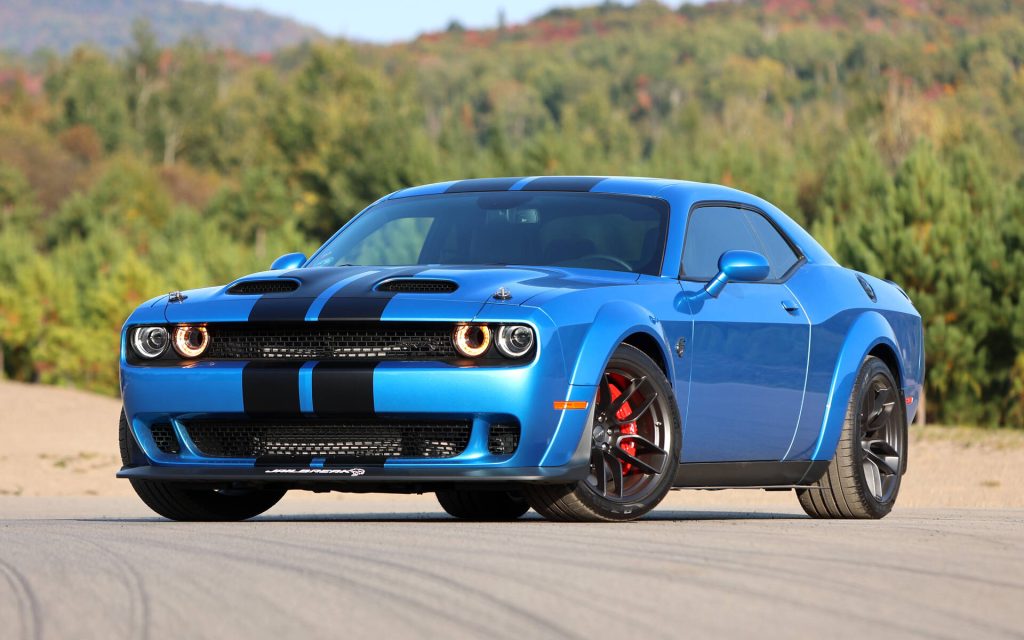
The Challenger also ended production after the 2023 model year, making the used market particularly important. Buyers considering a used example should examine both its security equipment and insurance costs rather than focusing solely on horsepower and purchase price.
9. Acura TLX
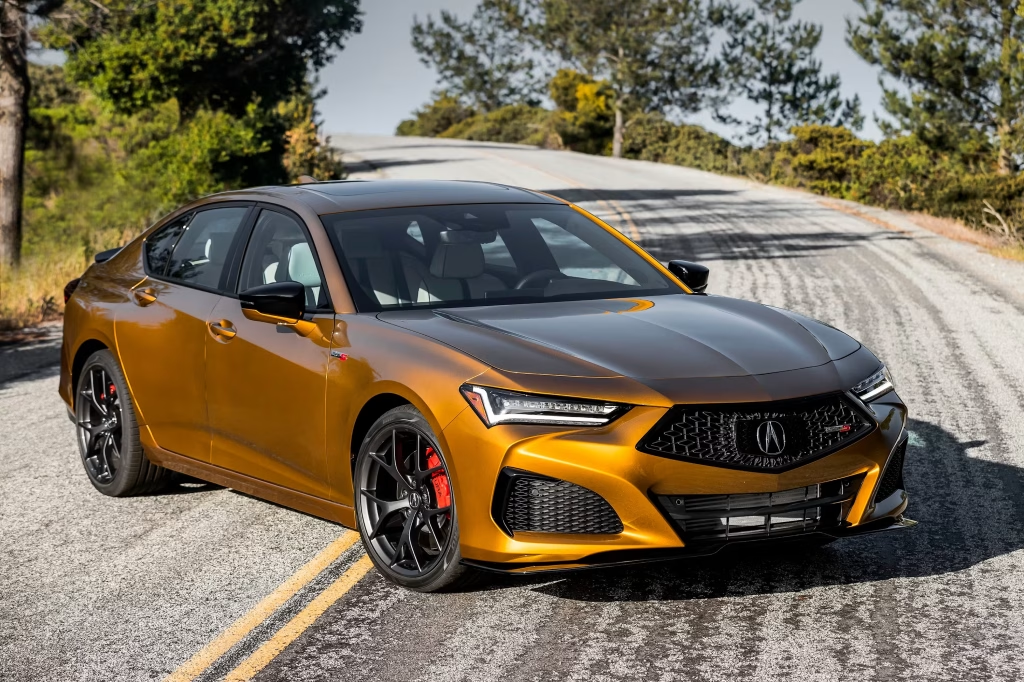
The Acura TLX appears twice in HLDI’s theft-loss data because its all-wheel-drive and front-wheel-drive versions are evaluated separately. Even after the much higher result from the AWD model, the standard TLX posts a theft-loss score of 601, placing it among the vehicles with the highest insurance losses in the study.
For 2022 through 2024 model years, HLDI recorded 75 whole-vehicle theft claims across 20,785 insured vehicle years for the front-wheel-drive TLX. Its relative theft claim frequency was 805, while its relative claim severity was 75.
These figures indicate that the model’s high theft-loss score was driven mainly by the frequency of theft claims rather than unusually costly payouts for individual vehicles.
HLDI uses 100 as its industry benchmark, corresponding to a theft loss of $24 per insured vehicle year. With a score of 601, the TLX records theft losses at roughly six times the benchmark after HLDI’s statistical adjustments.
The model’s presence here is notable because it is not a traditional muscle car or heavy-duty pickup. Its inclusion demonstrates that theft exposure can affect luxury sedans as well. The TLX combines relatively high value with desirable equipment and modern keyless technology, factors that can influence theft patterns.
HLDI standardizes its calculations for variables including geography, vehicle density, deductible, driver characteristics, and model year. This makes the comparison more meaningful than simply counting how many TLXs were stolen nationwide.
For owners, the result is a reminder that a relatively understated luxury sedan can still generate elevated theft losses. Buyers should obtain insurance quotes before purchasing and consider additional security measures if their particular vehicle is kept outdoors.
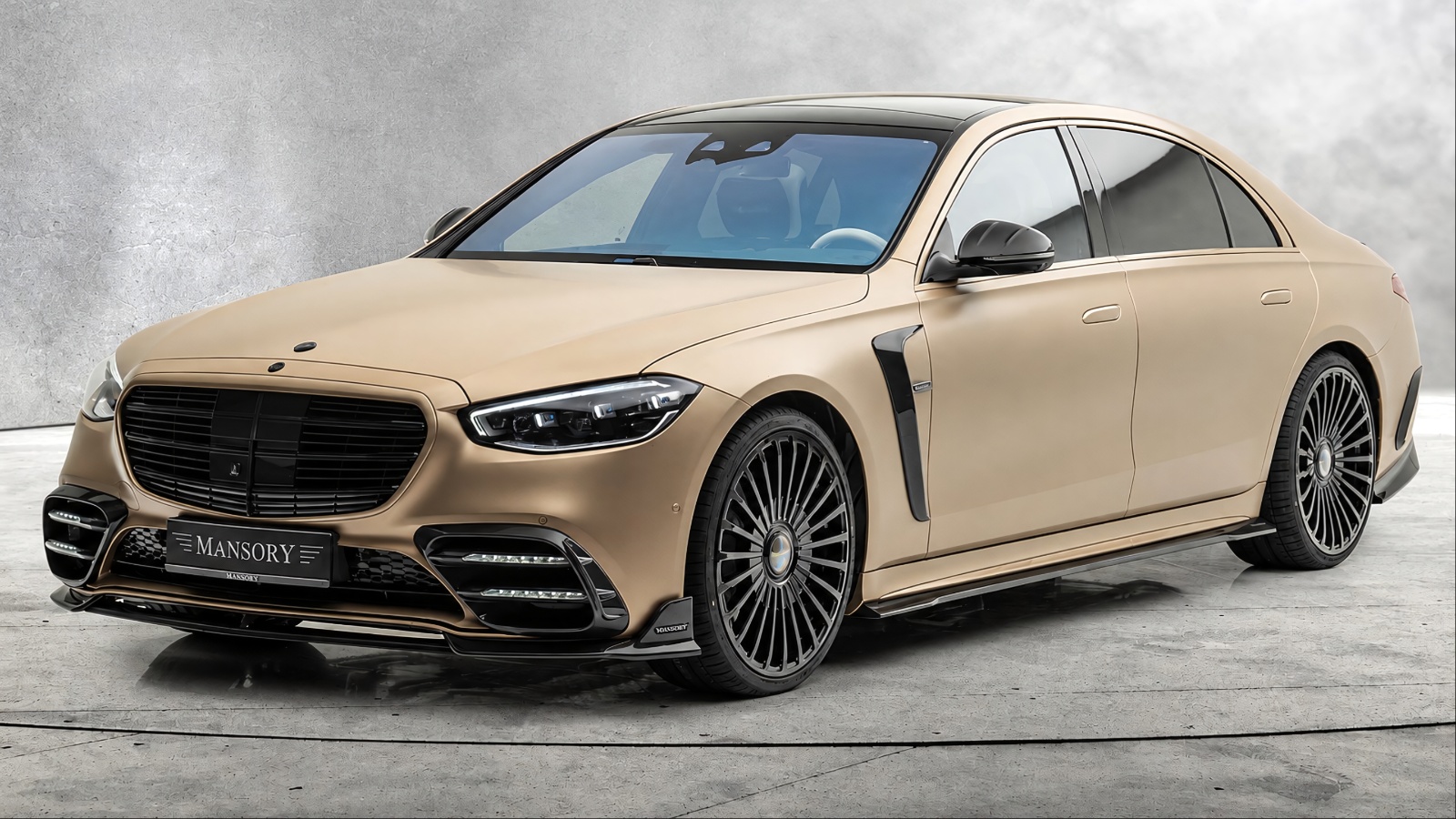
10. Mercedes-Benz S-Class
The Mercedes-Benz S-Class long-wheelbase 4WD ranks among the 10 vehicles with the highest HLDI whole-vehicle theft losses. Its score of 569 is more than five times the 100 benchmark for all passenger vehicles.
HLDI recorded 52 whole-vehicle theft claims from 43,356 insured vehicle years for the 2022 through 2024 model years. Its relative theft claim frequency was 267, while its claim severity reached 213.
That combination is what makes the S-Class particularly expensive for insurers. It was stolen more frequently than the average vehicle, but the individual claims were also substantially more costly.
The latter figure makes sense given the S-Class’s position as a high-value luxury sedan. When a vehicle of this class is stolen and qualifies as a whole-vehicle theft loss, the financial exposure can be considerably greater than with a mainstream car. HLDI’s average whole-vehicle theft claim across the entire 2022-24 passenger-vehicle population was $53,217.
The S-Class therefore illustrates an important point about insurance theft losses: frequency alone does not determine the ranking. A vehicle can generate substantial losses because it is stolen often, because each claim is expensive, or because both factors combine.
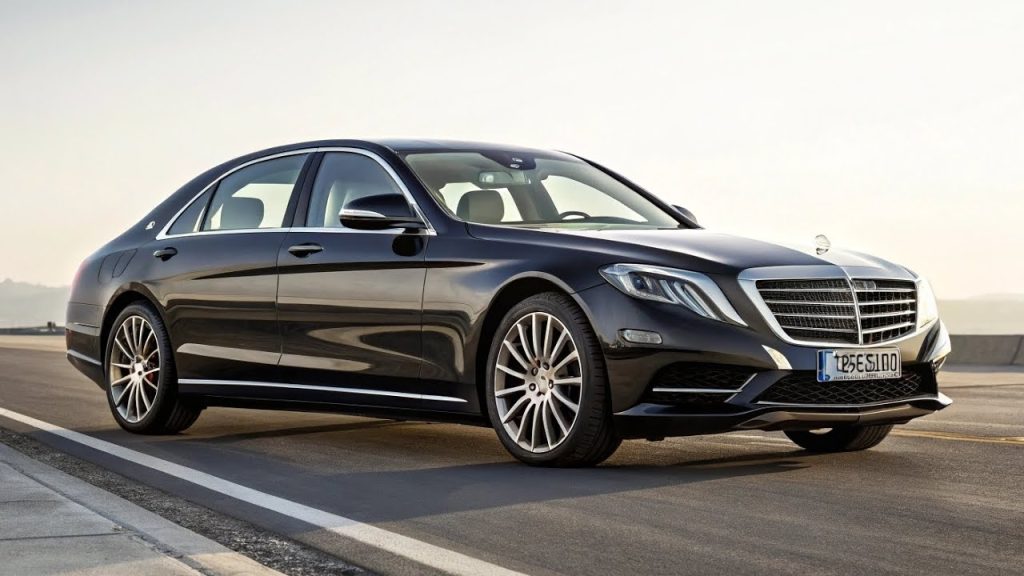
For owners, the S-Class’s elevated claim severity makes comprehensive insurance particularly important. Secure parking and modern anti-theft precautions can also help reduce exposure.
HLDI’s data does not predict the theft probability for an individual S-Class owner, but it clearly identifies the model as one of the costlier theft risks for insurers.
