

Few automotive origin stories are as entertaining as the supposed feud between Ferruccio Lamborghini and Enzo Ferrari. The popular version says Lamborghini, already a wealthy tractor manufacturer and Ferrari owner, became frustrated with repeated clutch problems in his Ferrari.
He confronted Enzo Ferrari, was allegedly dismissed as a tractor maker who did not know how to drive a Ferrari, and then decided to build his own sports cars. It is a great story, but the real history is more complicated.
The clutch problems were genuine. Lamborghini owned several Ferraris and later recalled being frustrated by their clutches. He also spoke directly with Enzo Ferrari about the issue.
What remains uncertain is whether Ferrari’s alleged insult alone caused Lamborghini to enter the automobile business. Historians and former Lamborghini employees have offered different versions of the confrontation, making the exact details difficult to verify.
What is certain is what happened next. Lamborghini founded his automobile company in 1963, recruited engineers with Ferrari experience, and soon produced the 350 GT. A successful tractor manufacturer had entered the high-performance automobile business and was preparing to challenge Ferrari.
The Ferrari Problem That Started It All
Ferruccio Lamborghini was already an accomplished industrialist before becoming an automaker. Lamborghini’s official history says he trained as a mechanic and built his fortune by converting surplus military equipment into tractors. His tractor business became highly successful, allowing him to expand into heating and cooling equipment.
By the late 1950s, Lamborghini could afford the exotic cars he admired. Among them were Ferraris, including versions of the 250 GT. He appreciated their performance but believed they had weaknesses, particularly the clutch.
Lamborghini later recalled that the clutch worked normally during ordinary driving but could slip under hard acceleration. He repeatedly returned to Maranello for repairs, yet the problem continued despite clutch rebuilds and replacements. Eventually, he decided to investigate the issue himself.
One famous account comes from Valentino Balboni, Lamborghini’s longtime test driver. Balboni told Car and Driver that Lamborghini’s tractor mechanics removed the Ferrari clutch and discovered that it was essentially a commercially available component related to one already used in Lamborghini tractors.
According to Balboni, Lamborghini was furious because he believed Ferrari was charging a substantial premium for a component his own company could obtain cheaply.
The exact financial details are difficult to verify because they come from a later recollection rather than factory records. However, Lamborghini’s own account supports the broader mechanical complaint. He genuinely experienced repeated clutch problems and believed Ferrari had failed to solve them.
Lamborghini eventually decided to speak directly with Enzo Ferrari. According to his later recollection, he complained about the clutch and told Ferrari that his cars were not good enough.
That conversation became the foundation of one of automotive history’s most famous legends.
Lamborghini recalled Ferrari responding that he might know how to build tractors but did not know how to drive a Ferrari. Other versions claim Ferrari told Lamborghini to stick to tractors while Ferrari concentrated on sports cars. The exact wording, however, varies between accounts.
MotorTrend has noted that the conversation has become partly legendary, with different versions of what was said. Former Lamborghini test driver Bob Wallace questioned the popular interpretation, arguing that Lamborghini’s decision to enter the sports-car business was influenced more by prestige and the possibility of making money than by revenge.
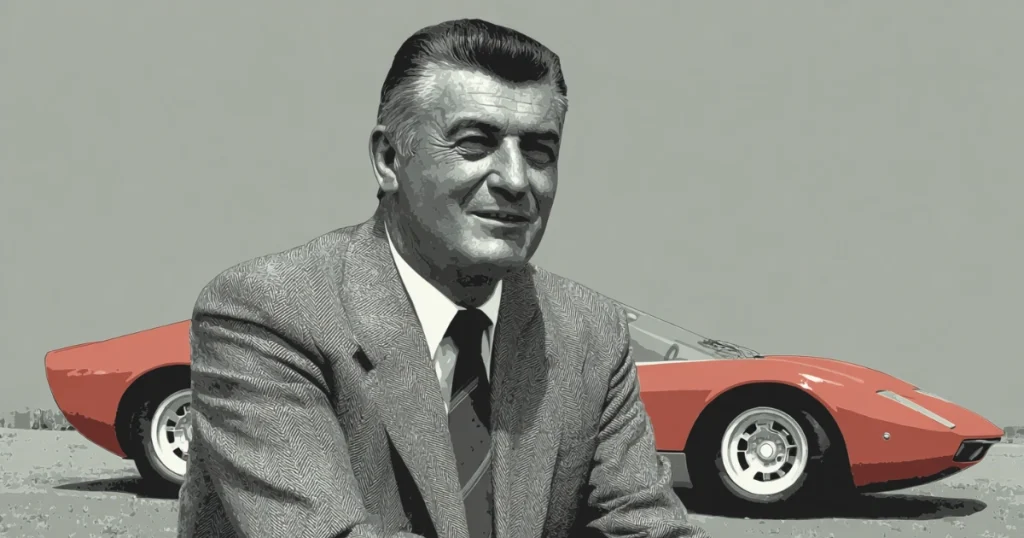
There is evidence that Lamborghini and Ferrari had a confrontation and that Lamborghini was unhappy with Ferrari’s cars.
But there is no way to prove that one insult alone caused Lamborghini to create a new car company. In reality, Lamborghini already had the resources and ambition to become an automaker.
Lamborghini Was More Than a Tractor Manufacturer
Calling Ferruccio Lamborghini simply a tractor maker misses the scale of his achievements. By the early 1960s, he was a wealthy industrialist who understood manufacturing, mechanical engineering, and business. He also had extensive experience with automobiles and had formed strong opinions about how Ferrari’s road cars could be improved.
Lamborghini did not simply want to copy Ferrari. He believed there was room for a different type of high-performance road car. Ferrari had built much of its identity around racing, while Lamborghini wanted to focus on grand touring cars that combined performance with greater refinement and comfort.
That philosophy shaped his new company. Lamborghini knew competing with Ferrari would require serious engineering talent. He assembled a strong technical team that included Giotto Bizzarrini, a former Ferrari engineer who had worked on Ferrari’s racing and road-car programs.
Lamborghini commissioned Bizzarrini to develop a high-performance V12 engine. This showed that the project was far more serious than a wealthy businessman building a vanity sports car.
The first Lamborghini prototype, the 350 GTV, appeared in 1963. The production 350 GT followed soon afterward and became the company’s first production automobile. It featured a V12 engine, a five-speed transmission, and independent suspension.
Rather than purchasing an existing engine, Lamborghini developed a sophisticated twelve-cylinder powerplant for his new automobiles. Although it had been conceived with racing ambitions, it was adapted for road use.
The 350 GT made Lamborghini’s intentions clear. This was a serious new Italian automaker attempting to compete with established manufacturers.
The company also attracted engineers familiar with Ferrari’s methods, giving Lamborghini valuable insight into the engineering philosophy of its new rival.
The rivalry soon became more than a personal disagreement. Ferrari represented a performance philosophy strongly connected to motorsport. Lamborghini took a different approach, focusing on road cars and not initially considering racing essential for building the brand.
The Cars That Changed Everything
The Ferrari dispute may have provided motivation, but Lamborghini’s cars created the company’s lasting reputation.
The 350 GT established credibility, while the Miura changed the company’s position in the automotive world. Introduced during the 1960s, the Miura combined a mid-engine layout with dramatic styling and helped redefine the modern exotic sports car.
The Countach pushed that philosophy even further. Its aggressive shape and futuristic design made it one of the most recognizable performance cars of its era. Together, the Miura and Countach transformed Lamborghini from a young Ferrari challenger into one of the world’s most famous exotic-car manufacturers.
That makes the original story especially fascinating. The confrontation reportedly began with something as ordinary as a clutch complaint, yet it helped lead to an automaker that would eventually produce some of the world’s most celebrated performance cars.
Still, revenge alone does not explain Lamborghini’s decision. He already had the money, manufacturing experience, and engineering knowledge to start the company. He owned Ferraris and believed their road cars could be improved. More importantly, he recognized a commercial opportunity.
The Ferrari dispute may have supplied the emotional spark, but Lamborghini’s ambitions provided the foundation.
Bob Wallace said prestige and the possibility of making money were important motivations, while historian Massimo Delbò suggested something likely happened between Lamborghini and Ferrari, even if the exact conversation remains known only to the two men.
The timeline supports that interpretation. Lamborghini established his automobile company in 1963, and the 350 GT arrived soon afterward. The automobile business became the third major successful venture of his career, following tractors and heating and cooling equipment.
He therefore did not simply wake up after an argument with Ferrari and decide to build sports cars. He was already positioned to enter the industry. The dispute appears to have strengthened his determination.
And Lamborghini’s response was much bigger than fixing a clutch. He built an entirely new automotive company.
Within a relatively short period, that company was producing V12 grand tourers capable of challenging Ferrari. The Miura and Countach later established Lamborghini as a major force in the exotic-car market.
The rivalry that reportedly began with an argument over a clutch eventually became one of the most famous rivalries in automotive history.
The exact words exchanged between Lamborghini and Ferrari may never be established with certainty. Later recollections differ, and historians continue to treat parts of the confrontation as legend.
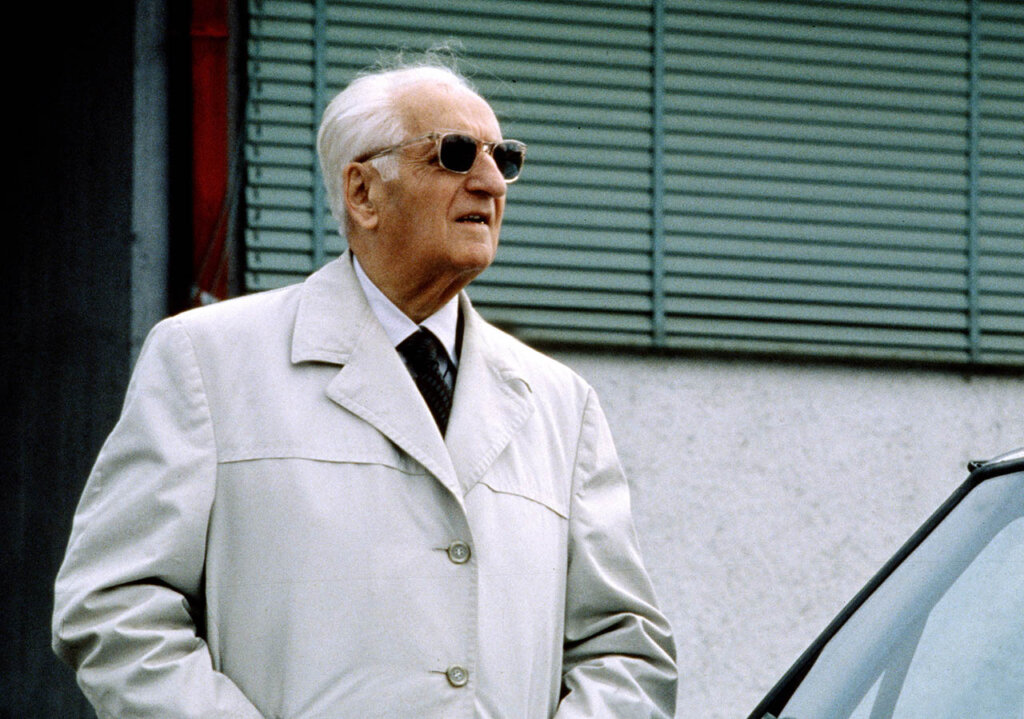
But the central elements are clear. Ferruccio Lamborghini was a successful tractor manufacturer, owned Ferraris, experienced repeated clutch problems, confronted Enzo Ferrari, and subsequently entered the sports-car business.
So, did Ferrari really insult Lamborghini and accidentally create one of the world’s most famous supercar brands? The answer is more complicated.
The insult may have lit the fuse, but Lamborghini’s engineering knowledge, manufacturing experience, wealth, and ambition drove everything that followed. Ferrari did not single-handedly create Lamborghini.
Ferruccio Lamborghini did. What began as a complaint about a clutch ultimately produced a company capable of standing beside Ferrari, creating legendary cars such as the Miura and Countach and turning one disputed confrontation into one of the greatest stories in automotive history.
