
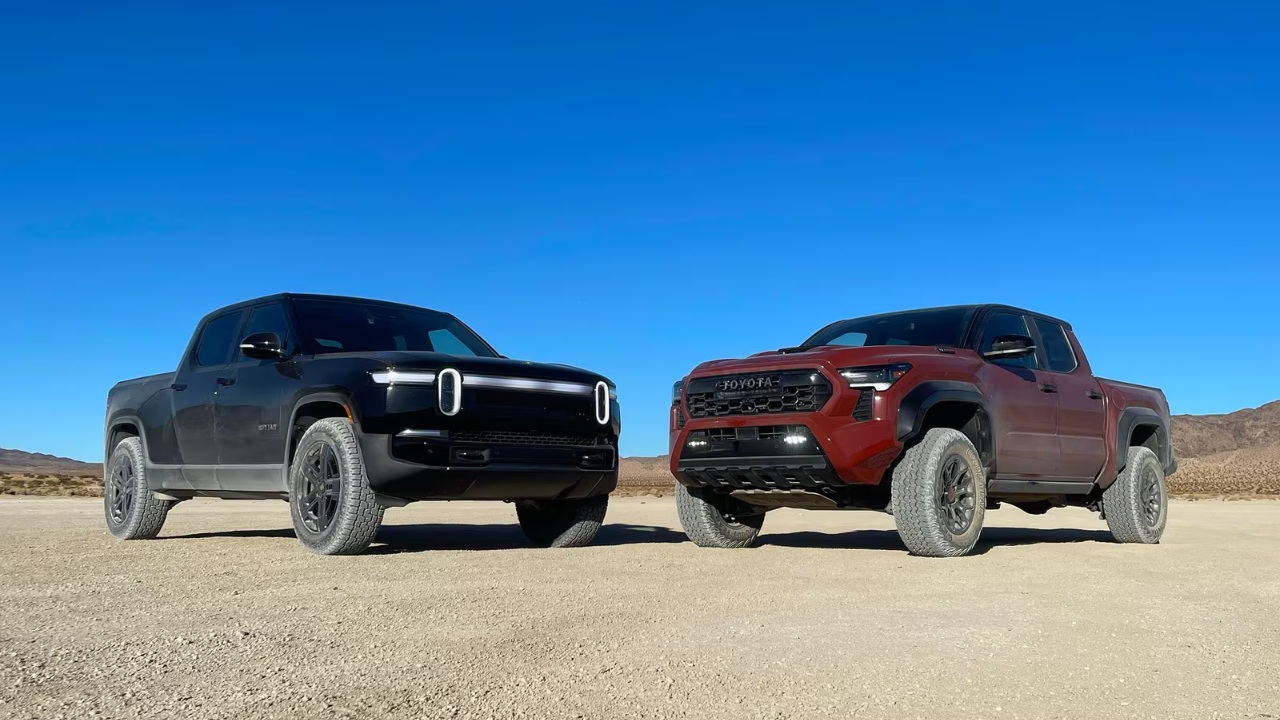
In Fresno, the Toyota Camry is the single most popular used vehicle on the road. In Detroit, no Toyota takes the top spot at all. Los Angeles belongs to a Honda. Houston belongs to a Ford.
Consumer Reports scored Toyota 66 out of 100 for predicted reliability and Rivian 24. That is a 42-point gap between first and last place across 26 brands, built on problems reported by more than 380,000 vehicles rather than opinions about badges.
A reliability score tells you nothing about whether anyone near you drives one, or whether a shop near you can fix it. Those are different questions, and the answers are geographic.
One clarification the headlines mostly skipped. Toyota topped Consumer Reports’ reliability index. Subaru topped the separate Overall Brand Report Card, which folds in road-test scores, safety ratings and owner satisfaction. If you are shopping purely on the odds of something breaking, the reliability index is the list that matters to you.
The Cities Where Each Brand Actually Shows Up
iSeeCars analyzed more than 9 million used car sales across the last five model years and calculated each model’s share nationally, by state and across the 50 largest metro areas.
A Toyota is the most popular used vehicle in six of the fifty biggest markets. The Camry leads Fresno-Visalia, California with 4.1 percent of all one to five-year-old used sales. The Corolla leads Miami-Fort Lauderdale at 3.3 percent, Orlando-Daytona Beach at 3.2 percent, West Palm Beach-Fort Pierce at 2.5 percent and Washington, DC at 2.1 percent. The Tacoma leads Portland, Oregon at 2.9 percent.
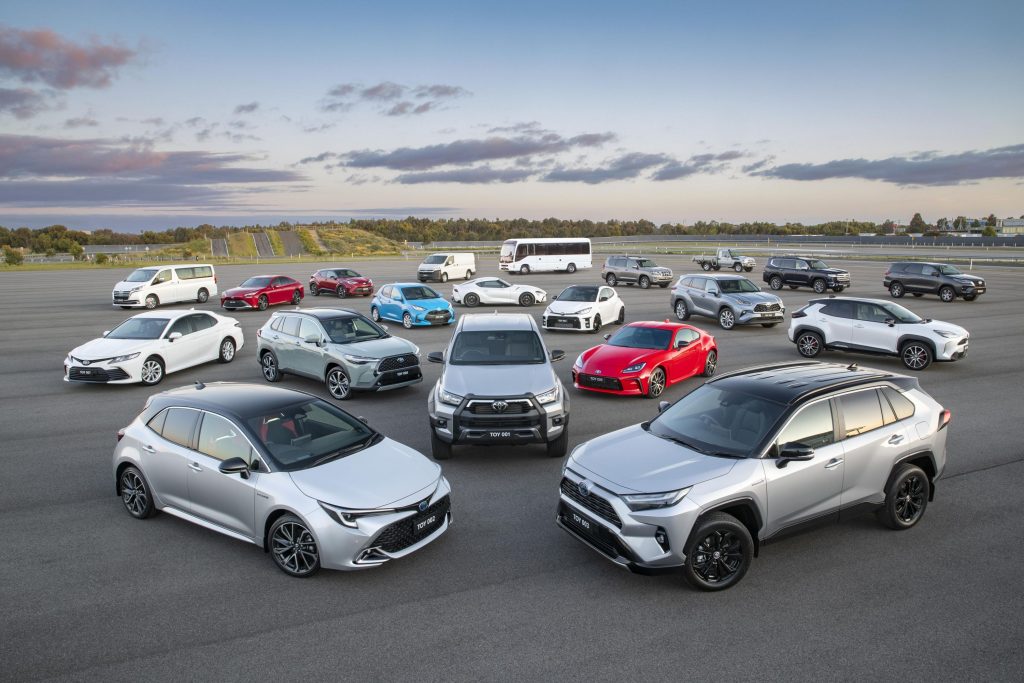
At state level Toyota takes five: the Camry in California and Maryland, the Corolla in Florida, the RAV4 in Massachusetts and the Tacoma in Oregon.
Nationally the Camry finished sixth, the Corolla ninth and the Tacoma tenth, with the RAV4 eleventh and the Highlander twentieth.
Six of fifty is real, but it is not dominance. The Ford F-150 still leads 22 of the top 50 metros. The Chevrolet Malibu leads seven, the Silverado five, and the Equinox and Corolla four each.
Toyota tops none of the four largest markets in the country. Los Angeles goes to the Honda Civic at 2.5 percent. New York goes to the Honda CR-V at 2.3 percent. Chicago goes to the Chevrolet Equinox at 2.0 percent and Houston to the Ford F-150 at 3.4 percent. Add Dallas-Fort Worth and Atlanta, both F-150, San Antonio at 3.5 percent for the Silverado, and Phoenix, which the Malibu takes at 2.6 percent.
The most concentrated market in the entire study is Detroit, where the Chevrolet Equinox holds 5.4 percent of one to five-year-old used sales. No metro in America is more loyal to a single nameplate, and it is not a Toyota.
Rivian operates at a different scale. The company reported 97 service locations, 36 showrooms and close to 700 mobile service vehicles, with more than 20 sites in development. Its Texas network covers Austin, Dallas, Houston, Katy, San Antonio and Fort Worth. In Florida it runs service centers in Miami, Tampa, Fort Myers and Orlando. It opened an East Coast headquarters in Atlanta, near the Georgia plant it broke ground on last September.
In California, the largest car market in the country, Toyota finished 2025 as the top-selling brand with 17.8 percent share against Honda’s 10.8 percent and Tesla’s 9.9 percent, out of 1,582,031 retail registrations. Toyota pushed that to 19.0 percent through the first half of 2026. The Camry alone recorded 62,324 California registrations in 2025 and took 50.0 percent of the entire midsize and large car segment. The RAV4 added 65,604.
The sales gap is wider than the service map suggests. Rivian delivered 42,247 vehicles in 2025, down 18 percent from 51,579 in 2024 after the $7,500 federal EV tax credit expired at the end of September. Toyota sold 1,947,079 vehicles in the US under the Toyota brand alone, up 4.89 percent from 1,856,276. Counting Lexus, Toyota Motor North America moved 2,518,071 units. Even treating every Rivian delivered anywhere in the world as a US sale, Toyota outsold it roughly 46 to one.
No public dataset ranks every automaker city by city, so treat these as registration and sales figures rather than a definitive popularity table.
That distribution gap is the practical one. A Camry can go to almost any independent shop in any of those 50 metros. An R1S starts around $77,000 and goes to one of 97 locations.
What the 42-Point Gap Actually Measures
The full brand order tells you more than the two endpoints. Toyota took first at 66, followed by Subaru at 63, Lexus at 60, Honda at 59, BMW at 58 and Nissan at 57. Tesla climbed to ninth at 50, up from seventeenth the previous year.
The bottom five are all domestic brands: Chrysler and GMC tied at 31, Jeep at 28, Ram at 26 and Rivian at 24. Rivian did not lose narrowly to the brand above it and badly to the leader. It lost by two points to Ram and by 26 points to Tesla, which builds the same category of vehicle with the same category of software.
Consumer Reports also quantified the powertrain penalty underneath those numbers. Plug-in hybrids generate roughly 70 percent more reported problems than gasoline vehicles. Full electrics generate roughly 40 percent more. Conventional hybrids do not carry that penalty, which is why Toyota’s hybrid-heavy lineup props up its average rather than dragging it down.
Read the brand score as a starting filter, not a verdict on the car in front of you. A brand average hides enormous spread. Before you sign anything, pull the score for the exact model and the exact model year, because a 66-point brand can still sell you a below-average vehicle and a 24-point brand can still sell you a competent one.
Why Toyota Leads While Rivian Finishes Last
Toyota’s advantage is platform age. The company has spent decades building high-volume vehicles for the US market, and the engines, transmissions, hybrid systems and electrical architecture in most of its lineup have already been through several rounds of correction.
The 2026 results show that correction cycle working in real time. The Tacoma was redesigned for the 2024 model year and moved from below-average reliability last year to above average this year. The Tundra, which launched on an all-new platform with new engines for 2022, took longer, and Consumer Reports now rates the 2026 model as average. Six Toyota models placed among the ten most reliable vehicles in the survey.
That does not make every Toyota safe. The brand score is an average, and the redesigned models are exactly the ones with the least data behind them.
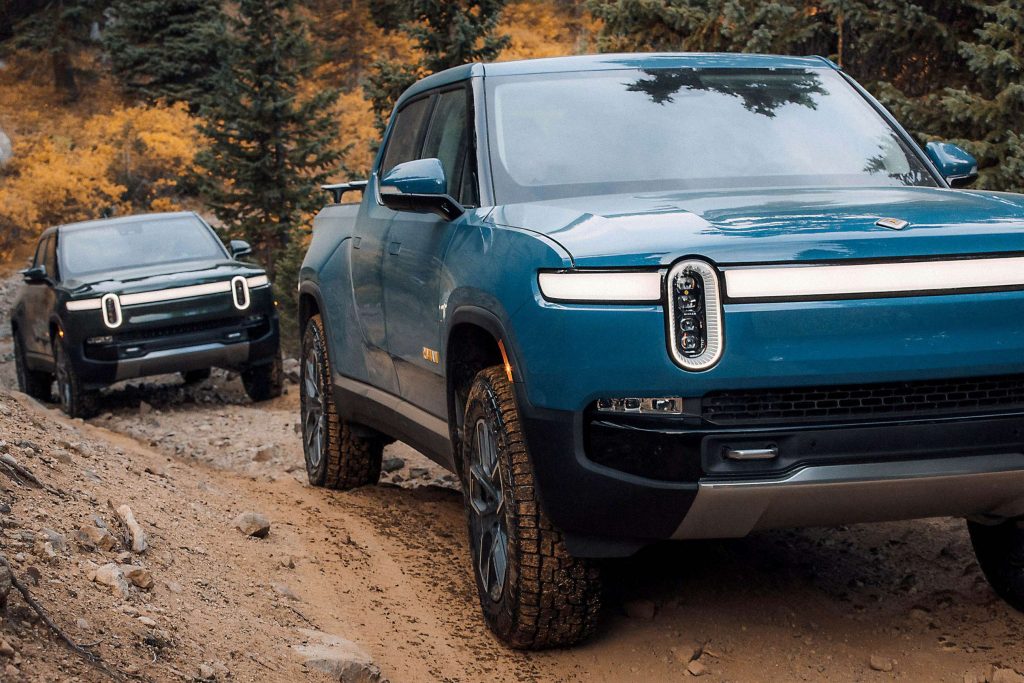
Rivian’s problem is the opposite of Toyota’s. The R1T and R1S are young vehicles running sophisticated battery, electrical and software systems, and Consumer Reports named the R1T among the least reliable vehicles in the 2026 report. Both Rivian models sit below or well below average.
Volume is part of it. Toyota has millions of vehicles feeding warranty claims back into engineering every year. Rivian has tens of thousands.
None of this means Rivian owners are unhappy. Consumer Reports has repeatedly placed Rivian near the top of owner satisfaction, and the two measurements answer different questions. Satisfaction asks whether you would buy it again. Reliability asks how many times it went back to the shop. You can answer yes to the first and still have a service history that reads badly.
The Warranty Gap Nobody Mentions
Here is the part that matters more to your wallet than the score itself, and the part most coverage gets wrong.
Rivian’s headline warranty number is 8 years or 175,000 miles. Per Rivian’s own New Vehicle Limited Warranty Guide, that figure applies only to 2022 through 2024 vehicles with the Large battery pack and Quad-Motor drivetrain. Large-pack Dual-Motor vehicles get 8 years or 150,000 miles. Standard and Standard-Plus packs get 8 years or 120,000 miles. For 2025 vehicles, Max packs get 150,000 miles and Standard packs get 120,000.
The comprehensive warranty, the one covering everything that is not the battery or the motors, is shorter still. It runs 5 years or 60,000 miles only on the 2022 to 2024 Large Quad configuration. On most other configurations it is 4 years or 50,000 miles.
Now read what that warranty excludes. Rivian’s guide specifically lists normal noise, vibration and harshness as not covered, including brake noise, road noise, and general creaks, squeaks and rattles. Wheel alignments, tire balancing, brake pad replacement and body fit concerns such as misaligned panels or squeaky hinges fall under a separate adjustment warranty that expires at one year or 12,000 miles.
Build quality and electronics are precisely what Consumer Reports penalizes Rivian for. The long battery warranty everyone quotes does not touch them.
Two more clauses worth knowing. The warranty does not apply to a vehicle used primarily for business or commercial purposes. And coverage may transfer to a second owner, but Rivian tells buyers to contact the company before purchase to confirm nothing has been voided. If you are buying a used R1T or R1S, make that call before you hand over money.
One piece of good news in the same document: taking the vehicle to a shop that is not Rivian-authorized does not automatically void the warranty, and using third-party parts alone does not void it either.
What to Check Before You Buy Either One
Pull the model-year score, not the brand score. A 66 belongs to Toyota, not to the specific vehicle on the lot.
Find out how long the current generation has been in production. Consumer Reports’ own data shows redesigned models carry the most risk, which is why the Tundra needed four model years to reach average.
If you are looking at an EV or a plug-in hybrid, price the 40 and 70 percent problem premiums into your expectations rather than assuming the powertrain is simpler because it has fewer moving parts.
For a Rivian, find the exact battery pack and drivetrain configuration before you believe any warranty number. The difference between 175,000 miles and 120,000 miles of battery coverage is decided by which pack the original buyer ordered.
Count the months left on the comprehensive warranty, not the battery warranty. On most configurations it expires at 4 years or 50,000 miles, and it is the one that covers electronics and interior hardware.
If the Rivian is used, call the company before you pay and confirm the coverage transfers and nothing has been voided.
Check where your nearest authorized service center is before you buy, not after something stops working.
