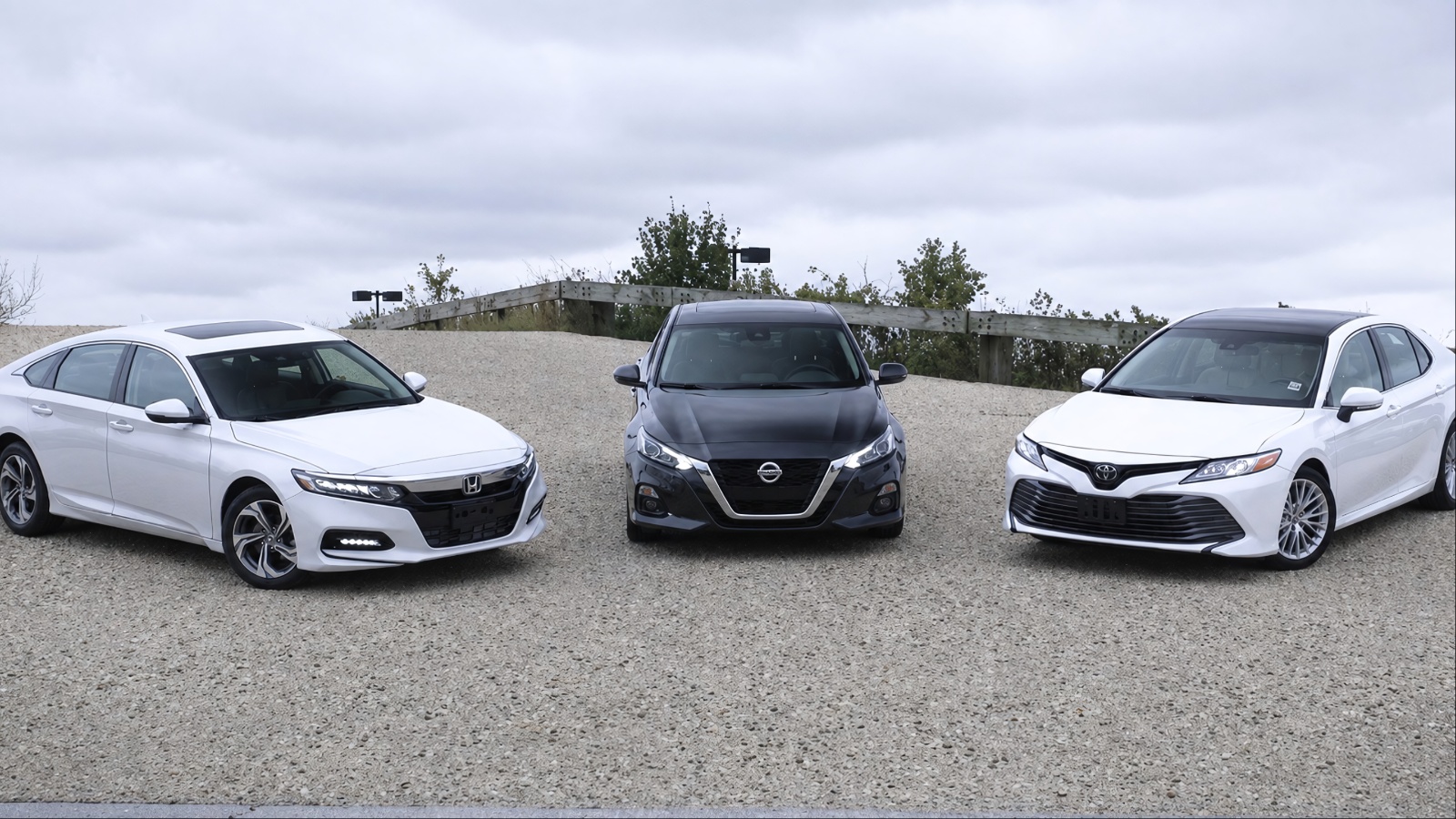
The Toyota Camry, Honda Accord, and Nissan Altima have spent years fighting for attention in America’s midsize sedan market. Each has built a different reputation.
The Camry is known for reliability and efficiency; the Accord has traditionally focused on balanced driving dynamics and interior space, while the Altima has positioned itself as a more affordable alternative with available all-wheel drive.
For 2026, the differences are even more significant. Toyota has made the Camry exclusively hybrid, giving every version an electrified powertrain. Honda continues to offer both a conventional turbocharged engine and a hybrid system in the Accord.
Nissan takes the opposite route with the Altima, retaining a conventional 2.5-liter four-cylinder engine and a continuously variable transmission.
Pricing also separates them. The 2026 Accord starts at $28,395, and the Camry begins at $29,600, while Nissan’s current 2026 Altima pricing information lists the sedan in the high-$20,000 range, depending on configuration and pricing updates.
The Accord’s gasoline model produces 192 horsepower, while its hybrid versions make 204 horsepower. Toyota’s Camry uses a 2.5-litre four-cylinder hybrid system, with front-wheel-drive and all-wheel-drive configurations available.
That leaves buyers with three sedans that may look similar on a dealership lot but have very different priorities.
Here is how the Camry, Accord, and Altima compare across six of the categories that matter most to everyday sedan buyers.
Price and Value
Price is the first area where the Nissan Altima makes a strong case. The sedan has traditionally undercut the Camry and Accord at the entry level, giving buyers a way into a midsize sedan without immediately paying for a hybrid powertrain.
Nissan’s 2026 Altima lineup includes S, SV and SR configurations, with the published pricing for the range varying depending on the specific model and drivetrain.
The Altima also gives buyers something neither competitor provides in quite the same way: a conventional gasoline powertrain combined with available all-wheel drive. That makes it particularly interesting for shoppers who want traditional mechanical simplicity and additional traction without moving into an SUV.
The Accord starts at $28,395 for the LX. That price gets buyers a 192-horsepower turbocharged 1.5-liter four-cylinder, CVT, front-wheel drive, wireless Apple CarPlay and Android Auto compatibility, a 10.2-inch digital instrument cluster, and a wireless phone charger.
The Accord’s SE starts at $30,695 and adds equipment such as heated front seats, a moonroof, and 19-inch wheels.
The Camry starts higher at $29,600 for the 2026 LE. Unlike the Accord and Altima, however, the Camry does not require buyers to choose a higher trim or pay extra for electrification. Every 2026 Camry uses a hybrid powertrain. The LE also delivers an impressive 52 mpg city and 49 mpg highway according to Toyota’s estimates.
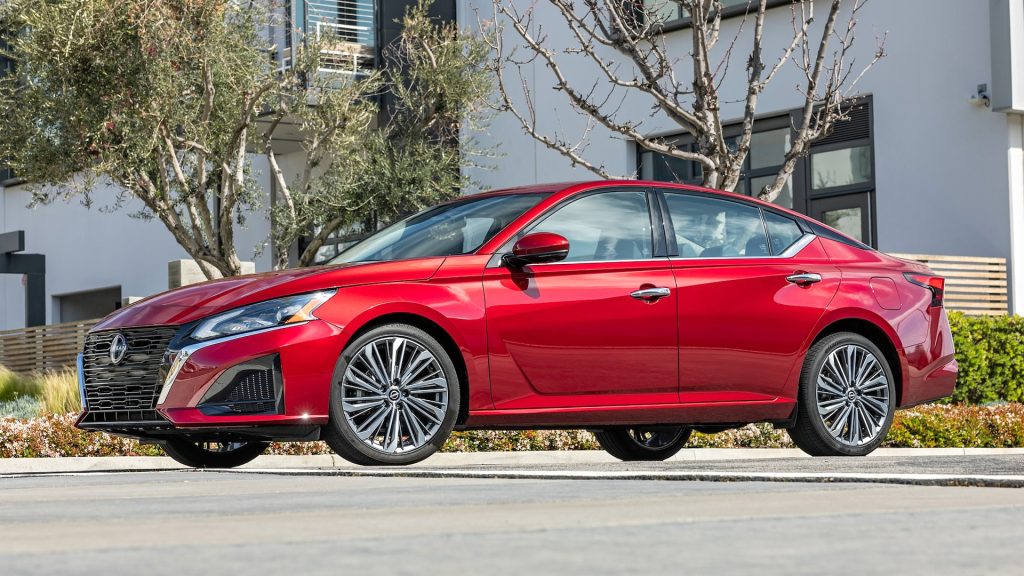
This creates an interesting value equation. The Altima wins on purchase price, the Accord provides an attractive balance between entry price and standard equipment, while the Camry asks buyers to spend more initially but provides hybrid efficiency from the beginning.
For shoppers focused strictly on the lowest initial price, Nissan has the advantage. For buyers calculating fuel savings over several years, the Camry becomes more compelling.
Winner: Nissan Altima
Powertrain and Performance
The three sedans take completely different approaches to performance. The Altima uses a 2.5-liter naturally aspirated four-cylinder engine paired with Nissan’s Xtronic CVT. Depending on configuration, Nissan lists the engine at 188 horsepower.
The setup is not designed to turn the Altima into a sports sedan, but it provides straightforward acceleration and predictable operation. The availability of all-wheel drive is also an important advantage for drivers who prioritize traction.
The Camry has abandoned its previous gasoline-only strategy. The 2026 model uses a 2.5-liter four-cylinder hybrid system across the range.
Front-wheel-drive models use the hybrid system with impressive efficiency, while all-wheel-drive versions add an electric motor to the rear axle. Toyota offers several configurations, including the LE, SE, Nightshade, XLE, and XSE.
The Accord gives buyers the most interesting combination of choices. The LX and SE use a 1.5-liter turbocharged four-cylinder producing 192 horsepower and 192 lb-ft of torque. Buyers wanting stronger efficiency can move to the hybrid lineup, where the powertrain produces 204 horsepower.
Honda’s hybrid system also provides the instant response associated with an electric motor, making it feel different from the conventional Accord.
The Accord’s advantage is not simply its horsepower figure. It offers two distinct personalities. The turbocharged car provides familiar gasoline-engine behavior, while the hybrid delivers stronger efficiency and a more immediate power delivery. Hybrid models also receive selectable drive modes, including Sport and Individual modes.
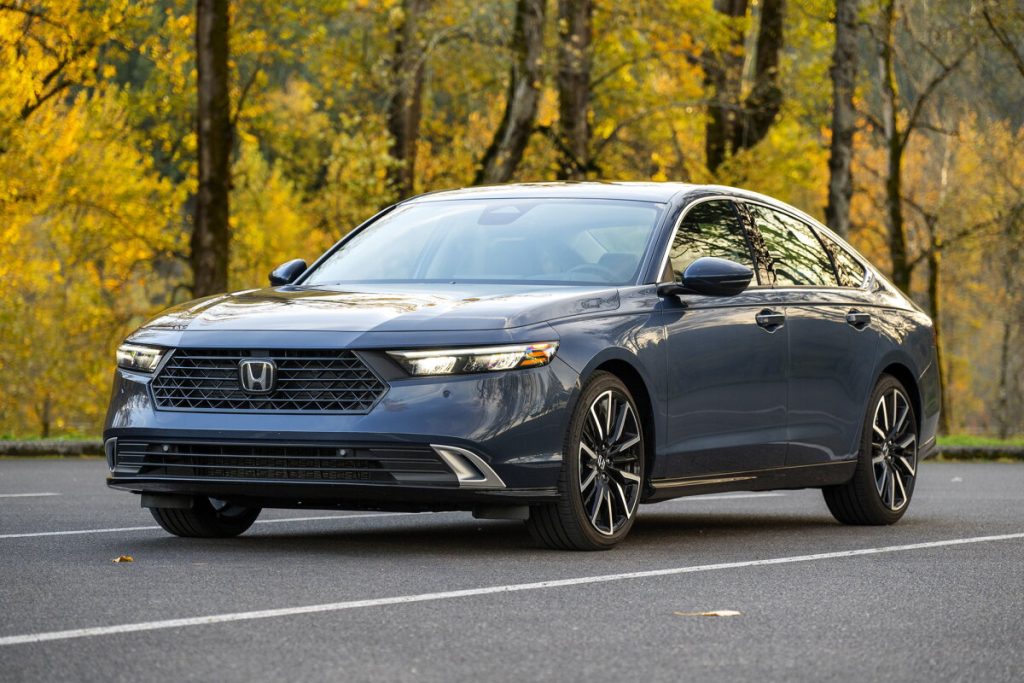
The Camry is arguably the most efficient performance compromise, while the Altima is the most conventional. The Accord, however, gives buyers the broadest choice between traditional power and hybrid performance.
That flexibility matters because different sedan buyers have different expectations. Someone replacing an older gasoline sedan may prefer the turbocharged Accord, while someone chasing fuel economy can choose the hybrid without changing models.
Winner: Honda Accord
Fuel Economy
This is where the Camry delivers its clearest advantage. Toyota has turned the Camry into a hybrid-only sedan for 2026, and that decision has produced exceptional fuel-economy numbers.
The Camry LE front-wheel-drive model is rated at an estimated 52 mpg city and 49 mpg highway. Even other versions remain highly efficient, with Toyota listing figures such as 47/45 mpg for several front-wheel-drive trims. All-wheel-drive models remain efficient as well, with the LE AWD rated at 50 mpg city and 49 mpg highway.
The Accord is the closest competitor. Its conventional LX achieves 29 mpg city, 37 mpg highway, and 32 mpg combined. The hybrid lineup is significantly more efficient. Honda lists the EX-L Hybrid at 51 mpg city, 44 mpg highway, and 48 mpg combined, while the Sport Hybrid, Sport-L Hybrid, and Touring Hybrid are rated at 46/41/44 mpg.
Those numbers make the Accord Hybrid a legitimate rival. In fact, the EX-L Hybrid’s 48 mpg combined rating puts it very close to the Camry’s strongest configurations.
The Altima cannot match either hybrid sedan. Nissan’s published figures for the 2026 lineup show conventional gasoline models reaching around 30 to 32 mpg combined depending on configuration. The SR is listed at 27 mpg city, 37 mpg highway, and 31 mpg combined in one current specification set.
The difference becomes important for drivers who cover large annual mileage. A commuter traveling thousands of miles each year can potentially save substantial money by choosing a Camry Hybrid rather than a conventional gasoline sedan.
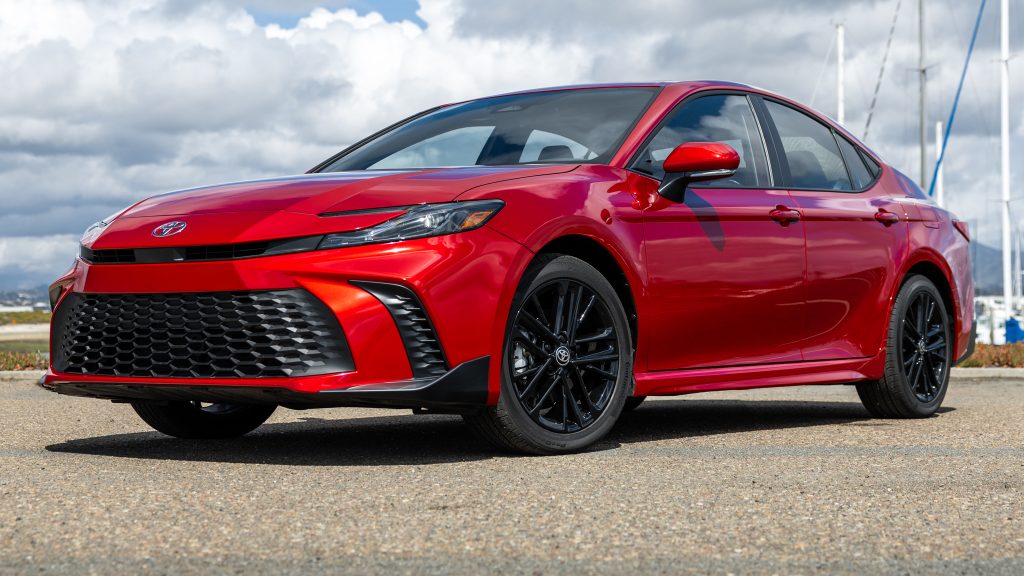
The Camry also avoids making fuel economy a trim-specific luxury. Buyers do not need to select a special hybrid version because hybrid technology is standard across the lineup.
The Accord deserves credit for offering an excellent hybrid economy, but Toyota has made efficiency the central purpose of the entire Camry lineup.
Winner: Toyota Camry
Interior Space and Practicality
The Accord has long been one of the strongest sedans in this class when practicality is considered, and the current generation continues that approach.
Honda designed the Accord around a spacious cabin with generous rear-seat room and a large trunk. That matters because many sedan buyers are not purchasing these cars simply as commuter vehicles. They may carry adults in the back seat, transport luggage on road trips, or use the trunk for everyday shopping.
The Camry is also a practical five-seat sedan, and Toyota’s latest generation has a modern cabin with a clean dashboard layout and useful storage. Its available hybrid system does not turn the car into a cramped package. The sedan remains easy to use as a family vehicle, and Toyota offers both front-wheel-drive and all-wheel-drive configurations.
The Altima is surprisingly competitive in this area. Nissan lists 43.8 inches of front legroom and 35.2 inches of rear legroom, along with 100.6 cubic feet of passenger volume in configurations without a moonroof. Its trunk provides 15.4 cubic feet of cargo capacity.
The problem for Nissan is that the Accord’s cabin feels more carefully optimized as a complete package. The Honda offers a particularly strong combination of rear-seat usability, trunk capacity, seating comfort, and cabin design.
The Accord also provides a 60/40 split-folding rear seat, allowing owners to expand the cargo area when carrying longer items. That feature becomes particularly useful for people who want sedan efficiency without giving up some of the versatility associated with a crossover.
The Camry remains a comfortable and practical choice, and the Altima provides plenty of usable space. But when the priority is carrying passengers and cargo without stepping into an SUV, the Accord’s packaging gives it the advantage.
Winner: Honda Accord
Technology and Safety
All three sedans provide modern safety equipment, but the Accord has a particularly strong technology package at the upper end of the lineup.
Honda equips the Accord with its Honda Sensing suite, which includes features such as collision mitigation braking, road departure mitigation, adaptive cruise control, and lane keeping assistance. Available equipment includes blind-spot information, rear cross-traffic monitoring, parking sensors, and traffic-sign recognition.
The technology story becomes stronger as buyers move through the Accord lineup. The Touring Hybrid features a 12.3-inch touchscreen, Google built-in, a head-up display, and Bose premium audio. Lower trims still receive useful equipment, including wireless smartphone compatibility and a digital instrument cluster.
Toyota takes a similarly safety-focused approach with the Camry. The 2026 model includes Toyota Safety Sense 3.0, with features such as Lane Tracing Assist and Full-Speed Range Dynamic Radar Cruise Control. Toyota also uses technology designed to monitor driver attention and assist with emergency situations.
The Altima is equipped with Nissan Safety Shield 360, which includes a range of driver-assistance technologies. Nissan also provides Apple CarPlay integration, an 8-inch touchscreen, and remote engine start on applicable versions. Higher trims can add equipment such as a Bose premium audio system.
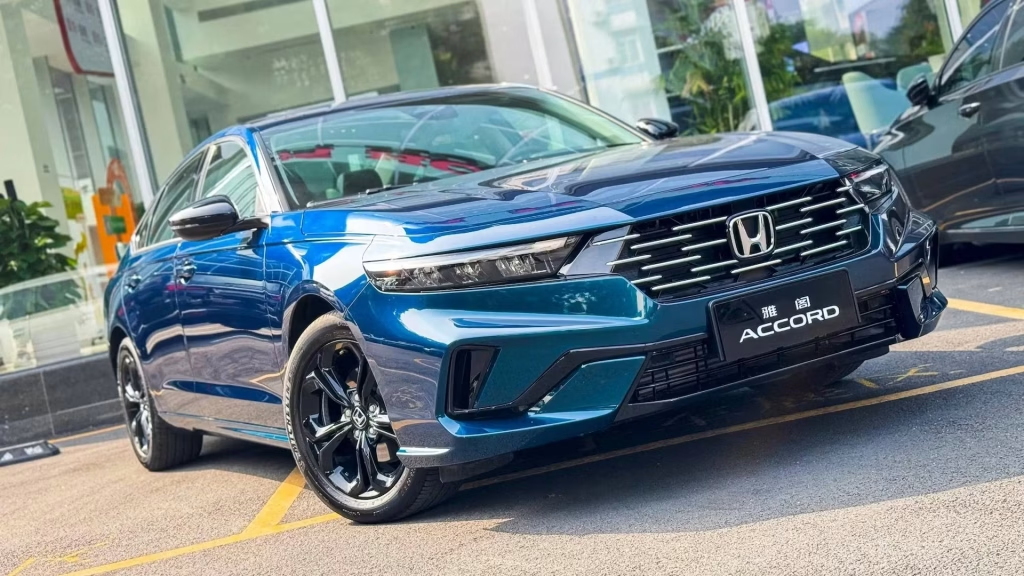
The difference is not that the Altima lacks technology. It is that Honda’s available system feels more modern at the top of the range. The 12.3-inch display, Google built-in, head-up display, wireless connectivity and premium audio give the Accord a stronger technology ceiling.
The Camry is close behind, particularly because Toyota provides a strong safety foundation throughout the lineup. Nissan remains competitive, but its infotainment hardware and presentation are starting to feel less ambitious beside the newest Honda and Toyota systems.
Winner: Honda Accord
All-Weather Capability and Everyday Driving
This category is much closer because each sedan has a different advantage. The Nissan Altima has the most obvious mechanical advantage for buyers who prioritize winter traction.
Intelligent All-Wheel Drive is available, giving the sedan a capability that is not offered on the Accord. That makes the Nissan appealing to drivers who regularly encounter snow and want the confidence of additional traction without buying an SUV.
Toyota counters with available all-wheel drive on the hybrid Camry. Instead of relying on a conventional mechanical arrangement, the system uses an electric motor to provide rear-wheel assistance.
This allows Toyota to combine all-weather traction with the efficiency of the hybrid powertrain. The 2026 Camry LE AWD is rated at 50 mpg city and 49 mpg highway, according to Toyota.
The Accord is the outlier. Its 2026 lineup remains front-wheel drive, meaning buyers looking specifically for an all-wheel-drive midsize sedan will have to look elsewhere.
For ordinary daily driving, the Camry’s hybrid powertrain gives it another advantage. Electric motor assistance provides smooth initial acceleration, while regenerative braking can recover energy that would otherwise be lost. Toyota’s approach makes the car particularly well suited to stop-and-go commuting.
The Altima remains easy to drive and has the benefit of a familiar gasoline engine and CVT. Its relatively low curb weight compared with some hybrid competitors also helps it maintain a conventional sedan feel. Nissan lists curb weights around 3,281 pounds for the SV FWD and 3,399 pounds for the SV AWD.
The Camry’s combination of hybrid efficiency, available AWD, and smooth low-speed operation gives it the strongest everyday package. The Altima deserves credit for its AWD availability, while the Accord remains the best choice for someone who prefers front-wheel drive and a more traditional driving character.
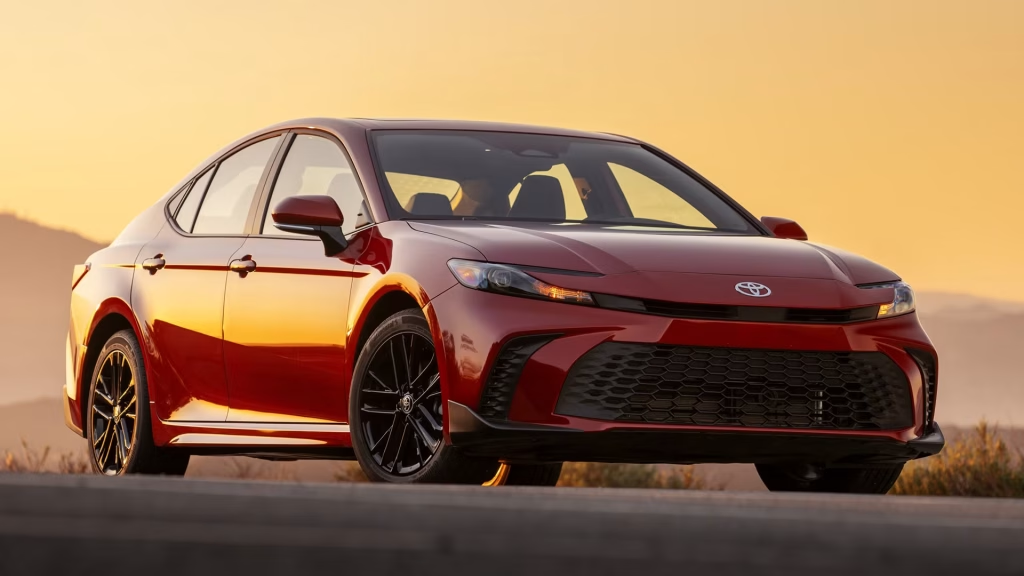
For a broad range of commuting conditions, however, the Camry manages to combine more of the desirable traits into one package.
Winner: Toyota Camry
The 2026 Toyota Camry, Honda Accord, and Nissan Altima are no longer simply three versions of the same midsize sedan formula.
The Nissan Altima is the value-focused choice. Its lower entry price and available all-wheel drive make it attractive to buyers who want a conventional gasoline sedan and do not want to pay a premium for hybrid technology. Its cabin is spacious enough for family use, and its straightforward powertrain remains familiar.
The Honda Accord is the most balanced choice. It provides a conventional turbocharged engine for buyers who want traditional power, while its hybrid versions offer 204 horsepower and excellent fuel economy. It also has one of the strongest cabins in the segment, along with a particularly impressive technology package at the top of the lineup.
The Toyota Camry is the efficiency champion. Toyota has made hybrid power standard, and that gives the sedan a major advantage at the fuel pump. Its available AWD system also means buyers can combine electrification with additional traction.
With the LE reaching an estimated 52 mpg city and 49 mpg highway, the Camry sets the benchmark for efficiency among these three sedans.
The category results make the decision clearer:
| Category | Winner | The Edge |
|---|---|---|
| Price and Value | Nissan Altima | Lower entry prices give budget-conscious buyers more affordable access. |
| Powertrain and Performance | Honda Accord | Two powertrain choices provide stronger flexibility for different driving preferences. |
| Fuel Economy | Toyota Camry | Standard hybrid power delivers the strongest fuel-economy figures here. |
| Interior Space and Practicality | Honda Accord | Spacious seating and useful cargo flexibility make it family-friendly. |
| Technology and Safety | Honda Accord | More advanced available displays, connectivity, and driver-assistance technology strengthen its package. |
| All-Weather Capability and Everyday Driving | Toyota Camry | Hybrid efficiency combines with available all-wheel drive for versatile daily use. |
Final Winner: Honda Accord
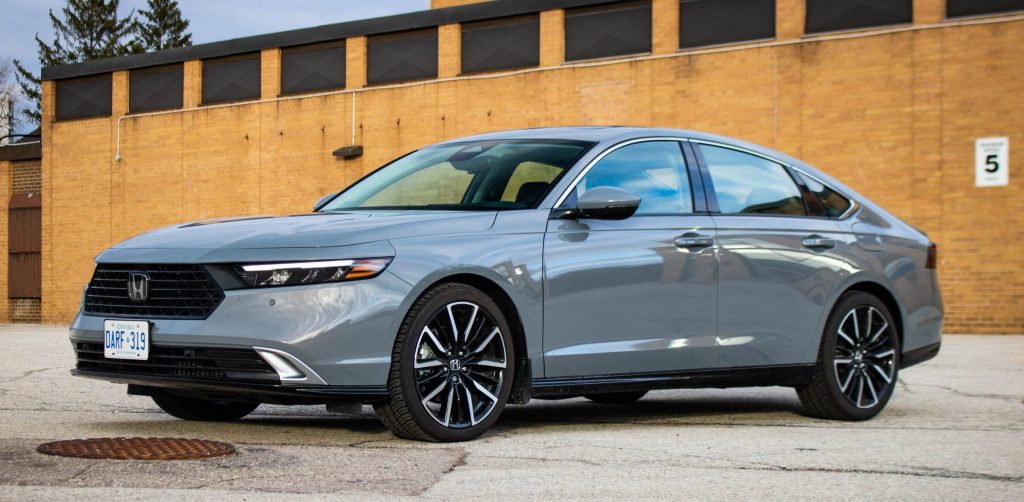
The Honda Accord takes the comparison by winning three of the six categories, while the Toyota Camry wins two and the Nissan Altima takes one. That does not mean the Accord is the obvious choice for every buyer.
Someone who drives long distances and wants maximum fuel economy should take the Camry very seriously. Its hybrid-only strategy gives it an efficiency advantage that neither rival can consistently match. The Camry is also the better choice for buyers who want AWD without sacrificing hybrid technology.
The Altima makes the most sense for shoppers who place purchase price and conventional powertrain operation ahead of fuel savings. Its available AWD system further separates it from the Accord.
But for the buyer looking for the strongest combination of performance choices, interior practicality, technology, and everyday usability, the Accord has the broadest appeal.
Its 192-horsepower turbocharged model provides a lower-cost entry point, while the 204-horsepower hybrid models give buyers a more efficient alternative without changing vehicles. That versatility is what gives the Honda Accord the win in this three-way comparison.