
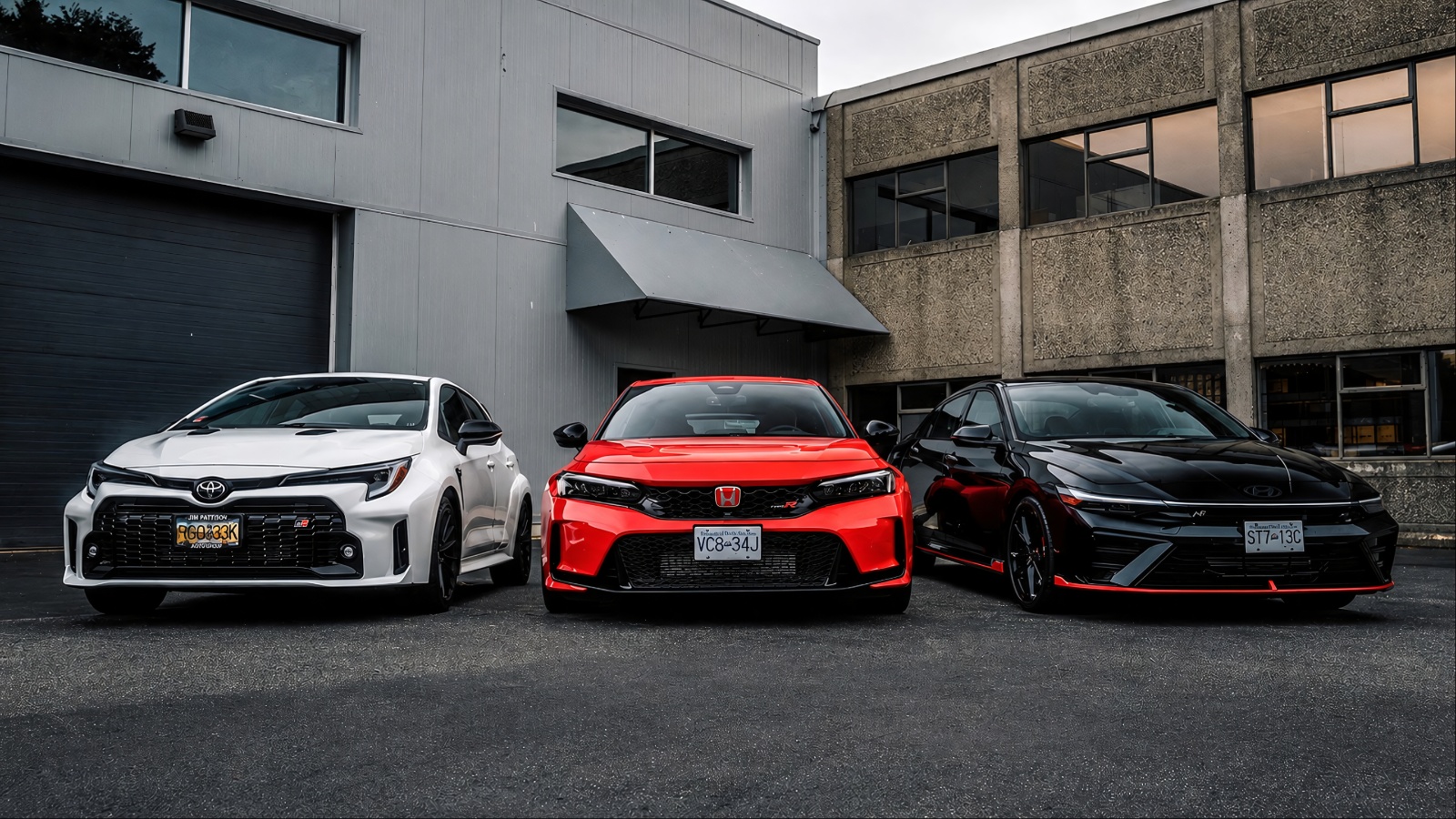
The compact sedan segment remains one of the smartest places to shop for an affordable new car. Buyers can still get strong fuel economy, useful interior space, modern safety technology, and low running costs without moving into a more expensive SUV. Three of the most recognizable choices are the Toyota Corolla, Honda Civic, and Hyundai Elantra.
For 2026, these three cars have noticeably different strengths. The Corolla leans heavily into efficiency, proven practicality, and Toyota’s reputation for long-term ownership. The Civic offers a more engaging driving experience, a hybrid option with 200 horsepower, and one of the most polished cabins in the class.
The Elantra counters both with a lower starting price, generous technology, and a wider range of powertrain choices, including a 201-horsepower N Line and an exceptionally efficient hybrid.
Pricing makes the competition especially interesting. The 2026 Elantra starts at $22,625, and the Corolla starts at $23,125, while the Civic sedan starts at $24,695.
That means the cheapest car is not automatically the one with the best value, and the most expensive car is not necessarily the most capable.
Here is how the three compare across six categories that matter most when choosing a compact sedan.
Price and Value
The Hyundai Elantra enters this comparison with an immediate advantage because it has the lowest starting price. The 2026 Elantra SE starts at $22,625 before freight, taxes, title, and licensing charges.
The 2026 Toyota Corolla LE starts at $23,125, while the Honda Civic sedan begins at $24,695. That gives Hyundai a $500 advantage over the Corolla and a $2,070 advantage over the Civic at the entry point.
The difference becomes more interesting when standard equipment is considered. The Elantra SE comes with a 147-horsepower 2.0-liter four-cylinder, an 8-inch touchscreen, wireless Apple CarPlay and Android Auto, LED projector headlights, and second-row USB charging ports.
Hyundai is essentially trying to make the base car feel like a complete vehicle rather than an inexpensive starting point that requires several options.
The Corolla LE uses a more powerful 169-horsepower 2.0-liter four-cylinder and provides 32 mpg city, 41 mpg highway, and 35 mpg combined. Toyota also offers the Corolla with a hybrid powertrain, giving buyers another route toward lower fuel costs.
The Civic starts higher, but its $24,695 LX includes a 150-horsepower 2.0-liter engine, Honda Sensing safety technology, a 7-inch touchscreen, Apple CarPlay and Android Auto compatibility, LED headlights, and adaptive cruise control with low-speed follow.
Honda also offers a Civic Sport Hybrid beginning at $29,395. It produces 200 horsepower and returns an EPA-rated 50 mpg city and 47 mpg highway. The hybrid brings considerably more performance and efficiency, although the price jump is substantial.
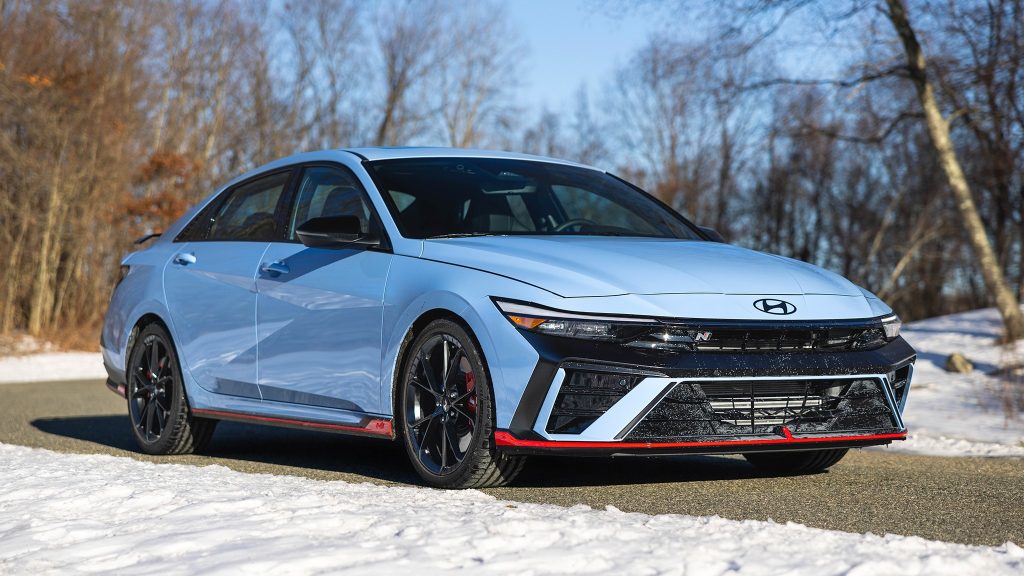
The Elantra has another advantage at the other end of the lineup. Buyers can choose the sporty N Line with a 201-horsepower 1.6-liter turbocharged engine, seven-speed dual-clutch transmission, and 18-inch wheels. Hyundai lists the N Line at $29,400. The Elantra Hybrid Blue provides another alternative for efficiency-focused buyers.
This makes the Elantra particularly flexible for budget shoppers. It starts with the lowest price, provides useful equipment immediately, and offers several different directions as buyers move up the range.
The Corolla is close, especially because of its reputation and hybrid availability. The Civic is arguably the most sophisticated car here, but its higher starting price works against it.
For buyers asking how much car they can get for their initial budget, Hyundai has the strongest argument.
Winner: Hyundai Elantra
Powertrain and Performance
The Civic takes this category because it offers the strongest combination of power, responsiveness, and efficiency.
The standard 2026 Civic sedan uses a 2.0-liter four-cylinder producing 150 horsepower and 133 lb-ft of torque. It is paired with a continuously variable transmission and front-wheel drive. That powertrain is not especially powerful, but Honda has tuned the Civic around balanced handling rather than simply chasing horsepower.
The real story is the Civic Hybrid. The Sport Hybrid and Sport Touring Hybrid use a two-motor hybrid system producing 200 horsepower. Honda lists 181 horsepower for the electric motor and 232 lb-ft of motor torque, with total system output reaching 200 horsepower.
That gives the hybrid Civic a substantial performance advantage over the standard Corolla and Elantra powertrains.
The Civic Hybrid also includes selectable driving modes. Sport mode changes the character of the car, while Individual mode allows the driver to customize certain responses on the highest trim. That combination makes the Civic unusual in this class because fuel efficiency does not require giving up the ability to enjoy the car on a winding road.
The Corolla’s standard 2.0-liter engine produces 169 horsepower and 151 lb-ft of torque, giving it more output than the standard Civic and Elantra. The Corolla also offers a hybrid powertrain for buyers who prioritize fuel economy.
The Elantra’s standard 2.0-liter engine makes 147 horsepower and 132 lb-ft of torque. That puts it behind both competitors in standard gasoline form.
Hyundai changes the equation with the N Line, which uses a 1.6-liter turbocharged engine making 201 horsepower and 195 lb-ft of torque. It also receives a seven-speed dual-clutch transmission and a multi-link independent rear suspension.
The N Line therefore gives the Elantra the highest gasoline-engine output of the three, but it is a specific trim rather than the standard powertrain.
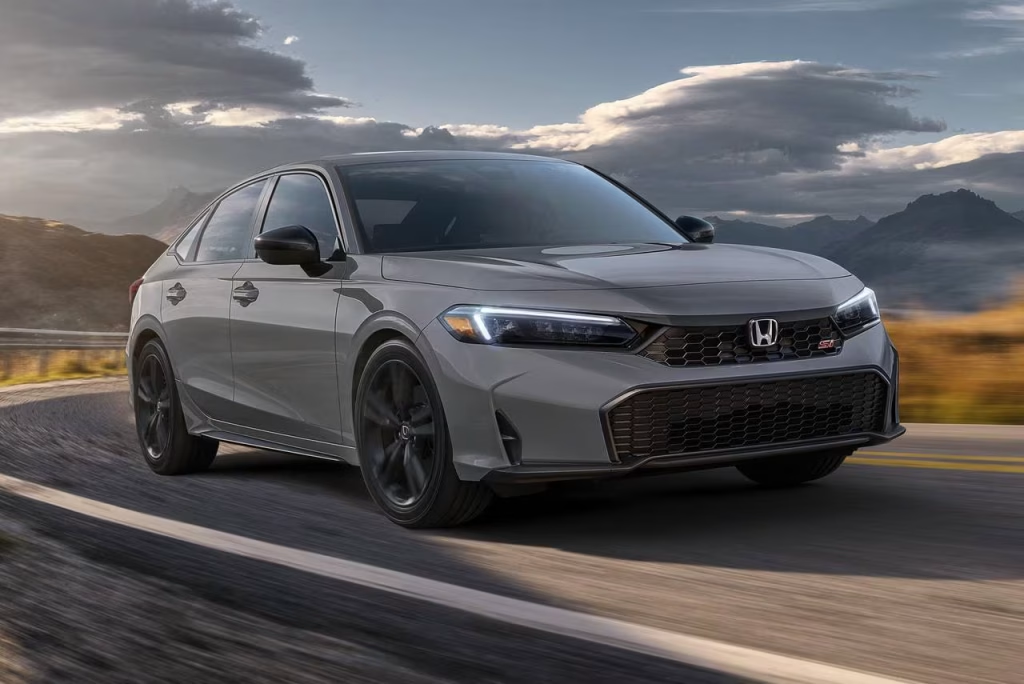
The Civic’s advantage comes from the fact that its 200-horsepower hybrid is integrated into the mainstream lineup and still achieves impressive fuel economy. The car combines strong electric-motor response with the balanced chassis characteristics that have helped the Civic remain popular among drivers who want more involvement.
The Corolla is dependable and sufficiently powerful for normal commuting. The Elantra N Line is the choice for someone who specifically wants turbocharged performance.
But considering the complete lineup and the combination of performance with efficiency, the Civic has the strongest powertrain story.
Winner: Honda Civic
Fuel Economy
Fuel economy is an unusually close battle because all three manufacturers have developed efficient versions of their compact sedans.
The standard Corolla LE returns an EPA-estimated 32 mpg city, 41 mpg highway, and 35 mpg combined. The standard Elantra SE is rated at 31 mpg city, 40 mpg highway, and 35 mpg combined. The standard Civic LX reaches 32 mpg city, 41 mpg highway, and 36 mpg combined.
That means the Civic has a slight advantage among the conventional gasoline models. But the competition changes dramatically when hybrid models enter the picture.
Hyundai’s 2026 Elantra Hybrid Blue is rated at 51 mpg city, 58 mpg highway, and 54 mpg combined. Those figures give the Elantra Hybrid the strongest fuel-economy numbers in this comparison. Hyundai pairs its hybrid system with a 1.6-liter four-cylinder and offers the car with a multi-link independent rear suspension.
The Civic Hybrid is also extremely efficient. Honda lists 50 mpg city, 47 mpg highway, and 49 mpg combined for the Sport Hybrid and Sport Touring Hybrid. That is an impressive result, especially considering the hybrid’s 200-horsepower system output.
Toyota’s Corolla Hybrid is another strong contender. Toyota has positioned the hybrid Corolla as an efficiency-focused alternative to the standard gasoline model, making the Corolla lineup particularly attractive to commuters who cover significant mileage.
The interesting part is that buyers do not have to choose a larger sedan to get hybrid efficiency. These compact cars can provide fuel economy numbers that would have been remarkable in a conventional family sedan only a few years ago.
For a buyer driving mostly on highways, the Elantra Hybrid’s 58 mpg highway estimate is particularly compelling. It can reduce fuel consumption without requiring an expensive move to an electric vehicle.
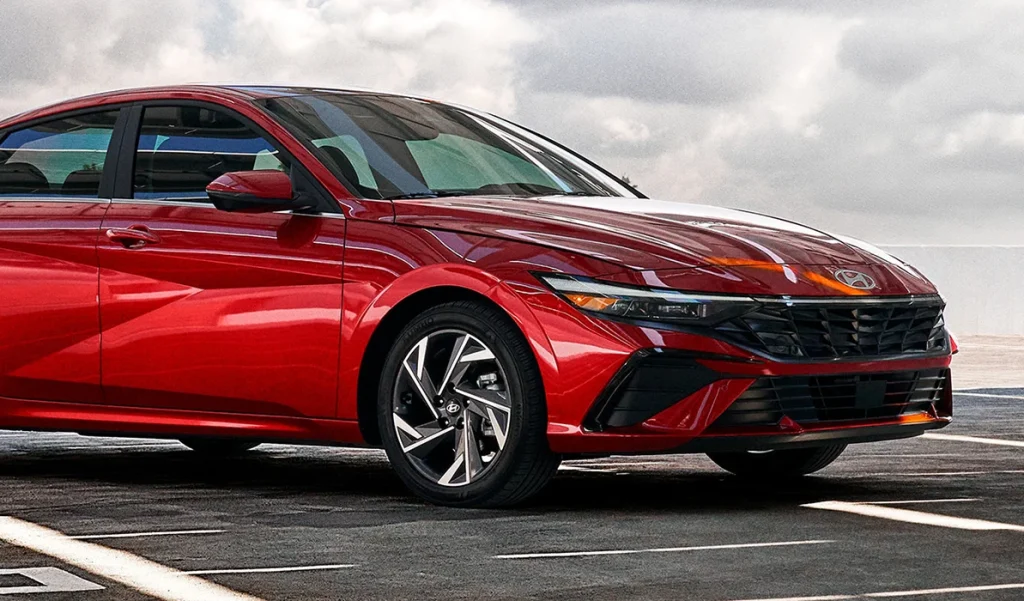
The Civic Hybrid remains a better choice for someone who wants to combine efficiency with stronger performance. Its 200 horsepower gives it a significant advantage over the Elantra Hybrid’s more efficiency-focused configuration.
The Corolla continues to offer an excellent balance and benefits from Toyota’s long experience with hybrid technology.
Still, the category is decided by the highest published fuel-economy capability. Hyundai’s 54 mpg combined and 58 mpg highway figures give the Elantra Hybrid the narrowest edge.
Winner: Hyundai Elantra
Interior Space and Practicality
The Civic wins this category because it provides the strongest balance between passenger room, cargo usability, and the quality of its cabin.
The Corolla remains a practical five-seat sedan, but it is positioned toward the smaller side of the compact segment. Toyota lists 42.0 inches of front legroom and 34.8 inches of rear legroom in its comparison with the Elantra. The Corolla also has a 13.1-cubic-foot trunk.
The Elantra is larger in several important dimensions. Hyundai’s sedan provides 42.3 inches of front legroom and 38.0 inches of rear legroom, according to Toyota’s current comparison data. Its trunk provides 14.2 cubic feet of cargo space.
That makes the Elantra particularly impressive for rear passengers. Someone who frequently carries adults in the second row may notice the additional space.
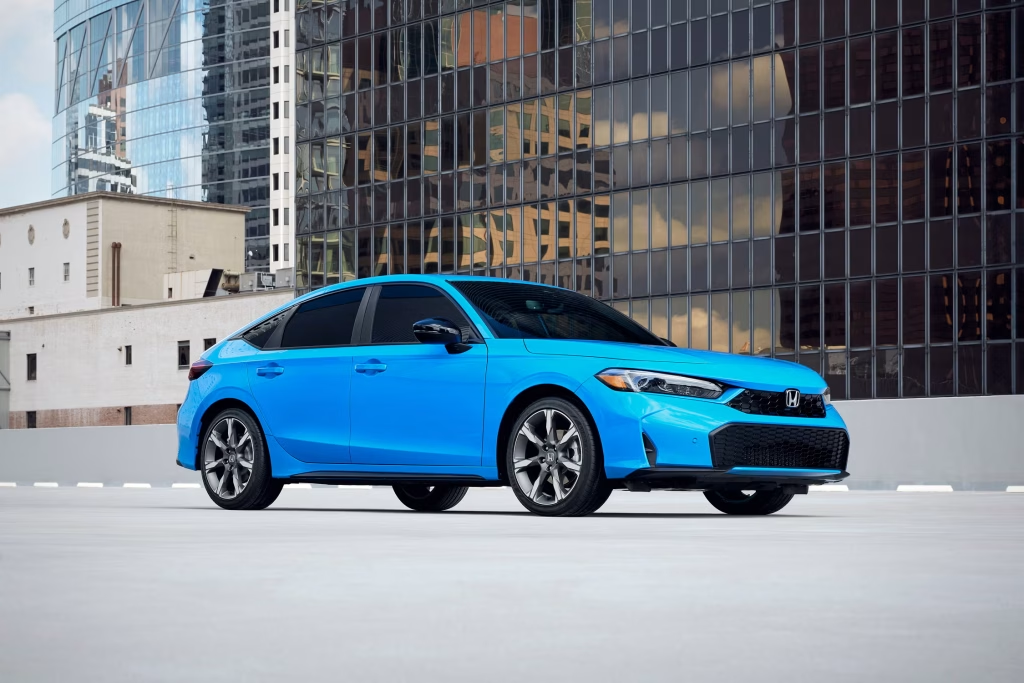
The Civic, however, combines a spacious cabin with a more refined interior design. Honda gives the sedan a 60/40 split-folding rear seatback, making it easier to carry longer objects without giving up all rear seating capacity. The Sport trim also includes automatic climate control, an eight-speaker audio system, and a leather-wrapped steering wheel.
The Civic’s cabin is also one of its defining strengths. Controls are logically arranged, visibility is strong, and the driving position feels more purposeful than in many inexpensive compact sedans.
The Elantra counters with technology and generous passenger dimensions. Its interior design is more dramatic than the Corolla’s, while higher trims can add features such as heated seats, a power sunroof, Bose audio, and advanced driver assistance.
Toyota takes the most conservative approach. The Corolla’s cabin prioritizes straightforward operation and durability rather than making a dramatic visual statement. That can actually be an advantage for buyers who prefer simplicity.
The Civic’s strength is that it does not force the driver to choose between practicality and driving enjoyment. It feels like a car designed around the person behind the wheel while still giving passengers usable space.
The Elantra is arguably the roomiest-feeling option, especially in the back. The Corolla remains easy to live with and has useful cargo space.
But for the combination of passenger comfort, seating flexibility, cabin quality, and everyday usability, the Civic gets the edge.
Winner: Honda Civic
Technology and Safety
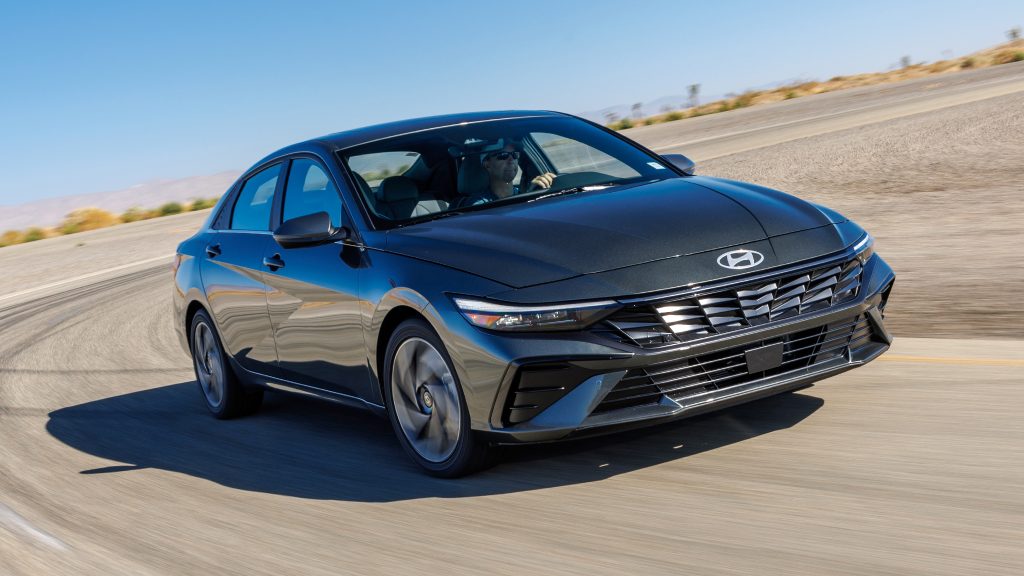
Technology is where Hyundai has become particularly competitive with Toyota and Honda. The 2026 Elantra SE starts with an 8-inch color touchscreen, wireless Apple CarPlay, and wireless Android Auto.
It also includes second-row USB charging ports and LED projector headlights. Those features are significant because they are available on the least expensive Elantra rather than being restricted to an expensive upper trim.
Move higher into the lineup, and the technology list becomes considerably stronger. The Elantra Limited offers Bose premium audio, H-Tex-trimmed seats, Highway Driving Assist, and Bluelink+. Hyundai also offers features such as Smart Cruise Control with Stop & Go on applicable trims.
The Civic is also well equipped. The base LX includes collision mitigation braking, road departure mitigation, adaptive cruise control with low-speed follow, lane keeping assistance, and traffic-sign recognition. The Sport adds blind-spot information with cross-traffic monitoring.
At the top of the Civic range, the Sport Touring Hybrid receives Google built-in, wireless Apple CarPlay, leather-trimmed seats, and a Bose premium sound system. That gives Honda a strong technology package for buyers willing to spend more.
The Corolla has a strong safety reputation, and Toyota’s modern driver-assistance systems are an important part of the car’s appeal. Toyota also offers a range of connected and infotainment features depending on trim.
However, Hyundai’s value proposition is difficult to ignore. The Elantra combines a lower starting price with useful connectivity, a modern interface, and a generous list of available convenience features.
There is another important factor: Hyundai offers an unusually long powertrain warranty. The company’s warranty package includes 10 years or 100,000 miles of powertrain coverage for qualifying owners, along with a five-year/60,000-mile new-vehicle limited warranty.
That does not mean the warranty automatically makes the Elantra more reliable than its rivals. It does, however, reduce some of the financial concern for a new-car buyer who plans to keep the sedan for many years.
The Civic’s technology is more polished at the upper end, and Toyota’s safety systems are highly competitive. But when price, standard connectivity, and available equipment are considered together, Hyundai delivers an unusually strong package.
Winner: Hyundai Elantra
Ownership and Long-Term Value
The Corolla wins the final category because long-term ownership is one of the areas where Toyota’s compact sedan has built its strongest reputation.
A new car’s ownership value is about more than its sticker price. Fuel costs, maintenance, warranty coverage, resale value, reliability expectations, and the availability of replacement parts all matter when a buyer intends to keep a vehicle for many years.
The Corolla’s basic mechanical formula is deliberately straightforward. The standard 2026 model uses a 2.0-liter naturally aspirated four-cylinder producing 169 horsepower and 151 lb-ft of torque. There is no turbocharger on the standard engine, and Toyota pairs it with a continuously variable transmission.
That simple formula is part of the Corolla’s appeal. Toyota also offers a Corolla Hybrid, giving buyers the ability to choose between conventional gasoline operation and a highly efficient electrified powertrain. That broadens the model’s appeal without requiring customers to switch to a different vehicle.
Honda has an equally strong reputation for building durable compact cars. The Civic’s 2.0-liter naturally aspirated engine is straightforward, while its hybrid system provides excellent efficiency.
Honda also lists a 100,000-mile interval for scheduled tune-up requirements in the 2026 Civic specifications, with no scheduled tune-ups during that period under its listed maintenance program.
Hyundai’s warranty is the strongest numerical advantage in this category. The 10-year/100,000-mile powertrain warranty gives the Elantra a significant ownership-security benefit. Hyundai also offers a broad range of powertrains, from the standard 147-horsepower engine to the 201-horsepower N Line and the highly efficient hybrid.
Still, the Corolla’s advantage comes from consistency. The model has been a staple of Toyota’s lineup for decades. Its reputation for economical operation and straightforward ownership is one of the reasons it remains such a common choice for commuters, families, and buyers who prioritize keeping a car for a long time.
The Civic is extremely competitive and may offer a more rewarding driving experience. The Elantra provides more warranty coverage and more technology for the money.
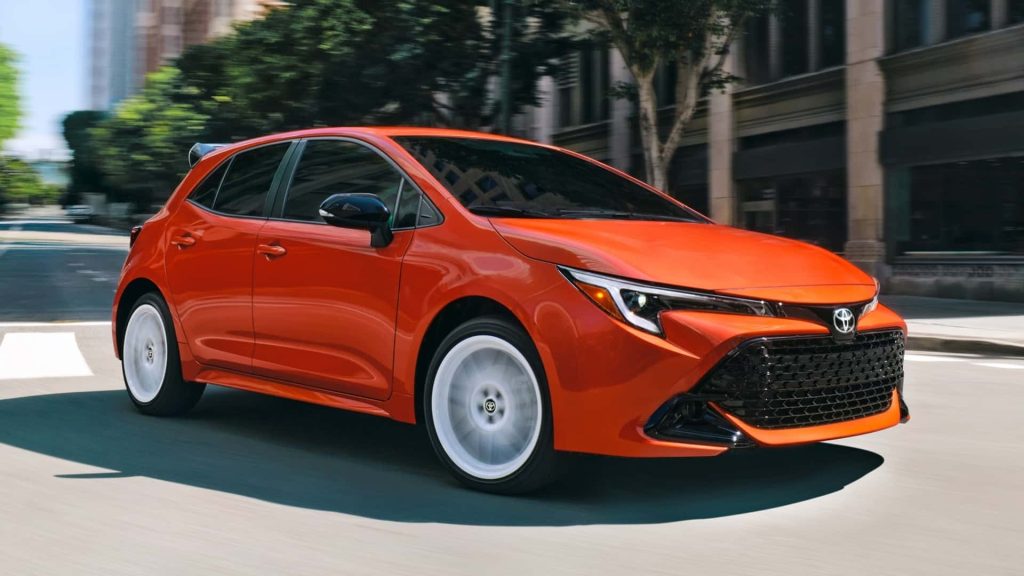
But long-term ownership is where the Corolla’s conservative engineering approach becomes an advantage. It is not trying to be the fastest, most futuristic, or most technologically ambitious car in the segment.
It is trying to be a dependable compact sedan that is inexpensive to operate and easy to live with. For that particular mission, the Corolla remains the benchmark.
Winner: Toyota Corolla
The Toyota Corolla, Honda Civic, and Hyundai Elantra each take a different route toward being a good compact sedan.
The Hyundai Elantra is the value champion. It starts at the lowest price, provides impressive standard technology, and offers several interesting configurations. Its available hybrid can reach 54 mpg combined, while the N Line produces 201 horsepower.
The combination of price, equipment, and powertrain variety makes the Elantra particularly difficult to ignore.
The Toyota Corolla is the conservative choice, but that is not necessarily a criticism. It provides a proven formula, a 169-horsepower standard engine, strong fuel economy, and a hybrid option. Its biggest advantage is the confidence that comes with a model built around practical long-term ownership.
The Honda Civic is the driver’s choice. Its standard model is reasonably efficient, but the 200-horsepower hybrid transforms the car into one of the most appealing combinations of performance and fuel economy in the segment. It also provides a polished cabin and a strong technology package on higher trims.
The six-category results are close:
| Category | Winner | The Edge |
|---|---|---|
| Price and Value | Hyundai Elantra | Lower starting prices and generous standard equipment create stronger entry-level value. |
| Powertrain and Performance | Honda Civic | A 200-horsepower hybrid delivers the best balance of power and efficiency. |
| Fuel Economy | Hyundai Elantra | Hybrid reaches 54 mpg combined and 58 mpg highway for exceptional efficiency. |
| Interior Space and Practicality | Honda Civic | Refined cabin and flexible seating provide the strongest everyday passenger package. |
| Technology and Safety | Hyundai Elantra | Extensive connectivity and available technology arrive at a highly competitive price. |
| Ownership and Long-Term Value | Toyota Corolla | Proven compact-car formula supports economical and straightforward long-term ownership. |
