
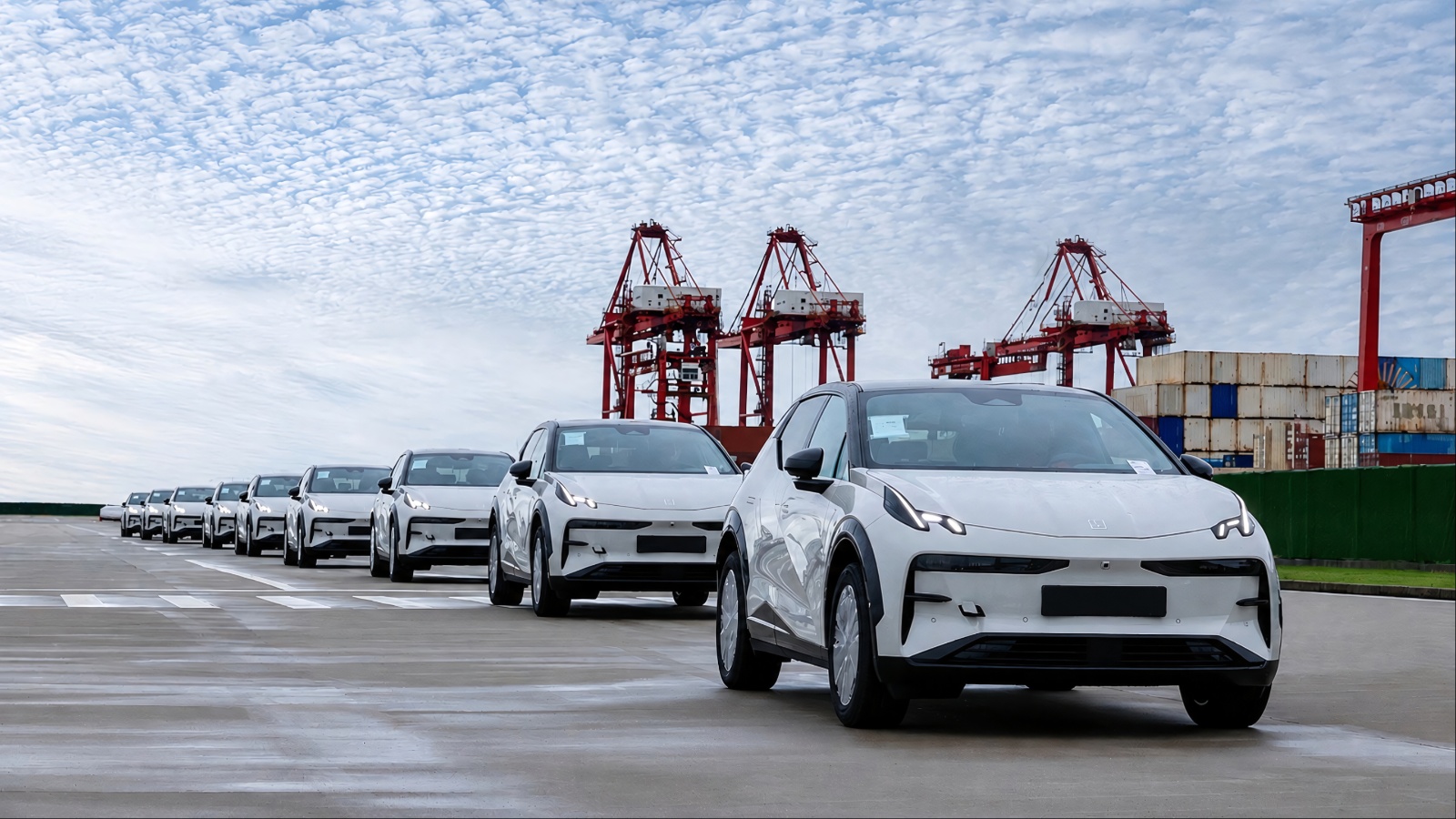
China’s auto industry is experiencing an unusual split. Vehicle sales at home are weakening sharply, yet Chinese automakers are expanding overseas at a remarkable pace, taking market share from established manufacturers across Europe, Southeast Asia, Latin America and other international markets.
According to Reuters, China’s passenger-car sales fell 20% year over year in July to 1.47 million vehicles, marking the tenth consecutive month of decline. At the same time, vehicle exports surged 88% to 923,000 units.
The figures include some non-Chinese brands producing vehicles in China, but the underlying trend remains clear: domestic demand is weakening while overseas sales are accelerating.
The contrast is becoming increasingly important for the global automotive industry. Companies such as BYD, Geely, and Chery are no longer relying primarily on China’s enormous domestic market for growth.
They are increasingly looking abroad, where their competitive pricing, electric powertrains, battery technology, and rapid product development are helping them challenge Toyota, Volkswagen, and other established manufacturers.
For China’s automakers, international expansion was once mainly an ambition. With domestic competition intensifying and excess production capacity becoming a growing problem, it is increasingly becoming an economic necessity.
China’s Domestic Auto Market Is Under Growing Pressure
The weakness in China’s home market is significant because the country remains the world’s largest automotive market.
According to the China Passenger Car Association data cited by Reuters, domestic car sales declined by 2.3 million vehicles during the first half of 2026 compared with the same period a year earlier, representing a 20% reduction. Meanwhile, China’s vehicle exports increased 71% during the same period.
Several factors are contributing to the domestic slowdown. Consumer demand has remained weak, while years of aggressive price competition have created a highly competitive market in which manufacturers have struggled to maintain profitability.
Reuters reported that Cui Dongshu, secretary-general of the China Passenger Car Association, attributed July’s weakness partly to elevated fuel prices and continued softness in the entry-level sedan market. More broadly, the auto industry is being affected by weaker consumer spending and an economy still dealing with problems in its property sector.
The result is an industry with enormous manufacturing capacity but fewer customers at home. That creates a powerful incentive to sell vehicles abroad.
Chinese automakers have invested heavily in factories, battery supply chains, software, electric motors, and vehicle development. With those capabilities already in place, international markets provide an opportunity to keep factories operating at higher utilization rates even when domestic demand is insufficient.
Bill Russo, CEO of Shanghai-based consultancy Automobility, told Reuters that Chinese automakers have excess manufacturing capacity, highly competitive supply chains and increasingly sophisticated products, giving them a strong economic incentive to expand overseas.
BYD illustrates the shift particularly well. Reuters reported that BYD’s domestic sales fell 35% during the first seven months of 2026, while its overseas sales increased 79%. Britain and Brazil have emerged as its largest individual overseas markets this year.
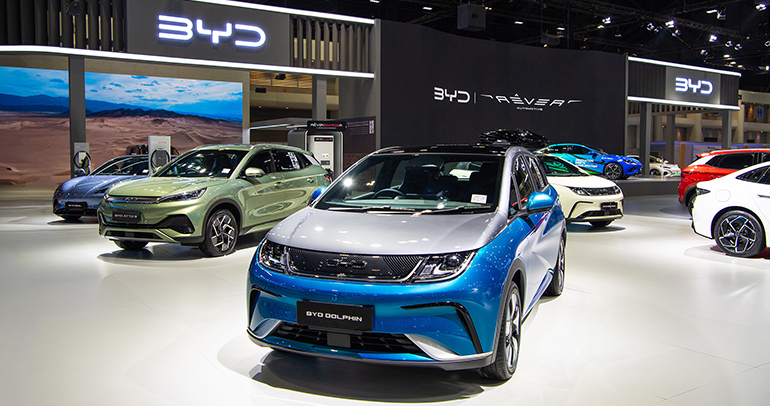
That does not mean every Chinese automaker is performing equally well internationally. Establishing dealer networks, service operations, brand recognition and regulatory compliance takes time. But the direction of travel is increasingly difficult for competitors to ignore.
Chinese Brands Are Taking Market Share Overseas
Europe has become one of the most important battlegrounds. Chinese automakers have rapidly increased their presence across European markets, particularly in electric vehicles.
Reuters, citing Counterpoint Research data, reported that Chinese automakers captured roughly 16% of Europe’s passenger-vehicle market during the first quarter of 2026. That marks a major increase from around 3% four years earlier. Japanese automakers, by comparison, held about 12% of the European passenger-vehicle market during the same period.
The difference is even more striking in EVs. Chinese brands accounted for nearly one-quarter of Europe’s electric vehicle shipments, while Japanese manufacturers represented less than 5%.
Counterpoint analyst Abhilash Gupta told Reuters that the divide is not simply about price but also reflects a significant gap in electrification. That is a major challenge for established automakers.
Toyota has built one of the world’s strongest automotive businesses around reliability, manufacturing efficiency, and hybrid technology, but Chinese manufacturers have developed formidable advantages in batteries, electric drivetrains, and software.
Volkswagen, meanwhile, has been investing heavily in EVs while struggling with intense competition in China and a difficult European market.
Reuters recently highlighted the growing pressure on European and Japanese manufacturers as Chinese automakers expand internationally. The advantage Chinese companies possess extends beyond inexpensive vehicles.
Their supply chains cover batteries, electronics, software, and other critical components at an enormous scale, allowing them to develop and launch products rapidly.
China’s position as the world’s largest vehicle exporter further demonstrates the scale of the transformation. Reuters noted that China overtook Japan as the world’s largest vehicle exporter in 2023, ending Japan’s long-standing dominance of global automotive exports.
The competitive advantage is especially visible in EVs and hybrids. Chinese companies have gained years of experience producing batteries and electric vehicles at enormous volumes, while many traditional manufacturers are still transitioning their factories and supply chains away from combustion-engine vehicles. Chinese automakers are also becoming more willing to manufacture vehicles outside China.
That matters because tariffs and trade restrictions can make direct exports more expensive. Establishing factories in overseas markets allows companies to produce locally, avoid some trade barriers, and build stronger relationships with local governments and consumers.
Reuters reported that Chinese automakers are expanding their presence in Europe by building more factories across the region. Counterpoint Research expects Chinese brands to capture more than 20% of Europe’s passenger-vehicle market by 2030, while their share of the European EV market could reach 29%.
Analyst Abhilash Gupta said tariffs could slow that growth but are unlikely to reverse the underlying trend.
Toyota, Volkswagen, and Other Global Automakers Face a New Competitive Reality
The rise of Chinese automakers represents a different challenge from the competition global manufacturers faced during earlier periods of automotive expansion.
Japanese automakers built their international success around manufacturing efficiency, reliability, fuel economy, and quality. German manufacturers established strong positions through engineering, performance, and premium branding.
Chinese companies are competing with a broader combination of strengths. According to Reuters, China’s current advantages include electrification, batteries, software, intelligent vehicle features, supply chain scale, and rapid product development.
That combination could make their international expansion particularly disruptive. For Toyota, the challenge is especially interesting. Toyota remains one of the world’s strongest automakers and has benefited enormously from its hybrid technology.
But Chinese manufacturers are expanding quickly in battery-electric and plug-in hybrid vehicles, areas where the competitive landscape is changing rapidly.
Volkswagen faces an even more complicated situation because China has historically been one of its most important markets. Chinese consumers have increasingly favored local brands, particularly in EVs and connected-car technology.
At the same time, Chinese brands are now taking those technologies into Volkswagen’s traditional European market.
The pressure is not limited to Europe. Chinese automakers are also expanding in Brazil, Britain, Southeast Asia and other emerging markets where affordable EVs and hybrids can attract buyers who may have fewer established brand loyalties.
Reuters reported that Chinese vehicle exports increased more than 50% in both value and volume terms in July, reflecting the aggressive overseas expansion of Chinese automakers.
This creates a difficult strategic question for established manufacturers. They can respond by lowering prices, accelerating EV development, improving software, increasing local production or strengthening their own supply chains. But each approach carries high costs.
Protectionist policies may provide some relief. Europe has already imposed additional tariffs on Chinese EVs, while the United States has erected far stronger trade barriers against Chinese electric vehicles and related technology.
However, tariffs alone may not prevent Chinese companies from expanding if they increasingly build vehicles inside the markets they want to enter.
The domestic weakness in China could therefore accelerate a transformation that was already underway.
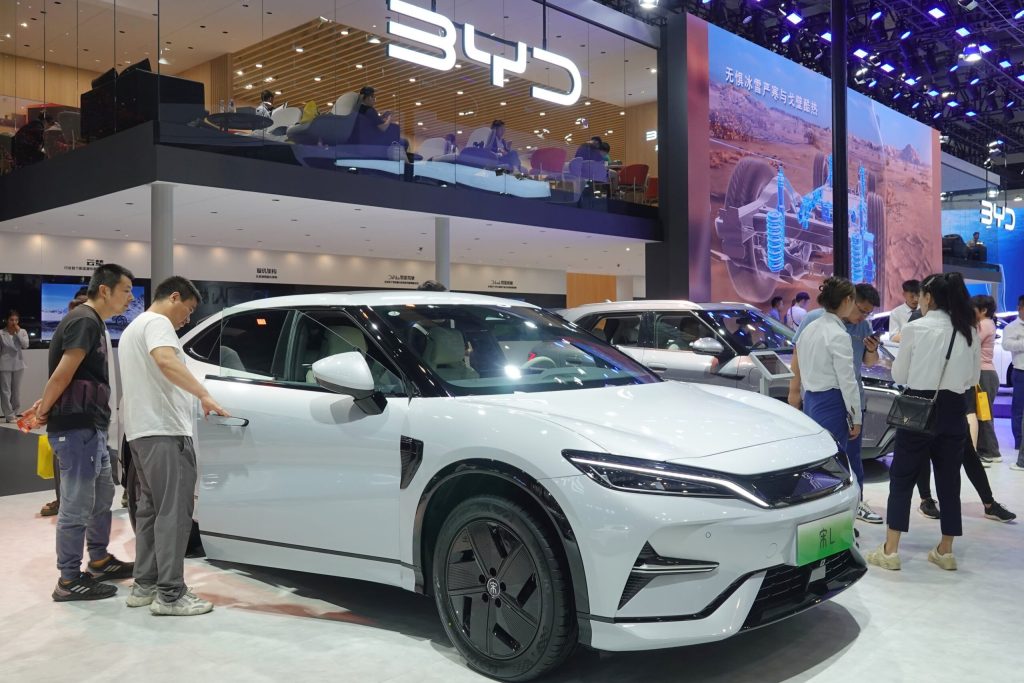
Chinese automakers have excess capacity, strong battery and electronics supply chains, increasingly competitive products, and an urgent need for growth. International markets provide an outlet for all four.
The next phase of competition will depend on whether companies such as BYD, Geely, and Chery can turn their export momentum into durable global businesses.
Building factories overseas, establishing reliable dealer and service networks, adapting vehicles to local preferences, and developing recognizable brands will determine whether today’s export surge becomes a lasting shift in the global auto industry.
For Toyota, Volkswagen, and other established manufacturers, the challenge is no longer simply competing against Chinese brands inside China. Those competitors are increasingly bringing the battle to their home markets.
China’s domestic auto slowdown may therefore have consequences far beyond its borders. As Reuters’ latest data shows, falling sales at home are being accompanied by extraordinary export growth.
If that pattern continues, Chinese automakers could emerge from their domestic downturn with an even larger international footprint, turning a problem of excess capacity and weak consumer demand into a powerful push for global expansion.
