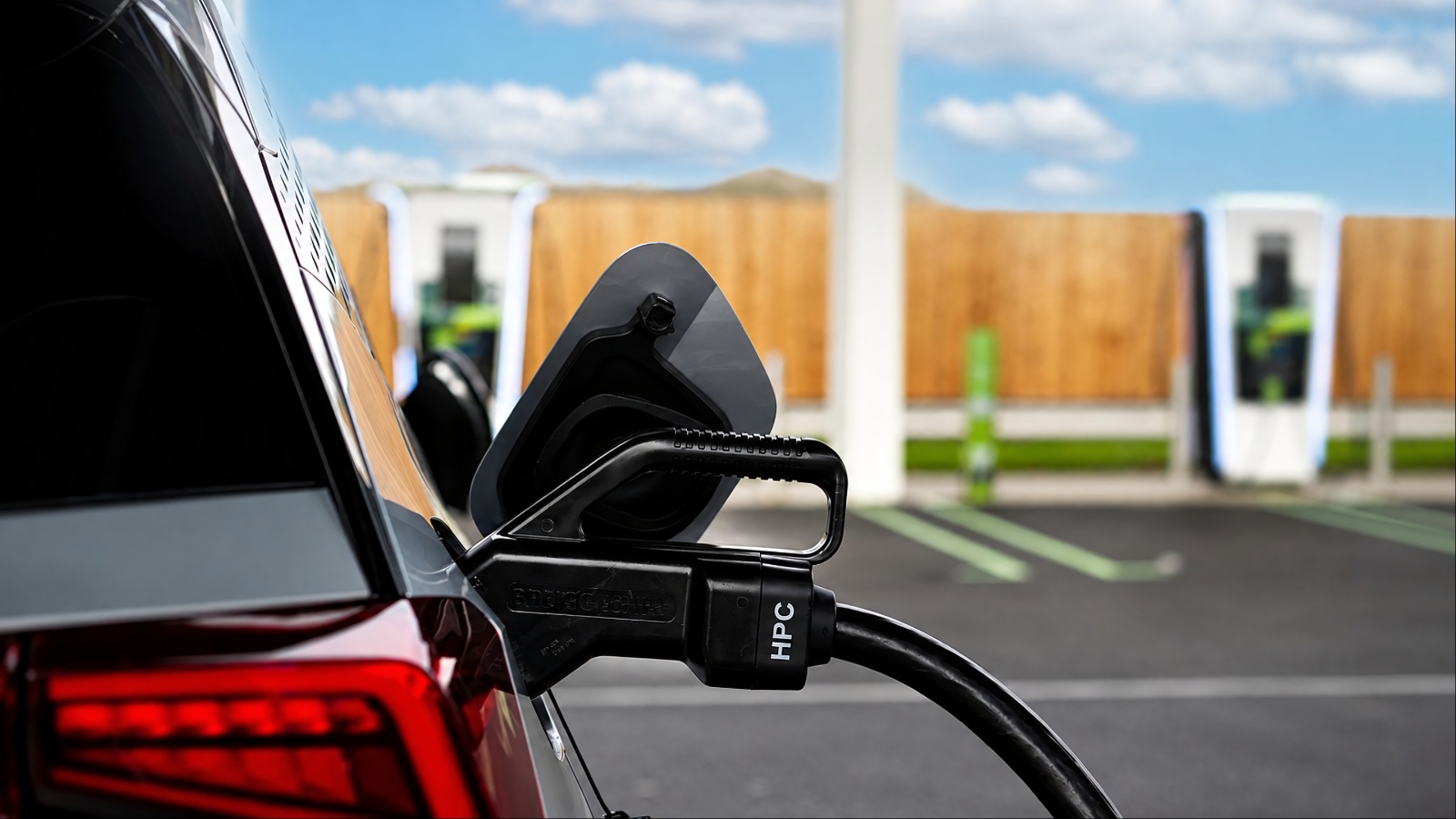
Electric vehicles have no universal rule for where the charging port should sit. Automakers place it on front fenders, rear quarters, grilles, or even both sides, usually based on packaging and expected home-charging habits.
The problem appears at public fast chargers, where a perfectly sensible location can suddenly become awkward. Short cables, curbs, bollards, angled stalls, and charger placement can force drivers to park unusually close or use a neighboring space just to make the connector reach.
For this list, “wrong place” does not mean a manufacturing defect. It means the port location can create unnecessary inconvenience at common North American public-charging layouts, especially older Tesla Supercharger sites.
Tesla itself acknowledges that different EV port locations can sometimes require drivers to park over a line, while newer V4 Superchargers use longer cables to improve compatibility. These 10 EVs illustrate why charging-port placement matters.
1. Lucid Air
The Lucid Air provides perhaps the clearest example of a charging-port location that works beautifully in one situation and poorly in another. Lucid places the Air’s port on the driver’s side between the front door and the left-front wheel.
For home charging, that location can be convenient because drivers can pull into a garage and connect without walking around the rear of the vehicle. Lucid even describes the forward placement as a convenience feature.
Problems begin when the Air encounters charging stations designed around a rear-mounted inlet. Lucid specifically warns owners that Tesla Superchargers historically used shorter cables and that the Air’s front-left port requires the vehicle to pull farther forward into the charging stall.
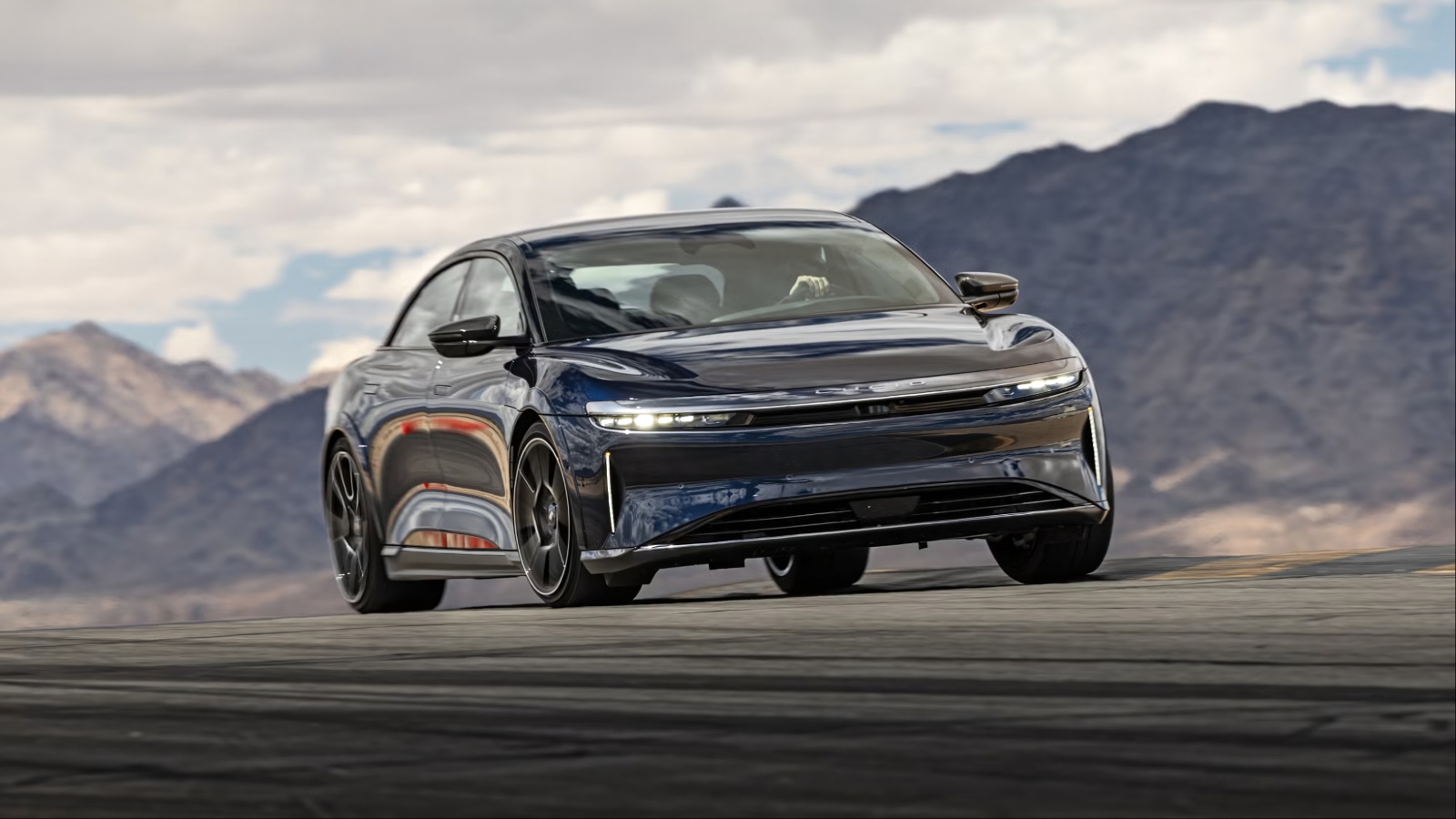
At some locations, Lucid says the car can extend into an adjacent stall. That is unusually strong evidence because the manufacturer itself provides special parking guidance resulting from the port position.
The Air therefore shows why charging-port placement cannot be considered independently from infrastructure. A long cable at an Electrify America-style station may make the location practically irrelevant. An older Supercharger installation can turn the same port into a parking puzzle.
Newer V4 Supercharger posts substantially improve the situation because Tesla designed their longer cables to reach a wider variety of EV locations. Still, for Air owners using older sites, the front-left position remains one of the clearest cases where vehicle design and charger design do not naturally line up.
2. Ford Mustang Mach-E
Ford positioned the Mustang Mach-E’s charging inlet on the front-left side of the vehicle. The company’s owner’s manual specifically identifies the port there, rather than near the rear quarter where Tesla traditionally positions its inlet. For a home charger mounted near the front wall of a garage, Ford’s decision can work extremely well. The driver simply pulls in and plugs in without routing a cable along the side of the crossover.
Public fast charging is where the compromise becomes noticeable. Ford opened Tesla Supercharger access to compatible Mustang Mach-E vehicles through its NACS fast-charging adapter program.
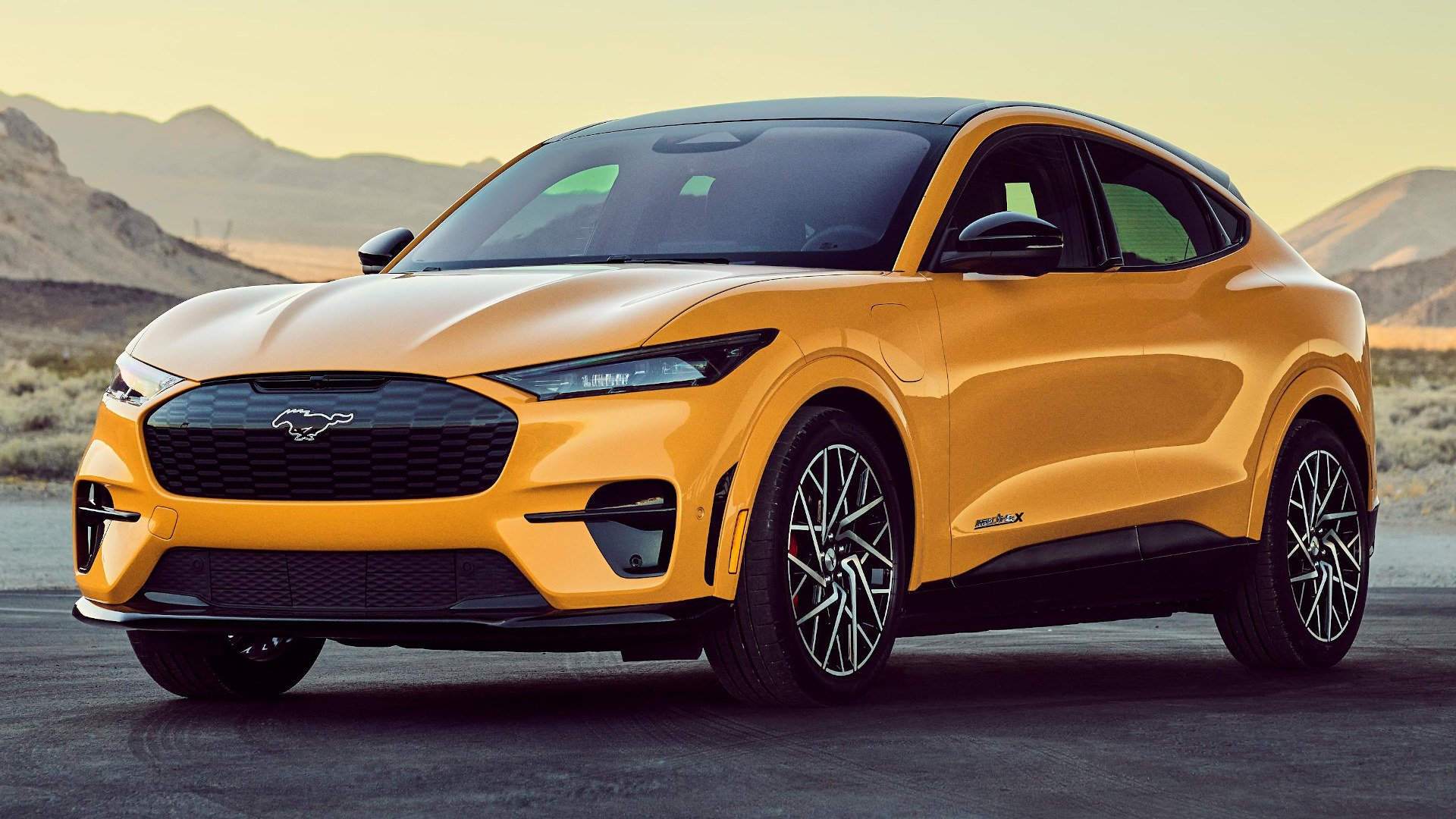
Ford’s own Supercharger guidance says that, at most locations, its EVs should park in the space to the right of the Supercharger they intend to use. That unusual instruction reflects the difference between Ford’s port position and the rear-left layout around which many older Tesla stalls were designed.
Nothing prevents the Mach-E from being a practical road-trip EV because of this. Compatible Superchargers still dramatically increase the number of charging locations available to owners. The annoyance is physical rather than electrical: drivers may need to think about which pedestal belongs to which parking space instead of simply backing in.
Tesla’s newer V4 installations, with longer cables intended to accommodate varied charge-port locations, reduce that problem. Until those become universal, however, the Mach-E’s front-left inlet remains a reminder that a port perfectly positioned for someone’s garage can be inconvenient at a nationwide fast-charging network.
3. Ford F-150 Lightning
The F-150 Lightning follows a similar philosophy to the Mustang Mach-E, putting its charging connection toward the front-left side of the vehicle. Ford service information places the charging hardware between the front-left door area and the front-left wheel well. On a conventional pickup that is already extremely long compared with most passenger EVs, that forward position has consequences when charger cables are short.
At home, the design is understandable. Trucks commonly park nose-first in driveways, and placing the connection near the cab allows a wall-mounted charger to remain close to the electrical service without requiring a long cable to reach the rear bumper. The arrangement can also keep a charging cable away from cargo being loaded into the bed.
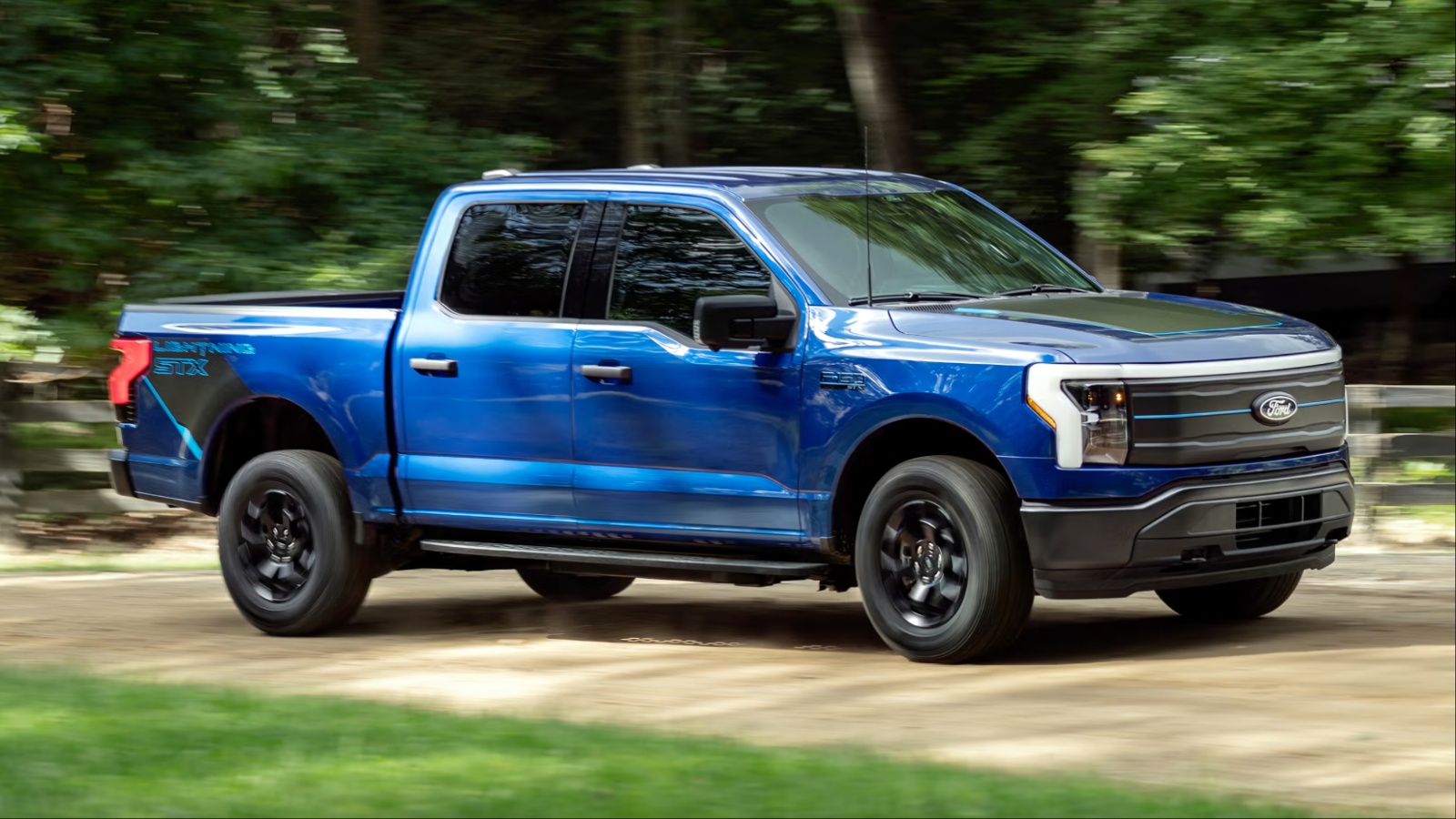
At some public stations, however, the Lightning’s size amplifies every disadvantage of a mismatched charging-port location. Ford’s Tesla Supercharger instructions acknowledge that its vehicles may need to use the space to the right of the intended charging post. With a large pickup, maneuvering into a nonstandard position can be more awkward than doing the same thing in a compact crossover.
The Lightning gained access to compatible Tesla V3-and-newer Superchargers through Ford’s NACS adapter program, significantly expanding its charging options. The network access is valuable, but it also exposes how infrastructure designed around a rear-left Tesla inlet interacts with a front-left Ford inlet.
Longer-cable chargers increasingly reduce the issue, yet existing Lightning owners can still encounter stations where reaching the truck requires more parking strategy than it should.
4. Cadillac Escalade IQ
Few EVs make charging-stall geometry more important than the Cadillac Escalade IQ. Cadillac places its charging port on the driver’s-side front fender. The company confirms that location in its own charging instructions, which also explain that Escalade IQ owners can use compatible Tesla Superchargers through a GM-approved NACS adapter.
The location can be very convenient when the charger sits beside the front of the vehicle. But the Escalade IQ is an enormous luxury SUV, so asking a short cable positioned behind a parking space to reach its front fender creates a very different situation. The driver may have to pull deeply into a stall and position the vehicle accurately enough to keep tension off the connector.
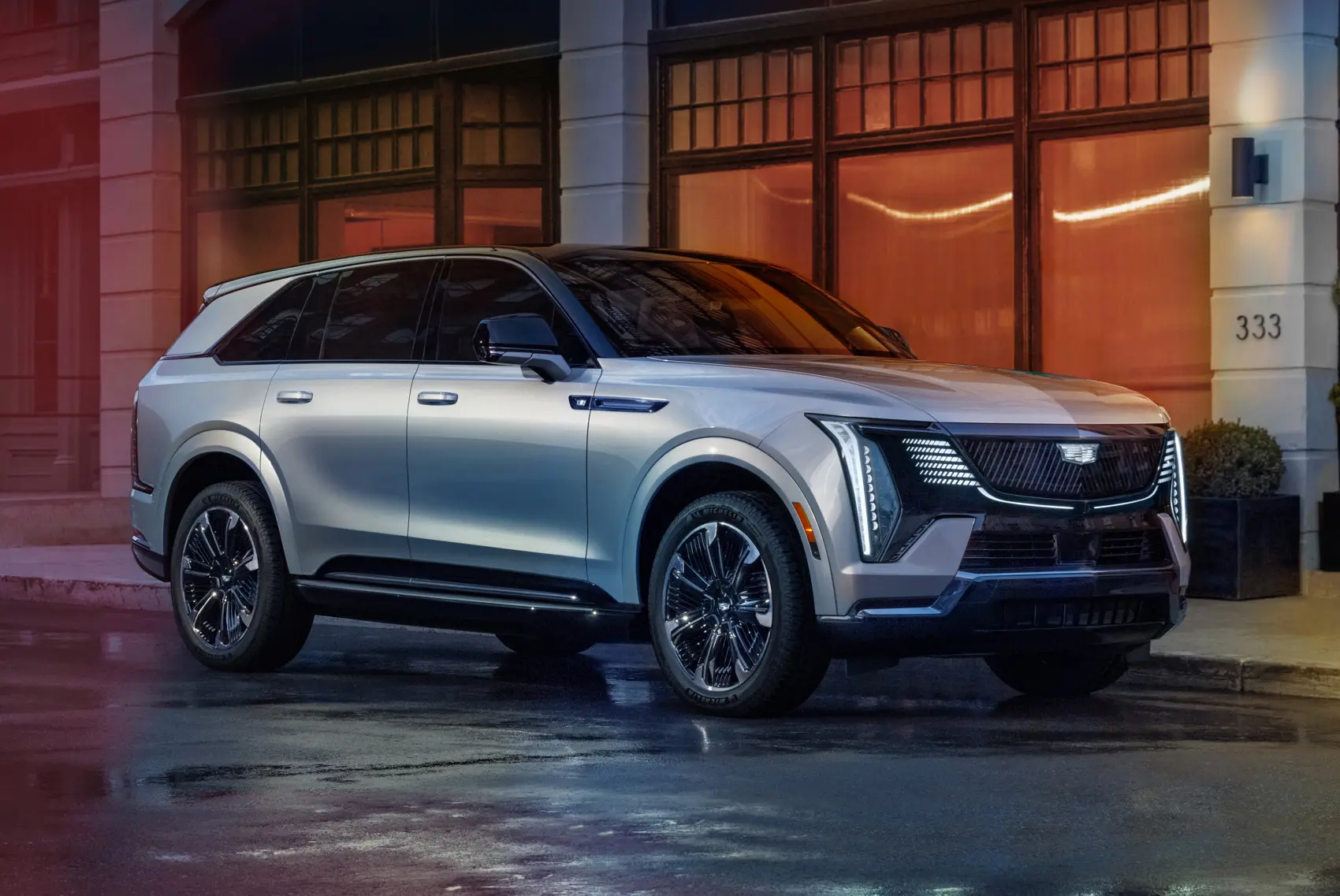
Tesla acknowledges that charge-port locations vary among non-Tesla EVs and says some vehicles may occasionally need to park over a line to make a Supercharger cable comfortably reach. The company also advises drivers not to park diagonally and to block as few charging posts as possible. Those considerations become particularly important with something as large as the Escalade IQ.
There is nothing inherently poor about a front-fender inlet. It can actually be excellent for residential charging and for public stations equipped with long overhead or side-mounted cables. The problem is lack of standardization.
A rear-left position would naturally match legacy Supercharger geometry more closely. A centrally located front connection could also make head-in charging easier. Cadillac instead chose a driver’s-front position that can work brilliantly at one station and require careful maneuvering at the next—exactly the inconsistency EV charging should eventually eliminate.
5. Toyota bZ4X / Toyota bZ
Toyota’s electric crossover demonstrates how even an automaker can reconsider charge-port placement over a model’s lifetime. Toyota states that the earlier bZ4X placed its charge inlet on the driver’s-side front quarter panel. When the vehicle was substantially updated and renamed simply bZ for the 2026 model year, Toyota moved the NACS inlet to the front right-hand side.
Changing sides solves some situations but creates others. A front-quarter port can be excellent in a home garage because the vehicle can simply be driven forward toward the wall charger. At highway fast-charging locations, however, the front corner is a long distance from a dispenser positioned behind the parking space.
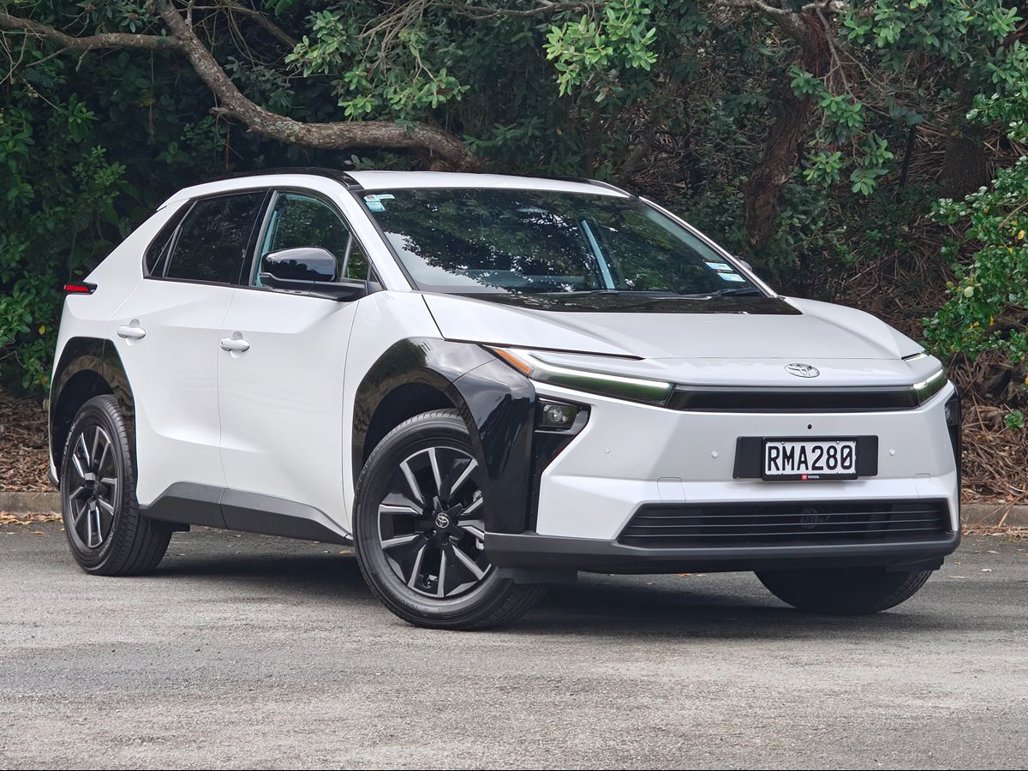
Moving from left to right also means owners of different model years can have completely different cable-routing experiences despite driving essentially the same vehicle family.
The 2026 bZ’s native NACS connection improves direct compatibility with the expanding NACS charging ecosystem. Connector compatibility, however, does not automatically guarantee ideal physical compatibility. A plug can fit perfectly while its cable barely reaches.
Tesla’s guidance for non-Tesla vehicles acknowledges exactly that distinction, noting that some charge-port arrangements can create parking difficulties at certain Supercharger layouts. Newer V4 posts are intended to address the problem with longer cables.
Toyota’s changing position therefore highlights an underappreciated issue. EV owners do not merely need the correct connector standard. They need the charging cable, parking geometry, vehicle dimensions, and inlet location to cooperate. The bZ family makes that challenge unusually visible.
6. Nissan Ariya
Nissan chose the front-right fender area for the Ariya’s charging connection. Official Nissan parts documentation identifies the Ariya charge-port door and related hardware as being positioned at the front right of the vehicle. From a driver’s perspective, that location can be convenient at chargers positioned along the passenger side or at home installations near the front of a parking space.
The catch becomes clear when an Ariya has to use charging infrastructure designed for a different vehicle layout. Nissan allows Ariya owners to access compatible Tesla Superchargers through its approved NACS adapter. This opens the door to a much larger fast-charging network, but the physical arrangement creates an awkward fit.
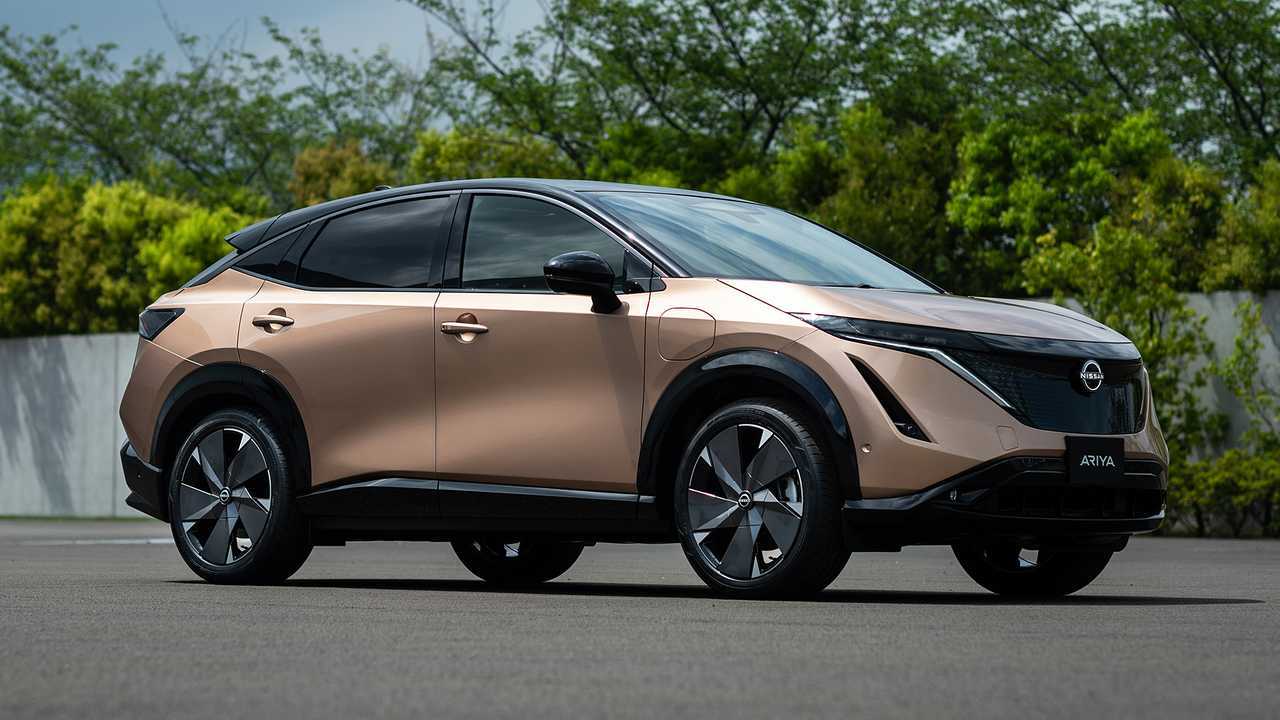
The Ariya’s charging port is positioned at the front right, while Tesla models such as the Model Y place the inlet at the rear left. Tesla’s owner’s manual confirms that the Model Y charging port is located near the left rear taillight.
That difference matters most at older sites with short cables. Depending on the stall design, an Ariya driver may need to pull in rather than back in, move especially close to the dispenser, or choose a particular parking space to minimize cable distance.
None of this makes the Ariya’s placement universally bad. Front-fender ports can be excellent at many CCS installations where charger cables are longer, and dispensers stand beside the vehicle.
The Ariya instead illustrates a broader industry problem: manufacturers optimized their cars independently before a dominant physical charging layout emerged. Adapter access can solve connector differences almost overnight. Moving the actual inlet to another corner of the car is considerably harder.
7. Porsche Taycan
Porsche took a different approach with the Taycan, positioning its charging ports around the front fenders instead of using the more familiar rear-mounted setup. On certain Taycan models, charging access is available on both sides, giving owners greater flexibility when using home chargers or destination stations.
The idea is straightforward and practical. Rather than requiring drivers to park in a specific direction to reach a wall-mounted charger, the Taycan lets them connect from either side.
DC fast charging complicates the picture. For model year 2027 in the United States, Porsche announced that Taycan models would receive a NACS DC fast-charging port on the passenger-side fender while the driver’s-side fender retains a J1772 AC connection. Porsche also supplies a CCS adapter.
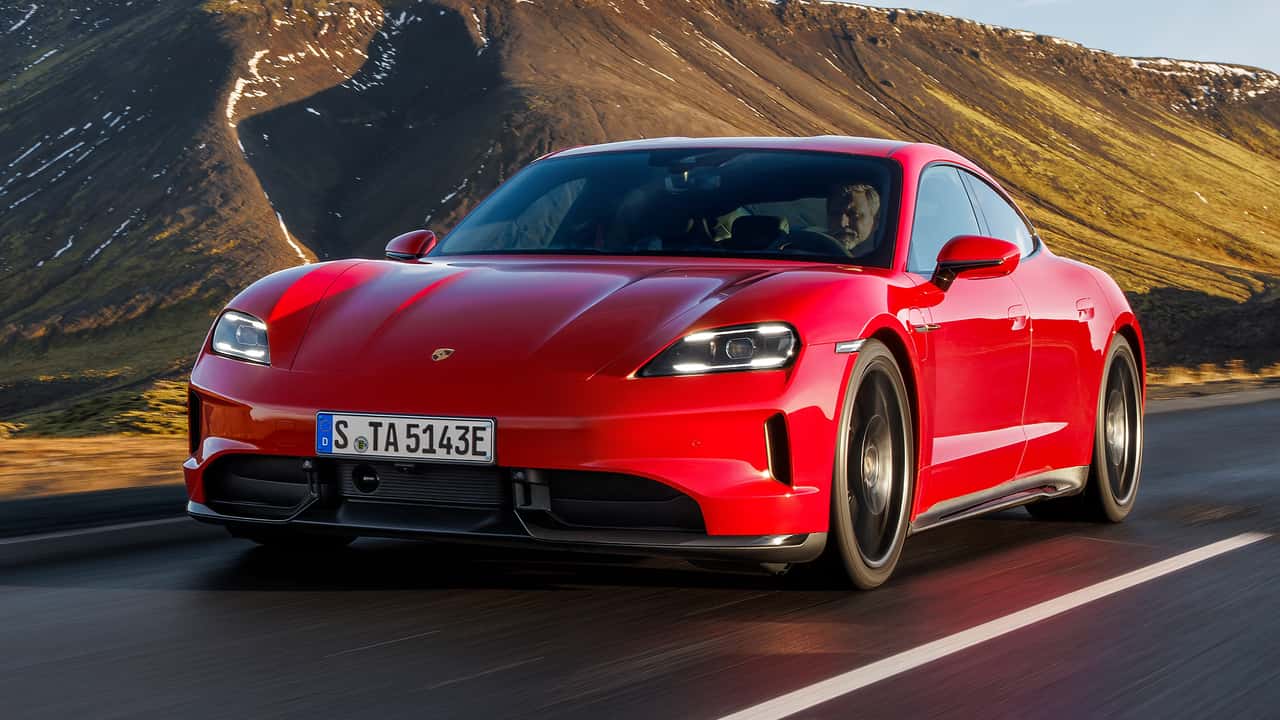
Native NACS removes the inconvenience of using an adapter at compatible Tesla chargers, but it does not move the DC inlet closer to where legacy Supercharger cables expect it to be. A passenger-side front-fender connection is far from Tesla’s traditional rear-left location, so older short-cable stations can still demand careful parking.
The Taycan takes a distinctive approach to charging. Porsche tackled connector compatibility without compromising the placement of the charging ports, integrating them into the vehicle’s design in a practical way.
The arrangement is less troublesome at modern chargers with long cables. Tesla says its V4 Supercharger posts are designed to reach all EVs within the same stall, directly addressing problems created by differing inlet locations. Until longer-cable infrastructure dominates, however, the Taycan’s stylish front-fender charging solution can occasionally turn a simple fast-charge stop into a positioning exercise.
8. Audi e-tron GT
The Audi e-tron GT shares more than performance philosophy with the Porsche Taycan; it also follows the idea of locating charging hardware around the front fenders. Audi states that the e-tron GT’s charging flaps sit behind the front wheels. Both sides support AC connections in the original configuration, while the DC connection is positioned on the right-hand side.
For premium home charging, this is a clever arrangement. Owners have more flexibility in how they park, and the connector stays near the front half of the car rather than requiring a cable to run all the way toward the rear. At public fast chargers, however, right-front DC access can become less convenient.
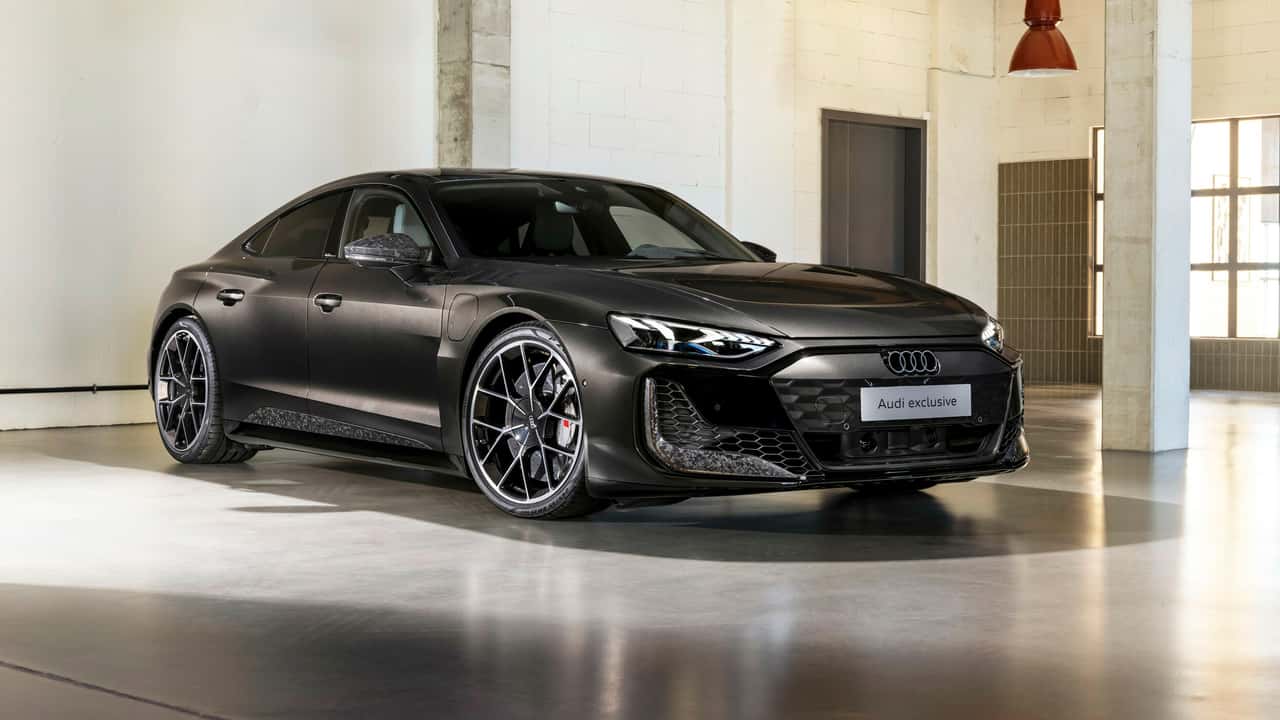
Audi has expanded Tesla Supercharger compatibility by offering a NACS DC charging adapter for eligible e-tron models. As with several other vehicles on this list, electrical compatibility does not guarantee that the charger’s physical cable arrangement is ideal.
At older Supercharger locations, dispensers were designed primarily for Teslas with a rear-left inlet. A right-front port asks the cable to reach the opposite end of the vehicle. Depending on parking layout, that can mean approaching the stall differently or occupying a space associated with another charging post.
Tesla openly acknowledges that non-Tesla port locations can create these situations and says its newer V4 design uses a longer cable specifically to improve same-stall access.
The e-tron GT therefore demonstrates the tradeoff perfectly. Dual-side AC access is exceptionally convenient in a garage. The right-front DC inlet can be considerably less elegant when the charging network was designed around another manufacturer’s opposite-corner standard.
9. Genesis GV60
The Genesis GV60 puts its charging connection at the rear passenger side of the vehicle. Genesis’ own imagery for the GV60 and GV60 Magma clearly identifies the charging port in that rear passenger-side area. The newest GV60 models also feature a built-in NACS connection and direct access to tens of thousands of compatible Tesla Superchargers.
At first glance, a rear-quarter location sounds ideal because Tesla also uses a rear-quarter port. The problem is the side. Traditional Tesla Supercharger geometry is optimized around a port on the driver’s-side rear corner. Putting the GV60’s inlet on the opposite rear corner changes which dispenser is physically closest when the Genesis backs into the same parking space.
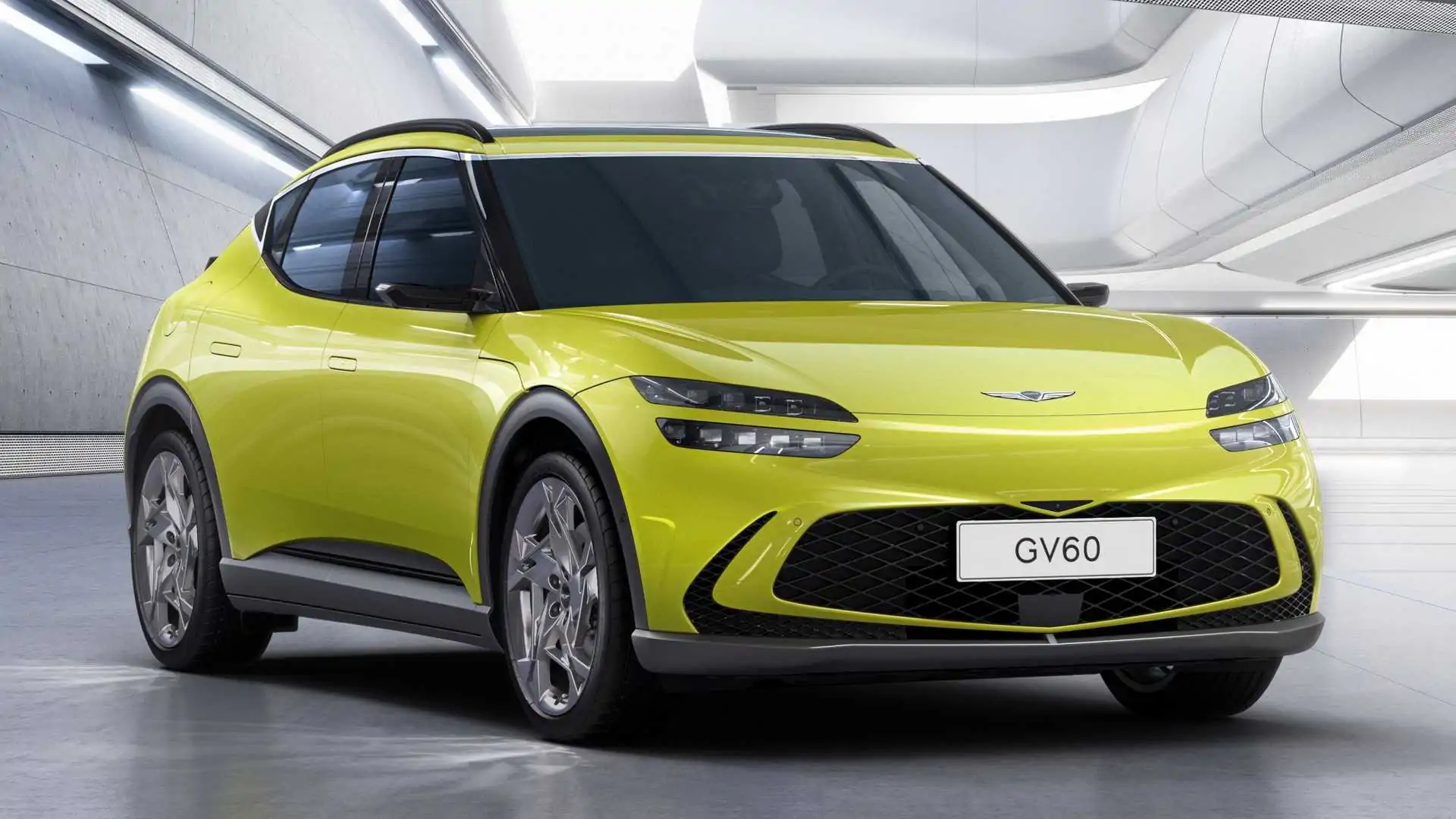
That can force drivers at older installations to think about adjacent charging posts rather than simply choosing an empty stall. Tesla acknowledges that different EV charge-port locations can result in cable sharing between neighboring stalls and says some vehicles may need special positioning.
The irony is that Genesis has already adopted the connector most closely associated with Tesla’s network. The GV60 can therefore possess exactly the right plug but still have the plug physically located on the inconvenient side.
New V4 Superchargers largely neutralize the issue with longer cables, and other fast-charging networks frequently use cables long enough that the GV60’s location causes no problem. But at compact legacy installations, the rear passenger-side port can still make charging less intuitive than native NACS compatibility might suggest.
10. Genesis Electrified GV70
The Genesis Electrified GV70 takes a completely different approach from the GV60. Rather than hiding the connector in a rear quarter panel, Genesis integrates the Electrified GV70’s charging port into the front of the vehicle. Genesis’ own product materials show a charging connector being inserted into a discreet front charging port behind the grille area.
There are genuine advantages to this layout. A central or near-central front port does not strongly favor the driver’s side or passenger side. At many public chargers, the driver can simply pull straight toward the dispenser. It also avoids running a heavy DC cable alongside the vehicle.
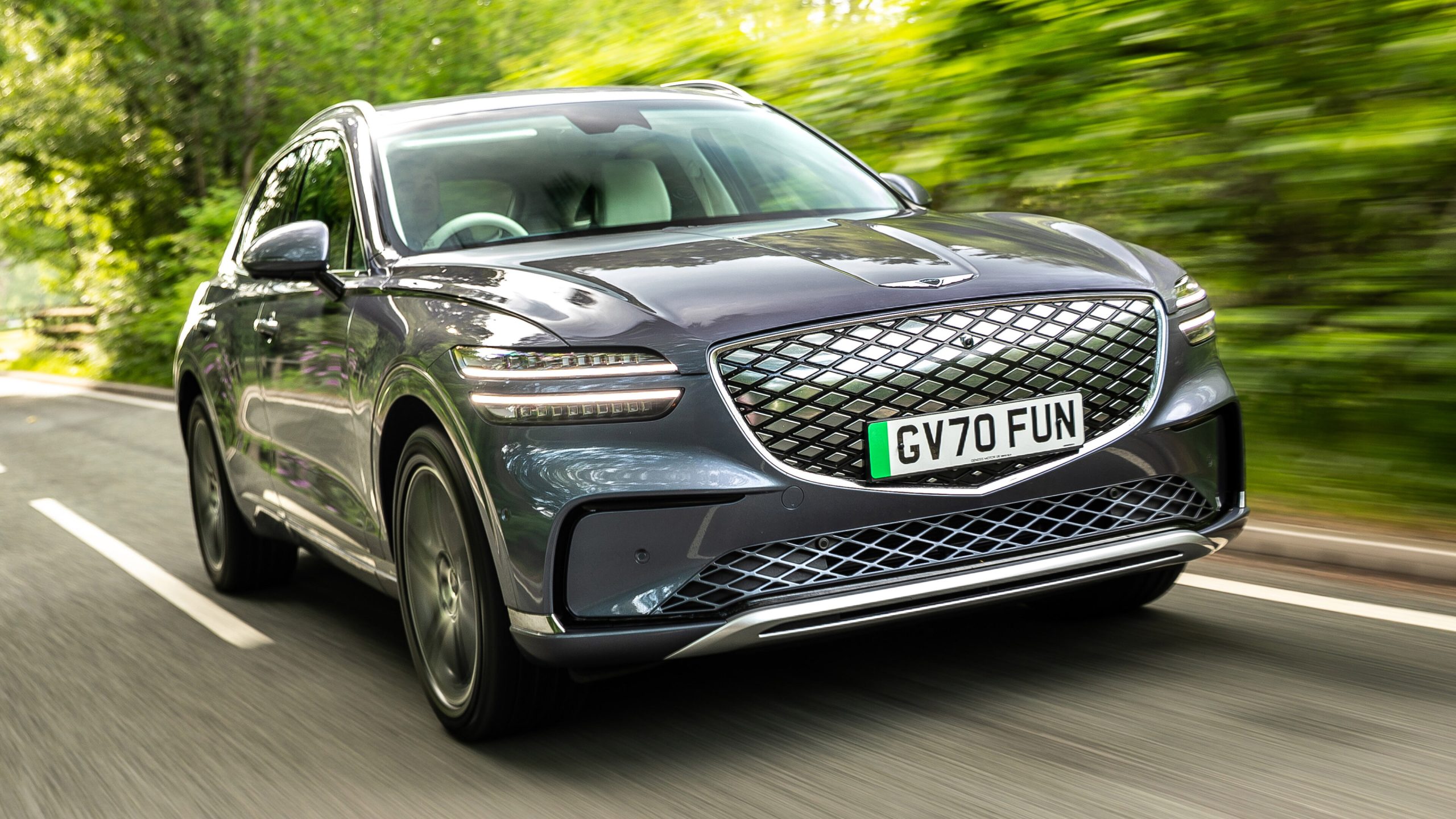
The difficulty comes at charging stations designed to be backed into. A dispenser positioned near the rear of a conventional parking space can be several feet away from the nose of the GV70. Short cables may therefore require the SUV to pull into the stall rather than reverse into it, and some physical layouts may still make reaching the front grille difficult.
That matters increasingly because Genesis is expanding access to the NACS ecosystem. The company says its 2026-and-newer electrified models use NACS ports and can access a large number of Tesla Superchargers.
Tesla’s V4 stations are specifically designed with longer cables to accommodate varied EV port locations, making the front-mounted solution much easier to live with. Yet the Electrified GV70 shows why no port position is universally perfect. A front-center inlet may be among the fairest designs for future infrastructure, while remaining awkward at stations designed around yesterday’s rear-corner standard.