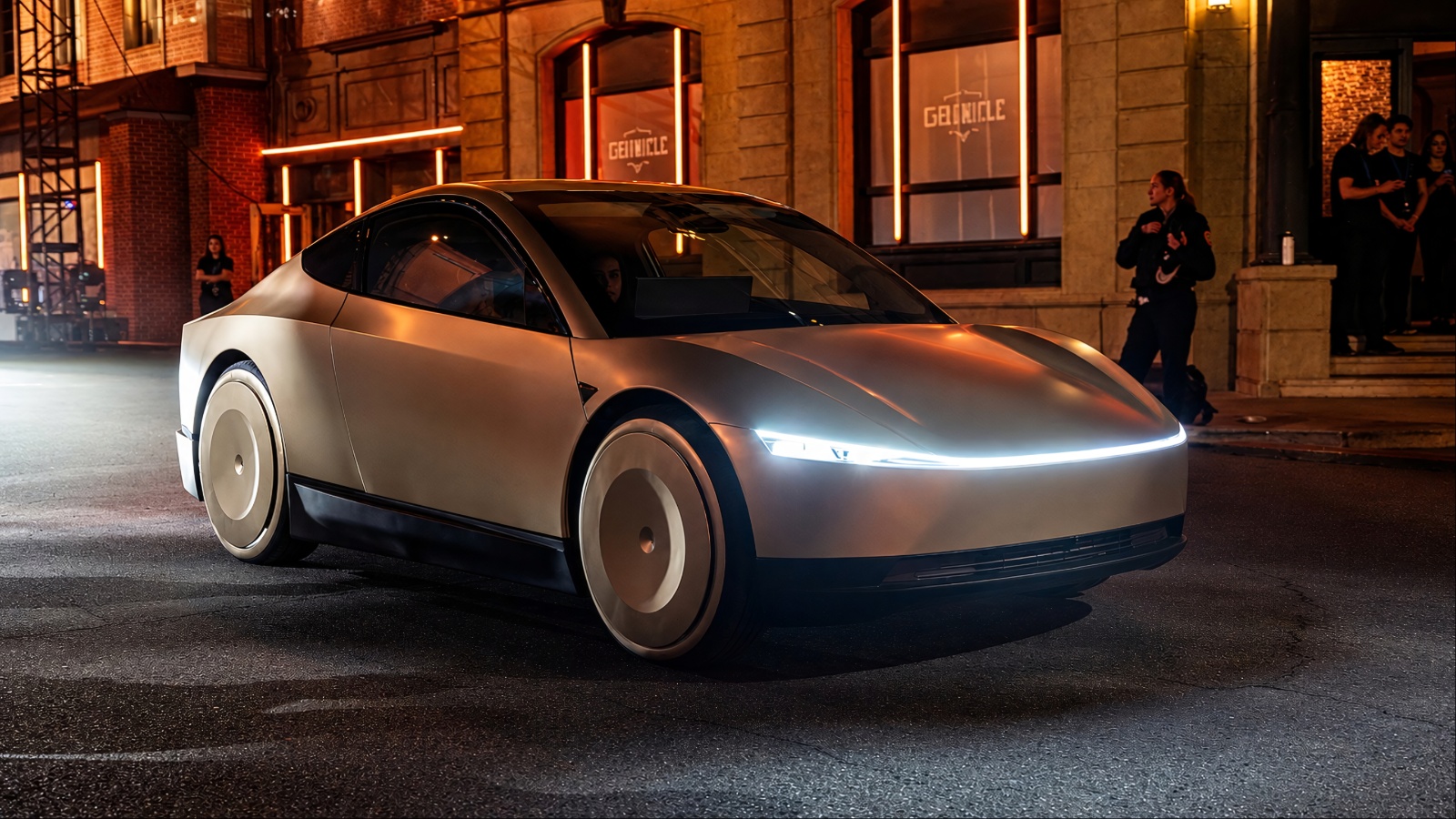
Tesla is preparing to introduce its purpose-built Cybercab robotaxi in Austin, Texas, potentially marking the next major stage in the company’s effort to turn autonomous driving into a significant business beyond electric-vehicle sales.
According to Reuters, Tesla has told employees that it is preparing for a Cybercab launch as soon as August, beginning with rides for employees in Austin before expanding more broadly.
Reuters based its report on information from The Information, which cited people familiar with Tesla’s plans. The initial rollout would allow Tesla to gather experience with the new vehicle before opening the service to a wider group of passengers.
The development is important because the Cybercab is fundamentally different from the Tesla vehicles currently being used for the company’s robotaxi service. It is being designed from the beginning as an autonomous vehicle, without a steering wheel or pedals.
Tesla has already begun operating robotaxi services using modified Model Y vehicles. Reuters reported that the company launched an unsupervised robotaxi service in Austin in June and subsequently expanded operations to Dallas, Houston, and Miami.
The Cybercab would therefore represent the next step: moving from adapting existing vehicles for autonomous ride-hailing toward producing a vehicle specifically designed to operate without traditional driver controls.
Cybercab Represents a Different Kind of Tesla Vehicle
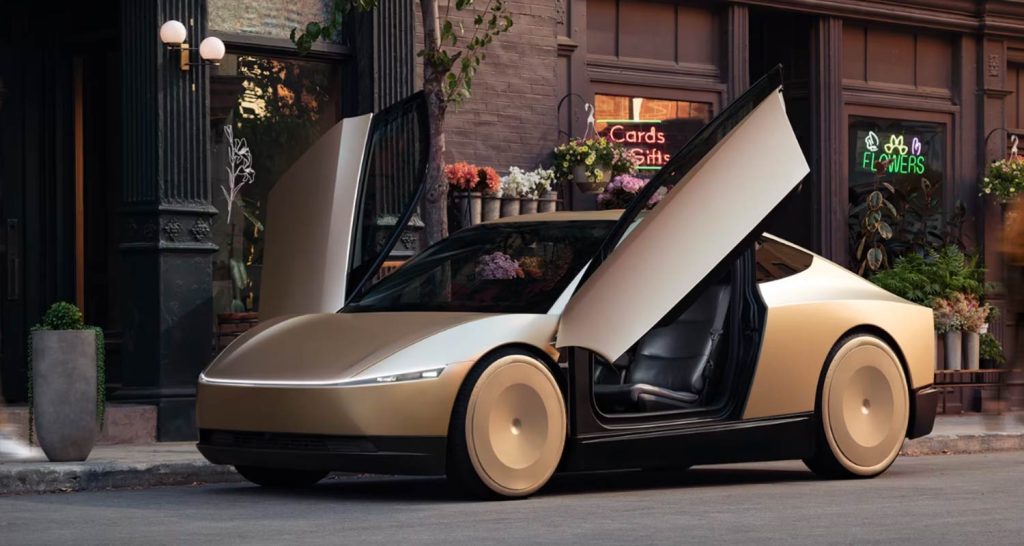
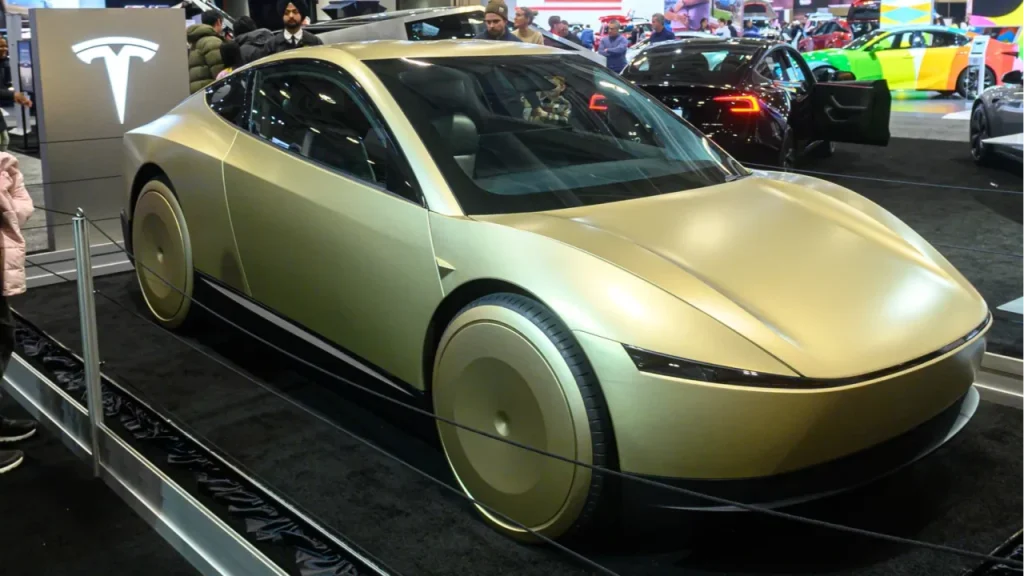
Tesla first revealed the Cybercab as a purpose-built autonomous vehicle intended for robotaxi operations. Unlike the company’s Model 3 or Model Y, the vehicle is designed without conventional driver controls, including a steering wheel and pedals.
That design could eventually allow Tesla to build a vehicle optimized around passenger transportation rather than private ownership. Without a driver, the cabin can be designed around passengers, while the vehicle’s electronic and computing systems can be developed specifically for autonomous operation.
According to Reuters, Tesla plans to produce the Cybercab in Texas, with volume production scheduled to begin in 2026. The company has also been investing heavily in factories and infrastructure intended to support the Cybercab and its broader autonomous-driving ambitions.
The August rollout, if it proceeds as reported, would be an important test of whether Tesla can move the concept from demonstrations and limited robotaxi operations into a repeatable commercial service.
Beginning with employees would give Tesla a controlled group of early riders who can provide feedback on the vehicle, passenger experience, and autonomous driving system. It would also allow the company to identify problems before expanding the service to a much larger customer base.
That cautious approach is notable because Tesla’s robotaxi rollout has progressed more slowly than CEO Elon Musk previously predicted.
Reuters reported in April that Musk had adopted a more cautious tone regarding the company’s autonomous-driving plans, acknowledging that the rollout was moving slower than expected. At the time, Musk said Tesla was taking a cautious approach because safety remained a priority.
Tesla has also faced criticism over the pace and performance of its robotaxi expansion. Reuters testing in Dallas and Houston in May found long waits, limited availability, and problems with some rides, suggesting that scaling an autonomous ride-hailing network is considerably more difficult than simply deploying software to vehicles.
The Cybercab therefore arrives at a critical point for Tesla. The company needs to demonstrate not only that its autonomous technology can operate safely but also that the entire robotaxi business can function reliably at a commercial scale.
Tesla Is Already Building a Robotaxi Business
Although the Cybercab would be new, Tesla’s robotaxi business is not starting from zero. The company began its Austin robotaxi pilot using modified Tesla vehicles and has gradually expanded the service into additional cities.
Reuters reported that Tesla launched robotaxi operations in Dallas and Houston in April and expanded the service to Miami in July.
These vehicles have provided Tesla with an opportunity to collect real-world operating data while testing its autonomous-driving system with actual passengers.
That experience could be particularly valuable for the Cybercab. A purpose-built vehicle will require Tesla to solve challenges that go beyond autonomous driving itself.
The company must also demonstrate that passengers can safely enter and exit the vehicle, understand how the system works, summon assistance when necessary, and travel reliably without a human driver sitting behind the controls. The regulatory environment adds another layer of complexity.
Tesla’s Cybercab will not necessarily face exactly the same regulatory path as conventional vehicles because it lacks traditional controls. Amazon’s Zoox recently became the first company to receive U.S. approval for limited commercial deployment of a purpose-built robotaxi without human controls, according to Reuters.
The National Highway Traffic Safety Administration granted Zoox an exemption allowing deployment of up to 2,500 vehicles annually for two years.
That precedent could become relevant as Tesla attempts to deploy its own steering-wheel-free vehicle.
Tesla will also have to navigate state and local requirements governing autonomous ride-hailing. Its existing strategy of expanding city by city reflects the fact that regulatory conditions can differ between jurisdictions.
Tesla engineering executive Lars Moravy told Reuters in July that the company was expanding one city at a time to make sure it met the requirements in each location.
That means an August Cybercab launch would not automatically translate into a nationwide service.
Instead, Austin is likely to function as another important testing ground before Tesla determines how quickly the vehicle can expand into other markets.
A Critical Test of Tesla’s AI and Business Strategy
The Cybercab carries significance far beyond the vehicle itself because autonomous driving has become central to Tesla’s long-term strategy.
Tesla remains one of the world’s largest electric-vehicle manufacturers, but the company has increasingly positioned artificial intelligence, autonomous driving, and robotics as major sources of future growth. Musk has repeatedly argued that a large autonomous ride-hailing fleet could fundamentally change Tesla’s economics.
The potential market is enormous. A robotaxi can theoretically operate for many more hours each day than a privately owned vehicle, allowing its owner or operator to generate revenue from transportation services rather than using the vehicle only for personal travel.
For Tesla, that could create an entirely different business model. Instead of simply selling a car to a customer, the company could potentially own or operate fleets of Cybercabs, sell autonomous vehicles to fleet operators, license its technology, or allow Tesla owners to place compatible vehicles into a future ride-hailing network.
However, those possibilities depend on achieving reliable autonomous operation at scale. Reuters reported in July that Tesla’s robotaxi rollout had been slower than expected, with analysts noting that the company had not met some of its previously stated expansion targets.
There is also intense competition. Alphabet’s Waymo has been operating commercial driverless services for years and has expanded its paid robotaxi network into numerous U.S. cities.
Amazon’s Zoox is now moving toward paid service, while Chinese autonomous-driving companies are pursuing international expansion. Reuters reported that Pony.ai and Uber plan to deploy more than 2,000 robotaxis across four European cities as their partnership expands.
Tesla’s advantage is the enormous amount of driving data generated by its global vehicle fleet and the scale of its manufacturing operations. The company has also developed its own AI computing infrastructure and Full Self-Driving software.
But its approach differs from competitors such as Waymo, which uses a broader sensor strategy and has spent years operating highly controlled autonomous fleets.
Tesla’s decision to pursue a camera-based autonomous system has therefore remained one of the most closely watched aspects of its strategy.
Reuters reported in May that former Tesla employees involved in training its AI systems raised concerns about the technology’s ability to handle certain difficult real-world situations safely at scale. Tesla has disputed criticisms of its autonomous-driving technology and continues to develop its systems.
The Cybercab could provide the company with an opportunity to demonstrate measurable progress.
If employee rides begin in August as reported, the next milestones will likely be broader passenger access, increased fleet size, improved availability, and expansion beyond Austin. The pace of those steps will provide a clearer indication of whether Tesla can turn the Cybercab into a genuine commercial transportation platform.
For now, the reported August launch should be viewed as an important beginning rather than proof that Tesla has solved autonomous ride-hailing at scale. The company still has to demonstrate safety, reliability, regulatory compliance, and commercially viable operations.
Nevertheless, the Cybercab represents a significant evolution of Tesla’s strategy. The company is moving from testing autonomous technology in modified production vehicles toward a vehicle designed specifically for a driverless future.
If Tesla can successfully manufacture the Cybercab in large numbers and operate it reliably without human controls, the implications could extend well beyond the robotaxi market.
It would strengthen Tesla’s position in artificial intelligence and autonomous transportation while giving the company another potential source of revenue at a time when the traditional EV market is becoming increasingly competitive.
The first Cybercab rides, therefore, will be watched for more than just how the vehicle drives. They could provide an early indication of whether Tesla’s long-promised autonomous future is finally moving from an ambitious concept toward a scalable business.