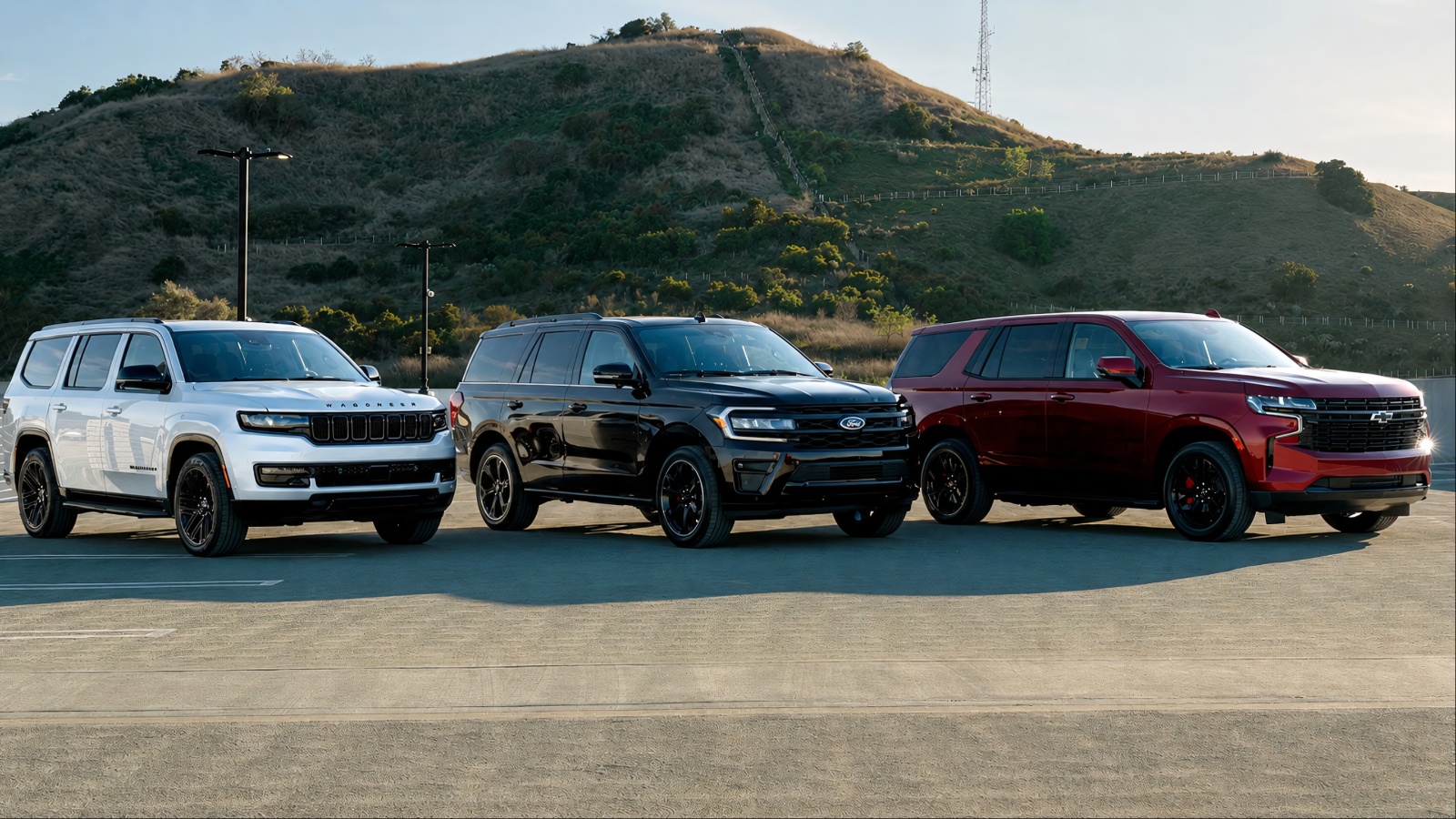
The full-size SUV market is where automakers bring their biggest vehicles, strongest engines, and most expensive technology to the fight.
These are not simply family haulers anymore. The Chevrolet Tahoe, Ford Expedition, and Jeep Wagoneer can carry large families, tow substantial trailers, swallow enormous amounts of cargo, and serve as comfortable long-distance vehicles. For 2026, the three take noticeably different approaches.
The Chevrolet Tahoe remains the traditionalist of the group, offering a choice of a 5.3-liter V8, a 6.2-liter V8, and a 3.0-liter Duramax turbo-diesel six-cylinder.
The Ford Expedition uses a twin-turbo 3.5-liter V6, available in standard and high-output forms, while the Jeep Wagoneer relies on a 3.0-liter Hurricane twin-turbo inline-six producing 420 horsepower and 468 lb-ft of torque.
Their pricing is also remarkably close at the entry level. The 2026 Tahoe starts at $60,700, and the Expedition starts around $62,400, according to Chevrolet’s current comparison data, while the 2026 Wagoneer has moved into a more aggressively priced position in Jeep’s updated lineup.
But price alone cannot decide this contest. The Tahoe has a major towing and powertrain advantage; the Expedition offers tremendous interior space and some of the strongest towing capability in the segment, while the Wagoneer combines serious towing strength with an upscale cabin and standard Hurricane power.
So which one is better? Here is how the three compare across six categories that matter most to full-size SUV buyers.
Price and Value
The Tahoe starts this comparison with a major advantage: it gives buyers a genuinely full-size SUV without forcing them immediately into luxury-SUV pricing.
The 2026 Tahoe starts at $60,700. The Ford Expedition starts at $62,400 according to Chevrolet’s current comparison data, putting the Tahoe roughly $1,700 lower before options.
Cars.com lists the 2026 Tahoe LS at $60,700 and the 2026 Expedition at $57,700, illustrating why exact pricing can vary depending on how destination charges and configurations are presented.
The Tahoe also offers something valuable at the entry level: a choice of powertrains across the broader lineup. The standard 5.3-liter V8 produces 355 horsepower and 383 lb-ft of torque, while the available 6.2-liter V8 increases output to 420 horsepower.
The 3.0-liter Duramax diesel provides another route for buyers who prioritize fuel economy and long-distance driving.
Ford’s Expedition is more expensive to start, but it brings a strong standard powertrain. The 3.5-liter EcoBoost produces 400 horsepower and 480 lb-ft of torque, while the high-output version reaches 440 horsepower and 510 lb-ft.
The Wagoneer is particularly interesting because Jeep has repositioned the model around a 420-horsepower 3.0-liter Hurricane inline-six. It produces 468 lb-ft of torque and can tow up to 10,000 pounds when properly equipped. That is impressive capability for a vehicle competing directly with the Tahoe and Expedition.
The problem for the Wagoneer is that buyers are often paying for more upscale equipment, while the Tahoe provides a simpler route into the segment.
The Tahoe also offers a particularly broad range of trims. Buyers can start with the LS and move through LT, RST, Z71, Premier, and High Country configurations. That means the same basic SUV can serve as a family vehicle, towing machine, or near-luxury highway cruiser.
The Expedition has an equally broad range, including Active, Platinum, Tremor, and King Ranch models. Its pricing rises considerably as buyers add equipment.
For value, the Tahoe’s combination of lower entry pricing, multiple engine choices, available diesel technology, strong towing capability, and broad trim selection gives it the strongest case.
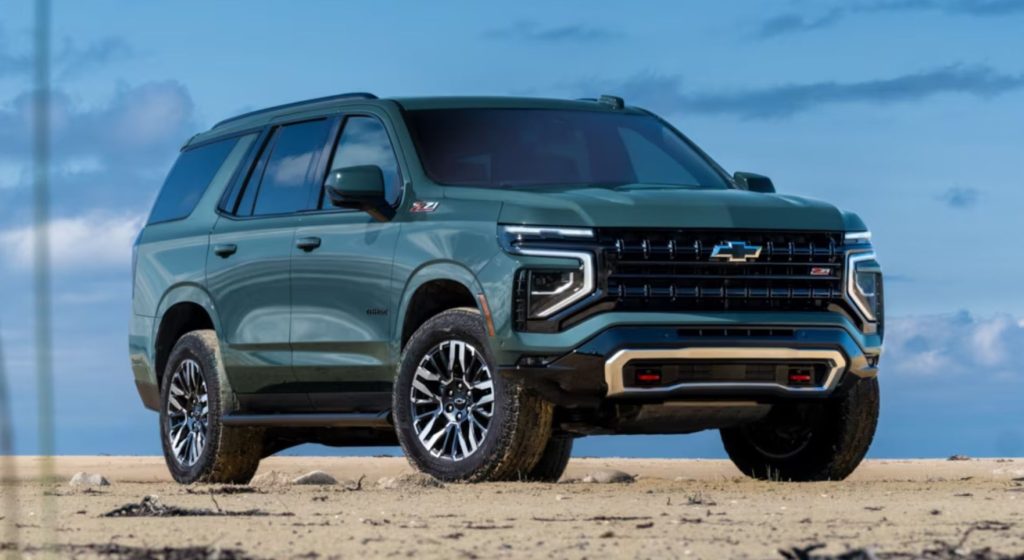
The Wagoneer offers more luxury-oriented equipment at several levels, while the Expedition provides exceptional standard performance.
But the Tahoe gives buyers the most ways to configure the vehicle without immediately pushing the price into luxury territory.
Winner: Chevrolet Tahoe
Powertrain and Performance
The Expedition wins this category because Ford has concentrated enormous amounts of power into a relatively simple engine lineup.
The standard 2026 Expedition uses a 3.5-liter EcoBoost twin-turbo V6 producing 400 horsepower and 480 lb-ft of torque. Ford also offers a high-output version producing 440 horsepower and 510 lb-ft. Both engines use a 10-speed automatic transmission.
That means even the regular Expedition has more horsepower and torque than the standard Tahoe’s 5.3-liter V8.
The high-output expedition goes even further. Its 440 horsepower gives it a clear advantage over the Tahoe’s 420-horsepower 6.2-liter V8 and the Wagoneer’s 420-horsepower Hurricane inline-six.
Ford also uses turbocharging to produce substantial torque at relatively low engine speeds. That characteristic is particularly useful in a vehicle this large because strong low-end torque makes acceleration, highway merging, and trailer pulling easier.
The Tahoe takes a completely different approach. Its 5.3-liter V8 produces 355 horsepower and 383 lb-ft, while the 6.2-liter V8 reaches 420 horsepower and 460 lb-ft according to Chevrolet’s specifications. The Tahoe also offers the 3.0-liter Duramax diesel, which produces 305 horsepower and 495 lb-ft.
The diesel is particularly interesting because it produces more torque than the gasoline V8s while potentially delivering better fuel economy. For buyers who spend thousands of miles on highways or tow frequently, it can be a compelling option.
Then there is the Wagoneer. Its 3.0-liter Hurricane twin-turbo inline-six produces 420 horsepower and 468 lb-ft of torque. The engine is paired with an eight-speed automatic transmission. Jeep says the Wagoneer can tow up to 10,000 pounds when properly equipped.
The Wagoneer’s engine is exceptionally strong, but the Expedition’s high-output version still has the advantage in maximum power.
The difference becomes more noticeable when acceleration is considered. Car and Driver’s testing of the Expedition Max recorded a 0-to-60-mph time of 4.9 seconds, demonstrating how much performance Ford has managed to extract from its turbocharged V6 platform.
The Tahoe’s 6.2-liter V8 remains appealing for buyers who prefer the sound and character of a large naturally aspirated engine. The diesel adds another layer of choice.
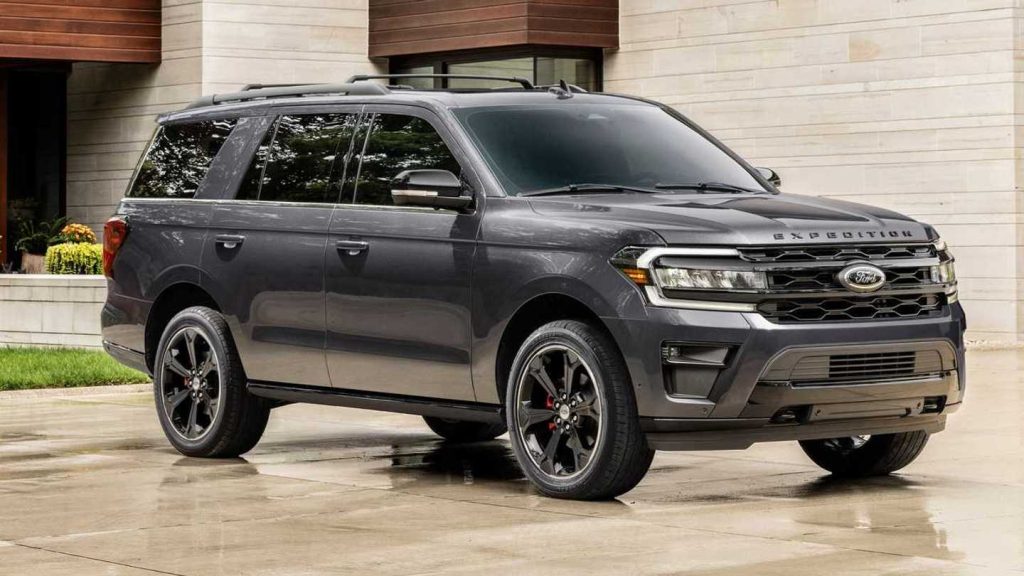
But the Expedition combines 440 horsepower and 510 lb-ft with a 10-speed automatic and strong towing capability.
For buyers who care most about acceleration and maximum engine output, Ford has the strongest powertrain.
Winner: Ford Expedition
Towing and Capability
This is one of the closest categories because all three SUVs are serious towing machines. The 2026 Jeep Wagoneer can tow up to 10,000 pounds when properly equipped. Jeep pairs its 420-horsepower Hurricane engine with a heavy-duty towing setup, and the available four-wheel-drive system provides additional traction when conditions become difficult.
That 10,000-pound figure is not merely marketing fluff. It requires the correct configuration, but it puts the Wagoneer at the top of this particular group.
The Ford Expedition is extremely close. Ford lists a maximum conventional towing rating of 9,600 pounds for properly equipped Expedition models.
That requires available four-wheel drive and the Heavy-Duty Trailer Tow Package on the relevant short-wheelbase configurations. The Expedition Max can tow up to 9,000 pounds, while the Tremor reaches 9,300 pounds.
That makes the Expedition one of the strongest towing SUVs available, particularly for buyers who want a large family vehicle that can also handle substantial travel trailers or boats.
The Tahoe’s maximum towing rating reaches 8,400 pounds in the configurations cited by Chevrolet and current comparison data. Chevrolet also advertises 7,900 pounds as the standard towing capacity in its comparison material against the Expedition and Wagoneer.
That still makes the Tahoe a formidable towing vehicle. An 8,400-pound maximum is enough for many large recreational trailers, boats, and enclosed utility trailers.
But towing capacity is not the only measurement that matters. The Tahoe offers an available Super Cruise with trailering capability, which can be particularly useful for long highway journeys. Chevrolet specifically highlights hands-free driver assistance with trailering as an available Tahoe feature.
Ford counters with its towing-focused technology and strong EcoBoost torque. The Expedition’s 480 lb-ft standard output and 510 lb-ft high-output engine provide substantial pulling force.
Jeep has its own advantage through the Wagoneer’s four-wheel-drive systems and available Quadra-Lift air suspension. Those features can be useful when towing across uneven terrain or dealing with changing road surfaces.
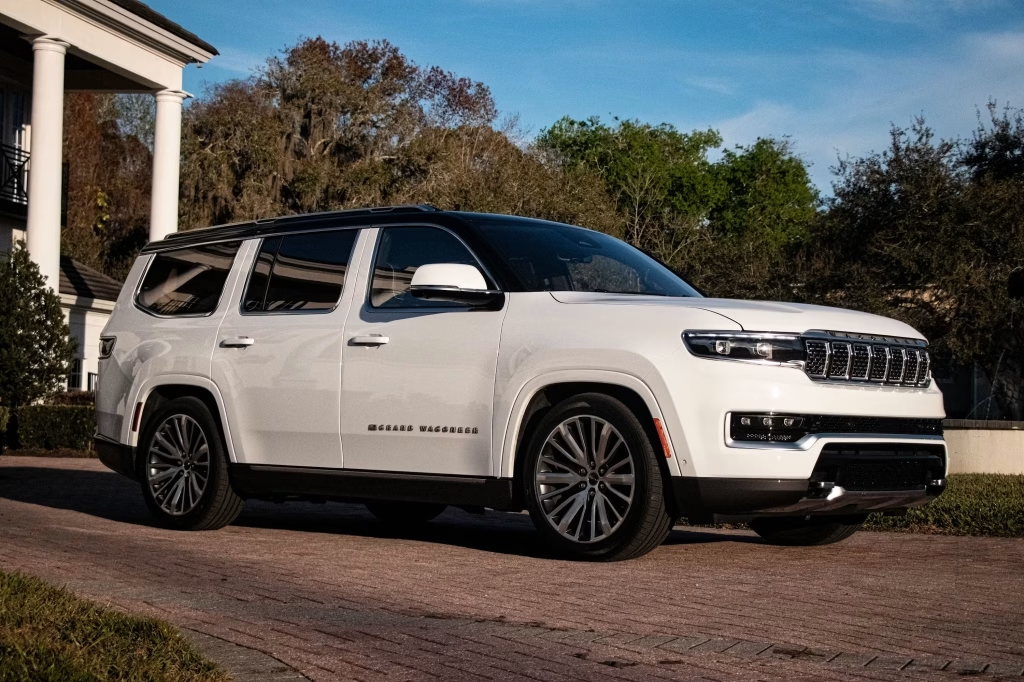
Still, when the question is simply which SUV can pull the heaviest trailer, the Wagoneer has the strongest published number. Its 10,000-pound maximum exceeds the Expedition’s 9,600 pounds and the Tahoe’s 8,400-pound maximum.
For buyers who regularly tow a large travel trailer, boat, or other heavy load, that difference can matter The Expedition remains an excellent towing machine, while the Tahoe offers useful trailering technology. But Jeep takes this category with the highest maximum capacity.
Winner: Jeep Wagoneer
Interior Space and Family Practicality
The Expedition wins because Ford has paid particular attention to the needs of families who actually use all three rows.
Full-size SUVs are frequently purchased because buyers want something larger than a midsize three-row crossover. That means third-row comfort and cargo capacity become important, particularly when adults or older children regularly occupy the back seats.
The Expedition provides a spacious cabin and can be configured in standard and long-wheelbase Expedition Max forms. The longer version adds substantial cargo room behind the third row while retaining the three-row seating arrangement.
Ford also gives the Expedition a flexible second row, including configurations designed to make access to the third row easier. The result is an SUV that feels designed around family use rather than simply adding a third row as an afterthought.
The Tahoe is also exceptionally practical. Chevrolet lists up to 122.7 cubic feet of maximum cargo volume, and its independent rear suspension helps create useful interior packaging.
The Tahoe can seat up to nine passengers in certain configurations, according to current comparison data, while more typical versions seat seven or eight.
That gives Chevrolet a major advantage for buyers who occasionally need maximum seating capacity.
The Wagoneer takes a different approach. Jeep’s 2026 specifications show 182.4 cubic feet of passenger volume in the standard-wheelbase model and 210.3 cubic feet of total passenger-plus-cargo volume.
Cargo volume reaches 27.9 cubic feet behind the third row, 70.8 cubic feet behind the second row, and 116.7 cubic feet behind the first row in the standard-wheelbase configuration. Those numbers are substantial.
The Wagoneer also provides available second-row captain’s chairs and a power-folding third row, making it particularly attractive to families who prioritize comfort over maximum seating count.
The Tahoe’s cabin is easy to use and offers impressive cargo capacity, while the Wagoneer provides a luxurious and spacious environment.
But the Expedition’s combination of passenger room, cargo flexibility, and standard versus Max configurations gives it the strongest family-use package.
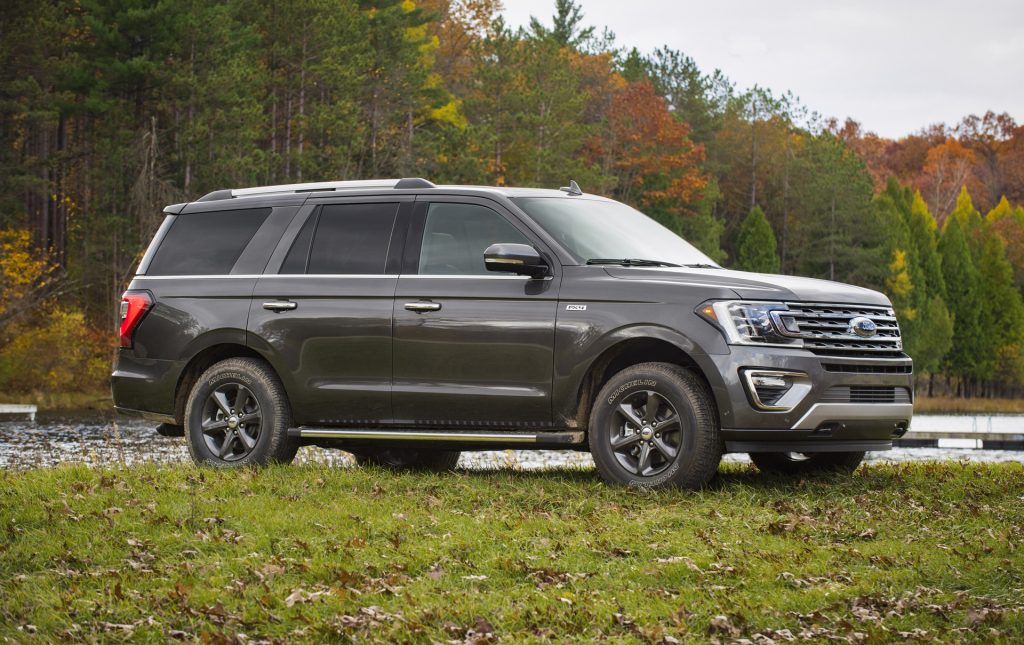
For a family that regularly carries seven or eight people, the ability to choose between a standard-length body and the larger Expedition Max can be extremely valuable.
The Tahoe is the better choice for maximum configuration flexibility. The Wagoneer is excellent for premium passenger comfort. But the Expedition is the most convincing family-focused package.
Winner: Ford Expedition
Technology and Luxury
The Wagoneer wins this category because its cabin is designed to feel closer to a luxury SUV than a traditional truck-based family hauler.
The Jeep gives the Wagoneer an upscale interior with premium materials, available leather seating, multiple screens, and extensive comfort equipment. The 2026 Grand Wagoneer goes even further, but it is important not to confuse the Grand Wagoneer with the standard Wagoneer being compared here.
The standard Wagoneer already occupies an interesting middle ground between mainstream and luxury.
The Tahoe counters with one of the strongest infotainment systems in this class. Chevrolet offers a 17.7-inch diagonal center touchscreen, and the company calls it best-in-class in its comparison material. The Tahoe can also be equipped with Super Cruise, including trailering capability.
That is a serious technology advantage. The Tahoe’s screen is enormous, and the available camera system can provide up to 14 views for parking, trailering, and maneuvering.
Ford’s Expedition takes a different approach. The 2026 Expedition features a large panoramic dashboard display measuring 24 inches. Ford also offers wireless Apple CarPlay and Android Auto and BlueCruise hands-free highway driving.
That makes the Expedition arguably the most technologically dramatic of the three. The BlueCruise system is particularly useful on long highway trips because it allows hands-free driving on mapped roads while monitoring the driver.
Yet technology is only one part of luxury. The Wagoneer puts greater emphasis on the atmosphere of the cabin. The Jeep provides premium seating materials, sophisticated audio options, multiple comfort features, and a cabin that feels substantially more upscale than the average full-size SUV.
The Wagoneer also offers Quadra-Lift air suspension on applicable configurations, allowing the SUV to adjust its ride height. That system can improve ride comfort while also providing additional ground clearance when needed.
The Tahoe’s advantage is its infotainment interface and Super Cruise availability. The Expedition’s advantage is its enormous dashboard display and BlueCruise.
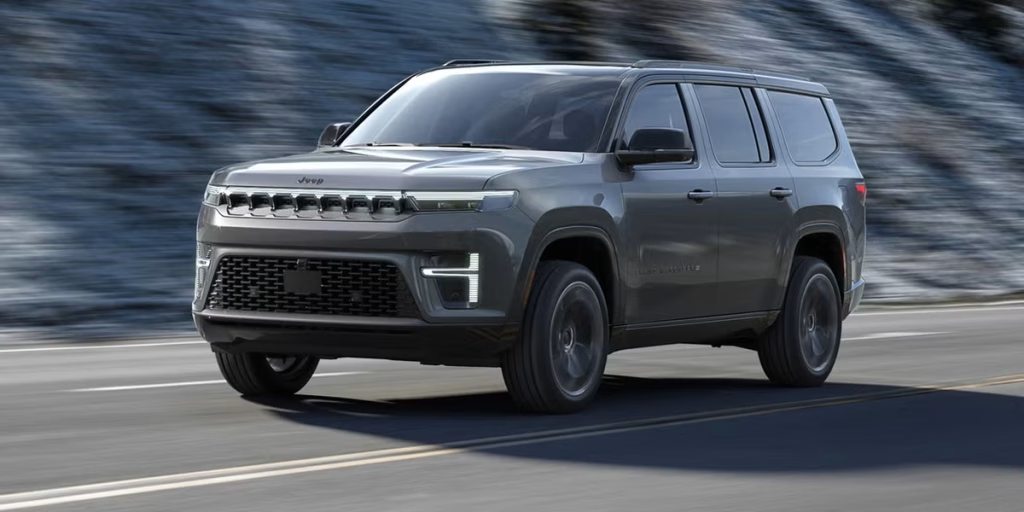
But the Wagoneer combines technology with luxury in a way that makes the cabin feel more expensive than its mainstream competitors.
For buyers who want the most impressive passenger environment rather than simply the biggest screen, Jeep has the strongest argument.
Winner: Jeep Wagoneer
Fuel Economy and Everyday Driving
It may seem strange to give a full-size SUV with V8 engines the fuel-economy victory, but the Tahoe has one major weapon that changes the equation: the available 3.0-liter Duramax diesel.
The diesel-powered Tahoe can achieve an EPA-estimated fuel economy of up to 24 mpg combined, according to current comparison data, with Car and Driver listing the diesel at 24 mpg combined.
Chevrolet also advertises available fuel-economy figures reaching 22 mpg city and 26 mpg highway in its comparison material. For a vehicle this large, those numbers are remarkable.
The diesel also produces 495 lb-ft of torque, giving the Tahoe a useful combination of fuel efficiency and towing ability. It is particularly well suited to highway commuters who cover large distances because diesel engines can deliver strong highway efficiency while maintaining substantial low-end torque.
The Expedition’s standard 3.5-liter EcoBoost is rated at 16 mpg city and 24 mpg highway in its 4×2 configuration. Ford’s high-output version is rated at 15 mpg city and 22 mpg highway in applicable configurations.
Those figures are competitive for a large turbocharged SUV, but the Tahoe diesel has a clear highway advantage.
The Wagoneer uses the 3.0-liter Hurricane inline-six. Jeep’s 2026 specifications list estimated fuel economy around 17 mpg city and 24 mpg highway for 4×2 versions, while four-wheel-drive models are less efficient.
That makes the Wagoneer reasonably efficient considering its size and 420-horsepower output, but it cannot match the Tahoe diesel’s combination of highway economy and torque.
The Tahoe also benefits from its range of powertrains. Buyers can choose the 5.3-liter V8 for conventional gasoline power, the 6.2-liter V8 for maximum naturally aspirated performance, or the Duramax diesel for long-distance efficiency.
The Expedition has fewer choices but offers strong turbocharged performance from its standard engine.
The Wagoneer has a powerful and refined Hurricane engine, but its fuel economy is closer to what buyers expect from a large gasoline-powered SUV.
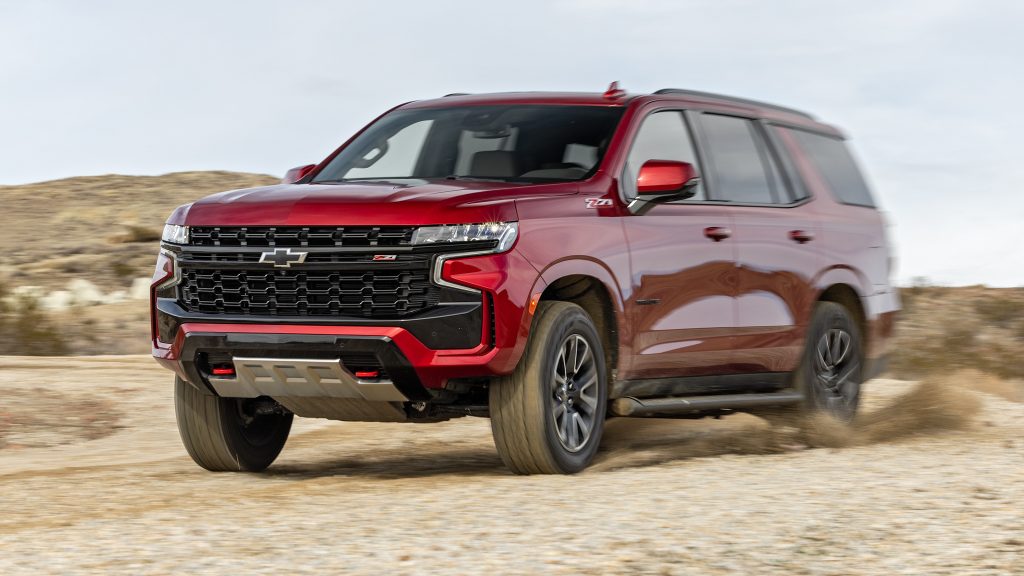
For daily driving, the Expedition can be surprisingly quick and comfortable, while the Wagoneer delivers a smooth and quiet experience.
But if the question is which SUV gives the best opportunity to combine full-size capability with lower fuel consumption, the Tahoe’s diesel option makes the difference.
Winner: Chevrolet Tahoe
The 2026 Chevrolet Tahoe, Ford Expedition, and Jeep Wagoneer are all highly capable full-size SUVs, but their personalities are surprisingly different.
The Chevrolet Tahoe is the most versatile traditional choice. It offers multiple engine options, a diesel powertrain, strong towing capability, a huge 17.7-inch touchscreen, and available Super Cruise with trailering. Its starting price also remains competitive against the other two.
The Ford Expedition is the performance and family-space specialist. Its 3.5-liter EcoBoost produces 400 horsepower and 480 lb-ft, while the high-output version reaches 440 horsepower and 510 lb-ft. Properly equipped models can tow up to 9,600 pounds, and the Expedition Max gives families an enormous amount of cargo space.
The Jeep Wagoneer is the luxury and towing specialist. Its 420-horsepower Hurricane inline-six produces 468 lb-ft and can tow up to 10,000 pounds when properly equipped. Its upscale cabin and available four-wheel-drive hardware give it an especially strong identity.
The six-category results are close:
| Category | Winner | The Edge |
|---|---|---|
| Price and Value | Chevrolet Tahoe | Competitive pricing and multiple powertrains provide exceptional configuration flexibility. |
| Powertrain and Performance | Ford Expedition | High-output EcoBoost delivers 440 horsepower and 510 lb-ft of torque. |
| Towing and Capability | Jeep Wagoneer | Properly equipped, a Wagoneer can tow up to 10,000 pounds. |
| Interior Space and Family Practicality | Ford Expedition | Standard and long-wheelbase versions provide outstanding family and cargo flexibility. |
| Technology and Luxury | Jeep Wagoneer | Upscale materials and premium features create the most luxurious cabin experience. |
| Fuel Economy and Everyday Driving | Chevrolet Tahoe | Available Duramax diesel combines strong torque with excellent highway fuel economy. |