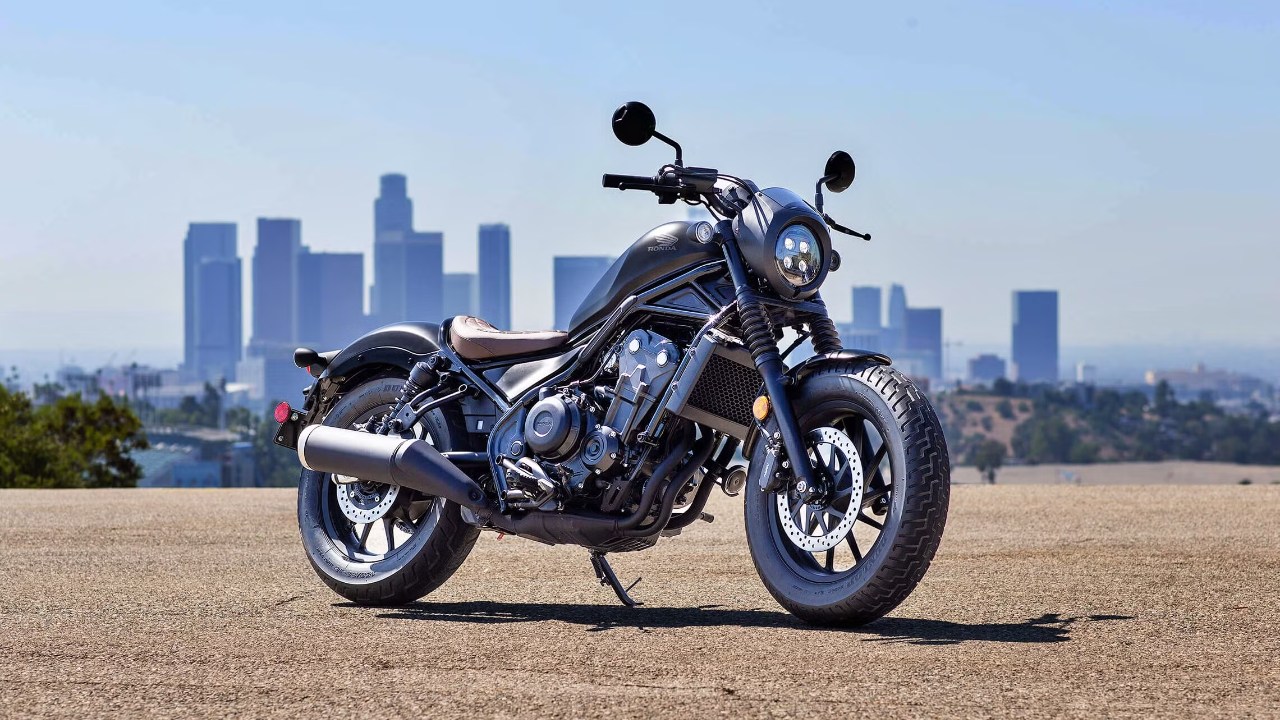
The Honda Rebel 500 looks deliberately simple, but its minimalist styling can hide how much thought went into the motorcycle.
Beneath the low seat, compact bodywork, and classic round headlight are several useful features that are easy to overlook if you simply ride the bike without reading through its controls and specifications.
Some are designed to make everyday riding easier, while others improve control, maintenance, visibility, or practicality. Honda has also incorporated several small details into the Rebel 500 that experienced riders may appreciate more than first-time owners.
Here are ten lesser-known features and functions that can make the Rebel 500 more useful and enjoyable in everyday American riding.
1. The LCD Display Shows More Than Just Speed
The Rebel 500’s compact LCD instrument panel can look almost too simple at first glance, especially compared with motorcycles carrying large TFT displays. However, Honda has packed several useful pieces of information into that small screen.
The display is designed to provide considerably more than the motorcycle’s current speed, and knowing how to cycle through its information can make the bike easier to live with.
Honda lists a speedometer, gear-position indicator, fuel gauge, clock, and tripmeters among the information available through the Rebel 500’s LCD instrument cluster. That gear-position display is particularly useful for newer riders because the six-speed transmission can otherwise require some guesswork when cruising at changing speeds.
Rather than relying entirely on engine sound and feel, the rider can glance down and confirm the selected gear.
The tripmeter functions are another practical detail. Riders can use them to track individual journeys, monitor fuel stops, or keep an eye on distance between maintenance tasks.
Since the Rebel 500 has a relatively compact 3.0-gallon fuel tank, having trip information available can also provide another reference when planning longer rides. Honda’s current U.S. specifications list the tank capacity at 3.0 gallons.
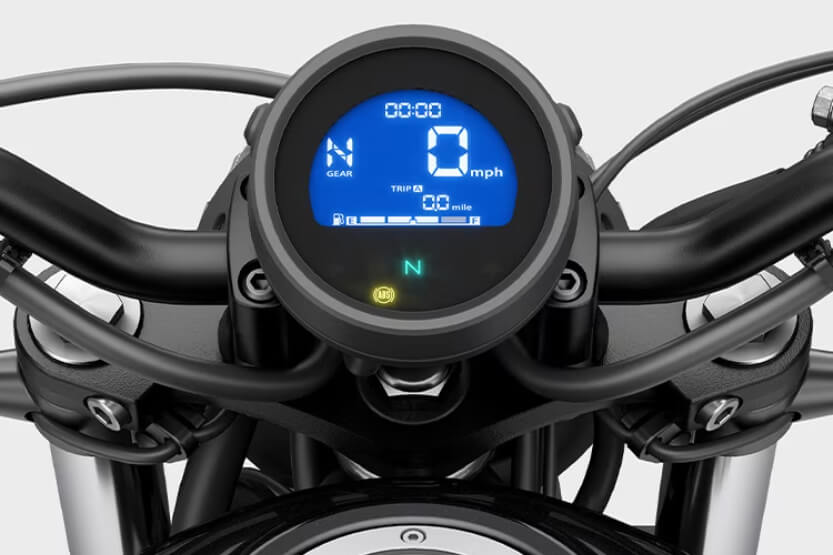
There is also a clock, which sounds insignificant until you use the motorcycle for commuting. It means the rider does not need to rely on a phone or wristwatch for a quick time check.
The hidden advantage is not one spectacular function. It is the combination. Honda has kept the Rebel’s cockpit visually uncluttered while still providing information that matters during daily riding.
2. The Slipper Clutch Makes Downshifts Easier
One of the Rebel 500’s more easily overlooked mechanical features is its slipper clutch. It is not something that immediately stands out when looking at the motorcycle, yet it can have a noticeable effect on how the bike behaves during aggressive or quick downshifts.
The Rebel 500 uses a six-speed manual transmission with a slipper clutch. Honda specifically says the system provides a 30 percent lighter pull at the clutch lever. That means the rider does not have to exert as much effort with the left hand when repeatedly operating the clutch in traffic or during a longer ride.
The slipper function has another job. During a rapid downshift, the rear wheel can experience a sudden increase in engine braking if the selected gear is significantly lower than the previous one. A slipper clutch is designed to partially manage that situation, helping reduce the chance of excessive rear-wheel lock-up or hopping caused by abrupt engine braking.
That does not mean the system gives the rider permission to make careless downshifts. Smooth clutch and throttle control still matter. Instead, the slipper mechanism provides an additional layer of mechanical assistance when the rider changes down through the gears quickly.
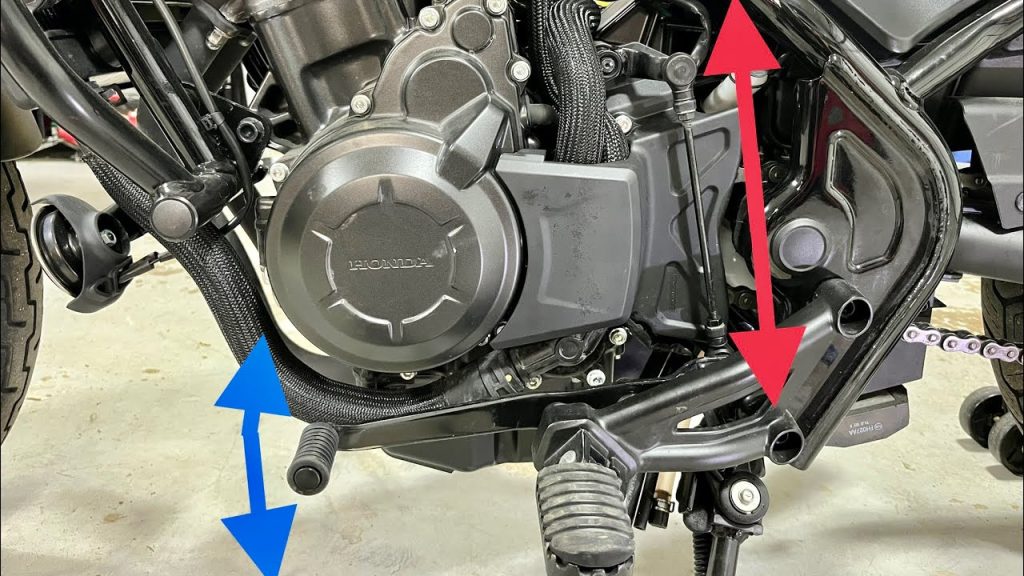
For everyday Rebel 500 owners, the lighter clutch pull may actually be the feature they notice most. Stop-and-go traffic can involve hundreds of clutch movements over time, and reducing the effort required at the lever can make urban riding less tiring.
It is also an interesting example of Honda putting technology into a motorcycle without advertising it through an elaborate dashboard or complicated riding mode menu. The rider simply operates the clutch normally, while the mechanical design quietly helps make the experience smoother.
3. The Rear Shocks Have Adjustable Preload
The Rebel 500’s twin rear shocks are easy to overlook because they fit neatly into the motorcycle’s stripped-back design, but they provide an adjustment that can make a meaningful difference to ride quality.
Honda equips the current U.S.-market Rebel 500 with dual rear shocks featuring adjustable preload, giving riders a way to account for different loads and riding conditions rather than being locked into one fixed suspension setting.
Preload adjustment does not make the shocks electronically adaptive, nor does it change damping at the push of a button. Instead, it changes the initial compression of the spring.
That matters when the motorcycle is carrying additional weight, such as luggage or a passenger. Honda also offers an optional passenger seat and rear footpeg kit, so the ability to alter preload becomes particularly useful when switching between solo and two-up riding.
The current Rebel 500 uses 3.7 inches of rear-wheel travel. At the front, the motorcycle has a 41mm fork with 5.5 inches of travel. That combination gives the Rebel a useful amount of suspension movement for a motorcycle with its low cruiser stance.
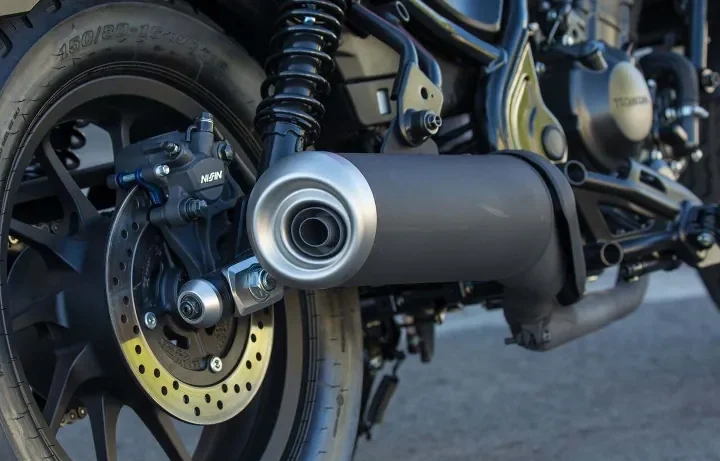
A rider should not assume that a higher preload setting automatically means a better ride. The appropriate setting depends on load and desired suspension sag. The goal is to keep the motorcycle properly supported through its available travel.
This is one of those features that may go unnoticed during a dealership test ride because the factory setting is already usable. However, once the motorcycle’s load changes, understanding the rear-shock adjustment can help the Rebel behave more consistently.
4. The Entire Lighting System Uses LEDs
The Rebel 500’s lighting arrangement is another feature that can disappear into its styling. The motorcycle deliberately uses a classic-looking round headlight, so the technology inside it is easy to miss.
Honda says the Rebel 500 lineup features an all-LED lighting setup, giving the motorcycle modern lighting technology without abandoning its retro-inspired appearance.
The headlight is particularly effective at disguising the feature. Instead of using a futuristic housing or an obviously high-tech design, Honda retains the traditional circular shape that fits the Rebel’s bobber-inspired styling. The result is a motorcycle that looks much more old-school than its lighting technology actually is.
LED technology can provide several practical advantages over traditional incandescent bulbs. LEDs generally consume less electrical power and have long service lives, while their compact size gives designers more flexibility when creating distinctive lighting signatures.
Honda specifically highlights the Rebel’s all-LED arrangement as a package intended to provide brighter, lighter, and longer-lasting illumination.
The feature extends beyond the headlight. The Rebel’s lighting package includes LED elements throughout the motorcycle, helping maintain a consistent lighting system rather than mixing older bulb technology with modern components.
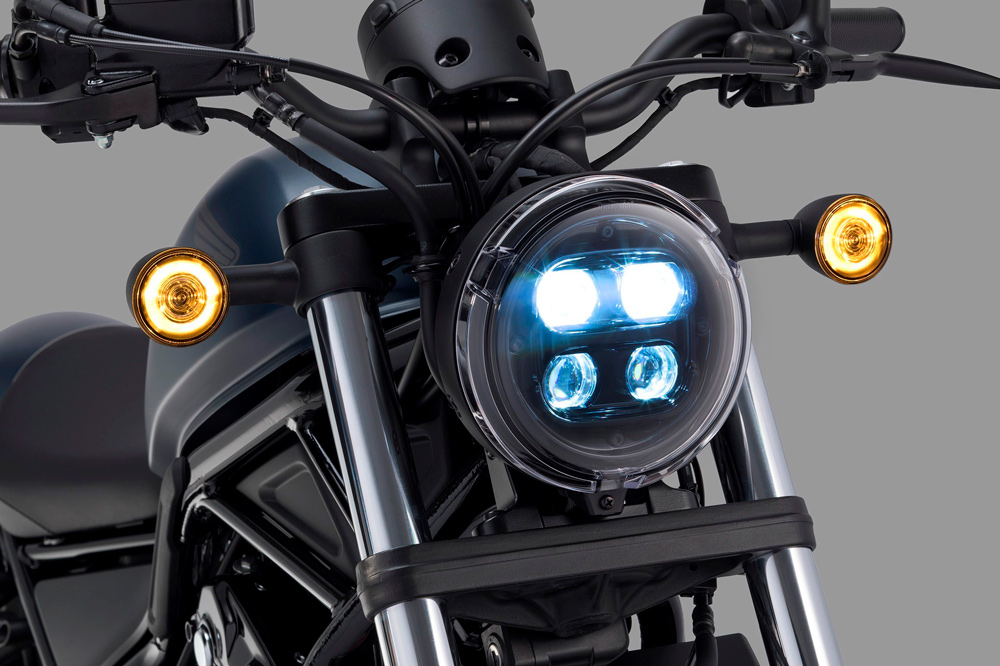
For everyday riders, this matters most during commuting, early-morning departures, and evening rides. Lighting is not simply decorative equipment on a motorcycle. Being visible to other road users is an important part of riding safely, while adequate illumination helps the rider identify the road ahead.
The clever part of Honda’s design is that none of this makes the Rebel look excessively technical. The motorcycle keeps its simple appearance while quietly incorporating modern equipment underneath that classic visual theme.
5. The Rear Subframe Is Designed for Easy Passenger Conversion
The Honda Rebel 500 may have a minimalist rear section that suggests it was built strictly for solo riding, but its design offers more practicality than its appearance suggests. Honda uses a die-cast aluminum rear subframe that provides a solid mounting foundation for an optional passenger seat and rear footpeg kit. This allows owners to convert the motorcycle for two-up riding without replacing the existing rear structure.
The Rebel 500’s low seat, narrow design, and bobber-inspired styling naturally make it popular as a solo cruiser. However, the motorcycle’s 27.2-inch seat height also makes it relatively accessible for a wide range of riders, while leaving room for a passenger setup when needed.
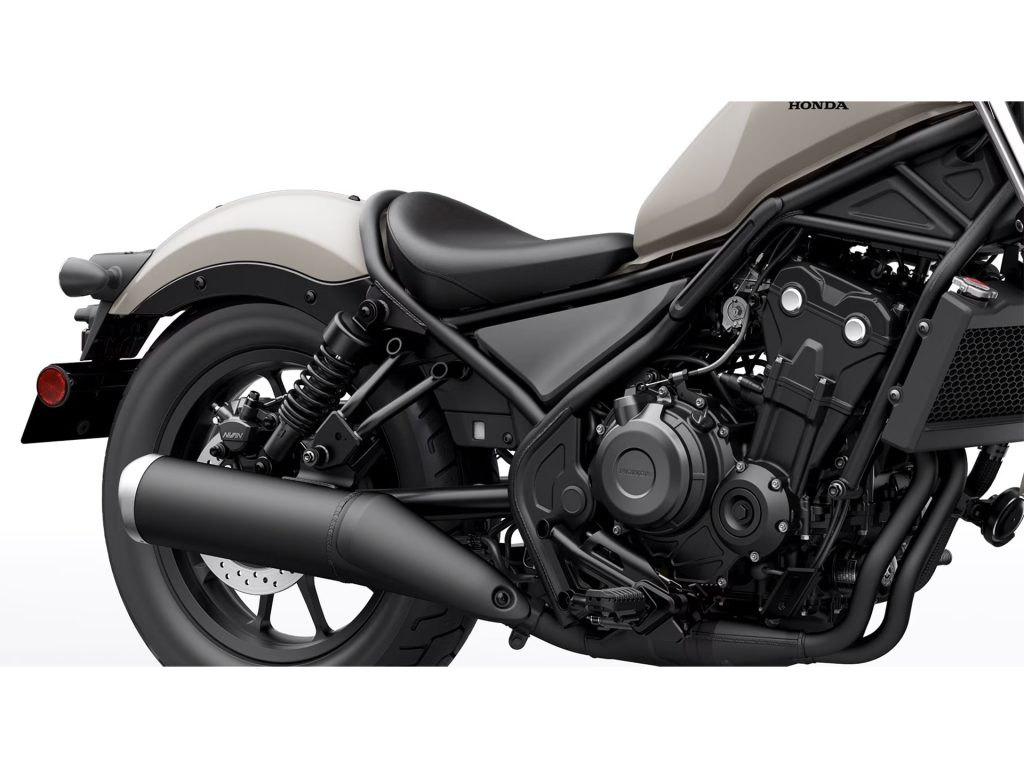
It is important to note that the passenger equipment does not come standard on every Rebel 500. Honda offers the passenger seat and rear footpeg kit as optional accessories, so buyers should consider these additions if they regularly plan to carry someone.
This flexible design gives the Rebel 500 an advantage for owners whose riding needs change. The motorcycle can retain its clean, stripped-down appearance when used primarily alone, yet be adapted for occasional passenger trips when necessary.
For someone who commutes during the week but sometimes rides with a passenger, this practical flexibility may be more useful than adding unnecessary electronic features. The rear subframe demonstrates that the Rebel 500’s minimalist styling does not come at the expense of everyday versatility.
6. The Narrow Tank and Seat Area Helps With Easy Foot Placement
One of the Rebel 500’s most useful characteristics is also one of the easiest to mistake for a styling decision. Honda deliberately made the motorcycle narrow around the tank and seat junction. That shape is not simply there to create the Rebel’s distinctive silhouette.
It helps the rider reach the ground more naturally when stopping and makes mounting and dismounting easier. Honda specifically describes the narrow width around this area as a design intended to support easy mounting, dismounting, and stable footing.
The effect becomes particularly noticeable at intersections and parking lots. A motorcycle can have a low seat but still feel awkward if the rider’s legs have to spread widely around the tank and frame. The Rebel’s slim central section reduces that problem by allowing the rider’s legs to come down closer to the motorcycle.
Honda pairs this design with a 27.2-inch seat height on the 2026 U.S. Rebel 500. That measurement is unusually low for a motorcycle with a 471cc engine, and it contributes to the bike’s approachable character.
The low seat should not be confused with a cramped riding position. Honda describes the Rebel’s rider triangle as being designed to balance relaxed cruiser comfort with a more active riding posture. The handlebars, seat, and foot controls therefore work together rather than simply lowering the rider toward the ground.
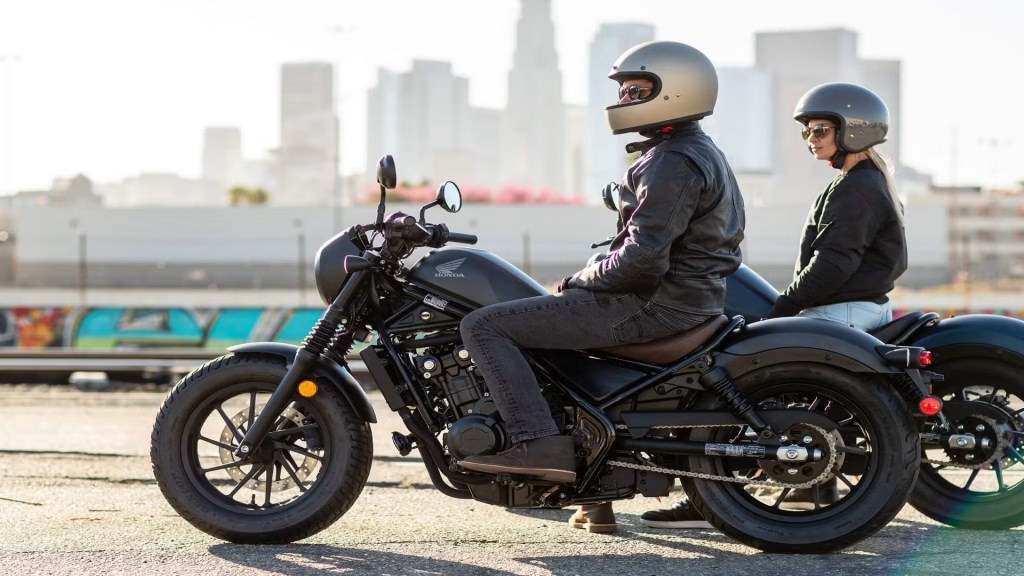
This feature can be particularly helpful for riders who are new to motorcycles or those who simply prefer having both feet firmly planted during low-speed maneuvers. It can also make reversing the motorcycle out of a parking space less intimidating because the rider has easier access to the ground.
Nothing needs to be switched on, adjusted electronically, or selected from a menu. The benefit is built directly into the Rebel’s physical proportions, making it one of the motorcycle’s most useful hidden design features.
7. ABS Is Standard, Not Just an Optional Safety Upgrade
One feature that can easily be overlooked on the Rebel 500 is the braking system because the motorcycle’s styling puts so much emphasis on its classic cruiser appearance.
The current U.S.-market 2026 Rebel 500 comes with ABS as standard equipment, and Honda has fitted anti-lock braking to both the front and rear brakes. That is an important change from earlier Rebel 500 versions in which ABS availability depended on the configuration.
The hardware is straightforward but substantial for a motorcycle in this class. Honda lists a single 296mm front disc and a 240mm rear disc, with ABS integrated into the braking system. The system is designed to help prevent wheel lock during hard braking, particularly when available traction is reduced.
There is also a small detail that many owners may not think about: the ABS warning indicator is part of the motorcycle’s instrument system.
Honda’s owner’s manual explains that the ABS indicator illuminates when the ignition is switched on and should go out once the motorcycle reaches approximately 6 mph. If the light remains illuminated while riding, the system requires attention.
That means the Rebel does not simply have an invisible electronic safety system working in the background. The rider has a way to identify whether the ABS has completed its startup check.
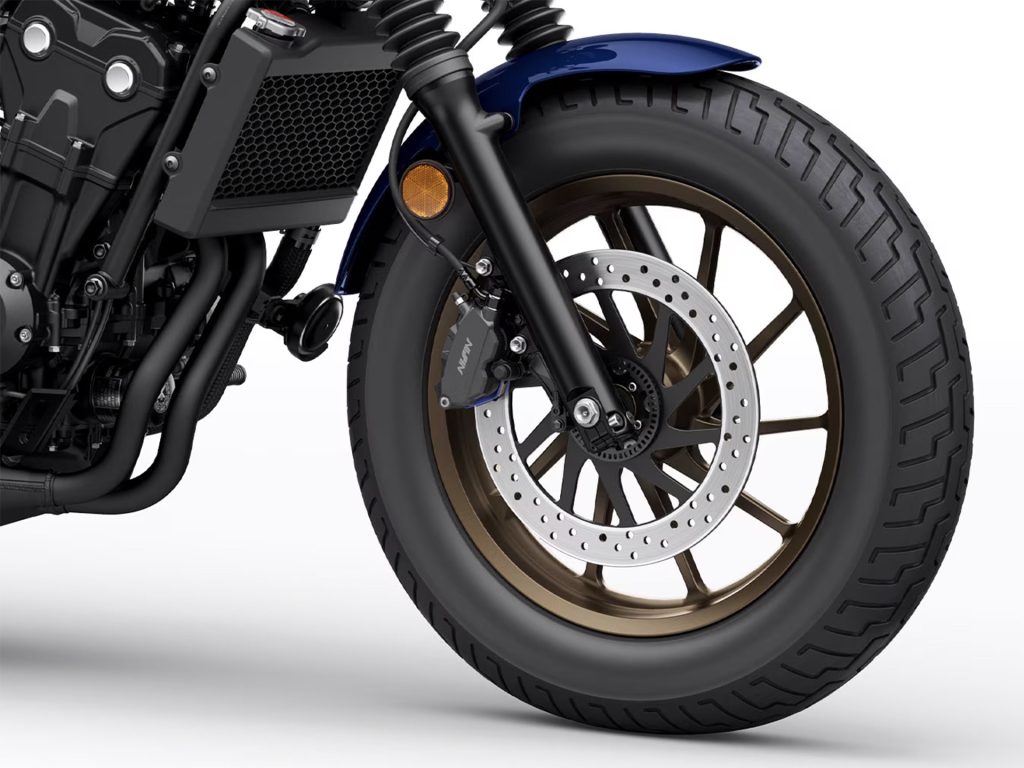
The feature is particularly useful because the Rebel 500’s approachable ergonomics can attract newer riders. Having ABS does not replace proper braking technique, but it can provide an additional margin when a rider encounters an unexpected obstacle or slippery section of pavement.
Honda’s decision to make ABS standard also means buyers do not have to choose between a lower-priced non-ABS version and a more expensive safety-focused model in the current U.S. lineup.
8. The Rebel Uses an O-Ring-Sealed Final-Drive Chain
The chain on the Rebel 500 may look like ordinary motorcycle hardware, but Honda has chosen an O-ring-sealed design for the final drive. That detail is easy to miss because it does not change the motorcycle’s appearance, yet it plays an important role in how the chain handles lubrication and contamination during normal use.
Honda’s 2026 U.S. specifications identify the final drive as an O-ring-sealed chain with a 15-tooth countershaft sprocket and 40-tooth rear sprocket. The motorcycle’s six-speed transmission sends power through this chain-drive arrangement to the rear wheel.
An O-ring chain uses sealing rings between its links to retain lubricant inside the chain’s critical internal joints while helping keep dirt and moisture away from those areas. That does not make the chain maintenance-free.
Riders still need to inspect, clean, lubricate, and correctly adjust the chain according to Honda’s maintenance recommendations.
The benefit is that the chain is engineered to retain its internal lubrication more effectively than a basic non-sealed design. For a motorcycle used for commuting, weekend riding, and occasional longer trips, that can be a meaningful durability advantage.
The Rebel’s chain also gives owners an important maintenance point that should not be ignored. Because the system is exposed rather than enclosed inside a shaft-drive housing, the rider can visually inspect the chain and sprockets. Wear, excessive slack, corrosion, or damage can therefore be identified before they become bigger problems.
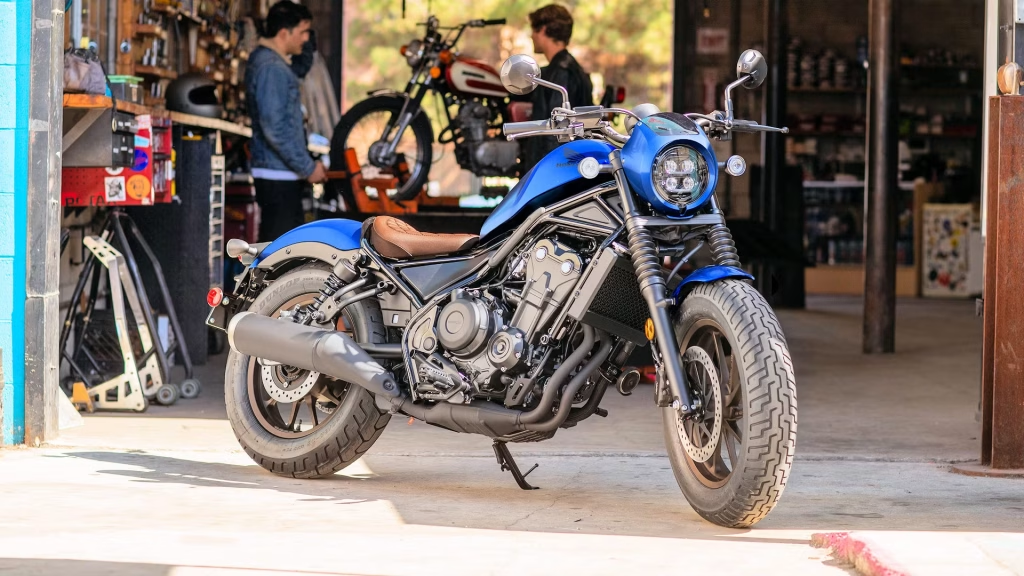
This setup fits the Rebel 500’s mechanical character particularly well. A chain final drive is relatively simple, efficient, and familiar to motorcycle owners, while the O-ring construction adds a layer of durability without introducing complicated equipment.
It is hardly the most glamorous feature on the motorcycle, but it is exactly the type of engineering detail that can matter more during years of ownership than something designed merely to attract attention in a showroom.
9. The Rebel 500 Has a 12-Volt Charging Accessory Option
The Rebel 500’s minimalist cockpit does not come with the kind of built-in connectivity equipment found on larger touring motorcycles, but Honda has made the bike surprisingly adaptable for riders who want to add electronic equipment.
Among the genuine accessories offered for the Rebel 500 is a 12-volt charger, giving owners a practical way to power compatible devices without changing the motorcycle’s basic appearance. Honda lists the 12-volt charger among its available Rebel 500 accessories.
This is easy to overlook because it is not part of the standard equipment list. The important distinction is that Honda treats the charging solution as an accessory rather than claiming that every U.S.-market Rebel 500 arrives with a factory-installed charging outlet.
For riders who use the Rebel as a commuter, that can be particularly useful. A 12-volt outlet can support compatible charging equipment for phones, navigation devices, or other small electronics.
The exact accessory installation and electrical requirements should be checked against Honda’s instructions before adding equipment, especially because motorcycle electrical systems should not be overloaded with accessories.
The Rebel’s simple cockpit actually makes this type of customization fit the motorcycle’s character. Instead of filling the handlebar area with a large screen or complicated electronics, an owner can keep the factory appearance and add only the genuinely useful equipment.
Honda says the Rebel 500 line has more than 23 genuine accessories available, covering items such as luggage, passenger equipment, headlight accessories, and charging solutions. That gives the motorcycle considerably more customization potential than its stripped-back appearance suggests.
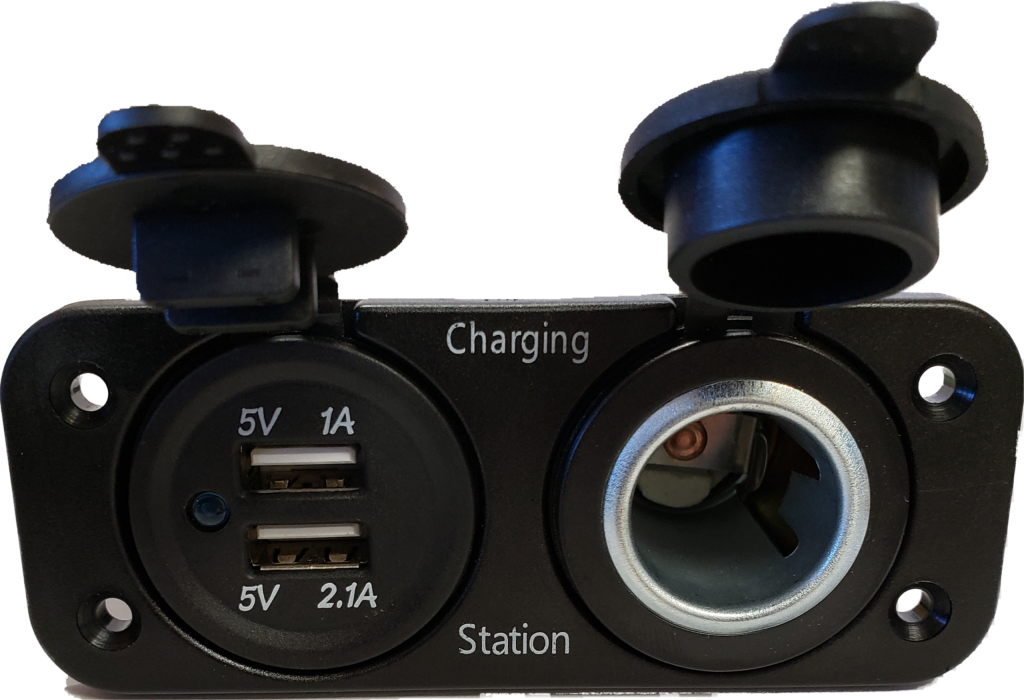
There is also a practical advantage to keeping charging equipment optional. Riders who prefer a completely uncluttered motorcycle do not have to pay for or maintain equipment they will never use. Someone who regularly depends on a phone for navigation, meanwhile, can add the necessary equipment later.
It is a small feature rather than a headline-grabbing technology package, but it reinforces one of the Rebel’s strengths: the motorcycle can remain visually simple while giving owners several ways to make it more practical.
10. The 3.0-Gallon Tank Is Shaped for Both Style and Function
The Rebel 500’s teardrop-shaped fuel tank looks like a styling feature, but Honda designed it to serve a practical purpose as well.
The company describes the tank as both a visual element and a functional part of the motorcycle, with its shape contributing to the Rebel’s classic appearance while providing the fuel capacity needed for everyday riding. The current U.S. model has a 3.0-gallon fuel tank.
That capacity is worth putting into context. The Rebel 500 is a relatively compact motorcycle, so a 3.0-gallon tank does not dominate the chassis. Honda has integrated it into the motorcycle’s narrow central section while retaining the low-slung bobber-inspired profile.
The tank’s position also works with the motorcycle’s ergonomics. Honda specifically emphasizes the narrow width around the tank and seat junction, which helps riders put their feet down and makes mounting and dismounting easier.
The result is a fuel tank that does not simply sit on top of the frame as a decorative object. Its shape is part of the rider interface.
Fuel economy is another reason the tank can provide useful range. Honda describes the Rebel 500’s fuel efficiency as an important part of its design, although Honda’s U.S. specifications do not provide a single official EPA fuel-economy figure for the current model.
Honda also states that it normally does not publish performance numbers such as fuel economy for its motorcycles, so real-world consumption can vary with speed, traffic, rider weight, weather, and riding style.
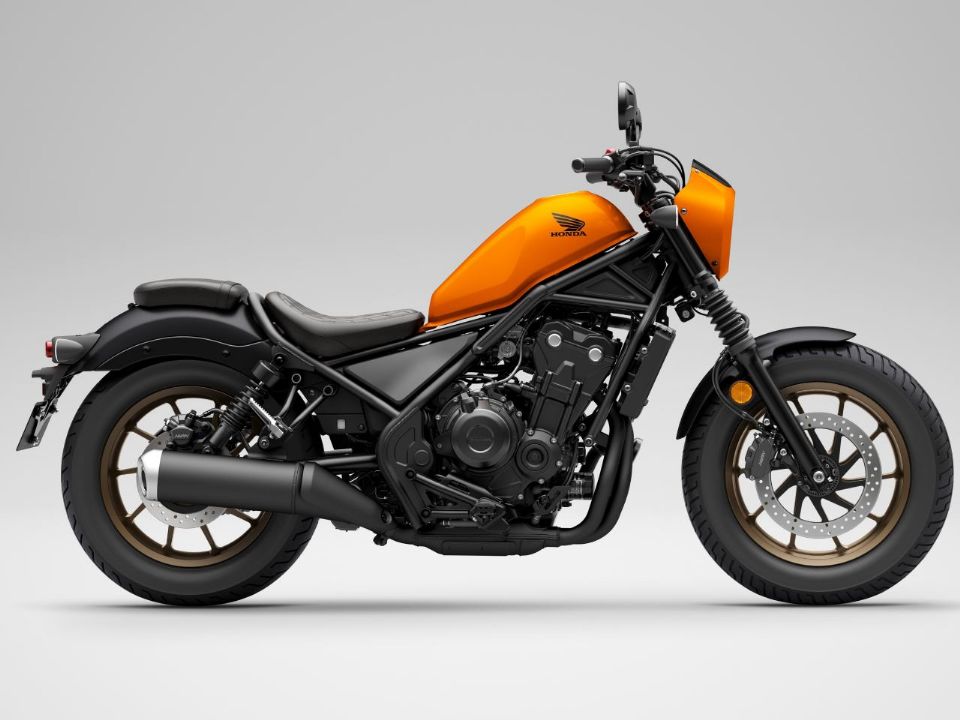
The 2026 Rebel 500 weighs 414 pounds with required fluids and a full fuel tank, according to Honda’s U.S. specifications. Its 58.7-inch wheelbase and 27.2-inch seat height help maintain the motorcycle’s compact proportions despite its 471cc engine.
That combination explains why the fuel tank is more than a styling statement. It is part of the motorcycle’s packaging philosophy, combining the visual identity of a traditional cruiser with proportions designed for approachable everyday use.