

Chinese autonomous-driving company Pony.ai is accelerating its international expansion, with a pipeline of more than 4,000 potential overseas robotaxis as the company looks beyond China’s increasingly competitive market.
The move puts Pony.ai among the most aggressive autonomous-driving companies pursuing international growth. The company is targeting markets across Europe, the Middle East, and Asia, where governments and transportation companies are gradually establishing the regulatory frameworks needed for commercial driverless services.
According to Reuters, Pony.ai said on August 18 that it has a pipeline of more than 4,000 planned and potential overseas robotaxi deployments.
The vehicles have already been contracted, but their rollout depends on permits, regulatory approvals, and other operational requirements. Pony.ai did not provide a timetable for completing the entire overseas expansion.
The announcement comes only days after Pony.ai revealed plans to deploy more than 2,000 robotaxis in Europe through an expanded partnership with Uber. That agreement is expected to extend their existing collaboration from Zagreb, Croatia, into four additional European cities that have not yet been publicly identified.
For Pony.ai, the strategy represents a major shift from building its business primarily in China to establishing a global autonomous-transportation network.
It also puts the company into increasingly direct competition with established robotaxi operators such as Waymo and emerging rivals including Tesla and the fellow Chinese company WeRide.
Why Pony.ai Is Looking Overseas
Pony.ai’s international push comes as competition within China’s autonomous-driving sector becomes increasingly intense.
China has become one of the world’s most active markets for robotaxi development, with companies such as Pony.ai, WeRide, and Baidu expanding commercial services across multiple cities.
While that domestic experience has helped Chinese companies develop their autonomous-driving systems, the growing number of competitors makes international markets increasingly attractive.
Pony.ai is therefore looking for additional sources of revenue while autonomous ride-hailing develops into a larger global industry.
The company’s latest financial results suggest that robotaxis are becoming increasingly important to its business. Reuters reported that Pony.ai’s second-quarter revenue rose 68.8% year over year to $36.2 million, while its net loss narrowed by 14.9% to $45.4 million.
Robotaxi revenue increased an extraordinary 691.2%, accounting for roughly one-third of the company’s total revenue for the first time.
Pony.ai expects robotaxi revenue for 2026 to exceed three and a half times its 2025 level, another indication that the company expects autonomous transportation to become a much larger part of its business.
The international strategy could help Pony.ai achieve that growth. Instead of relying solely on Chinese cities, the company can pursue markets where autonomous ride-hailing is still developing and where local transportation companies may prefer partnering with established autonomous-driving specialists rather than developing the technology themselves.
That partnership model is particularly important because robotaxi deployment requires much more than an autonomous vehicle.
Companies must secure regulatory approval, establish vehicle fleets, develop remote-support systems, arrange maintenance and charging, work with local transportation authorities and demonstrate that the technology can operate safely in different road environments.
Pony.ai’s existing experience in China gives it a foundation for that expansion, but each new market presents its own regulatory and operational challenges.
Europe Is Becoming a Major Battleground
Pony.ai’s planned European expansion could become the most important part of its international strategy.
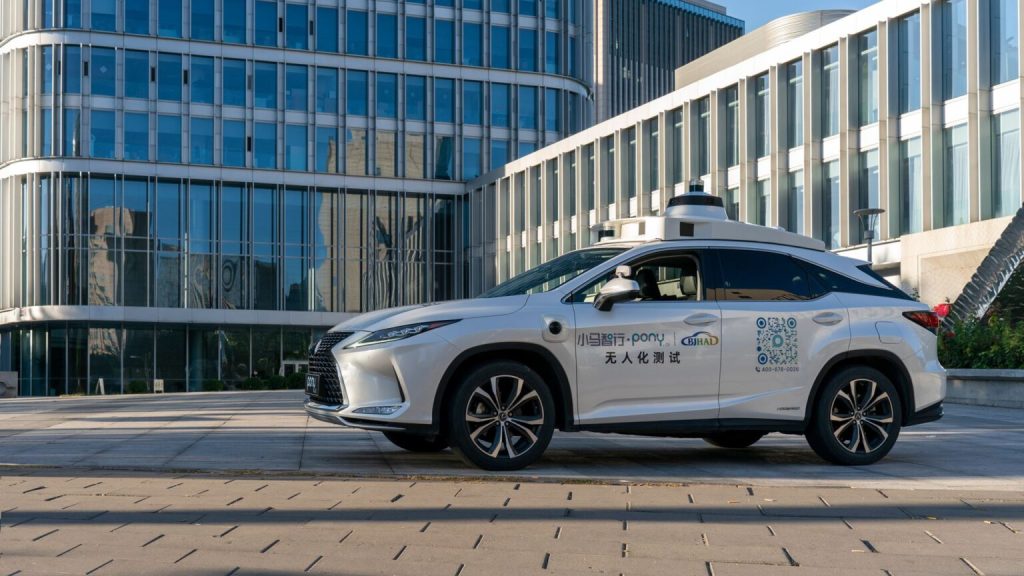
Last week, the company announced that it would work with Uber to deploy more than 2,000 robotaxis across Europe. Reuters reported that the partnership builds on a commercial robotaxi service already operating in Zagreb, Croatia, since 2025.
The expanded program is expected to reach four additional European cities, although neither company has yet disclosed all of those locations or provided a completion date.
The partnership is significant because Uber already operates a massive global ride-hailing platform. Pony.ai does not have to build an entirely new consumer-facing transportation network from scratch if Uber provides access to its existing customer base and booking infrastructure.
That could allow Pony.ai to concentrate more heavily on the technology and fleet operations required to make autonomous rides work.
The European opportunity also comes at a time when Chinese autonomous-driving companies are becoming more confident about operating outside China.
Pony.ai is not the only Chinese autonomous driving company looking beyond its home market. WeRide is also pursuing international growth, with Australia, South Korea, Japan, and Southeast Asia among the regions under consideration. Reuters reported that WeRide’s overseas revenue jumped 164% year over year in the second quarter of 2026, far outpacing the company’s growth in total revenue.
The company had more than 1,800 robotaxis in its global fleet by the end of July and is targeting 2,600 robotaxis within a broader 5,000-vehicle Level 4 autonomous fleet by the end of 2026.
That competition could make Europe an important proving ground. European governments have generally taken a cautious approach toward autonomous vehicles, requiring companies to demonstrate safety and comply with country-specific regulations.
Pony.ai’s ability to obtain approvals and operate consistently across several countries will therefore be just as important as the number of vehicles it has under contract.
The company’s more than 4,000-vehicle overseas pipeline should consequently not be interpreted as 4,000 robotaxis already operating internationally.
Pony.ai CEO James Peng told investors that the vehicles have been contracted, but deployment schedules depend on permits and other regulatory and operational requirements.
Reuters also reported that Pony.ai did not disclose how many robotaxis it currently operates outside China. That distinction is important when assessing the scale of the company’s current business.
Pony.ai Enters a Global Robotaxi Race
Pony.ai’s expansion comes as the global robotaxi industry moves from limited testing toward commercial operations.
Waymo remains one of the most established players in the United States, having spent years developing and operating driverless ride-hailing services.
Tesla is pursuing a different strategy and is preparing to introduce its purpose-built Cybercab into its Austin robotaxi operation, according to recent Reuters reporting. Tesla has told employees it is preparing for a public Cybercab launch beginning with employee rides before broader deployment.
Pony.ai’s approach is closer to that of other autonomous-driving specialists. Rather than relying on a large privately owned vehicle fleet, the company is building partnerships with transportation companies and deploying dedicated autonomous vehicles.
The company’s international expansion could therefore provide an important alternative to the approaches being pursued by Tesla and Waymo.
Pony.ai also has ambitions beyond robotaxis. Reuters reported that the company is developing autonomous trucking operations in China and aims to deploy 500 to 1,000 autonomous heavy-duty trucks within two to three years. It also wants to scale its light-duty autonomous truck fleet to 100,000 vehicles by 2030.
That suggests Pony.ai sees autonomous transportation as a broader technology business rather than one limited to passenger ride-hailing. Still, robotaxis remains the company’s most immediate international opportunity.
The economics could eventually be attractive if autonomous vehicles can operate for long periods without human drivers while maintaining high utilization.
A robotaxi can potentially provide transportation services throughout much of the day, creating more revenue opportunities from each vehicle than a privately owned car that spends most of its time parked. But reaching that stage requires solving difficult problems.
Autonomous systems must deal with unpredictable human drivers, pedestrians, road construction, unusual weather, and unfamiliar road layouts. Regulatory authorities also need evidence that the technology can operate safely without a human driver inside the vehicle.
Pony.ai’s decision to expand internationally therefore represents both an opportunity and a test.
The company now has more than 4,000 overseas robotaxis in its contracted pipeline, but converting those contracts into operating vehicles will require regulatory approvals and successful local deployments.
If Pony.ai can execute its European and Middle Eastern expansion plans, it could establish itself as one of the first Chinese autonomous-driving companies with a genuinely global robotaxi footprint.
The timing is especially significant because autonomous ride-hailing is becoming a competitive global industry rather than a technology confined to a handful of Chinese and American cities.
Pony.ai’s second-quarter results provide evidence that robotaxis are already becoming an important revenue source, while the company’s Uber partnership gives it a pathway into European markets.
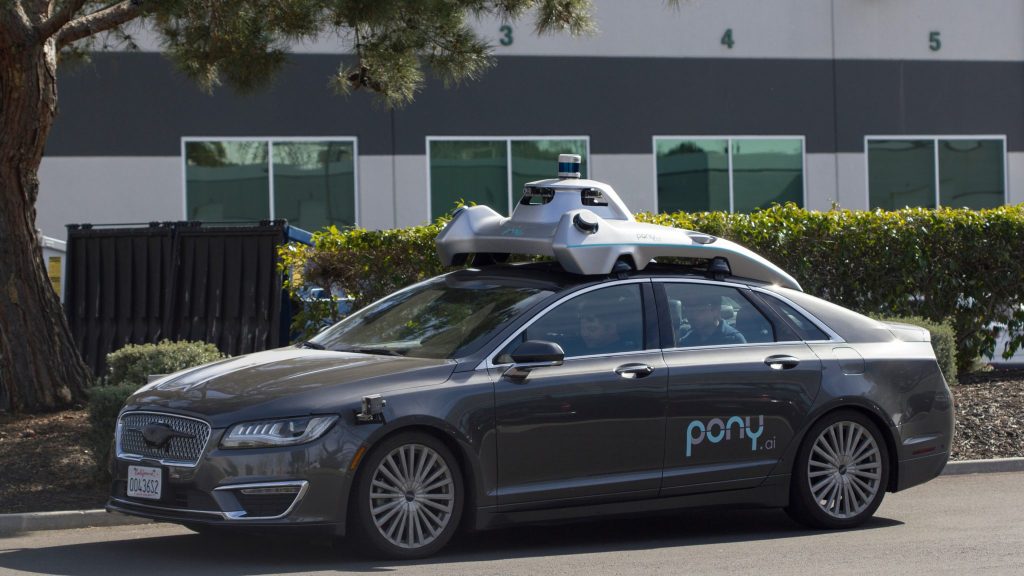
The biggest question now is how quickly those more than 4,000 vehicles can move from contracts and plans to actual commercial service.
If regulators approve the deployments and the operations prove economically viable, Pony.ai could significantly expand its international presence over the next several years. It would also give Chinese autonomous-driving technology a much larger role in the global race for driverless transportation.
For Waymo and Tesla, that means the competitive landscape is becoming more crowded. For Pony.ai, the overseas push could determine whether it remains primarily a successful Chinese autonomous-driving company or develops into a genuine global mobility technology business.
