
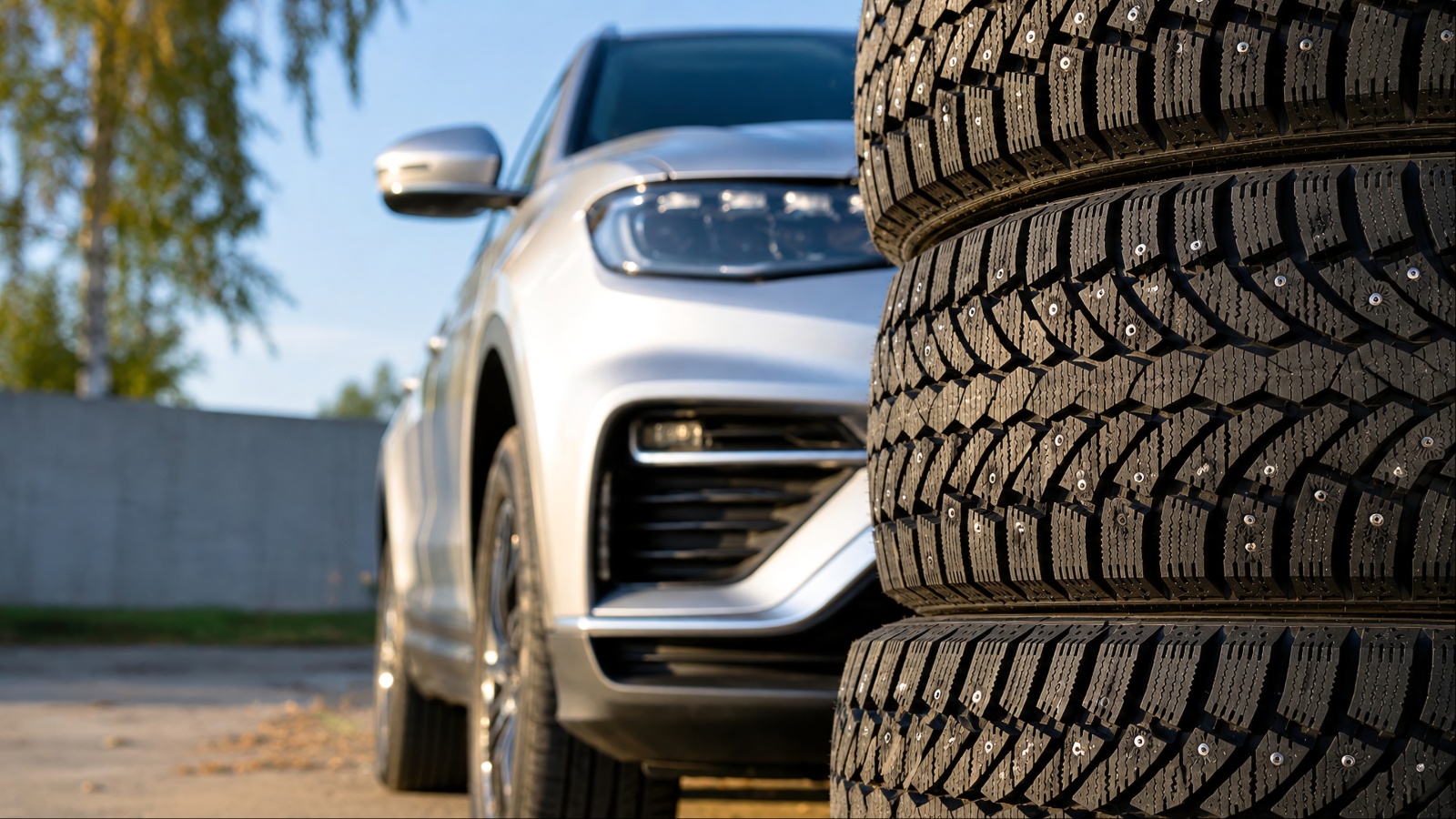
Winter driving conditions push a lot of people toward studded tires, but before you order a set, it pays to check your state’s rules first. Metal studs grip ice well, yet that same hardware chews up pavement, and plenty of states have decided the tradeoff isn’t worth it. Some states ban studs outright, while others carve out narrow exceptions for postal carriers, disabled veterans, or specific mountain roads.
Getting this wrong can mean a citation, wasted money on tires you can’t legally use, or an awkward conversation with a police officer during a road trip. Here’s a breakdown of ten states with the strictest studded tire laws in the country, so you can plan your winter setup with clear eyes instead of guesswork.

1. Alabama
Alabama has strict rules on studded tires, but the state does not completely prohibit their use. The law allows certain traction devices when road conditions make them necessary for safe driving. This can include situations involving snow, ice, or other conditions that may cause a vehicle to lose control or skid.
For motorists, the main issue is whether the road conditions actually justify using such equipment. A driver using studded tires during normal dry weather may have difficulty explaining why the extra traction was necessary. This makes Alabama different from states where conventional metal studs are prohibited at all times, regardless of weather conditions.
The rule is particularly relevant during the occasional winter storms that affect parts of northern Alabama. When roads become icy or covered with snow, additional traction may be useful, and the law provides room for appropriate traction equipment. However, this does not mean drivers can freely use studded tires throughout the year simply because they prefer them.
Weather also plays a role in how useful these tires would be. Northern areas of Alabama can experience freezing temperatures and occasional ice, while communities farther south generally see much less winter weather. As a result, most motorists have little reason to consider studded tires for everyday driving.
Anyone planning to use them should pay attention to the actual road conditions and ensure the equipment complies with state requirements. Alabama is therefore better described as a state with restricted use rather than a complete ban.
The distinction is important because studded tires may be acceptable when genuine winter hazards make additional traction necessary, but routine use on clear roads is not the purpose of the law.

2. Florida
Snow tires of any kind feel almost comical in a state known for palm trees and year-round warmth, and Florida’s law reflects that reality. The regulation here focuses on tire projections capable of damaging the highway surface, a category that conventional metal studs fall squarely into.
Because of that language, ordinary studded passenger tires simply aren’t legal for use on public roads anywhere in the state. This isn’t really a seasonal restriction in the way some northern states structure their rules, since there’s no window of permitted months carved out for winter driving.
Florida’s climate makes the entire question somewhat academic for most residents, who would have little practical reason to seek out studded tires in the first place. Still, transplants moving down from colder states sometimes bring winter gear with them out of habit, not realizing the equipment sitting in their garage isn’t street legal locally.
Visitors driving through with vehicles registered elsewhere should also be aware that Florida’s prohibition applies regardless of where the car came from. If you’re relocating south and your old car still has a set of studded tires mounted from last winter, swapping them out before your first Florida road trip saves you the hassle of an unexpected traffic stop.

3. Hawaii
Hawaii has very strict rules on studded tires, although the state has one unusual exception because of the weather conditions on Mauna Kea. The mountain is the highest point in Hawaii, and snow and ice can appear near its summit during colder periods. These conditions can make driving on certain parts of the mountain road difficult and require better traction.
For this reason, Hawaii allows studded tires on the Mauna Kea access road above Hale Pōhaku and on certain roads within the Mauna Kea Science Reserve. Outside these specific areas, conventional studded tires are generally prohibited on public roads throughout the state.
This means that drivers cannot use the same tires on ordinary roads that they may legally use on the higher sections of Mauna Kea. The exception exists because those mountain conditions are very different from what motorists experience in Hawaii’s coastal communities and towns.
Visitors planning to travel toward the summit for activities such as stargazing or sunrise viewing may need to pay attention to these requirements. Rental companies and tour operators can also provide guidance about suitable vehicles and equipment for mountain trips, especially when weather conditions become difficult.
For most residents, studded tires are rarely needed. Hawaii’s warm climate means that snow and icy roads are not a normal part of daily driving. People travelling along coastal roads, city streets, and other regular routes generally have no reason to consider this type of tire.
The rule therefore remains quite specific: conventional studded tires are generally prohibited across Hawaii, with limited permission for certain roads around Mauna Kea where snow and ice can make extra traction necessary.

4. Illinois
Illinois takes a clearer, more structured approach than some neighboring states, prohibiting metal-studded tires on improved highways while carving out specific, limited exceptions. Rural postal carriers qualify for an exemption, recognizing the reality that mail delivery continues regardless of icy backroads and unplowed rural routes.
Drivers with qualifying disability plates or veterans-with-disabilities plates can also use studded tires, but only within specified unincorporated areas rather than statewide. That geographic limitation matters quite a bit here, since it means the exemption doesn’t automatically extend to city or suburban driving even for someone holding the right plates.
Timing adds another layer to this rule. The permitted window for those exceptions runs from November 15 through April 1, a period that roughly tracks with when Illinois typically experiences its harshest winter weather. Outside that window, even qualifying drivers with the correct plates and location would fall outside the legal exemption.
This kind of layered structure, combining who you are, where you’re driving, and when you’re driving, makes Illinois a good example of a state that isn’t simply “banned” or “allowed” but instead requires checking three separate boxes before studded tires become a legal option for a given driver.

5. Louisiana
Ice storms aren’t a daily concern in Louisiana, but the state’s law doesn’t leave much room for interpretation regardless of how rare winter weather gets. Conventional studded tires are not permitted for ordinary passenger vehicles under Louisiana’s regulations, full stop.
Unlike Alabama’s more conditional framework, which allows for situational use tied to actual hazardous conditions, Louisiana’s approach reads as a near-total prohibition without that same built-in flexibility. Drivers searching for loopholes based on weather severity won’t find much support in how this law is written or enforced.
Given the state’s subtropical climate, this restriction rarely creates friction for typical residents going about typical winter driving, since actual icy roads remain a rare enough occurrence that most people never feel the absence of studded tires as a meaningful limitation.
Occasional cold snaps and freezing rain do happen, particularly in northern parishes closer to the Arkansas border, but even then, the legal framework doesn’t bend to accommodate temporary conditions.
Anyone moving to Louisiana from a colder climate should plan on switching to all-season or winter tires without metal studs, since bringing studded equipment south simply won’t hold up against how the law here gets classified and enforced by state authorities.
6. Michigan
Technically speaking, Michigan’s law isn’t a total ban, but in practice, it functions almost exactly like one. The state’s framework theoretically allows studded tires if manufacturers can demonstrate their products meet strict pavement-wear specifications and other technical standards.
That sounds like a real pathway to legal use, until you learn that Michigan State Police has confirmed no manufacturer has ever actually met those requirements. That gap between what the law permits on paper and what exists in reality creates an odd situation for drivers.
There’s no manufacturer currently producing a studded tire that clears Michigan’s bar, which means ordinary motorists are left without a legal product to purchase even though the underlying statute doesn’t use outright prohibition language.
This is worth understanding clearly, because a driver reading only the statute might assume studded tires are permitted somewhere in Michigan, when the honest, practical answer from law enforcement itself is that they aren’t.
Given how brutal Michigan winters can get, especially in the Upper Peninsula, this creates real frustration for drivers who want maximum ice traction and instead have to rely on quality winter tires without metal studs, chains where appropriate, and cautious driving habits to get through the season safely.

7. Minnesota
Minnesota has strict rules on studded tires, and the law mainly depends on where a vehicle is registered. Cars and other vehicles registered in the state generally cannot use conventional metal studded tires. There are a few legal exceptions, but they apply to specific situations and do not cover most private motorists.
Vehicles registered outside Minnesota may use metal studded tires while travelling through the state under certain conditions. This provision is useful because Minnesota shares borders with several states where winter driving is common and studded tires may be permitted.
Rural mail carriers can also receive special permits that allow them to use studded tires when extra traction is needed for their work. For most people who own Minnesota-registered vehicles, however, these exceptions do not apply.
A resident cannot simply install metal studded tires because the weather is particularly cold or the roads are covered with ice and snow. The restriction remains in place despite the severe winter conditions experienced in many parts of the state.
This rule can create a situation where two vehicles travelling on the same road have different rights. For example, a vehicle with an out-of-state registration may legally use qualifying studded tires, while a Minnesota-registered vehicle cannot.
Minnesota residents have other ways to handle difficult winter roads. Many drivers use high-quality winter tires made with rubber compounds designed to provide better grip on snow and ice. All Wheel Drive and careful driving also help motorists deal with freezing conditions.
During severe storms, reducing speed, allowing extra stopping distance, and avoiding unnecessary trips can provide additional safety when roads become hazardous.

8. Mississippi
Mississippi has a straightforward rule on conventional studded tires: they are not allowed on ordinary passenger vehicles anywhere in the state. Unlike states that permit their use during certain months, Mississippi generally treats metal studded tires as prohibited throughout the year.
For drivers, this means there is no winter period when ordinary passenger vehicles can legally switch to conventional metal studded tires. The rule applies even when cold weather creates difficult road conditions.
Anyone considering these tires should therefore check the law before purchasing or installing them for use on public roads. Weather conditions also help explain why studded tires are not widely discussed by motorists in Mississippi.
Severe winter weather is uncommon across the state, and most residents rarely experience the prolonged snow or ice that would make metal studs useful. When freezing conditions occur, they are usually short-lived and may affect certain northern areas more than other parts of the state.
During an occasional ice event, motorists generally depend on slower speeds, extra caution, avoiding unnecessary travel, and waiting for road conditions to improve. These measures are more practical for most local drivers than purchasing equipment that cannot legally be used on public roads.
Anyone planning to drive through Mississippi with studded tires should also confirm whether an exception applies to their vehicle. Rules can differ for special vehicles or particular circumstances, so checking the current state requirements before traveling is advisable. For ordinary passenger vehicles, however, conventional metal studded tires remain prohibited.

9. Texas
Texas frames its rule around a performance standard rather than a flat prohibition, though the practical effect lands in a similar place. Conventional metal-studded tires are barred unless the tire’s projections meet the state’s specific requirements for avoiding damage to highway surfaces.
That’s a technical bar few, if any, conventional studded tire products actually clear, which means that in real-world terms, ordinary metal-studded passenger tires simply aren’t legal for normal highway use across the state.
Given the massive size of Texas and the range of climates within its borders, from subtropical Gulf Coast conditions to occasional harsh winter weather in the Panhandle, this rule applies uniformly across the state. A driver in Amarillo dealing with genuine snow and ice faces the same restriction as someone in Houston who rarely sees frost.
That uniformity might seem surprising given how differently winter shows up across such a large state, but the law doesn’t carve out regional exceptions the way some other states on this list do for specific mountain roads or rural areas.
Texas drivers facing icy conditions typically lean on all-season or dedicated winter tires without metal studs, along with basic precautions like reduced speed and increased following distance, to manage road conditions legally and safely.

10. Wisconsin
Wisconsin winters bring genuine snow and ice, yet the state still maintains a general prohibition on studded tires for ordinary passenger vehicles, with a handful of narrow carve-outs for specific situations.
Emergency vehicles qualify for an exception, a sensible allowance given how critical reliable traction becomes when responding to accidents or medical calls during a snowstorm.
School vehicles receive similar consideration, reflecting the added responsibility that comes with transporting children safely through winter conditions. Rural mail carriers, a group that shows up repeatedly across several states on this list, also qualify for permitted use given the unpredictable backroad conditions their routes often involve.
Qualifying out-of-state vehicles round out the exception list, allowing visitors from other states to keep their existing setup without running afoul of Wisconsin law during a temporary visit.
Taken together, these carve-outs mean Wisconsin functions as a near-total ban for regular motorists rather than an absolute prohibition without any exceptions whatsoever. An everyday commuter driving to work in Milwaukee or Madison won’t qualify for any of these categories, and needs to rely on quality winter tires without metal studs instead.
Given how seriously Wisconsin takes winter driving safety generally, this approach reflects an attempt to balance road preservation against the genuine traction needs of specific groups. Studded tire laws vary enough from state to state that assuming one set of rules applies everywhere can land you in trouble fast.
Checking your specific state’s Department of Transportation website before mounting a set of studs, especially if you’re planning a road trip across state lines, remains the safest way to stay both legal and prepared for whatever winter throws at you.
