
Pickup trucks are often judged by reputation before buyers look closely at what they actually deliver. A popular truck may command a high price because of its badge, resale value, or marketing image, while a less celebrated model can provide similar capability for considerably less money.
That does not mean popular trucks are bad or obscure trucks are automatically better. The real question is whether the truck’s price, capability, reliability, comfort, and ownership costs match what buyers expect.
This comparison looks at five trucks that can be overrated in certain situations and five that deserve more attention from shoppers seeking practical value.
5 Overrated Trucks
1. Ford F-150 Raptor
The Ford F-150 Raptor is an extraordinary off-road pickup, but its reputation can make it seem like the perfect truck for buyers who rarely leave paved roads. That is where the “overrated” label becomes relevant.
The Raptor is engineered around high-speed desert running, extreme suspension travel, large tires, and aggressive off-road driving. Those abilities are impressive, but many owners will never use them.
The standard F-150 already provides enormous towing and hauling capability. Choosing a Raptor means paying substantially more for specialized suspension hardware, off-road equipment, wide-body styling, and performance-oriented features.
For someone who spends nearly all of their time commuting, hauling ordinary loads, or towing conventional trailers, those upgrades may provide little practical benefit.
The Raptor also sacrifices some traditional truck priorities. Its wide body can make tight parking lots and narrow trails more difficult, while its aggressive tires can be expensive to replace. Fuel consumption is another consideration, especially with high-output engines designed around performance rather than maximum efficiency.
That does not diminish what the Raptor does well. Its suspension system, ground clearance, selectable drive modes, and off-road capability make it one of the most capable factory pickups available. The issue is whether the buyer actually needs those characteristics.
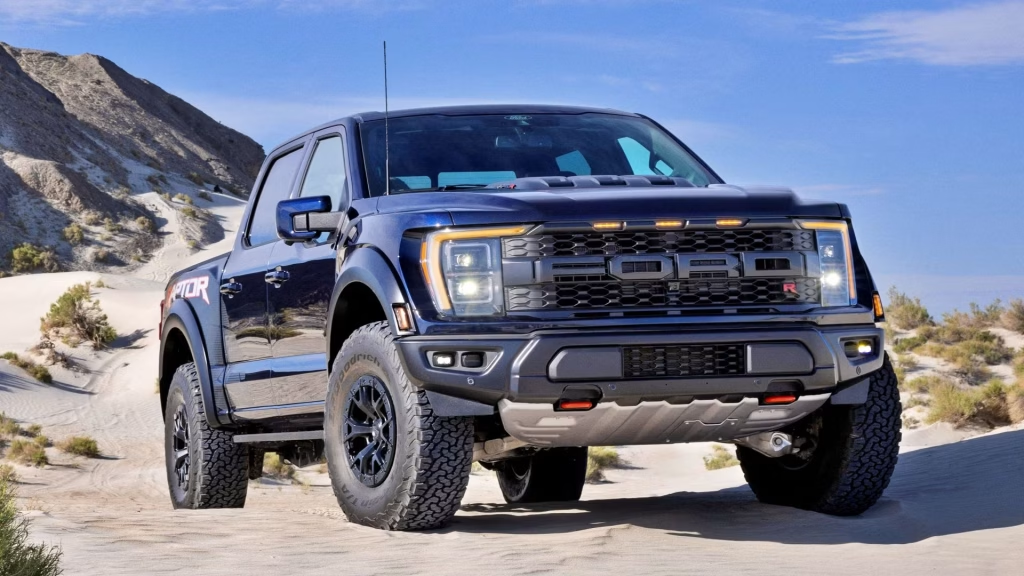
A customer who regularly drives desert trails, sand, rocky terrain, or high-speed dirt roads can have a very good reason to choose one. For everyone else, a more conventional F-150 can deliver towing, payload, comfort, and daily usability without paying for extreme off-road hardware.
The Raptor is therefore overrated only when its specialized strengths are mistaken for universal advantages.
2. Ram 1500 TRX
The Ram 1500 TRX takes the same basic idea even further. It is built around extreme performance, using a supercharged V8, long-travel suspension, enormous tires, and specialized chassis hardware designed for high-speed off-road driving.
The result is spectacular, but its usefulness depends heavily on how the owner intends to use it.
The 6.2-liter supercharged HEMI V8 produces 702 horsepower and 650 lb-ft of torque. Those numbers make the TRX dramatically more powerful than a conventional half-ton pickup. Yet very few owners require that level of output for towing equipment, carrying household supplies, or commuting.
The size and weight also work against it in ordinary use. Its wide stance and aggressive tires are not ideal for every parking garage or narrow road. Tire replacement can be expensive, while fuel consumption is inevitably high when using a supercharged V8.
The TRX also carries a premium because it is a specialty performance truck. Buyers are paying for a unique combination of speed and off-road capability rather than simply buying the most practical half-ton pickup available.
That makes the truck difficult to criticize as a performance machine. It was never intended to be an economical work truck. The concern appears when someone purchases it primarily because it is one of the most powerful pickups available, despite having no practical use for its specialized abilities.
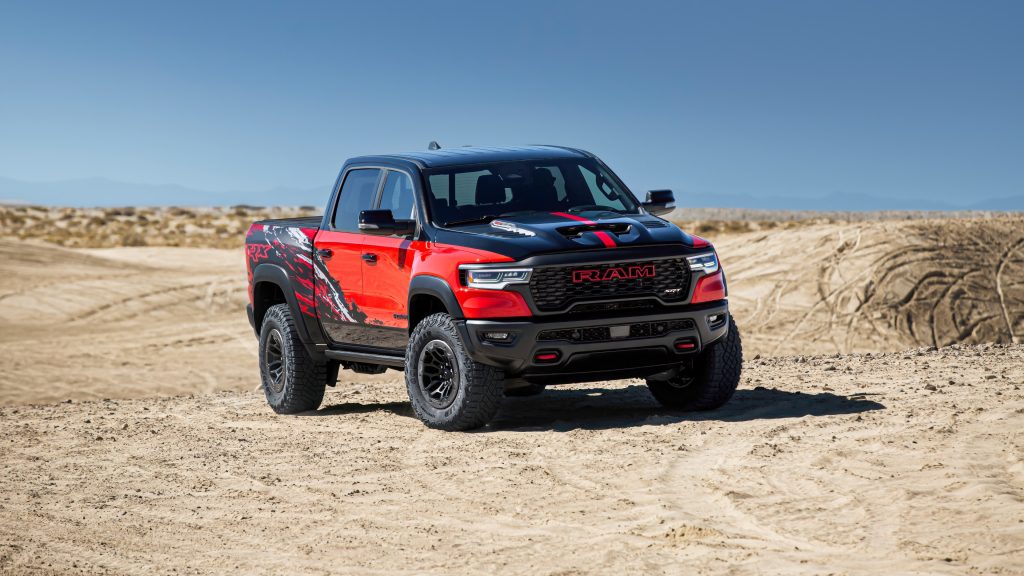
A conventional Ram 1500 can provide excellent towing capability, a comfortable cabin, and much lower operating costs. Someone who genuinely wants a high-performance off-road truck can justify the TRX, but ordinary truck shoppers may be paying for capabilities they rarely use.
3. Chevrolet Silverado 1500
The Chevrolet Silverado 1500 is unquestionably a capable pickup, but its enormous popularity can sometimes make buyers assume that choosing one is automatically the smartest decision. That is where its reputation can become overstated.
The Silverado competes in an extremely crowded segment, and several rivals offer comparable towing capability, powertrain choices, interior comfort, and technology.
One issue is that the Silverado’s configuration can dramatically affect its value. A basic work truck can be a sensible purchase, while a heavily optioned version can become expensive enough to overlap with better-equipped competitors. Buyers who focus only on the badge may overlook how much equipment they are actually getting for the money.
The 5.3-liter V8 is a popular engine choice, producing 355 horsepower and 383 lb-ft of torque. It offers strong performance, but the Silverado’s reputation for being a simple, durable truck should not encourage buyers to ignore maintenance requirements.
Modern Silverado engines and transmissions incorporate considerable technology, and repairs can become expensive as mileage increases.
The interior is another consideration. Higher trims have improved considerably, but some lower-cost configurations prioritize work duties over premium materials. A buyer expecting a luxury-like cabin simply because the truck carries a substantial price tag may be disappointed.
None of this makes the Silverado a poor truck. It remains one of America’s most capable full-size pickups, with extensive dealer support and a huge parts network. The point is that buyers should compare it directly against the Ford F-150, Ram 1500, Toyota Tundra, and GMC Sierra instead of assuming the Chevrolet is automatically superior.
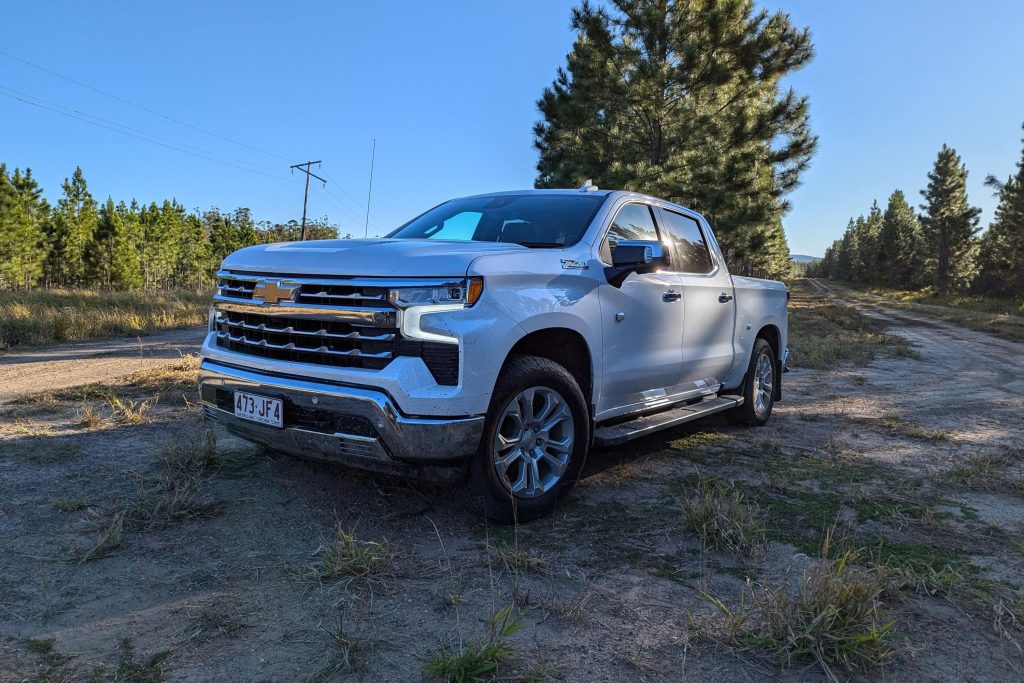
Its popularity is deserved in many applications, but popularity should not replace a careful comparison of price, equipment, reliability history, and intended use.
4. Toyota Tacoma
The Toyota Tacoma has one of the strongest reputations in the midsize-truck market, particularly for durability and off-road capability. However, that reputation can push used prices surprisingly high.
In some cases, buyers pay a substantial premium for an older Tacoma when competing midsize trucks offer more power, more interior space, and newer features for similar money.
The previous-generation Tacoma’s 3.5-liter V6 produces 278 horsepower and 265 lb-ft of torque. Those figures are adequate, but they are not exceptional compared with newer competitors. Buyers who prioritize acceleration or heavy towing may find that other midsize pickups provide more capability.
Interior refinement can also be a weakness in older examples. The Tacoma is designed around durability and utility, and its cabin can feel dated compared with newer trucks. Rear-seat space in certain cab configurations is another consideration for families.
The Tacoma does have genuine strengths. Its off-road versions are highly capable, aftermarket support is enormous, and Toyota’s reputation for long-term durability is valuable. Those qualities help explain the truck’s resale value.
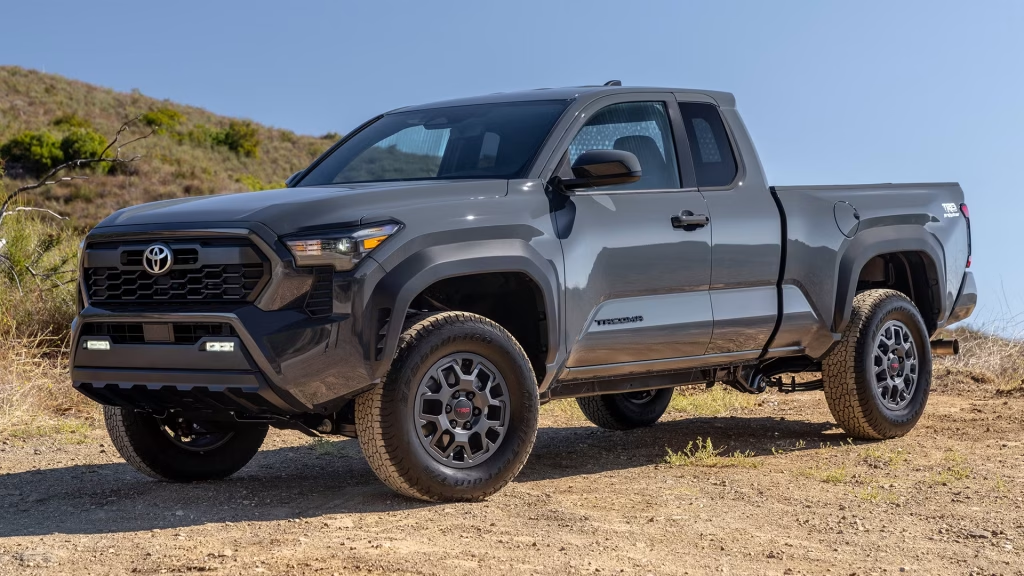
The concern is paying a premium for those advantages when the buyer does not actually need them. Someone who wants a reliable commuter and occasional utility vehicle may get better value from a different midsize pickup.
This is particularly important in the used market. A high-mileage Tacoma can cost nearly as much as a newer competitor simply because buyers expect it to retain its value. That does not necessarily mean it provides the best ownership proposition.
The Tacoma makes sense for buyers who specifically value its durability, off-road capability, and aftermarket ecosystem. It becomes overrated when its reputation causes shoppers to ignore equally capable alternatives that cost less.
5. Jeep Gladiator
The Jeep Gladiator is one of the most distinctive pickups available, but its uniqueness can sometimes overshadow the compromises that come with its design. It combines Wrangler-inspired off-road hardware with an open bed, removable roof, and removable doors.
For buyers who genuinely want those characteristics, that combination is difficult to replace. For everyone else, the truck can be harder to justify.
The standard 3.6-liter Pentastar V6 produces 285 horsepower and 260 lb-ft of torque. Those figures are respectable, but the Gladiator is not particularly quick, and its boxy shape and off-road-oriented tires can contribute to higher fuel consumption than some midsize competitors.
Ride quality is another tradeoff. The solid-axle design that helps the Gladiator perform on difficult trails can make it less composed on pavement than conventional midsize pickups. Wind noise can also be noticeable, particularly with removable roof panels and doors.
The bed is useful, but its dimensions are more limited than those of a full-size truck. Towing capability can be strong depending on configuration, yet buyers should pay attention to payload and axle ratings rather than relying on the vehicle’s headline towing figure.
The Gladiator’s biggest advantage is its off-road personality. Few trucks provide the same ability to remove doors and roof panels while retaining a usable pickup bed. That is a legitimate reason to choose it.
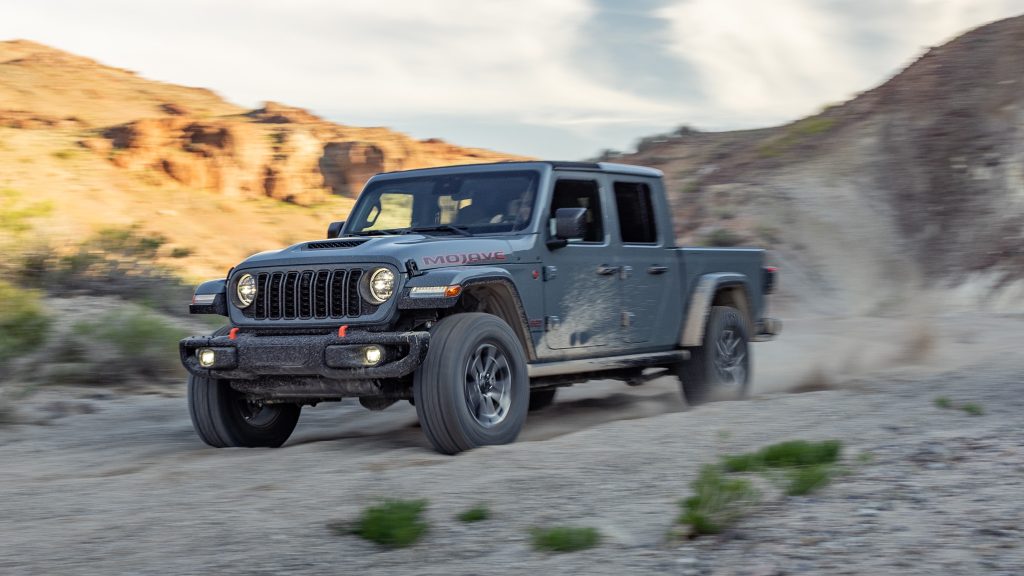
The concern comes when buyers select a Gladiator simply because they want a Jeep but rarely use its off-road hardware. A Ford Ranger, Chevrolet Colorado, Toyota Tacoma, or Honda Ridgeline may offer a more comfortable everyday experience depending on the buyer’s priorities.
The Gladiator is not a bad truck. It is a highly specialized one. Its reputation becomes excessive when its unique character is treated as a substitute for the practical advantages offered by more conventional pickups.
5 Underrated Trucks
1. Honda Ridgeline
The Honda Ridgeline is frequently overlooked because it does not follow the traditional body-on-frame pickup formula. Instead, it uses a unibody architecture related to Honda’s SUV platform. That design gives it a different character, but it also provides advantages that many conventional pickup buyers may not immediately appreciate.
The 3.5-liter V6 produces 280 horsepower and 262 lb-ft of torque. It is paired with a nine-speed automatic transmission and standard all-wheel drive on modern versions. The Ridgeline also provides a useful bed with a lockable in-bed trunk, giving owners additional storage that traditional pickups do not always provide.
Ride quality is one of the truck’s strongest characteristics. The unibody construction helps the Ridgeline feel more like an SUV than a traditional body-on-frame pickup.
That makes it particularly appealing for buyers who use their truck primarily for commuting, family transportation, home-improvement projects, and recreational equipment rather than heavy commercial work.
The interior is another reason it deserves more attention. The rear seat provides useful passenger space, and the cabin is generally easier to live with daily than some rugged midsize pickups.
Its towing capacity is lower than that of certain traditional trucks, so the Ridgeline is not the right choice for every job. But buyers who do not need maximum towing or payload can benefit from its smoother driving characteristics and clever storage solutions.
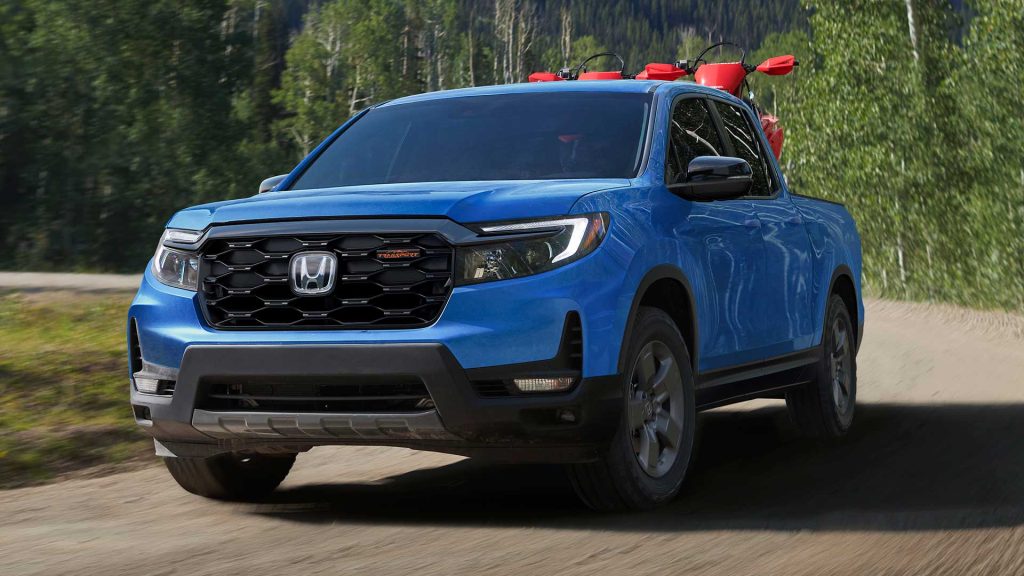
That makes the Ridgeline genuinely underrated. It does not attempt to be the toughest truck in every category. Instead, it focuses on the needs of people who want pickup functionality without accepting all of the compromises associated with a conventional truck.
2. Nissan Frontier
The Nissan Frontier has often lived in the shadow of the Tacoma, Ranger, Colorado, and newer midsize pickups. That is unfortunate because the Frontier offers a straightforward combination of traditional truck hardware, useful capability, and a comparatively strong value proposition.
Modern versions use a 3.8-liter naturally aspirated V6 producing 310 horsepower and 281 lb-ft of torque. Unlike some competitors that increasingly rely on smaller turbocharged engines, the Frontier’s V6 provides its power without forced induction. That simplicity can appeal to buyers who want conventional power delivery.
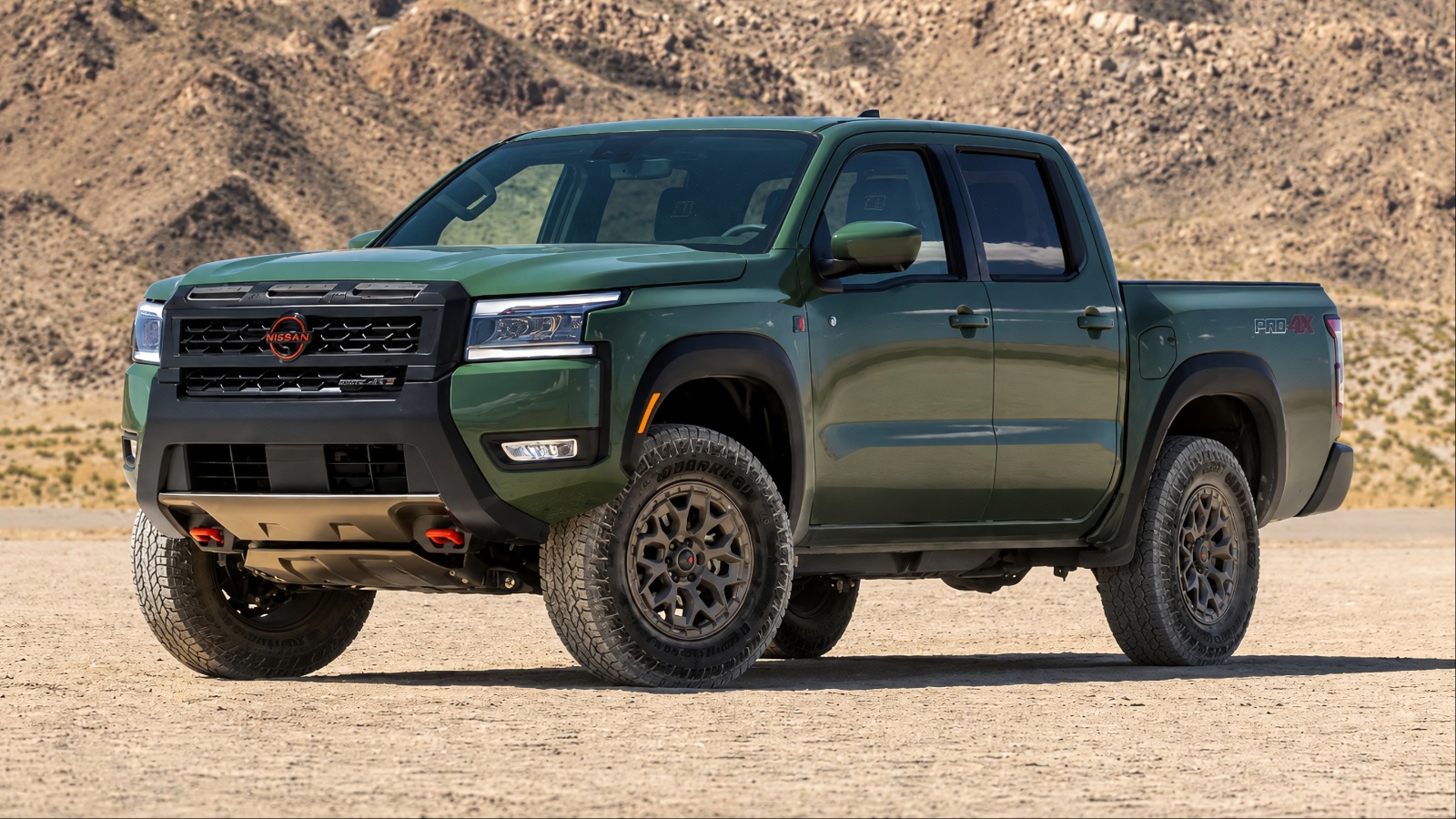
The Frontier is also available with four-wheel drive and multiple cab configurations, allowing it to serve both recreational and work-oriented roles. The PRO-4X version adds off-road equipment for buyers who want greater trail capability without moving into a specialized full-size performance truck.
One of the Frontier’s biggest strengths is its positioning. Used examples can sometimes cost less than similarly equipped competitors that carry stronger resale reputations. That gives shoppers an opportunity to obtain substantial capability without paying entirely for the popularity of a particular badge.
The cabin is not the most luxurious in the class, and the Frontier does not have the largest rear seating area. Those limitations should be acknowledged. Yet a truck does not have to win every category to be a good purchase.
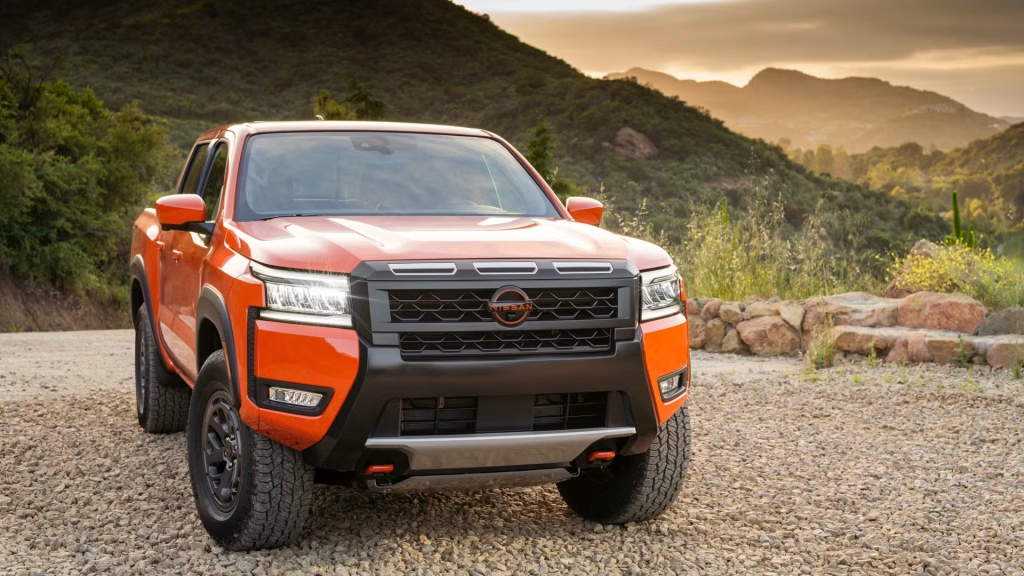
For buyers who want a traditional midsize pickup with a naturally aspirated V6, available four-wheel drive, and useful towing capability, the Frontier deserves more attention than it receives. Its combination of conventional mechanical hardware and reasonable market positioning makes it particularly interesting for shoppers who care about value.
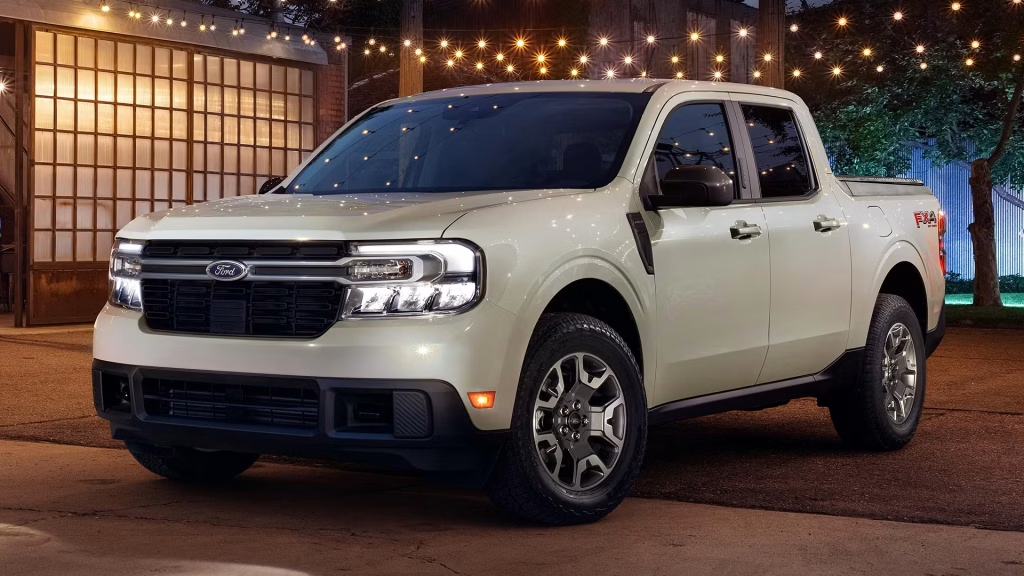
3. Ford Maverick
The Ford Maverick is easy to underestimate because of its compact size, but that is precisely what makes it useful for a large group of truck buyers.
Many people want an open bed and the ability to carry bulky equipment, yet do not need the size, weight, or fuel consumption associated with a full-size pickup. The Maverick addresses that gap with a smaller footprint and a practical cabin.
Its standard 2.5-liter hybrid powertrain produces 191 combined horsepower, while available versions use a 2.0-liter EcoBoost four-cylinder producing 250 horsepower and 277 lb-ft of torque. The hybrid is particularly interesting for commuters because it combines pickup utility with impressive fuel economy.
The Maverick’s compact dimensions make it easier to park and maneuver than traditional pickups. That can be a major advantage for urban owners who regularly encounter tight parking spaces or narrow streets.
The bed is not enormous, but Ford designed it around practical tasks, with available features intended to make hauling and organizing equipment easier.
Another reason it deserves more attention is its price positioning. A buyer who does not need heavy towing can avoid spending full-size-truck money while still getting a genuine pickup bed.
There are limitations. Payload and towing capability are lower than what a larger truck can provide, and the compact cabin cannot offer the same interior room as a full-size pickup. Buyers need to understand those tradeoffs.
For homeowners, commuters, small-business operators, and recreational users, however, those limitations may never become a problem. The Maverick succeeds by matching its size to everyday needs rather than trying to imitate a full-size truck.
4. Nissan Titan
The Nissan Titan has never matched the sales volume of the Ford F-150, Chevrolet Silverado, or Ram 1500, and that lower profile can work in a used buyer’s favor.
The Titan offers full-size-truck dimensions, strong V8 power, substantial towing capability, and a comfortable cabin without carrying the same level of market hype as America’s most popular pickups.
Its 5.6-liter Endurance V8 produces 400 horsepower and 413 lb-ft of torque in later versions. That gives the Titan plenty of muscle for towing and highway driving. The nine-speed automatic transmission also provides a more modern gearing strategy than older full-size pickups.
One of the Titan’s advantages is its relatively straightforward identity. It was not designed as an extreme performance truck or a luxury vehicle first. It is a conventional full-size pickup intended to perform normal truck duties while offering modern comfort and technology.
The cabin can be particularly attractive in crew-cab form. There is useful passenger space, and higher trims offer features that make long-distance driving easier.
Its lower sales volume can affect parts availability compared with America’s best-selling trucks, although Nissan’s dealer network and aftermarket support remain substantial. Used buyers should still verify that replacement components are readily available in their area.
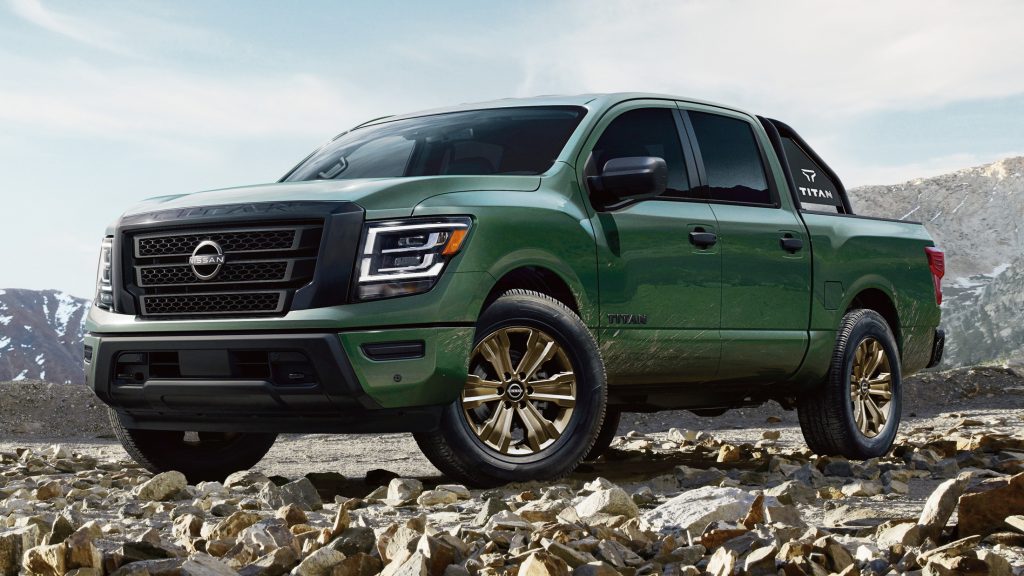
The Titan also has a finite production history in the U.S. Nissan discontinued the model after the 2024 model year, which means buyers interested in a new Titan are no longer entering the market. For used shoppers, that makes late examples especially interesting.
The Titan is underrated because it offers much of what buyers seek in a full-size pickup without commanding the same attention as its domestic rivals. For someone willing to look beyond the most familiar badges, it can represent a strong used-truck value.
5. Chevrolet Colorado
The Chevrolet Colorado deserves more credit because it occupies a useful middle ground between compact pickups and full-size trucks. The latest generation gives buyers a more modern cabin, stronger technology, and several different versions designed around different priorities, including work, daily driving, and off-road use.
The standard 2.7-liter turbocharged four-cylinder is available in different output levels depending on configuration. In higher-output versions, it produces 310 horsepower and 391 lb-ft of torque, giving the Colorado substantial low-end strength for a midsize truck.
That torque figure is particularly useful when towing or carrying equipment. The Colorado does not need a large-displacement V6 or V8 to provide useful pulling power, and its smaller dimensions make it easier to maneuver than a full-size pickup.
The Z71 and ZR2 versions add different levels of off-road equipment, allowing buyers to select capability according to their needs. Someone who spends most of the time on pavement does not have to pay for the most aggressive suspension package.
The Colorado’s cabin is also a major improvement compared with older versions. Modern infotainment, available digital displays, and improved storage make the truck more appealing as a daily driver.
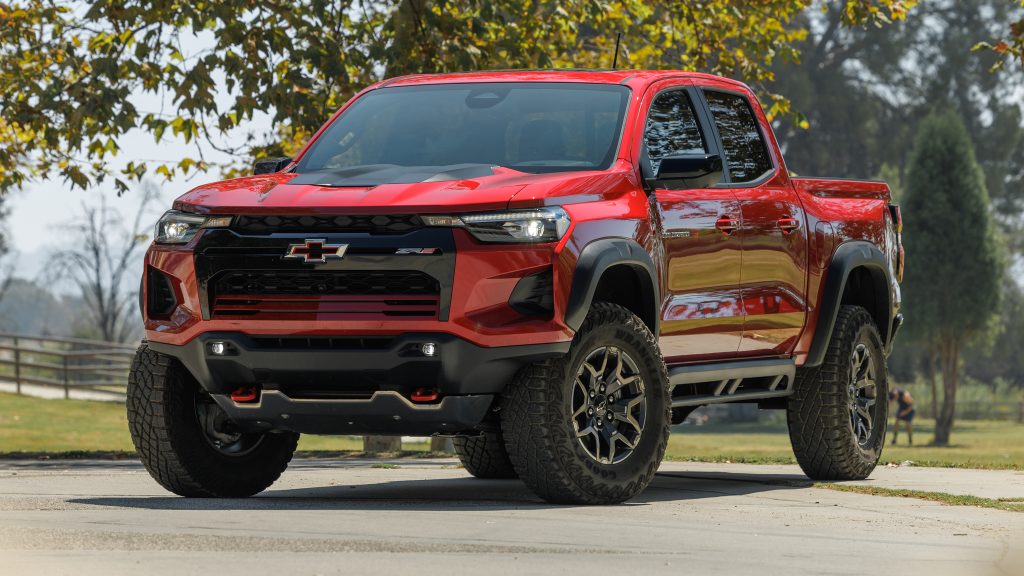
The main reason it remains underrated is that midsize trucks can be overshadowed by the enormous popularity of full-size pickups. Yet many owners do not need the additional width, weight, and towing capacity of a larger truck.
For drivers who need a useful bed, respectable towing ability, modern technology, and easier urban maneuverability, the Colorado can make more sense than stepping up to a full-size pickup. Its strengths become particularly obvious when the buyer chooses the configuration that matches the work actually being done.
