
California’s enormous driving population, sprawling metropolitan areas, long commutes, and expensive vehicle ownership costs make keeping a car for many years particularly valuable. But there is an important distinction between national longevity data and California-specific ownership behavior.
iSeeCars has found that the average new vehicle is kept for about 8.4 years, while its metro-level analysis shows the Toyota Land Cruiser was the longest-kept new vehicle in Los Angeles, Sacramento, and San Francisco, with owners keeping it for 12.7, 11.5, and 12.0 years, respectively.
The cars below combine California ownership evidence with national longevity data to identify models especially well suited to long-term ownership.
1. Toyota Land Cruiser
The Toyota Land Cruiser is the strongest starting point for a list about California’s longest-kept vehicles because iSeeCars has directly measured its performance in three major California metropolitan areas.
In Los Angeles, original owners kept the Land Cruiser for an average of 12.7 years. Sacramento-Stockton-Modesto recorded 11.5 years, while San Francisco-Oakland-San Jose reached 12.0 years. That is dramatically longer than the national average new-car ownership period of 8.4 years.
The California numbers are particularly impressive because the Land Cruiser is not an inexpensive vehicle. Owners appear willing to keep paying for maintenance rather than replacing it simply because a newer SUV arrives.
That behavior is consistent with the model’s reputation for durability and its ability to handle high mileage.
National longevity data reinforces the California pattern. iSeeCars’ latest long-lasting vehicle study places the Toyota Sequoia first and the 4Runner second for predicted likelihood of reaching 250,000 miles, while the Land Cruiser has historically demonstrated exceptional mileage capability.
The Land Cruiser also makes sense for California’s geographic diversity. One owner can use it for commuting around Los Angeles, another for mountain trips near Sacramento, and another for long-distance travel from the Bay Area. Its versatility reduces the pressure to replace it when lifestyle requirements change.
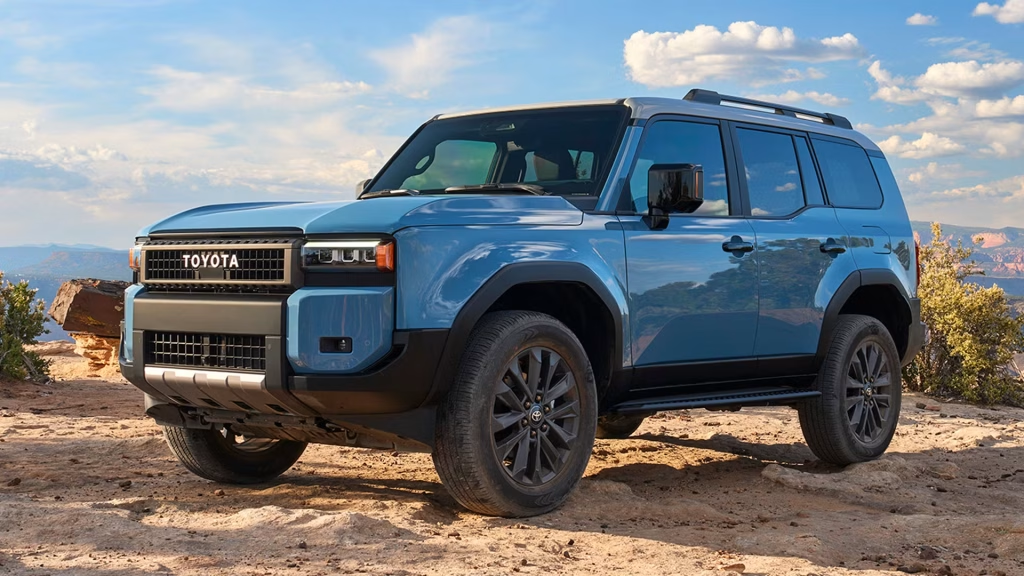
That combination of strong resale demand, durable engineering, and long ownership patterns explains why California owners have kept the Land Cruiser for well beyond the typical new-car ownership cycle.
2. Toyota Highlander
The Toyota Highlander is another model that fits California’s long-term ownership pattern remarkably well. While iSeeCars’ California metro analysis identifies the Land Cruiser as the longest-kept model in several major markets, its national longevity research shows that the Highlander family has an exceptionally strong record of surviving deep into its service life.
The Highlander Hybrid has a 31.0% predicted chance of reaching 250,000 miles, while the conventional Highlander has a 12.7% chance.
The difference between those figures and the 4.8% average for all vehicles is significant. The Highlander Hybrid is more than six times as likely as the average vehicle to reach a quarter-million miles, according to iSeeCars’ model.
California provides a particularly suitable environment for this type of vehicle. Families can use it for school runs and commuting, then keep it for years rather than replacing it when mileage climbs. The three-row layout also reduces the likelihood that growing families will immediately outgrow the vehicle.
iSeeCars’ long-term ownership study separately found that the Highlander ranks first among SUVs for the percentage of original owners keeping their vehicles for at least 15 years, with 12.4% reaching that threshold. That compares with a 5.9% average for SUVs.
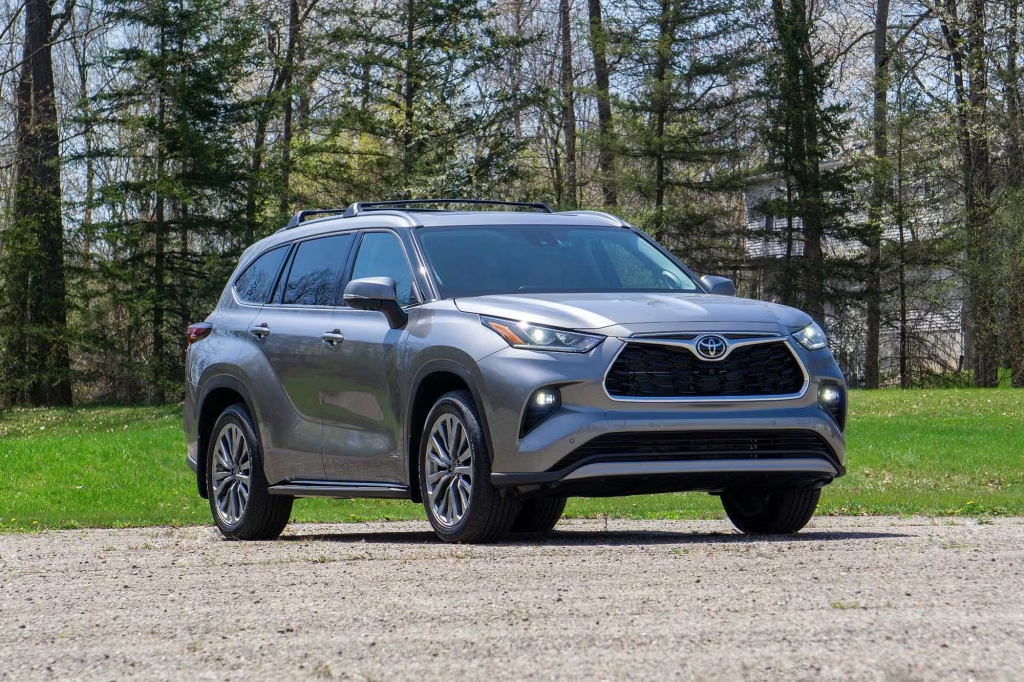
That statistic says something different from simply reaching 250,000 miles. It shows that owners are willing to keep the vehicle for an unusually long period, not merely that the vehicle can survive high mileage.
For Californians facing expensive replacement costs, that can be a major advantage. A Highlander that remains dependable for 10, 12, or 15 years can postpone another major vehicle purchase while continuing to provide family-friendly utility.
3. Toyota Prius
California has an unusually strong relationship with the Toyota Prius, and the long-term ownership data backs up why. In iSeeCars’ city-level analysis, the Prius was the vehicle most frequently kept for at least 15 years in San Francisco-Oakland-San Jose, where 26.4% of Prius vehicles remained with their original owners for that long.
Sacramento-Stockton-Modesto recorded 20.0%, while the Prius also led the 15-year ownership rankings in several major U.S. metros.
That is more than just an indication of popularity. Keeping a vehicle for 15 years means an owner is willing to continue maintaining it long after the typical new-car ownership period has ended. iSeeCars says the average new vehicle is kept for about eight years, making 15-year ownership a significant commitment.
The Prius also has impressive longevity data independent of California. iSeeCars’ latest study gives the Prius a 12.2% predicted chance of reaching at least 250,000 miles, roughly 2.5 times the 4.8% average for vehicles.
That combination makes particular sense in California, where fuel efficiency can be important for drivers covering long distances in congested metropolitan areas. The hybrid powertrain also means the Prius can deliver strong fuel economy without requiring owners to switch to a fully electric vehicle.
California’s Prius ownership numbers are especially striking because they show that the car is not simply being purchased and replaced quickly. Many owners appear comfortable keeping the same vehicle through multiple life stages.
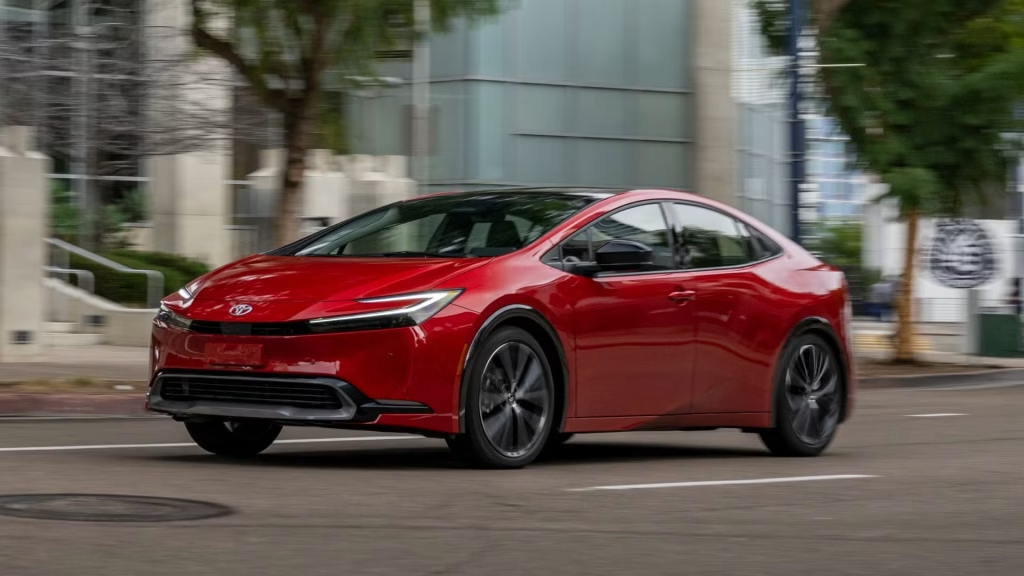
For buyers who want a vehicle that can handle years of commuting while minimizing fuel consumption and replacement costs, the Prius has one of the strongest long-term ownership cases in the state.
4. Toyota Camry
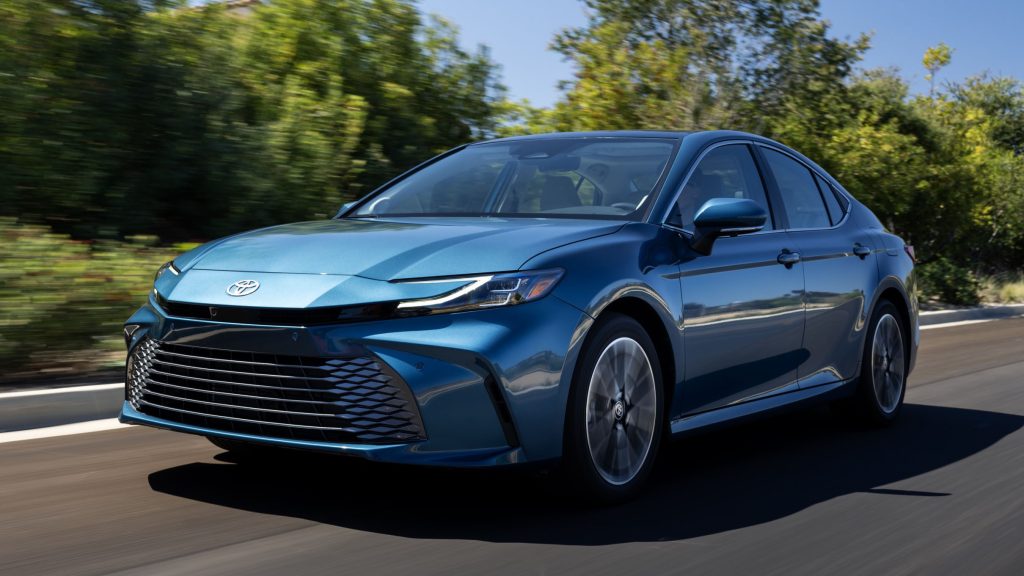
The Toyota Camry may not attract the same attention as a Land Cruiser or Prius, but its long-term California ownership record is difficult to ignore. iSeeCars’ city-level study found the Camry was the vehicle most likely to be kept for at least 15 years by original owners in Fresno-Visalia, California, where 15.8% reached that threshold.
That figure is important because the Camry’s appeal has traditionally been based on practical ownership rather than novelty. Owners often buy it because they need dependable transportation, then discover little reason to replace it when the vehicle continues performing its basic job.
National reliability data supports that behavior. iSeeCars estimates the Camry’s average lifespan at 163,603 miles, or approximately 12.1 years, based on more than 300 million vehicle data points. It also gives the model a 26.6% predicted chance of reaching at least 200,000 miles.
The 2025 long-lasting vehicle study gives the Camry a 9.0% predicted chance of reaching 250,000 miles, approximately 1.9 times the industry average. The Camry Hybrid performs even better, at 10.2%.
For California drivers, that longevity can translate into years of commuting without the expense of repeatedly replacing vehicles. The sedan is also relatively easy to live with in crowded urban areas, while its efficient powertrains make it suitable for longer highway journeys.
The Camry’s real advantage is not that every example will effortlessly reach extreme mileage. Maintenance still matters. Oil changes, tires, brakes, fluids, and timely repairs remain essential.
But when a model repeatedly appears in long-term ownership and longevity studies, it becomes easier to understand why California drivers are willing to keep it for years.
5. Honda CR-V
The Honda CR-V has one of the strongest long-term ownership records in the American market, and California is particularly favorable to that reputation.
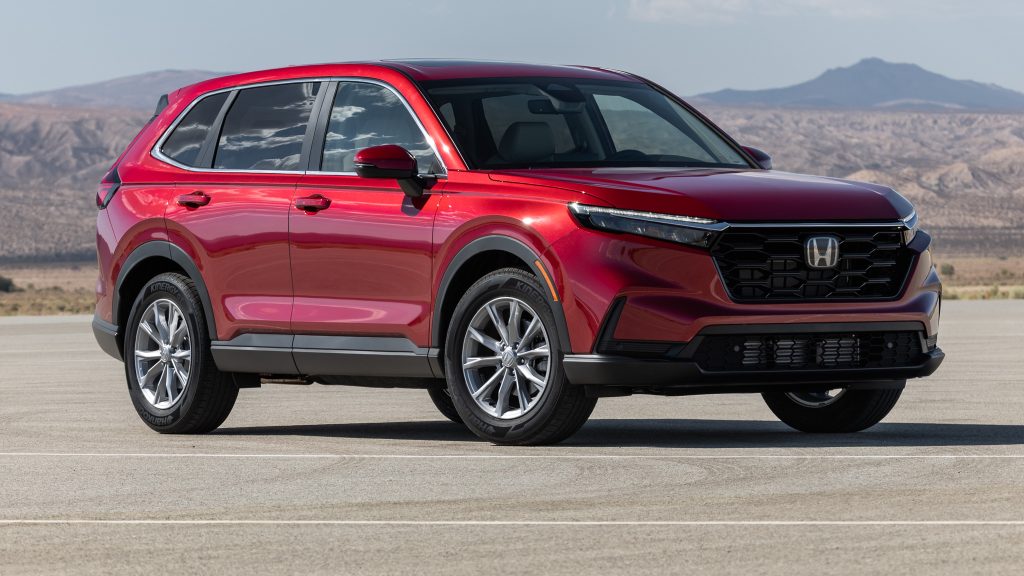
iSeeCars’ study of vehicles kept for at least 15 years places the CR-V sixth among all models, with 10.7% of vehicles remaining with their original owners for 15 years or longer. That is 1.8 times the 6.1% average for all vehicles.
The model’s performance becomes even more interesting when looking specifically at California. The CR-V was the longest-kept vehicle in the San Diego market in one iSeeCars analysis, while the broader California ownership data consistently places Japanese SUVs among the vehicles most likely to remain with their original owners for extended periods.
San Diego also ranks third nationally among major metropolitan areas for the percentage of vehicles kept at least 15 years, at 10.3%.
Mileage longevity gives the CR-V another advantage. iSeeCars’ latest 250,000-mile study gives it a 10.6% predicted chance of reaching at least 250,000 miles, more than twice the 4.8% average for all vehicles. That is a meaningful figure for California drivers who may accumulate substantial mileage through commuting and long-distance travel.
The CR-V also offers the practicality that encourages owners to keep it rather than replace it. Its compact exterior works well in crowded urban areas, while its interior provides enough space for family use, luggage, and daily errands.
The important qualification is maintenance. Longevity statistics describe probabilities, not guarantees. Neglected fluids, worn suspension components, accident damage, and skipped maintenance can shorten any vehicle’s useful life.
Still, the CR-V’s combination of long ownership, strong mileage potential, and practical packaging makes it one of the safest bets for Californians who would rather keep a vehicle than continually replace it.
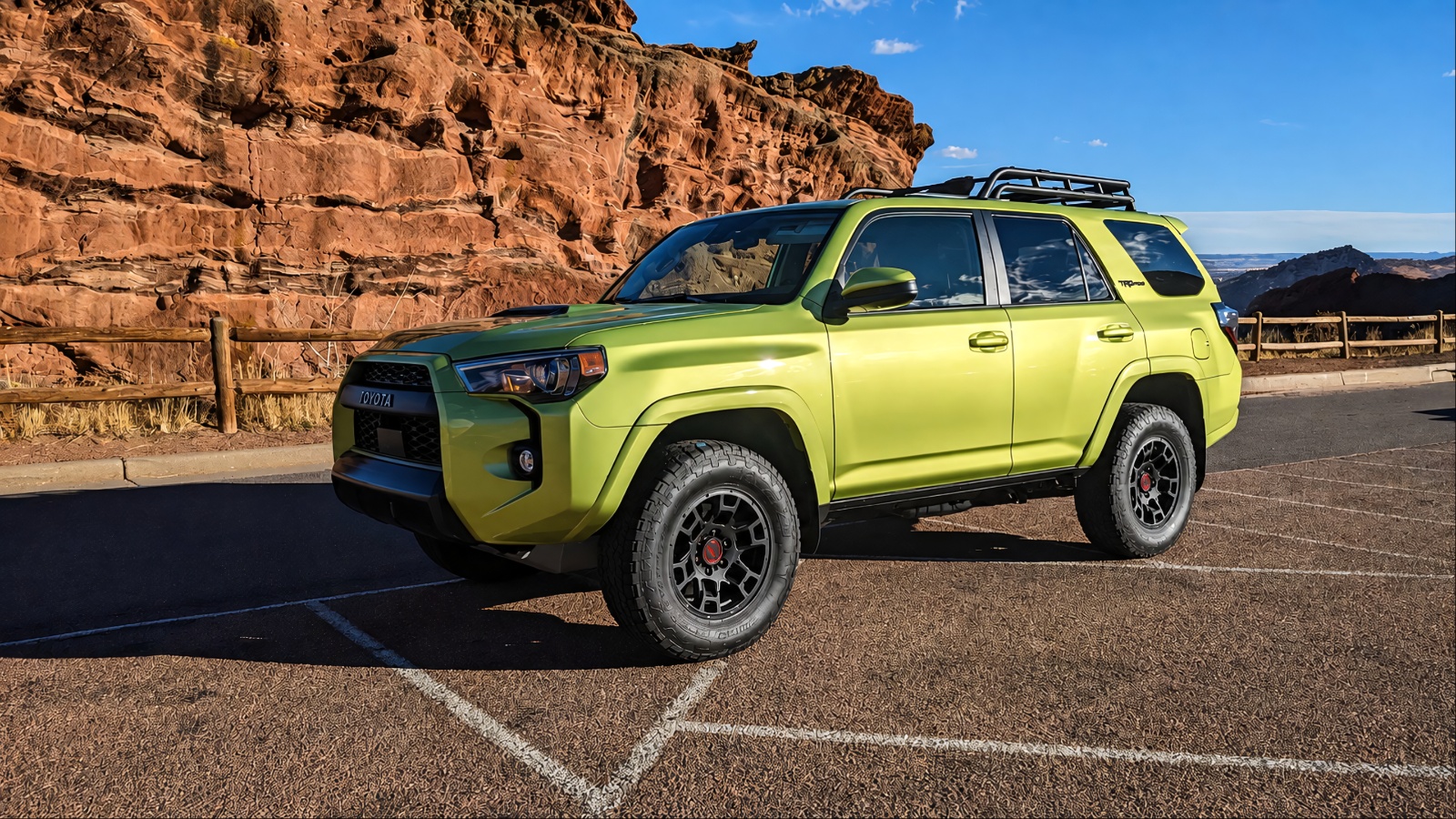
6. Toyota 4Runner
The Toyota 4Runner has a reputation for being kept long after many other SUVs have moved into their second or third owners, and the data gives that reputation plenty of support.
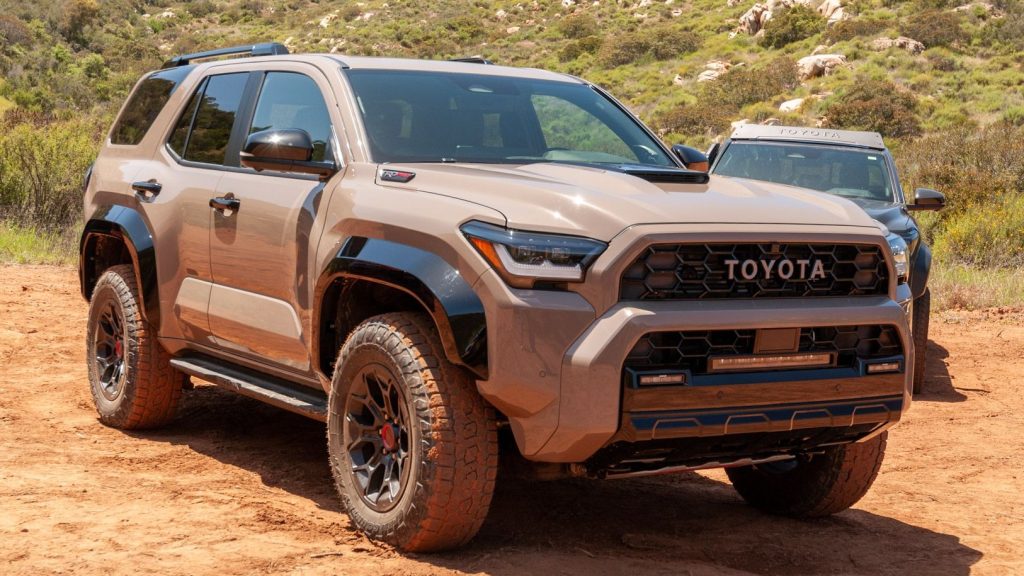
iSeeCars ranks the 4Runner second among all vehicles in its latest study of models most likely to reach 250,000 miles. Its predicted probability is 32.9%, compared with just 4.8% for the average vehicle.
That is not merely a high-mileage statistic. iSeeCars’ separate 15-year ownership research shows that 9.4% of 4Runners remain with their original owners for at least 15 years. That puts the model at ninth among all vehicles and substantially above the 6.1% average.
California’s environment also suits the 4Runner’s versatility. The same vehicle can handle daily commuting, family transportation, mountain trips, desert travel, and weekend recreation. That versatility gives owners fewer reasons to replace it simply because their lifestyle changes.
The model’s long-term potential is reinforced by iSeeCars’ broader lifespan analysis, which estimates a potential lifespan of approximately 244,665 miles for the 4Runner. That figure is based on historical vehicle data and represents potential rather than a guaranteed service life.
There is a trade-off. The 4Runner is not designed primarily around maximum fuel efficiency, and its traditional SUV architecture can make it less economical to operate than smaller crossovers. But for an owner who prioritizes durability and utility, that can be an acceptable compromise.
A California driver who buys a well-maintained 4Runner and continues servicing it may have a realistic path toward keeping the SUV for a decade or much longer.
7. Honda Pilot
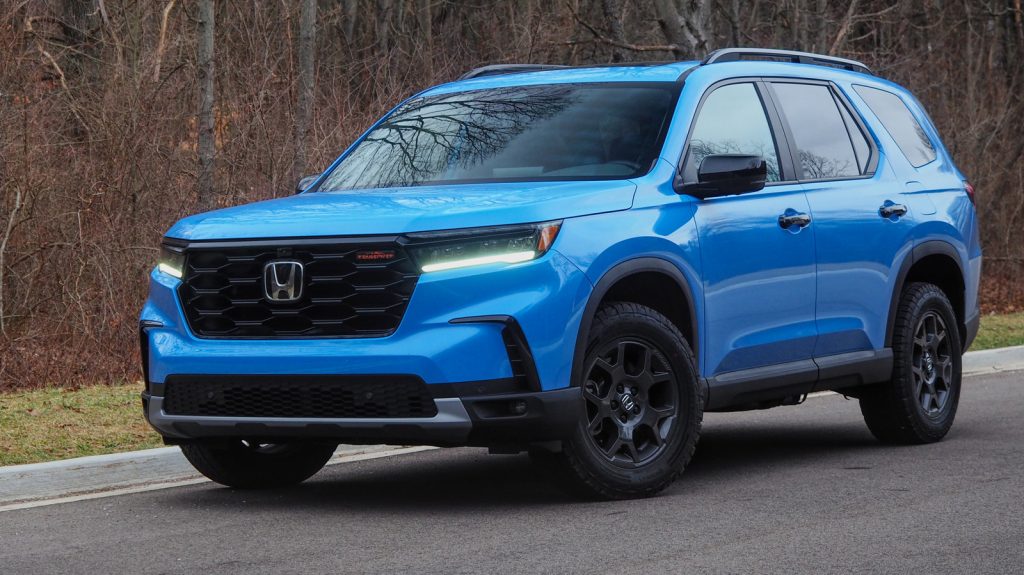
The Honda Pilot gives California families another reason to hold onto the same vehicle for years. iSeeCars ranks the Pilot seventh among all vehicles in its 15-year ownership study, with 10.4% of examples remaining with their original owners for at least 15 years. That is 1.7 times the 6.1% average for all vehicles.
The pilot also performs well when the measurement changes from years to mileage. iSeeCars’ 2025 longevity study gives it a 13.1% predicted chance of reaching at least 250,000 miles. That is nearly 2.7 times the 4.8% predicted average for all vehicles.
For California drivers, the pilot’s appeal is easy to understand. It gives families three-row seating without requiring them to move into a massive full-size SUV. That makes it useful for daily commuting, school transportation, road trips, and hauling family gear.
There is also a practical reason long-term owners may be reluctant to replace it. Once a pilot has been paid off and continues operating properly, keeping it can be considerably less expensive than taking on another large monthly vehicle payment.
That does not mean every pilot will reach 250,000 miles. Maintenance history remains critical, particularly on older examples. Transmission service, cooling-system maintenance, suspension components, brakes, tires, and other wear items still require attention as mileage accumulates.
What the data demonstrates is probability, not a guarantee. A pilot is simply much more likely than the average vehicle to remain useful deep into its life.
For Californians looking for a family vehicle they can keep well beyond the typical ownership cycle, that combination of space, longevity, and strong long-term ownership behavior makes the Pilot a compelling choice.
8. Toyota Tacoma
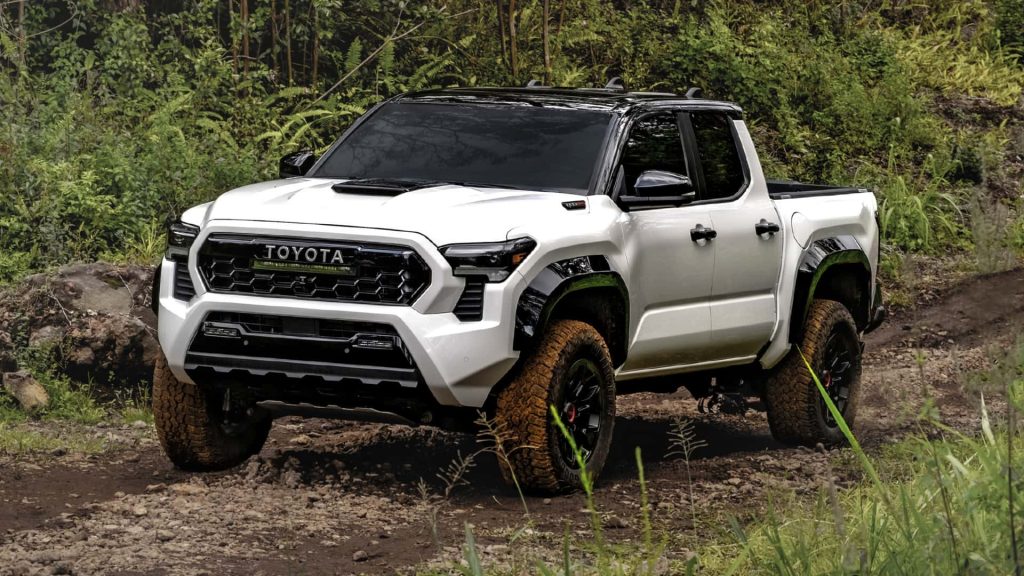
The Toyota Tacoma is not merely a truck that owners keep for a long time. It is one of the strongest long-term ownership performers in iSeeCars’ data. The company’s 15-year ownership study places the Tacoma third among all vehicles, with 11.6% of examples remaining with their original owners for at least 15 years. That is 1.9 times the 6.1% average.
Its mileage performance is even more striking. iSeeCars gives the Tacoma a 25.3% predicted chance of reaching at least 250,000 miles, more than five times the 4.8% industry average. It ranks sixth among all vehicles in the 2025 study.
That kind of longevity can be particularly valuable in California, where pickup trucks are used for everything from commuting to weekend recreation. A Tacoma can serve as a daily vehicle during the week and handle camping equipment, motorcycles, trailers, or outdoor gear on weekends.
Its relatively compact dimensions compared with full-size pickups also make it easier to live with in crowded areas. That versatility can give owners fewer reasons to replace it as their needs change.
The Tacoma’s long ownership numbers also demonstrate an important point about vehicle durability: high mileage does not necessarily mean the end of useful life. Properly maintained examples can continue operating long after crossing the 100,000-mile mark.
Of course, the truck’s actual condition matters more than its badge. Heavy towing, off-road use, corrosion, neglected maintenance, and accident damage can dramatically alter an individual vehicle’s lifespan.
Still, when both ownership duration and high-mileage probability point in the same direction, the Tacoma becomes one of the strongest candidates for California drivers who want to buy once and keep driving for many years.
9. Toyota Sienna
The Toyota Sienna earns its place here because minivan owners often have a strong financial reason to keep their vehicles long after the loan is finished.
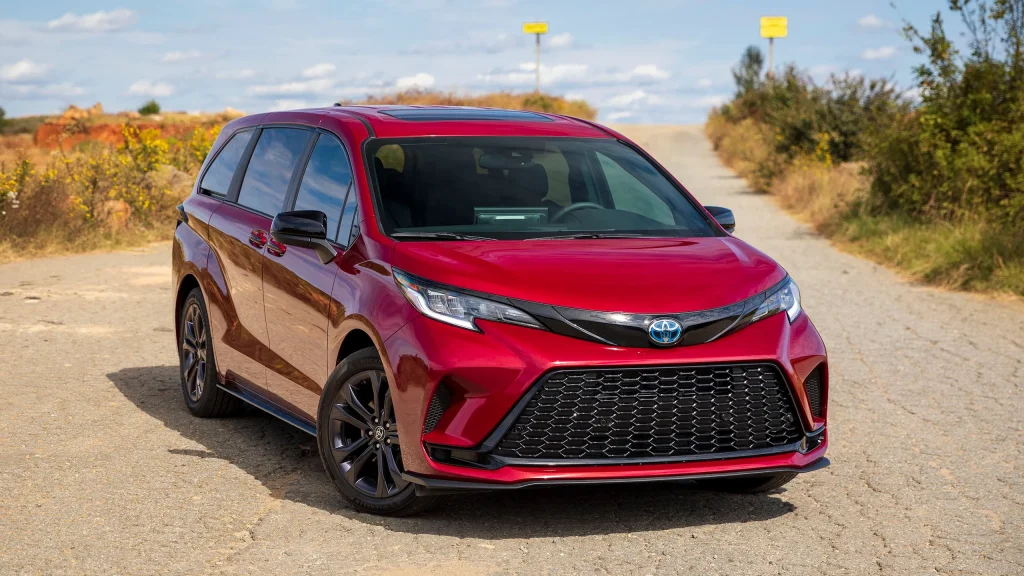
iSeeCars’ 15-year ownership study found that 8.5% of Sienna owners keep their vehicles for at least 15 years, compared with 6.1% for the average vehicle. That puts the Sienna among the models with notably strong long-term ownership behavior.
The Sienna also has a strong reputation for accumulating mileage. iSeeCars’ latest longevity research estimates a 10.3% probability of reaching at least 250,000 miles, more than twice the 4.8% average for all vehicles.
The number does not mean every Sienna will reach that distance, but it does indicate that the model has a substantially stronger statistical chance than the typical vehicle.
For California families, the Sienna’s formula makes particular sense. It offers three-row seating, substantial cargo capacity, and the ability to transport several passengers without requiring a full-size SUV.
A family can therefore keep the same vehicle through multiple stages of ownership rather than replacing it whenever seating requirements increase.
The hybrid powertrain available on current Sienna models adds another reason to keep the vehicle for years. It can reduce fuel consumption compared with many conventional three-row vehicles, particularly for drivers covering substantial annual mileage.
The important caveat is maintenance. A 15-year-old Sienna will inevitably require repairs and replacement of wear items. Sliding doors, suspension components, brakes, tires, cooling-system components, and other age-related parts can eventually require attention.
But those expenses can still be worthwhile when compared with the cost of replacing a vehicle that continues to meet the family’s needs. The Sienna’s long ownership statistics show why many California families choose to keep theirs rather than start another expensive vehicle-payment cycle.
10. Subaru Outback
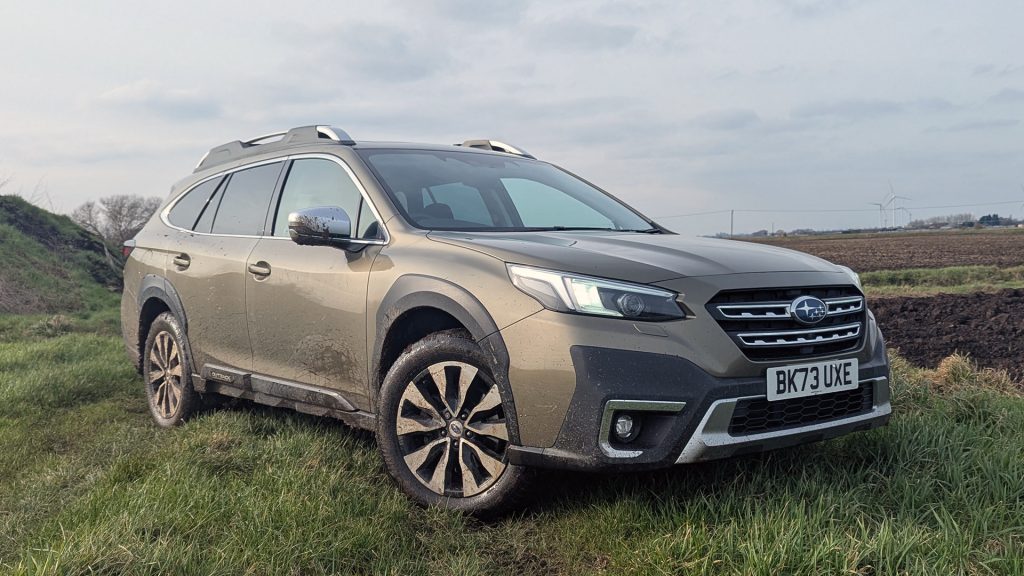
The Subaru Outback closes the list with a vehicle that combines long-term ownership potential with the kind of versatility that encourages California drivers to keep the same car for many years. iSeeCars’ 15-year ownership study found that 8.3% of Outbacks remain with their original owners for at least 15 years, compared with 6.1% for vehicles in general.
Its high-mileage numbers are also encouraging. iSeeCars’ latest longevity analysis gives the Outback a 9.1% predicted chance of reaching at least 250,000 miles, nearly twice the 4.8% average for all vehicles. That places it among the stronger long-term performers in the mainstream market.
The Outback’s appeal in California is easy to understand. It combines a wagon-like body with SUV-style ground clearance and standard all-wheel drive, giving owners a vehicle that can handle everyday commuting while remaining useful for mountain trips, camping, skiing, and other outdoor activities.
That versatility can have a direct effect on ownership length. A vehicle that works for commuting, family transportation, road trips, and recreational activities is less likely to become unsuitable when an owner’s lifestyle changes.
Subaru’s long-term ownership figures also show why buying a well-maintained used Outback can make sense. The important factor is condition. Maintenance records, oil-change history, drivetrain servicing, suspension condition, and evidence of accident damage should all be examined before purchasing an older example.
The Outback is not guaranteed to reach 250,000 miles, and long-term ownership always brings age-related repairs. Yet the statistics indicate that it has a better chance than the average vehicle of remaining useful deep into its life.
For California drivers who want one vehicle capable of handling city traffic, long road trips, and weekend adventures, that flexibility can make the Outback easier to justify keeping for a decade or more.
