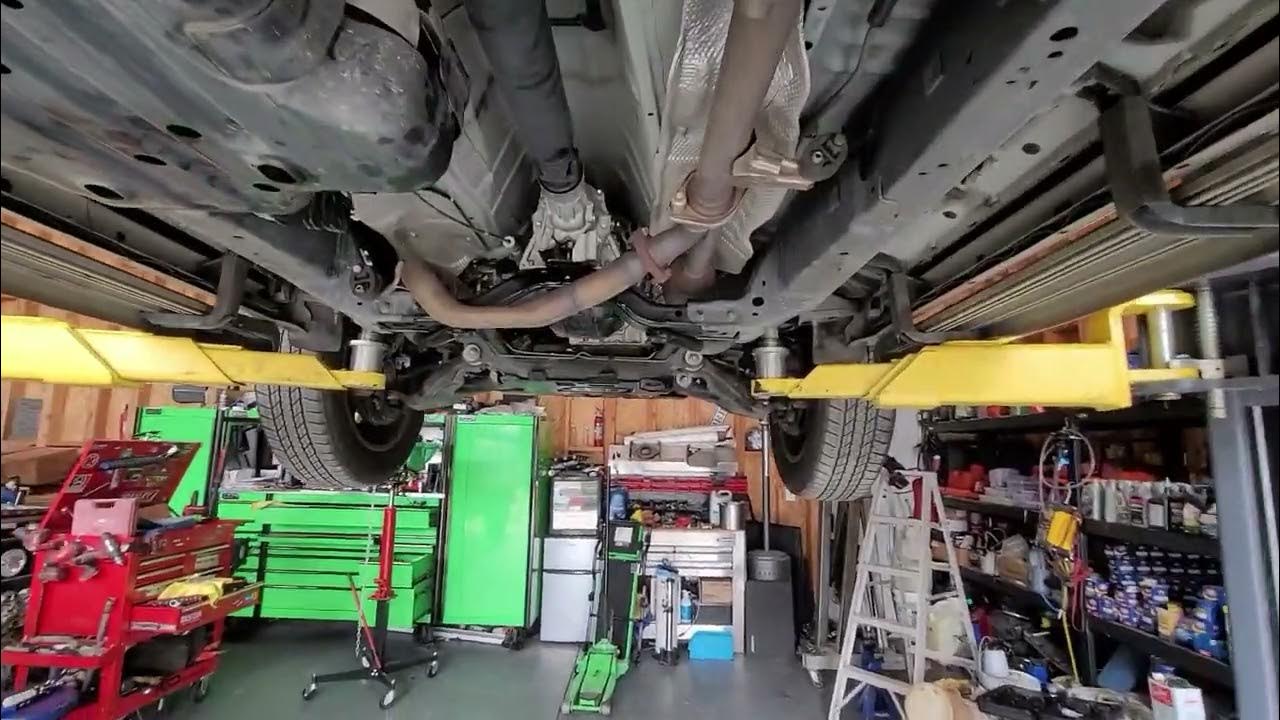
All-wheel-drive vehicles depend on properly matched tires to distribute power between the wheels without placing unnecessary stress on drivetrain components. Installing tires with different diameters, tread depths, or rolling circumferences can interfere with this process, even when the size difference appears insignificant.
Over time, the additional strain may contribute to excessive heat, premature wear, and expensive mechanical failures involving differentials, transfer cases, or other AWD components. The damage is not always immediately noticeable, either.
Recognizing unusual noises, vibrations, handling changes, and warning lights can help owners identify potential problems before a relatively inexpensive tire mismatch develops into a costly repair.
1. Chattering or Shuddering During Acceleration
One of the more recognizable warning signs of an AWD system experiencing problems from mismatched tires is a chattering or shuddering sensation during acceleration. Drivers may notice repeated vibrations coming through the floor, seats, or steering wheel, particularly when applying throttle at lower speeds.
Although similar symptoms can originate from worn CV joints, engine mounts, or transmission problems, drivetrain chatter deserves attention when the vehicle has recently received tires with different rolling circumferences.
The reason involves how an AWD system manages wheel-speed differences. Its differentials and coupling mechanisms are designed to accommodate changes in wheel rotation during normal driving.
However, tires with different circumferences can continuously rotate at different speeds, even while the vehicle travels straight. This forces certain drivetrain components to compensate more frequently than intended, potentially generating excessive heat and mechanical wear.
Kia addressed this issue in a September 2023 technical bulletin, PS750, covering AWD vehicles. The manufacturer identified complaints involving drivetrain chatter and component failures associated with differences in tire circumference.
Its guidance specifies that the circumference of all four tires should remain within 10 millimeters of one another. This is a Kia-specific technical recommendation, not a universal tolerance for every AWD vehicle.
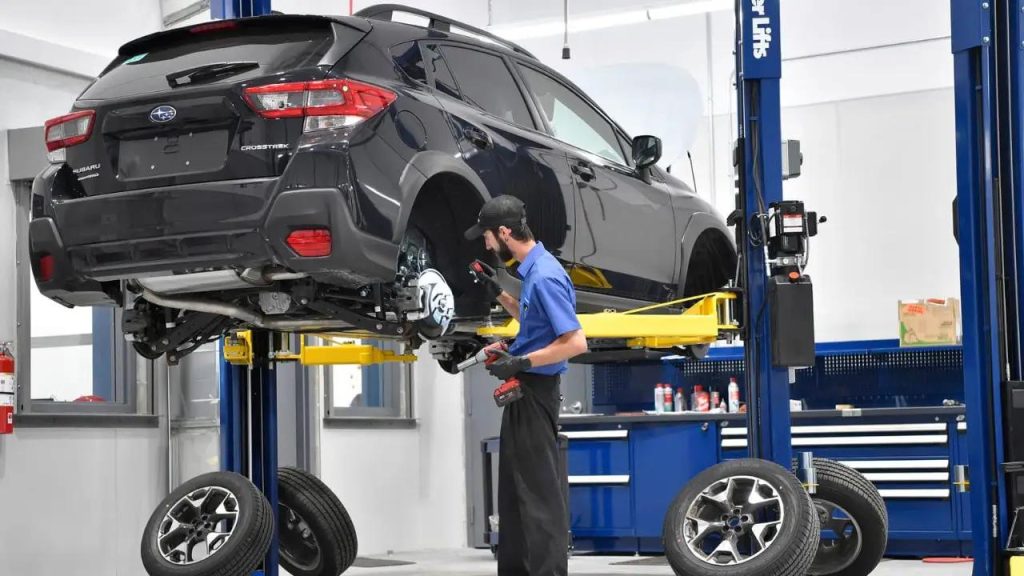
Tire Rack also explains that mismatched tires can force differentials and viscous couplings to operate continuously, creating excessive heat and accelerated wear.
Pay attention to recurring shuddering when accelerating, especially after replacing one or two tires.
Have a qualified technician measure all four tire circumferences and inspect the AWD coupling, differentials, and related components. Avoid assuming that replacing the mismatched tires alone will reverse mechanical damage that has already occurred.
2. Binding or Resistance When Turning at Low Speeds
An AWD vehicle should negotiate ordinary parking-lot turns without feeling as though its drivetrain is fighting against the direction of travel. When mismatched tires create persistent differences in wheel speed, however, certain AWD systems can develop a sensation known as drivetrain binding.
Drivers might describe it as the vehicle resisting a tight turn, briefly hopping, dragging, or feeling as though the tires are struggling to move freely.
This happens because the tires are not covering identical distances during each revolution. A tire with a smaller rolling circumference must rotate more times than a larger one to travel the same distance.
While differentials normally accommodate wheel-speed variations during cornering, a persistent mismatch between tires can place additional demands on the drivetrain’s components.
Tire Rack identifies axle windup and binding as potential drivability problems associated with mismatched tires or incorrect inflation pressures on AWD and four-wheel-drive vehicles. The company also explains that differentials and viscous couplings can experience excessive heat when they are forced to compensate continuously for differences in tire rotation.
The sensation may become particularly noticeable during slow, tight maneuvers, such as entering a parking space, making a U-turn, or navigating a narrow driveway. However, binding is not exclusive to tire-related AWD damage. Faulty differentials, worn driveline joints, and certain transmission problems can produce similar behavior.
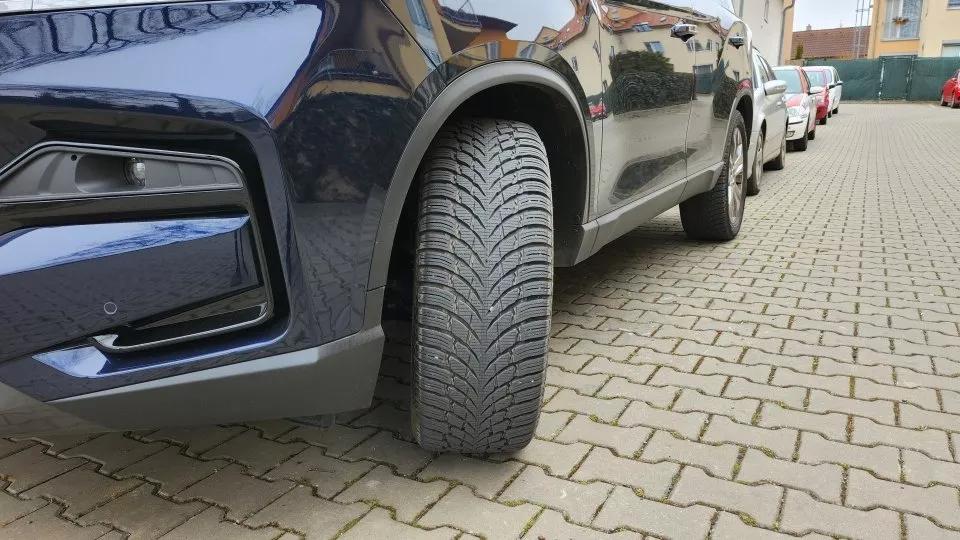
Subaru also warns in its U.S. owner manuals that differences in tire circumference, size, construction, and degree of wear can cause serious drivetrain damage. Its guidance emphasizes matching all four tires to the vehicle’s specified requirements.
If the vehicle hops, drags, or resists turning after a tire replacement, arrange an AWD inspection rather than continuing to drive normally. Ask the technician to compare tire circumferences and investigate possible binding in the center coupling and differentials.
3. The AWD Warning Light Comes On or the System Disengages
An illuminated AWD warning light can indicate that the vehicle’s drivetrain has detected a problem requiring attention. When mismatched tires create continuous differences in wheel rotation, the system may struggle to manage power distribution correctly.
Depending on the manufacturer’s design, the vehicle may activate a warning, restrict AWD operation, or temporarily switch to another drive configuration to protect mechanical components.
Ford provides a useful example in its U.S. owner documentation. The manufacturer’s guidance explains that certain AWD-equipped vehicles can automatically disable the system and switch to front-wheel drive when a non-full-size spare tire is installed.
An AWD OFF message may appear in the information display, indicating that the system has restricted its operation. Ford also warns that significantly different tire sizes between the front and rear axles can cause AWD malfunction or drivetrain damage.
This is particularly important because drivers sometimes assume that an illuminated warning simply means a sensor needs resetting. While electronic faults are certainly possible, ignoring the warning without checking the tires can allow an underlying mechanical problem to continue.
Another consideration is that AWD warning lights are not exclusively associated with mismatched tires. Faulty wheel-speed sensors, wiring problems, coupling failures, and other drivetrain issues can trigger similar alerts. The diagnostic trouble codes stored in the vehicle’s computer can help identify the actual cause.
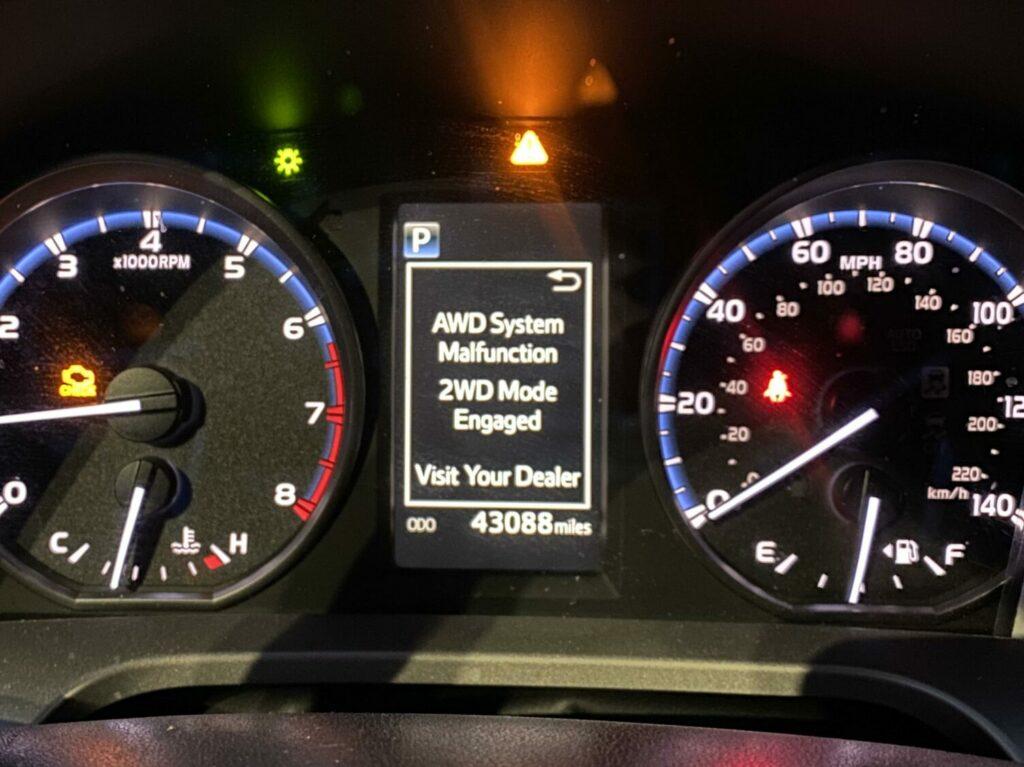
Record the exact dashboard message and have the vehicle scanned with equipment capable of accessing its AWD control module. Ask the technician to compare all four tire sizes, pressures, and circumferences before replacing sensors or clearing warning codes.
If the manufacturer recommends avoiding AWD operation under the displayed fault condition, follow that guidance until the system is inspected.
4. A Whining or Grinding Noise Comes From the Transfer Case or Differentials
A new whining, humming, or grinding noise coming from underneath an AWD vehicle should not be dismissed as ordinary road noise, particularly if it develops after installing tires with different tread depths or rolling circumferences.
The sound may become more noticeable as vehicle speed increases, during acceleration, or when the drivetrain is under load. In some cases, drivers notice a change in the noise when transitioning between acceleration and coasting.
The connection to mismatched tires lies in the additional work required from the drivetrain. Differentials and viscous couplings are designed to accommodate differences in wheel speed during normal driving conditions.
However, when tires have substantially different circumferences, these components may have to compensate continuously rather than occasionally.
Tire Rack explains that forcing differentials and viscous couplings to operate continuously because of mismatched tires can generate excessive heat and accelerate internal wear. Over time, this can contribute to component failure.
The source of the noise matters. A transfer case distributes power between driveline sections on vehicles equipped with that arrangement, while differentials manage speed differences between connected wheels. Depending on the AWD design, damage or wear can affect different components.
However, a whining noise alone does not establish that mismatched tires have damaged the system. Low or contaminated lubricant, worn bearings, damaged gears, and wheel bearings can produce similar sounds.
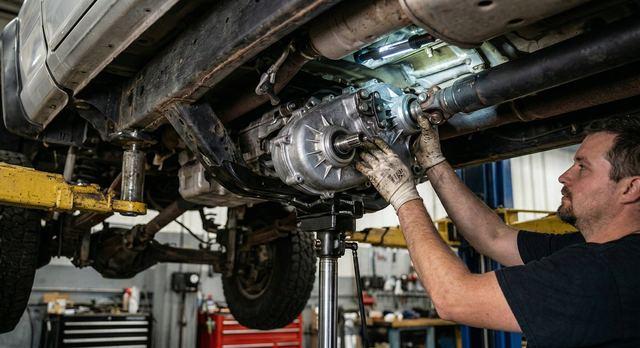
Have a drivetrain specialist inspect the transfer case, front and rear differentials, and associated bearings. Ask for lubricant level and condition checks, along with a comparison of all four tire circumferences.
Avoid attempting to diagnose the problem solely by listening to the noise, because identifying the affected component requires a proper inspection.
5. A Burning Smell Develops After Driving
A burning smell coming from underneath an AWD vehicle is a warning that deserves immediate attention, especially when it appears after a recent tire replacement. One possible explanation is excessive heat developing inside drivetrain components that are being forced to compensate for differences in tire rotation.
Depending on the vehicle’s AWD design, the transfer case, center coupling, or differentials may experience additional friction and thermal stress.
Unlike a brief smell from overheated brakes, a drivetrain-related burning odor may become noticeable after extended driving, particularly when the vehicle has been operating at highway speeds or under acceleration.
Some drivers might describe it as a hot mechanical or burnt-oil smell. However, the odor alone cannot establish that the AWD system is responsible.
Tire Rack explains that mismatched tire circumferences can force differentials and viscous couplings to operate continuously. These components are normally designed to accommodate temporary differences in wheel speed, such as those experienced during cornering.
Continuous operation can produce excessive heat and accelerate wear, potentially resulting in component failure.
The concern is not limited to mechanical friction. If a drivetrain component develops a lubricant leak or operates with insufficient fluid, additional heat and internal damage may follow. A burning smell could also originate from an overheated clutch, transmission fluid, brakes, or another unrelated problem.
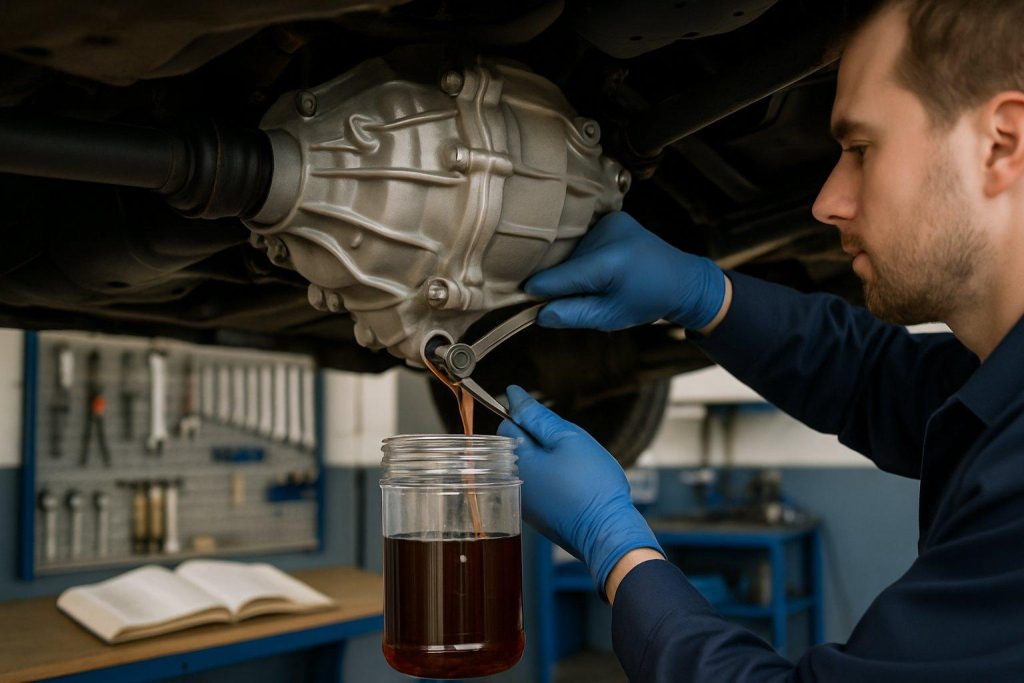
This is why drivers should not continue testing the vehicle by repeatedly accelerating or making tight turns to reproduce the smell. Doing so could worsen an existing mechanical fault.
If a strong burning odor develops alongside drivetrain noise, vibration, or AWD warnings, stop driving somewhere safe and arrange a professional inspection. Ask the technician to examine the transfer case, differentials, coupling assembly, and their lubricants for signs of overheating, leakage, or damage.
6. Vibrations Become Noticeable at Highway Speeds
Vibrations at highway speeds are frequently associated with tire balancing, wheel damage, or suspension problems. However, when the sensation develops after fitting tires with different rolling circumferences, the AWD drivetrain should also be considered.
The important distinction is whether the vibration comes from an imbalance in the wheels or from mechanical components experiencing abnormal operating conditions.
A mismatched tire does not necessarily produce an immediate vibration. Instead, the difference in rolling circumference can create a continuous variation in wheel rotation. Since AWD systems mechanically connect the front and rear driveline sections in different ways, this mismatch can increase the workload on differentials, couplings, and related components.
Tire Rack’s technical guidance explains that even relatively small differences in tire dimensions can create additional strain. Its example describes a tire with 8/32-inch remaining tread depth having a different circumference from a comparable new tire, producing approximately four additional tire revolutions per mile.
That difference illustrates why apparently minor tread variations can matter to an AWD system.
Nevertheless, a steering-wheel vibration that appears within a particular speed range is more commonly associated with wheel and tire balance than internal AWD damage. A vibration felt through the seat or floor can have several possible sources, including driveline joints and worn bearings.
Have all four wheels inspected for balancing problems, bent rims, uneven tread wear, and incorrect inflation. Then ask for actual tire circumference measurements rather than relying exclusively on the size printed on the sidewall.
If the vibration continues after wheel balancing, a drivetrain inspection can help determine whether the transfer case, differentials, or driveshaft components have suffered damage.
7. The Tires Show Unusual or Uneven Wear After Replacement
Uneven tire wear can be an important clue that something is wrong with an AWD vehicle, particularly when the tires were replaced at different times or different brands were installed.
Although uneven tread depth does not automatically mean the drivetrain has been damaged, substantial differences between the four tires can create the rolling circumference mismatch responsible for additional AWD stress.
For example, imagine replacing two worn tires while leaving the other two with considerably more tread. Even if all four tires display the same nominal size, their actual rolling circumferences may differ.
The smaller effective diameter of the more heavily worn tires means they rotate more frequently over the same distance. This can force certain AWD components to compensate continuously for the difference.
Subaru specifically addresses this issue in its U.S. owner manuals. Its guidance requires all four tires to match in size, circumference, construction, manufacturer, tread pattern, and degree of wear. The manufacturer warns that differences can cause serious drivetrain damage and affect vehicle handling, braking, and speedometer accuracy.
It is also important to note that uneven tire wear may point to other issues, including poor wheel alignment, incorrect tire pressure, worn suspension parts, or missed tire rotations. These factors could have caused the differences in tread wear rather than being a result of AWD-related damage.
A technician should therefore examine both the tires and the mechanical components instead of automatically blaming the drivetrain.
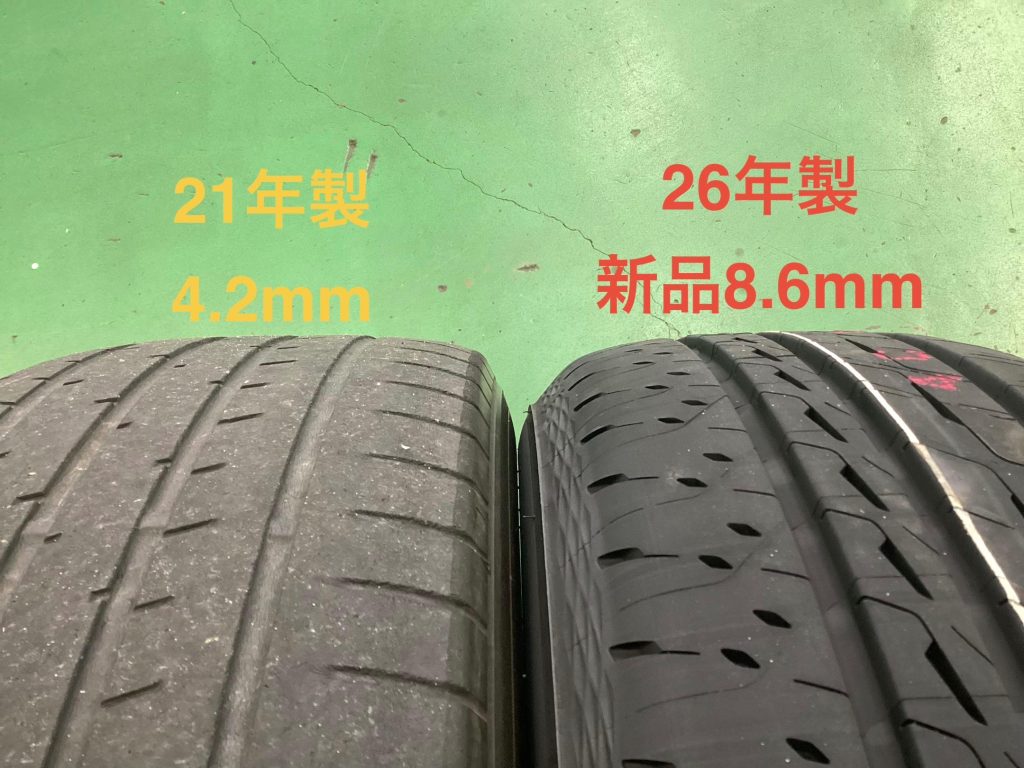
Measure tread depth at several points across all four tires using a tread-depth gauge. Compare the results with the vehicle manufacturer’s requirements and have the rolling circumference measured when necessary.
If substantial differences exist, ask whether the tires need replacement or professional shaving to match the required circumference. Also inspect alignment and suspension components to identify the original cause of uneven wear.
8. The Vehicle Loses Its Normal AWD Traction and Power Distribution
An AWD vehicle that no longer delivers its usual traction can indicate a problem with the system’s ability to distribute engine power.
Drivers might notice increased wheelspin on slippery surfaces, reduced confidence when accelerating on wet roads, or a vehicle that behaves more like a front-wheel-drive or rear-wheel-drive model. If these changes appear after fitting mismatched tires, the AWD system deserves a closer inspection.
The principle is simple. AWD systems rely on tires with matching dimensions to maintain consistent wheel speeds. When tires have noticeably different rolling circumferences, the drivetrain is forced to make constant adjustments to compensate.
Depending on the design, this can create excessive strain on the center coupling, transfer case, or differentials. In some vehicles, protective electronics may restrict AWD operation to prevent further damage.
Ford specifically warns in its owner documentation that significantly different tire sizes between the front and rear axles can cause an AWD system to stop functioning, default to a two-wheel-drive configuration, or suffer drivetrain damage. The exact response depends on the vehicle’s system design.

It is important not to confuse reduced traction with ordinary changes in road conditions. Worn tires, incorrect inflation pressure, faulty wheel-speed sensors, and electronic control problems can also affect traction performance. A vehicle that spins its wheels on snow does not automatically have a damaged transfer case.
Have the AWD control module scanned for stored faults and ask the technician to verify whether power is reaching both axles as intended.
The inspection should also include the tires, coupling assembly, transfer case, and differentials. Avoid deliberately testing the vehicle on slippery roads to reproduce the problem, as this can create additional safety risks.