

For decades, drivers were told to change their engine oil every 3,000 miles, making the odometer the obvious guide for routine maintenance.
Modern engines, however, have made that rule increasingly outdated. Better lubricants, tighter engine tolerances, improved filtration, and electronic oil-life monitoring have allowed many vehicles to travel substantially farther between oil changes.
That has created a different question for drivers who do not put many miles on their cars: If you barely drive, how long can the oil remain in the engine?
The answer is not simply miles or months. Both matter, and the manufacturer’s recommended interval usually tells you which limit comes first.
Oil does not only deteriorate because it travels through the engine. Time, heat cycles, moisture, fuel contamination, and exposure to oxygen can also affect its condition. That means someone who drives 2,000 miles a year cannot necessarily leave the same oil in the engine for several years simply because the mileage requirement has not been reached.
AAA’s current guidance recommends starting with the factory maintenance schedule because oil-change intervals vary according to the vehicle, lubricant, driving conditions, and manufacturer requirements.
Modern vehicles may use oil-life monitoring systems that calculate remaining oil life based on factors such as driving habits and operating conditions.
For most drivers, the safest approach is therefore simple: follow whichever limit the manufacturer specifies first, whether that is mileage, time, or an oil-life monitor.
Why Mileage Alone Is No Longer Enough
Mileage is still an important way to determine when an oil change is due because engine oil accumulates contaminants and experiences repeated cycles of heat and mechanical stress as the vehicle is driven.
But two vehicles can travel the same number of miles while putting very different demands on their oil.
A car driven 7,500 miles almost entirely on highways may experience relatively stable operating conditions. Another vehicle that travels the same distance through congested city traffic, makes hundreds of short trips, and spends considerable time idling can place much greater stress on its lubricant.
That is why many automakers distinguish between normal and severe service. AAA identifies frequent short trips, stop-and-go traffic, extreme heat or cold, dusty conditions, mountainous driving, and regular towing or heavy loading as examples of severe operating conditions that can require more frequent oil changes.
Short trips deserve particular attention. When an engine is started cold and driven only a few miles, it may not remain at operating temperature long enough to evaporate accumulated moisture effectively. Repeated short journeys can therefore be harder on the lubricant than a longer trip at normal operating temperature.
Frequent cold starts also mean the engine repeatedly moves from ambient temperature to operating temperature and back again. Those repeated heat cycles contribute to the aging of the oil.
This is why a low-mileage driver should not automatically assume the oil is still healthy simply because the vehicle has traveled only a few thousand miles since the previous service.
Time can become the limiting factor. AAA notes that many modern vehicles have recommended oil-change intervals of around 5,000 miles or more, while vehicles using synthetic oil can have substantially longer intervals depending on the manufacturer’s requirements.
But AAA also emphasizes that the manufacturer’s schedule should take priority rather than applying a universal mileage figure to every vehicle.
That difference is important because there is no single mileage or month figure that applies to every engine.
A 2026 turbocharged vehicle, a 15-year-old naturally aspirated sedan, and a heavy-duty diesel pickup may have completely different oil-change requirements. The owner’s manual knows the difference.
Why Months Still Matter Even When You Barely Drive
The time component becomes especially important for people who drive very little. Imagine someone who owns a second vehicle and puts only 2,000 miles on it each year.
If that vehicle’s maintenance schedule says to change the oil every 7,500 miles or 12 months, waiting until 7,500 miles would mean leaving the oil in the engine for nearly four years.
That is not what the manufacturer intended. The “whichever comes first” language exists for precisely this reason.
Some manufacturer schedules explicitly specify both mileage and time limits. For example, an FCA service document available through NHTSA specifies oil and filter replacement at 15,000 miles or 12 months, or sooner if the vehicle’s oil-life monitoring system calls for it.
Another General Motors service document states that some vehicles may go as long as a year under favorable driving conditions according to their oil-life monitoring system but still require an oil and filter change at least once a year.
These examples demonstrate an important principle: oil-life systems and maintenance schedules are designed around the vehicle’s engineering, not a generic rule that applies to every car.
Time also matters because oil can become contaminated even when the vehicle is not traveling significant distances. Condensation and moisture can accumulate, particularly when a vehicle is repeatedly started and driven for short periods.
That makes the low-mileage driver one of the people who should pay particularly close attention to the calendar.
There is another misconception worth clearing up: oil color is not a reliable method for determining whether an oil change is necessary.

Fresh oil can darken relatively quickly as it begins collecting combustion byproducts and suspended contaminants. Dark oil does not automatically mean it has reached the end of its useful life, while oil that still looks clean does not necessarily mean it is suitable for continued use.
AAA specifically warns drivers not to use oil color as the deciding factor for an oil change and instead recommends following the manufacturer’s maintenance schedule.
The same logic applies to smell and appearance. They can sometimes indicate a problem, but they should not replace the manufacturer’s service interval or a proper diagnosis.
The Best Rule Is “Whichever Comes First.”
For most vehicle owners, the easiest way to approach the question is to treat the manufacturer’s interval as a maximum boundary rather than a target that must be stretched.
If the manual says 7,500 miles or 12 months, change it when you reach 7,500 miles or 12 months, whichever happens first.
If the vehicle has an oil-life monitor, use that system as instructed by the manufacturer while also observing any calendar-based limit in the maintenance schedule.
Modern oil-life monitors can be considerably more sophisticated than simply counting miles. GM documentation, for example, explains that its system can account for factors including engine revolutions, engine temperature, and miles driven when determining when an oil change is necessary.
That is why resetting an oil-life monitor after every oil change is important. The system needs to know when the fresh oil was installed.
However, an oil-life monitor does not permit drivers to ignore the rest of the maintenance schedule. GM’s documentation specifically notes that other scheduled maintenance remains necessary even when the oil-life system is being used.
Drivers should also be cautious about assuming that switching to synthetic oil automatically allows them to double their oil-change interval.
It does not. AAA states that if a vehicle’s manual specifies a 5,000-mile interval, switching from conventional oil to synthetic does not automatically mean the owner should extend that interval. The factory schedule remains the reference point unless the manufacturer provides a different interval for the specific lubricant and vehicle.
Synthetic oil can offer advantages in heat resistance, oxidation stability, and deposit control, but those characteristics do not override the manufacturer’s maintenance requirements.
The same applies to older, high-mileage vehicles. An older engine may need closer monitoring of oil level and consumption, but its owner should still follow the specified time and mileage intervals rather than inventing a schedule based solely on the odometer.
For drivers who use their vehicles under severe conditions, the answer may actually be shorter than either the normal mileage or time interval. Frequent short trips, extensive idling, towing, extreme temperatures, and dusty environments can accelerate oil degradation.
There is also no advantage in changing oil dramatically more often than necessary simply because it feels safer. AAA describes the traditional 3,000-mile rule as outdated for most modern vehicles and notes that contemporary engines and lubricants can support substantially longer intervals when the manufacturer’s recommendations allow it.
That means changing oil every 3,000 miles is not automatically better for an engine designed around a much longer interval. The smarter approach is to understand how the vehicle is actually being used.
A commuter covering 15,000 highway miles annually may primarily reach the mileage limit. A weekend driver covering 3,000 miles annually may reach the time limit first. Someone making repeated two-mile trips through traffic may fall into severe-service requirements despite putting relatively few miles on the odometer.
The calendar and the odometer are therefore not competing methods. They are two measurements of the same maintenance problem. If the manufacturer’s schedule says miles or months, whichever comes first, follow that rule.
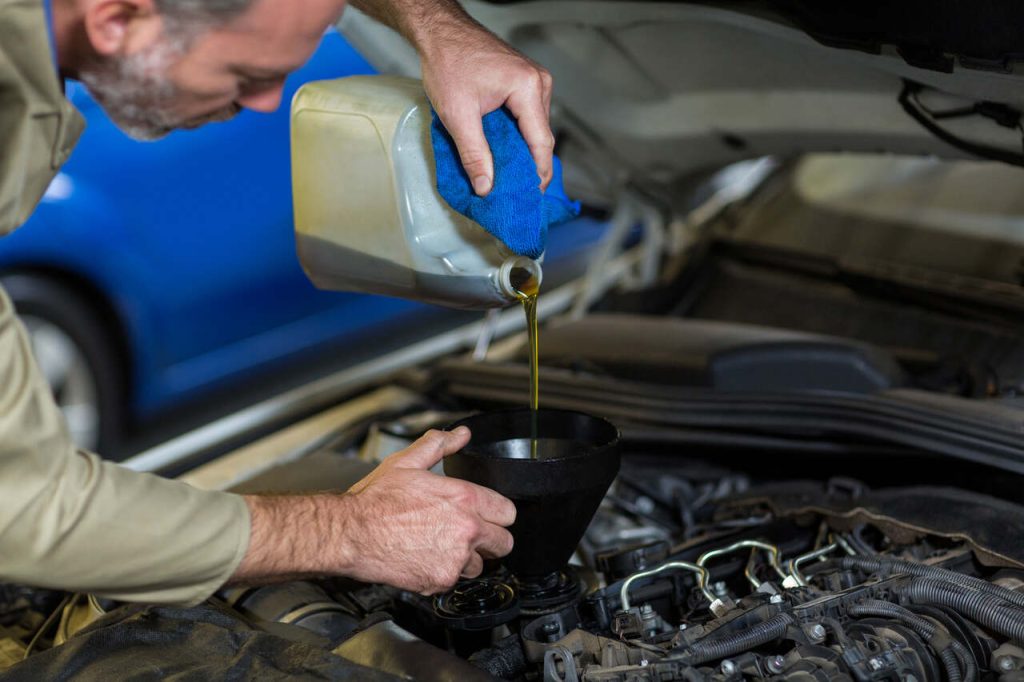
For low-mileage vehicles, the calendar becomes particularly important. For high-mileage vehicles, mileage may arrive first. For vehicles driven under severe conditions, neither standard interval should automatically be assumed to apply.
The most reliable strategy is to check the owner’s manual, understand whether your driving qualifies as severe service, follow the oil-life monitor if your vehicle has one, and never allow an oil change to drift years beyond the manufacturer’s specified time limit simply because the vehicle has barely moved.
Modern oil can last longer than the lubricants used decades ago, but it is not immortal. The right time to change your oil is not simply when you hit a certain number on the odometer.
It is when your vehicle’s maintenance schedule, oil-life system, and driving conditions say the lubricant has reached its service limit, with the manufacturer’s specified mileage or time limit taking priority.
