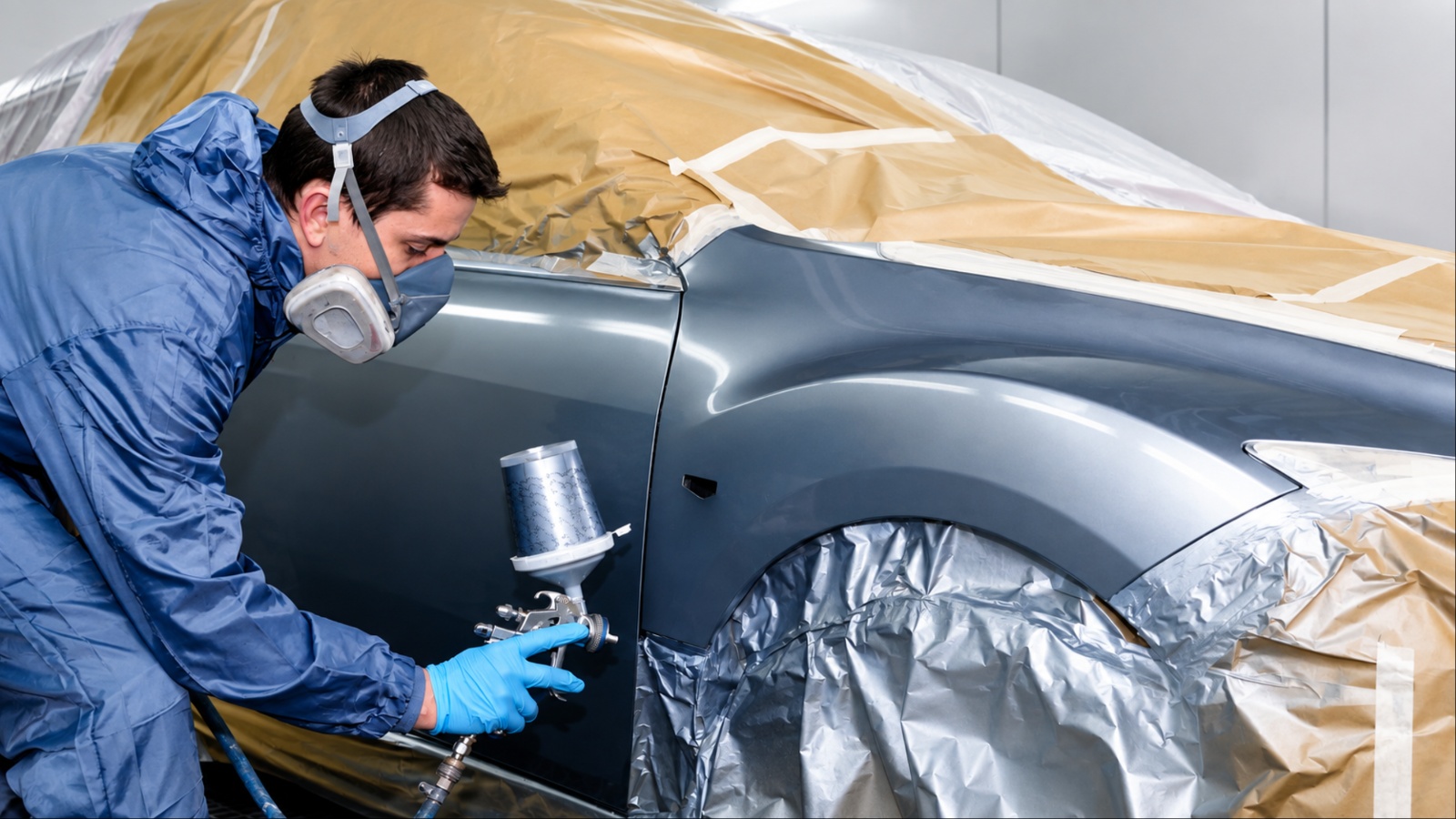
A professional car repaint can cost far more than the price of a few cans of paint. A proper automotive paint job involves preparation, bodywork, primer, color application, clear coat, sanding, curing, and extensive labor. The quality of that preparation often matters more than the paint itself.
For a complete repaint, the price can range from roughly $2,000 for a basic professional job to well above $10,000 for a high-end restoration or a demanding color change.
The National Association of Insurance Commissioners notes that auto body repair costs can vary substantially based on the vehicle, repair complexity, labor rates, and parts involved, while industry estimates commonly place professional full-vehicle repainting into several distinct price tiers. The reason for such a wide range is simple: “painting a car” can mean very different things.
A budget repaint may involve minimal disassembly and limited preparation. A high-quality refinish can require removing trim, lights, bumpers, and other components; repairing imperfections; carefully preparing every panel; and applying multiple layers under controlled conditions.
For owners trying to decide whether repainting is worthwhile, understanding where the money goes is more useful than simply comparing quotes.
Preparation Is Where Much of the Cost Comes From
The most expensive part of a proper paint job is often not the paint. It is the labor required to prepare the vehicle.
Before the new color is sprayed, technicians must inspect the existing finish and determine whether the body has dents, scratches, rust, peeling clear coat, or previous repairs. Every defect that remains underneath the new paint can eventually become visible.
That means a professional shop may spend hours sanding, filling, blocking, and priming panels before the color is ever applied.
Small imperfections can require body filler. Rust may need to be cut out and repaired rather than simply painted over. Deep scratches may need additional sanding and primer. Existing paint that is peeling or failing may need to be removed.
This is why two cars with identical dimensions can have dramatically different repainting costs.
A relatively straight vehicle with sound paint may require mostly surface preparation. A car covered in dents, corrosion, and damaged paint could require extensive bodywork before refinishing begins.
Labor rates also vary substantially by location and shop. A facility in an expensive metropolitan area may charge considerably more per labor hour than a smaller independent shop in another region.
The type of vehicle matters too. A basic sedan with relatively simple body panels is generally easier to refinish than a large SUV with extensive trim, complex body contours, roof rails, sensors, and numerous removable components.
Modern vehicles add another challenge: electronics. Bumpers can contain parking sensors, radar equipment, and cameras. Removing and reinstalling these components takes additional time and may require calibration afterward.
A proper paint job therefore involves far more than masking windows and spraying color. Once the surface is repaired, technicians typically apply primer or sealer as required. The vehicle then has to be sanded and cleaned carefully before color is applied.
Contamination is a major enemy in automotive refinishing. Dust, grease, silicone, and moisture can create defects such as fisheyes, poor adhesion, or uneven texture. Professional paint facilities use controlled environments to minimize those problems.
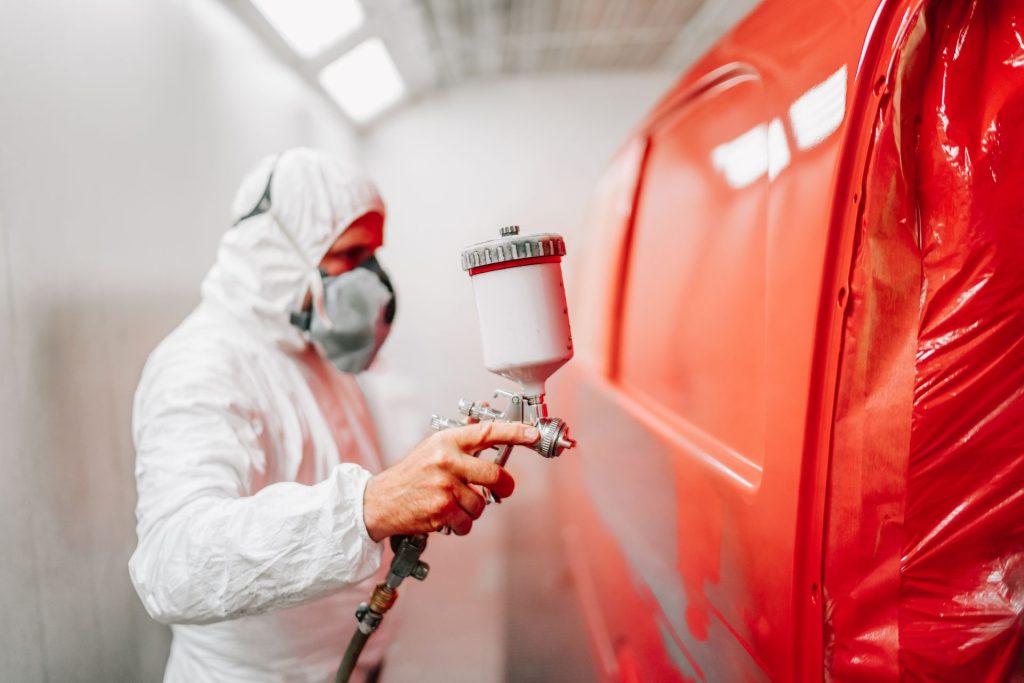
The actual paint application usually involves several layers. Depending on the system, the process can include primer, basecoat, and clear coat, with drying or curing between stages.
Clear coat provides much of the gloss and protection against environmental exposure. It is also one reason a professional finish can look dramatically better than a quick spray-can repair.
Paint Type and Color Can Change the Price Dramatically
Not all automotive paint costs the same. A basic solid color is generally easier and less expensive to apply than a metallic, pearl, or specialized finish. Metallic paints contain reflective particles that need to be distributed consistently.
Pearl finishes can be even more difficult because their appearance changes depending on how light interacts with the layers. A color change is more expensive again.
If a car originally painted white is being changed to black, a shop may need to paint areas that are not visible when the doors, hood, or trunk are closed. Door jambs, trunk openings, and other areas can become obvious if the original color remains underneath.
That means a genuine color change can involve significantly more labor than simply repainting the exterior panels. Some modern finishes are even more complicated.
Tri-coat and other multi-stage paint systems require careful application to achieve the correct shade and depth. Matching a replacement panel to the surrounding original paint can also be challenging because the existing finish has aged.
This is particularly important for older cars. Paint exposed to years of sunlight can fade, making an exact color match more difficult. A shop may need to blend the new color into adjacent panels so the repair is not visually obvious.
Blending is another reason a seemingly small repair can become expensive. If one front fender is damaged, for example, spraying only that panel may produce a noticeable difference between the new finish and the adjacent door. A technician may therefore blend the color into neighboring panels before applying clear coat.
That increases both material use and labor. Paint quality also matters. Professional body shops generally use automotive refinishing systems designed for proper adhesion, durability, and color matching.
High-quality materials cost more, but the difference is not simply cosmetic. Poor-quality products or incorrect application can lead to premature fading, peeling, or other defects.
However, expensive paint does not automatically guarantee a high-quality result. Preparation, application technique, and curing conditions remain critical.
A cheap paint job using premium materials can still look poor if the underlying surface was not properly prepared.
What You Are Really Paying For
When a professional shop quotes several thousand dollars for a full repaint, the bill is paying for much more than the paint sitting in the spray booth.
It covers technician labor, preparation materials, primer, basecoat, clear coat, masking materials, sanding supplies, booth operation, equipment maintenance, electricity, waste disposal, insurance, and the shop’s other operating costs.
There is also considerable time involved. A proper repaint may take several days or longer depending on the amount of bodywork and the shop’s workload. The vehicle cannot simply be painted in one afternoon and returned to the customer.
The number of panels also matters. Painting a hood and two fenders is obviously very different from repainting an entire vehicle. A partial repair might cost hundreds to a few thousand dollars depending on the damage, materials, and labor involved.
A full professional repaint generally starts much higher. Industry estimates commonly place basic professional full-car repainting around the low thousands of dollars, with better-quality work frequently reaching $5,000 or more. High-end restorations, premium materials, extensive bodywork, or complete color changes can push costs beyond $10,000.
Those numbers are estimates rather than fixed national prices. The actual quote depends heavily on location, vehicle size, paint type, and condition.
Insurance can also affect the economics. If the paint damage resulted from a covered accident, the insurer may pay for the necessary refinishing work subject to the policy and deductible. For ordinary fading, age-related deterioration, or cosmetic preferences, the owner normally pays out of pocket.
There is another important consideration: the vehicle’s value. Spending $8,000 repainting a $6,000 car rarely makes financial sense unless the vehicle has unusual sentimental or collector value.
On the other hand, repainting a valuable classic, enthusiast car, or well-maintained vehicle can be worthwhile if the body is structurally sound and the owner intends to keep it for years.
A proper paint job can also protect the underlying metal from environmental exposure, especially when existing paint has deteriorated enough to expose bare metal.
But repainting should not be used to hide serious rust without addressing the underlying problem. If corrosion continues beneath the new finish, the expensive paint job may begin failing again.
That is why the best shops spend so much time inspecting and preparing the body before spraying anything. Ultimately, the phrase “properly painted” is what makes the difference.
A cheap repaint can make a vehicle look better from several feet away, but shortcuts in preparation can become obvious months or years later. Overspray, uneven texture, poor masking, visible sanding marks, mismatched panels, and premature peeling are all signs that the process was rushed.
A quality repaint is closer to a restoration process than a simple cosmetic treatment. The technician has to prepare the surface, correct defects, select the appropriate materials, control contamination, apply the finish consistently, and allow each stage to cure correctly.
That is why the cost of painting a car properly can range from a few thousand dollars to well into five figures. The paint itself is only part of the bill.
The real cost comes from the labor, preparation, and precision required to make the finish look factory-quality and remain durable for years. For anyone considering a repaint, the cheapest quote is rarely the most useful comparison. The better question is what preparation, materials, and level of finish that price actually includes.