
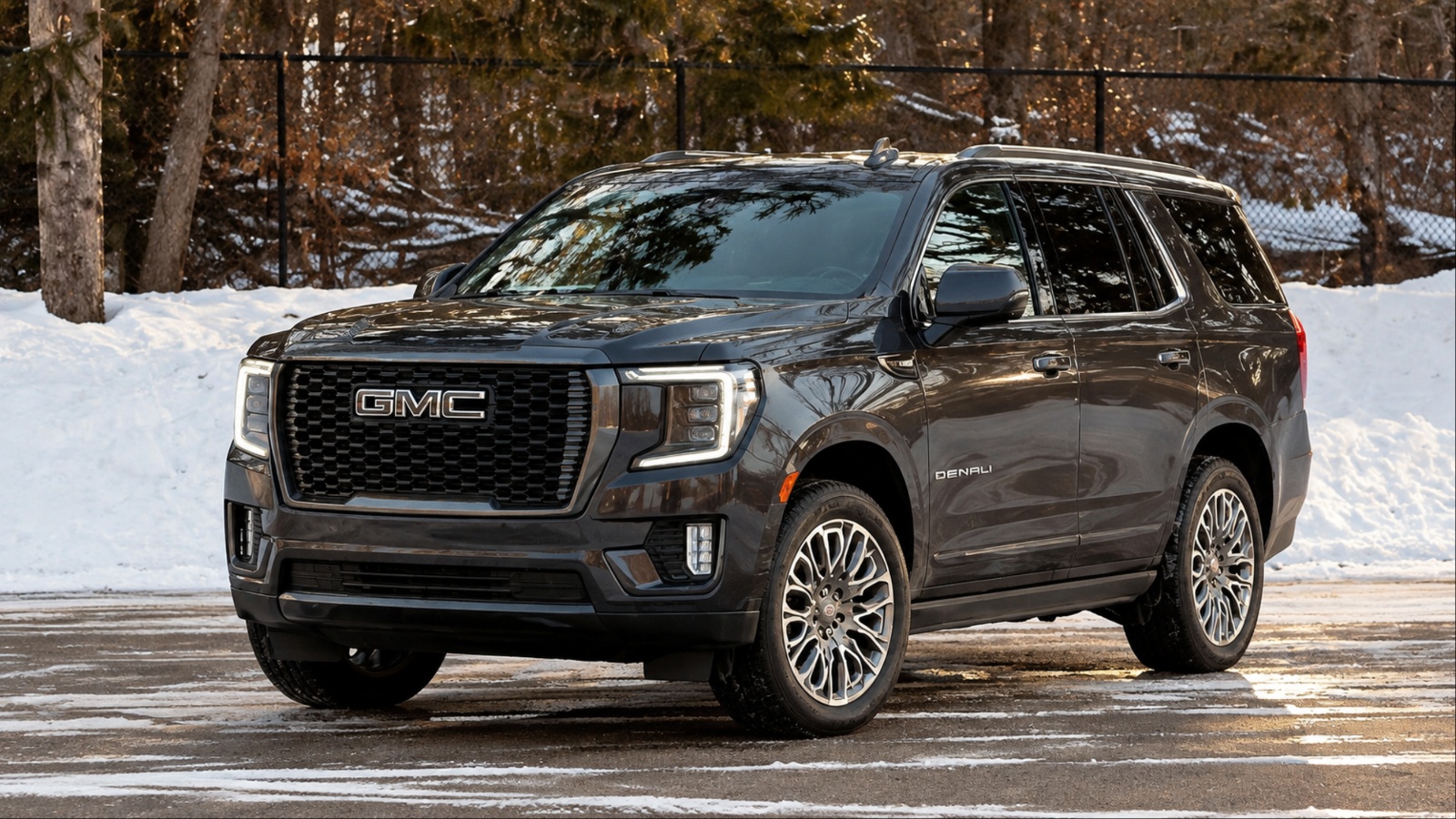
Big SUVs have become so tall that some now stand only a few inches below the height of a typical doorway. For private buyers, that creates a fascinating combination of commanding visibility, generous cabin space, serious towing ability, and a few practical concerns that smaller vehicles simply do not have.
This list focuses on U.S.-market passenger vehicles that can be purchased for normal private use, with height measured from manufacturer specifications rather than judging size by appearance.
The rankings also consider the published roof height, because roof rails, antennas, and suspension settings can produce different measurements. Here are the towering vehicles that stand highest.
1. Jeep Grand Wagoneer
At 79.8 inches tall at the roof rail, the 2026 Jeep Grand Wagoneer is almost 6 feet 8 inches high, making it one of the tallest luxury SUVs available to ordinary U.S. buyers. Jeep’s own specifications put the standard-wheelbase model at 216.1 inches long and 83.6 inches wide without mirrors.
With the longer Grand Wagoneer L, length increases dramatically to 228.1 inches while roof height remains essentially unchanged.
That towering exterior is backed by a cabin designed to make the most of the vertical space. The first row provides 41.3 inches of headroom, while the second row has 40.0 inches and the third row receives 39.0 inches.
Second-row legroom reaches 42.7 inches, giving passengers substantial room to stretch out. The standard model can also provide more than 116 cubic feet of maximum cargo volume, depending on configuration.
The Grand Wagoneer is not simply a tall family hauler. Its 3.0-liter Hurricane twin-turbocharged inline-six produces 420 horsepower and 468 lb-ft of torque, connected to an eight-speed automatic transmission. Four-wheel-drive versions can tow up to 10,000 pounds when properly equipped, putting the SUV firmly into serious towing territory.
There is also an interesting mechanical reason its dimensions can vary in practical use. Available air suspension allows the vehicle to change its ride height, including an entry/exit setting that lowers the body to make climbing into the cabin easier. That feature is particularly useful on a vehicle this tall.
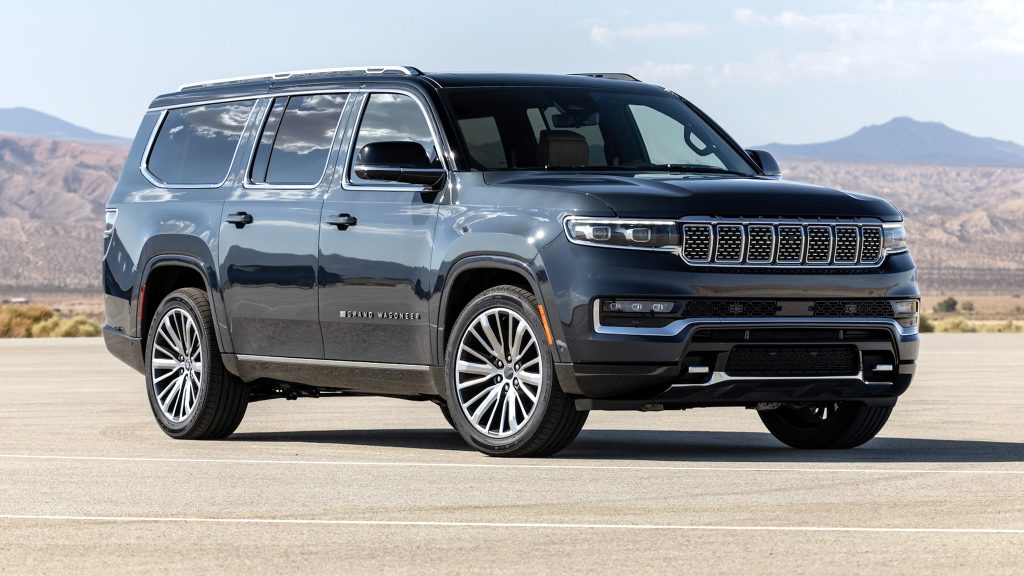
For buyers who want a private passenger SUV with genuine full-size proportions, three rows, substantial towing capability, and a roof nearly 80 inches from the ground, the Grand Wagoneer is difficult to ignore.
2. Jeep Wagoneer
The 2026 Jeep Wagoneer delivers nearly the same towering presence as its more luxurious sibling. Its published exterior height reaches 79.8 inches, putting the roof only a little more than 2 inches below the 6-foot-10-inch mark.
The standard Wagoneer measures 216.1 inches long and 83.6 inches wide without the mirrors, while the Wagoneer L stretches to 228.1 inches.
What makes the Wagoneer especially interesting is how much of that size is converted into usable passenger room. The front row has 41.3 inches of headroom, followed by 40.0 inches in the second row and 39.0 inches in the third. Second-row passengers receive 42.7 inches of legroom, so the vehicle’s enormous exterior footprint is not simply there for visual effect.
Power comes from the 3.0-liter Hurricane twin-turbocharged inline-six, producing 420 horsepower and 468 lb-ft of torque. An eight-speed automatic transmission manages the output.
Depending on drivetrain and equipment, the Wagoneer can also reach a maximum towing rating of up to 10,000 pounds, giving its substantial size a practical purpose for owners who haul boats, trailers, or other heavy loads.
The L version takes the concept even further in terms of physical presence. Its 130-inch wheelbase and 228.1-inch body make it longer than many pickup trucks, yet it remains configured as a conventional three-row passenger SUV. That additional length creates more room for cargo and passengers without making the roof any taller.
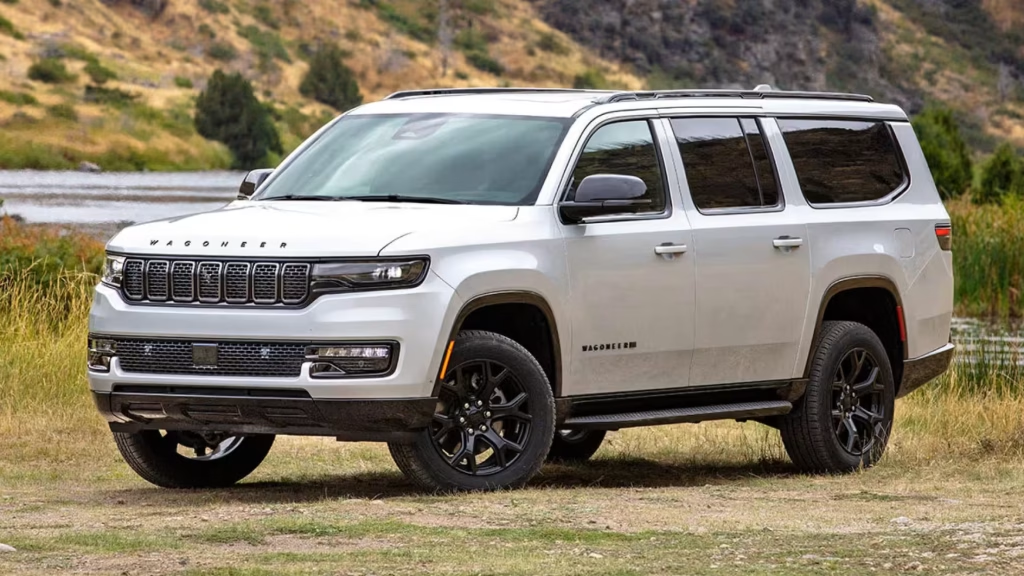
It is also important to distinguish between the Wagoneer’s body width and its width with the mirrors included. The body measures 83.6 inches across, while the width with the mirrors extends to 94 inches. That extra width can make a noticeable difference when navigating a garage, parking structure, or narrow driveway.
For anyone specifically searching for a tall SUV rather than merely a large one, the Wagoneer combines exceptional roof height with serious passenger capacity and towing strength.
3. Nissan Armada
The 2026 Nissan Armada brings a surprisingly tall profile to a segment usually dominated by the biggest American SUVs. Depending on trim, its published exterior height ranges from 76.5 to 77.9 inches, with the Armada Platinum Reserve reaching the highest figure.
That puts the tallest version only a couple of inches below 6 feet 7 inches, while the SUV measures 209.6 inches long and 83.3 inches wide without mirrors. Nissan’s official specifications confirm the dimensions for the U.S. market.
The Armada’s height is accompanied by meaningful ground clearance. Depending on configuration, Nissan lists between 8.8 and 9.9 inches, with the PRO-4X reaching 9.6 inches. The off-road version also gets a 33-degree approach angle, showing that the vehicle’s elevated stance has a functional purpose rather than being purely about appearance.
Underneath the tall hood sits Nissan’s 3.5-liter twin-turbocharged V6, producing 425 horsepower and 516 lb-ft of torque. Power reaches the wheels through a nine-speed automatic transmission, and properly equipped versions can tow up to 8,500 pounds.
That is enough capacity for substantial recreational trailers while keeping the Armada within the realm of a normal private passenger SUV.
Inside, the Armada takes advantage of its substantial dimensions with three rows and seating for up to eight people. Front legroom measures 43.8 inches, second-row legroom is 39.2 inches, and third-row legroom reaches 32.9 inches. Cargo capacity behind the third row is 20.4 cubic feet, expanding considerably when the rear seating is folded.
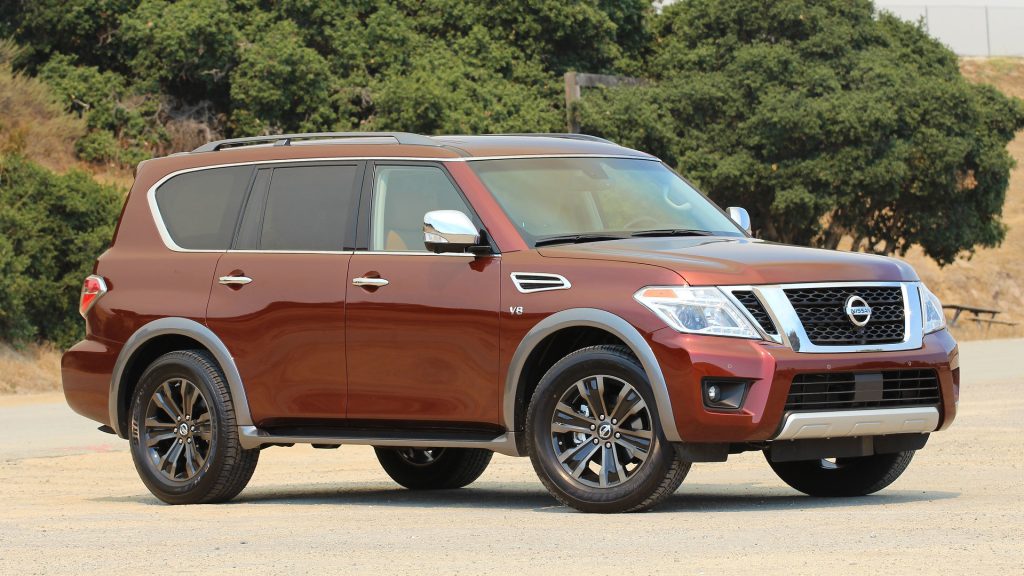
One particularly interesting detail is the difference between the body and mirror measurements. The body is 83.3 inches wide, but Nissan lists 92.5 inches across the mirrors. That is important for anyone planning to park this tall, broad SUV inside a residential garage.
4. Ford Expedition
The Ford Expedition earns its place among America’s tallest privately purchasable SUVs by combining a high roofline with genuine full-size capability. The 2026 model’s height varies by configuration, and the Tremor reaches approximately 78.9 inches, putting it close to the two Jeep models above it.
The standard Expedition measures 209.9 inches long, while the extended Expedition MAX reaches 221.7 inches, giving buyers two different approaches to full-size SUV packaging.
What separates the Expedition from many large crossovers is how deliberately Ford uses its dimensions. The cabin provides substantial vertical space for all three rows, while the available long-wheelbase MAX version prioritizes passenger and cargo capacity rather than simply making the vehicle look bigger.
That distinction becomes noticeable when the third row is occupied, and luggage still needs to be carried.
The mechanical package is equally substantial. Ford uses a 3.5-liter EcoBoost twin-turbocharged V6, with output varying according to configuration.
The standard engine produces 400 horsepower and 480 lb-ft of torque, while the high-output version increases those figures to 440 horsepower and 510 lb-ft. A 10-speed automatic transmission handles the power, and properly equipped versions can tow up to 9,600 pounds.
The Tremor adds another dimension to the Expedition’s tall stance. Its off-road equipment includes increased ground clearance and specialized suspension tuning, giving the vehicle greater capability away from paved roads. This makes the additional height useful when tackling rough terrain instead of treating it as merely a visual feature.
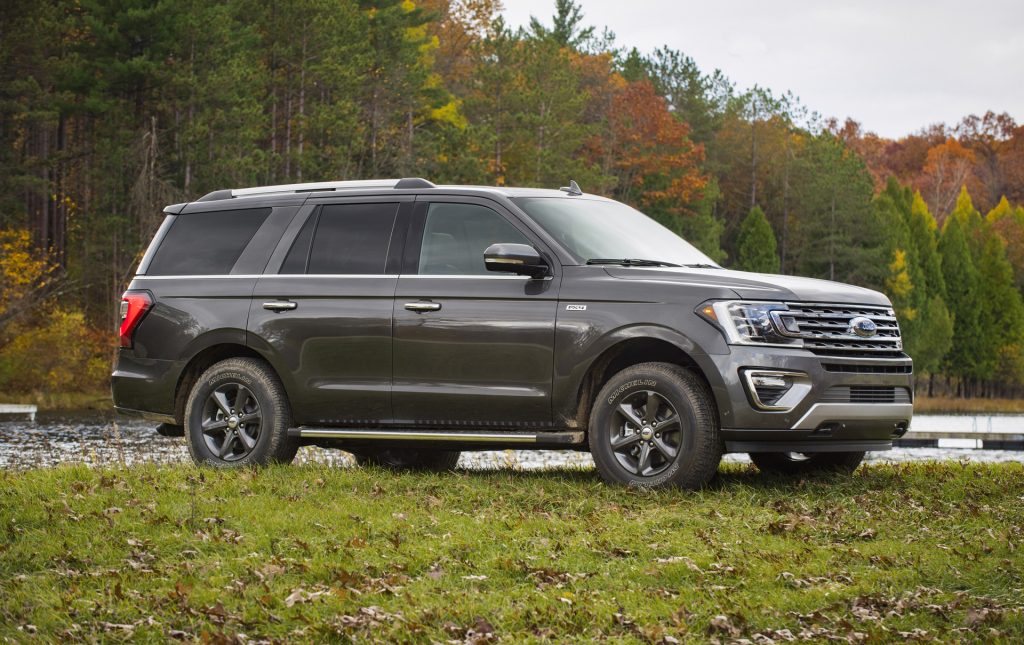
Inside, Ford provides the kind of commanding driving position expected from a vehicle this large. The tall seating position gives the driver an elevated view over surrounding traffic, while the wide body creates generous shoulder room across the first two rows.
The Expedition’s combination of height, towing strength, three-row practicality, and multiple body configurations makes it one of the most versatile tall SUVs available to American private buyers.
5. GMC Yukon XL
The 2026 GMC Yukon XL is a fascinating case because its 76.5-inch height is paired with an enormous body that measures approximately 225 inches long. GMC lists the Yukon at 76.5 inches tall, and the XL version retains that basic height while adding substantial length for passengers and cargo.
The result is an SUV that looks exceptionally large without crossing into a commercial-vehicle category.
That extra length is where the Yukon XL separates itself from many other tall SUVs. Its 134.1-inch wheelbase creates substantial room for the second and third rows, while GMC’s published figures show 44.5 inches of front legroom, 42.0 inches in the second row, and 36.7 inches in the third. Cargo capacity reaches 144.5 cubic feet with the rear seats folded.
GMC offers three distinct powertrains. The standard 5.3-liter V8 develops 355 horsepower and 383 lb-ft of torque, while the available 6.2-liter V8 increases output to 420 horsepower and 460 lb-ft.
Buyers can also choose the 3.0-liter Duramax turbo-diesel, which produces 305 horsepower but a stronger 495 lb-ft of torque. All are paired with a 10-speed automatic transmission.
The Yukon XL can tow up to 8,200 pounds when properly equipped, while the available four-corner Air Ride Adaptive Suspension can adjust ride height according to driving conditions.
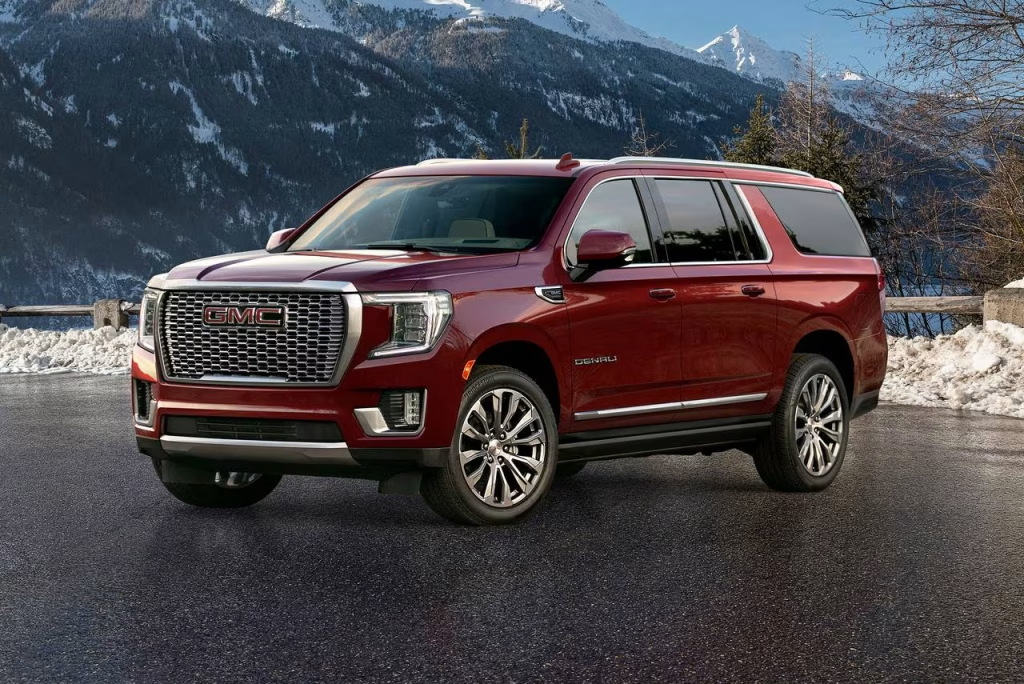
Its height is therefore just one part of the package. The real appeal is the combination of a high driving position, a huge passenger compartment, a long cargo area, and multiple engine choices. For families that routinely carry people and equipment, the Yukon XL turns its enormous footprint into something genuinely useful.
6. Toyota Sequoia
Toyota takes a different approach to the full-size SUV formula with the 2026 Sequoia. At 75.8 inches tall, it does not reach the towering heights of the Jeep Grand Wagoneer or Ford Expedition, but it still stands more than 6 feet 3 inches high and combines that stature with a rugged body-on-frame platform.
Toyota’s published specifications put its length at approximately 210.7 inches and its width at about 81 inches, depending on configuration.
The Sequoia’s most distinctive feature is what sits beneath its hood. Rather than offering a traditional V8, Toyota uses the i-FORCE MAX twin-turbocharged V6 hybrid system.
It produces 437 horsepower and 583 lb-ft of torque, giving the Sequoia more torque than many much larger gasoline-powered SUVs. Toyota rates maximum towing capacity at 9,500 pounds when properly equipped.
Its tall body also creates a commanding driving position, while the available off-road hardware makes the Sequoia more versatile than its size might suggest.
The TRD Pro, for example, receives specialized FOX suspension components designed for off-pavement driving. Toyota also offers an available load-leveling rear height-control air suspension on certain configurations.
Inside, the numbers show why the Sequoia qualifies as a genuinely large passenger vehicle. Depending on configuration, front headroom can reach 42.3 inches, while front legroom reaches 44.5 inches. The cabin can accommodate up to eight passengers, although available configurations vary by trim and equipment.
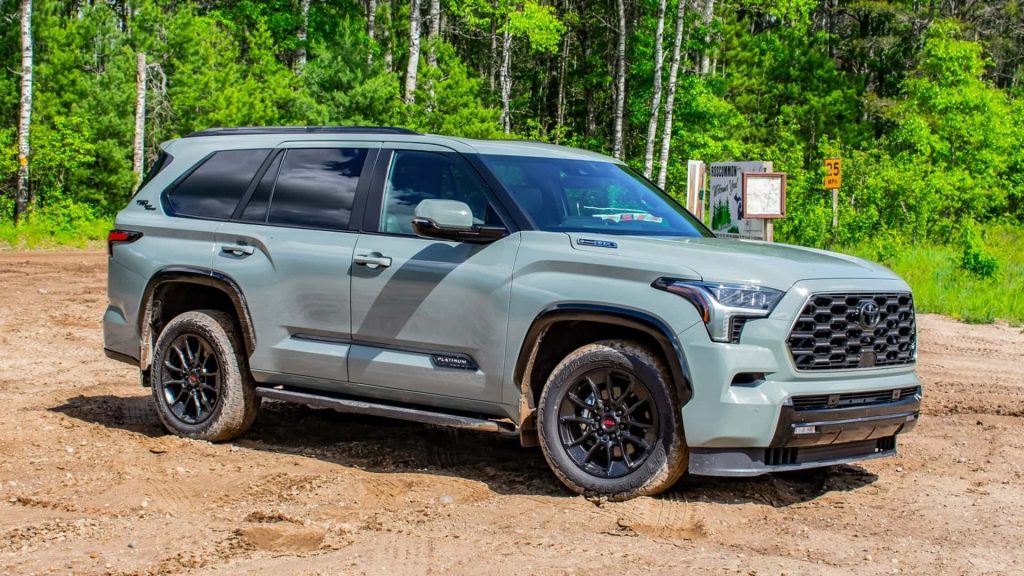
The Sequoia may not be the tallest vehicle here, but its combination of substantial height, hybrid power, impressive torque, and nearly 10,000 pounds of towing capacity gives it a distinctive place on the list. It proves that a tall SUV does not necessarily need a traditional V8 to deliver serious full-size capability.
7. Chevrolet Suburban
The 2026 Chevrolet Suburban demonstrates just how far the traditional full-size SUV formula can be stretched. Depending on configuration, Chevrolet lists the Suburban at 75.6 to 76.6 inches tall, meaning its roof can stand more than 6 feet 4 inches above the ground.
The Suburban’s size is hard to overlook. At 226.3 inches long, it ranks among the longest passenger vehicles you can buy without stepping into the realm of commercial vehicles.
That length creates a very specific advantage. Chevrolet can provide substantial room for passengers and luggage simultaneously, rather than forcing owners to sacrifice cargo space whenever all three rows are occupied.
The Suburban offers 41.5 cubic feet of cargo room behind the third row, increasing to 93.8 cubic feet behind the second row and 144.7 cubic feet behind the first row, depending on configuration.
Under the hood, buyers can choose from several engines. The 5.3-liter V8 produces 355 horsepower and 383 lb-ft of torque, while the available 6.2-liter V8 delivers 420 horsepower and 460 lb-ft.
Chevrolet also offers a 3.0-liter Duramax turbo-diesel producing 305 horsepower and 495 lb-ft of torque. Each powertrain is paired with a 10-speed automatic transmission.
The Suburban’s dimensions also create impressive passenger measurements. Front legroom reaches 44.5 inches, while second-row legroom measures 42.0 inches. Even the third row gets 36.7 inches of legroom, helping make long journeys considerably easier for rear passengers.
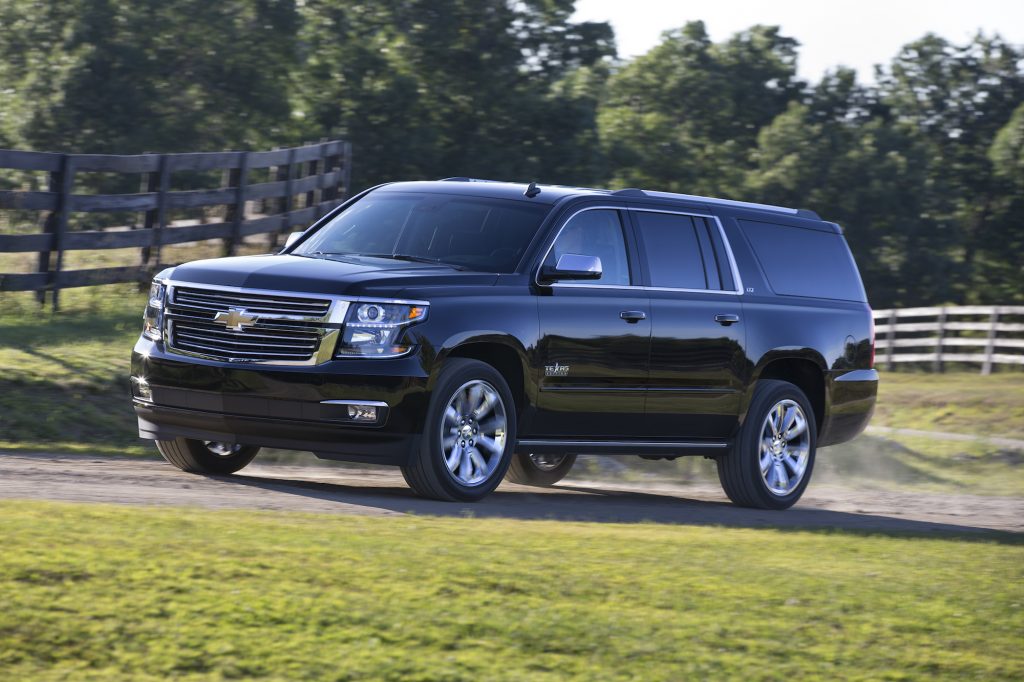
What makes the Suburban particularly interesting is that its height is almost secondary to its length. It is not simply a tall SUV. It is a huge family vehicle designed around maximum passenger and cargo capacity, making it especially appealing to buyers who regularly carry large groups or bulky equipment.
8. Cadillac Escalade
Luxury does not necessarily mean choosing a low-slung vehicle. The 2026 Cadillac Escalade stands 76.7 inches tall, giving it a roofline that is more than 6 feet 4 inches from the pavement. The standard Escalade measures 211.9 inches long and 81.1 inches wide without mirrors, while the extended Escalade ESV reaches 226.9 inches.
Cadillac uses that substantial footprint to create a cabin that feels appropriately spacious for a flagship SUV. The standard model provides 42.3 inches of front headroom and 44.5 inches of front legroom.
Second-row passengers receive 41.7 inches of legroom, while the third row has 34.9 inches. Cargo capacity reaches 25.5 cubic feet behind the third row and up to 121 cubic feet with the rear seating folded.
Power comes from a 6.2-liter V8 producing 420 horsepower and 460 lb-ft of torque. Cadillac pairs it with a 10-speed automatic transmission, and properly equipped versions can tow as much as 8,100 pounds. For buyers who want even more performance, the Escalade-V uses a supercharged 6.2-liter V8 generating 682 horsepower and 653 lb-ft of torque.
The Escalade’s size becomes particularly noticeable in urban environments. Its width with the mirrors extended reaches 93.7 inches, so owners need to consider garage openings and parking spaces as carefully as they consider vehicle height. The ESV adds considerable length without becoming taller, prioritizing rear passenger and cargo space instead.
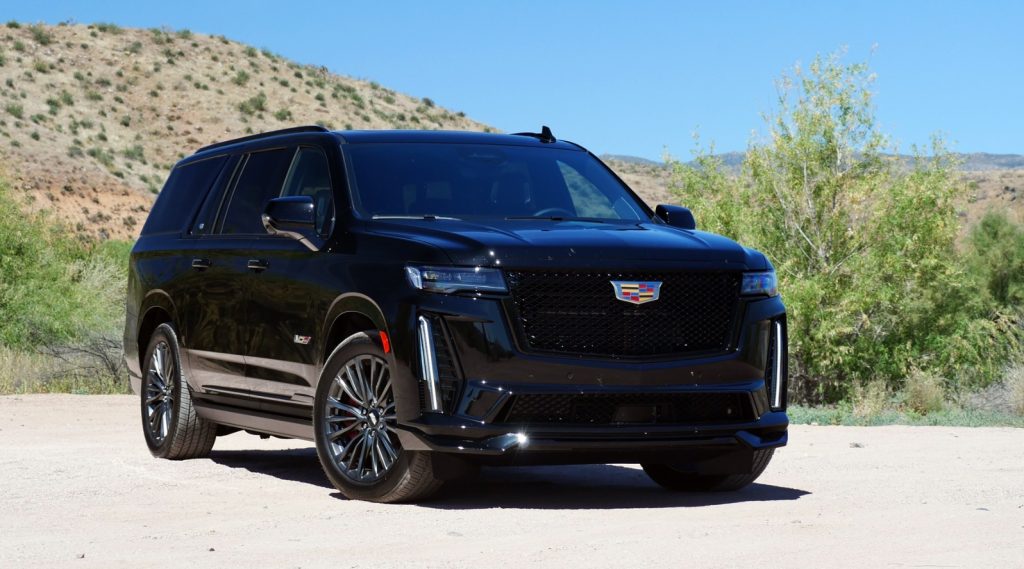
This is what makes the Escalade different from some of the rugged SUVs on this list. Its towering dimensions are paired with a distinctly luxury-focused mission. Instead of using height primarily for off-road clearance, Cadillac turns that physical scale into a commanding seating position, spacious cabin, and high-end passenger experience.
9. Chevrolet Tahoe
The 2026 Chevrolet Tahoe is proof that a vehicle does not need an extended wheelbase or luxury badge to become seriously tall. Chevrolet lists the full-size SUV at 75.8 to 76.8 inches in height, depending on configuration.
That means the tallest version stands 6 feet 4.8 inches from the ground to the roof, while its body stretches 211.3 inches from bumper to bumper. With the mirrors included, the Tahoe reaches 93.6 inches in width, making it a vehicle where garage measurements matter almost as much as parking space length.
Its height contributes to a commanding driving position, but the Tahoe’s real advantage is how that large footprint is divided between passengers and cargo.
Chevrolet offers seating for up to eight people, with some configurations allowing seven or even nine occupants. That makes the Tahoe unusually flexible for families that regularly transport large groups.
Three engines are available in the U.S. market. The 5.3-liter EcoTec3 V8 produces 355 horsepower and 383 lb-ft of torque, while the 6.2-liter V8 raises output to 420 horsepower and 460 lb-ft. The available 3.0-liter Duramax turbo-diesel produces 305 horsepower and 495 lb-ft of torque. All three use a 10-speed automatic transmission.
Towing is another reason the Tahoe’s physical size can be useful. Properly equipped, Chevrolet rates maximum towing capacity at 8,400 pounds. That gives the SUV enough capability for substantial travel trailers, boats, and recreational equipment without requiring a pickup truck.
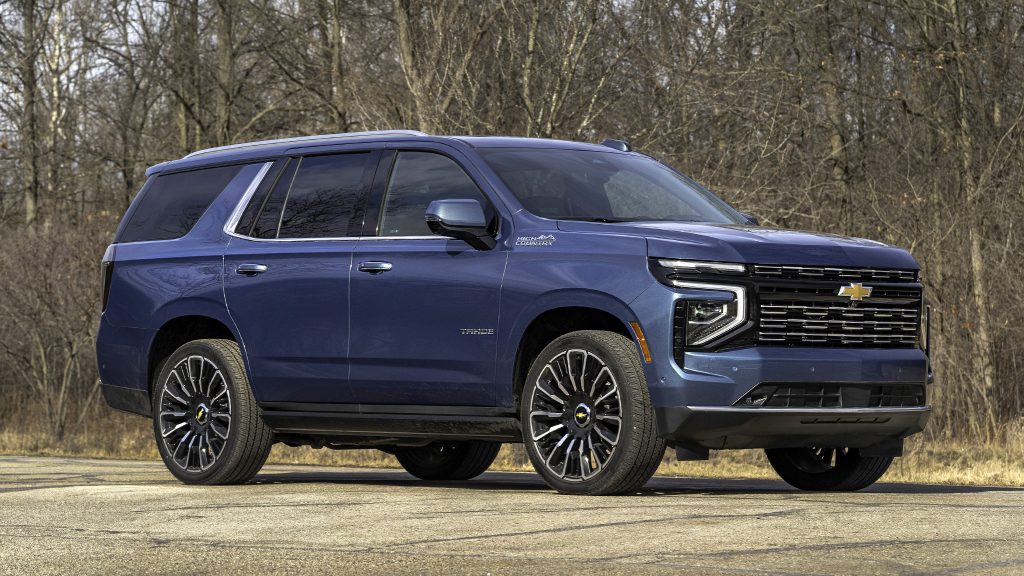
There is also a practical benefit to the Tahoe’s tall body for passengers. Its elevated seating position makes entry easier for many occupants than getting into a low crossover, while the upright roof provides generous headroom across the cabin.
The Tahoe therefore earns its place as one of America’s tallest privately purchasable SUVs by combining a substantial roof height with three-row seating, multiple powertrain choices, and genuine towing capability.
10. GMC Yukon
The 2026 GMC Yukon closes this list with a 76.5-inch exterior height, putting its roof more than 6 feet 4 inches above the ground. GMC lists the standard Yukon at 210.1 inches long, while the extended Yukon XL adds considerable length without requiring a taller body.
The standard Yukon also provides seating for up to eight passengers, making its dimensions useful for families rather than merely giving it a larger road presence.
One of the most impressive aspects of the Yukon is the amount of cargo space contained within its tall and boxy body. GMC lists 25.5 cubic feet behind the third row, 72.5 cubic feet behind the second row, and as much as 122.8 cubic feet behind the first row.
Those numbers explain why full-size SUVs remain popular with buyers who need passenger capacity and substantial cargo room in the same vehicle.
The standard Yukon Elevation uses a 5.3-liter V8 connected to a 10-speed automatic transmission. That engine develops 355 horsepower and 383 lb-ft of torque. Buyers can move up to the 6.2-liter V8 for 420 horsepower and 460 lb-ft or choose the available 3.0-liter Duramax turbo-diesel, which delivers 305 horsepower and 495 lb-ft.
The Yukon is also designed to function as a serious towing vehicle. Available equipment includes advanced trailering technology, while the larger engines provide the low-end pulling power expected from a full-size SUV.
Its 44.5 inches of front legroom further demonstrates how GMC uses the Yukon’s large footprint. The driver sits high above the road, while the long body gives passengers considerable room to spread out.
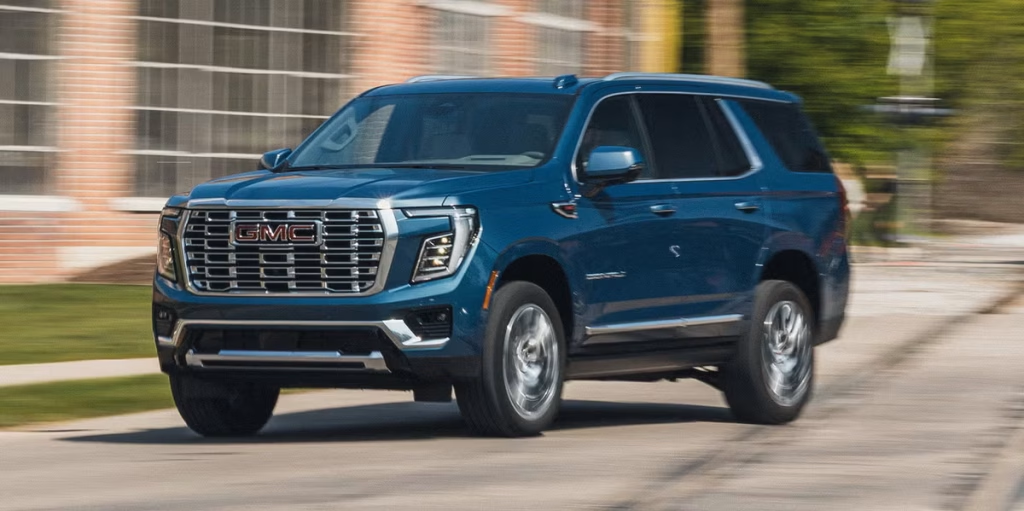
What makes the Yukon particularly appealing is the balance between traditional SUV proportions and modern technology. Features such as available Super Cruise add advanced driver assistance to a vehicle that still retains the tall, upright architecture associated with classic American full-size SUVs.
For private buyers wanting a large family vehicle with a nearly 6-foot-5-inch roof, multiple engine choices, substantial cargo capacity, and available diesel torque, the Yukon remains one of the most imposing choices on the U.S. market.
