Some factory cars sound almost civilized at idle, then turn into something completely different when the throttle is opened. The loudest examples are not simply fitted with bigger mufflers or larger tailpipes.
Engineers have used high-revving engines, flat-plane crankshafts, active exhaust valves, freer-flowing systems, and carefully tuned resonators to create sounds that can dominate an entire road.
Measuring exhaust volume is complicated because results depend on microphone position, engine speed, surroundings, and testing method, so there is no universally accepted decibel ranking. This list focuses on street-legal production cars with documented factory exhaust characteristics and exceptional measured or independently reported sound levels.
1. Ford Mustang Shelby GT350R
Few factory exhaust systems have given a street-legal Mustang a reputation quite like the one fitted to the 2020 Shelby GT350R. Ford equipped its high-performance Mustang with a 5.2-liter naturally aspirated V8 using a flat-plane crankshaft, allowing the engine to climb to an extraordinary 8,250 rpm.
The combination produces 526 horsepower and 429 lb-ft of torque, but the numbers only tell part of the story. The real drama begins when the tachometer races toward the redline.
The GT350R is particularly useful for this list because its sound was actually measured. In Car and Driver’s testing, the car reached 96 decibels inside the cockpit during its high-rpm acceleration run.
The publication specifically noted that the GT350R’s cold-start noise was exceptionally aggressive, while the exhaust continued producing prominent snaps and crackles during deceleration.
Those measurements were made inside the cabin, so they should not be confused with an exterior exhaust reading, but they provide hard evidence for just how intense the factory system could become.
Ford’s engineering choices explain the character. The GT350R used a high-flow dual exhaust with an X-pipe and active-valve mufflers, allowing the system to alter exhaust flow and sound depending on the selected driving conditions.
Unlike a conventional American V8 built around a deep, bass-heavy rumble, the flat-plane engine creates a sharper, higher-frequency wail as the revs climb.
The GT350R also deleted the rear seats and used lightweight components, including carbon-fiber wheels, reinforcing its track-focused character. Yet it remained a road-legal production Mustang sold through Ford dealers.
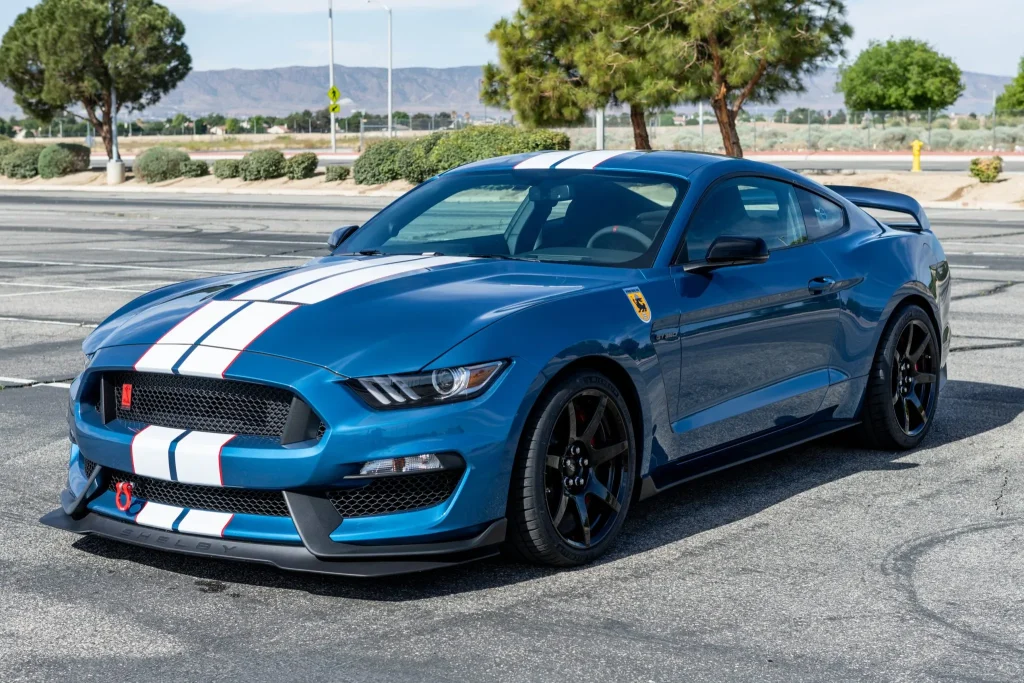
The GT350R stood out for more than just its volume. Its distinctive factory exhaust note became a defining part of the car’s character and one of the main reasons enthusiasts continued to remember it.
2. Chevrolet Corvette Z06
The eighth-generation Chevrolet Corvette Z06 brought a sound to the American sports-car market that was radically different from the traditional Corvette V8 rumble.
Its centerpiece is the 5.5-liter LT6 naturally aspirated V8, a flat-plane-crank engine developed with racing technology and designed to keep making power deep into the rev range. Chevrolet rates it at 670 horsepower at 8,400 rpm, with 460 lb-ft of torque arriving at 6,300 rpm and an 8,600-rpm redline.
The exhaust system was developed specifically to match that unusual engine. Chevrolet gave the Z06 a driver-adjustable active exhaust capable of altering its sound character, while the engine breathes through four-into-two-into-one stainless-steel exhaust headers.
Car and Driver described the resulting soundtrack as remarkably exotic, noting that the Z06’s exhaust could be heard around the Nürburgring during testing. That is an anecdotal observation rather than a standardized decibel measurement, but it demonstrates how prominent the car’s factory exhaust was in real-world conditions.
The reason the Z06 sounds so different from a conventional American V8 lies largely in its flat-plane crankshaft. Instead of the traditional cross-plane arrangement used by most Corvette V8s, the LT6 uses a crank design associated with high-revving exotic engines.
It also uses dual overhead camshafts, four valves per cylinder, forged titanium connecting rods, and a six-stage dry-sump oiling system.
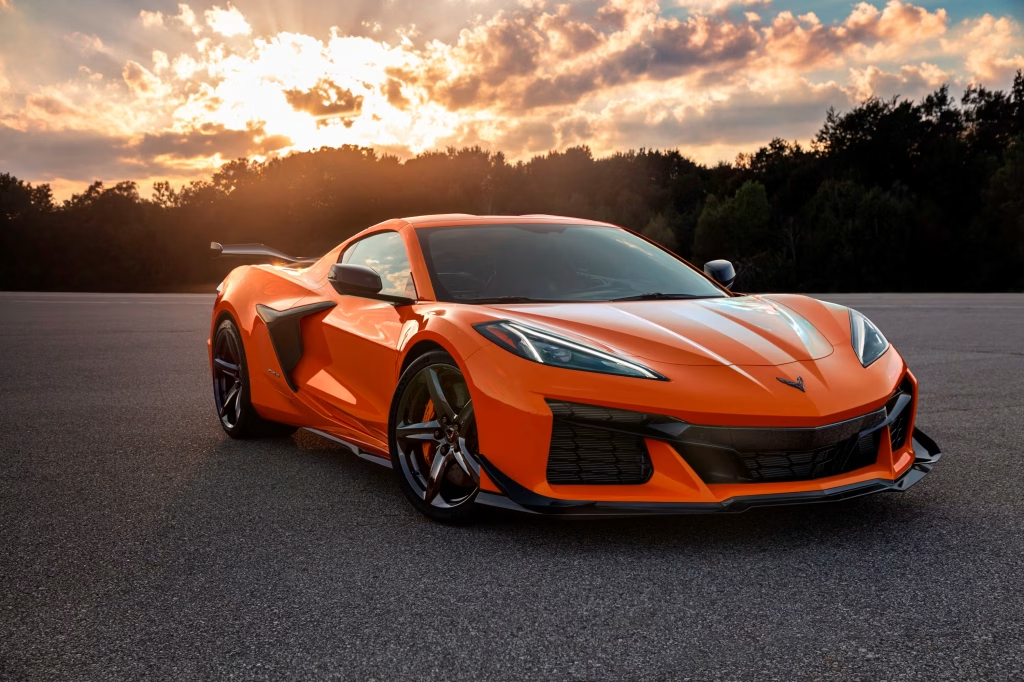
The result is a sound that rises dramatically with engine speed. At low rpm, the Z06 can remain relatively restrained, but once the tachometer approaches its upper reaches, the exhaust changes into a sharp mechanical wail.
With a 2.6-second manufacturer-claimed 0-to-60-mph time, an 8,600-rpm redline, and 670 horsepower without forced induction, the Z06 has the performance to justify its aggressive voice. Its factory exhaust is not an accessory added after the engineering was finished. It is an integral part of the car’s character.
3. Jaguar F-Type R
The Jaguar F-Type R did not need an aftermarket exhaust to become one of the most theatrical cars on the road. Its 5.0-liter supercharged V8 was paired with an active exhaust system designed to give the driver a quieter personality when cruising and a dramatically more aggressive one when the valves opened.
The U.S.-market F-Type R produced 550 horsepower and 502 lb-ft of torque in its earlier form, giving its four tailpipes plenty of engine behind them.
Independent testing provides the Jaguar F-Type R with some of the strongest sound figures on this list. Auto Express measured the car at 115 dB when revved to its limit, while a less aggressive test recorded a still-impressive 97 dB.
The testing methodology differs from other publications, so the number should not be treated as a direct apples-to-apples comparison with cabin measurements from other cars.
The sound itself is part of what made the F-Type unusual. Rather than producing one constant note, the exhaust could change dramatically with throttle position and engine speed.
The electronically controlled valves allowed the car to remain relatively restrained when conditions demanded it, then unleash a deep V8 roar under hard acceleration. Jaguar deliberately engineered the system to provide an emotional soundtrack without requiring owners to modify the car.
That mechanical personality came from more than displacement. The supercharged V8 delivered its torque early, while the exhaust system amplified the engine’s low-frequency rumble and high-rpm aggression. Crackles and pops during overrun became another recognizable part of the F-Type experience.
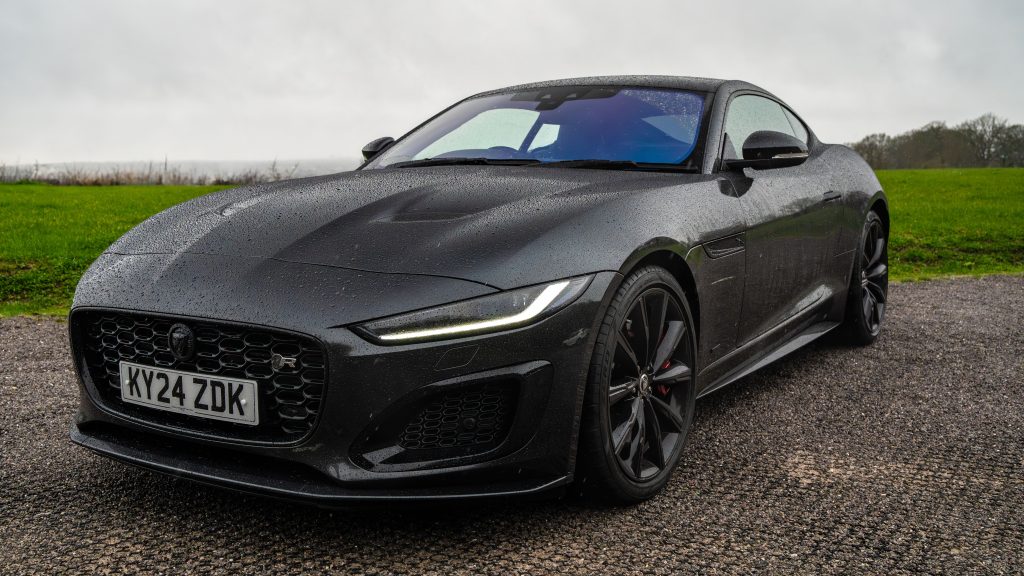
The car’s proportions also suited its character. With a relatively compact two-seat body compared with large American muscle cars, the exhaust sits close to the occupants and road surface, making the sound feel immediate.
For a factory-built road car, the F-Type R offered an unusually dramatic combination of supercharged V8 performance, active exhaust technology, and documented high sound levels.
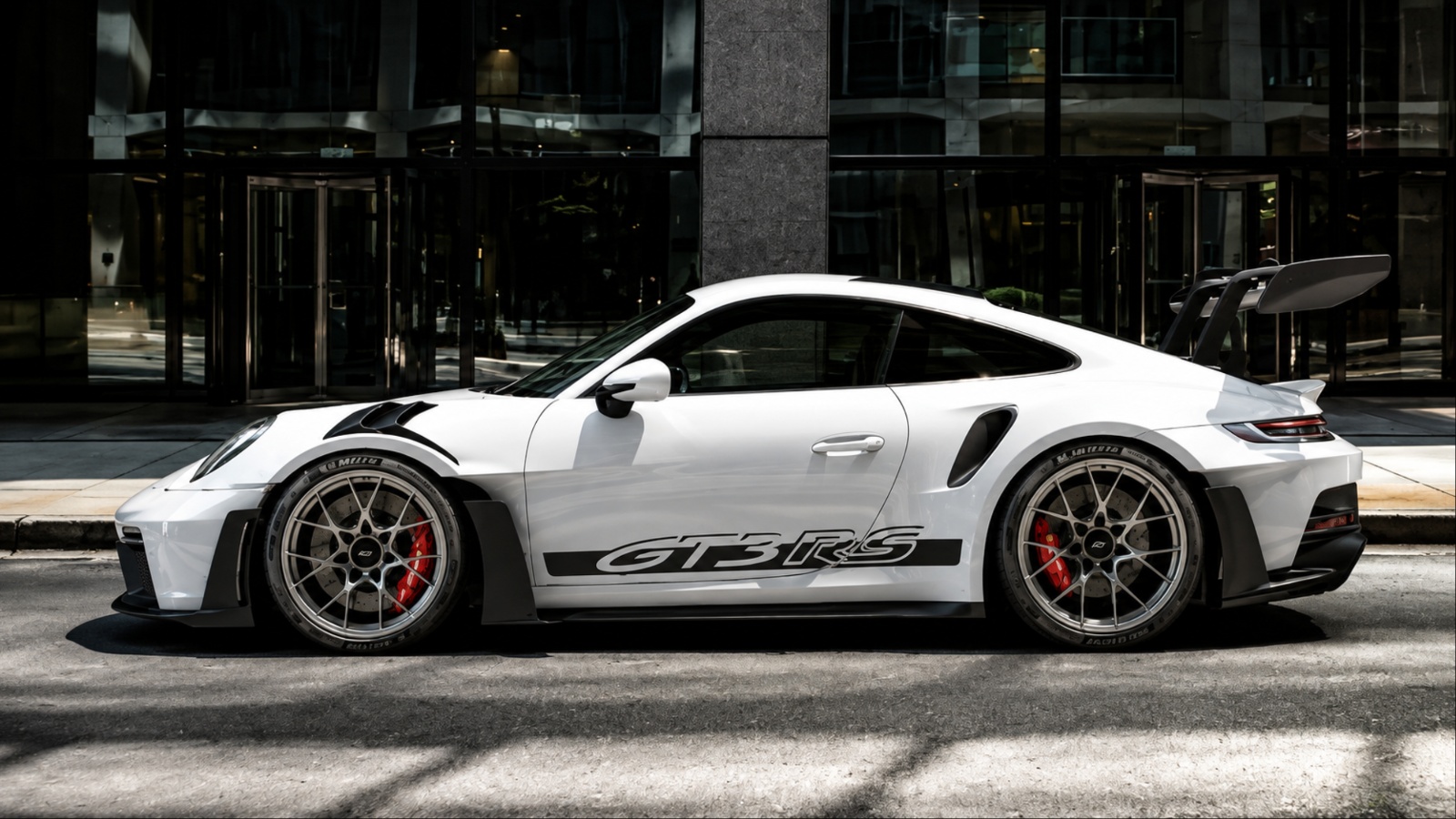
4. Porsche 911 GT3 RS
The 2016 Porsche 911 GT3 RS demonstrates that enormous exhaust volume does not require eight or ten cylinders.
Its 4.0-liter naturally aspirated flat-six produces 500 horsepower and 338 lb-ft of torque, but its extraordinary ability to climb toward the upper end of the tachometer gives the exhaust a character far more intense than the engine’s displacement suggests.
Porsche paired the engine with a high-flow exhaust system and an exhaust flap that opens as engine speed rises.
Car and Driver put a number behind the reputation. During its testing, the GT3 RS reached 108 dB at wide-open throttle, measured from inside the vehicle. The publication emphasized just how extreme the reading was, noting that the sound was intense even while wearing a helmet.
Because the measurement was taken inside the cabin, it cannot be directly compared with exterior exhaust tests, but it remains one of the clearest published demonstrations of how loud a factory GT3 RS can become.
The car’s sound is closely tied to its naturally aspirated character. There is no turbocharger muffling the immediate relationship between throttle input, engine speed, and exhaust note. The flat-six builds intensity as the revs rise, producing a hard-edged mechanical scream rather than the bass-heavy rumble associated with large-displacement American V8s.
Porsche also gave the driver control over the exhaust behavior. The flap can open around 4,000 rpm, while selecting the sport exhaust setting makes that transition happen earlier. That means the driver does not have to wait until the engine is near its limit before the soundtrack becomes aggressive.
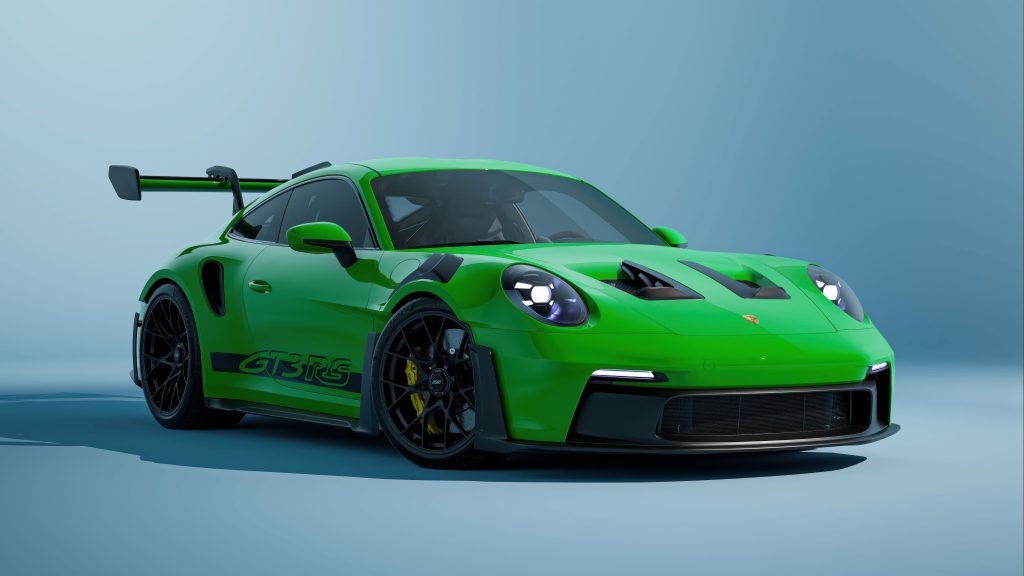
The GT3 RS was designed primarily with track performance in mind, yet it remained a road-legal production car.
Its combination of a high-revving flat-six, lightweight construction, aggressive aerodynamics, and an exhaust capable of reaching 108 dB makes it one of the clearest examples of a factory street car that sounds closer to a race machine than a conventional road vehicle.
5. Lexus LFA
The Lexus LFA occupies a special place among loud factory performance cars because its soundtrack was engineered around an engine that behaves more like a racing powerplant than a conventional luxury-car V10.
The 4.8-liter naturally aspirated V10 produces 552 horsepower and 354 lb-ft of torque, with peak horsepower arriving at 8,700 rpm and the engine capable of reaching 9,000 rpm. That enormous rev range is central to the LFA’s sound.
Lexus worked with Yamaha to develop the engine’s acoustic character, and the result became almost as famous as the car’s performance. The LFA uses a three-outlet exhaust system, with the central outlet positioned between two larger outer pipes.
Its titanium exhaust construction also helped reduce weight while producing the distinctive high-pitched note that became one of the car’s defining characteristics.
Edmunds documented the LFA being repeatedly run on a chassis dyno and described the sound from the 9,000-rpm V10 as extraordinary. At 5,000 rpm, the engine’s character already became dramatically more intense, while the rapid rise in engine speed made the exhaust note feel almost instantaneous from the driver’s seat.
MotorTrend’s dyno testing produced another memorable description of the factory triple-exit exhaust, comparing its character to a combination of a jet engine and a Ducati race bike. Again, this is descriptive rather than a standardized decibel measurement, but it captures why the LFA’s sound has remained famous long after production ended.
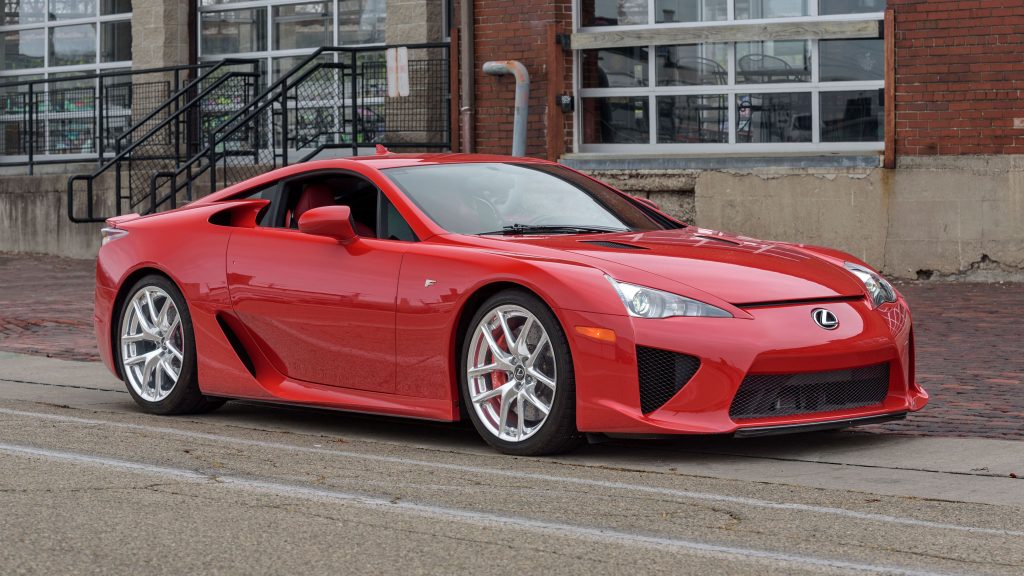
Only 500 LFAs were produced worldwide, making the factory exhaust note exceptionally rare as well as distinctive. The car also weighed roughly 3,500 pounds in Car and Driver’s estimate and could reach a manufacturer-claimed 202 mph.
The LFA demonstrates that outright volume is not the only measure of an unforgettable exhaust. Its combination of pitch, immediacy, engine speed, and factory-developed acoustics created one of the most recognizable sounds ever fitted to a road-going car.
6. Mercedes-AMG GT R
The Mercedes-AMG GT R proves that turbocharged engines can still produce an exceptionally aggressive factory soundtrack. Its 4.0-liter twin-turbocharged V8 delivers 577 horsepower and 516 lb-ft of torque, with peak torque available from 1,900 to 5,500 rpm. That broad torque band gives the exhaust plenty of force behind every hard acceleration run.
AMG did not simply bolt a conventional exhaust onto the GT R. The company developed a lighter system using thin-walled stainless-steel pipes and a titanium muffler, reducing the exhaust system’s weight by 13.2 pounds compared with the GT S system.
The setup also uses electronically controlled exhaust flaps that can alter the sound depending on the selected driving mode.
That active-valve arrangement gives the GT R two distinct personalities. In quieter modes, the exhaust can remain relatively restrained, allowing the car to function on ordinary roads without constantly broadcasting its presence.
Switch to the more aggressive settings, and the valves open progressively, exposing more of the V8’s raw character. A track test of a stock GT R recorded a 90 dB static reading at 5,250 rpm, although testing procedures and locations differ between venues, so the figure should not be treated as a universal maximum.
The exhaust arrangement is visually distinctive too. Mercedes-AMG placed two central outlets and two additional side outlets, giving the rear of the GT R a configuration that immediately communicates its performance intent.
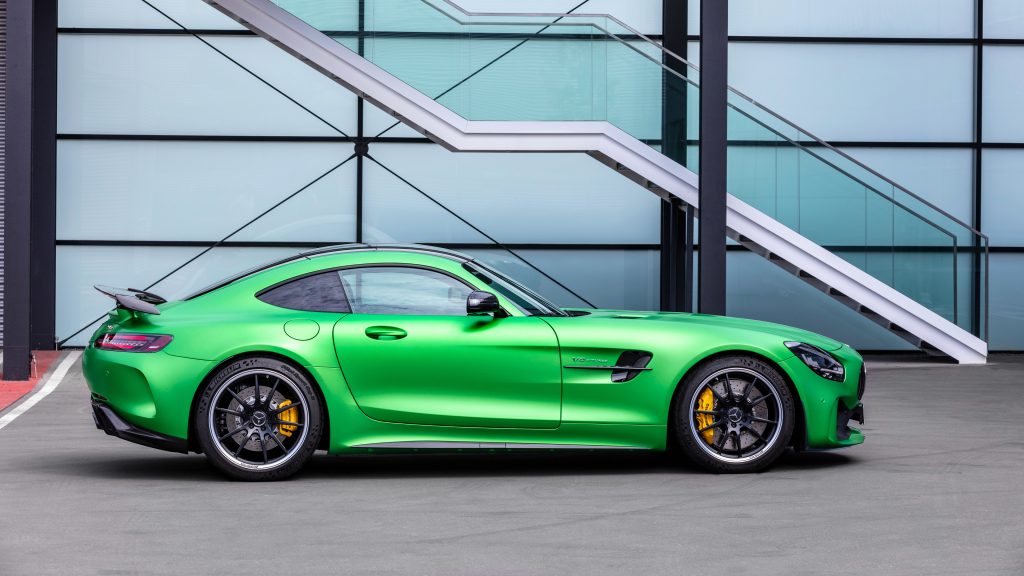
Performance makes the soundtrack even more convincing. Car and Driver recorded 3.2 seconds to 60 mph and a 198-mph manufacturer-claimed top speed in its testing of the 2018 GT R.
The GT R therefore earns its place through a combination of engineered exhaust hardware, high-output V8 power, active valves, and measurable track-day noise.
7. Aston Martin V12 Vantage S
The Aston Martin V12 Vantage S belongs in this conversation for a very different reason. Its exhaust note comes from a naturally aspirated 6.0-liter V12, an engine configuration that was already becoming rare when this car was produced.
Aston Martin’s official specifications list 573 PS, equivalent to roughly 565 horsepower, and a 205-mph top speed. The engine’s 12 cylinders and high-revving character gave the Vantage S a soundtrack that needed very little artificial enhancement.
MotorTrend’s road test captured the character particularly well, describing the V12 Vantage S as producing an exceptionally rich and intense exhaust sound under hard acceleration.
The publication noted that the car could produce what it described as essentially unmuffled V12 exhaust noise, an observation that helps explain why the model developed such a strong reputation among enthusiasts.
A major part of the experience came from the exhaust valves. The system could remain relatively subdued at certain engine speeds, allowing the car to function as a road-going grand tourer, before becoming dramatically more aggressive as the engine climbed higher in the rev range.
Owners and period reports frequently singled out the valve system as one of the major contributors to the car’s change in character.
The mechanical formula was unusually pure. There were no turbochargers to alter the response or soften the direct connection between throttle and exhaust. Instead, the driver had a large-displacement V12 responding immediately to throttle inputs, with the exhaust amplifying twelve individual combustion events into one distinctive soundtrack.
The V12 Vantage S also combined that sound with a compact two-seat body, making the engine’s voice feel much closer to the occupants than it would in a larger luxury sedan. Every increase in rpm brought another layer of mechanical intensity.
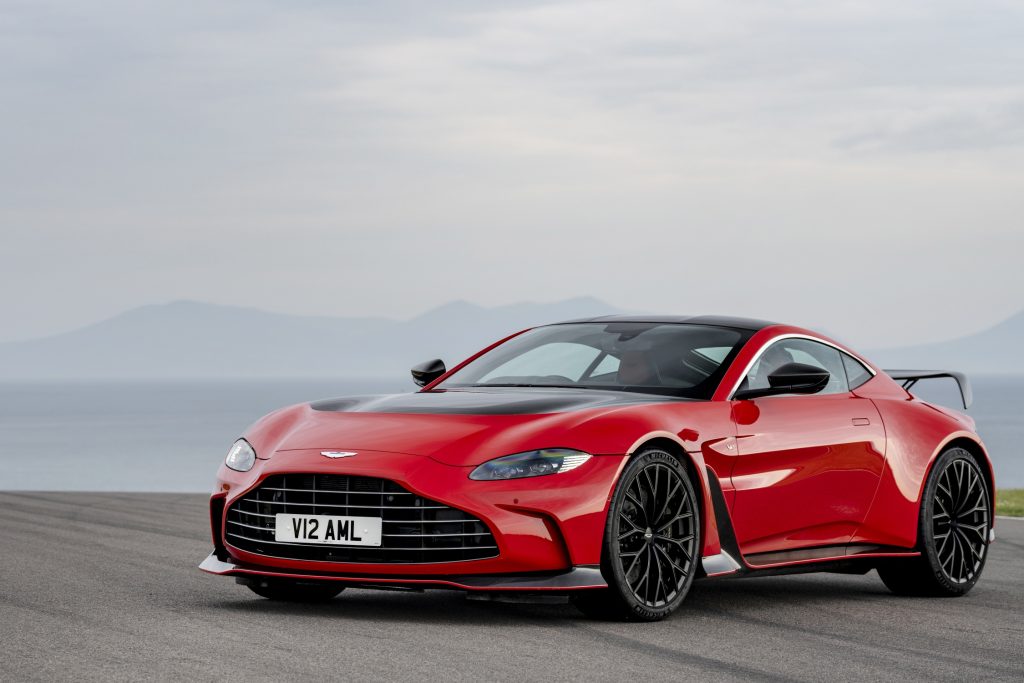
It is difficult to separate the V12 Vantage S from its sound. The exhaust was not simply part of the car’s performance package. For many enthusiasts, it was one of the reasons to want the car in the first place.
8. Chevrolet Camaro ZL1
The sixth-generation Chevrolet Camaro ZL1 brought an enormous amount of mechanical force to its factory exhaust system. Chevrolet equipped it with the 6.2-liter supercharged LT4 V8, rated at 650 horsepower and 650 lb-ft of torque.
That engine was shared in closely related form with the Corvette Z06, but the Camaro received its own exhaust calibration and electronically controlled dual-mode system.
The exhaust valves are particularly important here. Instead of having one fixed sound profile, the ZL1’s factory system can change its behavior electronically.
Chevrolet moved away from the older vacuum-actuated arrangement and used electronically controlled valves, allowing the exhaust character to become substantially more aggressive when the driver selects the appropriate mode.
That makes the ZL1 interesting in everyday driving. A 650-horsepower muscle car does not have to sound like it is permanently preparing for a drag race.
The exhaust can remain comparatively restrained during normal cruising, but once the throttle is opened, the supercharged V8 produces a deep, forceful roar accompanied by the distinctive mechanical sound of the blower.
Independent testing also demonstrated just how much power the stock system was handling. A factory-stock ZL1 tested on a chassis dyno produced 570 horsepower and 545 lb-ft at the rear wheels, despite Chevrolet’s 650-horsepower and 650-lb-ft ratings at the engine.
Those wheel figures show the enormous amount of energy being pushed through the drivetrain before the exhaust even gets its turn to announce the acceleration.
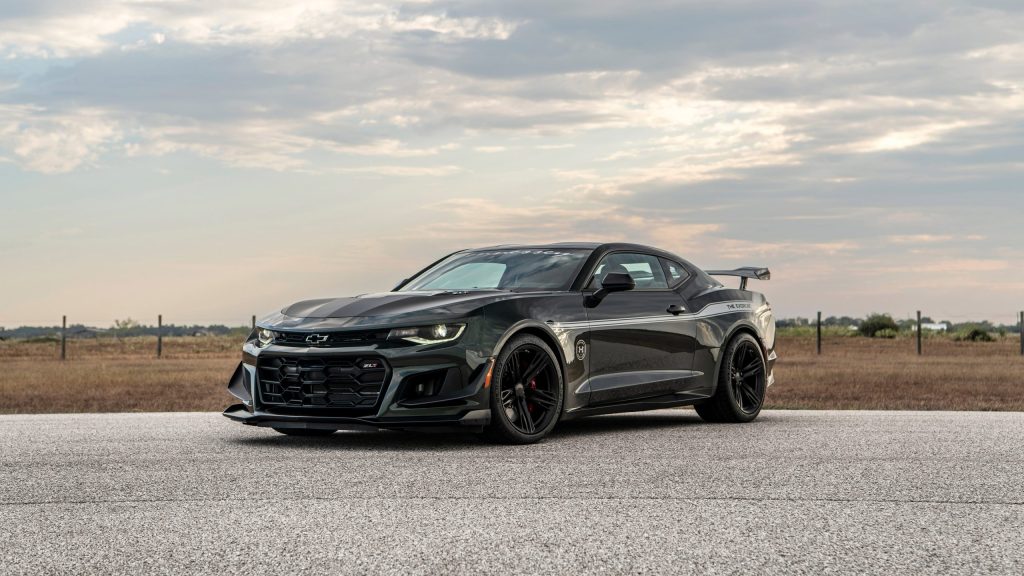
The ZL1’s factory exhaust therefore works as part of a carefully engineered package. Its electronically controlled valves provide flexibility, while the supercharged LT4 supplies the deep combustion pulses and immense airflow that give the Camaro its unmistakable voice.
It is particularly impressive that Chevrolet managed to retain this dramatic personality while keeping the car street legal and suitable for ordinary road use. The result is a muscle car whose exhaust can shift from restrained to intimidating without requiring the owner to replace a single factory component.
9. Lamborghini Aventador SVJ
The Lamborghini Aventador SVJ may be one of the clearest examples of a factory exhaust system designed to sound as outrageous as the car looks.
Its naturally aspirated 6.5-liter V12 produces 770 CV, equivalent to about 759 horsepower in U.S. terminology, at 8,500 rpm.
Torque reaches roughly 531 lb-ft, while the engine can rev to 8,700 rpm. Lamborghini also shortened and lightened the exhaust system compared with the Aventador S and moved the exhaust outlets high into the rear fascia.
The results were not subtle. Autocar measured 96 decibels inside the cabin at 8,500 rpm in third gear, placing the SVJ among the loudest factory road cars the publication had tested. That measurement is particularly striking because it was recorded from inside the vehicle rather than at an exterior tailpipe.
The sound is inseparable from the engine’s character. No turbochargers are filtering the exhaust pulse, or electric motors are changing the delivery. Instead, twelve cylinders breathe naturally while the tachometer climbs toward 9,000 rpm.
At low speeds, the V12 can sound relatively controlled, but the character changes dramatically as the engine approaches its upper rev range.
Lamborghini’s high-mounted exhaust outlets also serve a practical purpose. The shorter system reduces weight and helps the exhaust gases travel a more direct route from the engine. The company specifically highlighted the new muffler and high-mounted tips as contributors to the SVJ’s distinctive sound.
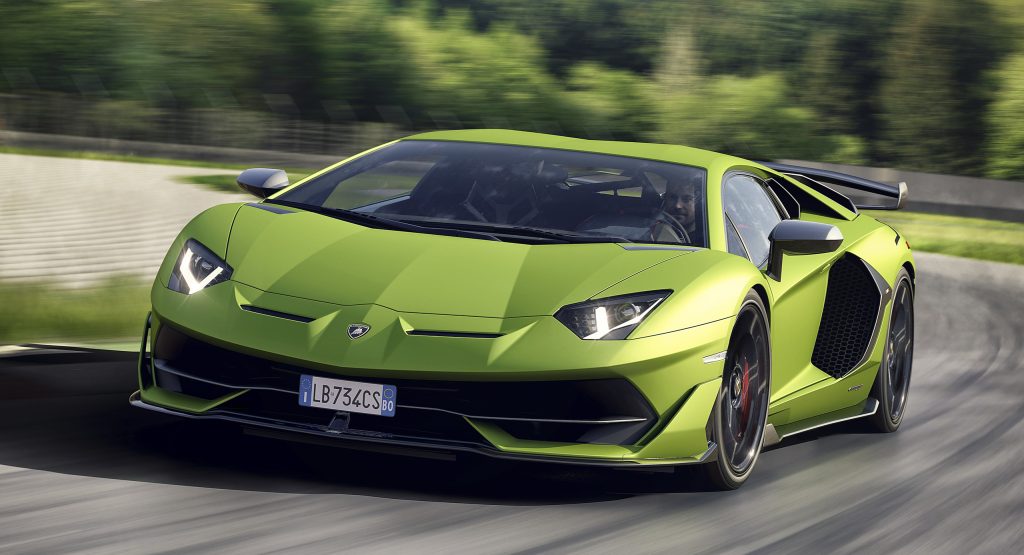
Performance provides the necessary context. Lamborghini claims the SVJ can reach 62 mph in 2.8 seconds and exceed 217 mph, while its active aerodynamics and all-wheel-drive system were engineered for extreme track performance.
This is what makes the SVJ so memorable. Its exhaust is not simply loud because Lamborghini wanted attention. The sound is the audible result of a high-revving V12, a shortened exhaust system, and an engine designed to operate close to racing-car territory.
10. Ferrari 458 Italia
The Ferrari 458 Italia is remembered not only for its performance but also for its distinctive and highly celebrated exhaust note. Its 4.5-liter naturally aspirated V8 produces 570 horsepower at 9,000 rpm and 398 lb ft of torque at 6,000 rpm. The engine’s flat-plane crankshaft and specially designed exhaust system help create its unique character.
Ferrari incorporated bypass flaps into the exhaust, allowing the sound to become significantly more aggressive as engine speed and throttle input increased. Car and Driver noted that the larger sound emerged when the flaps opened fully, producing a deeper and more dramatic tone than the previous F430.
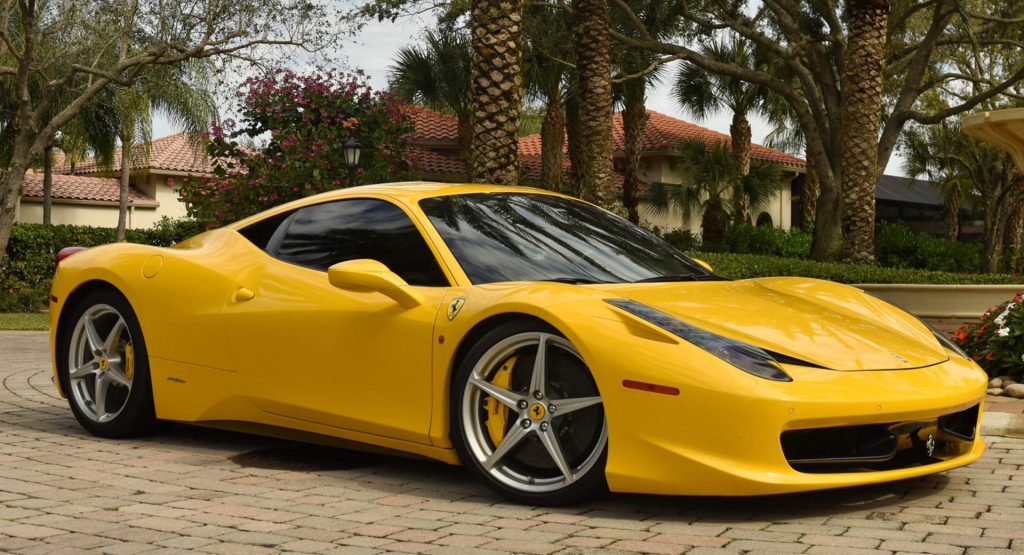
The exhaust was designed with the emotional side of driving in mind. Ferrari engineers treated the sound as an important part of the car’s personality rather than simply a byproduct of engine operation.
Independent testing recorded a maximum noise level of 92 dB(A), while the cabin measured 84 dB(A) at 100 mph. Although testing methods vary, these figures demonstrate the strength of the Ferrari’s soundtrack.
The engine’s ability to reach extremely high rpm also plays a major role. Producing 127 horsepower per liter, the V8 delivers a sharp and urgent sound unlike the deeper rumble of larger American V8 engines. Combined with its distinctive exhaust layout and acoustic tuning, the 458 created one of Ferrari’s most recognizable signatures.